
Metal Cutting Tools Market Growth, Trends & Forecast by 2034
Coverage: By Product (Drilling Machines, Lathe Machines, Boring Machines, Grinding Machines, Milling Machines); Application (Automotive, General Machinery, Precision Engineering, Construction, Transport Machinery, Others) , and Geography (North America, Europe, Asia Pacific, and South and Central America)
- Status : Data Released
- Report Code : TIPRE00022037
- Category : Manufacturing and Construction
- No. of Pages : 150
- Available Report Formats :


- Last update date : July 20, 2026


2025 Market Size
US$ 48.07 Bn
Base year value
2034 Forecast
US$ 80.36 Bn
Projected by 2034
CAGR 2026-2034
5.88 %
Growth rate
Addressable Market
US$ 581.97 Bn
(2026-2034)
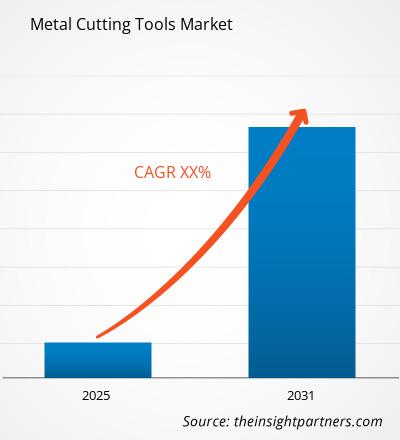
The metal cutting tools market is projected to grow from US$ 48.07 Billion in 2025 to US$ 80.36 Billion by 2034, registering a CAGR of 5.88% during 2026–2034. Demand is supported by precision machining needs across automotive, general machinery, precision engineering, construction, and transport machinery, where drilling machines, lathe machines, boring machines, grinding machines, and milling machines remain essential to production quality and throughput.
North America is expected to record a CAGR range of 5.3–5.8% through 2034, supported by the reshoring of component manufacturing, aerospace machining demand, and investments in automated CNC cells. The Metal Cutting Tools Market size in the region is also shaped by replacement demand from high-mix, low-volume production environments, where tool life, coating performance, and digital tool monitoring influence procurement decisions.
Metal Cutting Tools Market Assessment and Insights
- North America accounted for 24–27% share in 2025 and is projected to grow at a CAGR between 5.3–5.8% during 2026–2034, led by aerospace, EV tooling, and reshored precision machining.
- US represented 78–82% of North America in 2025 and is likely to expand at a CAGR between 5.4–5.9%, supported by defense, automotive, and CNC modernization.
- Europe held 22–25% share in 2025 and is forecast to grow at a CAGR between 4.8–5.3% during 2026–2034, with Germany, the UK, France, Italy, and Spain leading demand.
- Asia Pacific captured 42–46% share in 2025 and is expected to grow at a CAGR between 6.2–6.8%, supported by China, Japan, South Korea, India, and Australia.
- Largest Segment Automotive held 28–32% market share in 2025 and is forecast to grow at a CAGR between 5.6–6.1% as EV and ICE component machining coexist.
- High Growth Segment Precision Engineering held 16–19% market share in 2025 and is projected to grow at a CAGR between 6.4–7.0% amid tight-tolerance manufacturing demand.
- Key companies analyzed in detail: BIG KAISER Precision Tooling Inc., Kennametal Inc., Nachi-Fujikoshi Corp., OSG USA, INC, Sandvik AB, CERATIZIT S.A., DEWALT, Fraisa SA, Guhring, Inc., Kilowood Cutting Tools, Xiamen Golden Egret Special Alloy Co. Ltd.
Source: The Insight Partners' analysis based on proprietary research, government publications, company annual reports, investor presentations, industry databases, and expert interviews.
Manufacturing processes are evolving from standalone machining to networked, data-driven cutting operations. Buyers of tools now base their choices on factors such as insert shape, durability of the coating, vibration management, coolant delivery, and CNC program compatibility rather than focusing only on the cost. Thus, the Metal Cutting Tools Market expansion will be determined by time saved, less frequent change of tools, and increased surface finish consistency, particularly in automotive, machinery, and precision engineering industries with tight tolerances.
The new manufacturing corridors that will be developed in India, Southeast Asia, Mexico, and Eastern Europe during the forecast period will generate new requirements for tooling as companies will try to diversify their supply chains. The focus on localization, preparedness for defense purposes, energy generation capacity, and manufacturing facilities producing less waste will create opportunities for coated carbides, modular tooling, and digitally monitored machines.
Metal Cutting Tools Market Report Scope
| Report Attribute | Details |
|---|---|
| Market size in 2025 | US$ 48.07 Billion |
| Market Size by 2034 | US$ 80.36 Billion |
| Global CAGR (2026 - 2034) | 5.88% |
| Historical Data | 2021-2024 |
| Forecast period | 2026-2034 |
Metal Cutting Tools Market Analysis
Demand is rising as manufacturers pursue tighter tolerances, higher spindle utilization, and predictable tool life across mixed-material production. Automotive remains central, while general machinery and transport machinery add recurring replacement demand. The Metal Cutting Tools Market analysis shows that suppliers able to combine product engineering with application support are better positioned because machining performance depends on tool geometry, workpiece material, and process stability.
The supply chain consists of carbide powder suppliers and specialty alloy suppliers, tool manufacturers, coating companies, machine tool OEMs, distributors, and end-users. The supply chain is affected by the availability of tungsten, energy cost, and demand for local stock keeping. There is a growing demand for suppliers who can provide tool libraries and rapid delivery of tools to CNC manufacturing lines.
Competitors are mostly global suppliers having wide portfolios, along with regional suppliers who have expertise in niche tooling. Sandvik AB, Kennametal Inc., CERATIZIT S.A., OSG USA, INC, and Nachi-Fujikoshi Corp. differentiate themselves on the basis of superior material composition, superior coatings, and digital machining technology. BIG KAISER Precision Tooling Inc., Fraisa SA, Guhring, Inc., Kilowood Cutting Tools, and Xiamen Golden Egret Special Alloy Co., Ltd. enhance their niche capabilities.
The main investment areas include modular drilling, high feed milling, micro-machining, carbide recycling, and automated tool management. Positioning for future growth is based on lowering the overall cost of machining, rather than merely selling tools individually. Tool manufacturers who have established technical service operations, coating technology, and ties to machine tool builders will secure more lucrative agreements.
● REPORT CUSTOMIZATION
Tailor This Report To Align With Your Specific Business Requirements
This report can be customized to align precisely with your business objectives, scope, and target markets. Customization options include tailored segmentation, geography, competitive analysis, and strategic insights to support informed decision-making.
Customize This Report →WHAT YOU CAN ADJUST
- ● Segmentations
- ● Geography
- ● Competitive Analysis
- ● Language Preferences
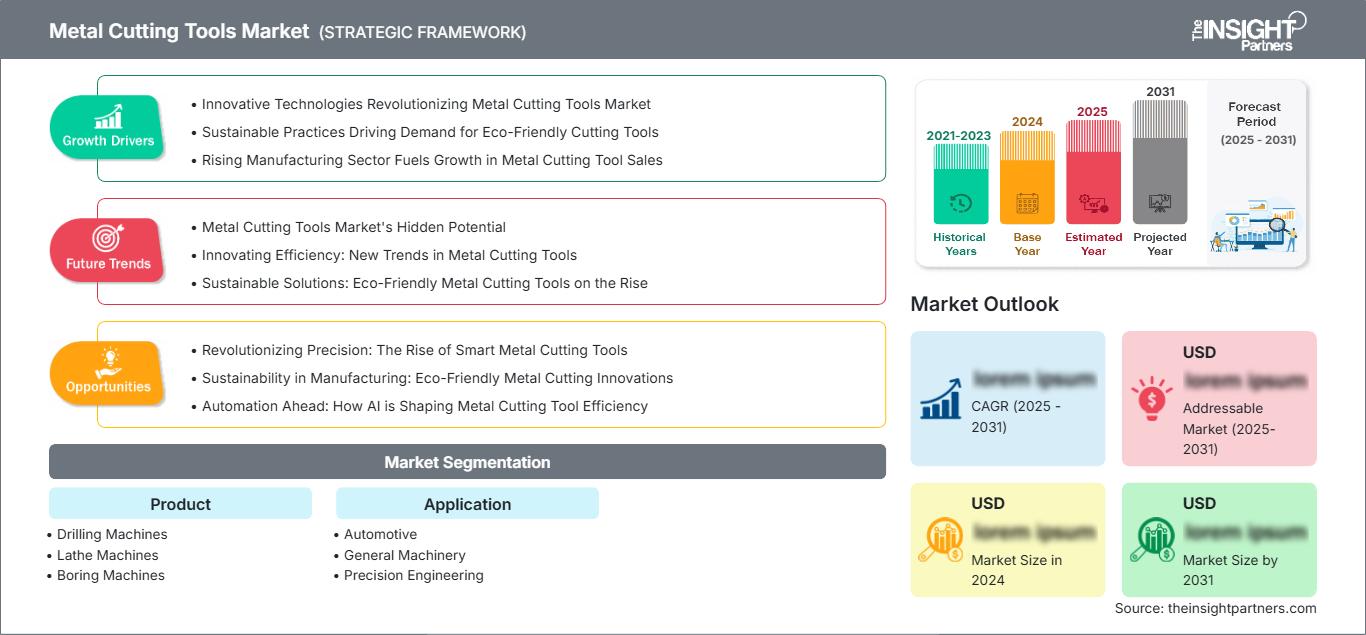
Metal Cutting Tools Market: Strategic Insights
Regional Insights
North America Metal Cutting Tools Market
North America represented 24–27% share in 2025 and is expected to expand at a CAGR of 5.3–5.8% through 2034. Demand is supported by aerospace production, automotive tooling replacement, and advanced manufacturing programs that prioritize CNC productivity, machining reliability, and domestic supply security.
The region’s Metal Cutting Tools Market share is reinforced by high adoption of coated carbide tools, modular boring systems, and application-specific milling tools. Machine shops are investing in automation to offset skilled labor shortages, while OEMs require tighter surface finish control for aircraft structures, EV drivetrains, and industrial equipment components.
U.S. Metal Cutting Tools Market
The U.S. accounted for 78–82% of North America in 2025 and is projected to grow at a CAGR of 5.4–5.9%. Its demand profile is shaped by defense machining, aerospace backlogs, EV battery enclosure production, and high-volume parts manufacturing requiring repeatable cutting accuracy.
Kennametal Inc., OSG USA, INC, DEWALT, and Guhring, Inc. maintain a strong market presence through distribution, product engineering, and customer support. Application trends include high-speed drilling, small-part turning, and coated insert adoption in automotive, transportation machinery, general machinery, and precision component manufacturing.
Europe Metal Cutting Tools Market
Europe accounted for approximately 22–25% of the global market in 2025 and is projected to expand at a CAGR of 4.8–5.3% through the forecast period, supported by a strong manufacturing base and continued investment in advanced machining technologies. Germany continues to be the leading market in the region due to its dominance in machine tools, auto manufacturing, precision engineering, and industrial automation. The contribution made by the United Kingdom comes mainly from its aerospace and defense industries, where there is a need for high-precision boring and milling tools that are used to manufacture complicated and valuable alloys and composite parts. France, Italy, and Spain contribute to the needs of the region due to their strong presence in the transportation equipment, machinery, energy generation systems, and extensive subcontract machining operations. There has been an increasing focus on tool traceability, consistent processes, low scrap rates, and energy-efficient machining methods across Europe among end users. This means that companies like Sandvik AB, CERATIZIT S.A., Fraisa SA, and BIG KAISER Precision Tooling Inc. will benefit greatly from the rising demand for top-quality cutting tools and application engineering services.
APAC Metal Cutting Tools Market
APAC accounted for 42–46% share in 2025 and is projected to grow at a CAGR of 6.2–6.8%, making it the largest regional base. China leads through automotive, electronics, and machinery production, while Japan and South Korea support demand for high-precision tools.
India and Australia add growth through infrastructure, transport machinery, mining equipment, and manufacturing localization. Policy support for industrial modernization and supply-chain diversification increases the adoption of CNC-ready drilling, milling, and grinding systems. Regional buyers balance cost efficiency with rising expectations for tool consistency and technical service.
Middle East & Africa Metal Cutting Tools Market
The Middle East and Africa market is expected to grow at a CAGR of 4.6–5.1% during 2026–2034, supported by ongoing industrialization, infrastructure development, and investments in energy-related projects. It is forecasted that Saudi Arabia will continue to be the biggest source of demand based on the diversification of industries, expansion of the energy sector, and development of construction industries that depend on the precision machining of valves, fabricated metal structures, transportation equipment, and maintenance parts. In the United Arab Emirates, the increase in demand for tooling is facilitated by a growing number of precision engineering shops specializing in the aviation industry, marine industry, oil and gas industry, and infrastructural sector, where the high-quality machining tools are crucial for ensuring productivity and component accuracy. As regards South Africa, its demand for tooling is determined by the needs of its mining industry, heavy equipment industry, and metal fabrication that need durable tooling solutions to operate in tough conditions. Throughout the rest of the MEA region, the demand for tooling is tied to some particular industrial and infrastructural projects; however, at the same time, its growth becomes increasingly related to the development of local service centers and technical assistance centers to facilitate customers' operations.
Segmentation Analysis
Product
Product is forecast to grow at a CAGR of 5.5–6.0% during 2026–2034. The Metal Cutting Tools Market scope across product categories is widening as manufacturers demand machines and tooling systems that improve drilling accuracy, turning stability, surface finishing, and multi-axis milling productivity across metals with varied hardness and machinability.
- Drilling Machines remain essential for hole-making in automotive, machinery, and construction components, with demand focused on coolant-through designs, insert stability, and faster cycle times in repetitive production lines.
- Lathe Machines support the turning of shafts, housings, and rotating parts, where tool rigidity, insert life, and process repeatability determine productivity in transport machinery and general engineering workshops.
- Boring Machines address high-accuracy internal diameter machining, particularly in engines, hydraulic equipment, and large machinery, where dimensional stability and surface quality directly influence component performance.
- Grinding Machines are critical for finishing hardened parts, precision surfaces, and tight tolerances, making them important in bearing, automotive, toolroom, and precision engineering applications.
- Milling Machines hold strategic importance in complex part production because they support slotting, contouring, face milling, and high-feed operations across automotive, aerospace, machinery, and fabricated metal components.
Application
Application is projected to expand at a CAGR of 5.7–6.3% from 2026 to 2034. End-use demand is shaped by production volume, material mix, tolerance requirements, and downtime sensitivity, with automotive remaining the largest application and precision engineering showing the fastest growth as components become smaller, lighter, and more complex.
- Automotive leads demand through engine, transmission, chassis, braking, and EV component machining, where productivity improvements depend on stable inserts, modular drilling, and reduced tool-change frequency.
- General Machinery generates broad replacement demand from pumps, compressors, agricultural equipment, and industrial assemblies, requiring versatile tools that balance durability, cost, and machining flexibility.
- Precision Engineering is strategically important for medical, electronics, aerospace, and instrumentation parts, where small tolerances, difficult alloys, and surface integrity raise demand for premium tools.
- Construction supports cutting tool consumption through fabricated structures, heavy equipment, fasteners, and site-related machinery, with demand tied to infrastructure cycles and equipment maintenance.
- Transport Machinery includes rail, marine, commercial vehicle, and off-highway equipment parts, where machining large components requires tool rigidity, chip control, and consistent performance.
Opportunity Snapshot
| Application | Revenue Contribution | Trend Tag | Adoption Stage |
| Automotive | High | EV Machining | Mature |
| General Machinery | Medium | Flexible Cells | Scaling |
| Precision Engineering | Medium | Micro Tolerance | Scaling |
| Construction | Medium | Equipment Repair | Mature |
| Transport Machinery | Medium | Heavy Parts | Scaling |
Metal Cutting Tools Market Growth Drivers and Impact Analysis
Automation-Led CNC Modernization
This development has led to greater demands on tools that should be reliable during uncrewed operation, robotic loading operations, and high-usage machining centers. Tool breakages become much more costly when production cells operate for longer periods of time, requiring less intervention from operators since they could result in the destruction of the work pieces, delays in schedule, and loss of machine availability. Such requirements will favor coated inserts, modular drill bits, and tool tracking features. The influence is felt most strongly by automotive, aerospace, and machinery manufacturers.
Shift Toward Lightweight and Complex Components
With vehicles, airplanes, and machinery getting lighter, manufacturers are using a lot of aluminum alloys, high-strength steels, titanium, and metal composites. Each of these metals needs its own geometry, coating, and machining approach to deal with heat, vibration, and tool wear. With increased complexity, customers will focus on milling, drilling, and grinding operations that will hold tolerance over long periods. This trend results in a higher need for quality tools and supplier input into the process planning phase.
Localized Manufacturing and Supply Security
Disruptions within the supply chain have resulted in OEMs and tier suppliers looking for the localization of manufacturing of key components and easy accessibility to their tooling support facilities. This situation creates a greater need for regional warehouses and technical service facilities, along with tool platforms that can be employed across several manufacturing facilities. Local manufacturing gives rise to greater demand for tool suppliers who offer quick problem-solving services along with inventory availability.
Metal Cutting Tools Market Future Trends
Sensor-Enabled Tooling and Predictive Wear Control
Metal Cutting Tools Market trends will increasingly move toward sensor-enabled tooling, machine connectivity, and predictive wear analytics. Future tool purchases will be influenced by the ability to capture performance data, forecast remaining tool life, and adjust cutting parameters before defects occur. This transition will support lights-out machining, reduce inspection burden, and help manufacturers document process capability. Suppliers that integrate digital interfaces with physical tools can create recurring value through software-supported machining optimization.
Sustainable Tool Materials and Circular Carbide Models
The importance of sustainability will increase as producers measure energy usage, scrap creation, and material reclamation. Reclaimed carbides, coating longevity, and cutting practices that reduce coolant usage will be important issues for companies looking for ways to have less environmental impact. Manufacturers can separate themselves through take-back programs and lifecycle costing. Eventually, buyers will consider tools not just on price and performance, but also for their ability to reduce waste and secure resources.
Metal Cutting Tools Market Opportunities
Tooling Packages for Electric Vehicle Component Lines
Metal Cutting Tools Market forecast indicates significant opportunities arising from electric vehicle manufacturing, particularly in battery tray production, motor housings, thermal management plates, brake components, and lightweight structural parts. These may demand fast aluminum machining, burr removal and flatness standards. Tool manufacturers can secure orders through presenting process packages, which are proven, cycle times and training on the newly installed production line. However, the most promising chance is through collaboration with OEMs and Tier suppliers at an early stage to avoid locking the machine strategy.
Service-Led Expansion in Emerging Manufacturing Hubs
New manufacturing bases require technical assistance just as much as products themselves. The supplier company can grow through setting up application centers, training courses, and distributorships in India, Southeast Asia, Mexico, and the Middle East. Such regions have increasing populations of small and medium machine shops that are moving from their old machinery to CNC-capable machinery. Service orientation would help in improving retention rate as customers would require assistance in choosing grades, feeds and speeds, and avoiding failures of the tools.
Recent Developments
- February 2026: Horn to showcase 20 new cutting tool innovations at MACH 2026. Horn expanded its cutting tool series, such as threading tools, deep axial grooving tools, six-edged radial grooving tools, and parting off tools, delivering exceptional machining efficiency, precision, and cost-effectiveness.
- January 2026: NTK Cutting Tools announces a major expansion of its JRF cutter series with the launch of seven new modular heads, now available in diameters of 16 mm, 20 mm, 25 mm, and 32 mm. This strategic addition enhances flexibility and performance in machining heat-resistant superalloys, reinforcing NTK’s commitment to innovation in advanced materials.
- January 2026: Mitsubishi Materials Corporation Metalworking Solutions Division announces the launch of its new multi-functional shoulder milling cutter, “RS0112,” on April 1, 2026. The “RS0112” features a unique V-shaped insert design that achieves an optimal balance between sharp cutting performance and edge strength, enabling stable machining over extended periods.
Frequently Asked Questions

- Comprehensive Market Sizing and Forecast Analysis
- Detailed Segmentation Analysis
- In-Depth Market Dynamics Assessment
- Regional and Country-Level Insights
- Competitive Landscape and Company Benchmarking
- Strategic Business Intelligence
Recent Reports
Testimonials

The Insight Partners' SCADA System Market report is comprehensive, with valuable insights on current trends and future forecasts. The team was highly professional, responsive, and supportive throughout. We are very satisfied and highly recommend their services.
RAN KEDEM Partner, Reali Technologies LTDs
I requested a report on a very specific software market and the team produced the report in a few days. The information was very relevant and well presented. I then requested some changes and additions to the report. The team was again very responsive and I got the final report in less than a week.
JEAN-HERVE JENN Chairman, Future Analytica
We worked with The Insight Partners for an important market study and forecast. They gave us clear insights into opportunities and risks, which helped shape our plans. Their research was easy to use and based on solid data. It helped us make smart, confident decisions. We highly recommend them.
PIYUSH NAGPAL Sr. Vice President, High Beam Global
The Insight Partners delivered insightful, well-structured market research with strong domain expertise. Their team was professional and responsive throughout. The user-friendly website made accessing industry reports seamless. We highly recommend them for reliable, high-quality research services
YUKIHIKO ADACHI CEO, Deep Blue, LLC.
This is the first time I have purchased a market report from The Insight Partners.While I was unsure at first, I visited their web site and felt more comfortable to take the risk and purchase a market report.I am completely satisfied with the quality of the report and customer service. I had several questions and comments with the initial report, but after a couple of dialogs over email with their analyst I believe I have a report that I can use as input to our strategic planning process.Thank you so much for taking the extra time and making this a positive experience.I will definitely recommend your service to others and you will be my first call when we need further market data.
JOHN SUZUKI President and Chief Executive Officer, Board Director, BK Technologies
I wish to appreciate your support and the professionalism you displayed in the course of attending to my request for information regarding to infectious disease IVD market in Nigeria. I appreciate your patience, your guidance, and the fact that you were willing to offer a discount, which eventually made it possible for us to close a deal. I look forward to engaging The Insight Partners in the future, all thanks to the impression you have created in me as a result of this first encounter.
DR CHIJIOKE ONYIA MANAGING DIRECTOR, PineCrest Healthcare Ltd.Reason to Buy
- Informed Decision-Making
- Understanding Market Dynamics
- Competitive Analysis
- Identifying Emerging Markets
- Customer Insights
- Market Forecasts
- Risk Mitigation
- Boosting Operational Efficiency
- Strategic Planning
- Investment Justification
- Tracking Industry Innovations
- Aligning with Regulatory Trends





 Get Free Sample for