
Micro Nuclear Reactors (MNRs) Market Size, Share & Demand by 2034
Coverage: By Product Type (High Temperature Reactors, Molten Salt Reactors); Application (Military, Industrial, Commercial) , and Geography (North America, Europe, Asia Pacific, and South and Central America)
- Status : Data Released
- Report Code : TIPRE00019902
- Category : Manufacturing and Construction
- No. of Pages : 150
- Available Report Formats :


- Last update date : July 20, 2026


2025 Market Size
US$ 1.39 Bn
Base year value
2034 Forecast
US$ 4.44 Bn
Projected by 2034
CAGR 2026-2034
13.80 %
Growth rate
Addressable Market
US$ 25.23 Bn
(2026-2034)
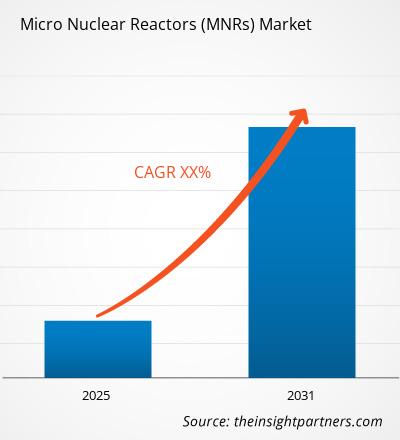
The Micro Nuclear Reactors Market is projected to grow from US$ 1.39 Billion in 2025 to US$ 4.44 Billion by 2034, registering a CAGR of 13.80% during 2026–2034. Demand is being shaped by resilient power needs across defense installations, remote industrial assets, and critical commercial infrastructure, where compact nuclear systems can provide reliable heat and electricity with limited refueling cycles.
North America is expected to remain the most active early deployment region, with an estimated CAGR range of 14.0–15.0% supported by defense resilience programs and private investment in factory-built reactors. The Micro Nuclear Reactors Market size is also influenced by grid-hardening needs, data center energy demand, and licensing pathways that favor demonstration projects before broader commercial procurement.
Micro Nuclear Reactors (MNRs) Market Assessment and Insights
- North America accounted for 38–42% share in 2025 and is expected to grow at a CAGR of 14.0–15.0% between 2026–2034, led by defense energy security, private demonstration sites, and resilient microgrid demand.
- US represented 78–82% of North America in 2025 and is projected to grow at a CAGR of 14.2–15.2% during 2026–2034, supported by military, laboratory, and industrial pilots.
- Europe held 22–26% share in 2025 and is forecast to expand at 12.5–13.5% CAGR during 2026–2034, with the UK, France, and Germany advancing policy and supply-chain readiness.
- Asia Pacific captured 20–24% share in 2025 and is anticipated to grow at 13.8–14.8% CAGR between 2026–2034 as Japan, South Korea, China, India, and Australia assess remote and industrial applications.
- Largest Segment high temperature reactors held 58–62% market share in 2025 and are expected to grow at 12.8–13.8% CAGR during 2026–2034, due to process heat relevance.
- High Growth Segment commercial applications held 24–28% share in 2025 and are projected to grow at 15.0–16.0% CAGR during 2026–2034, driven by data centers and industrial campuses.
- Key companies analyzed in detail: Toshiba Energy Systems and Solutions Corporation, Korea Atomic Energy Research Institute, NuScale Power Corporation, X-energy Reactor Company, LLC, TerraPower, LLC, Seaborg Technologies ApS, Rolls-Royce plc, General Electric Company, Ultra Safe Nuclear Corporation, and Atomic Energy of Canada Limited.
Source: The Insight Partners' analysis based on proprietary research, government publications, company annual reports, investor presentations, industry databases, and expert interviews.
Market technology advancement has transitioned from lab-scale feasibility to integration of fuel, coolant, manufacturing, and licensing processes. Plant manufacture, transportable units, and passive safety systems are simplifying implementation compared to traditional nuclear plants. Designs for high-temperature reactors take advantage of TRISO fuel readiness, whereas molten salt reactor designs have begun to gain traction in regions where thermal energy storage and flexibly scheduled power production offer advantages.
Going forward, the rate at which regulation, fuel manufacturers, utilities, and end-users can work together to create a repeatable business model is going to be key. The geographies that will adopt first will emphasize remote mining, islands, military installations, and industrial parks over urban power markets. Public investment, demonstration facilities, and private offtake contracts will help mitigate risk and build reference facilities in the market.
Micro Nuclear Reactors (MNRs) Market Report Scope
| Report Attribute | Details |
|---|---|
| Market size in 2025 | US$ 1.39 Billion |
| Market Size by 2034 | US$ 4.44 Billion |
| Global CAGR (2026 - 2034) | 13.80% |
| Historical Data | 2021-2024 |
| Forecast period | 2026-2034 |
Micro Nuclear Reactors (MNRs) Market Analysis
Demand is rising as energy users seek secure, low-carbon baseload supply for locations where diesel logistics, grid outages, or renewable intermittency create operational exposure. Micro Nuclear Reactors Market growth is strongest in defense, mining, remote communities, process heat, and data infrastructure. The value chain spans HALEU availability, TRISO or salt-compatible fuel qualification, heat exchangers, compact turbines, transport logistics, safeguards, and long-term service agreements.
Supply dynamics remain constrained by fuel enrichment capacity, nuclear-grade component manufacturing, and licensing resources. Developers are therefore pursuing standard designs and serial production to reduce first-of-a-kind risk. The Micro Nuclear Reactors Market analysis indicates that early revenue will come less from mass deployment and more from engineering services, demonstration contracts, fuel partnerships, and customer-funded site studies.
The competitive environment is dominated by technology developers who combine reactor IP with fuel, engineering, and site alliances. For example, NuScale Power Corporation makes use of existing approved modular technology; X-energy Reactor Company, LLC is related to high-temperature gas reactors; TerraPower, LLC is making advancements in advanced nuclear supply chains, and Ultra Safe Nuclear Corporation focuses on micro-modular applications for remote power.
Investments are being made towards companies that can show evidence of manufacturability, fuel availability, and licensing capability in addition to concept readiness. Toshiba Energy Systems and Solutions Corporation, Korea Atomic Energy Research Institute, Seaborg Technologies ApS, Rolls-Royce plc, General Electric Company, and Atomic Energy of Canada Limited provide experience and knowledge in reactors, nuclear services, marine engineering, and ecosystems.
● REPORT CUSTOMIZATION
Tailor This Report To Align With Your Specific Business Requirements
This report can be customized to align precisely with your business objectives, scope, and target markets. Customization options include tailored segmentation, geography, competitive analysis, and strategic insights to support informed decision-making.
Customize This Report →WHAT YOU CAN ADJUST
- ● Segmentations
- ● Geography
- ● Competitive Analysis
- ● Language Preferences
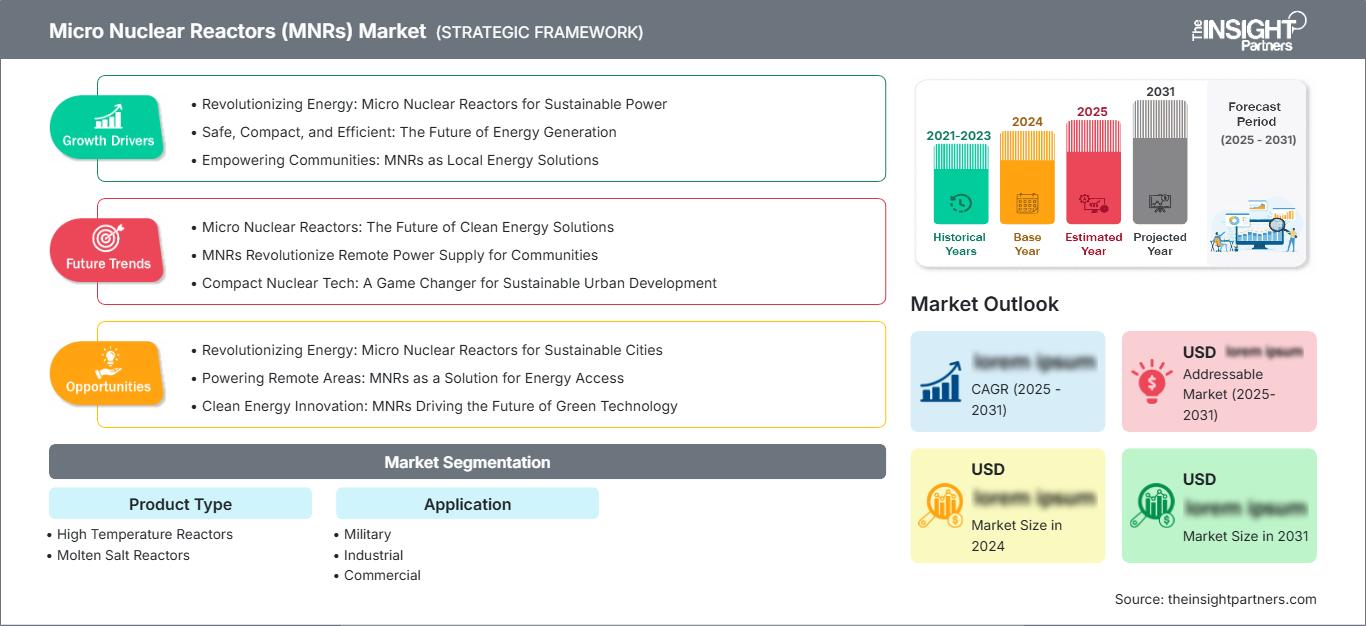
Micro Nuclear Reactors (MNRs) Market: Strategic Insights
Regional Insights
North America Micro Nuclear Reactors Market
North America held 38–42% Micro Nuclear Reactors Market share in 2025 and is projected to expand at 14.0–15.0% CAGR during 2026–2034. The region benefits from national laboratory infrastructure, military energy resilience programs, and growing private demand for firm power. U.S. agencies are supporting test beds, while Canada offers nuclear licensing experience and remote community use cases.
Deployment is likely to begin with controlled sites rather than broad utility rollouts. Defense bases, mining operations, hydrogen projects, and data campuses provide defined demand profiles and security-managed environments. North American developers also have stronger access to venture capital and engineering partners, although HALEU supply and public acceptance remain important gating factors.
U.S. Micro Nuclear Reactors Market
The U.S. represented 78–82% of North America in 2025 and is forecast to post a 14.2–15.2% CAGR through 2034. Federal demand from defense installations, national laboratory pilots, and energy-security programs creates the clearest early procurement route. Commercial interest is also rising from data centers and industrial users requiring a reliable, low-carbon baseload supply.
Company presence is concentrated around developers and engineering partners with licensing familiarity. NuScale Power Corporation, X-energy Reactor Company, LLC, TerraPower, LLC, General Electric Company, and Ultra Safe Nuclear Corporation are shaping U.S. positioning through reactor design, fuel development, and customer partnerships. Military and industrial applications are expected to advance before merchant power projects.
Europe Micro Nuclear Reactors Market
Europe accounted for 22–26% share in 2025 and is expected to grow at 12.5–13.5% CAGR from 2026–2034. The UK leads because of the presence of nuclear policy that is quite developed, military-related engineering capability, and modular industrial decarbonization. Rolls-Royce plc improves the reliability of the supply chain in the region.
The involvement of Germany is more selective because the nuclear policy is quite cautious, although the industries that consume heat and engineering firms that have an export strategy follow technologies. France gains because of well-developed nuclear institutions and fuel cycle capability. At the same time, Italy and Spain would probably be involved because of research, parts production, and evaluation of energy-intensive industries.
APAC Micro Nuclear Reactors Market
Asia Pacific held 20–24% share in 2025 and is projected to grow at 13.8–14.8% CAGR during 2026–2034. Japan and South Korea are regional leaders in terms of preparedness through nuclear engineering sophistication, while China considers long-distance industrial and heating applications. India and Australia contribute by virtue of the demand possibility from mining operations and remote settlements, in addition to energy security policies.
Regional adoption hinges on licensing assurances, grid connectivity standards, and public opinion following historical nuclear incidents. The Korea Atomic Energy Research Institute is a credible advocate for technology in South Korea. It is anticipated that industrial zones, island grids, and resource-based projects will drive the economics of adoption rather than household electricity needs.
Middle East & Africa Micro Nuclear Reactors Market
The Middle East & Africa is expected to grow at 11.8–12.8% CAGR during 2026–2034, with Saudi Arabia and the UAE showing the strongest readiness due to nuclear infrastructure planning, desalination needs, and energy diversification programs. South Africa provides an additional pathway through mining, grid reliability concerns, and industrial heat requirements.
Rest of MEA demand is likely to remain project-specific because financing, safeguards capacity, and regulatory maturity vary widely. Microreactors could support off-grid mineral extraction, remote ports, and desalination-linked energy systems where fuel logistics are costly and reliability has strategic value.
Segmentation Analysis
Product Type
Product Type is expected to grow at 13.2–14.2% CAGR during 2026–2034 as designs move from demonstration to customer-specific engineering. The market scope spans high-temperature reactors and molten salt reactors, both addressing compact power and heat needs. Differentiation will depend on fuel qualification, coolant behavior, thermal output, passive safety, and suitability for remote operation.
- High Temperature Reactors hold the leading position due to strong relevance for industrial heat, hydrogen, and defense power systems, with TRISO fuel improving safety perception and deployment confidence.
- Molten Salt Reactors are strategically important for flexible thermal operation, compact designs, and potential fuel-cycle advantages, though commercialization depends on materials validation, corrosion management, and licensing maturity.
Application
Application is projected to grow at 13.6–14.6% CAGR during 2026–2034, reflecting demand from military, industrial, and commercial users. Military sites value resilient power, industrial customers prioritize heat and uptime, and commercial buyers evaluate microreactors for data centers, campuses, and critical facilities. Adoption will depend on risk allocation and long-term service models.
- Military applications are due to the need for reliable base power supply, forward deployment, and communication infrastructure, where there is high reliance on diesel trucking and grid connectivity, posing higher risks to military missions.
Industrial use case examples would be mining, refinery, hydrogen, desalination, and process heat, where steady thermal output could provide reliability improvement and decreased exposure to fossil fuel logistics.
Commercial uses of such systems are being explored at data centers, mission-critical campus facilities, and remote infrastructure where reliability, carbon footprint, and energy assurance are important factors in purchasing decisions.
Opportunity Snapshot
| Application | Revenue Contribution | Trend Tag | Adoption Stage |
| Military | High | Base Resilience | Scaling |
| Industrial | High | Process Heat | Scaling |
| Commercial | Medium | Data Power | Emerging |
Micro Nuclear Reactors (MNRs) Market Growth Drivers and Impact Analysis
Defense Energy Resilience and Remote Operations
Defense Demand is one of the major driving factors in the Micro Nuclear Reactors Market since military bases require a source of electricity that will work without failure even during blackouts due to lack of power from the electric grid, disruption in fuel sources, and disruptions caused by cyber threats. Microreactors have the benefit of having long refueling cycles, compactness, and reduced dependency on diesel fuel logistics. It becomes easier for military bases to use these microreactors, especially in remote locations, since their main concern is not just saving money, but keeping operations running even in the event of power failure.
Industrial Heat Decarbonization
Industrial applications require a reliable source of heating and power supply to facilitate mining activities, metal smelting, hydrogen generation, desalination, and chemical processing. Electrification is not a solution for high-temperature needs in the industry, particularly if plants work on a round-the-clock basis and have limited energy supplies. Microreactors can offer a reliable source of heat that will decrease risks associated with the transportation of the fuel source and assist plants in reaching their emissions targets. The maximum effect of microreactors' commercial use will occur when heat take-off, operation, protection, and maintenance are provided under service agreements.
Factory Fabrication and Modular Deployment Models
Factory assembly plays a vital role in making projects economical since smaller modules of reactors can be made using factory facilities and shipped to sites through faster installations. This process may ensure reduced risks during construction, quality assurance, and even maintenance based on the fleet. It does not mean that there will be an instant equalization of cost with conventional power production sources, but rather a more favorable risk position for those customers who need reliable solutions and scheduling. With the increase in orders, suppliers can gain better learning curves and parts availability.
Micro Nuclear Reactors (MNRs) Market Future Trends
Nuclear Power for AI and Data Infrastructure
Data infrastructure is expected to become a more visible demand source as AI workloads increase firm power needs beyond what many grids can deliver quickly. Micro Nuclear Reactors Market trends point toward co-located generation models where campuses secure long-duration baseload power without depending entirely on transmission upgrades. The opportunity will require standardized safety cases, clear emergency planning zones, and financing models that match technology timelines with data center expansion schedules. Developers able to offer predictable output, modular scaling, and credible licensing progress will be better positioned for early commercial agreements.
Integrated Heat, Hydrogen, and Desalination Hubs
The future microreactor projects would not only provide multiple forms of output, including power, heat, hydrogen, and desalinated water, but would also not be used as electricity-generating units alone. It would result in increased efficiency of asset utilization and make the value proposition for customers much stronger because of this approach being useful to people who stay far away from conventional sources of power generation. It would especially be useful in the mining industry, on small islands, military establishments, and industrial ports because in all of these locations, it would be essential to have a regular supply of power and safe water.
Micro Nuclear Reactors (MNRs) Market Opportunities
Remote Mining and Critical Minerals Supply Chains
Critical minerals operations often face high fuel transport costs, harsh weather, and limited grid access. Microreactors can support electrified mining equipment, processing facilities, worker camps, and communications infrastructure with long-duration power. Micro Nuclear Reactors Market Forecasts highlight remote mining as a practical early opportunity because customers can quantify avoided diesel logistics, downtime, and emissions. Investors should prioritize projects where power demand is stable, site control is strong, and regulatory engagement begins early. Partnerships with mining companies can also create repeatable deployment templates for multiple remote assets.
Service-Based Reactor Ownership Models
A number of customers may be predicted to opt for the purchase of electricity and heat as a service in lieu of ownership and operation of nuclear assets. The purchase of nuclear assets in service mode can help facilitate the adoption process by delegating the tasks of licensing, compliance, operation, security management, refueling, and decommissioning of nuclear power facilities to specialized providers of such services. It seems especially appropriate in the case of defense plants, mining enterprises, remote communities, and business campuses, which need reliable sources of electricity without being able to establish their own nuclear operations divisions. Technology providers who can offer comprehensive packages including financing, insurance, and maintenance services are bound to have an advantage in the competition.
Recent Developments
- April 2026: NANO Nuclear Energy Inc. announced that a Construction Permit Application (CPA) has been submitted to the U.S. Nuclear Regulatory Commission (NRC) for its KRONOS MMR microreactor. The CPA submission represents the achievement of a critical milestone for the KRONOS MMR on the pathway from engineering design to construction on the campus of the U. of I., to reactor licensing, to ultimate commercial deployment.
- April 2026: According to U.S. Energy Information Administration data, small modular reactors and microreactors are under development in the United States as of February 2026. SMRs and microreactors could provide power for applications such as AI, data centers, or other industrial activities where developers may not want or need to connect to the grid. SMRs could also service remote areas and communities that have high transmission and distribution costs.
- 2025: GE Vernova Hitachi’s (GVH) BWRX-300 is a small modular reactor powering communities across the globe with the energy they rely on to thrive. The BWRX-300 is selected for the leading project in the Western world, with construction underway in Canada on the first BWRX-300. Construction of the first unit is estimated to be completed by the end of 2029 and in commercial operation by the end of 2030.
Frequently Asked Questions

- Comprehensive Market Sizing and Forecast Analysis
- Detailed Segmentation Analysis
- In-Depth Market Dynamics Assessment
- Regional and Country-Level Insights
- Competitive Landscape and Company Benchmarking
- Strategic Business Intelligence
Recent Reports
Testimonials

The Insight Partners' SCADA System Market report is comprehensive, with valuable insights on current trends and future forecasts. The team was highly professional, responsive, and supportive throughout. We are very satisfied and highly recommend their services.
RAN KEDEM Partner, Reali Technologies LTDs
I requested a report on a very specific software market and the team produced the report in a few days. The information was very relevant and well presented. I then requested some changes and additions to the report. The team was again very responsive and I got the final report in less than a week.
JEAN-HERVE JENN Chairman, Future Analytica
We worked with The Insight Partners for an important market study and forecast. They gave us clear insights into opportunities and risks, which helped shape our plans. Their research was easy to use and based on solid data. It helped us make smart, confident decisions. We highly recommend them.
PIYUSH NAGPAL Sr. Vice President, High Beam Global
The Insight Partners delivered insightful, well-structured market research with strong domain expertise. Their team was professional and responsive throughout. The user-friendly website made accessing industry reports seamless. We highly recommend them for reliable, high-quality research services
YUKIHIKO ADACHI CEO, Deep Blue, LLC.
This is the first time I have purchased a market report from The Insight Partners.While I was unsure at first, I visited their web site and felt more comfortable to take the risk and purchase a market report.I am completely satisfied with the quality of the report and customer service. I had several questions and comments with the initial report, but after a couple of dialogs over email with their analyst I believe I have a report that I can use as input to our strategic planning process.Thank you so much for taking the extra time and making this a positive experience.I will definitely recommend your service to others and you will be my first call when we need further market data.
JOHN SUZUKI President and Chief Executive Officer, Board Director, BK Technologies
I wish to appreciate your support and the professionalism you displayed in the course of attending to my request for information regarding to infectious disease IVD market in Nigeria. I appreciate your patience, your guidance, and the fact that you were willing to offer a discount, which eventually made it possible for us to close a deal. I look forward to engaging The Insight Partners in the future, all thanks to the impression you have created in me as a result of this first encounter.
DR CHIJIOKE ONYIA MANAGING DIRECTOR, PineCrest Healthcare Ltd.Reason to Buy
- Informed Decision-Making
- Understanding Market Dynamics
- Competitive Analysis
- Identifying Emerging Markets
- Customer Insights
- Market Forecasts
- Risk Mitigation
- Boosting Operational Efficiency
- Strategic Planning
- Investment Justification
- Tracking Industry Innovations
- Aligning with Regulatory Trends





 Get Free Sample for