
Permanent Rare Earth Magnets Market Size, Share & Trends by 2034
Coverage: by Material (Ferrite, Neodymium Iron Boron (NdFeB), Aluminum Nickel Cobalt (Alnico), Samarium Cobalt (SmCo)); Application (Automotive, Consumer Goods and Electronics, Industrial, Aerospace and Defense, Energy, Medical, Others) , and Geography (North America, Europe, Asia Pacific, and South and Central America)
- Status : Data Released
- Report Code : TIPRE00009445
- Category : Chemicals and Materials
- No. of Pages : 150
- Available Report Formats :


- Last update date : July 15, 2026


2025 Market Size
US$ 9.42 Bn
Base year value
2034 Forecast
US$ 14.01 Bn
Projected by 2034
CAGR 2026-2034
4.50 %
Growth rate
Addressable Market
US$ 106.33 Bn
(2026-2034)
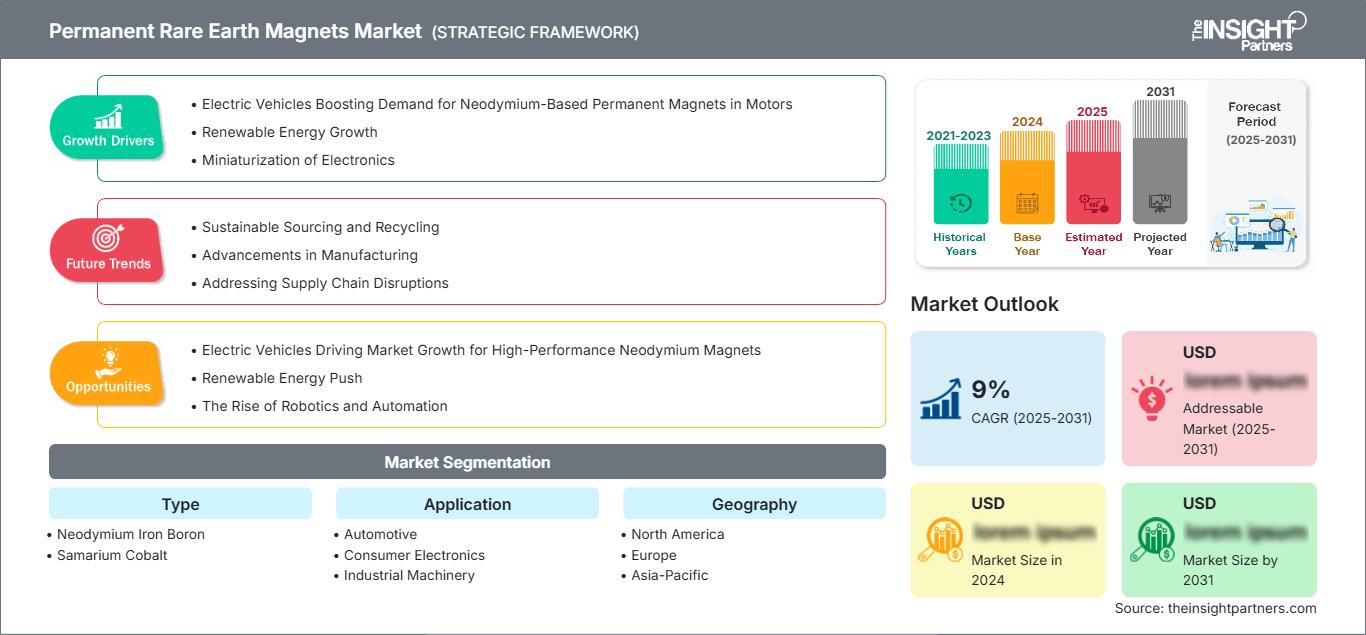
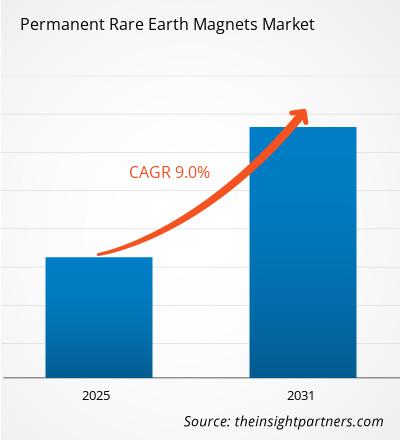
The Permanent Rare Earth Magnets Market is valued at US$ 9.42 billion in 2025 and is projected to reach US$ 14.01 billion by 2034, advancing at a CAGR of 4.50% during 2026–2034. Demand growth is being shaped by accelerating electrification across transportation, increasing deployment of high-efficiency industrial equipment, and the expanding role of advanced magnetic materials in precision medical and consumer electronic applications. Manufacturers are also prioritizing supply chain resilience as governments classify rare earth materials as strategic resources.
North America represents a technologically advanced market for permanent rare earth magnets and is anticipated to expand at an estimated CAGR of around 4.2% through 2034. Growth is supported by investments in electric vehicle manufacturing, renewable energy infrastructure, and defense-related technologies requiring high-performance magnetic components. According to the permanent rare earth magnets market report, efforts to strengthen domestic rare earth processing and magnet manufacturing capabilities are further contributing to regional market momentum.
Permanent Rare Earth Magnets Market Assessment and Insights
- North America: North America accounted for 24–28% market share in 2025 and is projected to expand at a CAGR of 4.1%–4.6% during 2026–2034. Growth is supported by rising electric mobility investments and ongoing domestic magnet manufacturing initiatives, which strengthen long-term demand for permanent magnet materials.
- U.S.: The U.S. represented 81–85% of the North American market in 2025 and is anticipated to register a CAGR of 4.2%–4.7% during 2026–2034, driven by expanding EV production, increased focus on supply chain localization, and growing adoption of advanced magnetic materials across industrial applications.
- Europe: Europe held 22–26% market share in 2025 and is expected to grow at a CAGR of 4.0%–4.5% during 2026–2034. Germany, France, and the United Kingdom lead regional demand, supported by automotive electrification trends and increasing adoption of industrial automation technologies.
- Asia Pacific: Asia Pacific accounted for 42–46% market share in 2025 and is forecast to expand at a CAGR of 5.0%–5.5% during 2026–2034. China, Japan, and South Korea dominate regional production, supported by integrated rare earth processing capabilities and strong advanced manufacturing ecosystems.
- Largest Segment – Neodymium Iron Boron: Neodymium iron boron represented the largest market segment and is expected to grow at a CAGR of 4.7%–5.2% during 2026–2034, driven by its superior magnetic strength, high efficiency, and lightweight properties, enabling broad industrial adoption.
- High Growth Segment – Automotive: The automotive segment is projected to register the fastest growth with a CAGR of 5.5%–6.0% during 2026–2034, driven by accelerating electric vehicle production and increasing demand for high-performance permanent magnets.
- Key companies analyzed in detail: Adams Magnetic Products Co.; Arnold Magnetic Technologies; Daido Steel Co., Ltd.; Eclipse Magnetics Ltd.; Electron Energy Corporation; Goudsmit Magnetics Group; Hangzhou Permanent Magnet Group Co., Ltd.; Proterial, Ltd.; Magnequench International, LLC; Earth-Panda Advanced Magnetic Material Co., Ltd.
Source: The Insight Partners' analysis based on proprietary research, government publications, company annual reports, investor presentations, industry databases, and expert interviews.
The Permanent Rare Earth Magnets Market has evolved from serving conventional industrial equipment toward becoming a critical enabler of electrification, automation, and advanced electronics. Permanent magnets have become indispensable in traction motors, robotics, medical imaging systems, and energy-efficient appliances, increasing their strategic significance across global manufacturing ecosystems.
Future market development will be influenced by technological innovation, localization of rare earth supply chains, and growing investments in energy transition industries. Companies are focusing on reducing dependence on scarce heavy rare earth elements while improving magnetic performance, creating opportunities for advanced material engineering and next-generation magnet production technologies.
Permanent Rare Earth Magnets Market Report Scope
| Report Attribute | Details |
|---|---|
| Market size in 2025 | US$ 9.42 Billion |
| Market Size by 2034 | US$ 14.01 Billion |
| Global CAGR (2026 - 2034) | 4.50% |
| Historical Data | 2021-2024 |
| Forecast period | 2026-2034 |
Permanent Rare Earth Magnets Market Analysis
The growing adoption of electric vehicles, industrial automation systems, and high-performance electronics is driving demand for permanent rare earth magnets. Neodymium iron boron magnets offer superior magnetic strength, making them the preferred choice for compact and energy-efficient applications. Increasing focus on reducing energy consumption in industrial equipment is further supporting market expansion.
The value chain covers rare earth mining, refining, alloy formation, magnet fabrication, assembly, and usage in finished products. Secure supply chains have emerged as a top priority because of the concentrated nature of rare earth refining in a few regions. Governments and manufacturers are focusing more on setting up processing and fabrication capacities locally to minimize procurement risks.
The competitive landscape includes both large global players and regional companies. Firms are establishing themselves based on their proprietary magnet compositions, superior thermal stability, and manufacturing technology to eliminate reliance on rare earth elements.
Investment activity is increasingly directed toward vertically integrated supply chains, recycling technologies, and high-performance magnetic materials. Strategic collaborations between material producers, automotive manufacturers, and industrial equipment companies are strengthening long-term market positioning while supporting technological innovation and production scalability, as highlighted in the permanent rare earth magnets market forecast.
● REPORT CUSTOMIZATION
Tailor This Report To Align With Your Specific Business Requirements
This report can be customized to align precisely with your business objectives, scope, and target markets. Customization options include tailored segmentation, geography, competitive analysis, and strategic insights to support informed decision-making.
Customize This Report →WHAT YOU CAN ADJUST
- ● Segmentations
- ● Geography
- ● Competitive Analysis
- ● Language Preferences
Permanent Rare Earth Magnets Market: Strategic Insights
Regional Insights
North America Permanent Rare Earth Magnets Market
North America is projected to record a CAGR of approximately 4.2% through 2034. Growth is supported by increasing production of electric vehicles, renewable energy installations, and advanced defense technologies. The region's focus on reducing dependence on imported strategic materials is encouraging investments across the rare earth value chain.
Both public and private sector efforts geared towards the production of rare earths and magnets are affecting the regional ecosystem. The demand that exists within the aerospace industry, medical technology industry, and the industrial automation industry is providing sustainable growth for the markets.
U.S. Permanent Rare Earth Magnets Market
The U.S. accounts for approximately 75–80% of the North American market and is expected to expand at a CAGR of around 4.3% during the forecast period. Rising investments in domestic rare earth processing, electric mobility, and defense modernization are reinforcing market demand.
The country hosts a growing network of manufacturers, technology developers, and research institutions focused on advanced magnetic materials. Applications in electric vehicle motors, medical imaging equipment, aerospace systems, and industrial automation continue to expand. Efforts to establish integrated domestic magnet supply chains are creating additional opportunities for producers and technology providers.
Europe Permanent Rare Earth Magnets Market
Europe represents approximately 20–25% of global market demand and is anticipated to grow at a CAGR of around 4.1% through 2034. Sustainability initiatives, industrial decarbonization programs, and increasing electric vehicle adoption are strengthening demand for high-performance permanent magnets, supporting the permanent rare earth magnets market share across the region.
Germany remains the leading country in the regional market due to its strong automotive manufacturing base and advanced industrial machinery sector. Investments in electric mobility and automation technologies continue to generate substantial demand for neodymium-based magnet systems.
The UK is benefiting from growth in aerospace technologies, medical devices, and renewable energy projects. France, Italy, and Spain are also expanding their use of permanent rare earth magnets through industrial modernization programs, energy transition initiatives, and increasing deployment of advanced manufacturing technologies.
APAC Permanent Rare Earth Magnets Market
Asia Pacific accounts for approximately 50–60% of global revenue and remains the leading regional market. The region is projected to register a CAGR of about 5.0% through 2034, supported by extensive manufacturing capabilities, robust electronics production, and strong electric vehicle demand.
China leads the regional market through its integrated rare earth mining, processing, and magnet manufacturing ecosystem. Japan and South Korea contribute through advanced electronics, automotive innovation, and high-value industrial applications that require precision magnetic materials.
India and Australia are emerging as important markets due to government initiatives supporting critical mineral development and manufacturing expansion. Industrial policy frameworks, clean energy investments, and localization efforts are creating favorable conditions for long-term market growth.
Middle East & Africa Permanent Rare Earth Magnets Market
The Middle East & Africa market is expected to witness steady expansion with a CAGR of nearly 3.8% during the forecast period. Infrastructure modernization, renewable energy projects, and industrial diversification programs are supporting demand for advanced magnetic materials, contributing to the permanent rare earth magnets market size growth.
Saudi Arabia remains the major market in the region owing to industrial development and manufacturing capacity investments. The demand from energy infrastructure and machinery industry applications remains on the rise.
The UAE is focusing on the expansion of its advanced manufacturing and technological sector, whereas South Africa takes advantage of its expertise in the mining industries. In the wider MEA region, investments in infrastructure and energy transition strategies will contribute to the development of the market.
Segmentation Analysis
Type
- Neodymium Iron Boron: The dominant segment within the permanent rare earth magnets market, owing to exceptional magnetic strength, compact design capability, and widespread use in electric vehicles, industrial motors, robotics, renewable energy systems, and advanced consumer electronics requiring high power density.
- Samarium Cobalt: Preferred for high-temperature and corrosion-resistant environments, particularly in aerospace, defense, medical equipment, and specialized industrial applications where operational reliability under extreme conditions is critical.
Application
- Automotive: Strong demand originates from electric vehicle traction motors, power steering systems, sensors, and auxiliary automotive components that require lightweight, high-efficiency magnetic solutions.
- Consumer Electronics: Permanent rare earth magnets support miniaturization and performance enhancement in smartphones, audio devices, wearable technologies, laptops, and numerous compact electronic products.
- Industrial Machinery: Utilized extensively in automation systems, robotics, industrial motors, compressors, and energy-efficient manufacturing equipment designed to improve operational productivity and reduce power consumption.
- Medical: Growing adoption in MRI systems, diagnostic equipment, surgical devices, and precision healthcare technologies requires reliable magnetic performance and long operational life.
Opportunity Snapshot
| Application | Revenue Contribution | Trend Tag | Adoption Stage |
| Automotive | High | Electrification | Scaling |
| Consumer Electronics | High | Miniaturization | Mature |
| Industrial Machinery | Medium | Automation | Scaling |
| Medical | Low | Diagnostics | Scaling |
Permanent Rare Earth Magnets Market Growth Drivers and Impact Analysis
Accelerating Electrification of Transportation Systems
The global shift toward electric mobility is significantly increasing demand for permanent rare earth magnets, particularly neodymium iron boron variants used in traction motors. Automakers continue to prioritize motor efficiency, reduced vehicle weight, and enhanced driving range, all of which benefit from high-performance magnetic materials. As governments implement stricter emissions regulations and support EV adoption through incentives and infrastructure development, magnet consumption within the permanent rare earth magnets market continues to rise on a per-vehicle basis.
This transition extends beyond passenger vehicles to commercial fleets, electric buses, rail systems, and emerging electric aviation concepts. Magnet suppliers are increasingly collaborating with automotive manufacturers to develop customized materials capable of operating efficiently under demanding conditions. The resulting increase in production volumes is strengthening economies of scale while encouraging investment in processing, refining, and manufacturing capacity across multiple regions.
Expansion of Industrial Automation and Smart Manufacturing
Companies across the world are increasingly using automation technology to increase efficiency, cut down costs, and solve labor shortages. Rare earth magnets are very important for robotics, motor controls, actuators, and motion control equipment used in manufacturing industries today. Their capacity to offer high magnetic performance in small packages makes them ideal for automation systems.
The growing adoption of Industry 4.0 technologies is accelerating the deployment of intelligent manufacturing equipment that relies on efficient motor systems. Demand is also increasing from logistics automation, warehouse robotics, and process industries seeking higher operational efficiency. As manufacturing facilities become increasingly digitized and automated, permanent rare earth magnets within the permanent rare earth magnets market are expected to remain essential enabling components across diverse industrial applications.
Strategic Focus on Energy Efficiency and Renewable Technologies
Energy efficiency requirements are influencing equipment design across numerous industries. Within the permanent rare earth magnets market, permanent rare earth magnets contribute significantly to improved motor efficiency, helping organizations reduce energy consumption and operational expenses. Their use in wind turbine generators, energy-efficient appliances, and advanced industrial systems supports broader sustainability objectives.
Renewable energy deployment is further enhancing market demand. Wind energy installations require reliable high-performance magnetic systems capable of delivering long-term operational stability. Governments and corporations pursuing carbon reduction targets continue to invest in clean energy infrastructure, creating sustained opportunities for magnet manufacturers. This dynamic is encouraging technological innovation aimed at maximizing magnetic performance while minimizing dependence on constrained raw material supplies.
Permanent Rare Earth Magnets Market Future Trends
Development of Heavy-Rare-Earth-Free Magnet Technologies
There is increased attention to the development of magnetic compositions that do not include or minimize heavy rare earth content, like dysprosium and terbium, within the permanent rare earth magnets market. These materials provide better resistance to high temperatures but face challenges related to limited supply and price volatility. Innovations in material science are making it possible to develop alternative solutions without compromising performance or quality.
The trend should be taken into consideration for understanding future competition as buyers look for more robust sources and steady prices on the inputs. Such companies that manage to produce high-quality magnets without heavy rare earths will be able to use their competitive advantage in various segments, including automotive, industrial, and electronic products.
Regionalization of Rare Earth Magnet Supply Chains
Both governments and industries are becoming more focused on developing local and regional supply chains for strategic minerals within the permanent rare earth magnets market. The growing concerns about geopolitical risks, export restrictions, and interruptions in supply chains have made the development of local facilities for processing and magnet production more urgent.
This is not limited to just mining operations but also involves the construction of facilities for mineral refinement, alloy production, magnet manufacturing, and recycling facilities. There are already plans and projects from North America, Europe, India, Japan, and Australia aimed at ensuring that their supply chains are more secure.
Permanent Rare Earth Magnets Market Opportunities
Investment in Magnet Recycling and Circular Economy Solutions
The increasing installed base of electric vehicles, electronics, industrial machinery, and renewable energy technology will result in a considerable future flow of magnetic waste that requires disposal. Recovery techniques that allow reclaiming rare earth elements from disposed materials create a great chance for businesspeople interested in finding alternative sources of materials.
Those companies that invest early in collection channels, recovery techniques, and closed-loop supply chains will have the possibility of gaining access to valuable materials without being affected by the raw material price fluctuations. Moreover, such measures will be consistent with regulatory and company policies on sustainability. The capacity to obtain and recycle rare earth elements could be a powerful advantage in the new ecosystem of rare earth magnets.
Emerging Demand from Advanced Medical and Precision Technologies
The manufacturing of medical equipment and technology continues to increase the use of high-performance magnets in imaging technologies, minimally invasive surgery instruments, diagnostic equipment, and innovative therapies. Medical applications' need for precision offers avenues for specialty magnet manufacturers who can deliver high-quality and reliable products.
In addition to the medical field, new areas such as aerospace equipment, sensors, robotics, and advanced electronics offer increasing prospects for tailored magnets within the permanent rare earth magnets market. Manufacturers who can produce materials specifically designed for particular applications will be able to target more lucrative markets. Longer product lifespans, technical difficulties involved, and specific performance needs offer attractive investment opportunities.
Recent Developments
- August, 2025: State-owned IREL (India) Limited pursued partnerships with Japanese and South Korean companies to establish commercial rare earth magnet production capabilities. The initiative aims to strengthen domestic magnet manufacturing, support critical mineral value chains, and reduce import dependence for strategic industries.
- July, 2025: Proterial, Ltd. has developed a high-performance heavy-rare-earth-free neodymium sintered magnet with no use of heavy rare earth. It can be used even for electric vehicle (EV) driving motors, satisfying both high residual magnetic flux density (Br) and high coercive force (HcJ). Due to its high magnetic properties, the product helps avoid the risk of resource depletion for heavy rare earths. It contributes to energy saving and CO2 emission reduction through higher torque, smaller size, and higher efficiency of motors.
- July, 2025: Indian auto company Mahindra & Mahindra and parts maker Uno Minda are looking to make rare earth magnets locally to cut reliance on China, as New Delhi draws up incentives for production of the critical components, company and government sources told Reuters. The initiative reflects growing industry interest in localizing magnet production amid global supply chain uncertainties.
Frequently Asked Questions

- Comprehensive Market Sizing and Forecast Analysis
- Detailed Segmentation Analysis
- In-Depth Market Dynamics Assessment
- Regional and Country-Level Insights
- Competitive Landscape and Company Benchmarking
- Strategic Business Intelligence
Recent Reports
Testimonials

The Insight Partners provided valuable market intelligence that supported our global go-to-market strategy. Their team was professional, responsive, and attentive to our feedback, providing thoughtful analysis and helpful methodological clarifications throughout the project.
Junmo Kim Chief Financial Officer (CFO), Enertech Co., Ltd.
The Insight Partners' SCADA System Market report is comprehensive, with valuable insights on current trends and future forecasts. The team was highly professional, responsive, and supportive throughout. We are very satisfied and highly recommend their services.
RAN KEDEM Partner, Reali Technologies LTDs
I requested a report on a very specific software market and the team produced the report in a few days. The information was very relevant and well presented. I then requested some changes and additions to the report. The team was again very responsive and I got the final report in less than a week.
JEAN-HERVE JENN Chairman, Future Analytica
We worked with The Insight Partners for an important market study and forecast. They gave us clear insights into opportunities and risks, which helped shape our plans. Their research was easy to use and based on solid data. It helped us make smart, confident decisions. We highly recommend them.
PIYUSH NAGPAL Sr. Vice President, High Beam Global
The Insight Partners delivered insightful, well-structured market research with strong domain expertise. Their team was professional and responsive throughout. The user-friendly website made accessing industry reports seamless. We highly recommend them for reliable, high-quality research services
YUKIHIKO ADACHI CEO, Deep Blue, LLC.
This is the first time I have purchased a market report from The Insight Partners.While I was unsure at first, I visited their web site and felt more comfortable to take the risk and purchase a market report.I am completely satisfied with the quality of the report and customer service. I had several questions and comments with the initial report, but after a couple of dialogs over email with their analyst I believe I have a report that I can use as input to our strategic planning process.Thank you so much for taking the extra time and making this a positive experience.I will definitely recommend your service to others and you will be my first call when we need further market data.
JOHN SUZUKI President and Chief Executive Officer, Board Director, BK Technologies
I wish to appreciate your support and the professionalism you displayed in the course of attending to my request for information regarding to infectious disease IVD market in Nigeria. I appreciate your patience, your guidance, and the fact that you were willing to offer a discount, which eventually made it possible for us to close a deal. I look forward to engaging The Insight Partners in the future, all thanks to the impression you have created in me as a result of this first encounter.
DR CHIJIOKE ONYIA MANAGING DIRECTOR, PineCrest Healthcare Ltd.Reason to Buy
- Informed Decision-Making
- Understanding Market Dynamics
- Competitive Analysis
- Identifying Emerging Markets
- Customer Insights
- Market Forecasts
- Risk Mitigation
- Boosting Operational Efficiency
- Strategic Planning
- Investment Justification
- Tracking Industry Innovations
- Aligning with Regulatory Trends





 Get Free Sample for