
Polycaprolactone Market Share, Size & Demand by 2034
Coverage: by Form (Pellets, Nano Sphere, Microsphere); Production Method (Ring Opening Polymerization, Polycondesation of carboxylic acid); Application (Coating and Thermoplastic polyurethane (TPU), Healthcare, Others) , and Geography (North America, Europe, Asia Pacific, and South and Central America)
- Status : Data Released
- Report Code : TIPRE00009934
- Category : Chemicals and Materials
- No. of Pages : 150
- Available Report Formats :


- Last update date : July 15, 2026


2025 Market Size
US$ 1.35 Bn
Base year value
2034 Forecast
US$ 3.57 Bn
Projected by 2034
CAGR 2026-2034
11.37 %
Growth rate
Addressable Market
US$ 21.63 Bn
(2026-2034)
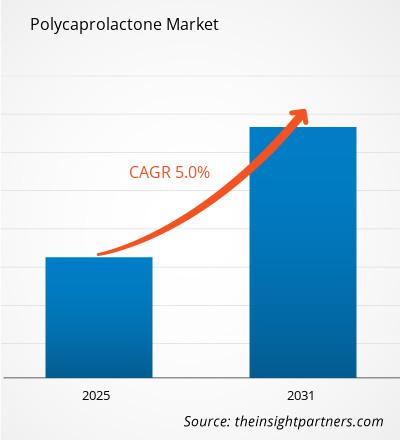
The Polycaprolactone market revenue is estimated at US$ 1.35 billion in 2025 and is projected to reach approximately US$ 3.57 billion by 2034, reflecting a CAGR of 11.37% during the forecast period. Polycaprolactone (PCL) is a biodegradable polyester widely utilized in specialty polymers, coatings, adhesives, biomedical materials, and advanced manufacturing applications. Growing emphasis on sustainable materials, combined with increasing adoption in high-value industrial and healthcare sectors, continues to strengthen market momentum globally.
North America is expected to register a CAGR of approximately 10.4% through 2034 in the polycaprolactone market. Demand growth is supported by expanding biomedical research activities and increasing utilization of sustainable polymer solutions in coatings and adhesives. Strong innovation ecosystems, advanced manufacturing capabilities, and rising investments in specialty materials are further contributing to regional market expansion.
Polycaprolactone Market Assessment and Insights
- North America: North America accounted for 31–35% market share in 2025 and is projected to expand at a CAGR of 10.8%–11.3% during 2026–2034. Growth is driven by strong biomedical innovation and increasing adoption of sustainable polymer solutions, which together support continued market expansion across industrial and healthcare applications.
- U.S.: The U.S. represented 83–86% of the North American market in 2025 and is anticipated to register a CAGR of 10.9%–11.4% during 2026–2034, supported by robust biomedical research activity, rapid commercialization of advanced materials, and rising demand for sustainable polymer-based solutions.
- Europe: Europe held 27–31% market share in 2025 and is expected to grow at a CAGR of 10.5%–11.0% during 2026–2034. Germany, France, and the United Kingdom lead regional development, driven by advanced specialty chemical manufacturing capabilities and strong R&D ecosystems.
- Asia Pacific: Asia Pacific accounted for 30–34% market share in 2025 and is forecast to expand at a CAGR of 12.4%–12.9% during 2026–2034. China, Japan, and South Korea dominate regional growth, supported by expanding polymer manufacturing capacity and strong industrial-scale production capabilities.
- Largest Segment – Solid: The solid segment represented the largest market share and is expected to grow at a CAGR of 11.2%–11.7% during 2026–2034, driven by its extensive use across industrial processing and biomedical manufacturing applications.
- High Growth Segment – Adhesives and Sealants: The adhesives and sealants segment is projected to register the fastest growth with a CAGR of 12.8%–13.3% during 2026–2034, supported by rising demand for sustainable, high-performance bonding materials across multiple end-use industries.
- Key companies analyzed in detail: BASF SE; Corbion N.V.; Daicel Corporation; Gantrade Corporation; Merck KGaA; Otto Chemie Pvt. Ltd.; Perstorp Holding AB; Polysciences, Inc.; Shenzhen eSUN Industrial Co., Ltd.; Shenzhen Polymtek Biomaterial Co., Ltd.
Source: The Insight Partners' analysis based on proprietary research, government publications, company annual reports, investor presentations, industry databases, and expert interviews.
The polycaprolactone market has evolved from a niche specialty polymer sector into an important component of the broader sustainable materials landscape. Improvements in polymer engineering, increasing environmental awareness, and expanding demand for biodegradable materials have widened commercial opportunities. Market participants are investing in advanced formulations capable of delivering both sustainability benefits and high-performance characteristics across diverse end-use industries.
Industry prospects remain favorable as manufacturers explore new applications in healthcare, additive manufacturing, coatings, and specialty adhesives. Technological advancements are improving processing flexibility and material functionality, enabling broader commercial adoption. Continued research efforts and increasing regulatory support for environmentally responsible materials are expected to support long-term market development.
Polycaprolactone Market Report Scope
| Report Attribute | Details |
|---|---|
| Market size in 2025 | US$ 1.35 Billion |
| Market Size by 2034 | US$ 3.57 Billion |
| Global CAGR (2026 - 2034) | 11.37% |
| Historical Data | 2021-2024 |
| Forecast period | 2026-2034 |
Polycaprolactone Market Analysis
Demand for polycaprolactone is being driven by its unique combination of biodegradability, low melting temperature, compatibility with other polymers, and excellent processing characteristics. These properties make it suitable for use in adhesives, coatings, elastomers, biomedical devices, and specialty industrial products. Sustainability objectives across manufacturing industries are also encouraging greater adoption of biodegradable polymer technologies.
The market ecosystem includes raw material suppliers, polymer manufacturers, compounders, specialty chemical producers, medical device developers, and industrial end users. Innovation frequently occurs through collaboration among these stakeholders to develop customized formulations tailored to specific performance requirements. The growing importance of environmentally responsible materials is reinforcing demand throughout the value chain and contributing to the polycaprolactone market size expansion.
Competition involves the participation of both international specialty chemical firms and local companies that specialize in the production of advanced polymers. Examples of such firms include BASF SE, Corbion N.V., Daicel Corporation, Perstorp Holding AB, Merck KGaA, and Shenzhen Polymtek Biomaterial Co., Ltd. These firms continue to make investments in product development and applications.
Investment activity is increasingly concentrated in sustainable materials research, biomedical applications, and advanced manufacturing technologies. Producers are expanding capabilities to address the rising demand for specialty biodegradable polymers while strengthening supply chain resilience. Technical expertise, product quality, and application-specific innovation continue to influence polycaprolactone market share and market positioning.
● REPORT CUSTOMIZATION
Tailor This Report To Align With Your Specific Business Requirements
This report can be customized to align precisely with your business objectives, scope, and target markets. Customization options include tailored segmentation, geography, competitive analysis, and strategic insights to support informed decision-making.
Customize This Report →WHAT YOU CAN ADJUST
- ● Segmentations
- ● Geography
- ● Competitive Analysis
- ● Language Preferences
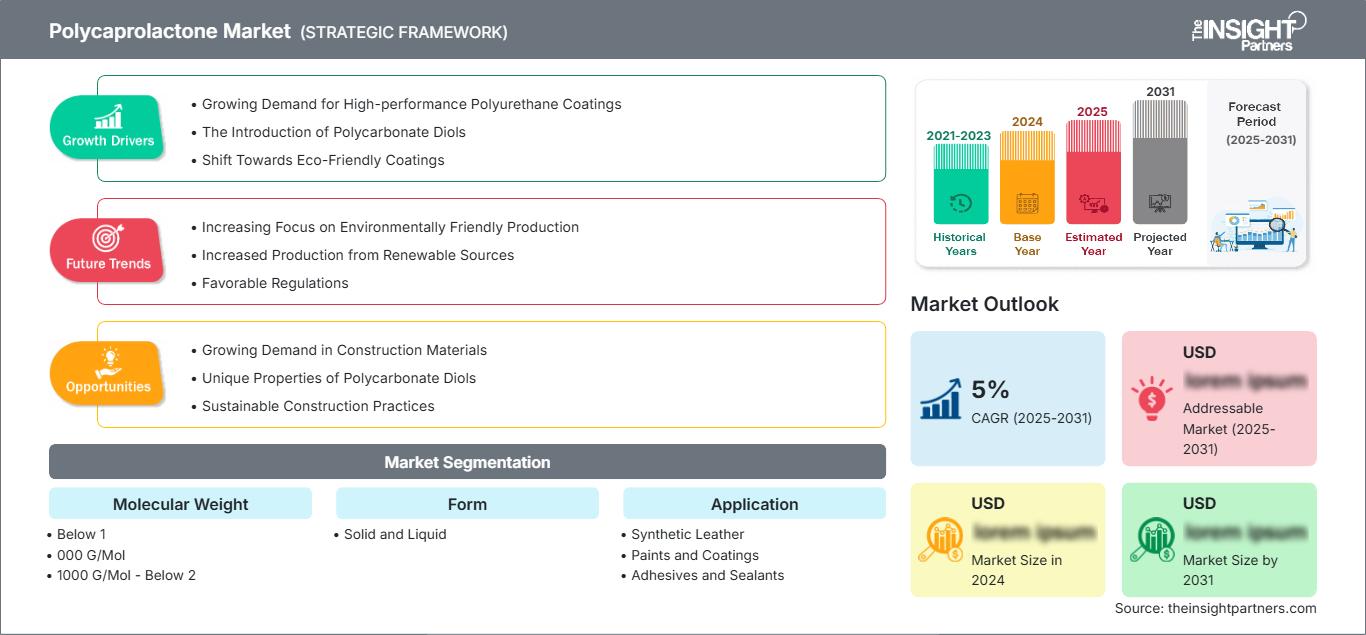
Polycaprolactone Market: Strategic Insights
Regional Insights
North America Polycaprolactone Market
North America is projected to expand at a CAGR of approximately 10.4% through 2034. The region benefits from strong research infrastructure, advanced manufacturing capabilities, and increasing demand for biodegradable specialty materials. Applications in medical technologies, coatings, adhesives, and emerging additive manufacturing sectors support growth.
The presence of innovative chemical companies and extensive research collaboration between industry and academic institutions contributes to technological advancement. Sustainability initiatives and growing interest in environmentally responsible materials are further encouraging the adoption of polycaprolactone-based solutions across multiple industries.
U.S. Polycaprolactone Market
The United States represents approximately 72–77% of North American market demand and is anticipated to grow at a CAGR near 10.7% through 2034. Strong demand from healthcare, specialty coatings, adhesives, and advanced manufacturing industries supports market expansion. The country's emphasis on innovation and material science research creates favorable conditions for the adoption of high-performance biodegradable polymers.
The major suppliers operating on the international front conduct their businesses actively in the U.S. market. The biomedical field and tissue engineering applications have gained significant attention. Increasing application of sustainable materials in industrial products is yet another factor driving growth in the market.
Europe Polycaprolactone Market
Europe accounts for approximately 27–32% of global polycaprolactone demand and is expected to register a CAGR of around 10.8% through 2034. The region benefits from strong environmental policies, advanced manufacturing industries, and extensive research activities related to biodegradable materials. According to the polycaprolactone market report, Germany remains the leading country market due to its robust industrial base and strong specialty chemicals sector.
Polycaprolactone use is becoming increasingly common in the UK for the development of healthcare applications, coatings, and materials.
Investment in sustainable manufacturing and innovative polymers is driving market expansion.
Germany leads regional demand owing to the presence of an advanced industrial infrastructure and sustainable technologies. Adhesives, elastomers, and specialty industrial products are some of the key application segments of the market.
France, Italy, and Spain together account for considerable demand due to manufacturing, healthcare, and specialty materials applications. The growing importance of environmentally friendly products drives market growth in the region.
APAC Polycaprolactone Market
Asia Pacific holds approximately 40–46% of global market demand and is projected to achieve the highest regional CAGR of about 12.4% through 2034. China serves as the leading market due to expanding industrial production, growing demand for biodegradable materials, and increasing investments highlighted in the polycaprolactone market forecast for advanced polymer manufacturing capabilities.
Japan and South Korea have very powerful positions because of their expertise and innovations in materials technology, as well as biomedical uses. Both countries keep investing in research projects that will help them develop new polymer technologies.
India and Australia are witnessing increased use of biodegradable polymers in industry and healthcare. With the help of favorable policies, development of manufacturing processes, and increased knowledge of sustainable materials, new opportunities are bound to arise in this region.
Middle East & Africa Polycaprolactone Market
The Middle East & Africa market is expected to expand at a CAGR of approximately 8.9% through 2034. Growth is supported by increasing industrial diversification efforts, expanding manufacturing activities, and rising interest in sustainable material solutions. Saudi Arabia represents the leading country market due to investments in downstream specialty chemicals and advanced materials industries.
The United Arab Emirates is gradually increasing its focus on sustainable manufacturing and innovation-driven industrial development. Demand for specialty polymers is benefiting from investments in healthcare, packaging, and advanced materials sectors, reflecting emerging polycaprolactone market trends.
South Africa and the broader MEA region are witnessing growing adoption of specialty polymers in industrial applications. Infrastructure development, industrial modernization, and increasing environmental awareness are expected to support long-term demand for polycaprolactone-based products.
Segmentation Analysis
Molecular Weight
- Below 1,000 G/Mol: Lower molecular weight polycaprolactone is primarily used in specialty additives, reactive intermediates, and formulation modifiers where enhanced compatibility, flexibility, and processing characteristics are required across industrial applications.
- 1000 G/Mol - Below 2,000 G/Mol: This segment serves a wide range of adhesives, coatings, and specialty polymer applications. It offers a balanced combination of mechanical performance, processability, and compatibility with other materials.
- 2000 G/Mol and Above: Higher molecular weight grades are widely utilized in elastomers, biomedical materials, and advanced industrial products requiring superior strength, durability, and long-term performance characteristics.
Form
- Solid: Solid polycaprolactone dominates market demand due to its widespread use in coatings, adhesives, elastomers, biomedical devices, and specialty manufacturing applications. Ease of handling and formulation flexibility contribute to broad commercial adoption.
- Liquid: Liquid polycaprolactone is increasingly utilized in specialty formulations where precise processing control, improved blending characteristics, and enhanced application performance are critical requirements.
Application
- Synthetic Leather: Polycaprolactone enhances flexibility, durability, and surface performance in synthetic leather manufacturing. Growing demand for premium and sustainable alternatives to conventional leather supports increasing utilization.
- Paints and Coatings: The material improves coating flexibility, adhesion, durability, and weather resistance. Demand is supported by industrial coatings, specialty coatings, and environmentally responsible product development initiatives.
- Adhesives and Sealants: This segment represents the largest application area due to excellent adhesion properties, formulation versatility, and compatibility with advanced adhesive technologies used across industrial sectors.
- Elastomers: Polycaprolactone contributes enhanced elasticity, mechanical strength, and performance characteristics in specialty elastomer formulations serving industrial, automotive, and consumer product applications.
Opportunity Snapshot
| Application | Revenue Contribution | Trend Tag | Adoption Stage |
| Synthetic Leather | Medium | Vegan Materials | Scaling |
| Paints and Coatings | Medium | Green Coatings | Scaling |
| Adhesives and Sealants | High | Smart Bonding | Mature |
| Elastomers | Medium | Flexible Polymers | Scaling |
Polycaprolactone Market Growth Drivers and Impact Analysis
Growing Demand for Biodegradable and Sustainable Polymer Solutions
Environmental concerns and regulatory initiatives encouraging sustainable materials are significantly influencing the polycaprolactone market. Industries across packaging, consumer goods, industrial manufacturing, and specialty chemicals are increasingly evaluating biodegradable polymers that can reduce long-term environmental impact while maintaining performance standards. Polycaprolactone has emerged as an attractive option because of its biodegradability, compatibility with other polymers, and broad application flexibility.
Manufacturers are responding to customer demands for environmentally responsible materials by integrating biodegradable components into product development strategies. Polycaprolactone is frequently utilized in formulations where sustainability objectives must be balanced with mechanical strength, processability, and durability. This has created opportunities across coatings, adhesives, elastomers, and advanced specialty materials.
The market impact extends beyond direct material substitution. Increased focus on sustainable innovation is stimulating research investments, technology partnerships, and commercialization activities throughout the value chain. Companies that can develop high-performance biodegradable solutions are strengthening competitive positioning while benefiting from growing demand across multiple industrial sectors.
Expansion of Biomedical and Healthcare Applications
Healthcare remains one of the most promising growth areas for polycaprolactone due to its biocompatibility, biodegradability, and suitability for advanced medical technologies. Within the polycaprolactone market, the material is increasingly utilized in drug delivery systems, tissue engineering research, regenerative medicine, wound care products, and specialized biomedical devices.
The increasing cost of healthcare, along with innovations in the medical sciences, is helping the emergence of advanced polymer-based solutions. New methods are being discovered to use polycaprolactone in areas that require degradation control, structural strength, and biocompatibility. The wide-ranging applicability of the material makes it ideal for new healthcare technologies.
This driver helps in expanding the market through the creation of high-margin applications, which may not be possible with traditional industrial applications. Ongoing innovations in healthcare, together with positive demographic trends in the long term, will contribute to the sustained demand for polycaprolactone.
Increasing Use in High-Performance Adhesives and Coatings
The adhesives and coatings industries are increasingly incorporating polycaprolactone to improve product performance and sustainability characteristics. Its ability to enhance flexibility, adhesion, durability, and processing efficiency makes it valuable in specialty formulations designed for demanding industrial environments.
Manufacturers are seeking materials capable of delivering superior performance while supporting environmental objectives and regulatory compliance requirements. Within the polycaprolactone market, polycaprolactone contributes to these goals through compatibility with various formulation systems and its ability to improve end-product functionality. Applications span construction, automotive, electronics, and industrial manufacturing sectors.
The resulting market impact is substantial because adhesives and coatings represent large and diversified end-use industries. As performance requirements become more sophisticated and sustainability considerations gain importance, polycaprolactone consumption is expected to increase. Producers focusing on formulation support and application-specific innovation are likely to benefit from expanding commercial opportunities.
Polycaprolactone Market Future Trends
Integration with Advanced Additive Manufacturing Technologies
Additive manufacturing is emerging as an important future application area for polycaprolactone. The material's low melting temperature, processing flexibility, and biocompatibility make it suitable for specialized 3D printing applications, particularly in healthcare, research, and advanced manufacturing environments.
Researchers are increasingly utilizing polycaprolactone in custom medical devices, tissue engineering scaffolds, and prototype development within the polycaprolactone market. Its ability to support complex geometries and controlled performance characteristics aligns well with the evolving requirements of additive manufacturing technologies. Continued improvements in printing systems are expected to expand application possibilities.
Future market development is likely to benefit from increasing adoption of additive manufacturing across industrial and healthcare sectors. Companies investing in customized formulations optimized for advanced manufacturing technologies may secure strategic advantages. This trend is expected to create new revenue streams while strengthening the role of polycaprolactone in next-generation manufacturing ecosystems.
Development of Multifunctional Polymer Blends and Composites
A growing trend within the polycaprolactone market involves the development of advanced blends and composites designed to deliver enhanced performance characteristics. Manufacturers are combining polycaprolactone with other polymers, additives, and functional materials to improve strength, durability, flexibility, and application-specific functionality.
These technological advancements are contributing to an increase in the number of industries that can use PCL-based solutions. Advances in composite technology have enabled their use in coating, elastomer, biomedical, and other specialty industrial applications. Improved performance helps overcome certain disadvantages typical of biodegradable polymers.
Looking ahead, multifunctional material development is expected to become a key area of competitive differentiation. Companies with robust research & development capacity and collaboration in their product development efforts will be well-positioned to benefit from these trends. This will help them diversify their markets further and move into more profitable areas.
Polycaprolactone Market Opportunities
Expansion of Regenerative Medicine and Tissue Engineering Applications
Regenerative medicine represents one of the most attractive long-term opportunities for the polycaprolactone market. Growing interest in tissue engineering, personalized healthcare, and advanced therapeutic solutions is creating demand for materials capable of supporting biological processes while offering controlled degradation characteristics.
Polycaprolactone has demonstrated strong potential in scaffolds, implants, and regenerative medicine research because of its biocompatibility and performance characteristics. Within the polycaprolactone market, the increasing advancement of healthcare technologies is expected to drive demand for specialized materials that support innovative treatment approaches. Significant investments are being made in these areas by universities, biotechnology companies, and healthcare institutions.
Market players have an opportunity that extends beyond material sourcing alone. Collaboration and partnerships with healthcare innovators, research institutions, and medical device manufacturers will help differentiate the products for premium placement in the market. Such an investment will create competitive strengths in the future.
Growth Potential in Sustainable Specialty Consumer Products
There is a growing tendency toward environmentally conscious materials in consumer markets, creating new opportunities within the polycaprolactone market for specialty consumer products. Demand is increasing for products that combine sustainability, performance, and premium-quality attributes.
The trend towards sustainable consumption behaviors is leading businesses to integrate innovations in materials into their product design strategies. The unique features of polycaprolactone allow for usage in varied formulations, along with contributing to the achievement of environmental goals. Growing consumer awareness of material sustainability is a factor that positively impacts the market potential.
This business opportunity is valuable because it offers an opportunity to access the segment of the market characterized by differentiation and value addition. Businesses, which are working closely with the consumer product manufacturers, will be able to integrate solutions according to the demands of performance and sustainability.
Recent Developments
- July, 2025: Evonik Industries AG entered a strategic distribution agreement with IMCD Group to expand the availability of its RESOMER bioresorbable polymers, including caprolactone-based materials, across Europe. The partnership enhances access to medical-grade polymers used in applications such as orthopedic implants, tissue engineering, and 3D-printed medical devices, strengthening Evonik's footprint in the healthcare biomaterials segment.
- September, 2024: Ingevity Corporation launched its next-generation Capa HS polycaprolactone polyols, designed to deliver enhanced hydrolytic resistance and improved durability in polyurethane elastomers used in extreme industrial environments, including offshore, mining, and wind energy. The product demonstrates superior long-term stability and supports high-performance applications requiring resistance to moisture and degradation.
- September, 2024: Ingevity Corporation introduced Capa® L polycaprolactone polyols at the FEICA 2024 conference, focusing on sustainable polyurethane adhesive applications. The product is engineered for enhanced biodegradability and EU food-contact compliance, making it suitable for flexible packaging, construction, and industrial uses, thereby expanding PCL applications into environmentally driven markets.
Frequently Asked Questions

- Comprehensive Market Sizing and Forecast Analysis
- Detailed Segmentation Analysis
- In-Depth Market Dynamics Assessment
- Regional and Country-Level Insights
- Competitive Landscape and Company Benchmarking
- Strategic Business Intelligence
Recent Reports
Testimonials

The Insight Partners' SCADA System Market report is comprehensive, with valuable insights on current trends and future forecasts. The team was highly professional, responsive, and supportive throughout. We are very satisfied and highly recommend their services.
RAN KEDEM Partner, Reali Technologies LTDs
I requested a report on a very specific software market and the team produced the report in a few days. The information was very relevant and well presented. I then requested some changes and additions to the report. The team was again very responsive and I got the final report in less than a week.
JEAN-HERVE JENN Chairman, Future Analytica
We worked with The Insight Partners for an important market study and forecast. They gave us clear insights into opportunities and risks, which helped shape our plans. Their research was easy to use and based on solid data. It helped us make smart, confident decisions. We highly recommend them.
PIYUSH NAGPAL Sr. Vice President, High Beam Global
The Insight Partners delivered insightful, well-structured market research with strong domain expertise. Their team was professional and responsive throughout. The user-friendly website made accessing industry reports seamless. We highly recommend them for reliable, high-quality research services
YUKIHIKO ADACHI CEO, Deep Blue, LLC.
This is the first time I have purchased a market report from The Insight Partners.While I was unsure at first, I visited their web site and felt more comfortable to take the risk and purchase a market report.I am completely satisfied with the quality of the report and customer service. I had several questions and comments with the initial report, but after a couple of dialogs over email with their analyst I believe I have a report that I can use as input to our strategic planning process.Thank you so much for taking the extra time and making this a positive experience.I will definitely recommend your service to others and you will be my first call when we need further market data.
JOHN SUZUKI President and Chief Executive Officer, Board Director, BK Technologies
I wish to appreciate your support and the professionalism you displayed in the course of attending to my request for information regarding to infectious disease IVD market in Nigeria. I appreciate your patience, your guidance, and the fact that you were willing to offer a discount, which eventually made it possible for us to close a deal. I look forward to engaging The Insight Partners in the future, all thanks to the impression you have created in me as a result of this first encounter.
DR CHIJIOKE ONYIA MANAGING DIRECTOR, PineCrest Healthcare Ltd.Reason to Buy
- Informed Decision-Making
- Understanding Market Dynamics
- Competitive Analysis
- Identifying Emerging Markets
- Customer Insights
- Market Forecasts
- Risk Mitigation
- Boosting Operational Efficiency
- Strategic Planning
- Investment Justification
- Tracking Industry Innovations
- Aligning with Regulatory Trends





 Get Free Sample for