
Rapeseed Oilseed Processing Market Trends, Demand & Growth by 2034
Coverage: by Type (Mechanical, Chemical); End Use (Food, Feed, Industrial) , and Geography (North America, Europe, Asia Pacific, and South and Central America)
- Status : Data Released
- Report Code : TIPRE00013422
- Category : Manufacturing and Construction
- No. of Pages : 150
- Available Report Formats :


- Last update date : September 02, 2026


2025 Market Size
US$ 12.92 Bn
Base year value
2034 Forecast
US$ 20.81 Bn
Projected by 2034
CAGR 2026-2034
5.43 %
Growth rate
Addressable Market
US$ 152.89 Bn
(2026-2034)
The rapeseed oilseed processing market is valued at US$ 12.92 Billion in 2025 and is projected to reach US$ 20.81 Billion by 2034, registering a CAGR of 5.43% during 2026–2034. The market reflects expanding oilseed crushing, refining, and fractionation capacity, supported by food applications, animal feed demand, and industrial uses. Processing economics increasingly depend on seed availability, energy costs, logistics, and the value recovered from oil and meal.
North American processors are positioned for steady expansion as domestic oilseed crushing capacity rises and demand for low-carbon feedstocks strengthens. The rapeseed oilseed processing market size is supported by Canada’s large canola crop, integrated rail and port infrastructure, and growing renewable-fuel applications. A modeled regional CAGR of 4.70–5.10% from 2026–2034 reflects capacity additions, higher domestic value capture, and improving links between crushers, refiners, and downstream buyers.
Rapeseed Oilseed Processing Market Assessment and Insights
- North America: The is expected to hold a 25–29% share in 2025 and grow at a CAGR of 4.70–5.10% between 2026–2034, supported by Canadian crushing expansion, renewable fuels, export infrastructure, and integrated oilseed supply chains.
- US: The US is estimated to represent 27–31% of North America in 2025 and expand at a CAGR of 4.50–4.90% during 2026–2034, with food and feed applications sustaining demand.
- Europe: Europe is estimated at a 24–28% share in 2025 and is projected to grow at a CAGR of 5.00–5.40% through 2034, led by Germany, France, Poland, and the Netherlands, where food processing and biofuel demand reinforce crushing economics.
- Asia Pacific: Asia Pacific is expected to command a 31–35% share in 2025 and grow at a CAGR of 5.60–6.10% through 2034, with China, India, Japan, and Australia shaping regional processing, imports, and downstream consumption.
- Largest Segment: Mechanical processing is estimated to hold a 62–67% market share in 2025 and expand at a CAGR of 4.90–5.30% through 2034, reflecting its broad industrial adoption.
- High Growth Segment: Industrial end use is estimated at a 17–21% market share in 2025 and is projected to grow at a CAGR of 6.00–6.50% through 2034, supported by bio-based applications.
- Key companies analyzed in detail: Ag Processing Inc.; Archer-Daniels-Midland Company; Bunge Global SA; Cargill, Incorporated; CHS Inc.; EFKO Group; ITOCHU Corporation; Louis Dreyfus Company B.V.; Richardson International Limited; Wilmar International Limited.
Source: The Insight Partners' analysis based on proprietary research, government publications, company annual reports, investor presentations, industry databases, and expert interviews.
The industry has evolved from basic seed crushing toward integrated systems combining cleaning, conditioning, mechanical pressing, solvent extraction, refining, storage, and logistics. Processing plants increasingly optimize oil recovery while preserving meal quality. Modern facilities also emphasize energy efficiency, traceability, automation, and flexible feedstock handling, allowing operators to respond to changing seed quality, commodity prices, and downstream specifications.
End Use determines product specifications, refining requirements, and value realization across the supply chain. Food remains the principal outlet because rapeseed oil provides neutral flavor and functional performance in frying, bakery, sauces, dressings, and packaged foods, supporting a significant Rapeseed Oilseed Processing Market Share. Feed demand benefits from protein-rich meal, while industrial applications increasingly create additional outlets for vegetable oil and derivatives. End use is projected to grow at a CAGR of 5.20–5.70% during 2026–2034.
Rapeseed Oilseed Processing Market Report Scope
| Report Attribute | Details |
|---|---|
| Market size in 2025 | US$ 12.92 Billion |
| Market Size by 2034 | US$ 20.81 Billion |
| Global CAGR (2026 - 2034) | 5.43% |
| Historical Data | 2021-2024 |
| Forecast period | 2026-2034 |
Rapeseed Oilseed Processing Market Analysis
Demand is supported by the food industry’s requirement for neutral-tasting edible oils, while protein-rich meal provides an important coproduct for livestock nutrition. The rapeseed oilseed processing market growth is therefore determined by both oil and meal economics rather than oil demand alone. Crushers source seed through farmer networks, elevators, traders, and integrated procurement systems before conditioning and extracting oil.
Supply chains differ according to the location. Canada has a high concentration of canola supply chains and bulk logistics, while Europe has rapeseed cultivation combined with cross-border trade. Margins for processing would depend on the basis of seed, price of oil and meal, extraction efficiency, energy cost, solvent and transport cost. For integrated producers, they may balance the factors through storage, merchandising, refining and a diverse customer base.
Geographic locations and origination become more important for competitive advantages than the processing capacities. Archer-Daniels-Midland Company and Cargill, Incorporated have operations covering procurement, logistics, processing and downstream distribution, while Bunge Global SA and Louis Dreyfus Company B.V. have used their global commodity network to optimize the process flow. Richardson International Limited has a strong Canadian position through its high canola processing and grain handling.
Investment is also shifting toward assets that increase optionality. Ag Processing Inc., CHS Inc., EFKO Group, ITOCHU Corporation, and Wilmar International Limited participate across different regional supply chains and downstream markets, while strategic differentiation increasingly involves refined oils, specialty ingredients, renewable-fuel feedstocks, and traceable agricultural sourcing. The rapeseed oilseed processing market analysis, therefore, favors companies capable of monetizing multiple coproducts and managing commodity volatility.
● REPORT CUSTOMIZATION
Tailor This Report To Align With Your Specific Business Requirements
This report can be customized to align precisely with your business objectives, scope, and target markets. Customization options include tailored segmentation, geography, competitive analysis, and strategic insights to support informed decision-making.
Customize This Report →WHAT YOU CAN ADJUST
- ● Segmentations
- ● Geography
- ● Competitive Analysis
- ● Language Preferences
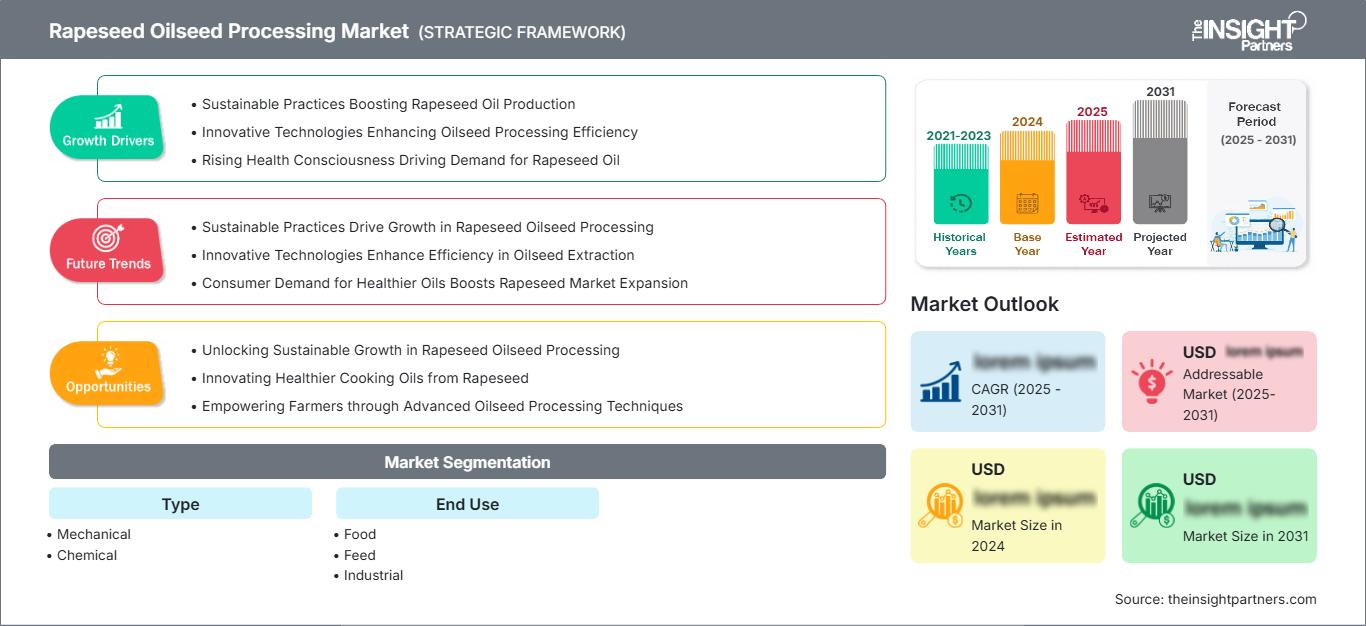
Rapeseed Oilseed Processing Market: Strategic Insights
Regional Insights
North America rapeseed oilseed processing market
North America is estimated to represent 25–29% of global revenue in 2025 and is projected to expand at a CAGR of 4.70–5.10% through 2034. Canada is the region’s production hub due to the extensive production of canola, the presence of elevators, railway connections, and well-established export routes. Domestic crushing becomes more favorable since processors are able to extract oil and meal value before moving the product further along the value chain. Renewable-fuel production offers yet another application of vegetable oil, thereby making the usage of large facilities more favorable.
The US is a relatively minor player in rapeseed/canola processing compared to Canada; however, this country’s importance is determined by the food manufacturing, feed production, and renewable fuels industries. The region’s demand is affected by the oil flows across the border and the commodity chains in North America. The US and Canada also have developed storage and transportation systems that allow processors to utilize seasonal crop production.
U.S. rapeseed oilseed processing Market
The US accounts for an estimated 27–31% of North American rapeseed oilseed processing market revenue in 2025 and is expected to grow at a CAGR of 4.50–4.90% through 2034. The demand is centered on food processing, food service, animal nutrition, and industrial use. Processing firms have advantages in the availability of grain-handling facilities and nearness to large consumers. Canola oil competes with soybean oil, sunflower, and vegetable oils, which make the functionality and pricing of the product important factors that consumers consider when purchasing it.
Companies include agribusiness and regional processors. Archer-Daniels-Midland Company has capability in oilseed sourcing, crushing, refining, ingredients, and animal nutrition. Cargill, Incorporated operates in commodity value chains. Refined oils are preferred for frying, baked goods, dressings, sauces, and prepared foods. Industrial demand provides diversification with bio-based chemicals and renewable fuels, however, the economic and regulatory environment can significantly affect purchasing decisions and production capacity.
Europe rapeseed oilseed processing Market
Europe is estimated to account for 24–28% of global rapeseed oilseed processing market revenue in 2025 and is projected to expand at a CAGR of 5.00–5.40% through 2034. Germany is at the forefront of the countries list, with France, Poland, Netherlands, Italy, Spain, and the UK following closely. This area encompasses traditional food-oil demand, biodiesel demand, and advanced refinery capabilities; moreover, growing needs for sustainability drive purchasing and processing decisions.
The UK continues to hold up the demand side with food processing and retail oils, feed, and other uses, despite domestic production and imports having an impact on the availability of supplies. Germany has a strong base in food-processing as well as biofuels infrastructure. France boasts not only large agricultural production but also crushing and refining operations, while Italy and Spain serve as important food outlets.
APAC rapeseed oilseed processing Market
APAC is estimated to hold 31–35% of global rapeseed oilseed processing market revenue in 2025 and is expected to grow at a CAGR of 5.60–6.10% through 2034. China has dominance in processing activities in the region thanks to large local food and feed markets, while Japan and South Korea depend largely on imported oilseeds and processed products. There is a growth in processing of mustard and rapeseed in India, and Australia still plays a significant role as both a producer and exporter.
Processing demand will be driven by industrialization, growing populations, urban food demand, and growing livestock production. Government policy stressing agricultural value addition and renewable energy could help in the economics of investments. Australian export focus links regional supplies with Asian processors, while Chinese refining capacity drives down-stream demand. Competitive advantage now lies in procurement, port access, refinery integration, and product differentiation.
Middle East & Africa rapeseed oilseed processing Market
The Middle East and Africa rapeseed oilseed processing market represent a smaller but developing market, with Saudi Arabia and the UAE serving as important trade and refining hubs. Regional growth is modeled at a CAGR of 4.30–4.80% through 2034. South Africa contributes through agricultural processing and food manufacturing, while the rest of MEA relies substantially on imports and regional distribution networks.
Energy availability, food-security priorities, population growth, and infrastructure investment influence processing economics. The UAE benefits from port connectivity and re-export capabilities, while Saudi Arabia combines large food markets with logistics investments. South Africa provides a more established agricultural-processing base. Across the wider region, investment opportunities are strongest where imported oilseeds can be efficiently stored, crushed, refined, and distributed into foodservice, retail, feed, and industrial channels.
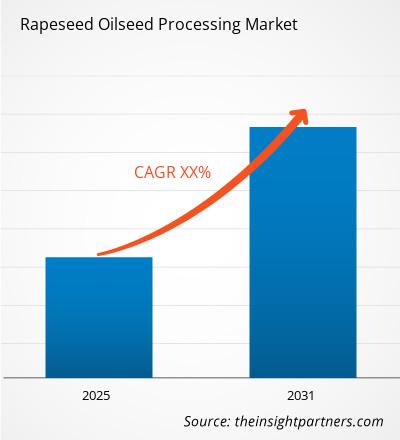
Segmentation Analysis
Type
Type influences extraction efficiency, capital requirements, operating costs, and product quality. Mechanical processing remains widely used because pressing provides an efficient first extraction stage and can operate without the solvent systems required for chemical extraction. Chemical processing enables higher total oil recovery when integrated with pressing, making it strategically important for large-scale plants. The segment is projected to expand at a CAGR of 4.80–5.20% during 2026–2034.
- Mechanical: Mechanical processing supports broad deployment through expellers and screw presses, offering operational simplicity, lower solvent dependency, and suitability for decentralized or integrated crushing facilities serving food and feed markets.
- Chemical: Chemical extraction is important for maximizing residual oil recovery after mechanical pressing, particularly at large plants where throughput, yield optimization, and continuous processing justify additional equipment and operational controls.
End Use
End Use determines product specifications, refining requirements, and value realization across the supply chain. Food remains the principal outlet because rapeseed oil provides neutral flavor and functional performance in frying, bakery, sauces, dressings, and packaged foods. Feed demand benefits from protein-rich meals, while industrial applications increasingly create additional outlets for vegetable oil and derivatives. End use is projected to grow at a CAGR of 5.20–5.70% during 2026–2034, according to the Rapeseed Oilseed Processing Market Report.
- Food: Food applications represent the core demand base, requiring consistent color, flavor, stability, and contaminant control. Refiners increasingly tailor products for foodservice, packaged foods, bakery, sauces, dressings, and household cooking.
- Feed: Feed applications primarily monetize the meal coproduct generated during oil extraction, supporting poultry, swine, dairy, and other livestock formulations where protein availability and nutritional composition influence purchasing.
- Industrial: Industrial uses create diversification through renewable fuels, oleochemicals, lubricants, bio-based ingredients, and other applications, improving the ability of processors to capture value when food-oil margins weaken.
Opportunity Snapshot
| End Use | Revenue Contribution (High/Medium/Low) | Trend Tag | Adoption Stage |
| Food | High | Edible Oils | Mature |
| Feed | Medium | Protein Meal | Mature |
| Industrial | Medium | Bio-based Fuels | Scaling |
Rapeseed Oilseed Processing Market Growth Drivers and Impact Analysis
Expansion of Domestic Oilseed Crushing Capacity
Growing investment in domestic crushing capacity is increasing the amount of rapeseed processed close to producing regions. This improves value capture by converting seed into oil and meal before export, while reducing exposure to raw-seed logistics and international freight volatility. Canada illustrates the model particularly clearly, with domestic canola crushing reaching a record 11.6 million tonnes in 2025 and canola oil production reaching about 4.9 million tonnes. Additional capacity also strengthens procurement competition among processors, encouraging closer farmer relationships and improved elevator utilization. For the broader industry, larger plants can spread fixed costs across higher throughput, improve energy efficiency per tonne, and support dedicated refining or renewable-fuel integration. These economics can accelerate consolidation around strategically located processing hubs.
Increasing Demand for Vegetable Oils in Food Manufacturing
Food manufacturers continue to require oils with predictable functionality, neutral taste, and suitable frying and processing characteristics. Rapeseed oil can serve multiple categories, including bakery, sauces, dressings, snacks, foodservice, and prepared foods, giving processors access to diversified demand. Population growth and urbanization in emerging economies further support packaged-food consumption and commercial foodservice activity. The impact extends beyond crude oil demand because consistent food specifications require investment in refining, filtration, deodorization, storage, and quality-control systems. Processors able to provide standardized grades and reliable delivery can capture higher-value contracts than businesses focused solely on commodity crushing. Greater differentiation also encourages investment in traceability and quality systems, strengthening links between farmers, crushers, refiners, ingredient suppliers, and food manufacturers.
Renewable Fuel and Bio-based Industrial Applications
Renewable fuels are creating an additional demand channel for vegetable oils, particularly in regions where carbon-intensity policies encourage lower-emission feedstocks. Rapeseed oil can enter biodiesel and other renewable-fuel pathways, while derivatives can support bio-based chemicals and specialty industrial products. This diversification reduces reliance on food markets and gives processors alternative outlets during periods of weak edible-oil margins. However, industrial demand is sensitive to policy design, feedstock eligibility, carbon accounting, and relative economics against used cooking oil, animal fats, soybean oil, and other alternatives. Consequently, processors are investing selectively in flexible assets that can serve multiple end markets. Plants with refining capability, storage flexibility, and strong logistics are better positioned to shift product allocation as policy incentives and commodity spreads change.
Rapeseed Oilseed Processing Market Future Trends
Digital Optimization of Crushing and Refining
Digital control of the process is likely to become even more relevant as processors try to maximize their extraction yield while not increasing their energy usage proportionately. With the help of advanced sensors, moisture content, temperatures, throughput, and equipment efficiency can be monitored in each step of conditioning, pressing, extraction, and refining. Machine learning algorithms may be used to adjust parameters of operation and schedule equipment maintenance on the basis of such information, without disruptions to the manufacturing process. In the long run, digitalization may also link procurement data with manufacturing schedules. The rapeseed oilseed processing market trends will therefore increasingly involve integrated operational data rather than isolated automation projects. Plants with interoperable control systems should gain greater visibility over yield losses, energy intensity, downtime, and product quality.
Flexible Feedstock and Product Portfolio Management
Future plants will seek out flexibility in terms of feedstock and end product flexibility. Processors will have to deal with varying availability of rapeseed, canola, sunflower, soybean, and other types of oilseeds, as well as variations in margins on oils and meals. The flexibility of plant design will provide the capability of adjusting the sequence of crushing, oil extraction, storage, use, and refining output without physical changes. Flexibility will lead to increased efficiency throughout the seasons as well as lower risk from being dependent on one type of feedstock. Flexibility will allow producing differentiated products for foods, feeds, renewable fuels, and industrial buyers. With diversified geographic sourcing, processors will utilize traceability technology in order to preserve information about the source and sustainability characteristics.
Rapeseed Oilseed Processing Market Opportunities
Integrated Value-added Processing Hubs
Investors can target processing hubs that combine crushing, refining, storage, rail or port access, and coproduct handling within a single logistics network. Such facilities can capture value at several stages rather than depending exclusively on the crush margin. The rapeseed oilseed processing market Forecasts indicate that integrated assets should be particularly attractive where agricultural production is concentrated and transportation infrastructure can support large volumes. The development approach may take the form of expansion of existing refining capacity, meal pelleting, the manufacture of specialty oils, and feedstock production for renewables. Establishing production capacity in close proximity to regions where significant agricultural production occurs would help cut down on import logistics costs, and proximity to ports would enhance export options. Effective collaboration with farmer groups, traders, and downstream processors would enhance procurement security.
Specialty Oils and Traceable Sustainable Products
Through differentiating their oils by developing grades and tracing their sources, processors may be able to obtain higher margins. Instead of competing simply through bulk commodities, processors may be able to form customer relations based on quality, documentation, and specifications. This is especially relevant to food processors who require consistent performance in their ingredients, as well as companies that need to demonstrate sustainability in their operations. Through segregating their oils, building a traceability system, obtaining certification and having quality labs, processors can offer their customers high-end products without necessarily rebuilding their entire crushing plant. Tolling and partnering for smaller processors may also offer solutions for accessing refining and distribution.
Frequently Asked Questions

- Comprehensive Market Sizing and Forecast Analysis
- Detailed Segmentation Analysis
- In-Depth Market Dynamics Assessment
- Regional and Country-Level Insights
- Competitive Landscape and Company Benchmarking
- Strategic Business Intelligence
Recent Reports
Testimonials

The Insight Partners provided valuable market intelligence that supported our global go-to-market strategy. Their team was professional, responsive, and attentive to our feedback, providing thoughtful analysis and helpful methodological clarifications throughout the project.
Junmo Kim Chief Financial Officer (CFO), Enertech Co., Ltd.
The Insight Partners' SCADA System Market report is comprehensive, with valuable insights on current trends and future forecasts. The team was highly professional, responsive, and supportive throughout. We are very satisfied and highly recommend their services.
RAN KEDEM Partner, Reali Technologies LTDs
I requested a report on a very specific software market and the team produced the report in a few days. The information was very relevant and well presented. I then requested some changes and additions to the report. The team was again very responsive and I got the final report in less than a week.
JEAN-HERVE JENN Chairman, Future Analytica
We worked with The Insight Partners for an important market study and forecast. They gave us clear insights into opportunities and risks, which helped shape our plans. Their research was easy to use and based on solid data. It helped us make smart, confident decisions. We highly recommend them.
PIYUSH NAGPAL Sr. Vice President, High Beam Global
The Insight Partners delivered insightful, well-structured market research with strong domain expertise. Their team was professional and responsive throughout. The user-friendly website made accessing industry reports seamless. We highly recommend them for reliable, high-quality research services
YUKIHIKO ADACHI CEO, Deep Blue, LLC.
This is the first time I have purchased a market report from The Insight Partners.While I was unsure at first, I visited their web site and felt more comfortable to take the risk and purchase a market report.I am completely satisfied with the quality of the report and customer service. I had several questions and comments with the initial report, but after a couple of dialogs over email with their analyst I believe I have a report that I can use as input to our strategic planning process.Thank you so much for taking the extra time and making this a positive experience.I will definitely recommend your service to others and you will be my first call when we need further market data.
JOHN SUZUKI President and Chief Executive Officer, Board Director, BK Technologies
I wish to appreciate your support and the professionalism you displayed in the course of attending to my request for information regarding to infectious disease IVD market in Nigeria. I appreciate your patience, your guidance, and the fact that you were willing to offer a discount, which eventually made it possible for us to close a deal. I look forward to engaging The Insight Partners in the future, all thanks to the impression you have created in me as a result of this first encounter.
DR CHIJIOKE ONYIA MANAGING DIRECTOR, PineCrest Healthcare Ltd.Reason to Buy
- Informed Decision-Making
- Understanding Market Dynamics
- Competitive Analysis
- Identifying Emerging Markets
- Customer Insights
- Market Forecasts
- Risk Mitigation
- Boosting Operational Efficiency
- Strategic Planning
- Investment Justification
- Tracking Industry Innovations
- Aligning with Regulatory Trends





 Get Free Sample for