
Alternate Fuel Aircraft Market Size, Demand & Growth by 2034
Coverage: By Fuel Type (Biofuel, CNG, LPG, Others); Process (Coal Liquefaction, Gas Liquefaction); Application (Commercial, Military) , and Geography (North America, Europe, Asia Pacific, and South and Central America)
- Status : Data Released
- Report Code : TIPRE00029697
- Category : Aerospace and Defense
- No. of Pages : 150
- Available Report Formats :


- Last update date : November 03, 2026


2025 Market Size
US$ 1.66 Bn
Base year value
2034 Forecast
US$ 99.97 Bn
Projected by 2034
CAGR 2026-2034
57.67 %
Growth rate
Addressable Market
US$ 268.77 Bn
(2026-2034)
The alternate fuel aircraft market was valued at US$ 1.66 Billion in 2025 and is projected to reach US$ 99.97 Billion by 2034, registering a CAGR of 57.67% from 2026 to 2034. Expansion is supported by aviation decarbonization targets, rising investment in sustainable aviation fuel production, advances in synthetic fuel pathways, and policy mechanisms encouraging lower-carbon aviation energy. Increasing airline commitments, feedstock diversification, and development of dedicated production infrastructure are also strengthening the transition toward alternative aviation fuels.
North America is positioned as a major commercialization center in the Alternate Fuel Aircraft Market share, supported by established aviation infrastructure, renewable fuel production capabilities, and government incentives for lower-carbon fuels. The alternate fuel aircraft size outlook is supported by expanding domestic feedstock availability, project financing, and integration between fuel producers, airlines, technology providers, and carbon-management systems. The regional market is estimated to register a CAGR of ~57% through 2034.
Alternate Fuel Aircraft Market Assessment and Insights
Regional Outlook
- North America: ~42% of the global market in 2025 | ~57% CAGR through 2034. Market position: North America holds the leading regional position because of its large aviation fuel ecosystem, established biofuel industry, extensive project pipeline, and strong commercial interest in scaling domestic alternative fuel production.
- US: ~88% of North American market revenue in 2025 | ~59% CAGR through 2034. Market position: The US dominates North American demand through its large commercial aviation base, renewable fuel infrastructure, federal and state incentives, and concentration of technology developers, fuel producers, airlines, and project developers.
- Europe: ~29% of the global market in 2025 | ~56% CAGR through 2034. Market position: Europe remains a highly regulated and rapidly scaling market, with Germany, France, Italy, the UK, and Spain developing production capacity and airline demand. Germany is the leading country in Europe.
- Asia Pacific: ~23% of the global market in 2025 | ~61% CAGR through 2034. Market position: Asia Pacific is the fastest-growing region, supported by expanding aviation traffic, domestic feedstock opportunities, energy-security priorities, and emerging national SAF programs. China is the leading country in Asia Pacific.
Segment Outlook
- Fuel Type: ~78% Share in 2025 | ~58% CAGR through 2034. Market position: Fuel Type represents the largest main segment because bio-based aviation fuels currently offer the strongest commercial pathway for replacing conventional jet fuel while leveraging established feedstock and refining infrastructure.
- Process: ~25% Share in 2025 | ~62% CAGR through 2034. Market position: Process represents the high-growth main segment as liquefaction technologies create opportunities to convert coal, gas, and other carbon resources into aviation-range fuels while enabling greater pathway diversification.
Competitive Coverage
Eni, World Energy, Gevo, Neste, SkyNRG, Fulcrum BioEnergy, Velocys, Aemetis, Inc., SG Preston Company, Sundrop Fuels, Inc.
Methodology
The Insight Partners follows Data Collection & Secondary Research, Primary Research, Data Analysis, and Data Triangulation & Final Review to validate market estimates and insights.
Source: The Insight Partners' analysis based on proprietary research, government publications, company annual reports, investor presentations, industry databases, and expert interviews.
The alternate fuel aircraft market is evolving from small-scale demonstrations toward an industrial fuel-supply ecosystem involving feedstock suppliers, conversion technology companies, refiners, airlines, airports, and logistics providers. Commercial development increasingly emphasizes pathways capable of achieving aviation fuel certification, securing reliable feedstocks, and integrating with existing distribution infrastructure. SAF has become the principal near-term alternative fuel pathway because certified fuels can be blended with conventional jet fuel and used within existing aircraft and airport systems.
Looking ahead, the Alternate Fuel Aircraft Market report is expected to broaden geographically as countries seek domestic fuel security alongside aviation decarbonization. Europe and North America are developing large production projects, while Asia Pacific is expanding feedstock and refining capabilities. Investment is also shifting toward projects with long-term offtake agreements, policy support, and scalable conversion technologies. Regulation is becoming a stronger demand mechanism, particularly as European SAF mandates create defined procurement requirements for aviation fuel suppliers.
Alternate Fuel Aircraft Market Report Scope
| Report Attribute | Details |
|---|---|
| Market size in 2025 | US$ 1.66 Billion |
| Market Size by 2034 | US$ 99.97 Billion |
| Global CAGR (2026 - 2034) | 57.67% |
| Historical Data | 2021-2024 |
| Forecast period | 2026-2034 |
Alternate Fuel Aircraft Market Analysis
Growth in the alternate fuel aircraft market is being shaped by the interaction of airline decarbonization commitments, fuel mandates, production capacity, and technology readiness. The alternate fuel aircraft growth trajectory depends less on aircraft hardware replacement than on the ability to produce certified lower-carbon aviation fuels at commercially viable scale. SAF can enter existing aviation systems as a drop-in fuel, reducing the need for immediate changes to aircraft engines or airport fueling infrastructure. This characteristic allows fuel producers to address aviation emissions through the existing fleet while newer propulsion technologies develop.
The value chain in the Alternate Fuel Aircraft Market forecast extends from waste oils, agricultural residues, renewable gases, biomass, and other feedstocks through preprocessing, conversion, fuel upgrading, certification, blending, storage, distribution, and airline procurement. Supply remains constrained by feedstock availability, conversion economics, project financing, and the limited number of large-scale operating facilities. IATA estimated global SAF output at 1.9 million tonnes in 2025 and expects approximately 2.4 million tonnes in 2026, highlighting the gap between current supply and aviation's longer-term decarbonization requirements.
Competitive positioning in the Alternate Fuel Aircraft Market trends is increasingly determined by technology ownership, feedstock access, project execution capability, and long-term offtake relationships. Eni and Neste bring substantial renewable-fuel processing capabilities, while Gevo is developing alcohol-to-jet capacity and Velocys focuses on Fischer-Tropsch systems. SkyNRG is building dedicated SAF production assets, while World Energy and Aemetis are developing North American production platforms. Fulcrum BioEnergy, SG Preston Company, and Sundrop Fuels, Inc. add additional pathway and feedstock diversity.
Investment strategies in the Alternate Fuel Aircraft Market are consequently moving toward integrated platforms rather than isolated fuel-production assets. The alternate fuel aircraft analysis indicates that projects combining secured feedstocks, proven conversion technology, contracted demand, and policy support have stronger prospects for financing. SkyNRG's investment platform, for example, combines production projects with supply-chain and customer programs, while Gevo is pursuing project financing around its SAF platform. These models indicate that commercial scale will depend on coordinated development across technology, capital, feedstock, and aviation customers.
● REPORT CUSTOMIZATION
Tailor This Report To Align With Your Specific Business Requirements
This report can be customized to align precisely with your business objectives, scope, and target markets. Customization options include tailored segmentation, geography, competitive analysis, and strategic insights to support informed decision-making.
Customize This Report →WHAT YOU CAN ADJUST
- ● Segmentations
- ● Geography
- ● Competitive Analysis
- ● Language Preferences
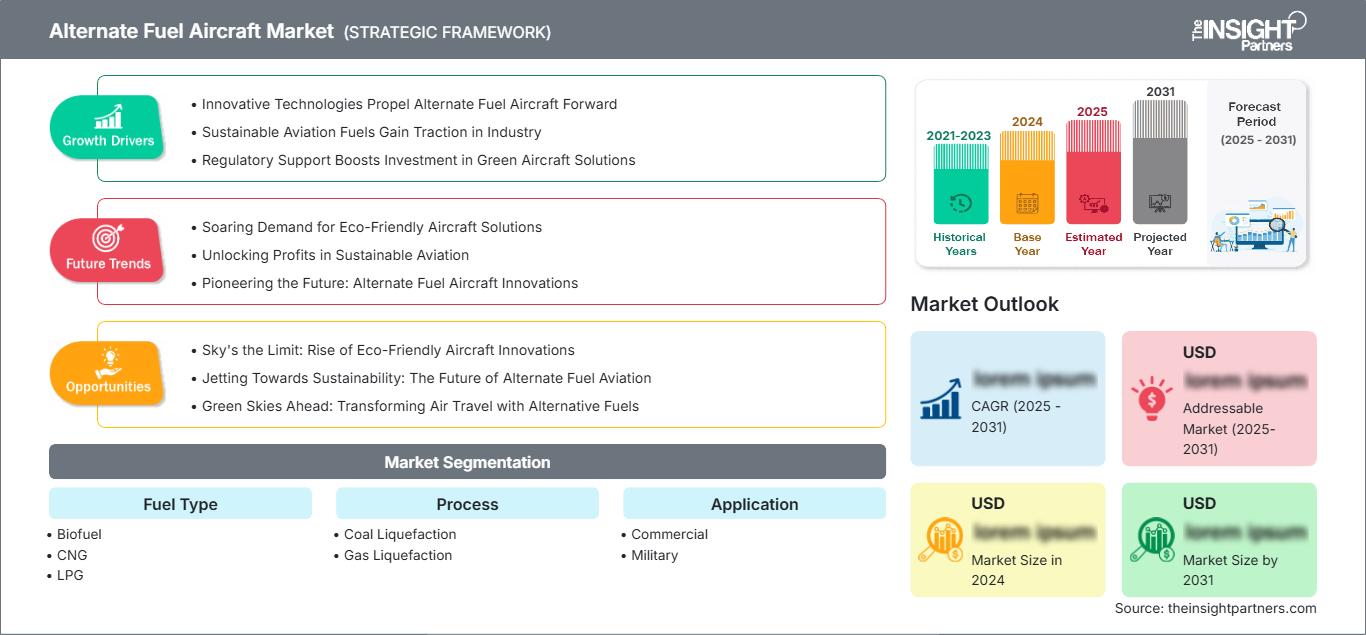
Alternate Fuel Aircraft Market: Strategic Insights
Regional Insights
North America Alternate Fuel Aircraft Market
North America accounted for ~42% of the global alternate fuel aircraft market in 2025 and is expected to register a CAGR of ~57% through 2034. The region benefits from a large commercial aviation system, established refining infrastructure, abundant agricultural and waste-based feedstocks, and an advanced renewable-fuel industry. The US represents the overwhelming majority of regional demand and production activity, supported by domestic fuel policies, project development, and technology commercialization.
The regional ecosystem is also characterized by extensive participation from fuel producers, airlines, technology developers, and investors. Project economics increasingly depend on carbon intensity, feedstock logistics, offtake commitments, and access to incentives. The US market is developing both conventional bio-based SAF pathways and synthetic routes using alcohol, renewable natural gas, biomass, and other carbon resources. This combination gives North America a strong base for scaling alternative fuel production while maintaining compatibility with existing aviation infrastructure.
U.S. Alternate Fuel Aircraft Market
The US represented ~88% of North American alternate fuel aircraft market revenue in 2025 and is forecast to expand at a CAGR of ~59% through 2034. Its position reflects the country's extensive airline network, major airports, renewable fuel production base, agricultural resources, and concentration of alternative fuel developers. Commercial aviation is the primary demand source, while government and corporate procurement programs can strengthen early project economics.
Companies such as Gevo, World Energy, Aemetis, Inc., Fulcrum BioEnergy, and SG Preston Company contribute to the country's diverse project landscape. Gevo is advancing an alcohol-to-jet platform, while other developers emphasize waste-derived feedstocks and renewable hydrocarbons. The US market is also moving toward projects that integrate carbon capture, renewable energy, and low-carbon feedstocks, allowing fuel producers to improve lifecycle emissions performance while creating additional revenue opportunities from environmental attributes.
Europe Alternate Fuel Aircraft Market
Europe represented ~29% of the global alternate fuel aircraft market in 2025 and is projected to register a CAGR of ~56% through 2034. The region has a comparatively mature policy framework for aviation decarbonization, with SAF mandates creating more predictable demand. Germany is the leading country in Europe, supported by its major aviation industry, industrial base, engineering capabilities, and interest in synthetic and renewable fuel pathways. The UK also maintains a substantial project pipeline supported by its domestic aviation fuel policy.
France combines large aviation manufacturing and airline ecosystems with renewable fuel development, while Italy is expanding SAF production through established refining assets. Eni began SAF production at its Gela biorefinery in January 2025, with a stated capacity of 400,000 tonnes per year. Italy's position demonstrates how existing refining infrastructure can be repurposed to support aviation fuel transition.
The UK is advancing waste-to-fuel and synthetic fuel projects, while Spain is positioned around renewable energy resources, refining infrastructure, and emerging e-fuel opportunities. Across Europe, regulatory requirements are an important demand catalyst. ReFuelEU Aviation requires fuel suppliers to progressively increase SAF content, beginning at 2% in 2025 and reaching substantially higher levels over subsequent years. This framework strengthens the connection between policy compliance, production investment, and airline procurement.
APAC Alternate Fuel Aircraft Market
Asia Pacific accounted for ~23% of the global alternate fuel aircraft market in 2025 and is expected to expand at a CAGR of ~61% through 2034, making it the fastest-growing region. China is the leading country in Asia Pacific because of its large aviation system, industrial manufacturing capacity, energy-security priorities, and expanding interest in alternative fuel production. Japan and South Korea are also developing technology and production initiatives.
India offers significant long-term potential because of rapidly expanding air travel, agricultural residues, and increasing policy attention toward domestic SAF production. Australia benefits from renewable energy resources and biomass availability, although project commercialization remains dependent on cost competitiveness and infrastructure development. Regional development is increasingly focused on combining domestic feedstocks with established refining and chemical-processing capabilities. These factors should support a rapid expansion of production capacity as airlines and governments seek greater fuel diversification.
Middle East & Africa Alternate Fuel Aircraft Market
Middle East & Africa is expected to register a CAGR of ~54% through 2034. Saudi Arabia is the leading country in the Middle East & Africa region where current energy infrastructure, refining expertise, and large-scale industrial investment create a foundation for alternative aviation fuel development. The UAE also benefits from major international aviation hubs and strong airline connectivity, making fuel decarbonization strategically relevant.
South Africa provides opportunities linked to synthetic fuel expertise, renewable resources, and industrial infrastructure, while the rest of the Middle East and Africa region offers feedstock and renewable-energy opportunities at different stages of commercialization. The regional market is likely to favor projects that combine alternative fuel production with existing refining assets, renewable power, carbon-management infrastructure, and aviation hubs. Cost competitiveness and access to reliable feedstocks will remain important determinants of project execution.
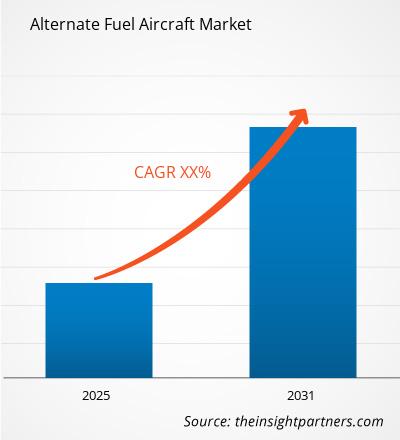
Segmentation Analysis
Fuel Type
Fuel Type is the largest main segment in the alternate fuel aircraft market because the transition depends fundamentally on the availability of fuels that can meet aviation performance, sustainability, and certification requirements. Bio-based alternatives currently offer the broadest commercialization pathway, supported by established feedstock supply chains and refining infrastructure. Biofuel is expected to register a CAGR of ~58% through 2034 as airlines, fuel suppliers, and policymakers expand lower-carbon fuel procurement.
- Biofuel: Biofuel remains central to aviation decarbonization because waste oils, residues, and biomass-derived resources can be processed through established pathways. Its strategic relevance is reinforced by existing certification frameworks and compatibility with conventional aviation fuel infrastructure.
- CNG: CNG can support alternative fuel strategies where renewable or low-carbon gas resources are locally available. Its relevance is linked to gas infrastructure and conversion economics, although aircraft application requires appropriate fuel-system and storage considerations.
- LPG: LPG offers an established hydrocarbon fuel platform with extensive distribution infrastructure. Its potential in aviation depends on aircraft-system adaptation, fuel economics, and the development of lower-carbon LPG sources that can improve lifecycle emissions performance.
Process
Process is the high-growth main segment in the Alternate Fuel Aircraft Market as producers seek conversion routes capable of expanding the available feedstock base and improving fuel supply resilience. Gas-based and coal-based liquefaction technologies can provide alternative pathways where suitable resources and industrial infrastructure exist. Gas Liquefaction is expected to register a CAGR of ~62% through 2034 as synthetic aviation fuel projects increasingly examine gas-derived feedstocks and Fischer-Tropsch conversion.
- Coal Liquefaction: Coal liquefaction provides a route for converting solid carbon resources into liquid fuels, with potential relevance in regions possessing large coal reserves. Its aviation application is constrained by lifecycle emissions requirements and therefore depends heavily on carbon-management strategies.
- Gas Liquefaction: Gas liquefaction can convert gas-derived resources into liquid hydrocarbons suitable for downstream fuel upgrading. Its strategic value increases where renewable natural gas, biogas, or other lower-carbon gas resources can support synthetic aviation fuel production.
Application
Application represents a critical demand dimension in the Alternate Fuel Aircraft Market because fuel adoption depends on aircraft utilization, operating economics, regulatory exposure, and fleet composition. Commercial aviation is expected to remain the primary application because airlines operate large fleets and face increasing pressure to reduce lifecycle emissions. Military aviation provides an additional opportunity where fuel security, logistics resilience, and operational availability can justify investment in alternative fuel supply.
- Commercial: Commercial aviation represents the principal application environment because airlines consume substantial volumes of jet fuel and increasingly require lower-carbon alternatives. Long-term offtake agreements and regulatory mandates can accelerate procurement and improve investment visibility.
- Military: Military applications emphasize energy security, supply resilience, and operational performance. Alternative fuels can diversify fuel sourcing and reduce exposure to vulnerable supply chains, although qualification requirements and mission-specific performance standards remain important.
Opportunity Snapshot
| Application | Revenue Contribution | Trend Tag | Adoption Stage |
| Commercial | High | SAF Mandates | Scaling |
| Military | Low | Fuel Security | Emerging |
Alternate Fuel Aircraft Market Growth Drivers and Impact Analysis
Mandatory Aviation Decarbonization Policies
Regulatory requirements in the Alternate Fuel Aircraft Market are converting alternative aviation fuel demand from a predominantly voluntary market into a compliance-driven market. European mandates are particularly important because they require progressively higher SAF use by fuel suppliers, creating a predictable procurement requirement for airlines and airports. The policy effect extends beyond Europe because producers seeking long-term offtake contracts increasingly design projects around jurisdictions with established sustainability criteria and fuel mandates. IATA reported that SAF production was only about 0.6% of global jet fuel consumption in 2025, illustrating the scale of capacity expansion still required. For producers, stronger mandates improve demand visibility, while for airlines they increase the need to manage fuel premiums, certificate accounting, and procurement portfolios.
Expansion of Commercial SAF Production Capacity
The addition of dedicated and integrated SAF plants is creating the physical supply base required for adoption in the Alternate Fuel Aircraft Market. Production projects are increasingly moving beyond demonstration scale toward facilities capable of supplying tens or hundreds of thousands of tonnes annually. SkyNRG's Delfzijl facility, for example, is designed to produce 100,000 tonnes of SAF annually and began construction in 2026. Such projects create demand for engineering, feedstock logistics, catalysts, process equipment, storage, blending, and certification services. The impact is therefore broader than fuel production itself. As projects progress, commercial buyers gain greater access to contracted volumes, while technology providers obtain reference installations that can improve financing confidence for subsequent facilities.
Feedstock and Conversion Pathway Diversification
The availability of sustainable feedstock is becoming a decisive constraint in the Alternate Fuel Aircraft Market as aviation demand for lower-carbon fuels increases. Current production is concentrated in a limited set of pathways and feedstocks, creating pressure to commercialize waste residues, biomass, renewable gases, and synthetic pathways. IATA identifies multiple certified SAF pathways, while emerging technologies are expanding the potential feedstock base. Diversification can reduce dependence on used cooking oil and other constrained resources while enabling regional production based on locally available materials. For investors, projects with flexible feedstock strategies may provide stronger long-term resilience. For fuel producers, the ability to integrate gasification, Fischer-Tropsch synthesis, alcohol-to-jet, or other pathways can broaden project locations and address different regional resource profiles.
Alternate Fuel Aircraft Market Future Trends
Increasing Integration of Synthetic and E-Fuel Pathways
Synthetic aviation fuels are likely to gain importance in the Alternate Fuel Aircraft Market as the industry approaches the limitations of conventional bio-based feedstocks. Power-to-liquid pathways can combine renewable hydrogen with captured carbon dioxide, while gasification and Fischer-Tropsch systems can convert renewable or waste-derived carbon into aviation-range hydrocarbons. The alternate fuel aircraft trends outlook therefore points toward a more diversified technology portfolio rather than dependence on a single pathway. Project developers will increasingly evaluate renewable electricity availability, carbon-source security, hydrogen economics, and plant utilization together. This shift should encourage larger investments in integrated energy systems and may favor regions with abundant renewable power, industrial carbon-management capabilities, and established chemical-processing infrastructure.
Regionalization of Alternative Fuel Supply Chains
Alternative aviation fuel production in the Alternate Fuel Aircraft Market is expected to become increasingly regional as governments seek domestic energy security and lower exposure to international fuel supply disruptions. North America is building projects around agricultural and waste feedstocks, Europe is using mandates to stimulate local capacity, and Asia Pacific is evaluating domestic biomass, waste, and renewable-energy resources. The trend should encourage shorter feedstock-to-fuel supply chains where local resources are economically competitive. Regional production can also reduce logistical complexity and strengthen the link between national aviation policy and industrial development. Over time, airline procurement portfolios may combine geographically diversified physical fuel supplies with certificate-based procurement to manage both compliance requirements and supply availability.
Alternate Fuel Aircraft Market Opportunities
Investment in Integrated Feedstock-to-Fuel Platforms
Investors can target projects that control multiple parts of the value chain rather than relying solely on commodity fuel margins. Integrated platforms combining feedstock aggregation, conversion technology, fuel upgrading, carbon management, and long-term offtake can reduce exposure to individual project risks. SkyNRG's development model illustrates the direction of the industry, combining production assets with customer programs and strategic investment. Its Delfzijl project reached financial close before construction, demonstrating the importance of financing structures that align project assets with long-term fuel demand. For investors, projects with contracted feedstocks and buyers, established certification pathways, and scalable technology offer stronger bases for evaluating future cash flows.
Technology Platforms for Emerging Asian and Global Projects
Technology providers have an opportunity to license modular conversion systems into regions where feedstocks are abundant but large integrated fuel plants remain limited. India, Japan, South Korea, and other Asia Pacific markets can benefit from technologies that reduce plant scale requirements and accommodate regional biomass or waste resources. Velocys, for example, is advancing Fischer-Tropsch systems for biomass, biogas, and waste-to-SAF applications, while its 2026 collaboration in India targets biomass-to-SAF development. Such modular platforms can support phased capital deployment and allow developers to replicate standardized designs across multiple feedstock locations. Technology licensing, engineering services, and local partnerships therefore represent potential expansion channels alongside direct ownership of production assets.
Frequently Asked Questions

- Comprehensive Market Sizing and Forecast Analysis
- Detailed Segmentation Analysis
- In-Depth Market Dynamics Assessment
- Regional and Country-Level Insights
- Competitive Landscape and Company Benchmarking
- Strategic Business Intelligence
Recent Reports
Testimonials

The Insight Partners provided valuable market intelligence that supported our global go-to-market strategy. Their team was professional, responsive, and attentive to our feedback, providing thoughtful analysis and helpful methodological clarifications throughout the project.
Junmo Kim Chief Financial Officer (CFO), Enertech Co., Ltd.
The Insight Partners' SCADA System Market report is comprehensive, with valuable insights on current trends and future forecasts. The team was highly professional, responsive, and supportive throughout. We are very satisfied and highly recommend their services.
RAN KEDEM Partner, Reali Technologies LTDs
I requested a report on a very specific software market and the team produced the report in a few days. The information was very relevant and well presented. I then requested some changes and additions to the report. The team was again very responsive and I got the final report in less than a week.
JEAN-HERVE JENN Chairman, Future Analytica
We worked with The Insight Partners for an important market study and forecast. They gave us clear insights into opportunities and risks, which helped shape our plans. Their research was easy to use and based on solid data. It helped us make smart, confident decisions. We highly recommend them.
PIYUSH NAGPAL Sr. Vice President, High Beam Global
The Insight Partners delivered insightful, well-structured market research with strong domain expertise. Their team was professional and responsive throughout. The user-friendly website made accessing industry reports seamless. We highly recommend them for reliable, high-quality research services
YUKIHIKO ADACHI CEO, Deep Blue, LLC.
This is the first time I have purchased a market report from The Insight Partners.While I was unsure at first, I visited their web site and felt more comfortable to take the risk and purchase a market report.I am completely satisfied with the quality of the report and customer service. I had several questions and comments with the initial report, but after a couple of dialogs over email with their analyst I believe I have a report that I can use as input to our strategic planning process.Thank you so much for taking the extra time and making this a positive experience.I will definitely recommend your service to others and you will be my first call when we need further market data.
JOHN SUZUKI President and Chief Executive Officer, Board Director, BK Technologies
I wish to appreciate your support and the professionalism you displayed in the course of attending to my request for information regarding to infectious disease IVD market in Nigeria. I appreciate your patience, your guidance, and the fact that you were willing to offer a discount, which eventually made it possible for us to close a deal. I look forward to engaging The Insight Partners in the future, all thanks to the impression you have created in me as a result of this first encounter.
DR CHIJIOKE ONYIA MANAGING DIRECTOR, PineCrest Healthcare Ltd.Reason to Buy
- Informed Decision-Making
- Understanding Market Dynamics
- Competitive Analysis
- Identifying Emerging Markets
- Customer Insights
- Market Forecasts
- Risk Mitigation
- Boosting Operational Efficiency
- Strategic Planning
- Investment Justification
- Tracking Industry Innovations
- Aligning with Regulatory Trends





 Get Free Sample for