
Endocrine Disruption Screening Market Share, Demand & Opportunities by 2034
Coverage: By Assay Type (In-Vitro and In-Vivo), Application (Natural Materials and Synthetic Materials), Sources of Waste (Incineration and Landfill, Agricultural Runoff, Industrial and Municipal Effluents, Pulp Mill Effluents, Consumer Products, and Others), Method [Estrogen Receptor (ER) Transactivation, Androgen Receptor (AR) Transactivation, Androgen Receptor (AR) Modulation, Estrogen Receptor-Alpha (ER-Alpha) Binding, Estrogen Receptor-Beta (ER-Beta) Binding, Androgen Receptor (AR) Binding, Steroidogenesis, Aromatase Assay, and Others], and End User (Pharmaceutical and Biopharmaceutical Companies, Cosmetics and Household Product Companies, Food Industry, and Chemical Industry) and Geography
- Status : Data Released
- Report Code : TIPRE00025912
- Category : Life Sciences
- No. of Pages : 150
- Available Report Formats :


- Last update date : February 02, 2026


2025 Market Size
US$ 141.94 Mn
Base year value
2034 Forecast
US$ 183.86 Mn
Projected by 2034
CAGR 2026-2034
2.92 %
Growth rate
Addressable Market
US$ 1,479.26 Mn
(2026-2034)
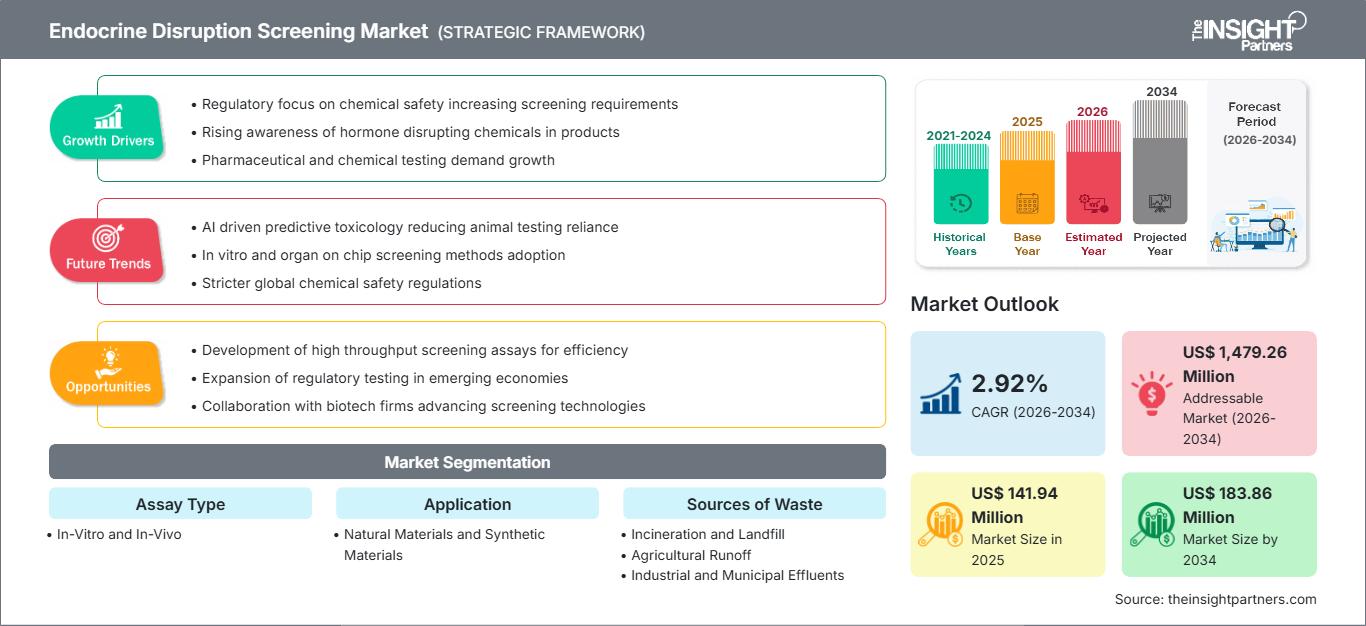
The global endocrine disruption screening market size is expected to reach US$183.86 million by 2034 from US$141.94 million in 2025. The market is anticipated to register a CAGR of 2.92% during the forecast period of 2026–2034.
Endocrine Disruption Screening Market Analysis
The endocrine disruption screening market is transitioning from traditional single-endpoint toxicity testing toward mechanism-based assessment frameworks. To lead the endocrine disruption screening market, stakeholders need to shift from traditional single-endpoint toxicity tests to a framework based on mechanisms. The primary opportunity is to use high-throughput screening and AI-driven predictive modeling, which are both needed to meet the testing requirements set by REACH and the EPA. Manufacturers can focus on developing human-on-a-chip systems and advanced in-vitro receptor-binding assays. These methods help lower the costs and address ethical concerns related to animal testing, which delays the approval of new chemicals. It is also important to combine real-time bio-monitoring data with computational toxicology to make stronger safety claims. Expanding localized testing services in the Asia-Pacific region will enable stakeholders to capture substantial volume growth as environmental monitoring standards converge with those of Western regulations.
Endocrine Disruption Screening Market Overview
The endocrine disruption screening market covers a comprehensive spectrum of assay technologies and methodologies designed to identify chemicals that interfere with hormonal signaling. These substances, known as endocrine-disrupting chemicals (EDCs), are clinically and environmentally linked through their ability to mimic or block natural hormones, leading to reproductive, developmental, and metabolic disorders. There are three main types of assays used in screening: in vitro receptor transactivation, in vivo apical endpoint studies, and steroidogenesis assays. In the past, endocrine screening was mostly seen as a secondary check for toxicity; now it is moving toward a more proactive method called the Integrated Approach to Testing and Assessment (IATA). This market serves a global industrial base that is rapidly expanding due to the proliferation of synthetic materials in consumer goods and rising public scrutiny of chemical safety in agricultural runoff and industrial effluents.
Market Research Highlights
- Global market for Endocrine Disruption Screening was valued at US$ 141.94 Million in 2025
- Annual market size is expected to reach US$ 183.86 Million by 2034
- Total addressable market (TAM) during 2026-2034 is projected to reach approximately US$ 1,479.26 Million
- Market is anticipated to register a CAGR of 2.92% during the forecast period
- The United States represents a key market, supported by Regulatory focus on chemical safety increasing screening requirements, Rising awareness of hormone disrupting chemicals in products, Pharmaceutical and chemical testing demand growth, as well as evolving industry dynamics
- Market analysis covers North America, Europe, Asia-Pacific, South and Central America, Middle East and Africa, with growth evaluated across the forecast period
- Market opportunities such as Development of high throughput screening assays for efficiency, Expansion of regulatory testing in emerging economies, Collaboration with biotech firms advancing screening technologies are expected to influence market dynamics and addressable market
- Report profiles industry participants, including Creative Bioarray ? United States, Xenometrix AG ? Switzerland, Charles River ? United States, Eurofins Scientific ? Luxembourg, Smithers ? United States, SGS SA ? Switzerland, JRF Global ? India, M?rieux NutriSciences ? France, Alpha Analytical ? United States, while analyzing competitive strategies and innovation developments
-
Source: The Insight Partners' analysis based on proprietary research, government publications, company annual reports, investor presentations, industry databases, and expert interviews.
● REPORT CUSTOMIZATION
Tailor This Report To Align With Your Specific Business Requirements
This report can be customized to align precisely with your business objectives, scope, and target markets. Customization options include tailored segmentation, geography, competitive analysis, and strategic insights to support informed decision-making.
Customize This Report →WHAT YOU CAN ADJUST
- ● Segmentations
- ● Geography
- ● Competitive Analysis
- ● Language Preferences
Endocrine Disruption Screening Market: Strategic Insights
-
Get Top Key Market Trends of this report.This FREE sample will include data analysis, ranging from market trends to estimates and forecasts.
Endocrine Disruption Screening Market Drivers and Opportunities
Market Drivers:
- Rising Regulatory Mandates and Global Safety Frameworks: Demand for screening services is rising due to strict EPA (EDSP) and OECD guidelines. These rules call for careful testing of pesticides and industrial chemicals to help prevent hormonal problems in people and wildlife.
- Advancements in High-Throughput and In-Vitro Technologies: Next-generation receptor-binding assays, such as ER and AR transactivation, offer more sensitive detection and quicker results. These advances help make testing thousands of existing and new chemicals more efficient.
- Shift Toward Holistic Environmental Impact Assessment: Healthcare and environmental systems are increasingly adopting early intervention models. By screening consumer products and industrial waste streams for endocrine activity early in the supply chain, regulators can prevent long-term public health crises related to endocrine-linked cancers and infertility.
Market Opportunities:
- Expansion into Automated Computational Toxicology: Significant opportunities exist in replacing labor-intensive assays with AI-powered predictive models. This broadens the screening potential for companies with limited physical lab capacity and facilitates rapid risk prioritization.
- Targeting Emerging Contaminants in Water and Soil: The development of specialized assays for agricultural runoff and pulp mill effluents represents an untapped frontier. Companies advancing these specialized field-testing agents can address the high unmet need for real-time environmental monitoring.
- Integration with Precision Health and Bio-monitoring: Combining screening data with digital health platforms allows for the correlation of EDC exposure with population health trends. This integration enhances regulatory decisiveness and supports the development of "safer-by-design" synthetic materials.
Endocrine Disruption Screening Market Report Segmentation Analysis
The endocrine disruption screening market share is analyzed across various segments to provide a clearer understanding of its structure, growth potential, and emerging trends. Below is the standard segmentation approach used in most industry reports:
By Assay Type:
- In-Vitro
- In-Vivo
By Application:
- Natural Materials
- Synthetic Materials
By Source of Waste:
- Incineration and Landfill
- Agricultural Runoff
- Industrial and Municipal Effluents
- Pulp mill effluents
- Consumer Products
By Method:
- Estrogen Receptor Transactivation
- Androgen Receptor Transactivation
- Androgen Receptor Modulation
- Estrogen Receptor-Alpha Binding
- Estrogen Receptor-Beta Binding
- Androgen Receptor Binding
- Steroidogenesis
- Aromatase Assays
By Geography:
- North America
- Europe
- Asia Pacific
- South & Central America
- Middle East & Africa
Endocrine Disruption Screening Market Report Scope
| Report Attribute | Details |
|---|---|
| Market size in 2025 | US$ 141.94 Million |
| Market Size by 2034 | US$ 183.86 Million |
| Global CAGR (2026 - 2034) | 2.92% |
| Historical Data | 2021-2024 |
| Forecast period | 2026-2034 |
| Segments Covered |
By Assay Type
|
| Regions and Countries Covered |
North America
|
| Market leaders and key company profiles |
|
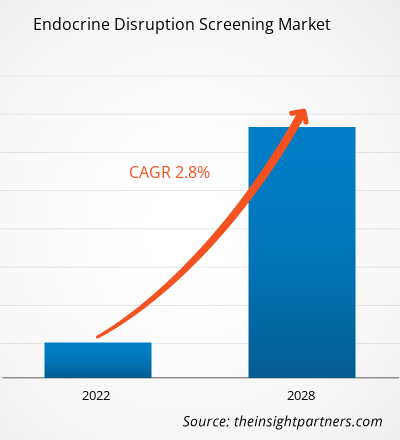
Endocrine Disruption Screening Market Players Density: Understanding Its Impact on Business Dynamics
The Endocrine Disruption Screening Market is growing rapidly, driven by increasing end-user demand due to factors such as evolving consumer preferences, technological advancements, and greater awareness of the product's benefits. As demand rises, businesses are expanding their offerings, innovating to meet consumer needs, and capitalizing on emerging trends, which further fuels market growth.
Endocrine Disruption Screening Market Share Analysis by Geography
Asia Pacific is expected to grow fastest in the coming years. Emerging markets in South & Central America, the Middle East, and Africa also have many untapped opportunities for contract research organizations (CROs) to expand.
The endocrine disruption screening market shows a different growth trajectory in each region due to factors such as healthcare infrastructure, regulatory environment, environmental awareness, and government initiatives. Below is a summary of market share and trends by region:
1. North America
- Market Share: Holds the largest market share due to strict EPA Endocrine Disruptor Screening Program (EDSP) mandates.
- Key Drivers:
- Strong presence of leading CROs and pharmaceutical giants
- High investment in high-throughput screening (HTS) technologies
- Early adoption of computational toxicology and in-silico modeling
- Trends: Shift toward integrated in-vitro testing batteries to reduce reliance on long-term in-vivo rodent studies and accelerate safety assessments.
2. Europe
- Market Share: Significant share driven by REACH regulations and ECHA safety standards.
- Key Drivers:
- There is widespread use of OECD-approved methods for ensuring chemical safety.
- The government provides significant funding for research into alternatives to animal testing.
- Cosmetics and personal care products are subject to strict regulations.
- Trends: Increasing focus on the "Chemicals Strategy for Sustainability" to achieve a toxic-free environment by 2030 through proactive hazard identification.
3. Asia Pacific
- Market Share: Fastest-growing region owing to rapid industrialization and expanding regulatory frameworks in China and India.
- Key Drivers:
- Urbanization is leading to stricter wastewater and industrial effluent monitoring.
- Government-led environmental protection missions and "Green Chemistry" initiatives
- Surge in domestic chemical manufacturing for global exports
- Trends: Local adoption of international screening standards to facilitate the export of chemical products and cosmetics to highly regulated Western markets.
4. South and Central America
- Market Share: Emerging market with growing focus on agricultural runoff and pesticide safety.
- Key Drivers:
- Large-scale agricultural sector requiring extensive pesticide toxicity screening
- Public-private partnerships to modernize environmental monitoring laboratories
- Rising awareness of hormonal health and reproductive safety in urban centers
- Trends: Adoption of cost-effective, portable screening kits to monitor water quality and soil contamination in rural and farming communities.
5. Middle East and Africa
- Market Share: Developing market with significant growth potential as environmental health policies mature.
- Key Drivers:
- National e-health and sustainability strategies in GCC countries
- Increasing investment in desalination and wastewater treatment infrastructure
- Expanding pharmaceutical production hubs in Egypt, Saudi Arabia, and South Africa
- Trends: Implementation of endocrine screening as part of broader national health security and water safety programs, often utilizing automated immunoassay platforms.
Endocrine Disruption Screening Market Players Density: Understanding Its Impact on Business Dynamics
High Market Density and Competition
Competition is intensifying due to the presence of global laboratory leaders such as Eurofins Scientific, Charles River, and SGS SA. Specialized toxicology innovators and regional experts like Xenometrix AG (Switzerland) and JRF Global (India) also contribute to the increasingly crowded and technically demanding market landscape.
This competitive environment pushes vendors to differentiate through:
- Screening assays are now developed with pre-validation by the OECD and EPA. This ensures international data acceptance and meets mutual acceptance of data (MAD) requirements.
- Testing is now faster as automated platforms with multiple receptors and computer-based modeling have replaced traditional, labor-intensive cell-based assays.
- New industrial hubs around the world now offer screening and analytical services. This shortens sample travel times and helps meet local chemical management rules.
- Specialized tests are now available for specific endocrine pathways beyond just estrogen and androgen. These include tests for thyroid and steroidogenesis disruption.
Opportunities and Strategic Moves
- Partner with chemical and agroscience manufacturers to support the early-stage identification of endocrine-disrupting properties, streamlining the path to global market registration.
- Incorporate New Approach Methodologies (NAMs) and high-throughput screening (HTS) to reduce reliance on animal testing while increasing the speed of safety assessments for complex mixtures.
Major Companies operating in the Endocrine Disruption Screening Market are:
- Creative Bioarray – United States
- Xenometrix AG – Switzerland
- Charles River – United States
- Eurofins Scientific – Luxembourg
- Smithers – United States
- SGS SA – Switzerland
- JRF Global – India
- Mérieux NutriSciences – France
- Alpha Analytical – United States
Disclaimer: The companies listed above are not ranked in any particular order.
Endocrine Disruption Screening Market News and Recent Developments
- In January 2025, the U.S. EPA finalized a settlement to advance its Endocrine Disruptor Screening Program (EDSP) and introduced a new tracking website for FIFRA Data Call-In notices targeting high-priority conventional pesticides. The move accelerates endocrine data requirements and enhances regulatory transparency, supporting continued demand for endocrine disruption screening and compliance services.
- In September 2024, UNEP and WHO convened an expert group to update the State of the Science Report on Endocrine Disrupting Chemicals (EDCs). The initiative enhances global scientific guidance and transparency, potentially influencing regulatory requirements and driving demand for endocrine disruption screening, testing, and compliance services.
Endocrine Disruption Screening Market Report Coverage and Deliverables
The "Endocrine Disruption Screening Market Size and Forecast (2021–2034)" report provides a detailed analysis of the market covering below areas:
- Endocrine Disruption Screening Market size and forecast at global, regional, and country levels for all the key market segments covered under the scope
- Endocrine Disruption Screening Market trends, as well as market dynamics such as drivers, restraints, and key opportunities
- Detailed PEST and SWOT analysis
- Endocrine Disruption Screening Market analysis covering key market trends, global and regional framework, major players, regulations, and recent market developments
- Industry landscape and competition analysis covering market concentration, heat map analysis, prominent players, and recent developments in the Endocrine Disruption Screening Market
- Detailed company profiles
Frequently Asked Questions

- Comprehensive Market Sizing and Forecast Analysis
- Detailed Segmentation Analysis
- In-Depth Market Dynamics Assessment
- Regional and Country-Level Insights
- Competitive Landscape and Company Benchmarking
- Strategic Business Intelligence
Recent Reports
Testimonials

The Insight Partners' SCADA System Market report is comprehensive, with valuable insights on current trends and future forecasts. The team was highly professional, responsive, and supportive throughout. We are very satisfied and highly recommend their services.
RAN KEDEM Partner, Reali Technologies LTDs
I requested a report on a very specific software market and the team produced the report in a few days. The information was very relevant and well presented. I then requested some changes and additions to the report. The team was again very responsive and I got the final report in less than a week.
JEAN-HERVE JENN Chairman, Future Analytica
We worked with The Insight Partners for an important market study and forecast. They gave us clear insights into opportunities and risks, which helped shape our plans. Their research was easy to use and based on solid data. It helped us make smart, confident decisions. We highly recommend them.
PIYUSH NAGPAL Sr. Vice President, High Beam Global
The Insight Partners delivered insightful, well-structured market research with strong domain expertise. Their team was professional and responsive throughout. The user-friendly website made accessing industry reports seamless. We highly recommend them for reliable, high-quality research services
YUKIHIKO ADACHI CEO, Deep Blue, LLC.
This is the first time I have purchased a market report from The Insight Partners.While I was unsure at first, I visited their web site and felt more comfortable to take the risk and purchase a market report.I am completely satisfied with the quality of the report and customer service. I had several questions and comments with the initial report, but after a couple of dialogs over email with their analyst I believe I have a report that I can use as input to our strategic planning process.Thank you so much for taking the extra time and making this a positive experience.I will definitely recommend your service to others and you will be my first call when we need further market data.
JOHN SUZUKI President and Chief Executive Officer, Board Director, BK Technologies
I wish to appreciate your support and the professionalism you displayed in the course of attending to my request for information regarding to infectious disease IVD market in Nigeria. I appreciate your patience, your guidance, and the fact that you were willing to offer a discount, which eventually made it possible for us to close a deal. I look forward to engaging The Insight Partners in the future, all thanks to the impression you have created in me as a result of this first encounter.
DR CHIJIOKE ONYIA MANAGING DIRECTOR, PineCrest Healthcare Ltd.Reason to Buy
- Informed Decision-Making
- Understanding Market Dynamics
- Competitive Analysis
- Identifying Emerging Markets
- Customer Insights
- Market Forecasts
- Risk Mitigation
- Boosting Operational Efficiency
- Strategic Planning
- Investment Justification
- Tracking Industry Innovations
- Aligning with Regulatory Trends





 Get Free Sample for