
Sports Medicine Devices Market Analysis, Size, and Share by 2028
Published Report - Sports Medicine Devices Market Forecast to 2028 - COVID-19 Impact and Global Analysis By Product (Body Reconstruction and Repair, Body Support and Recovery, Body Monitoring and Evaluation, and Accessories), Application (Elbow and Wrist Injury, Shoulder Injury, Knee Injury, Ankle and Foot Injury, Spine Injury, and Others), End User (Hospitals and Clinics, Physiotherapy Centers, Sport Centers, and Ambulatory Surgery Centers), and Geography
- Status : Published
- Report Code : TIPAR100001113
- Category : Life Sciences
- No. of Pages : 230
- Available Report Formats :


- Last update date : August 31, 2023


2022 Market Size
US$ 6.09 Bn
Base year value
2028 Forecast
US$ 9.45 Bn
Projected by 2028
CAGR 2023-2028
7.6 %
Growth rate
Addressable Market
US$ 47.59 Bn
(2023-2028)
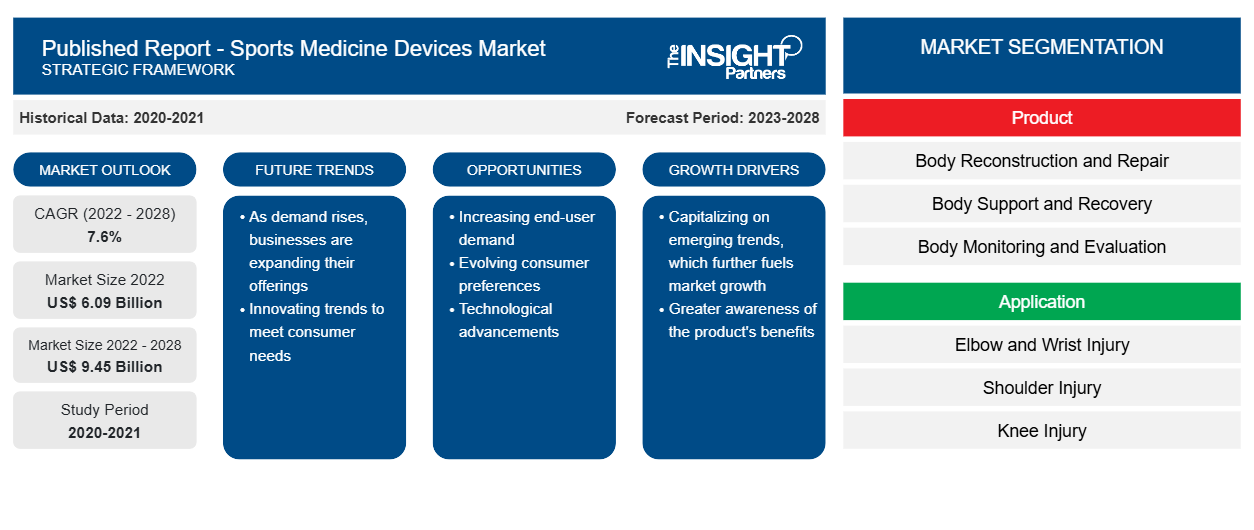
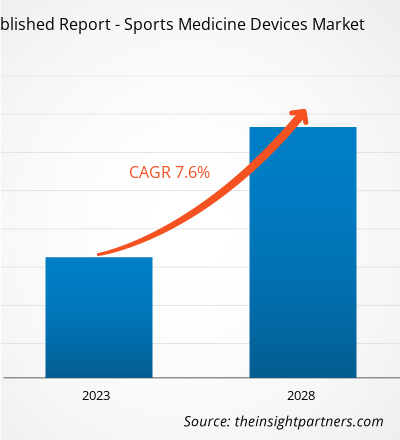
The sports medicine devices market is likely to be valued at US$ 6,094.67 million in 2022 and is projected to reach to a value of US$ 9,452.72 million by 2028; it is expected to grow at a CAGR of 7.6% from 2022 to 2028.
Sports medicine is a branch of health care that increases athletic performance and improves physical fitness. Sports medicine devices promote early recovery from injuries and prevent the risk of future injuries. Various injuries caused by sports and general exercise are head, knee, and ankle injuries; muscle spasms; sprains and strains; and torn ligaments. These devices can be surgically implanted, externally attached, or used for minimally invasive procedures such as arthroscopy. The devices also comprise performance monitoring devices and various accessories, such as bandages, bands, and slings. Orthopedic devices prevent and treat musculoskeletal problems, such as sprains and strains, fracture and ligament repairs, repetitive motion injuries, and upper and lower back pain associated with sports. In athletes with a physical deformity or any physiological dysfunction, prostheses replace, correct, or support a body part. Amputees of upper and lower extremities use sports prostheses to participate in sports and other physical activities. They help replicate the functions of the fingers, arms, elbows, and other body parts.
Report Coverage
The scope of the global sports medicine devices market consists of product, application, end user, and geography. The sports medicine devices market is segmented into five regions North America, Europe, Asia Pacific, the Middle East & Africa, and South & Central America. The report offers insights and in-depth analysis of the sports medicine devices market, emphasizing on various parameters such as market trends, technological advancements, market dynamics, and competitive landscape analysis of leading market players across the globe.
● REPORT CUSTOMIZATION
Tailor This Report To Align With Your Specific Business Requirements
This report can be customized to align precisely with your business objectives, scope, and target markets. Customization options include tailored segmentation, geography, competitive analysis, and strategic insights to support informed decision-making.
Customize This Report →WHAT YOU CAN ADJUST
- ● Segmentations
- ● Geography
- ● Competitive Analysis
- ● Language Preferences
Published Report - Sports Medicine Devices Market: Strategic Insights
-
Get Top Key Market Trends of this report.This FREE sample will include data analysis, ranging from market trends to estimates and forecasts.
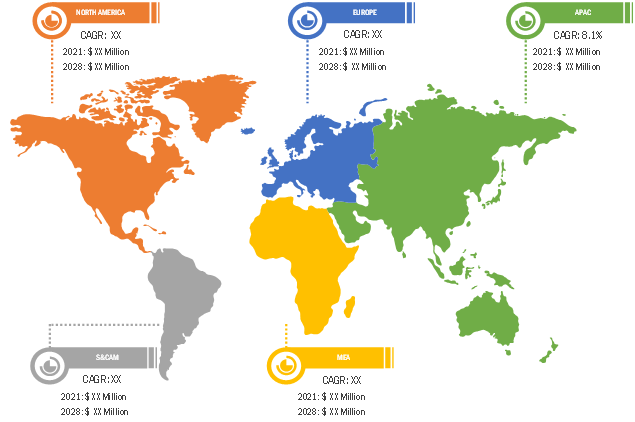
Lucrative Regions for Sports Medicine Devices Market
- This FREE sample will include data analysis, ranging from market trends to estimates and forecasts.
Market Insights
Rising Technological Advancements in Sports Medicine Devices
Medical technologies play a role in many aspects of an athlete's routine, from predicting and preventing sports-related injuries to monitoring fitness and enhancing recovery after a training session or competitive outing. The rise of artificial intelligence (AI), automation, and a host of other technological breakthroughs over the same period is leading to the introduction of innovations to optimize performance, maintain fitness, and extend athletes' careers. Further, new technologies and applications are also showing the potential to provide athletes and their coaches with even more valuable biometric data, including heart rate, metabolism, workload, and core temperature, which, in turn, can be used to detect fatigue and predict its likelihood of future injury.
3D printing is emerging as essential technology, and 3D printing of implants is expected to have a significant impact on orthopedics. Furthermore, this is due to various advantages of 3D printed implants, such as individual adaptation to patient requirements, lower costs (compared to commercially available implants), lower toxicity and higher patient acceptance, and efficient and fast production. For example, in May 2019, Kwambio (a Ukraine-based ceramic 3D printing service provider) launched a 3D bioprinting project called ADAM, which collaborated with WeFund Ventures (a European investment firm). This joint initiative aimed to develop a continuous 3D scanning and 3D printing process for the production of artificial bones. Prosthetic limbs evolved to incorporate advanced materials, such as plastics and carbon fiber composites. Further, technological advances and novel innovations such as bionics, sensors, artificial intelligence, and micro-mechatronics have been achieved in prosthetics. For example, in March 2019, a San Francisco-based company specializing in 3D-printed medical wearables announced the launch of the UNYQ socket, a 3D-printed prosthetic leg at the British Association of Prosthetics and Orthotists (BAPO) in Harrogate, Great Britain.
Additionally, the increasing use of wearable devices such as resistance bands and other sensory aids to monitor stress levels and prevent fatigue-related injuries among athletes is fueling the growth of the sports medicine devices market. For example, Athletigen Technology, Inc., a performance-driven company in Nova Scotia, works with various athletes to use the information they gather about their DNA to improve their performance and health while reducing the incidence of sports-related injuries. Such cases are expected to spur market growth over the forecast period, thereby providing numerous opportunities in the sports medicine devices market.
Product-Based Insights
Based on product, the sports medicine devices market is segmented into body reconstruction and repair, body support and recovery, body monitoring and evaluation, and accessories. In 2022, the body reconstruction and repair segment is likely to hold the largest market share. Body reconstruction is a specialized treatment used for the damaged or injured skin and tissues. The reconstruction and repair helps sport person to get back on the field as quickly as possible. The body reconstruction and repair enables are majorly done by the mode of surgeries that require products, such as autografts, allograft struts, mesh cages, cement augmentation, implants, and expandable cages. Therefore, owing to the advantages of the body reconstruction and repair for the sports injuries, the global sports medicine devices market is likely to grow with a significant growth rate in the coming years. Also, the body monitoring and evaluation segment is likely to register the highest CAGR in the market during the forecast period.
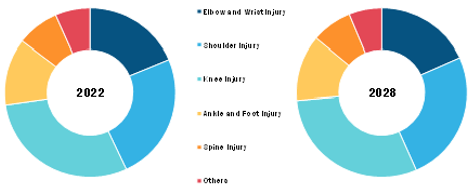
Global Sports Medicine Devices Market, by Application – 2022 & 2028
- This FREE sample will include data analysis, ranging from market trends to estimates and forecasts.
Application-Based Insights
Based on application, the global sports medicine devices market is segmented into elbow and wrist injury, shoulder injury, knee injury, ankle and foot injury, spine injury, and others. The knee injury segment is likely to hold the largest share of the market in 2022. However, the shoulder injury segment is anticipated to register the highest CAGR in the market during the forecast period.
End User-Based Insights
In terms of end user, the global sports medicine devices market is segmented into hospitals and clinics, physiotherapy centers, sport centers, and ambulatory surgery centers. The hospitals and clinics segment is likely to hold the largest market share in 2022, and the physiotherapy centers segment is anticipated to register the highest CAGR in the market during the forecast period.
The COVID-19 outbreak severely affected medical systems in various regions across the world. The global impacts of the outbreak are being felt across several markets. The COVID-19 pandemic had significantly impacted the sports medicine device market. Several sports activities were suspended or postponed at international, regional, and national levels to control the virus spread in the first quarter of 2020. For example, in March 2020, the International Olympic Committee postponed the Tokyo 2020 Olympic and Paralympic Games to 2021. Therefore, fewer sports injuries were recorded during the initial period of the pandemic, which dropped the demand for sports medicine devices. According to a 2021 update from the National Safety Council (NSC) in America, the Consumer Product Safety Commission (CPSC) reported that emergency room visits for consumer product-related injuries had decreased by 24% in the first seven months COVID-19 pandemic. The most significant decrease in injuries was in sports-related injuries related to athletics. However, as sports activities, resume the risk of sports-related injuries have increased again. Therefore, the COVID-19 pandemic had a short-term negative impact on the sports medicine devices market growth. However, the market is expected to grow in the coming years as sports activities started to increase from the end of 2021.
Companies adopt product launches and expansion strategies to expand their footprint across the world, meet the growing demand, and expand their product portfolio.
The players operating in the global sports medicine devices market adopted product innovation strategy to cater to the changing customer demands across the world, which also permits the players to maintain their brand name globally.
- In May 2022, INHANCE Shoulder System from DePuy Synthes received 510(k) clearance from the U.S. Food and Drug Administration (FDA) The system can be used in reverse total shoulder arthroplasty procedures. This clearance was in addition to the system’s already cleared use in anatomic shoulder arthroplasty and provides surgeons with interoperative flexibility.
- In November 2021, DePuy Synthes launched the UNIUM System. The system is used in the trauma setting, as well as in small bone, sports medicine, and spine and thorax procedures.
- In November 2021, Smith & Nephew introduced the LEGION CONCELOC Cementless Total Knee System with proprietary 3D printed Advanced Porous Titanium technology. CONCELOC is created in a virtual environment and manufactured through 3D printing additive manufacturing to optimize its porous structure to promote bony ingrowth.
By geography, the global sports medicine devices market is segmented into North America (the US, Canada, and Mexico), Europe (France, Germany, the UK, Spain, Italy, and the Rest of Europe), Asia Pacific (China, India, Japan, Australia, South Korea, and the Rest of APAC), the Middle East & Africa (Saudi Arabia, the UAE, South Africa, and the Rest of MEA), and South & Central America (Brazil, Argentina, and the Rest of South & Central America).
Company Profiles
- Arthrex Inc.
- Conmed Corporation
- Medtronic
- DePuy Synthes
- Stryker
- Smith & Nephew
- DJO Global Inc.
- Zimmer Biomet
- Karl Storz SE & Co., KG.
- Breg Inc.
Published Report - Sports Medicine Devices Market Report Scope
| Report Attribute | Details |
|---|---|
| Market size in 2022 | US$ 6.09 Billion |
| Market Size by 2028 | US$ 9.45 Billion |
| Global CAGR (2022 - 2028) | 7.6% |
| Historical Data | 2020-2021 |
| Forecast period | 2023-2028 |
| Segments Covered |
By Product
|
| Regions and Countries Covered |
North America
|
| Market leaders and key company profiles |
|
Published Report - Sports Medicine Devices Market Players Density: Understanding Its Impact on Business Dynamics
The Published Report - Sports Medicine Devices Market is growing rapidly, driven by increasing end-user demand due to factors such as evolving consumer preferences, technological advancements, and greater awareness of the product's benefits. As demand rises, businesses are expanding their offerings, innovating to meet consumer needs, and capitalizing on emerging trends, which further fuels market growth.
Frequently Asked Questions

- Comprehensive Market Sizing and Forecast Analysis
- Detailed Segmentation Analysis
- In-Depth Market Dynamics Assessment
- Regional and Country-Level Insights
- Competitive Landscape and Company Benchmarking
- Strategic Business Intelligence
Recent Reports
Testimonials

The Insight Partners' SCADA System Market report is comprehensive, with valuable insights on current trends and future forecasts. The team was highly professional, responsive, and supportive throughout. We are very satisfied and highly recommend their services.
RAN KEDEM Partner, Reali Technologies LTDs
I requested a report on a very specific software market and the team produced the report in a few days. The information was very relevant and well presented. I then requested some changes and additions to the report. The team was again very responsive and I got the final report in less than a week.
JEAN-HERVE JENN Chairman, Future Analytica
We worked with The Insight Partners for an important market study and forecast. They gave us clear insights into opportunities and risks, which helped shape our plans. Their research was easy to use and based on solid data. It helped us make smart, confident decisions. We highly recommend them.
PIYUSH NAGPAL Sr. Vice President, High Beam Global
The Insight Partners delivered insightful, well-structured market research with strong domain expertise. Their team was professional and responsive throughout. The user-friendly website made accessing industry reports seamless. We highly recommend them for reliable, high-quality research services
YUKIHIKO ADACHI CEO, Deep Blue, LLC.
This is the first time I have purchased a market report from The Insight Partners.While I was unsure at first, I visited their web site and felt more comfortable to take the risk and purchase a market report.I am completely satisfied with the quality of the report and customer service. I had several questions and comments with the initial report, but after a couple of dialogs over email with their analyst I believe I have a report that I can use as input to our strategic planning process.Thank you so much for taking the extra time and making this a positive experience.I will definitely recommend your service to others and you will be my first call when we need further market data.
JOHN SUZUKI President and Chief Executive Officer, Board Director, BK Technologies
I wish to appreciate your support and the professionalism you displayed in the course of attending to my request for information regarding to infectious disease IVD market in Nigeria. I appreciate your patience, your guidance, and the fact that you were willing to offer a discount, which eventually made it possible for us to close a deal. I look forward to engaging The Insight Partners in the future, all thanks to the impression you have created in me as a result of this first encounter.
DR CHIJIOKE ONYIA MANAGING DIRECTOR, PineCrest Healthcare Ltd.Reason to Buy
- Informed Decision-Making
- Understanding Market Dynamics
- Competitive Analysis
- Identifying Emerging Markets
- Customer Insights
- Market Forecasts
- Risk Mitigation
- Boosting Operational Efficiency
- Strategic Planning
- Investment Justification
- Tracking Industry Innovations
- Aligning with Regulatory Trends





 Get Free Sample for