Wearable EEG Devices Market Size and Growth 2031
Wearable EEG Devices Market Size and Forecast (2021 - 2031), Global and Regional Share, Trend, and Growth Opportunity Analysis Report Coverage: By Product (32-Channel EEG, 14-Channel EEG, 5-Channel EEG, and Others), Application (Health and Wellness, Human Machine Adaptive Interaction, Automotive, Aviation, Industrial, and Others), and Geography
Historic Data: 2021-2023 | Base Year: 2024 | Forecast Period: 2025-2031- Status : Published
- Report Code : TIPRE00007291
- Category : Electronics and Semiconductor
- No. of Pages : 183
- Available Report Formats :


The wearable EEG devices market size is projected to reach US$ 695.51 million by 2031 from US$ 396.17 million in 2024. The market is expected to register a CAGR of 8.7% during 2025–2031. Integration with artificial intelligence is likely to bring new trends into the market in the coming years.
Wearable EEG Devices Market Analysis
Wearable EEG devices are advanced, noninvasive systems designed to monitor and record the electrical activity of the brain in real time. Unlike traditional EEG setups, which are typically confined to hospital or clinical environments and require complex wiring, wearable EEG devices offer portability, ease of use, and continuous monitoring capabilities, making them ideal for both clinical and nonclinical applications. These devices consist of compact, lightweight sensors embedded in headsets, caps, or bands that detect brainwave patterns and transmit data wirelessly to smartphones, tablets, or cloud-based systems. The captured data can be analyzed to detect abnormalities, assess neurological conditions, monitor mental states, or optimize cognitive performance. Integration with artificial intelligence and machine learning further enhances diagnostic accuracy and enables personalized insights.
Wearable EEG Devices Market Overview
The rising prevalence of neurological disorders, growing technological advancements, and increasing demand for noninvasive brain monitoring across healthcare, gaming, sports, academic research, and other sectors are driving the wearable EEG devices market growth. In January 2024, researchers at Stanford University developed a wearable electronic cap capable of interpreting EEG signals. This breakthrough allows users to control robots, perform tasks such as cleaning, interact with robotic pets, and even prepare basic meals entirely through brain activity. Such advancements highlight the expanding applications of EEG technology beyond clinical use, demonstrating its potential to enhance human-machine interaction. Furthermore, the aging global population is a major contributor to market expansion. Older adults are at a higher risk for neurological conditions such as Alzheimer's, Parkinson’s disease, and stroke. As life expectancy increases, the need for continuous monitoring and effective management of age-related health conditions is rising. Wearable EEG devices, offering real-time, noninvasive brain monitoring, are ideally suited to meet this growing demand.
Customize This Report To Suit Your Requirement
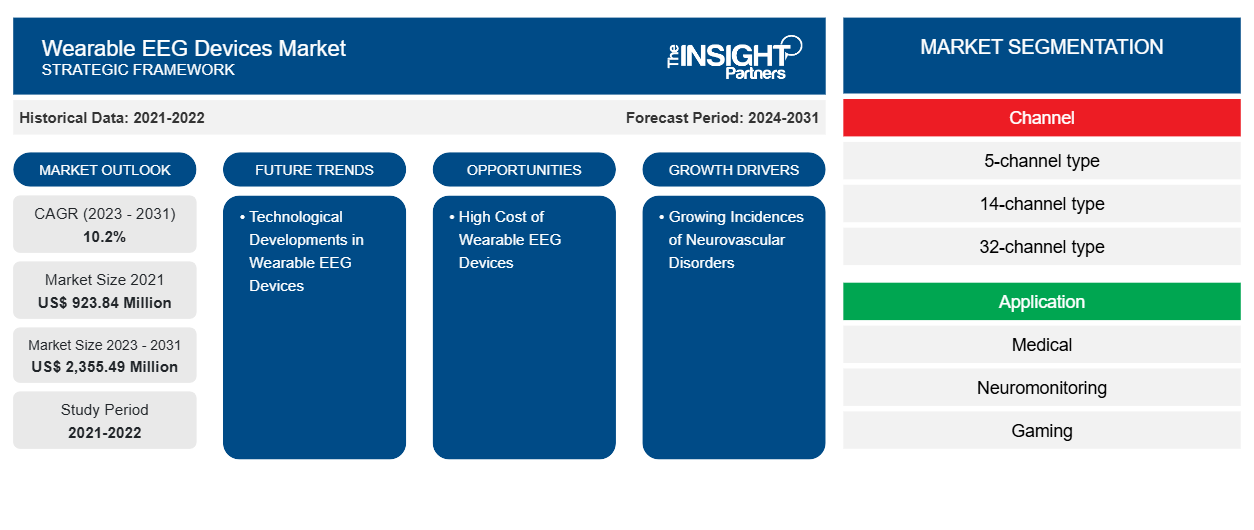
Get FREE CUSTOMIZATIONWearable EEG Devices Market: Strategic Insights
-
Get Top Key Market Trends of this report.This FREE sample will include data analysis, ranging from market trends to estimates and forecasts.
Wearable EEG Devices Market Drivers and Opportunities
Increasing Geriatric Population
Advancements in healthcare and improved living standards are extending life expectancy, leading to a sharp rise in the number of elderly individuals globally. In October 2024, according to data from the WHO, by 2050, 80% of the global elderly population will reside in low- and middle-income countries. The rate of population aging is accelerating more rapidly than in previous generations. In 2020, the number of individuals aged 60 and above surpassed the number of children under 5 years old. Furthermore, between 2015 and 2050, the share of the world’s population aged over 60 is expected to nearly double, rising from 12% to 22%.
As the elderly population grows, healthcare providers are confronted with the challenge of managing chronic neurological disorders that often necessitate long-term observation of brain activity. Traditional EEG methods, which are typically confined to hospital settings, are less suited to meet the demand of this demographic due to their complexity and discomfort. In contrast, wearable EEG devices offer a convenient, noninvasive, and patient-friendly solution for real-time brain monitoring, enabling continuous data collection in home or community settings. The increasing demand for remote healthcare solutions aligns well with the capabilities of wearable EEG technology. These devices support telemedicine initiatives by facilitating remote diagnostics and reducing the frequency of hospital visits, thereby improving patient outcomes and reducing healthcare costs. Thus, the rising geriatric population propels the demand for wearable EEG devices.
Expanding Applications in Nonmedical Sectors
While wearable EEG devices have traditionally been associated with clinical and neurological applications, their expanding use in nonmedical sectors presents a substantial growth opportunity for the market. The integration of EEG technology into consumer wellness, gaming, education, workplace productivity, and neuromarketing is unlocking new revenue streams and diversifying the market landscape. In the consumer wellness space, wearable EEG devices are increasingly being used for stress management, meditation enhancement, sleep optimization, and other applications. Devices that track brainwaves in real time allow users to monitor mental states and adopt techniques to improve focus, emotional well-being, and cognitive performance. This aligns with the growing global demand for personalized health and mental wellness solutions.
In gaming and virtual reality (VR), EEG-enabled headsets are being utilized to create immersive experiences by responding to a player’s cognitive and emotional states. Similarly, EEG technology in education is being explored to enhance learning outcomes through neurofeedback, attention tracking, and cognitive training tools, particularly for students with learning difficulties. Corporate sectors are also adopting EEG-based tools to monitor employee stress, cognitive load, and productivity levels to optimize work environments and improve performance. Meanwhile, in neuromarketing, EEG devices provide valuable insights into consumer behavior by measuring subconscious responses to advertising, branding, and product design. These nonmedical applications not only broaden the customer base but also reduce reliance on traditional healthcare markets, making the wearable EEG segment more resilient to regulatory and reimbursement constraints. As device manufacturers continue to improve usability, design, and affordability, the adoption of wearable EEG devices in nonclinical environments is expected to accelerate, driving long-term market growth and innovation.
Wearable EEG Devices Market Report Segmentation Analysis
Key segments that contributed to the derivation of the wearable EEG devices market analysis are product and application.
- By product, the global wearable EEG devices market is segmented into 32-channel EEG, 14-channel EEG, 5-channel EEG, and others. The 32-channel EEG segment held the largest share of the wearable EEG devices market in 2024.
- Based on application, the global wearable EEG devices market is segmented into health and wellness, human machine adaptive interaction, automotive, aviation, industrial, and others. The health and wellness segment held the largest share of the wearable EEG devices market in 2024.
Wearable EEG Devices Market Share Analysis by Geography
The geographic scope of the wearable EEG devices market report is mainly divided into five regions: North America, Asia Pacific, Europe, Middle East and Africa, and South and Central America.
Asia Pacific held a significant market share in 2024. The wearable EEG devices market in Asia Pacific is poised for rapid growth, with the increasing prevalence of neurological disorders, such as epilepsy, stroke, and dementia, as a significant driver. As per the Organisation for Economic Co-operation and Development (OECD) Health at a Glance: Asia/Pacific 2024 report, mental health conditions represent a significant public health challenge in Asia Pacific, affecting ~475 million people, or about one in seven individuals in the region. Wearable EEG devices provide cost-effective, noninvasive solutions for early diagnosis and continuous monitoring, addressing critical healthcare needs.
The expanding healthcare infrastructure of the region, particularly in Japan and South Korea, supports adoption through investments in telemedicine and digital health. Government initiatives, such as China’s Healthy China 2030 plan, promote advanced medical technologies. The Healthy China Initiative 2019–2030 is a comprehensive national strategy aimed at improving public health and well-being across China. It focuses on disease prevention, health promotion, and addressing health disparities. The initiative includes 15 special campaigns, with a particular emphasis on combating non-communicable diseases (NCDs) and promoting universal health coverage.
Wearable EEG Devices Market Report Scope
| Report Attribute | Details |
|---|---|
| Market size in 2024 | US$ 396.17 Million |
| Market Size by 2031 | US$ 695.51 Million |
| Global CAGR (2025 - 2031) | 8.7% |
| Historical Data | 2021-2023 |
| Forecast period | 2025-2031 |
| Segments Covered |
By Product
|
| Regions and Countries Covered |
North America
|
| Market leaders and key company profiles |
|
Wearable EEG Devices Market Players Density: Understanding Its Impact on Business Dynamics
The Wearable EEG Devices Market is growing rapidly, driven by increasing end-user demand due to factors such as evolving consumer preferences, technological advancements, and greater awareness of the product's benefits. As demand rises, businesses are expanding their offerings, innovating to meet consumer needs, and capitalizing on emerging trends, which further fuels market growth.
Wearable EEG Devices Market News and Recent Developments
The wearable EEG devices market is evaluated by gathering qualitative and quantitative data post primary and secondary research, which includes important corporate publications, association data, and databases. A few of the developments in the wearable EEG devices market are listed below:
- BrainBit and ROOK are excited to announce a new partnership aimed at transforming the way health data is utilized. ROOK's API empowers developers to integrate, process, and embed data from hundreds of wearables, now including BrainBit devices, into their apps seamlessly. This collaboration eliminates the need for extensive developer time on individual integrations, allowing teams to focus on creating impactful health solutions. (Source: BrainBit Inc, Press Release, June 2024)
- Neuro XR (NXR) and Emotiv announce the launch of Emotional Heatmapping Technology, uniting NXR’s analytics software with Emotiv’s EEG devices. This partnership revolutionizes emotional and behavioral analysis, offering real-time insights into user engagement. (Source: Emotiv, Press Release, January 2025)
Wearable EEG Devices Market Report Coverage and Deliverables
The "Wearable EEG Devices Market Size and Forecast (2021–2031)" report provides a detailed analysis of the market covering below areas:
- Wearable EEG devices market size and forecast at global, regional, and country levels for all the key market segments covered under the scope
- Wearable EEG devices market trends, as well as market dynamics such as drivers, restraints, and key opportunities
- Detailed PEST and SWOT analysis
- Wearable EEG devices market analysis covering key market trends, global and regional framework, major players, regulations, and recent market developments
- Industry landscape and competition analysis covering market concentration, heat map analysis, prominent players, and recent developments for the wearable EEG devices market
- Detailed company profiles
Frequently Asked Questions

- Historical Analysis (2 Years), Base Year, Forecast (7 Years) with CAGR
- PEST and SWOT Analysis
- Market Size Value / Volume - Global, Regional, Country
- Industry and Competitive Landscape
- Excel Dataset
Recent Reports
Testimonials

The Insight Partners' SCADA System Market report is comprehensive, with valuable insights on current trends and future forecasts. The team was highly professional, responsive, and supportive throughout. We are very satisfied and highly recommend their services.
RAN KEDEM Partner, Reali Technologies LTDs
I requested a report on a very specific software market and the team produced the report in a few days. The information was very relevant and well presented. I then requested some changes and additions to the report. The team was again very responsive and I got the final report in less than a week.
JEAN-HERVE JENN Chairman, Future Analytica
We worked with The Insight Partners for an important market study and forecast. They gave us clear insights into opportunities and risks, which helped shape our plans. Their research was easy to use and based on solid data. It helped us make smart, confident decisions. We highly recommend them.
PIYUSH NAGPAL Sr. Vice President, High Beam Global
The Insight Partners delivered insightful, well-structured market research with strong domain expertise. Their team was professional and responsive throughout. The user-friendly website made accessing industry reports seamless. We highly recommend them for reliable, high-quality research services
YUKIHIKO ADACHI CEO, Deep Blue, LLC.
This is the first time I have purchased a market report from The Insight Partners.While I was unsure at first, I visited their web site and felt more comfortable to take the risk and purchase a market report.I am completely satisfied with the quality of the report and customer service. I had several questions and comments with the initial report, but after a couple of dialogs over email with their analyst I believe I have a report that I can use as input to our strategic planning process.Thank you so much for taking the extra time and making this a positive experience.I will definitely recommend your service to others and you will be my first call when we need further market data.
JOHN SUZUKI President and Chief Executive Officer, Board Director, BK Technologies
I wish to appreciate your support and the professionalism you displayed in the course of attending to my request for information regarding to infectious disease IVD market in Nigeria. I appreciate your patience, your guidance, and the fact that you were willing to offer a discount, which eventually made it possible for us to close a deal. I look forward to engaging The Insight Partners in the future, all thanks to the impression you have created in me as a result of this first encounter.
DR CHIJIOKE ONYIA MANAGING DIRECTOR, PineCrest Healthcare Ltd.Reason to Buy
- Informed Decision-Making
- Understanding Market Dynamics
- Competitive Analysis
- Identifying Emerging Markets
- Customer Insights
- Market Forecasts
- Risk Mitigation
- Boosting Operational Efficiency
- Strategic Planning
- Investment Justification
- Tracking Industry Innovations
- Aligning with Regulatory Trends




 Get Free Sample For