
Adult Medical Imaging Market Share, Demand & Growth by 2034
Coverage: ByType (X-Ray Devices, Ultrasound Devices, MRI, CT, and Other); End Use (Hospitals, Diagnostic Centers, and Other), and Geography (North America, Europe, Asia Pacific, and South and Central America)
- Status : Data Released
- Report Code : TIPRE00022287
- Category : Life Sciences
- No. of Pages : 150
- Available Report Formats :


- Last update date : July 16, 2026


2025 Market Size
US$ 33.65 Bn
Base year value
2034 Forecast
US$ 48.20 Bn
Projected by 2034
CAGR 2026-2034
4.07 %
Growth rate
Addressable Market
US$ 371.67 Bn
(2026-2034)
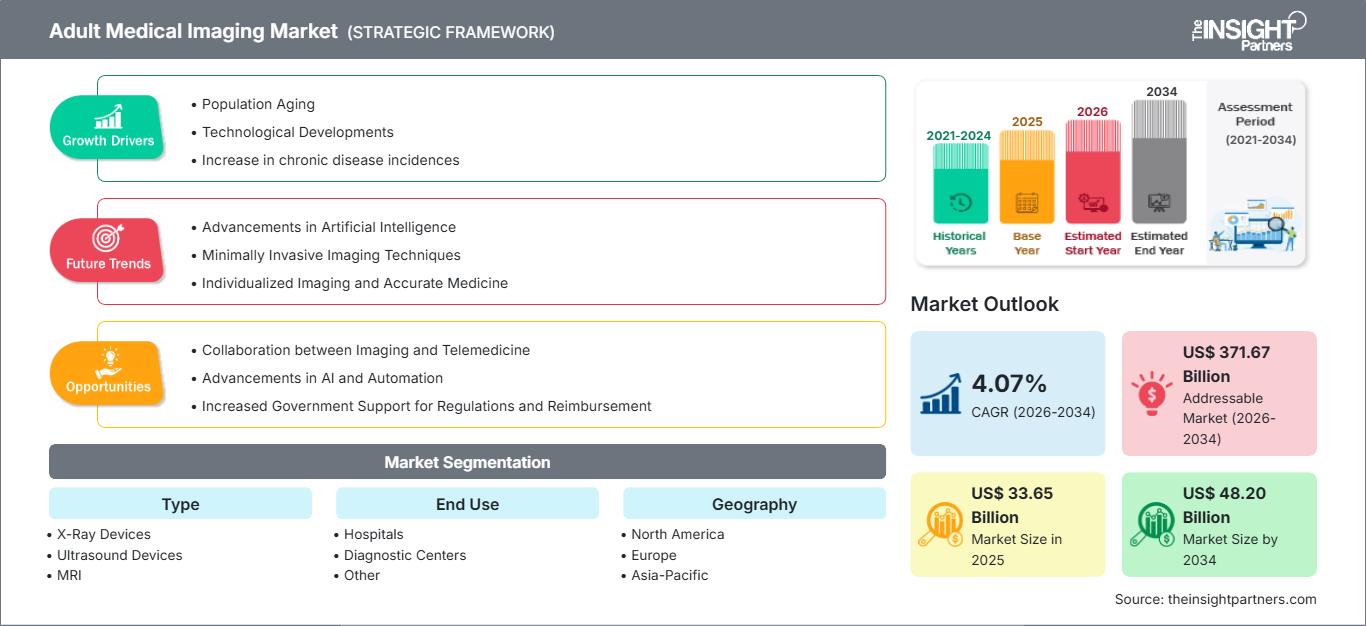
The value of the Adult Medical Imaging Market stood at US$ 33.65 billion in 2025 and is forecast to grow to US$ 48.20 billion by 2034, growing at a CAGR of 4.07% from 2026 to 2034. Key drivers behind the growth include increased incidence of chronic disorders, high imaging volumes for diagnostic purposes among the aged population, and upgrading of old imaging devices. The demand for these solutions has been limited to hospitals and diagnostic centers that need accurate imaging, improved workflow, and digital radiology solutions.
In North America, healthcare facilities have continued to invest in sophisticated MRI, CT, Ultrasound, and Digital X-ray systems. The Adult Medical Imaging Market size in the region benefits from favorable reimbursement structures, strong installed infrastructure, and ongoing investments in AI-enabled imaging workflows. Regional growth is expected to remain within a 3.8–4.8% range through 2034, supported by cardiovascular, oncology, and neurological imaging demand.
Adult Medical Imaging Market Assessment and Insights
- North America: Held an estimated 34–38% share in 2025 and is projected to expand at a 3.8–4.8% CAGR during 2026–2034. High imaging utilization rates, replacement demand, and AI integration continue to support market expansion.
- US: Accounted for 74–78% of North American revenue in 2025 and is expected to advance at a 3.9–4.9% CAGR during 2026–2034, driven by hospital modernization and advanced diagnostic adoption.
- Europe: Represented 27–31% share in 2025 and is forecast to grow at a 3.5–4.5% CAGR during 2026–2034. Germany, the UK, and France remain the leading revenue contributors.
- Asia Pacific: Captured 24–28% share in 2025 and is anticipated to record a 5.0–6.0% CAGR during 2026–2034, led by China, Japan, India, and South Korea.
- Largest Segment: Hospitals maintained a 58–62% market share in 2025 and are projected to grow at a 3.9–4.9% CAGR during 2026–2034 due to high imaging procedure volumes.
- High Growth Segment: MRI held a 16–20% market share in 2025 and is expected to expand at a 5.2–6.2% CAGR during 2026–2034, supported by neurological and oncology applications.
- Key companies analyzed in detail: Siemens Healthineers AG, GE HealthCare Technologies Inc., Koninklijke Philips N.V., Canon Medical Systems Corporation, Hitachi, Ltd., FUJIFILM Holdings Corporation, Carestream Health, Inc., Konica Minolta, Inc., Shimadzu Corporation, Hologic, Inc., Shenzhen Mindray Bio-Medical Electronics Co., Ltd., Samsung Medison Co., Ltd.
Source: The Insight Partners' analysis based on proprietary research, government publications, company annual reports, investor presentations, industry databases, and expert interviews.
Technological breakthroughs in detectors, image reconstruction, interpretation using artificial intelligence, and cloud-based workflow in radiology have revolutionized the importance of imaging technology in a clinical setting. Health care facilities now focus on investing in imaging equipment that can cut scanning time without compromising the image quality. This has been made possible through ecosystems integrating hardware, analytics, and enterprise imaging solutions. Equipment purchases are now being driven by lifetime efficiency, not just capital costs.
In the coming years, investments in imaging will be extended to new healthcare facilities in Asia and some countries in the Middle East. Modernization of public health systems, increased coverage of insurance, and better access to diagnostic facilities have been fueling equipment adoption. Regulations promoting use of artificial intelligence in diagnostics and digital healthcare platforms will further drive adoption of next-generation imaging systems.
Adult Medical Imaging Market Report Scope
| Report Attribute | Details |
|---|---|
| Market size in 2025 | US$ 33.65 Billion |
| Market Size by 2034 | US$ 48.20 Billion |
| Global CAGR (2026 - 2034) | 4.07% |
| Historical Data | 2021-2024 |
| Forecast period | 2026-2034 |
Adult Medical Imaging Market Analysis
The Adult Medical Imaging Market growth is fueled by the increasing cases of cancer, heart diseases, musculoskeletal issues, and nervous system ailments. The increasing use of imaging solutions allows health care providers to make earlier diagnoses and plan patient treatment. Aging population continues to be the key demand driver, especially in developed nations where the usage of imaging solutions per person keeps growing. Advancements in imaging technology, workflow efficiency, and radiation exposure reduction improve the equipment refresh cycle.
For the value chain players, cooperation with software providers, hospitals, diagnostics firms, and health systems allows delivering advanced imaging ecosystems. The supply-side developments are still driven by semiconductor shortages, detector production capacities, and helium management for MRIs. Increased use of mobile ultrasounds and compact imaging devices helps to boost the access to imaging solutions in ambulatory and decentralized care facilities.
The Adult Medical Imaging Market analysis indicates that there is high competition and international players have made heavy investments in AI technology, workflow, imaging, and cloud diagnostic solutions. Siemens Healthineers AG, GE HealthCare Technologies Inc., and Koninklijke Philips N.V. continue to maintain their dominance because of the variety of imaging modalities, while Canon Medical Systems Corporation and FUJIFILM Holdings Corporation are adding more advanced medical imaging technologies to their product portfolio.
The trend of growth in the market is being driven through software subscriptions and partnerships for equipment and hospitals. These include organizations such as Hologic, Inc., Samsung Medison Co., Ltd., Shenzhen Mindray Bio-Medical Electronics Co., Ltd., and Shimadzu Corporation who are expanding their product and geographic reach. Major investments in the market remain focused towards MRIs, low-dose CT technologies, AI-based ultrasound imaging technologies, and enterprise imaging technologies.
● REPORT CUSTOMIZATION
Tailor This Report To Align With Your Specific Business Requirements
This report can be customized to align precisely with your business objectives, scope, and target markets. Customization options include tailored segmentation, geography, competitive analysis, and strategic insights to support informed decision-making.
Customize This Report →WHAT YOU CAN ADJUST
- ● Segmentations
- ● Geography
- ● Competitive Analysis
- ● Language Preferences
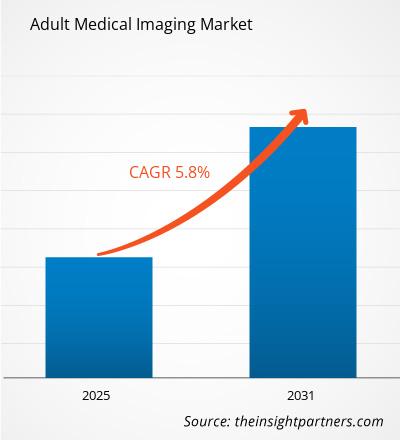
Adult Medical Imaging Market: Strategic Insights
Regional Insights
North America Adult Medical Imaging Market
North America held a market share of around 34% to 38% in 2025 and is expected to expand at a 3.8% to 4.8% CAGR up to 2034. This is attributed to good healthcare infrastructure, usage of advanced imaging modalities, and a high number of radiology procedures. Replacement of old-age imaging equipment, along with digitization programs, enables steady purchase activity at hospitals and outpatient imaging centers.
The Adult Medical Imaging Market share is robust due to highly developed reimbursement mechanism and significant purchasing power among healthcare providers. Artificial intelligence workflows, enterprise imaging systems, and MRIs continue to find popularity. Growth is facilitated by modernization programs at the province level in Canada, whereas the US is the leading market because of high imaging procedures, large imaging equipment installed base, and healthcare investments.
U.S. Adult Medical Imaging Market Market
The USA held around 74–78% of the revenue share in North America in 2025 and is expected to grow at a 3.9–4.9% CAGR up to 2034. Increasing diagnostic tests in oncology, cardiology, neurology, and orthopedics drive the market demand. The large-scale integrated healthcare systems still focus on upgrading their imaging systems that enhance efficiency and cut operating costs.
The prominent players like Siemens Healthineers AG, GE HealthCare Technologies Inc., Koninklijke Philips N.V., and Hologic, Inc. have a substantial operational presence. Increasing use of artificial intelligence in image reconstruction, cloud-based workflow management software, and enterprise radiology systems is being witnessed. Even the outpatient imaging centers are helping to drive the equipment demand due to the shift towards more cost-effective healthcare provision settings.
Europe Adult Medical Imaging Market
The share of Europe in 2025 is about 27-31%, and it is expected that the CAGR will be 3.5-4.5%. Germany still leads the market owing to well-developed hospital infrastructure and imaging use. The United Kingdom also continues to develop diagnostic capabilities in order to manage imaging backlogs.
In Germany, there is strong demand for MRI and CT replacement. In the UK, the situation can be explained by health care system modernization and development of diagnostics centers. France has a stable market because of the developed public health care sector. In Italy and Spain, investments in imaging digitization and optimization take place. These countries provide regional demand for the equipment.
APAC Adult Medical Imaging Market
The Asia Pacific region has an estimated market share of 24–28% in 2025 and is expected to have a compound annual growth rate of 5.0–6.0% till 2034. China has been the leading market in the region, thanks to new hospitals and manufacturing capabilities. Japan retains high demand for replacements, whereas South Korea is growing in artificial intelligence diagnostics.
India and Australia have shown increasing investments in imaging, outpatient diagnostic care, and rural care solutions. The favorable demographics and improvements in healthcare infrastructure in the region make it the fastest-growing market in the world.
Middle East & Africa Adult Medical Imaging Market
The Middle East and Africa Market is expected to grow with a CAGR of 4.5-5.5% between 2026 and 2034. The two regions where there is the highest adoption in the region are Saudi Arabia and UAE due to their diversification plans in the healthcare industry and investment in hospital facilities.
The South African market acts as the leading market for imaging technologies in the African region because of their already existing medical infrastructure. The growth in the regional market is associated with the modernization of health care, urban population growth, and increased diagnostic services.
Segmentation Analysis
Type
The CAGR for the Type market is expected to be between 4.2–5.2% in the period from 2026 to 2034. The selection of imaging modalities is becoming more dependent on diagnostic needs, efficiency, and cost issues. The adult medical imaging market’s scope is continually increasing because the use of imaging modalities for oncological, cardiovascular, neurological, and general diagnostic purposes is being adopted.
- X-Ray Devices: Widely used for first-line diagnostics, trauma assessment, and routine imaging. Digital radiography adoption and workflow enhancements maintain strong utilization across hospitals and diagnostic facilities.
- Ultrasound Devices: Growing demand reflects portability, non-ionizing operation, and broad clinical applicability. AI-assisted measurements and point-of-care deployment enhance clinical and operational value.
- MRI: High-resolution soft tissue visualization drives significance in neurology, oncology, and musculoskeletal imaging. Advanced reconstruction software improves productivity and image quality.
- CT: Essential for emergency, cardiovascular, oncology, and trauma diagnosis. Continued development of low-dose technologies strengthens long-term adoption.
End Use
It is anticipated that the End Use segment will witness growth at a CAGR of 3.9%-4.9% during the forecast period. Hospitals still dominate as the primary venue of use owing to advanced imaging capabilities and high number of patients. Diagnostic Centers have been playing an increasing role in offering customized services and reduced imaging costs.
- Hospitals: Largest revenue-generating sub-segment, supported by integrated diagnostic pathways, advanced imaging infrastructure, and high procedure frequency across multiple specialties.
- Diagnostic Centers: Increasingly important for outpatient imaging delivery. Competitive scheduling, specialized expertise, and growing healthcare decentralization support long-term expansion.
Opportunity Snapshot
| End Use | Revenue Contribution | Trend Tag | Adoption Stage |
| Hospitals | High | AI Imaging | Mature |
| Diagnostic Centers | Medium | Outpatient Shift | Scaling |
| Other | Low | Mobile Access | Emerging |
Adult Medical Imaging Market Growth Drivers and Impact Analysis
Expanding Burden of Chronic Diseases
Rising cases of cancer, cardiovascular disease, neurological conditions, and musculoskeletal problems across the globe continue to increase the need for diagnostic imaging. Providers utilize MRIs, CT scans, ultrasound, and X-rays for detection and treatment plans. Early detection efforts are prompting the development of more imaging facilities and making the procedures available. Screening programs and preventive care programs increase the volume of procedures performed. As diagnostic imaging becomes an integral part of the decision-making process, providers are adopting new systems to increase efficiency and image clarity. This trend in the structure of health care is likely to continue as a strong growth driver.
Healthcare Infrastructure Modernization Programs
The government and the private health facilities have been making investments in upgrading their facilities and digitizing their healthcare operations with enhanced diagnostics. There is a need to upgrade the aging fleet of imaging technology that has higher efficiencies and cost-effective operations. At the same time, developing countries are increasing their access to diagnostics by building hospitals and installing imaging equipment. Upgrading has been increasingly incorporating enterprise imaging systems, digital radiology systems, and AI-driven workflows. Such upgrades not only improve the quality of care for patients but are also operationally efficient.
Advancements in Artificial Intelligence Integration
The application of artificial intelligence is emerging as a key factor for differentiation in diagnostic imaging. Some of the roles played by the technology include image reconstruction, automated measurement, process optimization, and decision support. This helps improve efficiency and also reduces the problem associated with shortage of radiologists. Purchasing decisions are now being made based on the abilities of the software, as well as the quality of hardware. With continuous regulatory clearance for imaging applications, use of the technology will increase.
Adult Medical Imaging Market Future Trends
AI-Native Imaging Ecosystems
The Adult Medical Imaging Market trends increasingly reflect movement toward AI-native imaging ecosystems rather than standalone equipment deployment. The vendors are now including in their systems the use of reconstruction software, automation of reports, workflow management, and predictive maintenance within one system environment. This will enable the systems to have quick diagnosis, efficient resource utilization, and increased productivity of the clinicians. In future deployment of these technologies, interoperability will be given priority when it comes to integration within enterprise healthcare IT systems. There will be more emphasis on cloud technology and data-driven decisions in purchases.
Growth of Sustainable Imaging Technologies
The issue of environmental sustainability has gained importance within the procurement process. The manufacturers are now developing MRIs that use less helium, efficient imaging devices, and sustainable service models that increase asset life span. The hospitals have started assessing their environmental impacts along with their clinical performance and cost effectiveness. The future innovations will be concentrated towards conserving resources while retaining diagnostic accuracy. Sustainability goals match other operational goals in the healthcare sector, thus opening up new avenues for the development of equipment.
Adult Medical Imaging Market Opportunities
Expansion into Emerging Diagnostic Networks
Expanding diagnostic infrastructure in emerging economies represents a significant investment opportunity. Healthcare systems across Asia, the Middle East, and selected African markets continue increasing access to advanced imaging services. Rising healthcare expenditure, growing insurance coverage, and government-led modernization initiatives support equipment deployment. The Adult Medical Imaging Market Forecasts indicate increasing demand for scalable imaging solutions tailored to diverse healthcare environments. Manufacturers that provide flexible financing, localized service support, and clinically effective solutions are likely to benefit. Strategic partnerships with public healthcare organizations may further strengthen market access and long-term growth prospects.
Development of Portable and Point-of-Care Imaging
Portable imaging technologies offer opportunities to expand diagnostic access beyond traditional hospitals. Compact ultrasound systems, mobile radiography solutions, and decentralized imaging platforms support care delivery in outpatient clinics, rural regions, and community health settings. Healthcare providers increasingly seek solutions that improve accessibility while managing costs. Technological advancements are narrowing performance gaps between portable and conventional systems. Vendors capable of combining mobility, image quality, and connectivity are positioned to capture growing demand. Investments in portable imaging could create substantial value as healthcare delivery models continue evolving.
Recent Developments
- July 2026: Koninklijke Philips N.V. – Launched the Alturion ultrasound platform after FDA 510(k) clearance and CE marking, integrating AI-powered workflow capabilities for high-volume clinical environments and expanding its connected ultrasound ecosystem.
- April 2025: Siemens Healthineers AG – Announced plans to launch approximately 20 localized products in China during fiscal 2025 and highlighted advanced MRI and ultrasound systems at CMEF, reinforcing regional manufacturing and R&D investment.
- July 2025: Koninklijke Philips N.V. – Received FDA 510(k) clearance for SmartSpeed Precise dual-AI MRI software, enabling faster scans and sharper imaging performance across its MRI portfolio.
Frequently Asked Questions

- Comprehensive Market Sizing and Forecast Analysis
- Detailed Segmentation Analysis
- In-Depth Market Dynamics Assessment
- Regional and Country-Level Insights
- Competitive Landscape and Company Benchmarking
- Strategic Business Intelligence
Recent Reports
Testimonials

The Insight Partners provided valuable market intelligence that supported our global go-to-market strategy. Their team was professional, responsive, and attentive to our feedback, providing thoughtful analysis and helpful methodological clarifications throughout the project.
Junmo Kim Chief Financial Officer (CFO), Enertech Co., Ltd.
The Insight Partners' SCADA System Market report is comprehensive, with valuable insights on current trends and future forecasts. The team was highly professional, responsive, and supportive throughout. We are very satisfied and highly recommend their services.
RAN KEDEM Partner, Reali Technologies LTDs
I requested a report on a very specific software market and the team produced the report in a few days. The information was very relevant and well presented. I then requested some changes and additions to the report. The team was again very responsive and I got the final report in less than a week.
JEAN-HERVE JENN Chairman, Future Analytica
We worked with The Insight Partners for an important market study and forecast. They gave us clear insights into opportunities and risks, which helped shape our plans. Their research was easy to use and based on solid data. It helped us make smart, confident decisions. We highly recommend them.
PIYUSH NAGPAL Sr. Vice President, High Beam Global
The Insight Partners delivered insightful, well-structured market research with strong domain expertise. Their team was professional and responsive throughout. The user-friendly website made accessing industry reports seamless. We highly recommend them for reliable, high-quality research services
YUKIHIKO ADACHI CEO, Deep Blue, LLC.
This is the first time I have purchased a market report from The Insight Partners.While I was unsure at first, I visited their web site and felt more comfortable to take the risk and purchase a market report.I am completely satisfied with the quality of the report and customer service. I had several questions and comments with the initial report, but after a couple of dialogs over email with their analyst I believe I have a report that I can use as input to our strategic planning process.Thank you so much for taking the extra time and making this a positive experience.I will definitely recommend your service to others and you will be my first call when we need further market data.
JOHN SUZUKI President and Chief Executive Officer, Board Director, BK Technologies
I wish to appreciate your support and the professionalism you displayed in the course of attending to my request for information regarding to infectious disease IVD market in Nigeria. I appreciate your patience, your guidance, and the fact that you were willing to offer a discount, which eventually made it possible for us to close a deal. I look forward to engaging The Insight Partners in the future, all thanks to the impression you have created in me as a result of this first encounter.
DR CHIJIOKE ONYIA MANAGING DIRECTOR, PineCrest Healthcare Ltd.Reason to Buy
- Informed Decision-Making
- Understanding Market Dynamics
- Competitive Analysis
- Identifying Emerging Markets
- Customer Insights
- Market Forecasts
- Risk Mitigation
- Boosting Operational Efficiency
- Strategic Planning
- Investment Justification
- Tracking Industry Innovations
- Aligning with Regulatory Trends





 Get Free Sample for