
DNA Sequencing Market Demand, Size & Forecast by 2034
Coverage: By Product (Consumable, Instrument, Service); Application (Diagnostics, Biomarkers and Cancer, Reproductive Health, Personalized Medicine, Forensics, Others); Technology (Sequencing by Synthesis, Ion Semiconductor Sequencing, Sequencing by Ligation, Pyrosequencing, Single-molecule Real-time Sequencing, Chain Termination Sequencing, Nanopore Sequencing); End User (Academic and Government Research Institutes, Pharmaceutical Companies, Biotechnology Companies, Hospitals and Clinics) , and Geography (North America, Europe, Asia Pacific, and South and Central America)
- Status : Data Released
- Report Code : TIPRE00018011
- Category : Life Sciences
- No. of Pages : 150
- Available Report Formats :


- Last update date : July 06, 2026


2025 Market Size
US$ 15.56 Bn
Base year value
2034 Forecast
US$ 64.85 Bn
Projected by 2034
CAGR 2026-2034
17.18 %
Growth rate
Addressable Market
US$ 335.97 Bn
(2026-2034)
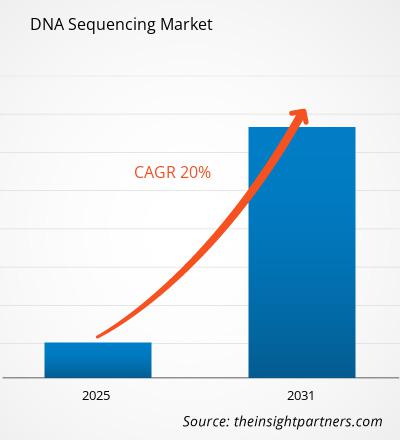
The DNA Sequencing Market was valued at US$ 15.56 Billion in 2025 and is expected to reach US$ 64.85 Billion by 2034, growing at a CAGR of 17.18% during 2026–2034. The market expansion is influenced by increasing genomic research activities, broader adoption of precision medicine, rising demand for molecular diagnostics, and technological advancements improving sequencing accuracy, speed, and scalability across healthcare and research applications.
North America remains a significant contributor to DNA sequencing market growth, supported by advanced healthcare infrastructure, strong research funding, and rapid adoption of genomic technologies. The region is projected to expand at an estimated CAGR range of 16–19% during 2026–2034, driven by clinical genomics adoption, increasing investments in biotechnology platforms, and growing integration of sequencing solutions into diagnostic workflows.
DNA Sequencing Market Assessment and Insights
- North America: Holds 34–38% DNA sequencing market share in 2025, growing at a CAGR of 16–19% during 2026–2034, driven by increasing adoption of precision medicine, expanding genomic research, and rising investments in advanced sequencing technologies.
- US: Accounts for 80–85% of the North American market in 2025, expanding at a 16–18% CAGR due to strong genomics research infrastructure, growing clinical sequencing adoption, and increasing funding for precision healthcare initiatives.
- Europe: Represents 27–31% share in 2025, growing at a 15–18% CAGR, led by the UK, Germany, and France through national healthcare genomics initiatives, expanding research collaborations, and continued investment in molecular diagnostics.
- Asia Pacific: Holds 24–28% share in 2025, expanding at a 19–22% CAGR, led by China, Japan, and India with increasing research investments, healthcare modernization, and growing adoption of next-generation sequencing technologies.
- Largest Segment: Consumables hold the largest market share in 2025, growing at a 17–20% CAGR due to recurring sequencing workflows, increasing sample processing volumes, and sustained demand for sequencing reagents and kits.
- High Growth Segment: Nanopore Sequencing is projected to register the fastest growth at a CAGR of 21–24% during 2026–2034, driven by portable sequencing platforms, real-time genomic analysis, and expanding applications in clinical and research settings.
- Key companies analyzed in detail: Abbott Laboratories; Agilent Technologies, Inc.; Danaher Corporation; F. Hoffmann-La Roche Ltd.; Illumina Inc.; LI-COR Biosciences, Inc.; Pacific Biosciences of California, Inc.; Siemens AG; PerkinElmer Inc.; Thermo Fisher Scientific, Inc.
Source: The Insight Partners' analysis based on proprietary research, government publications, company annual reports, investor presentations, industry databases, and expert interviews.
Market dynamics within the DNA sequencing industry have undergone substantial transformation with the shift from traditional sequencing methods to next-generation sequencing technologies, automation, and advanced genomic analysis systems. Innovations in sequencing chemistry, computational tools, and data interpretation software have significantly enhanced capabilities across both research and clinical settings. The DNA sequencing market report highlights a competitive landscape comprising sequencing instrument manufacturers, reagent suppliers, bioinformatics service providers, healthcare institutions, and biotechnology companies, all of which contribute to the expanding adoption and application of sequencing technologies worldwide.
Future prospects for the DNA sequencing industry include the broader adoption of sequencing technologies in developing healthcare markets, rising investments in population genomics initiatives, and the continued development of regulatory frameworks that support the growth of molecular diagnostics. In addition, an increasing number of partnerships between technology providers and healthcare organizations is expected to enhance the accessibility and affordability of sequencing solutions. The DNA sequencing market forecast highlights these factors as key drivers that will expand the reach and clinical application of sequencing technologies in the coming years.
DNA Sequencing Market Report Scope
| Report Attribute | Details |
|---|---|
| Market size in 2025 | US$ 15.56 Billion |
| Market Size by 2034 | US$ 64.85 Billion |
| Global CAGR (2026 - 2034) | 17.18% |
| Historical Data | 2021-2024 |
| Forecast period | 2026-2034 |
DNA Sequencing Market Analysis
Demand for DNA sequencing keeps rising owing to increasing demand for precise genetic data for diagnostics, oncology, inheritance testings, and drug discovery. Value chain players include DNA sequencers suppliers, manufacturers of sequencing consumables, software developers, research institutes, and clinical laboratories. Supply factors involve constant technological advancements, efficient manufacturing, and the growth of the distribution network worldwide.
The competitive structure of the DNA sequencing industry consists of leading technology companies and specialized genomics firms that concentrate on platform innovation, process optimization, and applications extension. Companies such as Illumina Inc., Thermo Fisher Scientific, Inc., and Pacific Biosciences of California, Inc. keep developing sequencing technologies and improving their position on the market.
Investment trends in the market are becoming increasingly oriented toward precision medicine, scalable sequencing infrastructure, and genomic data solutions. Strategies include growing clinical applicability, better sequencing economics, and solutions for drug discovery, diagnostics, and academia. Collaboration in the health care and biotech industries is defining competitive advantage.
● REPORT CUSTOMIZATION
Tailor This Report To Align With Your Specific Business Requirements
This report can be customized to align precisely with your business objectives, scope, and target markets. Customization options include tailored segmentation, geography, competitive analysis, and strategic insights to support informed decision-making.
Customize This Report →WHAT YOU CAN ADJUST
- ● Segmentations
- ● Geography
- ● Competitive Analysis
- ● Language Preferences
DNA Sequencing Market: Strategic Insights
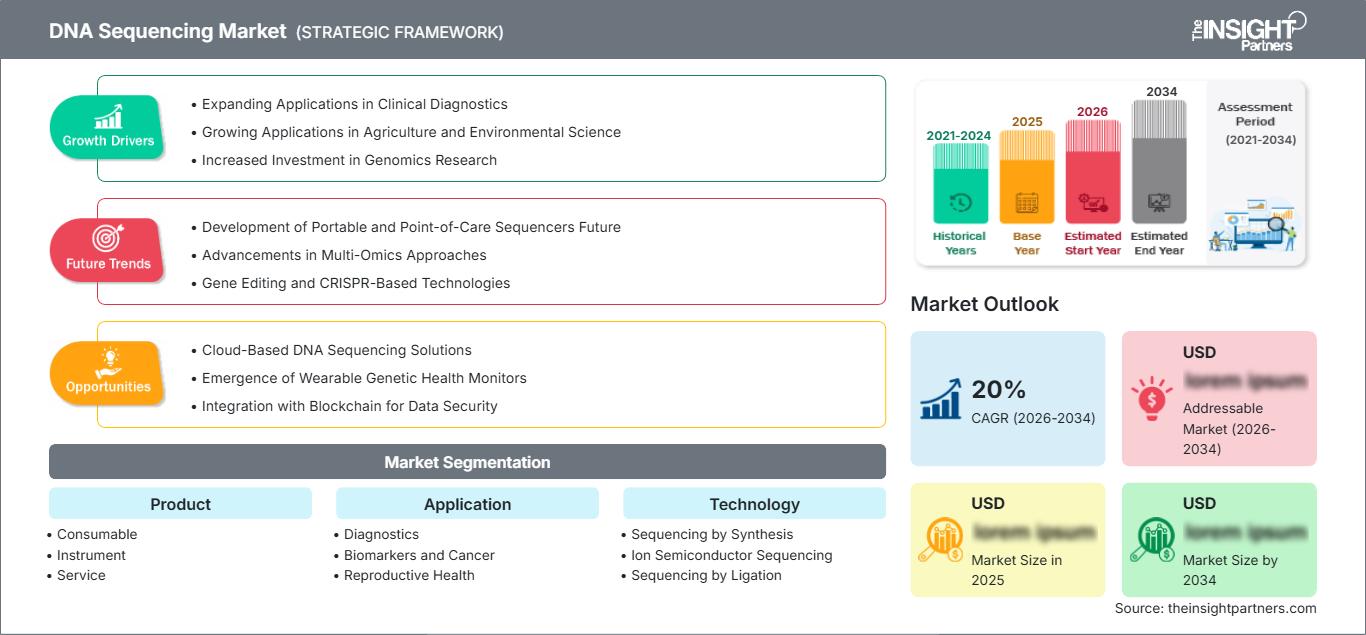
Regional Insights
North America DNA Sequencing Market
North America accounted for 34–38% of the DNA Sequencing Market share in 2025 and is expected to grow at a CAGR of 16–19% during 2026–2034. The region benefits from advanced laboratory infrastructure, strong genomic research ecosystems, and widespread adoption of sequencing technologies across healthcare and pharmaceutical applications.
Increasing demand for diagnostics, oncology sequencing, and individualized treatments will drive the regional market. Continued collaborations among research centers, biotech companies, and healthcare providers are driving the use of sequencing technology.
U.S. DNA Sequencing Market
The U.S. accounted for 80–85% of North America’s market share in 2025 and is expected to grow at a CAGR of 16–18% from 2026 to 2034. The expansion of the DNA sequencing market size is supported by strong healthcare investments, continuous biotechnology innovation, and substantial research funding, all of which reinforce the country's leadership in the global sequencing industry.
Illumina Inc., Danaher Corporation, and Thermo Fisher Scientific, Inc. hold major positions in sequencing and laboratory systems. The use of clinical applications like cancer profiling and hereditary disease screening is becoming increasingly common.
Europe DNA Sequencing Market
Europe held 27–31% share of the DNA Sequencing Market in 2025 and is expected to grow at a CAGR of 15–18% through 2034. The region benefits from government-supported genomics programs, research networks, and increasing healthcare digitization.
The UK is a major contributor due to national genomic projects, research capabilities, and the use of clinical sequencing. Germany is growing in terms of biotechnology projects, diagnostic advancements, and healthcare infrastructure. France, Italy, and Spain are developing the market through research collaborations, healthcare modernization, and rising demand for molecular testing.
The European market is changing with respect to the regulatory environment and is incorporating sequencing within its healthcare industry. The UK leads among all countries owing to its sound infrastructure.
APAC DNA Sequencing Market
APAC accounted for 24–28% of the DNA sequencing market share in 2025 and is projected to grow at a CAGR of 19–22% during 2026–2034. The region is supported by expanding healthcare infrastructure, increasing research investments, and rising demand for advanced diagnostics.
China drives regional growth via biotech growth, government genomics initiatives, and research funding. Japan and South Korea are also promoting sequencing uptake via precision medicine and technology innovations. India and Australia are developing genomics applications via healthcare digitalization and research initiatives.
The growth of industrial biotechnology, healthcare digitalization, and government funding for genomic research are boosting regional opportunities. China remains the top country in the APAC region because of its market size and the development of its sequencing ecosystem.
Middle East & Africa DNA Sequencing Market
Middle East & Africa represented a smaller portion of the DNA Sequencing Market in 2025 and is expected to expand at a CAGR of 13–16% during 2026–2034. Growth is supported by improving healthcare infrastructure, increasing diagnostic capabilities, and investments in biotechnology.
Saudi Arabia and the UAE have been bolstering their genomics healthcare initiatives through infrastructure development and research. South Africa is contributing via academia-based research and healthcare applications. Other MEA regions are slowly incorporating sequencing technology.
Factors such as healthcare diversification initiatives, infrastructure development, and investment outside the energy sector are impacting this region. Saudi Arabia is one of the top countries because of its genomic initiatives and healthcare transformation initiatives.
Segmentation Analysis
Product
The product segment of the DNA Sequencing Market is expected to expand at a CAGR of 17–20% during 2026–2034, supported by increasing sequencing activity, recurring laboratory requirements, and demand for efficient genomic workflows across research and clinical environments.
- Consumables: Consumables represent a major component due to continuous demand for reagents, kits, and sequencing materials. Rising sample volumes, clinical testing adoption, and research expansion support sustained utilization across laboratories and diagnostic facilities.
- Instrument: Instruments are gaining importance through technological upgrades, automation, and improved sequencing performance. Advanced platforms offering higher throughput, accuracy, and operational efficiency are being adopted by research institutes and healthcare organizations.
- Service: Services are expanding as organizations seek outsourced sequencing, bioinformatics support, and specialized genomic analysis. The growing complexity of sequencing data interpretation is encouraging adoption among pharmaceutical and biotechnology companies.
Application
The application segment of the DNA Sequencing Market is driven by increasing utilization across diagnostics, research, and personalized healthcare. The segment benefits from rising genomic testing adoption and broader integration of sequencing into medical decision-making.
- Diagnostics: Diagnostic applications are expanding through molecular testing, infectious disease identification, and genetic disorder analysis. Healthcare providers increasingly use sequencing technologies for accurate disease detection and improved clinical assessment.
- Biomarkers and Cancer: Cancer genomics remains a key application area due to increasing demand for tumor profiling, biomarker discovery, and targeted therapy development. Sequencing supports oncology research and personalized treatment strategies.
- Reproductive Health: Reproductive health applications are supported by increasing use of prenatal testing, carrier screening, and genetic risk assessment. Sequencing technologies provide an improved understanding of inherited conditions and reproductive outcomes.
- Personalized Medicine: Personalized medicine adoption is increasing through genomic-guided therapies and individualized treatment approaches. Sequencing enables healthcare providers and pharmaceutical companies to improve therapeutic decisions based on genetic information.
- Forensics: Forensic applications utilize sequencing for identification, genetic analysis, and investigative processes. Improvements in sequencing accuracy and data interpretation capabilities are supporting wider adoption in forensic laboratories.
Technology
The technology segment continues to evolve as sequencing platforms improve in speed, accuracy, and scalability. Innovation across multiple sequencing approaches supports broader applications in healthcare, research, and biotechnology.
- Sequencing by Synthesis: Sequencing by synthesis remains widely adopted due to high accuracy, established workflows, and extensive use across research and clinical sequencing applications.
- Ion Semiconductor Sequencing: This technology supports rapid sequencing workflows through semiconductor-based detection methods. It is utilized for applications requiring faster turnaround and scalable genomic analysis.
- Sequencing by Ligation: Sequencing by ligation provides accurate genomic information through probe-based methods and continues to support specialized research applications.
- Pyrosequencing: Pyrosequencing is applied in targeted genetic analysis where rapid detection and sequencing efficiency are required for specific applications.
- Single-molecule Real-time Sequencing: Single-molecule real-time sequencing enables long-read capabilities and supports complex genomic analysis, structural variation studies, and advanced research applications.
- Chain Termination Sequencing: Chain termination sequencing remains relevant for specific genetic analysis requirements due to its accuracy and established laboratory usage.
- Nanopore Sequencing: Nanopore sequencing is expected to record the highest growth with a CAGR of 21–24% during 2026–2034, driven by portable devices, real-time analysis, and long-read sequencing capabilities.
End User
The end user segment reflects increasing adoption of sequencing solutions across research institutions, healthcare providers, and life sciences organizations. Growing genomic applications are encouraging broader implementation across multiple user categories.
- Academic and Government Research Institutes: These organizations drive sequencing demand through genomic studies, population research, and scientific innovation. Funding support and research collaborations continue to strengthen adoption.
- Pharmaceutical Companies: Pharmaceutical companies utilize sequencing for drug discovery, biomarker identification, and clinical development. Genomic insights support targeted therapies and precision medicine strategies.
- Biotechnology Companies: Biotechnology companies adopt sequencing technologies for research, diagnostics development, and innovative genomic solutions. Expanding biotechnology ecosystems are increasing the demand for sequencing platforms.
- Hospitals and Clinics: Hospitals and clinics are increasingly integrating sequencing into diagnostic workflows, oncology testing, and personalized healthcare services to improve patient management.
Opportunity Snapshot
| End User | Revenue Contribution (High/Medium/Low) | Trend Tag | Adoption Stage |
| Academic and Government Research Institutes | High | Genomic Research | Mature |
| Pharmaceutical Companies | High | Drug Discovery | Scaling |
| Biotechnology Companies | Medium | Bioinnovation Platforms | Scaling |
| Hospitals and Clinics | High | Clinical Genomics | Scaling |
DNA Sequencing Market Growth Drivers and Impact Analysis
Expansion of Precision Medicine Applications
The growing trend in the use of precision medicine becomes one of the most important factors affecting the growth of the DNA sequencing market. Genomic data is used in the planning of medical treatments, disease diagnosis and therapies. The sequencing technologies make it possible to understand better the nature of genetic differences causing diseases, including oncological and rare diseases. The consequences of the market include the increased demand for the clinical sequencing systems, diagnostic tools, and genomic data analysis solutions. Besides, pharmaceutical companies become more active in the use of sequencing in their researches.
Rising Demand for Advanced Molecular Diagnostics
The rising need for accuracy and early disease detection in medicine is leading to increased application of DNA sequencing technology in diagnostic settings. In contrast to traditional methods of testing, sequencing offers more complete information about the genetic makeup. The commercial effect can be seen in the expanding application in hospitals, laboratories, and health care networks. Greater availability of sequencing technology, removal of operational hurdles, and increasing knowledge about the advantages of genomic testing are leading to its wider application.
Technological Improvements in Sequencing Platforms
Advancements in sequencing technology are leading to higher efficiencies in terms of speed, accuracy, mobility, and cost-effectiveness. Improvements in long read sequencing, automation, and analytics are increasing the applicability of sequencing devices due to innovations in these areas. The effect on the market would be in making these more accessible for research institutions, biotech firms, and clinical labs. With increased sequencing capabilities, organizations are better able to handle bigger genomics datasets without adding complexity.
DNA Sequencing Market Future Trends
Integration of Artificial Intelligence in Genomic Data Analysis
The adoption of artificial intelligence is predicted to be a significant trend that will affect the future of the DNA sequencing market. Higher volumes of sequencing require the use of computing technology able to analyze complicated genomic data sets effectively. The use of such platforms powered by artificial intelligence can facilitate identification of variants, prediction of diseases, and improved decision-making in the clinical setting. The application of sequencing technologies along with intelligent analysis is projected to lead to higher efficiency and a broader scope of applications of the technology other than genomics.
Growth of Portable and Decentralized Sequencing Solutions
In the future, healthcare organizations are expected to place greater emphasis on portable sequencing devices as they seek more flexible and accessible genomic testing solutions. These compact platforms can be deployed beyond traditional laboratory settings for applications such as field testing, remote diagnostics, and rapid analysis. Ongoing improvements in device performance, connectivity, and data management capabilities are likely to accelerate adoption across diverse healthcare environments. Among the key DNA sequencing market trends is the growing shift toward decentralized genomic testing, enabling broader access to sequencing services, particularly in regions with limited laboratory infrastructure.
DNA Sequencing Market Opportunities
Expansion Across Emerging Healthcare Markets
The development of new healthcare markets presents great chances for the companies dealing with DNA sequencing owing to growing expenditures on health care infrastructure, biotechnological tools, and molecular diagnostics. New markets will emerge through expansion of genomic research and healthcare development projects in certain countries, thus, creating the need for DNA sequencing technology. Scalable DNA sequencing technologies adapted to various conditions could benefit from such opportunities. The chance would be especially valuable for those regions where genome-based technologies move from research-oriented to clinical applications.
Development of Integrated Sequencing and Data Management Platforms
The integrated sequencing systems comprising the lab processes, automation, and genome data management systems stand out as a valuable area of opportunity. There is a growing need for solutions that simplify the sequencing process and optimize its interpretation. Businesses that come up with ecosystems integrating the instrumentation, consumables, software, and analytical competencies may have a competitive edge. The opportunity exists in pharmaceutical discovery, diagnostic procedures, and biotechnological uses where there is a great need for efficient management of genomic data.
Recent Developments
- January 2026: Illumina completed its acquisition of SomaLogic, strengthening its multiomics portfolio by integrating proteomics with its DNA sequencing technologies. The acquisition expands Illumina's capabilities beyond genomics, enabling more comprehensive biological insights for precision medicine, biomarker discovery, and translational research. The move reinforces the company's leadership in integrated omics solutions.
- April 2026: PacBio announced a collaboration with Lucid Genomics to improve tertiary analysis for long-read sequencing workflows. The partnership integrates Lucid Genomics' analysis platform with PacBio sequencing data, enabling researchers to streamline genomic data interpretation and accelerate variant analysis. The collaboration strengthens PacBio's ecosystem for clinical and research genomics.
- May 2025: Roche announced a strategic collaboration with Broad Clinical Labs to accelerate the clinical adoption of its newly introduced Sequencing by Expansion (SBX) technology. The collaboration will evaluate whole-genome sequencing applications for critically ill newborns and explore the integration of SBX into routine clinical genomics. The partnership supports the translation of Roche's next-generation sequencing platform into real-world clinical practice.
Frequently Asked Questions

- Comprehensive Market Sizing and Forecast Analysis
- Detailed Segmentation Analysis
- In-Depth Market Dynamics Assessment
- Regional and Country-Level Insights
- Competitive Landscape and Company Benchmarking
- Strategic Business Intelligence
Recent Reports
Testimonials

The Insight Partners' SCADA System Market report is comprehensive, with valuable insights on current trends and future forecasts. The team was highly professional, responsive, and supportive throughout. We are very satisfied and highly recommend their services.
RAN KEDEM Partner, Reali Technologies LTDs
I requested a report on a very specific software market and the team produced the report in a few days. The information was very relevant and well presented. I then requested some changes and additions to the report. The team was again very responsive and I got the final report in less than a week.
JEAN-HERVE JENN Chairman, Future Analytica
We worked with The Insight Partners for an important market study and forecast. They gave us clear insights into opportunities and risks, which helped shape our plans. Their research was easy to use and based on solid data. It helped us make smart, confident decisions. We highly recommend them.
PIYUSH NAGPAL Sr. Vice President, High Beam Global
The Insight Partners delivered insightful, well-structured market research with strong domain expertise. Their team was professional and responsive throughout. The user-friendly website made accessing industry reports seamless. We highly recommend them for reliable, high-quality research services
YUKIHIKO ADACHI CEO, Deep Blue, LLC.
This is the first time I have purchased a market report from The Insight Partners.While I was unsure at first, I visited their web site and felt more comfortable to take the risk and purchase a market report.I am completely satisfied with the quality of the report and customer service. I had several questions and comments with the initial report, but after a couple of dialogs over email with their analyst I believe I have a report that I can use as input to our strategic planning process.Thank you so much for taking the extra time and making this a positive experience.I will definitely recommend your service to others and you will be my first call when we need further market data.
JOHN SUZUKI President and Chief Executive Officer, Board Director, BK Technologies
I wish to appreciate your support and the professionalism you displayed in the course of attending to my request for information regarding to infectious disease IVD market in Nigeria. I appreciate your patience, your guidance, and the fact that you were willing to offer a discount, which eventually made it possible for us to close a deal. I look forward to engaging The Insight Partners in the future, all thanks to the impression you have created in me as a result of this first encounter.
DR CHIJIOKE ONYIA MANAGING DIRECTOR, PineCrest Healthcare Ltd.Reason to Buy
- Informed Decision-Making
- Understanding Market Dynamics
- Competitive Analysis
- Identifying Emerging Markets
- Customer Insights
- Market Forecasts
- Risk Mitigation
- Boosting Operational Efficiency
- Strategic Planning
- Investment Justification
- Tracking Industry Innovations
- Aligning with Regulatory Trends





 Get Free Sample for