
Ablation Device Market Growth and Recent Trends by 2034
Coverage: By Device (Radiofrequency Devices, Laser/Light Ablation, Ultrasound Devices, Cryoablation Devices, and Other Devices), Application (Cancer Treatment, Cardiovascular Disease Treatment, Ophthalmologic Treatment, Gynecological Treatment, Urological Treatment, Cosmetic Surgery, and Others), End-User (Hospitals and Clinics, Ambulatory Surgical Centers, and Others), and Geography (North America, Europe, Asia Pacific, South & Central America, and Middle East & Africa)
- Status : Data Released
- Report Code : TIPRE00003095
- Category : Life Sciences
- No. of Pages : 185
- Available Report Formats :


- Last update date : July 15, 2026


2025 Market Size
US$ 12.01 Bn
Base year value
2034 Forecast
US$ 26.74 Bn
Projected by 2034
CAGR 2026-2034
9.3 %
Growth rate
Addressable Market
US$ 173.09 Bn
(2026-2034)
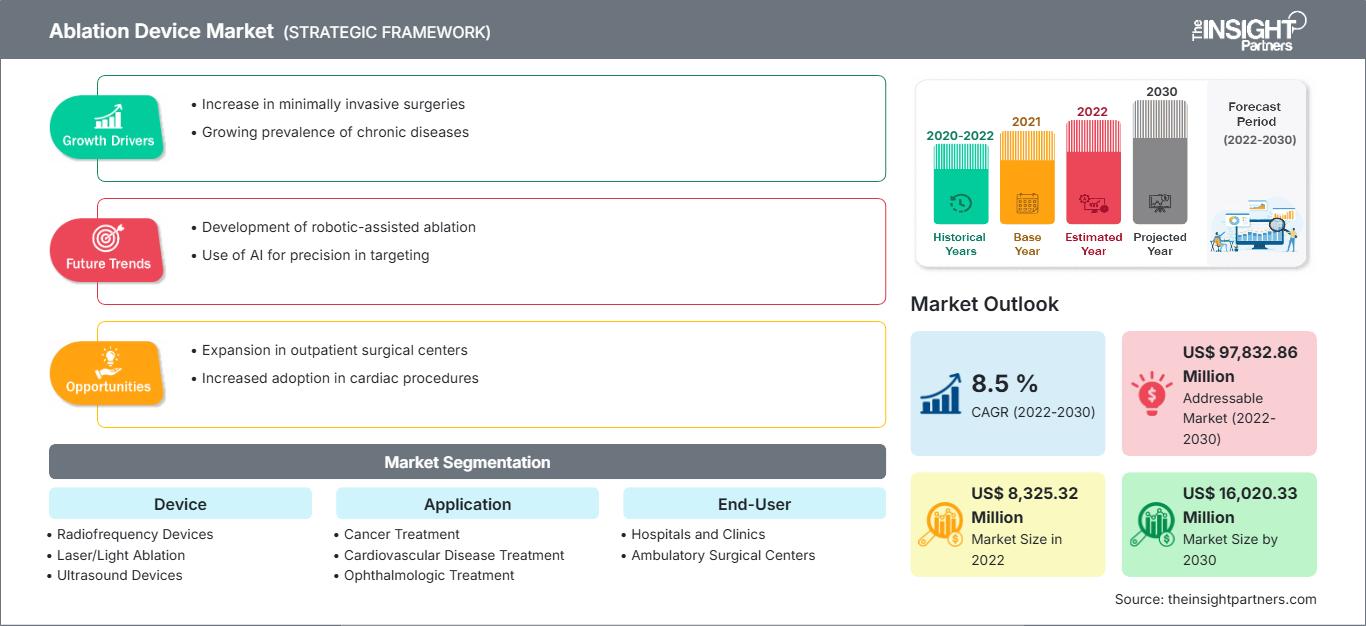
The ablation device market size is projected to grow from US$ 12.01 Billion in 2025 to US$ 26.74 Billion by 2034; it is expected to register a CAGR of 9.3% during 2026–2034. Demand is supported by rising use of energy-based treatment platforms across cancer, cardiovascular disease, ophthalmologic, gynecological, urological, and cosmetic procedures, alongside growing preference for minimally invasive care.
North America is expected to expand at a CAGR of 8.7–9.4% during 2026–2034, supported by electrophysiology lab upgrades, image-guided oncology interventions, and strong reimbursement for selected ablation procedures. The region benefits from specialist density, early regulatory access, capital equipment investment, and rapid uptake of radiofrequency, cryoablation, ultrasound, laser, and pulsed field technologies.
Ablation Device Market Assessment and Insights
- North America: Share in 2025 is estimated at 38–42%, with CAGR between 2026–2034 at 8.7–9.4%, supported by high cardiovascular ablation volumes, cancer center adoption, and advanced hospital infrastructure.
- US: Share in 2025 is estimated at 85–89% of North America, with CAGR between 2026–2034 at 8.6–9.3%, reflecting FDA-cleared technologies and strong outpatient procedural migration.
- Europe: Share in 2025 is estimated at 27–31%, with CAGR between 2026–2034 at 7.9–8.7%; Germany, the UK, France, Italy, and Spain lead adoption through established interventional networks.
- Asia Pacific: Share in 2025 is estimated at 22–26%, with CAGR between 2026–2034 at 10.8–11.7%; China, Japan, India, South Korea, and Australia advance through hospital modernization and cancer care expansion.
- Largest Segment: Radiofrequency Devices hold 34–38% market share in 2025, with CAGR between 2026–2034 at 8.8–9.6%, driven by cardiovascular, tumor, and surgical ablation use.
- High Growth Segment: Cryoablation Devices account for 18–22% market share in 2025, with CAGR between 2026–2034 at 10.9–11.8%, supported by expanding cardiac and oncology applications.
- Key companies analyzed in detail: Abbott Laboratories, AngioDynamics, Inc., AtriCure, Inc., BIOTRONIK SE & Co. KG, Boston Scientific Corporation, CONMED Corporation, Johnson & Johnson Services, Inc., Medtronic plc, Olympus Corporation, Smith & Nephew plc.
Source: The Insight Partners' analysis based on proprietary research, government publications, company annual reports, investor presentations, industry databases, and expert interviews.
Ablation device technology is moving from traditional heat-based systems to system-specific solutions that feature generators, catheters, probes, software, imaging, navigation and disposables. Radio frequency is commonly used, whereas cryoablation, laser / light, ultrasound, pulse field and irreversible electroporation methods are gaining popularity in terms of offering alternative clinical options. Key manufacturing challenges involve energy accuracy, sterility of disposables, generators' efficiency, catheters' flexibility, thermal control, and compliance with cardiovascular, oncological, surgical and specialist care regulatory requirements.
Future demand will be driven by increasing frequency of cancer occurrence, atrial fibrillation treatments, and growing access to specialist procedures in developing markets. Device development trends favor devices proven for their safety, lesion durability, reduction of recurrence, and effectiveness in clinical practice. Prospects for growth in the ablation device market are best in hospitals equipped with advanced imaging capabilities, specialized medical professionals, reimbursement opportunities, and minimal invasive procedures.
Ablation Device Market Report Scope
| Report Attribute | Details |
|---|---|
| Market size in 2025 | US$ 12.01 Billion |
| Market Size by 2034 | US$ 26.74 Billion |
| Global CAGR (2026 - 2034) | 9.3% |
| Historical Data | 2021-2024 |
| Forecast period | 2026-2034 |
Ablation Device Market Analysis
Factors influencing the demand include the need for treatment of cancers, atrial fibrillation, and arrhythmias, ophthalmic laser therapy, gynecologic tissue treatment, urologic ablation, and energy-based cosmetic surgery. According to the ablation device market analysis, factors driving the use of the technology include the disease prevalence rate, energy accuracy, ease of access, procedures training, imaging, and confidence in clinical outcomes. Modality choice depends on the type of tissues, lesion size, injury risk, repeatability, and recovery considerations.
The supply chain comprises energy generators, catheters and probes manufacturers, optical components, ultrasound transducers manufacturers, cryogens, software developers, hospitals, ambulatory care centers, and clinics. Supply trends are affected by the capital equipment cycle and disposable use. Purchasers are increasingly becoming favorably disposed to suppliers who offer clinical training, maintenance services, integrated solutions, evidence packages, and indications training.
Competition is concentrated among diversified medtech leaders and focused innovators. The ablation device market report focuses on the key players including Abbott Laboratories, Boston Scientific Corporation, Medtronic plc, AtriCure, Inc., and BIOTRONIK SE & Co. KG compete strongly in cardiovascular ablation. AngioDynamics, Inc., Olympus Corporation, CONMED Corporation, Johnson & Johnson Services, Inc., and Smith & Nephew plc strengthen the market through oncology, surgical energy, endoscopic, orthopedic, and minimally invasive portfolios.
Investment trends are shifting toward tissue-selective energy, pulsed field platforms, image-guided workflows, compact systems, and procedure-specific disposables. The ablation device market trends show that supplier differentiation increasingly depends on clinical evidence, installed-base leverage, training capability, and software-enabled workflow support. Companies with broad therapeutic coverage and recurring consumable economics are positioned to expand ablation device market share.
● REPORT CUSTOMIZATION
Tailor This Report To Align With Your Specific Business Requirements
This report can be customized to align precisely with your business objectives, scope, and target markets. Customization options include tailored segmentation, geography, competitive analysis, and strategic insights to support informed decision-making.
Customize This Report →WHAT YOU CAN ADJUST
- ● Segmentations
- ● Geography
- ● Competitive Analysis
- ● Language Preferences
Ablation Device Market: Strategic Insights
Regional Insights
North America ablation device market
The North America segment holds a 38–42% ablation device market share in 2025 and is expected to register a CAGR of 8.7–9.4% for the forecast period from 2026 to 2034. Growth factors include higher volumes of cardiovascular interventions, superior oncological offerings, and availability of imaging-based procedures. The region has several advantages such as rapid regulatory approval, high purchasing power of hospitals, and concentration of specialists in electrophysiology, interventional radiology, urology, and surgical oncology.
Expansion of ablation devices in hospitals includes investments in electrophysiology laboratories, ablation in outpatient settings, tumor ablation facilities, and sophisticated operating theaters. The purchase decision is driven by factors such as lesion consistency, safety, procedure time, integration with mapping systems, and disposable economics. The adoption rate is high in networks of integrated facilities that enable platform standardization across different departments.
U.S. ablation device market
The US represents 85–89% of the ablation device market in North America in 2025 and is expected to grow at a CAGR of 8.6–9.3% during 2026–2034. Demand is supported by large procedure volumes, active clinical trial infrastructure, FDA-regulated product access, and hospital investment in catheterization laboratories, ambulatory surgery centers, and image-guided treatment suites.
Company presence is significant, with Abbott Laboratories, AngioDynamics, Inc., AtriCure, Inc., Boston Scientific Corporation, Johnson & Johnson Services, Inc., Medtronic plc, and CONMED Corporation serving major therapeutic segments. Application trends are concentrated in cardiovascular disease treatment, cancer treatment, and urological treatment, while cosmetic, ophthalmologic, and gynecological procedures increasingly shift into outpatient settings.
Europe ablation device market
In 2025, Europe captures a 27–31% share of the ablation device market and is expected to register a CAGR of 7.9–8.7% for 2026–2034. In the UK, organized cancer care pathways, growth in electrophysiology services, and minimally invasive procedures in public and private hospitals drive the adoption. Budget review processes ensure purchasing remains procedure-efficient, safe, and with less hospital stay.
Germany dominates in Europe with its strong procedural capabilities, cardiovascular centers of excellence, and high intervention radiology facilities. The hospitals assess ablation platforms based on clinical evidence, repeatability, consumable price, service, and compatibility with imaging and mapping technologies. Platform adoption becomes strong where there is multidisciplinary tumor boards and electrophysiology collaboration.
France, Italy, and Spain provide consistent demand through public hospitals, private hospitals, and increasing number of minimally invasive surgery programs. Growth varies according to reimbursement policies, availability of training, and capital expenditure budgets. Across Europe, the preference of systems is driven by reduction in hospital stay, rapid recovery, and successful treatment of complex anatomy lesions.
APAC ablation device market
Asia Pacific accounts for 22–26% share in 2025 and the ablation device market forecast a CAGR of 10.8–11.7% during 2026–2034. China leads regional demand through cancer center expansion, domestic device production, and rising cardiovascular intervention capacity.
Japan and South Korea show mature adoption in cardiac and tumor ablation, supported by advanced imaging infrastructure. Australia maintains high procedural standards and early specialist uptake.
India is scaling through private hospital investment, medical tourism, and broader insurance access. Policy support for local medtech manufacturing, cancer screening, and tertiary care development reinforces ablation device market size expansion across the region.
Middle East & Africa ablation device market
The Middle East & Africa market is expected to grow at a CAGR of 6.9–7.8% during 2026–2034. Saudi Arabia leads adoption as tertiary hospitals expand oncology, cardiovascular, and minimally invasive surgery capabilities.
The UAE supports demand through private hospitals, imported advanced platforms, and medical tourism. Premium ablation systems remain concentrated in high-acuity centers with imaging and specialist capacity.
South Africa anchors Sub-Saharan demand, while Rest of MEA adoption is limited by reimbursement gaps, specialist shortages, and uneven imaging infrastructure. Energy-linked public investment and hospital modernization support selective growth in cancer and cardiovascular treatment capacity.
Segmentation Analysis
Device
The device segment in the global ablation device market forecast is 9.0-9.7% CAGR. The factors that determine the demand for devices include accuracy of energy delivery, indications, safety, user-friendliness, and compatibility with imaging/mapping. Radiofrequency will continue to be the primary technology used in several procedures, but cryoablation, ultrasound, and laser/light will gain popularity when tissue specificity, visualization, speed, or lower collateral damage is desired.
- Radiofrequency Devices are popularly used because of the familiarity of the procedure, well-documented clinical pathways, frequent usage of disposables, and suitability for cardiovascular, tumor, gynecological, urological, surgical, and cosmetic treatments.
- Laser/Light Ablation is useful for procedures requiring controlled and accurate optical energy, especially in the fields of ophthalmology, dermatology, urology, and specific endoscopic cases.
- Ultrasound Devices have a strategic position in non-invasive and imaging-guided procedures, where precise energy treatment of the tissue can be achieved without need for an incision.
- Cryoablation Devices are becoming increasingly popular in the field of cardiac rhythm management and oncology due to the predictability of the frozen zone, familiarity of the procedure, and alternative to heat treatments.
Application
The Application segment in the ablation device market is expected to grow at a CAGR of 9.2–10.0% during 2026–2034. Cancer and cardiovascular disease treatment generate the strongest revenue contribution because they combine high disease burden, specialist infrastructure, and repeat procedural demand. Ophthalmologic, gynecological, urological, and cosmetic applications broaden the addressable base through outpatient workflows and modality-specific adoption.
- Cancer Treatment uses ablation as a minimally invasive option for selected tumors, especially where surgery is unsuitable, imaging guidance is available, and local tissue destruction can preserve organ function.
- Cardiovascular Disease Treatment is driven by atrial fibrillation and arrhythmia procedures, where platforms compete on lesion durability, safety, mapping integration, workflow speed, and repeat intervention reduction.
- Ophthalmologic Treatment depends on precision energy delivery, short procedure duration, and outpatient suitability, making laser and light-based technologies important for high-volume specialty practices.
- Gynecological Treatment supports management of fibroids, abnormal tissue, and selected lesions, with adoption influenced by fertility preservation, recovery time, procedural access, and patient preference.
- Urological Treatment is expanding through prostate, kidney, and bladder-related tissue ablation, where physicians value function preservation, image guidance, and alternatives to invasive surgery.
- Cosmetic Surgery uses energy-based platforms for tissue remodeling, resurfacing, tightening, and contouring, with demand shaped by private clinics, patient affordability, and quick recovery expectations.
End-User
The End-User segment in the ablation device market is expected to grow at a CAGR of 9.1–9.8% during 2026–2034. Hospitals and clinics dominate because they manage complex cardiac, cancer, and surgical ablation procedures requiring imaging, anesthesia, and multidisciplinary support. Ambulatory surgical centers are expanding as selected ophthalmologic, cosmetic, gynecological, urological, and lower-acuity procedures shift toward cost-efficient outpatient care.
- Hospitals and Clinics generate the highest revenue contribution because they manage complex procedures, capital equipment purchasing, specialist staffing, imaging support, and high-acuity oncology and cardiovascular cases.
- Ambulatory Surgical Centers are scaling in ophthalmology, cosmetic surgery, gynecology, urology, and selected cardiovascular workflows where patient selection and procedural efficiency support outpatient care.
Opportunity Snapshot
| End User | Revenue Contribution | Trend Tag | Adoption Stage |
| Cancer Treatment | High | Tumor Ablation | Scaling |
| Cardiovascular Disease Treatment | High | PFA Uptake | Scaling |
| Ophthalmologic Treatment | Medium | Laser Precision | Mature |
| Gynecological Treatment | Medium | Fibroid Care | Scaling |
| Urological Treatment | Medium | Prostate Ablation | Scaling |
| Cosmetic Surgery | Medium | Energy Aesthetics | Mature |
Ablation Device Market Growth Drivers and Impact Analysis
Rising Burden of Cancer and Cardiovascular Procedures
Cancer and cardiovascular disease treatment remain the strongest demand drivers because both require scalable, minimally invasive intervention options. Ablation offers local tissue destruction, shorter recovery, and procedural repeatability in selected patients, making it attractive for hospitals managing high case volumes. In cardiovascular care, atrial fibrillation treatment is accelerating demand for catheter-based systems, mapping integration, and safer energy sources. The market impact is stronger capital equipment purchasing, recurring disposable utilization, and cross-specialty platform evaluation. Vendors that support high-volume workflows and complex cases can improve utilization economics while strengthening long-term relationships across hospitals, clinics, and specialty centers.
Shift Toward Minimally Invasive and Outpatient Care
Healthcare systems are moving procedures toward lower-acuity settings where clinically appropriate, and ablation fits this transition because many applications use smaller access points, shorter monitoring, and faster recovery. Ambulatory surgical centers are becoming more relevant for ophthalmologic, cosmetic, gynecological, urological, and selected cardiovascular procedures. This shift increases demand for compact, intuitive, and reliable platforms that reduce setup time and fit standardized protocols. Commercial impact is visible in product design, as manufacturers emphasize portability, simplified interfaces, disposable kits, and quick staff training. Suppliers aligned with outpatient economics can capture incremental procedure volume beyond tertiary hospitals.
Technology Improvements in Energy Precision and Safety
Ablation technology is improving through better thermal control, tissue-selective energy, real-time feedback, catheter maneuverability, and image-guided targeting. These advances reduce the risk of collateral damage, incomplete therapy, recurrence, and procedure variability. Cryoablation, focused ultrasound, laser systems, pulsed field ablation, and irreversible electroporation are expanding physician choice beyond conventional radiofrequency systems. The market impact is a broader treatable patient pool, adoption in sensitive anatomical areas, and stronger willingness to invest in premium systems. Manufacturers that combine hardware, software, disposables, and clinical education can differentiate effectively as buyers demand predictable outcomes.
Ablation Device Market Future Trends
Growth of Tissue-Selective Ablation Platforms
Future adoption will increasingly favor technologies that target pathological tissue while limiting injury to adjacent structures. Pulsed field ablation and irreversible electroporation are gaining attention because nonthermal mechanisms may reduce risks associated with heat or cold in sensitive anatomy. In oncology and urology, function preservation will become a stronger purchasing criterion, especially for prostate, kidney, and liver applications. Cardiovascular users will prioritize energy sources that reduce esophageal, nerve, or vascular complications while maintaining competitive procedure times. This trend will shift differentiation from generator power alone toward tissue response, safety evidence, mapping integration, and real-world durability.
Integration of Imaging, Navigation, and Outcome Analytics
Ablation workflows will increasingly connect imaging, navigation, energy delivery, and post-procedure assessment. Hospitals will expect systems that help define lesion boundaries, guide device placement, monitor ablation completeness, and document outcomes for reimbursement and quality reporting. This integration is particularly important for tumor ablation and complex arrhythmia procedures, where incomplete targeting can lead to recurrence or reintervention. Manufacturers are likely to invest in software, artificial intelligence, and connectivity to improve procedural confidence. Over time, procurement decisions will favor platforms that provide measurable clinical value, training scalability, and data-supported ablation device market trends.
Ablation Device Market Opportunities
Expansion of Ablation Access in Asia Pacific Hospitals
Asia Pacific offers a strong investment opportunity as China, India, South Korea, and Southeast Asia expand oncology, cardiovascular, and specialty surgical capacity. Manufacturers can accelerate adoption by combining device access with physician education, distributor reliability, local clinical evidence, and financing models for capital equipment. The opportunity is strongest in tertiary hospitals building multidisciplinary programs and seeking alternatives to open surgery. Localized support matters because successful ablation requires imaging, patient selection, procedural expertise, and follow-up. Companies that adapt pricing, training, and service models to regional infrastructure will be better positioned for sustained expansion.
Procedure-Specific Platforms for Ambulatory Surgical Centers
Ambulatory surgical centers represent a high-potential channel for selected ablation procedures where patient risk is manageable and recovery is rapid. Vendors can target these facilities with compact generators, standardized disposables, workflow-ready kits, and training modules that reduce dependence on large hospital teams. Ophthalmologic, cosmetic, gynecological, and urological procedures are particularly attractive because they fit scheduled outpatient care and private-pay or mixed reimbursement models. To win this opportunity, companies must demonstrate fast setup, consistent energy delivery, low maintenance burden, and clear economic value. Supplier strategies should emphasize utilization rates, staff efficiency, and predictable inventory management.
Recent Developments
- June 2026: AngioDynamics, Inc. received US FDA approval for an investigational device exemption to begin the RELIEF clinical trial of the NanoKnife System for benign prostatic hyperplasia. The study will enroll up to 40 participants across as many as five US sites and assess irreversible electroporation as a minimally invasive urology application.
- December 2025: Abbott Laboratories received US FDA approval for the Volt Pulsed Field Ablation System to treat atrial fibrillation. Approval was supported by the VOLT-AF IDE study involving 392 patients across 40 centers in the US, Europe, Canada, and Australia, expanding Abbott’s participation in the competitive cardiac ablation field.
- December 2025: AtriCure, Inc. announced the first patients treated with its novel dual energy platform combining pulsed field ablation and advanced radiofrequency ablation with the EnCompass clamp. The first-in-human procedures in Australia created box lesions isolating pulmonary veins and the left atrial posterior wall in less than 60 seconds.
Frequently Asked Questions

- Comprehensive Market Sizing and Forecast Analysis
- Detailed Segmentation Analysis
- In-Depth Market Dynamics Assessment
- Regional and Country-Level Insights
- Competitive Landscape and Company Benchmarking
- Strategic Business Intelligence
Recent Reports
Testimonials

The Insight Partners' SCADA System Market report is comprehensive, with valuable insights on current trends and future forecasts. The team was highly professional, responsive, and supportive throughout. We are very satisfied and highly recommend their services.
RAN KEDEM Partner, Reali Technologies LTDs
I requested a report on a very specific software market and the team produced the report in a few days. The information was very relevant and well presented. I then requested some changes and additions to the report. The team was again very responsive and I got the final report in less than a week.
JEAN-HERVE JENN Chairman, Future Analytica
We worked with The Insight Partners for an important market study and forecast. They gave us clear insights into opportunities and risks, which helped shape our plans. Their research was easy to use and based on solid data. It helped us make smart, confident decisions. We highly recommend them.
PIYUSH NAGPAL Sr. Vice President, High Beam Global
The Insight Partners delivered insightful, well-structured market research with strong domain expertise. Their team was professional and responsive throughout. The user-friendly website made accessing industry reports seamless. We highly recommend them for reliable, high-quality research services
YUKIHIKO ADACHI CEO, Deep Blue, LLC.
This is the first time I have purchased a market report from The Insight Partners.While I was unsure at first, I visited their web site and felt more comfortable to take the risk and purchase a market report.I am completely satisfied with the quality of the report and customer service. I had several questions and comments with the initial report, but after a couple of dialogs over email with their analyst I believe I have a report that I can use as input to our strategic planning process.Thank you so much for taking the extra time and making this a positive experience.I will definitely recommend your service to others and you will be my first call when we need further market data.
JOHN SUZUKI President and Chief Executive Officer, Board Director, BK Technologies
I wish to appreciate your support and the professionalism you displayed in the course of attending to my request for information regarding to infectious disease IVD market in Nigeria. I appreciate your patience, your guidance, and the fact that you were willing to offer a discount, which eventually made it possible for us to close a deal. I look forward to engaging The Insight Partners in the future, all thanks to the impression you have created in me as a result of this first encounter.
DR CHIJIOKE ONYIA MANAGING DIRECTOR, PineCrest Healthcare Ltd.Reason to Buy
- Informed Decision-Making
- Understanding Market Dynamics
- Competitive Analysis
- Identifying Emerging Markets
- Customer Insights
- Market Forecasts
- Risk Mitigation
- Boosting Operational Efficiency
- Strategic Planning
- Investment Justification
- Tracking Industry Innovations
- Aligning with Regulatory Trends





 Get Free Sample for