
Achondrogenesis Market Share, Growth & Forecast by 2034
Coverage: By Type ( Type IA (Houston-Harris Type), Type IB (Fraccaro Type), Type II (Langer-Saldino Type)); Diagnosis ( Molecular Genetic Testing, Biochemical Testing); End User (Hospitals and Clinics, Ambulatory Surgical Centers, Others), and Geography (North America, Europe, Asia Pacific, and South and Central America)
- Status : Data Released
- Report Code : TIPRE00017631
- Category : Life Sciences
- No. of Pages : 150
- Available Report Formats :


- Last update date : July 14, 2026


2025 Market Size
US$ 172.93 Mn
Base year value
2034 Forecast
US$ 326.88 Mn
Projected by 2034
CAGR 2026-2034
7.33 %
Growth rate
Addressable Market
US$ 2,253.92 Mn
(2026-2034)
The achondrogenesis market was valued at US$ 172.93 Million in 2025 and is projected to reach US$ 326.88 Million by 2034; it is expected to register a CAGR of 7.33% during 2026–2034. Demand is supported by improved prenatal imaging, molecular confirmation of rare skeletal dysplasias, broader fetal medicine access, and greater use of genetic counseling for families with suspected lethal congenital bone disorders.
Across North America, the achondrogenesis market size reflects a specialized diagnostic and tertiary-care setting, with an estimated CAGR range of 6.6–7.2% during 2026–2034. Growth is supported by advanced prenatal ultrasound workflows, rare disease genomics, reimbursement for high-risk pregnancy testing, and multidisciplinary fetal medicine programs that integrate imaging, genetic testing, pathology review, and family counseling.
Achondrogenesis Market Assessment and Insights
- North America held an estimated 36–38% of the achondrogenesis market share in 2025 and is expected to grow at a CAGR between 2026–2034 of 6.6–7.2%, supported by fetal medicine centers, genomic testing access, and rare disease diagnostic infrastructure.
- US accounted for 84–87% of North America in 2025 and is projected to grow at a CAGR between 2026–2034 of 6.7–7.3%, led by molecular diagnostics and advanced obstetric imaging.
- Europe represented 27–29% share in 2025 and is forecast to grow at a CAGR between 2026–2034 of 6.0–6.7%, with Germany, the UK, and France leading through prenatal screening and rare disease networks.
- Asia Pacific captured 22–24% share in 2025 and is expected to grow at a CAGR between 2026–2034 of 8.4–9.1%, led by China, Japan, India, South Korea, and Australia through expanding genetic testing access.
- Largest Segment Molecular Genetic Testing held 57–61% market share in 2025 and is projected to grow at a CAGR range of 7.6–8.3% during 2026–2034 due to improved variant confirmation.
- High Growth Segment Type II held 41–45% market share in 2025 and is projected to grow at a CAGR range of 8.0–8.8% during 2026–2034 as COL2A1 testing expands.
- Key companies analyzed in detail: Cook Medical LLC, Thermo Fisher Scientific Inc., CooperSurgical, Inc., Illumina, Inc., Siemens Healthineers AG, FUJIFILM Holdings Corporation, Koninklijke Philips N.V., Stryker Corporation, Canon Medical Systems Corporation, Abbott Laboratories.
Source: The Insight Partners' analysis based on proprietary research, government publications, company annual reports, investor presentations, industry databases, and expert interviews.
The diagnostic process has shifted from identification of postnatal patients through radiography into pre-natal suspicion based on high resolution ultrasound, fetal bone analysis, and genetic panels. This rare condition is characterized by ultra-small populations, however each case is accompanied by imaging, molecular tests, biochemical analysis, biopsy and counseling services. Key production drivers include sequencing reagents, diagnostic devices, biopsy needles, ultrasounds equipment, lab services, and interpretation processes.
Growth factors for the achondrogenesis market forecast will be the increasing prevalence of genomic studies, carrier screening, and the availability of fetal medicine in new healthcare systems. Rapid growth rates will be recorded in Asia Pacific region due to larger birth cohorts, private diagnostics and rare disease strategies of governments in the region. Tailwinds in the regulatory environment regarding laboratory quality, prenatal diagnostics, and fetal/newborn genomics will help producers with robust platforms, secure data and clinical support.
Achondrogenesis Market Report Scope
| Report Attribute | Details |
|---|---|
| Market size in 2025 | US$ 172.93 Million |
| Market Size by 2034 | US$ 326.88 Million |
| Global CAGR (2026 - 2034) | 7.33% |
| Historical Data | 2021-2024 |
| Forecast period | 2026-2034 |
Achondrogenesis Market Analysis
Achondrogenesis market growth is fueled by the rising adoption of prenatal imaging, next-generation sequencing, and carrier testing of serious skeletal dysplasias. While achondrogenesis is uncommon, it is clinically important since most cases have the need for fast differential diagnosis from other lethal skeletal disorders. The need is therefore generated from high-value diagnostics rather than high patient loads.
Value chain participants include makers of ultrasound systems, providers of next-generation sequencing platforms, makers of sample collection devices, genetic test laboratories, biochemical testing laboratories, fetal medicine specialists, hospitals, and genetic counselors. The reliability of supply is dependent on instrument uptime, availability of reagents, quality of bioinformatics, variant curation, and fast reporting. Solutions are assessed in terms of diagnostic yield, turnaround time, suitability of fetal samples, integration of counseling, and distinguishing between Types IA, IB, and II.
Positioning will be determined by the range of diagnostic platforms, and achondrogenesis market report reveals that genomics and imaging players complement each other. The genomics companies that support sequencing and molecular diagnostics include Illumina, Inc. and Thermo Fisher Scientific Inc., whereas the imaging companies that augment imaging during pregnancy include Siemens Healthineers AG, Koninklijke Philips N.V., FUJIFILM Holdings Corporation, and Canon Medical Systems Corporation.
Reproductive genomics and genetic testing services are provided by CooperSurgical, Inc. whereas Cook Medical LLC aids maternal-fetal procedures via devices. Abbott Laboratories participates through diagnostic platform and Stryker Corporation remains important for the overall fetal and neonatal and hospital surgery ecosystem. Strategic investment is shifting towards rare disease workflows, automation of interpretation and fetal medicine referral networks.
● REPORT CUSTOMIZATION
Tailor This Report To Align With Your Specific Business Requirements
This report can be customized to align precisely with your business objectives, scope, and target markets. Customization options include tailored segmentation, geography, competitive analysis, and strategic insights to support informed decision-making.
Customize This Report →WHAT YOU CAN ADJUST
- ● Segmentations
- ● Geography
- ● Competitive Analysis
- ● Language Preferences
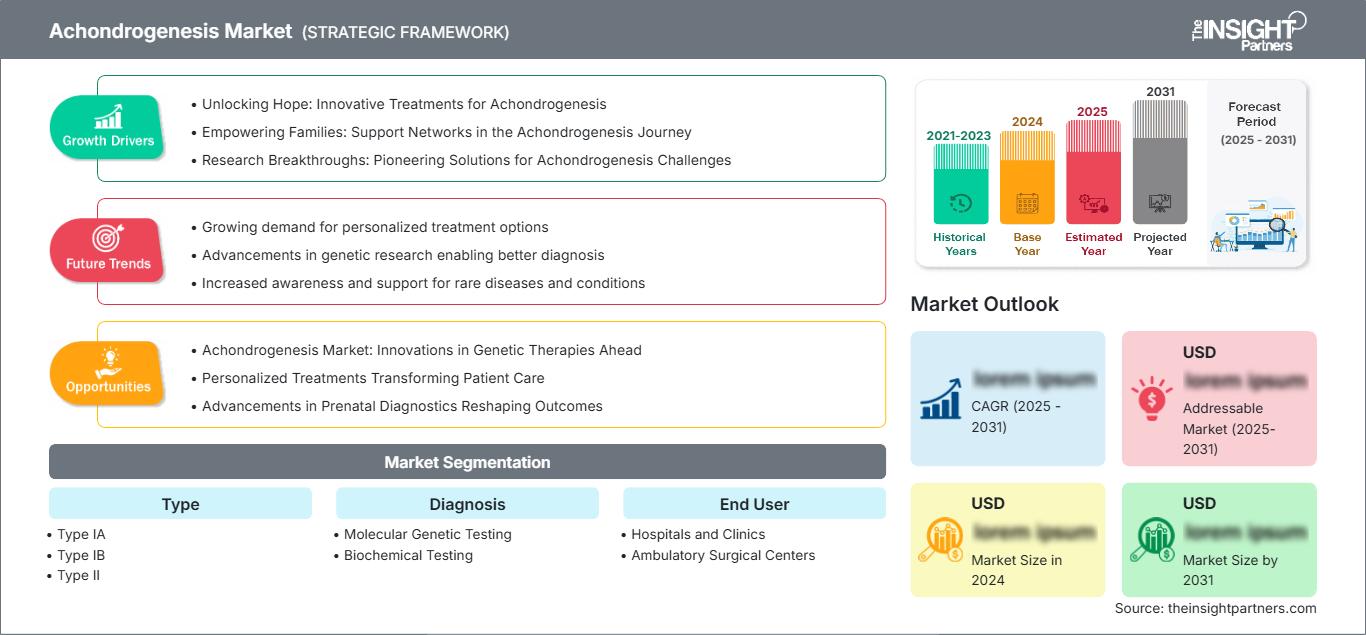
Achondrogenesis Market: Strategic Insights
Regional Insights
North America Achondrogenesis market
North America accounted for an estimated 36–38% share in 2025 and is expected to grow at a CAGR of 6.6–7.2% during 2026–2034. The region benefits from advanced fetal medicine centers, high availability of prenatal ultrasound, maternal-fetal medicine specialists, and rare disease sequencing laboratories. The achondrogenesis market share is supported by structured genetic counseling and payer coverage for high-risk pregnancies.
Demand is strongest for molecular genetic testing, fetal skeletal imaging, and multidisciplinary case review. Hospitals increasingly use sequencing to confirm variants in TRIP11, SLC26A2, and COL2A1 after ultrasound suspicion. North American providers also emphasize rapid reporting because results influence pregnancy management, recurrence counseling, and family planning decisions.
U.S. Achondrogenesis market
The U.S. represented 84–87% of North America in 2025 and is projected to grow at a CAGR of 6.7–7.3% during 2026–2034. Demand is supported by maternal-fetal medicine networks, clinical geneticists, reproductive endocrinology centers, and advanced diagnostic laboratories. Illumina, Inc., Thermo Fisher Scientific Inc., CooperSurgical, Inc., Abbott Laboratories, and Cook Medical LLC maintain strong visibility across the diagnostic ecosystem.
Application trends emphasize molecular confirmation after abnormal prenatal ultrasound, targeted familial variant testing, and differential diagnosis against other skeletal dysplasias. U.S. laboratories increasingly combine gene panels, exome testing, biochemical interpretation, and radiology review. This integrated approach improves diagnostic confidence in rare cases where imaging alone may not distinguish overlapping phenotypes.
Europe Achondrogenesis market
Europe held an estimated 27–29% share in 2025 and is expected to expand at a CAGR of 6.0–6.7% during 2026–2034. Germany is the leading country due to advanced prenatal diagnostics, hospital genetics programs, and strong medical imaging access. The UK and France remain important because national rare disease structures support referral pathways.
The UK market is shaped by fetal anomaly screening, specialist genetics services, and formal counseling pathways for severe congenital disorders. Germany benefits from high-quality ultrasound, tertiary fetal medicine centers, and established laboratory standards. France shows steady demand through prenatal diagnosis centers and clinical networks that manage complex fetal skeletal abnormalities.
Italy and Spain contribute meaningful demand through university hospitals, reproductive medicine centers, and public prenatal care systems. Growth is moderated by reimbursement variation and centralized approval processes for advanced genomic testing. Across Europe, suppliers must support data protection, laboratory accreditation, multilingual reporting, and evidence-based test utilization.
APAC Achondrogenesis market
APAC represented 22–24% share in 2025 and is forecast to grow at a CAGR of 8.4–9.1% during 2026–2034. China is the leading country by scale, while Japan and South Korea maintain strong diagnostic quality. India and Australia add growth through private fetal medicine, genetic counseling, and reproductive testing expansion.
Industrial and policy drivers include expanding sequencing capacity, maternal health investment, local diagnostic manufacturing, and rising awareness of rare congenital disorders. China and India offer large testing opportunities, but access remains uneven between urban tertiary centers and smaller facilities. Suppliers with affordable workflows and clinical education can improve penetration.
Middle East & Africa Achondrogenesis market
Middle East & Africa is expected to grow at a CAGR of 6.8–7.5% during 2026–2034, led by Saudi Arabia and the UAE. Tertiary hospital investment, fetal medicine expansion, and genetic counseling needs support demand. South Africa remains the most structured sub-Saharan market for advanced prenatal diagnostics.
Energy-linked fiscal capacity in Gulf countries supports specialty obstetric centers, imported sequencing systems, and regional genomics programs. Rest of MEA demand is uneven because laboratory access, genetic counseling availability, and affordability vary widely. Suppliers offering training, sample referral models, and tiered testing can improve access.
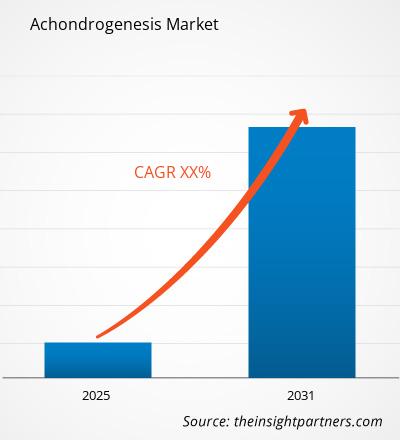
Segmentation Analysis
Type
Type is expected to grow at a CAGR of 7.1–7.8% during 2026–2034. The achondrogenesis market trends by type is shaped by genetic cause, inheritance pattern, prenatal phenotype, and recurrence counseling value. Type II holds strong diagnostic attention because COL2A1-related disease may overlap with hypochondrogenesis spectrum, while Type IA and Type IB require careful separation through molecular and biochemical evaluation.
- Type IA requires confirmation of TRIP11-related disease, making molecular interpretation important for autosomal recessive recurrence counseling and differentiation from other severe skeletal dysplasias.
- Type IB is linked to SLC26A2 variants and has strategic diagnostic importance because biochemical sulfate transporter assessment may support molecular findings in selected cases.
- Type II holds the largest clinical focus because COL2A1-related disease is frequently evaluated through prenatal skeletal findings, molecular panels, and family counseling.
Diagnosis
Diagnosis is projected to grow at a CAGR of 7.4–8.1% during 2026–2034. Molecular genetic testing is expanding because it provides definitive variant-level confirmation and improves recurrence risk assessment. Biochemical testing remains relevant in selected suspected Type IB cases and can support interpretation when molecular results require additional functional context.
- Molecular Genetic Testing dominates diagnostic value because sequencing can identify TRIP11, SLC26A2, and COL2A1 variants, improving diagnostic certainty and family planning guidance.
- Biochemical Testing remains useful in specialized laboratories, particularly when sulfate transporter dysfunction or metabolic pathway confirmation adds value to molecular and imaging findings.
End User
End User is expected to grow at a CAGR of 6.9–7.6% during 2026–2034. Hospitals and clinics dominate because suspected achondrogenesis is usually identified through prenatal imaging and managed by maternal-fetal medicine teams. Ambulatory surgical centers play a smaller role, mainly where reproductive procedures, genetic sampling, or coordinated outpatient diagnostic pathways are performed.
- Hospitals and Clinics dominate demand because fetal imaging, invasive sampling, genetic counseling, pathology review, and complex pregnancy management require multidisciplinary clinical infrastructure.
- Ambulatory Surgical Centers support selected reproductive medicine and outpatient procedural workflows, though their role remains limited compared with tertiary hospital-based fetal medicine programs.
Opportunity Snapshot
| End User | Revenue Contribution | Trend Tag | Adoption Stage |
| Molecular Genetic Testing | High | Variant Confirmation | Scaling |
| Biochemical Testing | Medium | Functional Support | Emerging |
Achondrogenesis Market Growth Drivers and Impact Analysis
Expansion of prenatal imaging and fetal medicine networks
With high-definition ultrasounds and fetal medicine special programs becoming popular, many cases of extreme skeletal disorders are being detected early in pregnancy. Many cases of achondrogenesis can be detected early in pregnancy due to the shortening of limbs, small chest size, bone development, and abnormal fetal development. The practical effect is that there will be increased use of ultrasounds and genetic testing in spite of the fact that the number of cases is very few. There will be benefits to the hospitals in terms of having a clear path on diagnosis and the risks involved. Suppliers of ultrasound machines and genetic testing will experience more demand.
Greater adoption of next-generation sequencing for rare disease diagnosis
NGS technologies will help diagnose patients affected by rare skeletal dysplasias through the identification of the causative mutations in genes such as TRIP11, SLC26A2, and COL2A1. This will decrease dependence on imaging tests and help differentiate between types of achondrogenesis and other related diseases. The market will be highly affected in the molecular genetic testing labs, NGS reagents providers, and the bioinformatics tools. Fast turnarounds will be beneficial in managing pregnancies and recurrence risks as well as future plans of reproduction. There will be a need for an interpretative framework in clinical settings.
Rising rare disease awareness and counseling demand
Awareness of rare diseases amongst health practitioners, diagnostics companies, and the families of patients is on the rise, hence resulting in an increase in systematic evaluation of lethal congenital disorders. It is important to have proper counseling for achondrogenesis due to poor outcomes, and the family will require the information to be used in subsequent pregnancies. The repercussions go beyond the patient as well, since carrier testing and prenatal options might be thought about in the future. There is thus a need for hospitals and reproductive genetics firms to come up with a system that links diagnosis to counseling.
Achondrogenesis Market Future Trends
Integrated fetal genomics and imaging interpretation
The achondrogenesis market trends would see more emphasis being placed on the integrated analysis of ultrasound, radiographic, and genetic information. There would be future work flows which employ the use of structured measurements of the fetal skeleton, AI-based imaging support, and variant databases in order to eliminate uncertain results. The benefit of this is that it enables clinicians to be able to distinguish between lethal skeletal dysplasias much earlier and counsel the parents accordingly. Diagnostic companies which combine sequencing and imaging context can add more clinical value.
Earlier reproductive risk assessment for affected families
Future demand will involve increased preconception and early pregnancy risk assessment for previous pregnancies involving the same problem. Families with a proven pathogenic mutation may want carrier screening or prenatal testing or preimplantation genetic diagnosis. Some of the demand for testing services is moving away from one-off diagnosis to reproductive planning over time. Laboratories and fertility practices will have an advantage in cases where they are able to do family testing, counseling, and referrals.
Achondrogenesis Market Opportunities
Rare skeletal dysplasia diagnostic panels
Rare skeletal dysplasia panels offer a clear investment opportunity because clinicians need rapid differentiation among overlapping fetal bone disorders. The achondrogenesis market Forecasts indicate that growth will be strongest where panels include TRIP11, SLC26A2, COL2A1, and related skeletal dysplasia genes with strong interpretation support. Laboratories can differentiate through turnaround time, fetal sample compatibility, parental testing options, and counseling-ready reports. Commercial success will depend on clinical partnerships with fetal medicine centers and transparent variant classification. Panels that reduce diagnostic uncertainty can support better pregnancy management and future reproductive planning.
Fetal medicine referral partnerships in emerging markets
Emerging markets offer practical opportunity as prenatal imaging and private genetic testing expand beyond major urban centers. Companies can partner with tertiary hospitals to build referral pathways for suspected skeletal dysplasia cases, combining ultrasound review, invasive sampling support, molecular testing, and counseling. This approach is especially relevant in China, India, Southeast Asia, Saudi Arabia, and South Africa. Suppliers should invest in clinician education, sample logistics, and affordable testing tiers. A referral-based model can improve diagnostic access without requiring every facility to maintain full rare disease genomics capability.
Recent Developments
- December 2025: The Cooper Companies, Inc. reported fiscal year 2025 revenue of US$ 4.1 billion, up 5%, and stated that CooperSurgical finished the year strongly with revenue at the high end of guidance. The update supports CooperSurgical’s continued role in fertility, genomics, and reproductive health services relevant to prenatal and inherited disease testing.
- 2026: Thermo Fisher Scientific Inc. highlighted reproductive health genetic testing capabilities covering carrier screening, preimplantation research, and newborn screening research, supported by next-generation sequencing, mass spectrometry, and biomarker analysis. These workflows are relevant to laboratories building capacity for inherited fetal disorders and monogenic disease evaluation.
- 2026: Illumina, Inc.’s genetic and rare disease testing resources emphasized next-generation sequencing for disease-causing variant identification and noted that rare diseases affect 2–6% of the global population, with 80% having a genetic component. This supports the role of sequencing platforms in diagnosing rare skeletal dysplasias such as achondrogenesis.
Frequently Asked Questions

- Comprehensive Market Sizing and Forecast Analysis
- Detailed Segmentation Analysis
- In-Depth Market Dynamics Assessment
- Regional and Country-Level Insights
- Competitive Landscape and Company Benchmarking
- Strategic Business Intelligence
Recent Reports
Testimonials

The Insight Partners' SCADA System Market report is comprehensive, with valuable insights on current trends and future forecasts. The team was highly professional, responsive, and supportive throughout. We are very satisfied and highly recommend their services.
RAN KEDEM Partner, Reali Technologies LTDs
I requested a report on a very specific software market and the team produced the report in a few days. The information was very relevant and well presented. I then requested some changes and additions to the report. The team was again very responsive and I got the final report in less than a week.
JEAN-HERVE JENN Chairman, Future Analytica
We worked with The Insight Partners for an important market study and forecast. They gave us clear insights into opportunities and risks, which helped shape our plans. Their research was easy to use and based on solid data. It helped us make smart, confident decisions. We highly recommend them.
PIYUSH NAGPAL Sr. Vice President, High Beam Global
The Insight Partners delivered insightful, well-structured market research with strong domain expertise. Their team was professional and responsive throughout. The user-friendly website made accessing industry reports seamless. We highly recommend them for reliable, high-quality research services
YUKIHIKO ADACHI CEO, Deep Blue, LLC.
This is the first time I have purchased a market report from The Insight Partners.While I was unsure at first, I visited their web site and felt more comfortable to take the risk and purchase a market report.I am completely satisfied with the quality of the report and customer service. I had several questions and comments with the initial report, but after a couple of dialogs over email with their analyst I believe I have a report that I can use as input to our strategic planning process.Thank you so much for taking the extra time and making this a positive experience.I will definitely recommend your service to others and you will be my first call when we need further market data.
JOHN SUZUKI President and Chief Executive Officer, Board Director, BK Technologies
I wish to appreciate your support and the professionalism you displayed in the course of attending to my request for information regarding to infectious disease IVD market in Nigeria. I appreciate your patience, your guidance, and the fact that you were willing to offer a discount, which eventually made it possible for us to close a deal. I look forward to engaging The Insight Partners in the future, all thanks to the impression you have created in me as a result of this first encounter.
DR CHIJIOKE ONYIA MANAGING DIRECTOR, PineCrest Healthcare Ltd.Reason to Buy
- Informed Decision-Making
- Understanding Market Dynamics
- Competitive Analysis
- Identifying Emerging Markets
- Customer Insights
- Market Forecasts
- Risk Mitigation
- Boosting Operational Efficiency
- Strategic Planning
- Investment Justification
- Tracking Industry Innovations
- Aligning with Regulatory Trends





 Get Free Sample for