
Activated Partial Thromboplastin Time Test (aPTTT) Market Size, Share & Trends by 2034
Coverage: by Product type (Instruments, Consumables); Application (Heparin therapy Monitoring, Coagulation Factor Deficiencies Screening, Coagulation Inhibitors); Technology (Optical Technology, Mechanical Technology, Electrochemical Technology); End User (Hospitals, Clinics, Laboratories, Point- of care- testing) Applications (Hospital, Clinic), and Geography (North America, Europe, Asia Pacific, and South and Central America)
- Status : Data Released
- Report Code : TIPRE00010453
- Category : Life Sciences
- No. of Pages : 150
- Available Report Formats :


- Last update date : July 22, 2026


2025 Market Size
US$ 1.54 Bn
Base year value
2034 Forecast
US$ 2.6 Bn
Projected by 2034
CAGR 2026-2034
5.95 %
Growth rate
Addressable Market
US$ 18.71 Bn
(2026-2034)
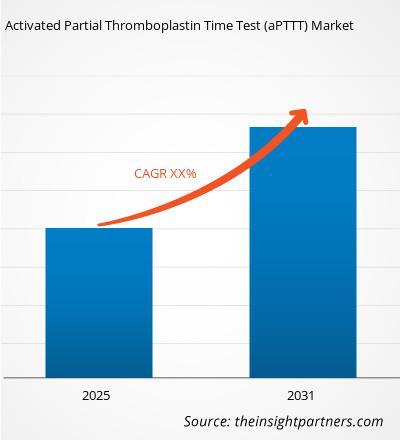
The activated partial thromboplastin time test market size reached $1.54 billion in 2025 and is forecast to grow at a CAGR of 5.95% between 2026 and 2034 to reach US$ 2.6 Billion by 2034 . This is because of the ongoing need for coagulation tests to monitor the effect of heparin treatment, detect abnormalities within the intrinsic pathway, perform perioperative assessments, and investigate unexplained bleeding or coagulation disorders.
In North America, the activated partial thromboplastin time test market is expected to grow at a compounded annual growth rate of 5.6% to 6.2% from 2026 to 2034 due to automation within the laboratory setting, widespread use of anticoagulants, and wide accessibility of covered coagulation tests. Hospitals are also adopting standard workflows in the field of hemostasis that have encouraged the adoption of integrated analyzers and quality control software.
Activated Partial Thromboplastin Time Test (aPTTT) Market Assessment and Insights
- North America accounted for 38–41% activated partial thromboplastin time test market share in 2025 and is projected to grow at a CAGR between 5.6–6.2% during 2026–2034, led by automated coagulation platforms, anticoagulation clinics, and advanced quality systems.
- US represented 78–82% of North America share in 2025 and is expected to grow at a CAGR between 5.5–6.1% during 2026–2034, driven by hospital laboratory consolidation.
- Europe held 27–30% share in 2025 and is forecast to grow at a CAGR between 5.0–5.7% during 2026–2034, with Germany, France, the UK, Italy, and Spain leading adoption.
- Asia Pacific captured 22–25% share in 2025 and is likely to grow at a CAGR between 6.6–7.4% during 2026–2034, supported by China, Japan, India, South Korea, and Australia.
- Largest Segment Consumables recorded 63–67% market share in 2025 and is expected to grow at a CAGR between 5.8–6.4% during 2026–2034 due to recurring reagent use.
- High Growth Segment Point-of-care testing held 9–12% market share in 2025 and is projected to grow at a CAGR between 7.2–8.1% during 2026–2034 as decentralized testing expands.
- Key companies analyzed in detail: Abbott Laboratories, bioMérieux SA, Bio-Rad Laboratories, Inc., Danaher Corporation, Eiken Chemical Co., Ltd., HORIBA, Ltd., Johnson & Johnson, Life Technologies Corporation, Siemens Healthineers AG, Takara Bio Inc., Thermo Fisher Scientific Inc.
Source: The Insight Partners' analysis based on proprietary research, government publications, company annual reports, investor presentations, industry databases, and expert interviews.
Laboratory hemostasis has evolved from manual clot formation into entirely automated multi-parametric systems that use parameters such as Activated Partial Thromboplastin Time, Prothrombin Time, Fibrinogen, D-Dimer, Antithrombin, and special tests. The production process is now being driven by the need for reagents' stability, calibration of controls, analysis equipment connectivity, and the need for compliance with ISO 15189 and IVDR regulations. Manufacturers are focusing on optical analysis, standardized reagent cassettes, and software-assisted quality control to minimize rerun rates and increase turn-around time.
The next stage will be determined by the rise of new geographies, regional manufacturing strategies, and additional investments into hospital diagnostics equipment. Public health care organizations have expanded their lab capabilities following the pandemic-related shortage, while private chains have begun developing multidimensional diagnostic systems. Regulatory tailwind is encouraging validation of the in vitro diagnostic systems, calibration traceability, and data management. Suppliers who have an integrated instrumentation and consumables portfolio have a sustainable competitive edge.
Activated Partial Thromboplastin Time Test (aPTTT) Market Report Scope
| Report Attribute | Details |
|---|---|
| Market size in 2025 | US$ 1.54 Billion |
| Market Size by 2034 | US$ 2.6 Billion |
| Global CAGR (2026 - 2034) | 5.95% |
| Historical Data | 2021-2024 |
| Forecast period | 2026-2034 |
Activated Partial Thromboplastin Time Test (aPTTT) Market Analysis
The Activated Partial Thromboplastin Time Test market growth is driven by growing anticoagulant management, an increasing number of surgeries, and diagnosis of hemophilia, lupus anticoagulant, and acquired coagulation factors. The demand for the tests follows a value chain that includes reagent manufacturers, analyzer makers, distributors, testing laboratories, hospitals, and quality accreditation agencies. It favors suppliers who can guarantee reagent consistency from one batch to another, cold-chain transportation, and analyzer uptime in large reference laboratories.
The inclusion of Direct Oral Anticoagulants in the World Health Organization's Essential Medicines List has also increased awareness of coagulation tests among clinicians. While the aPTT is most relevant to unfractioned heparin and intrinsic pathway assessment, laboratories use this test more often in the context of complete coagulation panel. This offers cross-selling opportunities for consumables, controls, calibrators, middleware, and analyzers services.
Activated Partial Thromboplastin Time Test Market analysis reveals that the competition among Siemens Healthineers AG, Thermo Fisher Scientific Inc., Bio-Rad Laboratories, Inc., Abbott Laboratories, HORIBA, Ltd., and Danaher Corporation is moderate, and competition arises based on installed-base, menu of reagents, automation compatibility, and informatics. Specialized manufacturers like Eiken Chemical Co., Ltd. and Takara Bio Inc. retain relevance in terms of reagent science, molecular diagnostic adjacencies, and geographic partnerships.
The investments are shifting towards consolidation of workflow rather than adding individual tests. For Siemens Healthineers AG, emphasis is placed on scalable hemostasis analyzers, for Bio-Rad Laboratories, Inc. emphasis is on peer quality control system and for Thermo Fisher Scientific Inc. emphasis is on wide reagent availability. Positioning now depends on reagent lock-in, service, regulatory documentation, and central and POCT coverage.
● REPORT CUSTOMIZATION
Tailor This Report To Align With Your Specific Business Requirements
This report can be customized to align precisely with your business objectives, scope, and target markets. Customization options include tailored segmentation, geography, competitive analysis, and strategic insights to support informed decision-making.
Customize This Report →WHAT YOU CAN ADJUST
- ● Segmentations
- ● Geography
- ● Competitive Analysis
- ● Language Preferences
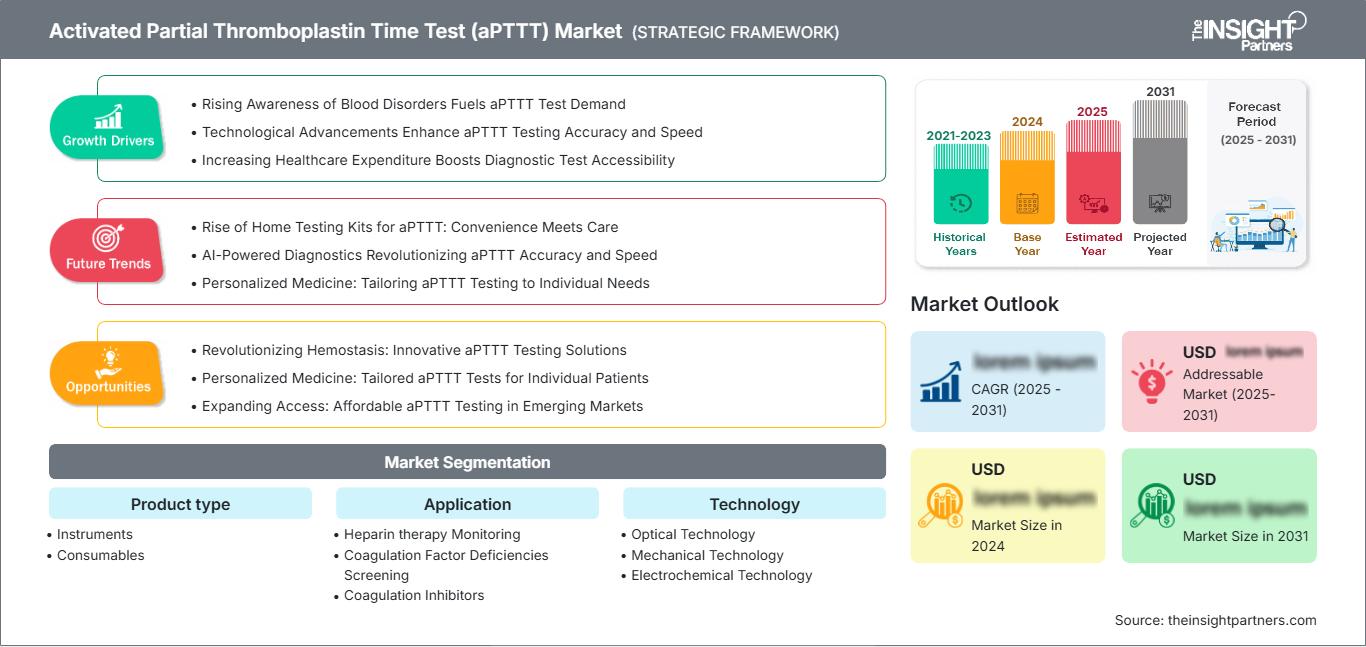
Activated Partial Thromboplastin Time Test (aPTTT) Market: Strategic Insights
Regional Insights
North America Activated partial thromboplastin time test Market
North America held a share of 38–41% in 2025 and is expected to experience a growth rate at CAGR of 5.6–6.2% from 2026 to 2034. The market share of the activated partial thromboplastin time test is supported by high volume of tests performed in hospitals, trauma centers, cardiac surgical suites, oncology treatment, and anticoagulation clinics.
The demand is driven by improved payment systems, automation of tests, and quality control driven by accreditations. The region is well supported by companies such as Abbott Laboratories, Bio-Rad Laboratories, Inc., Danaher Corporation, Siemens Healthineers AG, and Thermo Fisher Scientific Inc. There has been an increase in the adoption of middleware, liquid reagents, and peer quality control platforms by hospitals to reduce downtime.
U.S. Activated partial thromboplastin time test Market
In 2025, the U.S. was reported to be the largest contributor, holding 78-82% of the market share within North America, and it is anticipated to grow at a CAGR of 5.5-6.1% over 2026-2034. Hospital networks are still consolidating their lab purchases by embracing harmonization of analytical equipment, standardization of reagents, and enterprise-wide quality solutions. APTT is highly required in intensive care, cardiac surgery, dialysis, interventional radiology, and emergency departments
Companies' activities lie in menu, automation, and quality documentation. Siemens Healthineers AG and Bio-Rad Laboratories, Inc. improve laboratory workflow, and Abbott Laboratories is helping in building the decentralized infrastructure of diagnostics. The application trends are heparin therapy monitoring and pre-operative coagulation screening, as well as workups and reflex testing in hematology laboratories.
Europe Activated partial thromboplastin time test Market
Europe had a market share of 27–30% in 2025 and is estimated to expand at a CAGR of 5.0–5.7% during 2026–2034. Germany is the market leader among Europe countries owing to automated laboratories, specialized hospitals, and procurement discipline. UK has adopted centralized pathology systems that facilitate standardized purchase of reagents and analyzers along with digital quality control.
Germany continues to be the market leader while France derives growth from organized hospital diagnostics and anticoagulant treatment. Italy and Spain continue to make significant contributions via surgery testing, aged population, and cardiovascular treatment. IVDR compliance is influencing the supplier selection process, in which buyers look for validated documentation, reagent traceability, and post-market surveillance capabilities.
APAC Activated partial thromboplastin time test Market
In 2025, APAC secured a 22-25% market share and is estimated to grow at a 6.6-7.4% CAGR from 2026-2034. The largest country is China, driven by growth in hospitals, indigenous diagnostics, and cardiovascular testing. There is an advanced adoption of analyzers in Japan and South Korea, and India is developing its own private diagnostics chains.
The dominant driver for Australia is quality, which includes quality certifications and central laboratories. Some of the policy drivers are universal healthcare access growth, hospitals' modernization, and local production incentives.
Middle East & Africa Activated partial thromboplastin time test Market
The Middle East & Africa is expected to grow at a CAGR between 5.3–6.0% during 2026–2034. Saudi Arabia is the leading country due to hospital infrastructure investment, laboratory modernization, and rising demand for surgical and cardiovascular diagnostics. The UAE is expanding private healthcare networks with advanced laboratory automation.
South Africa remains the most established sub-Saharan market, supported by reference laboratories and tertiary care systems. Rest of MEA demand is uneven but improving through public hospital upgrades. Energy-sector revenues in Gulf economies continue to fund healthcare infrastructure, while diagnostic procurement is becoming more quality and accreditation oriented.
Segmentation Analysis
Product Type
Product type is expected to grow at a CAGR between 5.7–6.3% during 2026–2034. The activated partial thromboplastin time test market scope across product type is shaped by the balance between capital equipment replacement and recurring reagent consumption. Instruments create installed-base control, but consumables capture repeat revenue through aPTT reagents, calcium chloride, controls, calibrators, and quality materials.
- Instruments remain strategically important because laboratories evaluate throughput, detection method, sample-volume requirements, connectivity, maintenance burden, and compatibility with broader coagulation menus before purchasing or upgrading platforms.
- Consumables dominate routine revenue because every test requires reagents and quality materials, making supply continuity, shelf life, storage stability, and lot consistency central to procurement decisions.
Application
Application is projected to grow at a CAGR between 5.6–6.2% during 2026–2034. APTT is embedded in multiple clinical pathways, from monitoring unfractionated heparin to detecting intrinsic pathway factor deficiencies. Laboratories increasingly use algorithmic reflex testing to distinguish deficiencies from inhibitors, improving clinical interpretation and reducing unnecessary repeat testing.
- Heparin therapy Monitoring is a core application in intensive care, cardiac procedures, dialysis, and acute thrombosis management, where rapid and consistent coagulation results guide dose adjustment.
- Coagulation Factor Deficiencies Screening supports evaluation of hemophilia A, hemophilia B, factor XI deficiency, and unexplained bleeding, making it essential in hematology workups.
- Coagulation Inhibitors testing is strategically significant for lupus anticoagulant assessment, acquired factor inhibitors, and prolonged clotting-time investigations requiring confirmatory and mixing-study workflows.
Technology
Technology is expected to grow at a CAGR between 5.8–6.5% during 2026–2034. Technology selection depends on sample quality, throughput, testing environment, and reliability under variable plasma conditions. Optical systems remain common in automated laboratories, while mechanical approaches are valued where lipemia, icterus, or hemolysis may interfere with light-based detection.
- Optical Technology holds strong adoption in automated laboratories because it supports high throughput, multi-wavelength detection, efficient clot monitoring, and integration with large analyzer menus.
- Mechanical Technology remains relevant for difficult samples and specialized laboratories requiring clot detection less affected by optical interference or highly turbid specimens.
- Electrochemical Technology is associated with compact and decentralized testing formats, where small sample volume, rapid response, and device portability support point-of-care workflows.
End-User
End User is projected to grow at a CAGR between 6.0–6.8% during 2026–2034. Hospitals remain the primary users because they combine emergency, surgical, critical care, and hematology demand. Laboratories provide high-volume testing efficiency, while point-of-care settings are gaining importance where immediate anticoagulation decisions are required.
- Hospitals generate substantial testing volume through emergency departments, operating rooms, intensive care units, dialysis centers, oncology services, and inpatient anticoagulation monitoring pathways.
- Clinics use aPTT testing selectively, mostly through referral models or compact analyzers serving anticoagulation follow-up and pre-procedure screening.
- Laboratories are central to high-throughput testing, quality assurance, reflex algorithms, and specialized coagulation investigations requiring technical expertise and validated workflows.
- Point- of care- testing is scaling in urgent care, critical care, and procedure-linked settings, where reduced turn-around time can support faster therapy decisions.
Opportunity Snapshot
| End User | Revenue Contribution | Trend Tag | Adoption Stage |
| Hospitals | High | Critical Care | Mature |
| Clinics | Medium | Referral Testing | Scaling |
| Laboratories | High | Workflow Automation | Mature |
| Point- of care- testing | Medium | Bedside Coagulation | Emerging |
Activated Partial Thromboplastin Time Test (aPTTT) Market Growth Drivers and Impact Analysis
Rising anticoagulant use across acute and chronic care
Unfractionated heparin remains essential in intensive care, dialysis, cardiac surgery, extracorporeal circulation, and interventional settings, sustaining demand for aPTT-based monitoring despite wider use of anti-Xa and direct oral anticoagulant assays. Clinical teams require timely coagulation measurements to balance bleeding risk against thrombosis prevention. This driver directly increases reagent pull-through, analyzer utilization, and demand for validated controls. Hospitals with high acuity workloads are also adopting automated systems to reduce manual variability and improve response times. The market impact is strongest in tertiary care centers, where anticoagulation protocols are linked to electronic records, pharmacy dosing systems, and laboratory information systems.
Expansion of automated hemostasis platforms
Automation is reshaping coagulation testing by improving throughput, traceability, sample handling, and quality documentation. Modern analyzers integrate clotting, chromogenic, immunologic, and specialty assays, allowing laboratories to consolidate workflows that previously required separate instruments. This improves staff productivity at a time when many health systems face laboratory workforce constraints. The impact is visible in procurement decisions that prioritize uptime, reagent management, small sample volume, and middleware compatibility. Vendors with broad assay menus and service networks gain an advantage because laboratories increasingly assess total workflow economics rather than instrument cost alone. Automated hemostasis platforms also support accreditation requirements and reduce rerun costs.
Growing diagnosis of bleeding and clotting disorders
Greater awareness of inherited and acquired coagulation disorders is increasing demand for screening and follow-up testing. APTT remains a first-line tool when clinicians investigate prolonged bleeding, unexpected bruising, preoperative abnormalities, lupus anticoagulant, factor deficiencies, and inhibitor patterns. The testing burden is rising as aging populations undergo more procedures and chronic diseases increase exposure to anticoagulants. This driver supports both routine screening and specialized hematology referrals. Its market impact is especially relevant for laboratories offering mixing studies, factor assays, inhibitor panels, and reflex testing algorithms. Suppliers benefit when their reagent systems are validated across screening and confirmatory workflows.
Activated Partial Thromboplastin Time Test (aPTTT) Market Future Trends
AI-supported coagulation workflow interpretation
The activated partial thromboplastin time test market trends increasingly point toward software-assisted interpretation rather than only faster clot detection. Over the forecast period, laboratory information systems are expected to incorporate rule-based and AI-supported flags that connect aPTT results with patient history, medication exposure, sample quality, and prior coagulation profiles. This will help laboratories reduce unnecessary repeats, identify likely inhibitors faster, and support standardized reflex testing. The trend is not expected to replace specialist review, but it will improve consistency in high-volume settings. Vendors that combine analyzers, QC data, and middleware will be better positioned.
Decentralized coagulation testing in acute pathways
Point-of-care coagulation testing is expected to expand beyond niche use as emergency departments, catheterization labs, and intensive care units seek shorter decision cycles. Future systems will emphasize cartridge stability, operator guidance, data connectivity, and automated QC checks. Adoption will be strongest where transport time to central laboratories delays therapy adjustment or procedure clearance. This trend may not displace large automated analyzers, but it will create a dual testing model, with central laboratories retaining complex investigations and decentralized devices supporting immediate decisions. Suppliers must prove comparability, training simplicity, and digital traceability to scale adoption safely.
Activated Partial Thromboplastin Time Test (aPTTT) Market Opportunities
Integrated reagent and quality-control contracting
Vendors can expand by offering bundled reagent, control, calibrator, software, and service contracts that reduce procurement complexity for hospital networks. activated partial thromboplastin time test market Forecasts indicate that buyers will increasingly compare lifetime workflow cost, not only analyzer acquisition price. Suppliers able to guarantee reagent availability, lot stability, peer QC access, and preventive maintenance can improve customer retention. This opportunity is especially attractive in multisite health systems, where standardization lowers training burden and supports consistent clinical interpretation. Contracting models should include performance metrics, uptime commitments, and regulatory documentation support to strengthen long-term account value.
Emerging-market laboratory modernization
Asia Pacific, the Middle East, and selected African markets offer meaningful opportunities as governments and private providers expand diagnostic capacity. Market entry should focus on scalable systems that can serve district hospitals, private laboratories, and tertiary centers with different throughput requirements. Suppliers can differentiate through compact analyzers, robust reagent logistics, local distributor training, and affordable service models. Countries investing in universal health coverage and hospital modernization will need standardized coagulation testing for surgery, emergency care, and chronic disease management. The opportunity is strongest where vendors build local technical support rather than relying only on capital equipment sales.
Recent Developments
- December 2025: Sysmex Corporation introduced the Automated Blood Coagulation Analyzer CN-700 in Japan, adding a compact model to its CN-Series for small and medium-sized facilities. The system was designed to inherit higher-end analytical technology while supporting quality control and traceability functions aligned with ISO 15189 requirements.
- June 2025: Sysmex Corporation received U.S. FDA 510(k) clearance for its Automated Blood Coagulation Analyzer CN-6000, including five reagent products used in common coagulation tests such as PT, APTT, fibrinogen, antithrombin, and D-dimer. The clearance supported preparations for U.S. market launch.
- September 2024: Bio-Rad Laboratories, Inc. partnered with Sysmex America to offer Unity Next Peer QC software with Sysmex CA-Series and CS-Series hemostasis systems in the U.S. The collaboration created hemostasis-specific peer groups to help laboratories troubleshoot QC errors, improve reporting, and support compliance management.
Frequently Asked Questions

- Comprehensive Market Sizing and Forecast Analysis
- Detailed Segmentation Analysis
- In-Depth Market Dynamics Assessment
- Regional and Country-Level Insights
- Competitive Landscape and Company Benchmarking
- Strategic Business Intelligence
Recent Reports
Testimonials

The Insight Partners' SCADA System Market report is comprehensive, with valuable insights on current trends and future forecasts. The team was highly professional, responsive, and supportive throughout. We are very satisfied and highly recommend their services.
RAN KEDEM Partner, Reali Technologies LTDs
I requested a report on a very specific software market and the team produced the report in a few days. The information was very relevant and well presented. I then requested some changes and additions to the report. The team was again very responsive and I got the final report in less than a week.
JEAN-HERVE JENN Chairman, Future Analytica
We worked with The Insight Partners for an important market study and forecast. They gave us clear insights into opportunities and risks, which helped shape our plans. Their research was easy to use and based on solid data. It helped us make smart, confident decisions. We highly recommend them.
PIYUSH NAGPAL Sr. Vice President, High Beam Global
The Insight Partners delivered insightful, well-structured market research with strong domain expertise. Their team was professional and responsive throughout. The user-friendly website made accessing industry reports seamless. We highly recommend them for reliable, high-quality research services
YUKIHIKO ADACHI CEO, Deep Blue, LLC.
This is the first time I have purchased a market report from The Insight Partners.While I was unsure at first, I visited their web site and felt more comfortable to take the risk and purchase a market report.I am completely satisfied with the quality of the report and customer service. I had several questions and comments with the initial report, but after a couple of dialogs over email with their analyst I believe I have a report that I can use as input to our strategic planning process.Thank you so much for taking the extra time and making this a positive experience.I will definitely recommend your service to others and you will be my first call when we need further market data.
JOHN SUZUKI President and Chief Executive Officer, Board Director, BK Technologies
I wish to appreciate your support and the professionalism you displayed in the course of attending to my request for information regarding to infectious disease IVD market in Nigeria. I appreciate your patience, your guidance, and the fact that you were willing to offer a discount, which eventually made it possible for us to close a deal. I look forward to engaging The Insight Partners in the future, all thanks to the impression you have created in me as a result of this first encounter.
DR CHIJIOKE ONYIA MANAGING DIRECTOR, PineCrest Healthcare Ltd.Reason to Buy
- Informed Decision-Making
- Understanding Market Dynamics
- Competitive Analysis
- Identifying Emerging Markets
- Customer Insights
- Market Forecasts
- Risk Mitigation
- Boosting Operational Efficiency
- Strategic Planning
- Investment Justification
- Tracking Industry Innovations
- Aligning with Regulatory Trends





 Get Free Sample for