
Active Cosmetic Ingredients Market Demand, Trends & Forecast by 2034
Coverage: By Type Of Ingredients (Antioxidants, Anti-Aging Agents, Moisturizing Agents, Whitening Agents, and Others), Source (Natural, Synthetic, and Biotechnological), Aapplication (Skincare, Haircare, Makeup, and Others), and Geography (North America, Europe, Asia Pacific, and South and Central America)
- Status : Data Released
- Report Code : TIPRE00013027
- Category : Chemicals and Materials
- No. of Pages : 150
- Available Report Formats :


- Last update date : June 14, 2026


2025 Market Size
US$ 5.47 Bn
Base year value
2034 Forecast
US$ 11.52 Bn
Projected by 2034
CAGR 2026-2034
8.6 %
Growth rate
Addressable Market
US$ 76.07 Bn
(2026-2034)
The global active cosmetic ingredients market size is projected to reach US$ 11.52 billion by 2034 from US$ 5.47 billion in 2025. The market is anticipated to register a CAGR of 8.6% during the forecast period 2026–2034.
Key market dynamics include an intensifying consumer demand for evidence-based skincare, the rapid rise of the clean beauty movement, and significant advancements in biotechnology that allow for more stable and potent active compounds. Additionally, the market is expected to benefit from the growing popularity of nutricosmetics, expansion in organized e-commerce channels across emerging economies, and the increasing inclusion of specialized bioactives in high-value premium segments like anti-aging serums and barrier-repair creams.
Active Cosmetic Ingredients Market Analysis
The active cosmetic ingredients market analysis reveals a decisive shift toward performance-driven formulations where clinical efficacy is the primary competitive differentiator. The market is diversifying into traditional synthetic-led chemical and high-growth natural or bio-identical export markets. Strategic opportunities are emerging in the development of microbiome-friendly and blue beauty or marine-derived ingredients, which cater to the twin consumer desires for skin health and environmental stewardship. The analysis also notes that market expansion depends on stabilizing active components for long shelf life and improving precision extraction or fermentation efficiency for high-purity powders. Competitive differentiation now stands out depending on branding that tells a story and highlights green chemistry, clinical backing, and traceable sourcing. This approach helps ingredient suppliers charge higher prices in a highly specialized market.
Active Cosmetic Ingredients Market Overview
Skincare formulations have evolved from niche luxury treatments to mainstream daily lifestyle products. The market includes specialized skin barrier repair lotions, clinical anti-aging treatments, and targeted hyperpigmentation serums. Both global chemical companies and direct-to-consumer or D2C brands compete in this market, utilizing powerful actives such as peptides, hyaluronic acid, and botanical extracts. Growing demand for preventative personal care options among health-conscious consumers in North America and Europe has increased the popularity of performance ingredients as a foundational wellness solution. North America leads in R&D investments, while Asia-Pacific is advancing rapidly in ingredient innovation and retail adoption. The US market is highly developed, driven by science-focused intellectuals and the broad availability of advanced over-the-counter dermatological solutions. Competition among brands is fueling a greater variety of complex targeted formulations and the inclusion of premium actives like ceramides, niacinamide, and stabilized retinoids.
Market Assessment and Insights
- Global market for Active Cosmetic Ingredients was valued at US$ 5.47 Billion in 2025
- Annual market size is expected to reach US$ 11.52 Billion by 2034
- Total addressable market (TAM) during 2026-2034 is projected to reach approximately US$ 76.07 Billion
- Market is anticipated to register a CAGR of 8.6% during the forecast period
- The United States represents a key market, supported by Rising Demand for Natural Products, Advancements in Green Cosmetic Actives, Rising Demand for Customized Cosmetics, as well as evolving industry dynamics
- Market analysis covers North America, Europe, Asia-Pacific, South and Central America, Middle East and Africa, with growth evaluated across the forecast period
- Market opportunities such as Growth of Active Cosmetic Ingredients, Rise of Clean Beauty Trends, Growing Demand for Anti-Aging Ingredients are expected to influence market dynamics and addressable market
- Report profiles industry participants, including Boton, International FlavorsFragrances, McCormick, Prova, Robertet SA, Shanghai Apple, Symrise, Synergy Flavor, Takasago, Wanxiang International, while analyzing competitive strategies and innovation developments
-
Source: The Insight Partners' analysis based on proprietary research, government publications, company annual reports, investor presentations, industry databases, and expert interviews.
● REPORT CUSTOMIZATION
Tailor This Report To Align With Your Specific Business Requirements
This report can be customized to align precisely with your business objectives, scope, and target markets. Customization options include tailored segmentation, geography, competitive analysis, and strategic insights to support informed decision-making.
Customize This Report →WHAT YOU CAN ADJUST
- ● Segmentations
- ● Geography
- ● Competitive Analysis
- ● Language Preferences
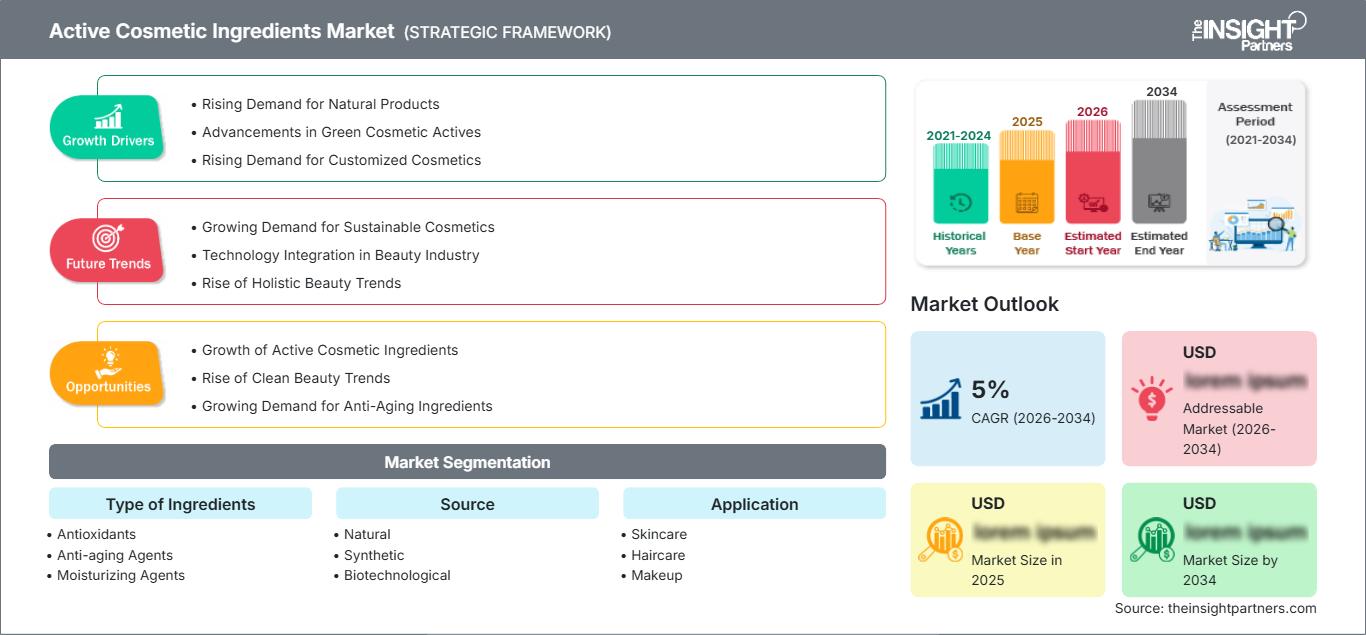
Active Cosmetic Ingredients Market: Strategic Insights
-
Get Top Key Market Trends of this report.This FREE sample will include data analysis, ranging from market trends to estimates and forecasts.
Active Cosmetic Ingredients Market Drivers and Opportunities
Market Drivers
- The Rise of Bio-Hacking and Evidence-Backed Performance: Modern consumers have moved beyond superficial brand promises, demanding data-backed efficiency. Ingredients like engineered peptides and polyglutamic acid are preferred because they offer measurable physiological changes, such as cellular repair and targeted collagen synthesis.
- Biotechnology as the Standard for Sustainability: Clean beauty has evolved into biotech beauty. Strict environmental considerations and changing regulations are forcing brands to move away from harsh synthetic processing toward white biotechnology and green chemistry, producing bio-identical active molecules with a drastically smaller carbon footprint.
- Rapid Expansion of Digital and E-Commerce Channels: Online specialized retail platforms and digital diagnostic tools have removed traditional entry barriers for performance skincare. This is particularly evident in the rapid consumer adoption of niche-targeted serums, micro-dosed boosters, and specialized home care kits in regions like Asia-Pacific and North America.
Market Opportunities
- Convergence into Adult Nutricosmetics and Wellness: Beyond topical solutions, active cosmetic ingredients offer significant opportunities in ingestible beauty supplements. Multi-purpose compounds like marine collagen or ferulic acid satisfy a rising demand within the longevity and holistic health, treating beauty from both the inside and the outside.
- Growth in Emerging APAC Corridors: Forming strategic partnerships between Western biotech labs and Asian cosmetics manufacturers facilitates immediate access to high-margin market segments in China, South Korea, and India, where consumer spending on premium, clinical-grade skincare is increasing rapidly.
- Diversification into Clean, Organic, and Upcycled Certifications: There is an expanding opportunity for producers to target eco-conscious demographics through specialized certifications such as COSMOS, ECOCERT, or circular or upcycled waste sourcing metrics, matching modern retail expectations in mature markets.
Active Cosmetic Ingredients Market Report Segmentation Analysis
The Active Cosmetic Ingredients Market share is analyzed across various segments to provide a clearer understanding of its structure, growth potential, and emerging trends. Below is the standard segmentation approach used in most industry reports:
By Type Of Ingredients
- Antioxidants: Essential for neutralising free radicals and protecting the skin structure from environmental pollutants and UV damage.
- Anti-Aging Agents: High-demand compounds, including peptides and retinoids, focused on cell turnover and structural skin matrix density.
- Moisturizing Agents: Key molecular drivers such as hyaluronic acid and glycerin that preserve deep hydration and moisture retention.
- Whitening Agents: Active skin-brightening complexes designed to target hyperpigmentation and reduce dark spots or uneven skin tones.
By Source
- Natural: A fast-growing sector focused on botanical plant extracts and marine-derived alternatives that align with global green consumer expectations.
- Synthetic: The dominant volume driver across standard beauty formulations due to long-standing supply chains, cost efficiencies, and precise molecular stability.
- Biotechnological: Innovational lab-synthesized and fermented bio-identical molecules providing high purity and functional efficacy with less environmental impact.
By Application
- Skincare: Remains the primary application channel, holding the largest market share due to continuous global demand for functional personal care lines.
- Haircare: The fastest-rising category focused on active scalp treatment, anti-hair loss proteins, and protective botanical complexes.
- Makeup: Offers a select but steadily expanding range of color cosmetics infused with active skin defense solutions.
By Geography
- North America
- Europe
- Asia Pacific
- South & Central America
- Middle East & Africa
Active Cosmetic Ingredients Market Report Scope
| Report Attribute | Details |
|---|---|
| Market size in 2025 | US$ 5.47 Billion |
| Market Size by 2034 | US$ 11.52 Billion |
| Global CAGR (2026 - 2034) | 8.6% |
| Historical Data | 2021-2024 |
| Forecast period | 2026-2034 |
| Segments Covered |
By Type Of Ingredients
|
| Regions and Countries Covered |
North America
|
| Market leaders and key company profiles |
|
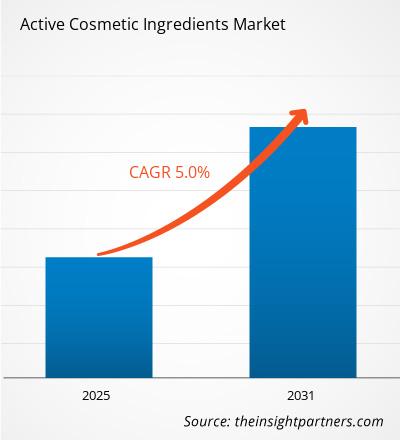
Active Cosmetic Ingredients Market Players Density: Understanding Its Impact on Business Dynamics
The Active Cosmetic Ingredients Market is growing rapidly, driven by increasing end-user demand due to factors such as evolving consumer preferences, technological advancements, and greater awareness of the product's benefits. As demand rises, businesses are expanding their offerings, innovating to meet consumer needs, and capitalizing on emerging trends, which further fuels market growth.
Active Cosmetic Ingredients Market Share Analysis by Geography
Asia-Pacific is expected to grow fastest in the coming years. Emerging markets in South & Central America, the Middle East, and Africa also have many untapped opportunities for active ingredient developers and clinical formulations to expand.
The active cosmetic ingredients market is undergoing a significant transformation, moving from traditional botanical use to a global science-driven industry. Growth is driven by the rising prevalence of pollution-related skin concerns, a surge in anti-aging and skin-longevity demand, and the expansion of the luxury cosmeceutical sector. Below is a summary of market share and trends by region:
1. North America
- Market Share: A mature yet highly innovative segment driven by a massive market presence of clinical brands and established healthcare standards.
- Key Drivers:
- High consumer preference for dermatologically backed, medical-grade active profiles.
- Mainstreaming of specialized cosmeceuticals in prestige beauty retail chains.
- Increased consumer awareness regarding ingredient concentration levels, such as specific percentages of Niacinamide or Retinol.
- Trends: Widespread adoption of personalized micro-dosing technologies and clean-label certifications to appeal to high-income, eco-conscious demographics.
2. Europe
- Market Share: Holds a prominent global share, anchored by long-standing formulation hubs in France, Germany, and Italy.
- Key Drivers:
- High domestic consumption of luxury, scientifically verified skincare, and personal care regimes.
- Strict European regulatory frameworks pushing for high safety benchmarks.
- Robust research infrastructure dedicated to organic extraction and green chemical engineering.
- Trends: A strategic structural transition toward upcycled raw materials, biodegradable base elements, and strict adherence to cruelty-free and vegan standards.
3. Asia-Pacific
- Market Share: The fastest-growing region globally, with major manufacturing hubs like China, Japan, and South Korea leading product implementation.
- Key Drivers:
- Massive consumer base heavily focused on targeted skin brightening, sun protection, and intense hydration.
- High regional digital integration and e-commerce platforms are driving fast product cycles.
- Rising disposable incomes are elevating consumer purchasing patterns toward premium functional cosmetics.
- Trends: Heavy integration of local heritage botanicals processed via advanced laboratory tech for the global clinical beauty pipeline.
4. South and Central America
- Market Share: An emerging market featuring expanding regional production lines in countries like Brazil and Chile.
- Key Drivers:
- Rich natural biodiversity offering immediate local sourcing access to premium exotic botanical extracts.
- Increasing consumer awareness regarding long-term skin health, sun defense, and climate-specific skincare.
- Gradual modernization of small-scale chemical suppliers into international standard manufacturing tiers.
- Trends: Expansion of regional mass-premium brands and the commercialization of local indigenous ingredients to capture domestic market shares.
5. Middle East and Africa
- Market Share: A developing market landscape transitioning from traditional raw oils to structured, premium commercial personal care solutions.
- Key Drivers:
- Deep-rooted regional consumer habits centered around high-end perfumes, rich hair treatments, and personal care.
- Extreme arid climates create massive regional demand for intense hydration barrier repair and UV-protection actives.
- Strategic investments in modern domestic distribution infrastructure to reduce dependence on imported premium goods.
- Trends: Rise of halal-certified active cosmetics and advanced encapsulation technologies ensuring raw ingredient survival in high-temperature logistics channels.
High Market Density and Competition
Competition is intensifying due to the presence of established global chemical leaders such as BASF SE, Croda International Plc, and Evonik Industries AG. Regional bio-tech experts and specialized players like Ashland Global Holdings Inc., Clariant AG, and DSM-Firmenich, alongside emerging ingredient innovators, contribute to a highly competitive and technically demanding market landscape.
This competitive environment pushes vendors to differentiate through:
- Clinical Premiumization and Functional Branding: Positioning actives as direct, high-efficiency biological solution providers by showcasing targeted testing data on skin elasticity, cellular repair, and deep hydration.
- Diversification of Product Formats: Companies offer more than simple liquid raw ingredients; they provide specialized high-purity powders, optimized oil-soluble complexes, and micro-encapsulated active beads designed to preserve ingredient potency.
- Total Supply Chain Transparency: Upstream suppliers maintain rigorous management over raw materials, from ethical farm sourcing of botanicals to green chemical laboratory processing, meeting clean-label guidelines.
- Advanced Extraction Tech: Implementing innovative processes like cold fermentation, supercritical carbon dioxide extraction, and advanced membrane filtration to isolate volatile actives without losing their natural efficacy.
Opportunities and Strategic Moves
- Partner with premium retail groups and tech-driven e-commerce companies to access the soaring demand for localized, clinical skincare across North American and rapid-growth APAC corridors.
- Incorporate green chemistry protocols and verified zero-waste upcycling metrics to appeal to environmentally sensitive consumers searching for ethical beauty alternatives.
Major Companies operating in the Active Cosmetic Ingredients Market are:
- Boton
- International Flavors Fragrances
- McCormick
- Prova
- Robertet SA
- Shanghai Apple
- Symrise
- Synergy Flavor
- Takasago
- Wanxiang International
Disclaimer: The companies listed above are not ranked in any particular order.
Active Cosmetic Ingredients Market News and Recent Developments
- In April 2026, Symrise unveils three novel ingredients at in-cosmetics global in Paris. Cellexora® MD, Mindera® Euca, and SymConcentrole® Barrier Boost, highlighting a shared long-term commitment to caring for skin, people, and the planet. Symrise will also present first concepts from its recently created Care & Wellness Division, bringing together topical, ingestible, and inside-out health and beauty solutions.
- In March 2026, Robertet announced the strategic investment in Aethera Biotech, a European pioneer in active cosmetic ingredients. This milestone marks entry into the field of plant-based biotechnologies and strengthens the “Augmented Naturality” strategy. By combining Aethera Biotech’s patented CROP® technology with the global expertise and commercial reach of Robertet Group. It accelerates innovation in cosmetic active ingredients and supports the long-term growth of our Health & Beauty division.
Active Cosmetic Ingredients Market Report Coverage and Deliverables
The Active Cosmetic Ingredients Market Size and Forecast (2021–2034) report provides a detailed analysis of the market covering below areas:
- Active Cosmetic Ingredients Market size and forecast at global, regional, and country levels for all the key market segments covered under the scope
- Active Cosmetic Ingredients Market trends, as well as market dynamics such as drivers, restraints, and key opportunities
- Detailed PEST and SWOT analysis
- Active Cosmetic Ingredients Market analysis covering key market trends, global and regional framework, major players, regulations, and recent market developments
- Industry landscape and competition analysis covering market concentration, heat map analysis, prominent players, and recent developments in the Active Cosmetic Ingredients Market.
- Detailed company profiles
Frequently Asked Questions

- Comprehensive Market Sizing and Forecast Analysis
- Detailed Segmentation Analysis
- In-Depth Market Dynamics Assessment
- Regional and Country-Level Insights
- Competitive Landscape and Company Benchmarking
- Strategic Business Intelligence
Recent Reports
Testimonials

The Insight Partners provided valuable market intelligence that supported our global go-to-market strategy. Their team was professional, responsive, and attentive to our feedback, providing thoughtful analysis and helpful methodological clarifications throughout the project.
Junmo Kim Chief Financial Officer (CFO), Enertech Co., Ltd.
The Insight Partners' SCADA System Market report is comprehensive, with valuable insights on current trends and future forecasts. The team was highly professional, responsive, and supportive throughout. We are very satisfied and highly recommend their services.
RAN KEDEM Partner, Reali Technologies LTDs
I requested a report on a very specific software market and the team produced the report in a few days. The information was very relevant and well presented. I then requested some changes and additions to the report. The team was again very responsive and I got the final report in less than a week.
JEAN-HERVE JENN Chairman, Future Analytica
We worked with The Insight Partners for an important market study and forecast. They gave us clear insights into opportunities and risks, which helped shape our plans. Their research was easy to use and based on solid data. It helped us make smart, confident decisions. We highly recommend them.
PIYUSH NAGPAL Sr. Vice President, High Beam Global
The Insight Partners delivered insightful, well-structured market research with strong domain expertise. Their team was professional and responsive throughout. The user-friendly website made accessing industry reports seamless. We highly recommend them for reliable, high-quality research services
YUKIHIKO ADACHI CEO, Deep Blue, LLC.
This is the first time I have purchased a market report from The Insight Partners.While I was unsure at first, I visited their web site and felt more comfortable to take the risk and purchase a market report.I am completely satisfied with the quality of the report and customer service. I had several questions and comments with the initial report, but after a couple of dialogs over email with their analyst I believe I have a report that I can use as input to our strategic planning process.Thank you so much for taking the extra time and making this a positive experience.I will definitely recommend your service to others and you will be my first call when we need further market data.
JOHN SUZUKI President and Chief Executive Officer, Board Director, BK Technologies
I wish to appreciate your support and the professionalism you displayed in the course of attending to my request for information regarding to infectious disease IVD market in Nigeria. I appreciate your patience, your guidance, and the fact that you were willing to offer a discount, which eventually made it possible for us to close a deal. I look forward to engaging The Insight Partners in the future, all thanks to the impression you have created in me as a result of this first encounter.
DR CHIJIOKE ONYIA MANAGING DIRECTOR, PineCrest Healthcare Ltd.Reason to Buy
- Informed Decision-Making
- Understanding Market Dynamics
- Competitive Analysis
- Identifying Emerging Markets
- Customer Insights
- Market Forecasts
- Risk Mitigation
- Boosting Operational Efficiency
- Strategic Planning
- Investment Justification
- Tracking Industry Innovations
- Aligning with Regulatory Trends





 Get Free Sample for