
Anti-Aging Cosmetics Market Share, Growth & Demand by 2034
Coverage: By Product Type (Skin Care, Hair Care, Makeup, Eye Care, Others); Form (Cream, Lotion, Serum, Others); End User (Men, Women); Distribution Channel (Supermarket/ Hypermarket, Cosmetic Stores, Online Stores, Others), and Geography (North America, Europe, Asia Pacific, and South and Central America)
- Status : Data Released
- Report Code : TIPRE00020508
- Category : Consumer Goods
- No. of Pages : 150
- Available Report Formats :


- Last update date : August 26, 2026


2025 Market Size
US$ 88.63 Bn
Base year value
2034 Forecast
US$ 128.51 Bn
Projected by 2034
CAGR 2026-2034
4.21 %
Growth rate
Addressable Market
US$ 985.89 Bn
(2026-2034)
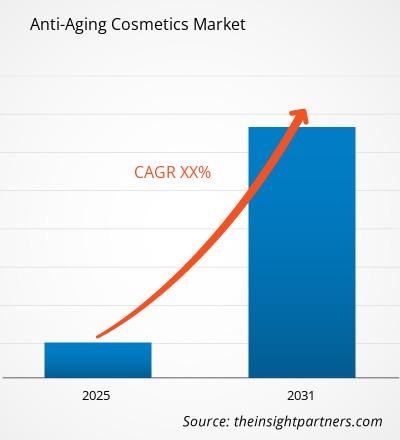
The anti-aging cosmetics market was valued at US$ 88.63 Billion in 2025 and is projected to reach US$ 128.51 Billion by 2034, expanding at a CAGR of 4.21% during 2026–2034. Demand is being supported by aging demographics, rising consumer awareness regarding preventive skincare, and increasing adoption of scientifically formulated products containing retinol, peptides, antioxidants, and bioactive ingredients designed to address visible signs of aging.
Across North America, consumer spending on premium beauty products remains resilient, supporting the anti-aging cosmetics market size expansion. The regional market is estimated to advance at a CAGR of 3.8–4.5% through 2034, driven by strong product innovation, high dermatological skincare adoption, and growing demand for personalized anti-aging regimens. E-commerce penetration and wellness-oriented beauty purchasing behavior continue to strengthen market fundamentals.
Anti-Aging Cosmetics Market Assessment and Insights
- North America: Share in 2025 of 34–36% and CAGR between 3.8–4.5%. Strong premium skincare consumption, established brand presence, and advanced dermatology-backed product adoption support regional leadership.
- US: Represents 74–78% of North America in 2025 and is expected to grow at a CAGR of 3.9–4.6% through 2034 due to high consumer spending and rapid innovation.
- Europe: Share in 2025 of 28–31% and CAGR between 3.5–4.2%. Germany, France, Italy, and the UK remain key revenue generators supported by mature beauty markets.
- Asia Pacific: Share in 2025 of 25–28% and CAGR between 5.4–6.2%. China, Japan, South Korea, and India are driving demand through premiumization and digital beauty retail.
- Largest Segment: Skin Care accounts for 58–62% market share in 2025 and is expected to grow at a CAGR of 4.4–5.1%, supported by strong anti-wrinkle and hydration product demand.
- High Growth Segment: Serum form category holds 28–32% share in 2025 and is expected to register a CAGR of 5.6–6.4% owing to concentration of active ingredients and premium positioning.
- Key companies analyzed in detail: L'Oréal S.A., Unilever PLC, Procter & Gamble Company, The Estée Lauder Companies Inc., Shiseido Company, Limited, Coty Inc., Natura &Co Holding S.A., Johnson & Johnson, Kao Corporation, Beiersdorf AG, Restoor Skin Essentials, SkinMedica, Sisley Paris, Hanacure, StriVectin Operating Company, Inc.
Source: The Insight Partners' analysis based on proprietary research, government publications, company annual reports, investor presentations, industry databases, and expert interviews.
Consumers now desire visible efficacy, ingredient visibility, and clinically proven benefits from cosmetics. Biotechnologically derived active ingredients, microbiome-friendly products, and innovative delivery methods have come to change product development approaches. Companies can leverage dermatology knowledge coupled with beauty marketing to create unique offerings that tackle the issues of wrinkles, hyperpigmentation, lack of elasticity and skin barrier degradation, at the same time boosting their client retention rate.
Future growth will be driven by the increased investments into the Asia Pacific, Latin America, and some Middle Eastern markets. Continued regulatory focus on the safety and ingredient listing of products drives the premiumization trend. Increasingly sophisticated digital consultation platforms and AI-based skin analysis systems are likely to facilitate greater consumer involvement in preventive skincare and aging management practices.
Anti-Aging Cosmetics Market Report Scope
| Report Attribute | Details |
|---|---|
| Market size in 2025 | US$ 88.63 Billion |
| Market Size by 2034 | US$ 128.51 Billion |
| Global CAGR (2026 - 2034) | 4.21% |
| Historical Data | 2021-2024 |
| Forecast period | 2026-2034 |
Anti-Aging Cosmetics Market Analysis
Growth in the industry is mainly driven by population aging, urbanization, and heightened consciousness among consumers about their appearance. With growing life expectancy, particularly in advanced countries, the demand for preventive beauty treatments has increased. Market environment includes suppliers of raw materials, biotechnology firms, contract manufacturing organizations, dermatology experts, retailers, and direct-to-consumer brands. Increasing demand for multi-benefit products that provide hydration, protection, and anti-aging benefits is driving up average price levels in premium segments.
Trends in the supply environment include improved formulations and sustainability. Brands employ raw materials from plants, peptides, ceramides, retinoids, and fermentation in their formulations. Online channels have enabled easy access and fast product introductions. Innovation in ingredients and formulation is key to competition and achieving repeat purchase and higher lifetime value.
Market analysis reveals the emergence of an intensely competitive environment where companies operate on the basis of scientific innovations in product offerings and portfolio diversification. L'Oréal S.A., The Estée Lauder Companies Inc., Shiseido Company, Limited, Beiersdorf AG, and Procter & Gamble Company continue to focus on investment in longevity science, biotechnology collaboration, and high-end skin care innovation. Specialized brands like SkinMedica, Hanacure, Sisley Paris, and StriVectin Operating Company, Inc. have sustained their relevance through their anti-aging orientation.
Increasing investment is oriented towards personalized beauty, artificial intelligence diagnostic techniques, and novel ingredient discovery. Unilever PLC, Natura & Co Holding S.A., Coty Inc., Kao Corporation, and Johnson & Johnson continue developing omnichannel strategies, alongside increasing engagement in the digital domain. The strategic positioning is moving away from wrinkle correction towards overall skin health, prevention, and maintenance.
● REPORT CUSTOMIZATION
Tailor This Report To Align With Your Specific Business Requirements
This report can be customized to align precisely with your business objectives, scope, and target markets. Customization options include tailored segmentation, geography, competitive analysis, and strategic insights to support informed decision-making.
Customize This Report →WHAT YOU CAN ADJUST
- ● Segmentations
- ● Geography
- ● Competitive Analysis
- ● Language Preferences
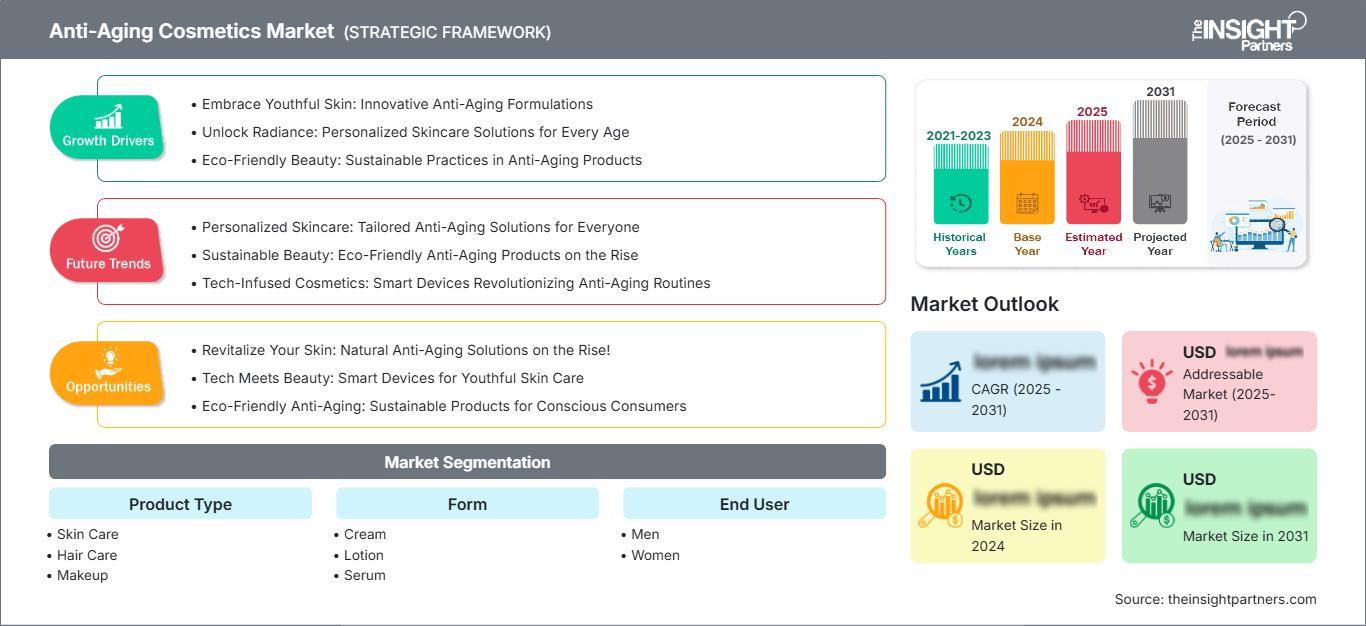
Anti-Aging Cosmetics Market: Strategic Insights
Regional Insights
North America Anti-Aging Cosmetics Market
North America accounted for 34–36% anti-aging cosmetics market share in 2025 and is estimated to register a CAGR of 3.8–4.5% between 2026 and 2034. The consumers' readiness to buy premium skincare items, those recommended by a dermatologist, and clinically proven ingredients, helps ensure steady growth. The ability of the company to have excellent research departments and retail networks helps to ensure the steady commercialization of novel formulations.
The region is helped by the advanced beauty ecosystems and high levels of awareness about skin care. Mature beauty markets in the US and Canada keep creating a steady demand for anti-wrinkle creams and age defense items.
U.S. Anti-Aging Cosmetics Market
The United States represents 74–78% of the North American market and is projected to expand at a CAGR of 3.9–4.6% through 2034. A strong concentration of multinational beauty companies, robust consumer spending, and rapid adoption of science-backed skincare products contribute to market leadership. Demand remains particularly strong for preventative skincare and premium anti-aging formulations.
Domestic consumers increasingly seek clinically substantiated ingredients such as retinol, niacinamide, peptides, and antioxidants. Major companies, including The Estée Lauder Companies Inc., Johnson & Johnson, SkinMedica, and Procter & Gamble Company, maintain substantial market presence. Growing online beauty consultations, influencer-driven product education, and personalized skincare assessments continue shaping purchasing decisions across multiple age groups.
Europe Anti-Aging Cosmetics Market
Europe represented 28–31% share in 2025 and is expected to grow at a CAGR of 3.5–4.2% through 2034. Germany remains the key national market because of strong consumer preference for premium skincare and established expertise in beauty manufacturing. Focus on safety and sustainability drives innovation in advanced anti-aging technology and ingredient labeling.
The UK and Germany will keep reaping the benefits of high awareness and extensive premium beauty distribution networks. Demand will be driven by aging populations, high disposable income levels, and widespread acceptance of science-based skincare products. Well-established retail infrastructure will ensure the quick penetration of anti-aging technology.
France, Italy, and Spain together will add value with their heritage in the cosmetics industry and increased consumption of premium skincare. Prestige beauty brands from France retain their influence globally, while Italy and Spain will gain from rising wellness-driven purchase trends.
APAC Anti-Aging Cosmetics Market
Asia Pacific accounted for 25–28% share in 2025 and is expected to register the fastest growth at 5.4–6.2% CAGR. China leads regional consumption, while Japan and South Korea remain innovation centers known for advanced skincare technologies and ingredient research.
India and Australia are experiencing rising premium beauty adoption supported by urbanization and growing digital commerce participation. Policy support for manufacturing investment, expanding beauty retail networks, and increasing awareness regarding preventative skincare continues to create favorable long-term market conditions across the region.
Middle East & Africa Anti-Aging Cosmetics Market
The Middle East & Africa market is projected to expand at a CAGR of 4.3–5.0% during the forecast period. Saudi Arabia and the UAE lead regional demand due to rising disposable incomes, premium beauty consumption, and expanding organized retail infrastructure.
South Africa remains a key African market, while other regional economies benefit from increasing beauty product penetration. Retail modernization, tourism-related luxury retail growth, and growing consumer focus on premium skincare products are contributing to broader market development across major urban centers.
Segmentation Analysis
Product Type
The market scope is heavily influenced by product type innovations. This segment is projected to grow at a CAGR of 4.3–5.0% between 2026 and 2034. Increasing consumer demand for targeted solutions addressing wrinkles, pigmentation, hydration, elasticity, and hair aging continues to support category diversification and premiumization.
- Skin Care: Largest revenue contributor, supported by strong consumer demand for anti-wrinkle creams, moisturizers, active serums, and preventive skincare routines across multiple age groups.
- Hair Care: Growing interest in scalp wellness, hair density enhancement, and age-related hair health concerns supports category relevance and product innovation.
- Makeup: Combines cosmetic coverage with skincare benefits, attracting consumers seeking multifunctional beauty solutions that address visible aging signs.
- Eye Care: Focused formulations targeting puffiness, dark circles, and fine lines maintain a specialized but strategically important market position.
Form
The form segment is expected to expand at a CAGR of 4.7–5.4% through 2034. Consumer preference increasingly favors formats offering convenience, enhanced absorption, and concentrated active ingredient delivery. Premium formulations continue influencing purchasing decisions.
- Cream: Remains widely adopted due to moisturizing properties, familiarity, and suitability for daily anti-aging skincare regimens.
- Lotion: Appeals to consumers seeking lightweight textures and ease of application, particularly in warmer climatic conditions.
- Serum: Fastest-growing format driven by concentrated actives, premium positioning, and strong consumer perception regarding efficacy.
End User
The end-user segment is anticipated to grow at a CAGR of 4.2–4.9%. Expanding awareness among both male and female consumers has broadened target demographics, with brands increasingly tailoring communication and formulations for specific consumer preferences.
- Men: Rising grooming awareness and expanding skincare adoption are increasing product purchases, particularly through online channels and premium retail outlets.
- Women: Continues generating the majority of market demand due to higher category engagement and broad product portfolio availability.
Distribution Channel
Distribution channels are projected to grow at a CAGR of 4.8–5.5% through 2034. Omnichannel strategies, convenience, and digital commerce adoption continue to reshape consumer purchasing behavior across the anti-aging cosmetics market.
- Supermarket/ Hypermarket: Provides broad product accessibility and supports mass-market brand visibility across diverse customer groups.
- Cosmetic Stores: Maintains importance through product expertise, premium brand positioning, and personalized consumer engagement.
- Online Stores: Benefit from expanding digital beauty ecosystems, wider product selection, reviews, and direct-to-consumer purchasing convenience.
Opportunity Snapshot
| Segment Name | Revenue Contribution | Trend Tag | Adoption Stage |
| Men | Medium | Premium Grooming | Scaling |
| Women | High | Preventive Care | Mature |
Anti-Aging Cosmetics Market Growth Drivers and Impact Analysis
Expanding Global Aging Population
The phenomenon of population aging is ensuring constant demand for products meant for tackling problems such as wrinkles, loss of elasticity, skin dryness, and uneven pigmentation. Increasing longevity and the focus on healthy aging is making people embrace the use of skincare products at an early stage in their lives. Premium anti-aging products get a boost from increased consumer readiness to spend money on maintaining their skin. This is reflected by more comprehensive portfolios designed to cater to different age groups and skin types.
Advances in Dermatological and Biotechnology Research
Technological advancements that relate to the use of peptides, retinoids, fermented components, stem cell mimicking actives and biomimetics have been enhancing product efficacy. Companies are becoming more involved in working with dermatologists, research facilities and biotechnology firms in order to bolster scientific credibility. Advances in delivery technology are ensuring ingredient stability and enhanced absorption, resulting in better performance results. These trends have been promoting premium product usage and building consumer confidence.
Growth of Digital Beauty Ecosystems
Cosmetics buying behavior is changing through digital commerce, virtual consultations, influencer education, and skin analysis using AI. People will have access to personalized recommendations and comparisons more easily through digital ecosystems compared to traditional shopping outlets. It provides companies with the advantages of direct engagement and understanding of customers, as well as opportunities for marketing. Digital ecosystems will make it easier to find new products and retain customers.
Anti-Aging Cosmetics Market Future Trends
Longevity Science Integration
The anti-aging cosmetics market trends increasingly reflect a shift from appearance-focused claims toward longevity-based skin health approaches. Biomarkers, preventative skin care systems, and biology of aging are among the new areas of investment by firms to ensure their products tackle the problem right at its core instead of its symptoms. The adoption of such technology is believed to result in an increase in demand for personalized skin care and scientifically proven products.
AI-Enabled Personalization
Artificial Intelligence is set to have greater significance in terms of product choice, formulation suggestions, and skincare monitoring. Companies are coming up with programs that will analyze individual features of consumers and recommend anti-aging products accordingly. The approach will make products more effective and increase consumer participation. Availability of increased data and adoption of digital beauty products will make personalized anti-aging products commercialized sooner.
Anti-Aging Cosmetics Market Opportunities
Expansion in Emerging Urban Consumer Bases
Anti-aging cosmetics market Forecasts indicate substantial opportunity across rapidly urbanizing populations in Asia, the Middle East, and selected Latin American countries. Rising disposable incomes, digital connectivity, and beauty awareness are fostering premium skincare adoption. Companies can capitalize by localizing product portfolios, strengthening e-commerce capabilities, and expanding retail partnerships. Early positioning in developing markets may support long-term revenue diversification and stronger brand equity. Strategic investments in education-based marketing and regional innovation centers can further enhance competitiveness.
Premium Serum and Personalized Skincare Development
Consumer preference towards high concentrations of active ingredients presents numerous possibilities for serum formulations and skin care solutions that are highly personalized. There are various ways in which companies could use biotechnology, artificial intelligence diagnostics, and dermatology research to create unique offerings based on the specific skin needs. Premium products tend to have more profit margins as well as a higher customer retention rate.
Frequently Asked Questions

- Comprehensive Market Sizing and Forecast Analysis
- Detailed Segmentation Analysis
- In-Depth Market Dynamics Assessment
- Regional and Country-Level Insights
- Competitive Landscape and Company Benchmarking
- Strategic Business Intelligence
Recent Reports
Testimonials

The Insight Partners' SCADA System Market report is comprehensive, with valuable insights on current trends and future forecasts. The team was highly professional, responsive, and supportive throughout. We are very satisfied and highly recommend their services.
RAN KEDEM Partner, Reali Technologies LTDs
I requested a report on a very specific software market and the team produced the report in a few days. The information was very relevant and well presented. I then requested some changes and additions to the report. The team was again very responsive and I got the final report in less than a week.
JEAN-HERVE JENN Chairman, Future Analytica
We worked with The Insight Partners for an important market study and forecast. They gave us clear insights into opportunities and risks, which helped shape our plans. Their research was easy to use and based on solid data. It helped us make smart, confident decisions. We highly recommend them.
PIYUSH NAGPAL Sr. Vice President, High Beam Global
The Insight Partners delivered insightful, well-structured market research with strong domain expertise. Their team was professional and responsive throughout. The user-friendly website made accessing industry reports seamless. We highly recommend them for reliable, high-quality research services
YUKIHIKO ADACHI CEO, Deep Blue, LLC.
This is the first time I have purchased a market report from The Insight Partners.While I was unsure at first, I visited their web site and felt more comfortable to take the risk and purchase a market report.I am completely satisfied with the quality of the report and customer service. I had several questions and comments with the initial report, but after a couple of dialogs over email with their analyst I believe I have a report that I can use as input to our strategic planning process.Thank you so much for taking the extra time and making this a positive experience.I will definitely recommend your service to others and you will be my first call when we need further market data.
JOHN SUZUKI President and Chief Executive Officer, Board Director, BK Technologies
I wish to appreciate your support and the professionalism you displayed in the course of attending to my request for information regarding to infectious disease IVD market in Nigeria. I appreciate your patience, your guidance, and the fact that you were willing to offer a discount, which eventually made it possible for us to close a deal. I look forward to engaging The Insight Partners in the future, all thanks to the impression you have created in me as a result of this first encounter.
DR CHIJIOKE ONYIA MANAGING DIRECTOR, PineCrest Healthcare Ltd.Reason to Buy
- Informed Decision-Making
- Understanding Market Dynamics
- Competitive Analysis
- Identifying Emerging Markets
- Customer Insights
- Market Forecasts
- Risk Mitigation
- Boosting Operational Efficiency
- Strategic Planning
- Investment Justification
- Tracking Industry Innovations
- Aligning with Regulatory Trends





 Get Free Sample for