
AI Smart Baby Monitors Market Demand, Trends & Forecast by 2034
Coverage: By Product Type (Audio and Video, Tracking Devices); Connection Mode (Wired, Wireless); Application (Household, Commercial); Distribution Channel (Offline, Online), and Geography (North America, Europe, Asia Pacific, and South and Central America)
- Status : Data Released
- Report Code : TIPRE00015197
- Category : Life Sciences
- No. of Pages : 150
- Available Report Formats :


- Last update date : July 22, 2026


2025 Market Size
US$ 2.69 Bn
Base year value
2034 Forecast
US$ 7.55 Bn
Projected by 2034
CAGR 2026-2034
12.14 %
Growth rate
Addressable Market
US$ 44.84 Bn
(2026-2034)
The AI Smart Baby Monitors Market held a market value of US$ 2.69 billion in 2025 and will be poised to hit US$ 7.55 billion in 2034 at a CAGR of 12.14% in the forecast period 2026-2034. The market is being driven by the emergence of advanced technologies related to AI, sensors, connectivity solutions, and intelligent monitoring systems, which help provide real-time monitoring of baby safety, sleeping patterns, and environmental factors.
Increasing adoption in North America is contributing to growth in the AI Smart Baby Monitors Market size, and the region is projected to exhibit a CAGR of 11.5% to 13.0% between 2026 and 2034. Growth in the adoption of connected home solutions, high penetration of smart homes ecosystem, and growing demand for childcare solutions have increased the regional adoption.
AI Smart Baby Monitors Market Assessment and Insights
- North America accounted for a leading position with an estimated AI Smart Baby Monitors Market share of 35–40% in 2025 and is projected to grow at a CAGR range of 11.5–13.0% between 2026–2034. The region benefits from smart home integration, high consumer awareness, and strong technology adoption.
- US represented approximately 28–32% share in 2025 and is expected to expand at a CAGR range of 11.8–13.5% through 2034, driven by connected parenting solutions, premium device adoption, and established consumer electronics channels.
- Europe held a 25–30% share in 2025 and is anticipated to grow at a CAGR range of 10.8–12.5%. Germany, the UK, France, and Italy are key contributors due to digital healthcare adoption and household technology modernization.
- Asia Pacific captured around 22–27% share in 2025 and is forecast to advance at a CAGR range of 13.0–15.0% between 2026–2034. China, Japan, South Korea, and India are supporting demand through rising urbanization and connected device penetration.
- Largest Segment: Audio and Video products held an estimated market share of 65–70% in 2025 and are projected to expand at a CAGR range of 11.5–13.0% due to broad consumer familiarity.
- High Growth Segment: Tracking Devices represented approximately 30–35% share in 2025 and are expected to grow at a CAGR range of 14.0–16.0% due to increasing demand for health and activity monitoring.
- Key companies analyzed in detail: Dorel Industries Inc., iBaby Labs, Inc., Samsung Electronics Co., Ltd., Motorola, Inc., VTech Holdings Limited, Lorex Technology Inc., NETGEAR Inc., Summer Infant, Inc., Angelcare Monitor Inc., Safety 1st.
Source: The Insight Partners' analysis based on proprietary research, government publications, company annual reports, investor presentations, industry databases, and expert interviews.
Market development can be viewed as a shift from regular audio baby monitors to smart systems using cameras, artificial intelligence technology, cloud integration, and predictive analytics. The market players are developing new models with facial recognition, crying detection, temperature monitoring, and sleeping behavior analysis. Innovations in the industry can be related to advancements in semiconductors, wireless technologies, and the need to develop small, easy-to-use products for modern homes. Hardware vendors, software developers, cloud vendors, and consumer electronics distributors can form an ecosystem of market players.
Further growth can be driven by developing markets, where smartphone adoption and Internet access are growing rapidly. Investments in artificial intelligence, edge computing, and secure data storage are likely to impact product development. Consumer privacy, cybersecurity, and child safety regulations will define the competitive activities of the players in the industry. Subscription-based analytics solutions, ecosystems, and regional product adaptation can become competitive activities.
AI Smart Baby Monitors Market Report Scope
| Report Attribute | Details |
|---|---|
| Market size in 2025 | US$ 2.69 Billion |
| Market Size by 2034 | US$ 7.55 Billion |
| Global CAGR (2026 - 2034) | 12.14% |
| Historical Data | 2021-2024 |
| Forecast period | 2026-2034 |
AI Smart Baby Monitors Market Analysis
Market growth drivers include growing knowledge about the safety of babies, high usage of connected products at home, and consumer inclination towards remote monitoring options. Consumers need devices not just to have video streams but also to have automatic alerts, sleep monitoring features, and environmental data analysis. The value chain comprises component manufacturers, device manufacturers, artificial intelligence software manufacturers, connectivity providers, and distribution channels.
The manufacturing landscape is being shaped by advancements in semiconductor components, small sensors, and cloud-based technologies. Manufacturers are emphasizing on power efficiency and reliable connection systems due to changing consumers' needs. The ecosystem consists of applications providers which allow using mobile-based baby monitor. This is creating opportunities for product differentiation and manufacturers’ investments into integrated systems.
Competitive Positioning focuses more and more on the role of technology, branding, and integration into an ecosystem. Major players, such as Samsung Electronics Co., Ltd., Motorola, Inc., VTech Holdings Limited, NETGEAR Inc., and Dorel Industries Inc., are working on innovations related to connected devices and customer-oriented features. Specialty players like iBaby Labs, Inc., Lorex Technology Inc., Summer Infant, Inc., Angelcare Monitor Inc., and Safety 1st develop specialized baby monitoring systems.
Capital is increasingly being invested in artificial intelligence technologies, cloud services, and cybersecurity. Through partnerships between device makers and software developers, analytics and remote functionality are enhanced. Players differentiate themselves through product reliability, software functionality, and integration with smart home platforms. Competition in the market is likely to remain fragmented, as rivalry will center on established electronics companies and specialty players.
● REPORT CUSTOMIZATION
Tailor This Report To Align With Your Specific Business Requirements
This report can be customized to align precisely with your business objectives, scope, and target markets. Customization options include tailored segmentation, geography, competitive analysis, and strategic insights to support informed decision-making.
Customize This Report →WHAT YOU CAN ADJUST
- ● Segmentations
- ● Geography
- ● Competitive Analysis
- ● Language Preferences
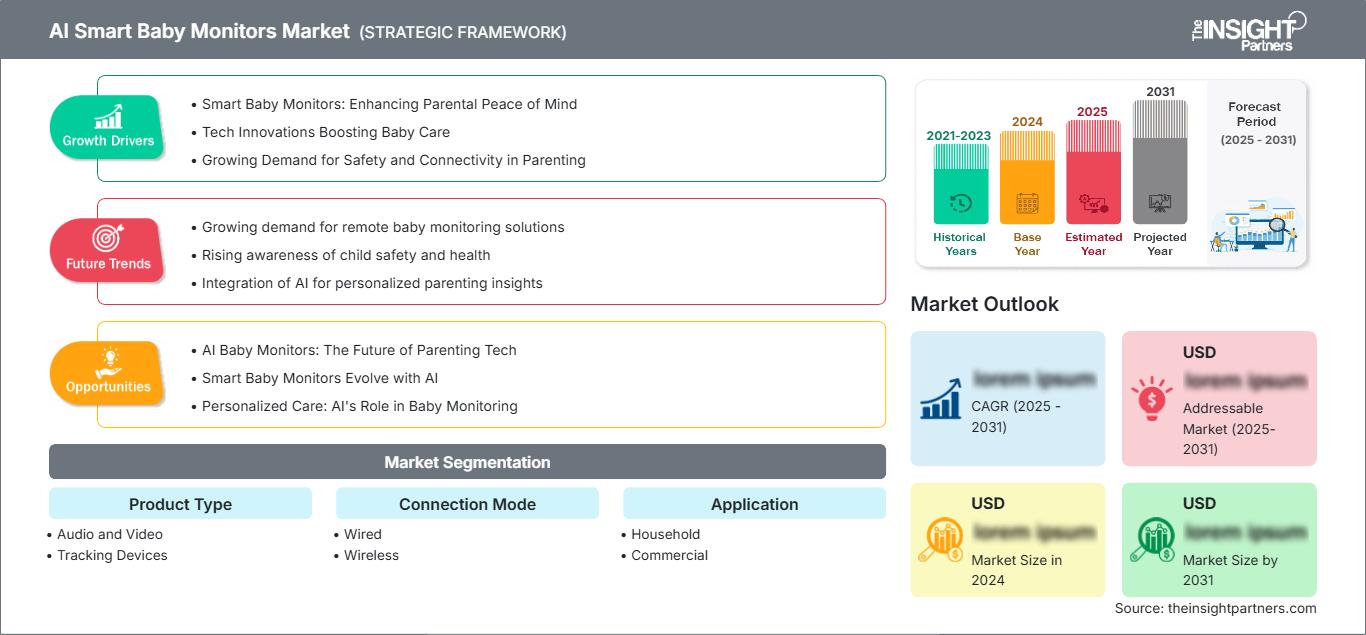
AI Smart Baby Monitors Market: Strategic Insights
Regional Insights
North America AI Smart Baby Monitors Market
North America maintained a dominant position with an estimated share of 35–40% in 2025 and is projected to expand at a CAGR range of 11.5–13.0% between 2026–2034. The region benefits from strong smart home adoption, high disposable income, and increasing demand for connected parenting technologies.
The US and Canada account for two of the largest markets, thanks to their well-developed consumer electronics networks and the increased popularity of AI-enabled childcare products. Producers have started manufacturing devices that incorporate sophisticated monitoring systems, mobile apps, and cloud services as a response to changing parental demands. Increased concern about consumer privacy and cybersecurity in the region is motivating companies to enhance their data protection capabilities. Online sales and specialty stores are providing additional assistance to increase access to such products. Major IT companies are also continuing investments in software integration, voice assistant support, and intelligent alarm systems.
U.S. AI Smart Baby Monitors Market
U.S. accounted for approximately 75–80% of the North American share in 2025 and is anticipated to grow at a CAGR range of 11.8–13.5% during 2026–2034. The country remains a key innovation center due to strong consumer electronics adoption and widespread smart home connectivity.
Companies such as Samsung Electronics Co., Ltd., Motorola, Inc., NETGEAR Inc., and Dorel Industries Inc. have established a market presence through their connected monitoring products and technologically advanced offerings. Trending applications have been seen in terms of products that provide information about sleep quality, environmental information and even real-time notifications. More consumers are looking for systems that integrate with smartphones and home automation systems. Retail sales on the internet, subscription models, and better artificial intelligence are some of the factors driving the market growth.
Europe AI Smart Baby Monitors Market
Europe AI Smart Baby Monitors Market represented an estimated share of 25–30% in 2025 and is expected to grow at a CAGR range of 10.8–12.5% between 2026–2034. The region is supported by rising adoption of connected household technologies and increasing consumer attention toward child safety solutions.
The UK market is characterized by strong acceptance of smart parenting products, as evidenced by high e-commerce penetration and consumers' interest in remote monitoring features. Germany appears to become a major contributor because of its high technological development, interest in high-end electronics, and preference for secure digital services. Countries such as France, Italy, and Spain show a gradual increase in their markets as connected devices are being integrated into family life. Manufacturers from Europe and other companies focus on compliance with privacy laws, energy conservation, and user-friendly apps.
APAC AI Smart Baby Monitors Market
APAC AI Smart Baby Monitors Market held an estimated share of 22–27% in 2025 and is forecast to register a CAGR range of 13.0–15.0% during 2026–2034. China leads regional adoption, supported by domestic electronics manufacturing and increasing smart home investments.
Japan, South Korea, India, and Australia are contributing through rising digital connectivity and changing childcare preferences. Urban households are adopting intelligent monitoring solutions that combine convenience with safety features. Government initiatives supporting digital technologies and expanding internet access are improving product awareness. Regional manufacturers are focusing on affordable solutions, while international brands emphasize premium AI capabilities. Growth is also supported by online marketplaces, smartphone adoption, and increasing consumer interest in connected lifestyle products.
Middle East & Africa AI Smart Baby Monitors Market
Middle East & Africa AI Smart Baby Monitors Market accounted for a smaller share in 2025 but is expected to grow at a CAGR range of 12.0–14.0% through 2034. The UAE and Saudi Arabia represent important markets due to smart home development and rising technology adoption.
South Africa and other MEA countries are gradually adopting connected childcare products as digital infrastructure improves. Investments in residential automation, premium consumer electronics, and online retail networks are creating opportunities for market expansion. The UAE remains a leading country due to strong smart city initiatives and consumer purchasing capacity. Regional growth is also influenced by infrastructure development, expanding internet connectivity, and increasing availability of international brands through digital commerce channels.
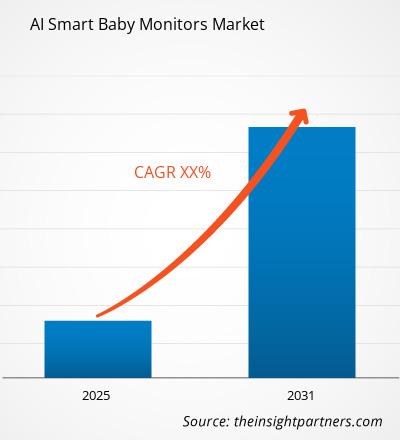
Segmentation Analysis
Product Type
The product type segment includes Audio and Video and Tracking Devices. The segment is expected to grow at a CAGR range of 11.5–13.0% between 2026–2034. AI Smart Baby Monitors Market scope within product categories is expanding as consumers move toward intelligent systems combining visual monitoring, health-related insights, and automated alerts. Audio and video products maintain broad adoption due to their established usage patterns, while tracking devices are gaining attention through advanced monitoring functions.
- Audio and Video products remain the leading category because they provide essential monitoring capabilities through cameras, microphones, and mobile connectivity. Integration with artificial intelligence improves detection accuracy, enabling features such as motion alerts, sound recognition, and remote access.
- Tracking Devices are gaining importance as parents seek additional information regarding infant movement, sleep quality, and wellness indicators. These products support personalized monitoring through sensors, wearable technologies, and connected applications.
Connection Mode
The connection mode segment consists of Wired and Wireless solutions. The segment is projected to expand at a CAGR range of 12.0–14.0% from 2026–2034. Wireless technologies are becoming increasingly important as households demand flexible installation, portability, and integration with smart home ecosystems. Market trends indicate continued movement toward connected and remotely accessible solutions.
- Wired systems continue serving consumers seeking stable connectivity and consistent performance. These products are often preferred in fixed installations where reliability and uninterrupted operation are important considerations.
- Wireless solutions are gaining adoption due to easy setup, smartphone compatibility, and mobility advantages. Wi-Fi and Bluetooth-enabled devices support remote monitoring and integration with broader connected environments.
Application
The application segment includes Household and Commercial uses. The segment is expected to register a CAGR range of 12.5–14.5% during 2026–2034. Household applications represent the primary demand area as parents increasingly adopt intelligent childcare solutions. Commercial applications include childcare facilities and healthcare-related environments where monitoring efficiency is valuable.
- Household applications dominate adoption as families seek convenient monitoring systems that provide safety alerts, video access, and environmental information through connected devices.
- Commercial applications are expanding through childcare centers and professional environments requiring reliable observation systems. Institutions are evaluating intelligent monitoring tools to improve operational efficiency and safety management.
Distribution Channel
The distribution channel segment covers Offline and Online channels. The segment is projected to grow at a CAGR range of 11.8–13.8% during the forecast period. Digital purchasing behavior and expanded e-commerce availability are influencing buying decisions for connected consumer products. Manufacturers are strengthening omnichannel strategies to reach diverse consumer groups.
- Offline channels continue providing product demonstrations, retailer assistance, and immediate purchasing options. Specialty stores and electronics retailers remain relevant for customers seeking physical evaluation before purchase.
- Online channels are expanding rapidly through broader product availability, consumer reviews, and direct manufacturer platforms. E-commerce supports wider geographic reach and enables comparison of advanced monitoring features.
Opportunity Snapshot
| Application | Revenue Contribution | Trend Tag | Adoption Stage |
| Household | High | Smart Nursery | Scaling |
| Commercial | Medium | Facility Monitoring | Emerging |
| Audio and Video | High | AI Vision | Mature |
| Tracking Devices | Medium | Health Tracking | Scaling |
AI Smart Baby Monitors Market Growth Drivers and Impact Analysis
Increasing Adoption of Connected Home Technologies
Growing integration of smart home ecosystems is a significant factor influencing Market expansion. Consumers are increasingly adopting connected devices that provide centralized control, remote access, and automated monitoring capabilities through smartphones and home platforms. Improvements in wireless connectivity, cloud services, and artificial intelligence algorithms are enabling manufacturers to deliver more responsive childcare solutions. The increasing availability of affordable smart devices is encouraging wider household adoption beyond premium customer segments. Integration with voice assistants and home automation systems is also improving user convenience. These developments are creating opportunities for companies to enhance product functionality, improve customer engagement, and introduce subscription-based monitoring services that provide additional analytical capabilities.
Rising Demand for Advanced Infant Safety Solutions
Growing parental focus on infant safety and wellness monitoring is driving demand for intelligent monitoring technologies. Modern consumers increasingly seek products capable of providing real-time alerts, environmental analysis, and activity tracking rather than basic audio or video surveillance. Artificial intelligence enables features such as automated sound detection, movement recognition, and sleep pattern analysis, improving monitoring efficiency. Healthcare awareness and changing family structures are contributing to demand for solutions that support remote observation. Manufacturers are responding by developing devices with improved sensors, higher-resolution cameras, and enhanced application interfaces. The impact of this trend includes greater product differentiation, increased investment in research and development, and stronger competition among companies offering advanced childcare technologies.
Expansion of Artificial Intelligence and Sensor Technologies
Advancements in artificial intelligence, machine learning, and sensor technology are transforming the capabilities of infant monitoring devices. Improved processing power allows devices to analyze data locally or through cloud platforms, enabling faster alerts and personalized insights. Enhanced sensors are supporting functions such as temperature monitoring, motion analysis, and environmental assessment. These technological developments are encouraging manufacturers to move beyond traditional monitoring solutions toward intelligent platforms. Semiconductor innovation and declining component costs are also improving accessibility for consumers. The impact extends across the value chain, including component suppliers, software developers, and device manufacturers. Companies investing in advanced algorithms, cybersecurity, and efficient hardware designs are better positioned to address evolving consumer expectations.
AI Smart Baby Monitors Market Future Trends
Integration of Predictive Analytics in Childcare Monitoring
Future AI Smart Baby Monitors Market trends are expected to emphasize predictive analytics capabilities that transform collected data into actionable insights. Manufacturers are increasingly exploring artificial intelligence models that can identify behavioral patterns, sleep variations, and environmental changes. These technologies may enable more personalized monitoring experiences by providing recommendations based on historical observations. Future product development is likely to focus on improving algorithm accuracy, reducing false alerts, and enhancing user trust. Integration with healthcare platforms and digital parenting applications could create broader ecosystems around infant wellness. As computing capabilities improve, edge processing may become more common, allowing faster responses while reducing dependence on cloud connectivity. Companies investing in secure analytics frameworks are expected to shape future innovation pathways.
Development of Privacy-Centric Smart Monitoring Platforms
Privacy-focused product development is expected to become a major future direction as connected childcare devices collect sensitive household information. Manufacturers are likely to prioritize encrypted communication, secure authentication, and transparent data management practices to address consumer concerns. Regulatory attention toward connected device security will influence product design strategies and encourage stronger protection standards. Future platforms may incorporate advanced permission controls, local data processing, and improved user visibility into information handling. Companies that combine intelligent monitoring features with reliable security frameworks may achieve stronger consumer acceptance. The evolution of privacy-centric technologies will influence purchasing decisions and encourage manufacturers to balance innovation with responsible data management practices.
AI Smart Baby Monitors Market Opportunities
Expansion into Emerging Digital Parenting Markets
Emerging economies present significant opportunities as smartphone penetration, internet connectivity, and digital commerce platforms continue expanding. Companies can leverage AI Smart Baby Monitors Market Forecasts to identify regions where household technology adoption is accelerating. Developing markets in Asia Pacific, Latin America, and parts of the Middle East are creating demand for affordable connected childcare solutions. Manufacturers can capture opportunities through localized product designs, competitive pricing strategies, and partnerships with regional distributors. Expanding online retail infrastructure enables companies to reach consumers without extensive physical networks. Investment in multilingual applications, regional customer support, and adaptable connectivity solutions can strengthen market entry strategies. These opportunities are expected to encourage broader adoption of intelligent monitoring technologies.
Development of Subscription-Based Monitoring Services
Subscription-based services represent an emerging opportunity for companies seeking recurring revenue models beyond hardware sales. Advanced analytics, cloud storage, personalized recommendations, and extended monitoring features can provide additional value to consumers. Businesses can develop service ecosystems that combine devices with digital applications and premium insights. Such models may improve customer retention while enabling continuous software enhancement. Companies focusing on secure cloud platforms and user-friendly applications can differentiate their offerings in an increasingly competitive environment. Strategic partnerships with technology providers and digital service companies may accelerate innovation. The opportunity lies in transforming monitoring products into comprehensive childcare platforms that deliver long-term value through software-driven experiences.
Recent Developments
- March 2026: Samsung Electronics Co., Ltd. continued expanding its connected device ecosystem with artificial intelligence-based consumer solutions, strengthening integration between smart home technologies and intelligent monitoring capabilities. Samsung’s developments in connected electronics support broader applications of AI-powered household devices through improved interoperability and software-driven experiences.
- September 2025: Motorola introduced enhancements across its connected baby monitoring portfolio, focusing on improved video quality, remote accessibility, and smart notification capabilities. The company continues developing childcare products that integrate modern connectivity features to support changing consumer expectations for digital parenting solutions.
- May 2025: NETGEAR expanded its focus on secure connected device infrastructure through advancements in networking technologies supporting smart home applications. The company’s investments in reliable wireless connectivity contribute to the development of consumer environments where intelligent monitoring devices can operate effectively.
Frequently Asked Questions

- Comprehensive Market Sizing and Forecast Analysis
- Detailed Segmentation Analysis
- In-Depth Market Dynamics Assessment
- Regional and Country-Level Insights
- Competitive Landscape and Company Benchmarking
- Strategic Business Intelligence
Recent Reports
Testimonials

The Insight Partners' SCADA System Market report is comprehensive, with valuable insights on current trends and future forecasts. The team was highly professional, responsive, and supportive throughout. We are very satisfied and highly recommend their services.
RAN KEDEM Partner, Reali Technologies LTDs
I requested a report on a very specific software market and the team produced the report in a few days. The information was very relevant and well presented. I then requested some changes and additions to the report. The team was again very responsive and I got the final report in less than a week.
JEAN-HERVE JENN Chairman, Future Analytica
We worked with The Insight Partners for an important market study and forecast. They gave us clear insights into opportunities and risks, which helped shape our plans. Their research was easy to use and based on solid data. It helped us make smart, confident decisions. We highly recommend them.
PIYUSH NAGPAL Sr. Vice President, High Beam Global
The Insight Partners delivered insightful, well-structured market research with strong domain expertise. Their team was professional and responsive throughout. The user-friendly website made accessing industry reports seamless. We highly recommend them for reliable, high-quality research services
YUKIHIKO ADACHI CEO, Deep Blue, LLC.
This is the first time I have purchased a market report from The Insight Partners.While I was unsure at first, I visited their web site and felt more comfortable to take the risk and purchase a market report.I am completely satisfied with the quality of the report and customer service. I had several questions and comments with the initial report, but after a couple of dialogs over email with their analyst I believe I have a report that I can use as input to our strategic planning process.Thank you so much for taking the extra time and making this a positive experience.I will definitely recommend your service to others and you will be my first call when we need further market data.
JOHN SUZUKI President and Chief Executive Officer, Board Director, BK Technologies
I wish to appreciate your support and the professionalism you displayed in the course of attending to my request for information regarding to infectious disease IVD market in Nigeria. I appreciate your patience, your guidance, and the fact that you were willing to offer a discount, which eventually made it possible for us to close a deal. I look forward to engaging The Insight Partners in the future, all thanks to the impression you have created in me as a result of this first encounter.
DR CHIJIOKE ONYIA MANAGING DIRECTOR, PineCrest Healthcare Ltd.Reason to Buy
- Informed Decision-Making
- Understanding Market Dynamics
- Competitive Analysis
- Identifying Emerging Markets
- Customer Insights
- Market Forecasts
- Risk Mitigation
- Boosting Operational Efficiency
- Strategic Planning
- Investment Justification
- Tracking Industry Innovations
- Aligning with Regulatory Trends





 Get Free Sample for