
Alcohol Abuse Monitoring Market Growth, Share & Trends by 2034
Coverage: By Technology (Sensors, GPS Systems, Others); Modality (Wearable, Non-Wearable); Product Type (Instrument, Software); End User (Hospitals, Government departments, Drug rehabilitation centers, Drug testing laboratories, Others) , and Geography (North America, Europe, Asia Pacific, and South and Central America)
- Status : Data Released
- Report Code : TIPRE00028903
- Category : Life Sciences
- No. of Pages : 150
- Available Report Formats :


- Last update date : July 10, 2026


2025 Market Size
US$ 2.82 Bn
Base year value
2034 Forecast
US$ 4.91 Bn
Projected by 2034
CAGR 2026-2034
6.35 %
Growth rate
Addressable Market
US$ 34.97 Bn
(2026-2034)
The alcohol abuse monitoring market size was valued at US$ 2.82 Billion in 2025 and is projected to reach US$ 4.91 Billion by 2034, registering a CAGR of 6.35% during 2026–2034. The market growth drivers include the increased use of monitoring systems, emphasis on substance abuse management, and expansion of institutional programs for compliance, rehabilitation, and behavior supervision.
North America continues to make an impact on the market size of alcohol abuse monitoring due to a developed healthcare infrastructure, electronic monitoring programs, and the increased use of sensor technology in the healthcare system. North America is estimated to have a CAGR range of 6.0-6.8% during 2026-2034.
Alcohol Abuse Monitoring Market Assessment and Insights
- North America holds a prominent position with an estimated alcohol abuse monitoring market share of 38–42% in 2025 and is expected to expand at a CAGR range of 6.0–6.8% during 2026–2034 due to mature monitoring infrastructure and healthcare adoption.
- US represents the largest national contributor within North America, accounting for an estimated 30–34% share in 2025 and growing at a CAGR range of 6.1–6.9% through 2034 due to regulatory and rehabilitation applications.
- Europe maintains a strong presence with a 28–32% share in 2025 and a CAGR range of 5.7–6.5%, supported by adoption in the UK, Germany, France, and other developed healthcare markets.
- Asia Pacific accounts for approximately 18–22% share in 2025 and is projected to grow at a CAGR range of 7.0–7.8%, led by China, Japan, South Korea, and India through expanding digital health ecosystems.
- Largest Segment: Wearable modality represents the leading segment with a market share range of 45–50% in 2025 and a CAGR range of 6.4–7.1% due to continuous monitoring capabilities.
- High Growth Segment: Sensors technology demonstrates accelerated adoption with a market share range of 35–40% in 2025 and a CAGR range of 7.0–7.8% owing to real-time detection demand.
- Key companies analyzed in detail: Soberlink, SCRAM Systems, Stree Time Technologies, Tarheel Monitoring, LLC, Sentinel, BI Incorporated, Electronic Sentencing Alternative, BACtrack, 3M Company, and LifeSafer.
Source: The Insight Partners' analysis based on proprietary research, government publications, company annual reports, investor presentations, industry databases, and expert interviews.
Progress in sensing technology, wireless communications, and data monitoring software tools has changed the face of the alcohol abuse monitoring market through real-time data gathering and remote control possibilities. Modern manufacturers and solution providers concentrate on development of small wearable devices, cloud computing platforms, and better accuracy in alcohol detection systems. The integration with the processes of healthcare treatment and the programs of criminal justice monitoring has increased the practical value of the products; however, nowadays the competition concentrates on reliability, comfort of use, and data management capacity. These factors stimulate cooperation between technology companies, healthcare organizations, and governmental departments interested in scalable solutions for addiction monitoring.
The future development of the alcohol abuse monitoring market will be impacted by growing adoption of the solution in Asia Pacific and Middle Eastern healthcare systems that require investments in the digital infrastructure and rehabilitation facilities. Focus on responsible alcohol management and need for remote patient monitoring can become an additional source of business opportunities. Companies should pay attention to interoperability, artificial intelligence-based data analytics, and secure data platforms in order to satisfy the changing demands of hospitals, rehabilitation clinics, and governmental departments.
Alcohol Abuse Monitoring Market Report Scope
| Report Attribute | Details |
|---|---|
| Market size in 2025 | US$ 2.82 Billion |
| Market Size by 2034 | US$ 4.91 Billion |
| Global CAGR (2026 - 2034) | 6.35% |
| Historical Data | 2021-2024 |
| Forecast period | 2026-2034 |
Alcohol Abuse Monitoring Market Analysis
he market growth for alcohol abuse monitoring is driven by factors such as increased consciousness about alcohol dependency issues, the growing requirement for treatment and rehabilitation support services, and the adoption of monitoring solutions in legal supervision programs. The key stakeholders in the market ecosystem are sensor manufacturers, wearable technology developers, software vendors, healthcare organizations, rehabilitation centers, and governmental organizations.
Demand will be driven from the fact that there is a need for the measurement process to be done accurately, efficiently, and there is a need for accountability among individuals undergoing treatment or supervision. Supply trends include investment in smaller sensors, connectivity technologies, and software integration capacity to meet the needs of institutions.
The alcohol abuse monitoring market analysis indicates increasing competitive activity among established technology companies and specialized monitoring providers. The alcohol abuse monitoring market report focuses on key companies including Soberlink, SCRAM Systems, Stree Time Technologies, Tarheel Monitoring, LLC, Sentinel, BI Incorporated, Electronic Sentencing Alternative, BACtrack, 3M Company, and LifeSafer, which are strengthening their market positions through product innovation and application expansion. Competitive differentiation is increasingly based on accuracy, compliance reporting, integration capabilities, and user accessibility.
Investment activities in the industry revolve around digitalization, interconnected monitoring solutions, and analytical processes. Strategic partnerships are being developed to optimize their portfolio of products and cater to the varied demands of the end users. The healthcare companies are in search of solutions that integrate monitoring with the rehabilitation process, whereas the government is using solutions that optimize supervising processes.
● REPORT CUSTOMIZATION
Tailor This Report To Align With Your Specific Business Requirements
This report can be customized to align precisely with your business objectives, scope, and target markets. Customization options include tailored segmentation, geography, competitive analysis, and strategic insights to support informed decision-making.
Customize This Report →WHAT YOU CAN ADJUST
- ● Segmentations
- ● Geography
- ● Competitive Analysis
- ● Language Preferences
Alcohol Abuse Monitoring Market: Strategic Insights
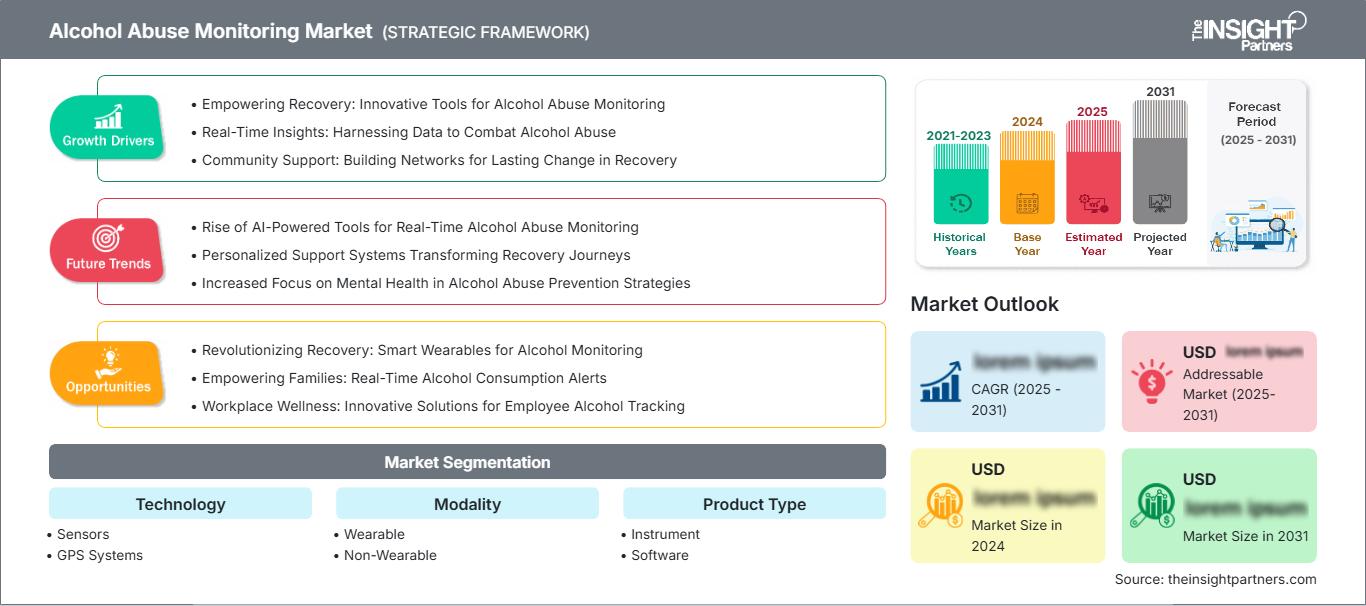
Regional Insights
North America alcohol abuse monitoring market
North America accounted for an estimated 38–42% share in 2025 and is projected to grow at a CAGR range of 6.0–6.8% through 2034. The region benefits from advanced healthcare infrastructure, established rehabilitation networks, and widespread adoption of electronic supervision programs. The US remains the leading contributor due to strong demand from government departments, hospitals, and judicial monitoring initiatives.
Increasing integration of connected devices, remote monitoring platforms, and data-driven rehabilitation systems continues to support regional expansion. Canada is also witnessing adoption through healthcare modernization efforts and increasing focus on substance abuse management. The presence of technology providers and established service networks further strengthens North America’s competitive position within the global industry.
U.S. alcohol abuse monitoring market Market
The U.S. alcohol abuse monitoring market represents approximately 30–34% of the North American share in 2025 and is expected to expand at a CAGR range of 6.1–6.9% during the forecast period. The country benefits from extensive healthcare facilities, court-mandated monitoring programs, and increasing deployment of wearable alcohol detection systems.
Companies operating in the US are developing solutions for hospitals, rehabilitation providers, and public agencies. The alcohol abuse monitoring market trends are shifting toward remote supervision, cloud-based reporting, and user-friendly devices. Government initiatives addressing substance abuse challenges and improvements in behavioral healthcare access continue to support technology implementation across multiple applications.
Europe alcohol abuse monitoring market
Europe accounted for an estimated 28–32% share in 2025 and the alcohol abuse monitoring market forecast is expected to register a CAGR range of 5.7–6.5% through 2034. The region demonstrates steady adoption due to healthcare digitization, rehabilitation programs, and regulatory focus on alcohol-related harm reduction. The UK remains one of the leading markets because of institutional monitoring applications and technology adoption.
Germany contributes significantly through advanced healthcare systems and increasing demand for reliable monitoring solutions in clinical environments. France, Italy, and Spain are also expanding adoption through healthcare modernization and public awareness initiatives. Across Europe, integration of monitoring technologies with treatment programs is supporting market development, while regulatory frameworks encourage responsible implementation of digital supervision solutions.
APAC alcohol abuse monitoring market
APAC represented an estimated 18–22% share in 2025 and is projected to grow at a CAGR range of 7.0–7.8% during 2026–2034. China leads regional adoption, supported by healthcare technology investments and expanding digital infrastructure.
Japan, South Korea, India, and Australia are increasingly adopting monitoring solutions through healthcare improvements and policy initiatives. Industrial development, rising awareness of addiction management, and expansion of rehabilitation services are supporting regional demand for connected monitoring technologies.
Middle East & Africa alcohol abuse monitoring market
The Middle East & Africa region is expected to expand at a CAGR range of 5.5–6.3%, supported by healthcare infrastructure development and increasing adoption of digital supervision systems. Saudi Arabia and the UAE are key contributors due to investments in healthcare modernization.
South Africa represents an important market within the region through growing rehabilitation service availability. Other MEA countries are gradually adopting monitoring technologies as healthcare networks improve. Energy-driven economies are supporting infrastructure development, enabling greater deployment of advanced healthcare and monitoring platforms.
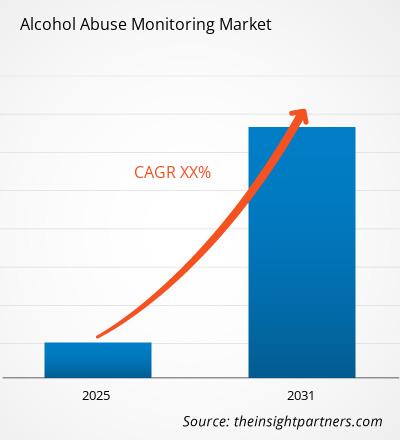
Segmentation Analysis
Technology Segment
The Technology segment, which includes sensors and GPS systems, is the main driver of the alcohol abuse monitoring market since it is responsible for real-time detection, tracking, and enforcing of compliance among other things. The use of sensors is widespread since they can determine the transdermal alcohol concentration all the time, whereas GPS systems help improve tracking and supervision of offenders. The growing use of automated compliance verification by judges and need for infrastructure for remote monitoring keeps increasing the use of this segment in correctional and rehabilitation environments.
- Sensors: Sensor-based systems are widely deployed for continuous alcohol detection, enabling non-invasive monitoring through skin-based alcohol measurement, supporting probation compliance and DUI enforcement programs with high reliability and real-time reporting capability.
- GPS Systems: GPS-enabled tracking systems are critical for offender supervision, allowing authorities to monitor movement patterns, enforce geographic restrictions, and integrate location-based compliance with alcohol monitoring frameworks.
Modality Segment
The Modality component consists of both wearable and non-wearable products. Wearable systems have become the most prevalent factor responsible for growth owing to increased demand for continuous and automatic monitoring solutions. Devices such as ankle bracelets and transdermal patches have gained widespread popularity in mandatory court programs providing continuous alcohol testing and behavioral control. At the same time, non-wearable products, which include breathalyzers and stationary monitors, still remain popular in institutions and checkpoints used by law enforcement agencies.
- Wearable: Wearable monitoring devices provide continuous alcohol detection and are increasingly mandated in probation and parole programs, improving compliance visibility and enabling real-time alerts for authorities managing offender rehabilitation.
- Non-Wearable: Non-wearable systems are primarily used in controlled environments such as testing centers and law enforcement checkpoints, offering periodic alcohol assessment through breath-based or stationary monitoring devices.
Product Type Segment
This Product Type segment consists of two types of products: instruments and software. The choice of the instrument type can be explained by the increased convergence of monitoring devices and the latest analytical platforms. At the same time, software products play an increasingly important role due to their involvement in interpreting, reporting, and predicting events based on the gathered information.
- Instrument: Instrument-based solutions include wearable sensors, breath analyzers, and transdermal monitoring devices that directly capture physiological alcohol levels, forming the primary data input layer for compliance systems.
- Software: Software platforms enable real-time monitoring, data aggregation, and behavioral analytics, supporting law enforcement agencies in managing offender compliance and generating automated reporting systems.
End User Segment
The End Users segment is made up of hospitals, government departments, rehabilitation centers for drugs, and laboratories for drug testing, all playing different roles in the growth of the market. The government departments constitute the biggest proportion since it is enforced through the adoption of alcohol monitoring systems. The rehabilitation centers are incorporating continuous monitoring systems in their treatment process, while hospitals and laboratories use alcohol monitoring systems for diagnosis purposes.
- Hospitals: Hospitals utilize alcohol monitoring tools for emergency care, addiction treatment assessment, and clinical evaluation of alcohol-related disorders, supporting early intervention strategies.
- Government Departments: Government agencies drive large-scale deployment of monitoring systems through DUI enforcement, probation supervision, and court-mandated sobriety programs.
- Drug Rehabilitation Centers: Rehabilitation centers adopt monitoring devices to track patient recovery progress, improve treatment adherence, and reduce relapse rates in structured recovery programs.
- Drug Testing Laboratories: Laboratories provide confirmatory testing and forensic analysis, supporting legal proceedings and compliance validation through standardized alcohol testing protocols.
Opportunity Snapshot
| Segment Name | Revenue Contribution | Trend Tag | Adoption Stage |
| Government Departments | High | Compliance Tech | Mature |
| Drug Rehabilitation Centers | Medium | Recovery Monitoring | Scaling |
| Drug Testing Laboratories | Medium | Forensic Testing | Mature |
| Hospitals | Medium | Clinical Screening | Scaling |
Alcohol Abuse Monitoring Market Growth Drivers and Impact Analysis
Rising enforcement of DUI and alcohol compliance laws
Increasingly strict enforcement of laws related to driving under influence (DUI) and alcohol compliance laws is one of the major factors driving the market for alcohol abuse monitoring. Increasingly stringent fines and alcohol monitoring programs for repeat offenders have been put in place in countries across North America and Europe. There has been increasing use of alcohol monitoring through wearable devices and ignition interlocks. The need for automated monitoring by the judicial system has also been rising, thus reducing administrative burdens and improving efficiency in enforcement. The use of monitoring technologies in real time improves transparency in the process of monitoring offenders and eliminates chances of reoffending.
Expansion of remote offender monitoring infrastructure
The development of remote monitoring facilities is bringing about structural changes in the management of offenders, allowing for constant monitoring without the need for physical reports. There have been instances in which the use of GPS wearable devices and cloud-based monitoring systems has been used to monitor alcohol drinking behavior as well as movement. The structural change helps to reduce the cost of doing things as well as making the probations system scalable. Through the use of IoT based sensors and mobile connectivity, the information can be relayed in real time to enforcement authorities. This structural change is especially evident in urban correctional facilities that have large caseloads.
Rising adoption of wearable sensor-based monitoring systems
The growing use of wearable sensor technology is revolutionizing the monitoring of alcohol consumption in the judicial and rehabilitation processes. This technology makes it possible to continuously monitor the concentration of alcohol in the transdermal fluid through an automatic and non-invasive process, thus resulting in better precision as compared to breath tests. The use of wearable technology helps in increasing the enforcement of compliance through real-time alarms and automated violation detection. Law enforcement authorities are increasingly using these devices for monitoring the behavior of offenders under the probation system. Further improvements in miniaturization, battery performance, and wireless technology are making the devices more user-friendly.
Alcohol Abuse Monitoring Market Future Trends
Integration of AI-driven predictive compliance systems
Alcohol monitoring systems are incorporating artificial intelligence technology to create systems that can make predictions about compliance levels and the risks of behavior of those being monitored. AI-powered algorithms use past alcohol consumption data, movements of the person, and previous violations to come up with a list of individuals who pose a danger. This way, preventive measures can be taken by the law enforcement agency and rehab centers. The incorporation of machine learning technology in alcohol monitoring platforms increases efficiency in the process of decision making while minimizing manual surveillance. Cloud analytics platforms have also made it possible to carry out centralized data processing in different jurisdictions.
Shift toward cloud-based unified monitoring platforms
The adoption of cloud-based systems for monitoring is increasingly becoming an important trend in the market for monitoring cases of alcohol abuse. These systems combine data collected from wearable monitors, GPS monitors, and testing kits and make it available through centralized dashboards for use by law enforcement agencies and the judiciary. Cloud-based systems ensure scalability and easy accessibility of information. They also provide for real-time monitoring of compliance in dispersed geographical locations. Security measures such as encryption of data and use of blockchain for auditing purposes are being adopted to ensure that systems function reliably. This trend will help achieve modernization of correction facilities.
Alcohol Abuse Monitoring Market Opportunities
Expansion of court-mandated sobriety monitoring programs
The expansion of court-mandated sobriety programs presents a significant growth opportunity for the alcohol abuse monitoring market. Governments are increasingly mandating continuous alcohol monitoring for repeat DUI offenders and high-risk individuals. This creates sustained demand for wearable sensors, GPS-enabled devices, and integrated compliance software. The scalability of such programs across urban and rural correctional systems enhances market penetration potential. Partnerships between technology providers and judicial agencies are enabling faster deployment of monitoring infrastructure. As legal systems prioritize rehabilitation over incarceration, continuous monitoring is becoming a preferred enforcement mechanism. This structural shift creates long-term demand stability and encourages innovation in cost-effective, scalable monitoring solutions.
Integration with digital rehabilitation and telehealth ecosystems
The integration of alcohol monitoring systems with digital rehabilitation and telehealth platforms is opening new commercial opportunities. Rehabilitation centers are increasingly combining behavioral therapy with continuous monitoring to improve treatment adherence and relapse prevention. Telehealth platforms enable remote counseling, while monitoring devices provide real-time behavioral data to clinicians. This integrated approach improves patient outcomes and reduces relapse rates in alcohol dependency cases. Insurance providers and healthcare systems are also beginning to support such hybrid care models due to cost efficiency and improved recovery metrics. As digital healthcare ecosystems expand, convergence between medical treatment and monitoring technology will become a key growth avenue for market participants.
Recent Developments
- March 2026: BI Incorporated expanded its offender monitoring ecosystem by upgrading its SCRAM Continuous Alcohol Monitoring platform with enhanced real-time alerting and cloud-based case management capabilities. The update improves supervision efficiency for probation departments by enabling faster violation detection and automated reporting workflows across large offender populations, strengthening compliance monitoring infrastructure in the United States correctional ecosystem.
- September 2025: BACtrack announced the launch of next-generation professional-grade breath alcohol testing devices with improved fuel-cell sensor accuracy and faster response calibration. The development targets law enforcement agencies and rehabilitation centers, supporting higher testing throughput and improved reliability in field conditions, particularly for roadside enforcement and structured addiction recovery programs.
- April 2025: 3M Company advanced its electronic monitoring portfolio through enhancements in wearable compliance tracking technologies used in correctional supervision programs. The upgraded system integrates improved connectivity features and longer device uptime, supporting continuous monitoring requirements across parole and probation use cases while reducing operational maintenance cycles for enforcement agencies.
Frequently Asked Questions

- Comprehensive Market Sizing and Forecast Analysis
- Detailed Segmentation Analysis
- In-Depth Market Dynamics Assessment
- Regional and Country-Level Insights
- Competitive Landscape and Company Benchmarking
- Strategic Business Intelligence
Recent Reports
Testimonials

The Insight Partners' SCADA System Market report is comprehensive, with valuable insights on current trends and future forecasts. The team was highly professional, responsive, and supportive throughout. We are very satisfied and highly recommend their services.
RAN KEDEM Partner, Reali Technologies LTDs
I requested a report on a very specific software market and the team produced the report in a few days. The information was very relevant and well presented. I then requested some changes and additions to the report. The team was again very responsive and I got the final report in less than a week.
JEAN-HERVE JENN Chairman, Future Analytica
We worked with The Insight Partners for an important market study and forecast. They gave us clear insights into opportunities and risks, which helped shape our plans. Their research was easy to use and based on solid data. It helped us make smart, confident decisions. We highly recommend them.
PIYUSH NAGPAL Sr. Vice President, High Beam Global
The Insight Partners delivered insightful, well-structured market research with strong domain expertise. Their team was professional and responsive throughout. The user-friendly website made accessing industry reports seamless. We highly recommend them for reliable, high-quality research services
YUKIHIKO ADACHI CEO, Deep Blue, LLC.
This is the first time I have purchased a market report from The Insight Partners.While I was unsure at first, I visited their web site and felt more comfortable to take the risk and purchase a market report.I am completely satisfied with the quality of the report and customer service. I had several questions and comments with the initial report, but after a couple of dialogs over email with their analyst I believe I have a report that I can use as input to our strategic planning process.Thank you so much for taking the extra time and making this a positive experience.I will definitely recommend your service to others and you will be my first call when we need further market data.
JOHN SUZUKI President and Chief Executive Officer, Board Director, BK Technologies
I wish to appreciate your support and the professionalism you displayed in the course of attending to my request for information regarding to infectious disease IVD market in Nigeria. I appreciate your patience, your guidance, and the fact that you were willing to offer a discount, which eventually made it possible for us to close a deal. I look forward to engaging The Insight Partners in the future, all thanks to the impression you have created in me as a result of this first encounter.
DR CHIJIOKE ONYIA MANAGING DIRECTOR, PineCrest Healthcare Ltd.Reason to Buy
- Informed Decision-Making
- Understanding Market Dynamics
- Competitive Analysis
- Identifying Emerging Markets
- Customer Insights
- Market Forecasts
- Risk Mitigation
- Boosting Operational Efficiency
- Strategic Planning
- Investment Justification
- Tracking Industry Innovations
- Aligning with Regulatory Trends





 Get Free Sample for