
Ambulatory Blood Pressure Monitoring (ABPM) Devices Market Growth, Size, Share, Trends, Key Players Analysis, and Forecast till 2034
Coverage: By Product (Arm ABPM Devices and Wrist ABPM Devices), End User (Hospitals, Ambulatory Surgery Centers, and Others), and Geography (North America, Europe, Asia Pacific, and South and Central America)
- Status : Data Released
- Report Code : TIPRE00002870
- Category : Life Sciences
- No. of Pages : 150
- Available Report Formats :


- Last update date : July 15, 2026


2025 Market Size
US$ 1.92 Bn
Base year value
2034 Forecast
US$ 4.13 Bn
Projected by 2034
CAGR 2026-2034
8.9 %
Growth rate
Addressable Market
US$ 27.11 Bn
(2026-2034)
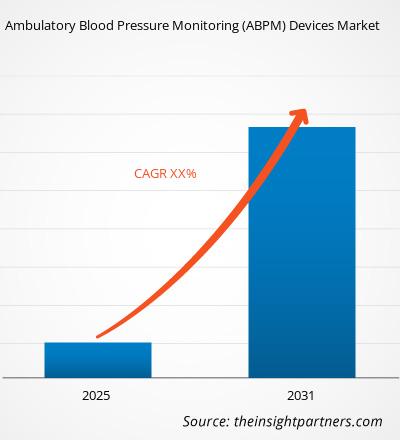
The Ambulatory Blood Pressure Monitoring Devices Market was valued at US$ 1.92 Billion in 2025 and is projected to reach US$ 4.13 Billion by 2034, growing at a CAGR of 8.4% during 2026–2034. Demand is being shaped by higher hypertension diagnosis, broader cardiology screening, and growing clinical reliance on 24-hour blood pressure profiles to identify masked hypertension, white-coat effects, nocturnal risk, and therapy response.
Across North America, adoption is expected to advance at an estimated 8.5–9.2% CAGR as cardiology practices, hospitals, and hypertension clinics expand out-of-office diagnostics. The Ambulatory Blood Pressure Monitoring Devices Market size is also supported by guideline-driven use, stronger reimbursement pathways, and integrated reporting systems that reduce clinician workload while improving treatment decisions for high-risk cardiovascular patients.
Ambulatory Blood Pressure Monitoring (ABPM) Devices Market Assessment and Insights
- North America: Share in 2025 is estimated at 36–40%, growing at a CAGR between 2026–2034 of 8.5–9.2%, supported by guideline adoption, cardiology networks, and stronger payer recognition for 24-hour diagnostic evidence.
- US: Share in 2025 is estimated at 76–80% of North America, growing at a CAGR between 2026–2034 of 8.6–9.3%, driven by hypertension prevalence and outpatient testing.
- Europe: Share in 2025 is estimated at 26–30%, growing at a CAGR between 2026–2034 of 7.8–8.5%, led by Germany, the UK, France, Italy, and Spain through structured hypertension pathways.
- Asia Pacific: Share in 2025 is estimated at 22–26%, growing at a CAGR between 2026–2034 of 9.4–10.2%, with China, Japan, India, South Korea, and Australia expanding diagnostics access.
- Largest Segment: Arm ABPM Devices held a market share range of 74–78% in 2025, with CAGR range 2026–2034 of 8.3–8.9%, reflecting clinical validation and physician familiarity.
- High Growth Segment: Wrist ABPM Devices held a market share range of 22–26% in 2025, with CAGR range 2026–2034 of 10.0–10.8%, supported by patient comfort and wearable innovation.
- Key companies analyzed in detail: Spacelabs Healthcare, Inc.; Welch Allyn, Inc.; SunTech Medical, Inc.; Bosch + Sohn GmbH u. Co. KG; SCHILLER AG; GE HealthCare Technologies Inc.; Rudolf Riester GmbH; Vaso Corporation; BPL Medical Technologies Pvt. Ltd.; OMRON Healthcare Co., Ltd.
Source: The Insight Partners' analysis based on proprietary research, government publications, company annual reports, investor presentations, industry databases, and expert interviews.
Classification moved from individual monitor to system that includes validated sensors, patient logs, physician dashboard, and electronic health record integration. There have been developments by manufacturers aimed at improving noise reduction, cuff design, battery performance, and movement tolerance because inaccurate readings result in repeating the measurement and delay in changing the treatment plan. Dynamics of manufacturing include high-precision pump, cuff, pressure sensor, firmware, and validated software, and suppliers must find the equilibrium between regulatory documentation and robust components.
In the coming years, new geographies are poised to witness growth as the application of cardiovascular screening moves from tertiary hospitals to ambulatory clinics and specialist centers. Cloud-based reporting system, local distribution, and variety in cuff sizes for diverse body profiles is expected to be invested in. Regulatory headwinds continue to be favorable since modern hypertension guidelines require out-of-office blood pressure measurement for distinguishing between several categories of hypertension.
Ambulatory Blood Pressure Monitoring (ABPM) Devices Market Report Scope
| Report Attribute | Details |
|---|---|
| Market size in 2025 | US$ 1.92 Billion |
| Market Size by 2034 | US$ 4.13 Billion |
| Global CAGR (2026 - 2034) | 8.9% |
| Historical Data | 2021-2024 |
| Forecast period | 2026-2034 |
Ambulatory Blood Pressure Monitoring (ABPM) Devices Market Analysis
Clinical demand for such devices is increasing since hypertension continues to be one of the most common and modifiable cardiovascular risk factors, whereas in-office measurement often neglects variations throughout the day. The Ambulatory Blood Pressure Monitoring Devices Market growth is driven by the necessity to measure nighttime blood pressure, morning pressure rise, and medication effectiveness throughout the entire day. Hospitals and ambulatory surgery centers leverage these devices to improve diagnostic accuracy prior to medication intensification or referral.
The value chain consists of sensor makers, cuff producers, programmers, clinical software providers, distributors, maintenance crews, and care delivery organizations. In terms of supply, there is an advantage for companies that have proven algorithms and wide ranges of cuffs along with regional services. Additionally, device replacement frequency depends on calibration requirements, infection control measures, data transfer, and shift from local desktop programs.
Competitive parameters include clinical reliability, measuring precision, fit, and user-friendliness of software. The Ambulatory Blood Pressure Monitoring Devices Market Report indicates that Spacelabs Healthcare, Inc., SunTech Medical, Inc., SCHILLER AG, and Welch Allyn, Inc. are leading competitors in installing ABPM clinically, whereas OMRON Healthcare Co., Ltd. benefits from volume sales in blood pressure monitoring and cardiovascular screening.
The strategic positioning is shifting towards integration into cardiology work process, rather than just sales of devices. GE HealthCare Technologies Inc., Vaso Corporation, BPL Medical Technologies Pvt. Ltd., Bosch + Sohn GmbH u. Co. KG, and Rudolf Riester GmbH stay relevant if hospitals analyze their offer in terms of complete vital signs, vascular and diagnostic packages. Priorities for investments include Bluetooth connection, automatic reporting, paediatric programs, and safety of integration with hospital IT-systems.
● REPORT CUSTOMIZATION
Tailor This Report To Align With Your Specific Business Requirements
This report can be customized to align precisely with your business objectives, scope, and target markets. Customization options include tailored segmentation, geography, competitive analysis, and strategic insights to support informed decision-making.
Customize This Report →WHAT YOU CAN ADJUST
- ● Segmentations
- ● Geography
- ● Competitive Analysis
- ● Language Preferences
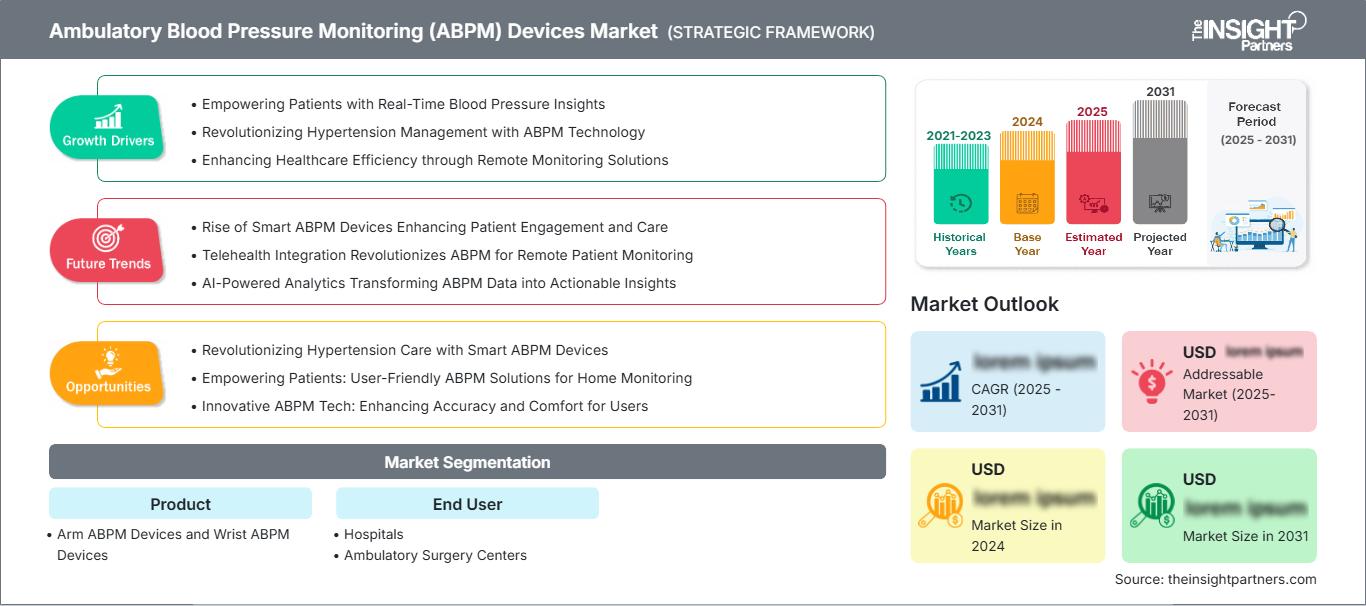
Ambulatory Blood Pressure Monitoring (ABPM) Devices Market: Strategic Insights
Regional Insights
North America Ambulatory Blood Pressure Monitoring Devices Market
North America holds an estimated market share of 36–40% in 2025 and is expected to grow at a CAGR of 8.5–9.2% from 2026 to 2034. North America enjoys advantages in terms of cardiology facility infrastructure, hypertension-specific primary care, payers’ familiarity with diagnostic monitoring, and greater acceptance of out-of-office blood pressure testing for difficult patients. The market’s greatest shares come from large integrated health facilities and specialist cardiovascular clinics.
The need for ABPM devices stems from issues of resistant hypertension, white-coat hypertension, nocturnal risk assessment, and medication adjustment. More hospitals look to validated machines that have low failures, good cuff availability, and automated report generation. Manufacturers favor service capability, device traceability, and software compatibility owing to fleet management of ABPM devices in high-volume outpatient departments.
U.S. Ambulatory Blood Pressure Monitoring Devices Market
In 2025, the United States was projected to account for 76-80% of North America and is anticipated to grow at a 8.6-9.3% CAGR between 2025 and 2034. The reason for its dominance includes high prevalence of hypertension, presence of cardiology practice and guidelines that emphasize confirmation out-of-office. Highest demand exists within hospitals, physicians and outpatient cardiovascular diagnostics clinics for adults with high risk.
Companies operating within the region include Spacelabs Healthcare, Inc., SunTech Medical, Inc., Welch Allyn, Inc., GE HealthCare Technologies Inc. and OMRON Healthcare Co., Ltd. who support monitoring process in various ways. Application trends include overnight BP monitoring, therapy monitoring and integration of diagnostic information with electronic medical records.
Europe Ambulatory Blood Pressure Monitoring Devices Market
In Europe, the market share was around 26–30% in 2025, and the growth rate for 2026–2034 is expected to be at 7.8–8.5% CAGR. Germany leads the market because of cardiological density, depth of medical devices manufacturing, and consistent use of out-of-office validated monitoring. In the United Kingdom, the market grows steadily due to primary care referral process and cardiological focus on avoidance of overtreatment caused by in-office monitoring.
Germany has well-developed validation process of devices and the customer base which prioritizes accuracy, safety, and continuity of care. There are reputable manufacturers such as SCHILLER AG, Bosch + Sohn GmbH u. Co. KG, and Rudolf Riester GmbH. Hospitals become more demanding in terms of software that allows generating reports for auditing and patient follow-up.
APAC Ambulatory Blood Pressure Monitoring Devices Market
In 2025, APAC had an estimated market share of 22-26%, with a forecasted growth rate of 9.4-10.2% CAGR. China was the key market, owing to hospital development, increase in diagnosis of chronic conditions, and investments made in cardiovascular diagnostics. Additional market pull comes from aging populations, e-health programs, and outpatient specialists in Japan, South Korea, India, and Australia.
Some industrial drivers include local production, distribution networks, and procurement of approved devices for both public and private hospitals. Emphasis on noncommunicable diseases and screenings is another driving force, particularly if there are improvements in primary care systems. The strongest growth is seen where doctors need low-cost devices, multilingual software, and cuffed devices.
Middle East & Africa Ambulatory Blood Pressure Monitoring Devices Market
Middle East & Africa is forecasted to register a CAGR of 7.2–8.0% from 2026 to 2034, with Saudi Arabia being the biggest regional market for demand. The UAE comes second due to its investments in hospitals and specialist cardiology services, whereas South Africa drives adoption in relatively well-established healthcare systems. RoMEA, on the other hand, will be selective yet gradual.
Hospital upgrades, investments based on the oil & gas industry, and chronic disease screening initiatives drive purchases within cities. The adoption of the device will be inconsistent owing to varying levels of reimbursement and trained professionals.
Segmentation Analysis
Product
In the Product segment, a growth rate between 8.6 and 9.2 percent CAGR is forecasted for the period 2026–2034 since the providers have to maintain accuracy and at the same time keep patients comfortable. The market scope of the Ambulatory Blood Pressure Monitoring Devices market with respect to product portfolio is expanding since there is a requirement for pediatric cuffs, various adult sizes, tolerance to movement, and good battery life.
- Arm ABPM Devices: Arm-based systems dominate clinical use because upper-arm oscillometric measurement has broad validation, physician trust, and compatibility with standard cuff protocols across hospitals and outpatient hypertension programs.
- Wrist ABPM Devices: Wrist-based systems are gaining attention where comfort, sleep tolerance, and wearability are priorities, although manufacturers must address positioning accuracy and validation requirements for broader clinical confidence.
End User
The End User Category is expected to experience a CAGR of 8.4% to 9.0% in the 2026 to 2034 period driven by increased testing in outpatient clinics and cardiovascular risk assessment. The hospitals will continue to be critical players since they deal with complicated patients and referrals, whereas the ambulatory surgical centers need portable devices for pre- and post-operation assessment.
- Hospitals: Hospitals generate the larger revenue contribution due to cardiology departments, nephrology clinics, internal medicine units, and structured hypertension programs requiring validated devices and centralized reporting.
- Ambulatory Surgery Centers: Ambulatory surgery centers show rising demand for pre-procedure risk evaluation, medication review support, and referral documentation, particularly for patients with uncontrolled or variable blood pressure.
Opportunity Snapshot
| End User | Revenue Contribution | Trend Tag | Adoption Stage |
| Hospitals | High | Cardiology Workflow | Mature |
| Ambulatory Surgery Centers | Medium | Preop Screening | Scaling |
Ambulatory Blood Pressure Monitoring (ABPM) Devices Market Growth Drivers and Impact Analysis
Guideline-Based Shift Toward Out-of-Office Diagnosis
Growing support for out-of-clinic blood pressure measurement through clinical guidelines since office measurements may misrepresent patients’ blood pressure status and skew therapy approaches constitutes a key driver for the growth of ABPM. This driver is directly supportive of the growth of ABPM, since ABPM measures patterns of blood pressure during daytime, night-time and morning hours that cannot be measured in regular office visits. The biggest impact on the market will be felt in areas of resistant hypertension, white coat hypertension suspicion, masked hypertension, and therapy titration. This will lead to increased budgetary allocations by hospitals and clinics for the purchase of ABPM equipment and reporting software.
Rising Hypertension Burden and Aging Populations
The worldwide prevalence of hypertension remains on the rise because of aging, cardiometabolic risks posed by urban lifestyle, and better diagnosis in emerging health care systems. The elderly tend to experience blood pressure variability, nighttime hypertension, orthostatic signs, and multiple medications; therefore, single measurements are not adequate for making a clinical decision. The implementation of ABPM represents an efficient method for obtaining a full range of these complicated indices without requiring hospitalization. The commercial potential is apparent in cardiology, nephrology, and internal medicine departments dealing with difficult patients. Furthermore, device requirement grows as the health care system emphasizes the necessity of early detection of uncontrolled hypertension in order to avoid costly complications.
Connectivity and Workflow Efficiency in Clinical Settings
Connectivity is becoming a purchasing consideration since the clinical staff will require a fast set-up, data transfer, storage, and interpretation. The traditional ABPM methods involved manual downloading of the results, paper journals, and separate procedures for generating reports, thus limiting the rate of tests conducted in busy establishments. Modern machines with the ability to use Bluetooth connections, automatic summarization, and connection to electronic health records decrease the paperwork involved in the process and increase the proportion of completed tests. The effect of the trend goes beyond selling the hardware itself: more and more care facilities consider the software costs, maintenance services, security, and integration.
Ambulatory Blood Pressure Monitoring (ABPM) Devices Market Future Trends
Cuffless and Wearable Validation Pathways
The ambulatory blood pressure monitoring devices market trends will lean more towards cuffless or less intrusive designs, though this will be determined by clinical validation and not merely convenience. Future designs might feature optical sensors, pulse transit measures, calibrations procedures, and AI-assisted signal analysis to aid in measuring BP during sleep. In case regulators are convinced by the validity of the measurements from the devices, they will enable wider application of the ABPM technology amongst patients that do not like the inflation of the cuff. In hospitals, there will be the need for comparability with traditional upper-arm devices, hence hybrid designs will be common.
AI-Enabled Interpretation and Risk Stratification
Interpretation driven by artificial intelligence will move ABPM analysis from reporting to decision-making assistance. Future systems could provide more consistent warnings about nocturnal hypertension, morning surge, problems with dipping, incorrect drug administration, and repeated testing. This development can assist clinicians in managing rising numbers of diagnoses without putting additional strain on specialists. Combining ABPM analysis with cardiovascular risk assessment and patient’s medical history could also contribute to the development of individualized treatment programs. To be adopted, it must provide transparent output and conform to requirements of medical software. Companies that can provide understandable recommendations based on the complex information about 24 hours of monitoring will have an edge.
Ambulatory Blood Pressure Monitoring (ABPM) Devices Market Opportunities
Expansion in Emerging Outpatient Cardiovascular Networks
Emerging outpatient cardiovascular networks offer a practical route for vendors to increase penetration beyond tertiary hospitals. Ambulatory Blood Pressure Monitoring Devices Market Forecasts point to rising demand where primary care screening identifies more patients but specialist confirmation capacity remains limited. Suppliers can create value through compact devices, distributor-led training, multilingual software, and affordable service models. Partnerships with diagnostic chains and private hospital groups can accelerate access in India, Southeast Asia, the Gulf, and Latin America. Investors should prioritize channels that combine device placement with recurring revenue from cuffs, calibration, reporting software, and clinical workflow support.
Integrated ABPM Services for Hospitals and ASCs
Hospitals and ambulatory surgery centers increasingly need turnkey ABPM services rather than one-time device procurement. Vendors can capture this opportunity by offering device fleets, cuff replacement programs, staff training, cybersecurity support, reporting templates, and integration assistance. This model is attractive where clinical teams want predictable uptime and lower administrative burden. ASCs are especially relevant because preoperative hypertension evaluation can reduce cancellations and improve referral quality. A service-led approach also differentiates suppliers in price-sensitive tenders, allowing them to compete on operational value, test completion rates, and clinician confidence instead of hardware specifications alone.
Recent Developments
- September 2025: Baxter International Inc. - Through its Welch Allyn portfolio, Baxter launched the Connex 360 Vital Signs Monitor to improve connected patient monitoring, automated documentation, and secure data transfer to electronic medical records. Although not an ABPM-only product, it strengthens Baxter’s broader blood pressure and vital-signs ecosystem for hospitals evaluating connected diagnostic infrastructure.
- August 2025: OMRON Healthcare Co., Ltd. - OMRON Healthcare issued a national call-to-action in response to the 2025 AHA and ACC high blood pressure guidance, emphasizing routine home blood pressure monitoring and earlier intervention. The announcement reinforced the strategic role of connected blood pressure devices in long-term cardiovascular risk management.
- May 2025: Baxter International Inc. - Baxter confirmed that Welch Allyn FlexiPort disposable blood pressure cuffs were no longer on allocation effective May 12, 2025, following U.S. capacity expansion and installation of new cuff production equipment. The update improved supply continuity for healthcare providers using Welch Allyn blood pressure measurement products.
Frequently Asked Questions

- Comprehensive Market Sizing and Forecast Analysis
- Detailed Segmentation Analysis
- In-Depth Market Dynamics Assessment
- Regional and Country-Level Insights
- Competitive Landscape and Company Benchmarking
- Strategic Business Intelligence
Recent Reports
Testimonials

The Insight Partners provided valuable market intelligence that supported our global go-to-market strategy. Their team was professional, responsive, and attentive to our feedback, providing thoughtful analysis and helpful methodological clarifications throughout the project.
Junmo Kim Chief Financial Officer (CFO), Enertech Co., Ltd.
The Insight Partners' SCADA System Market report is comprehensive, with valuable insights on current trends and future forecasts. The team was highly professional, responsive, and supportive throughout. We are very satisfied and highly recommend their services.
RAN KEDEM Partner, Reali Technologies LTDs
I requested a report on a very specific software market and the team produced the report in a few days. The information was very relevant and well presented. I then requested some changes and additions to the report. The team was again very responsive and I got the final report in less than a week.
JEAN-HERVE JENN Chairman, Future Analytica
We worked with The Insight Partners for an important market study and forecast. They gave us clear insights into opportunities and risks, which helped shape our plans. Their research was easy to use and based on solid data. It helped us make smart, confident decisions. We highly recommend them.
PIYUSH NAGPAL Sr. Vice President, High Beam Global
The Insight Partners delivered insightful, well-structured market research with strong domain expertise. Their team was professional and responsive throughout. The user-friendly website made accessing industry reports seamless. We highly recommend them for reliable, high-quality research services
YUKIHIKO ADACHI CEO, Deep Blue, LLC.
This is the first time I have purchased a market report from The Insight Partners.While I was unsure at first, I visited their web site and felt more comfortable to take the risk and purchase a market report.I am completely satisfied with the quality of the report and customer service. I had several questions and comments with the initial report, but after a couple of dialogs over email with their analyst I believe I have a report that I can use as input to our strategic planning process.Thank you so much for taking the extra time and making this a positive experience.I will definitely recommend your service to others and you will be my first call when we need further market data.
JOHN SUZUKI President and Chief Executive Officer, Board Director, BK Technologies
I wish to appreciate your support and the professionalism you displayed in the course of attending to my request for information regarding to infectious disease IVD market in Nigeria. I appreciate your patience, your guidance, and the fact that you were willing to offer a discount, which eventually made it possible for us to close a deal. I look forward to engaging The Insight Partners in the future, all thanks to the impression you have created in me as a result of this first encounter.
DR CHIJIOKE ONYIA MANAGING DIRECTOR, PineCrest Healthcare Ltd.Reason to Buy
- Informed Decision-Making
- Understanding Market Dynamics
- Competitive Analysis
- Identifying Emerging Markets
- Customer Insights
- Market Forecasts
- Risk Mitigation
- Boosting Operational Efficiency
- Strategic Planning
- Investment Justification
- Tracking Industry Innovations
- Aligning with Regulatory Trends





 Get Free Sample for