
Amino Acid Cleanser Market Demand, Trends & Forecast by 2034
Coverage: By Form (Liquid, Gel); Packaging Type (Bottles, Tubes, Others); Distribution Channel (Supermarkets and Hypermarkets, Specialty Stores, Online Retail, Others) , and Geography (North America, Europe, Asia Pacific, and South and Central America)
- Status : Data Released
- Report Code : TIPRE00028438
- Category : Consumer Goods
- No. of Pages : 150
- Available Report Formats :


- Last update date : August 19, 2026


2025 Market Size
US$ 1.32 Bn
Base year value
2034 Forecast
US$ 2.55 Bn
Projected by 2034
CAGR 2026-2034
8.58 %
Growth rate
Addressable Market
US$ 18.34 Bn
(2026-2034)
The amino acid cleanser market was valued at US$ 1.32 Billion in 2025 and is projected to reach US$ 2.55 Billion by 2034, registering a CAGR of 8.58% during 2026–2034. Demand is strengthening as consumers shift from harsh surfactant systems toward pH-balanced cleansing formulas that support the skin barrier while removing sebum, sunscreen, makeup residue, and urban pollutants.
North America remains a high-value region for amino acid cleanser market size expansion, supported by dermatologist-led education, premium skin care adoption, and rising sensitivity-focused product claims. The region is estimated to advance at a CAGR of 8.0–8.6% through 2034, with specialty stores and online retail reinforcing discovery for sulfate-free, barrier-friendly, and clinically positioned facial cleansing products.
Amino Acid Cleanser Market Assessment and Insights
- North America accounted for 28–31% share in 2025 and is expected to grow at a CAGR of 8.0–8.6% between 2026–2034, supported by premium facial care routines and strong e-commerce conversion.
- US represented 78–82% of North America share in 2025, growing at a CAGR of 8.1–8.7% as dermatologist-recommended mild cleansers gain visibility.
- Europe held 22–25% share in 2025 and is forecast to grow at 7.6–8.2% CAGR, led by the UK, Germany, France, Italy, and Spain.
- Asia Pacific contributed 35–39% share in 2025 and is projected to expand at 8.8–9.5% CAGR, led by China, Japan, South Korea, and India.
- Largest Segment: Liquid cleansers held 54–58% market share in 2025 and are expected to grow at 8.1–8.6% CAGR due to daily-use familiarity and convenient dispensing.
- High Growth Segment: Online retail held 28–32% share in 2025 and is projected to grow at 9.4–10.2% CAGR as discovery shifts to digital beauty platforms.
- Key companies analyzed in detail: Lancôme, The Procter and Gamble Company, boscia, LLC, Daiichi Sankyo Healthcare Co., Ltd., CP Skin Health Group, Inc., Unilever PLC, Caudalie, Kiehl’s Since 1851, Kanebo Cosmetics Inc., CEMÔY, and KIMTRUE.
Source: The Insight Partners' analysis based on proprietary research, government publications, company annual reports, investor presentations, industry databases, and expert interviews.
Product evolution has moved from basic cleansing toward skin-barrier management, where amino acid surfactants are valued for mildness, foam quality, and compatibility with sensitive skin positioning. The amino acid cleanser market growth reflects formulation upgrades in liquid and gel formats, broader use of coconut-derived and glutamate-based surfactants, and more precise claims around hydration, non-stripping cleansing, and post-cleanse comfort.
According to the Amino Acid Cleanser Market Report, investment over the forecast period will concentrate on Asia Pacific production, North American specialty retail, and European clean-label compliance. It will be necessary for brands to strike a balance between sensory performance and biodegradable surfactants, refills, and less irritating positioning to keep up with the changing consumer expectations. It will help in facilitating the premiumization strategy and also make it possible for mass brands to offer more affordable amino acid cleansers. The rising demand for mild formulations, along with growing consumer interest in eco-friendly personal care products, will further help in driving market growth.
Amino Acid Cleanser Market Report Scope
| Report Attribute | Details |
|---|---|
| Market size in 2025 | US$ 1.32 Billion |
| Market Size by 2034 | US$ 2.55 Billion |
| Global CAGR (2026 - 2034) | 8.58% |
| Historical Data | 2021-2024 |
| Forecast period | 2026-2034 |
Amino Acid Cleanser Market Analysis
Amino acid cleanser market growth is driven by the convergence of skin sensitivity, ingredient transparency, and daily cleansing frequency. There is a growing trend of associating sulfate-free formulations with reduced levels of irritation and improved barrier function. Such trends contribute to the rising popularity of cleansing products that will remove both sunscreen and pollution residues without causing any tension, particularly among people who suffer from acne, sensitivities, or combination skin.
The supply chain is characterized by the presence of well-known surfactant suppliers, contract manufacturers, testing agencies, and omnichannel beauty retailers. The supply dynamics will be influenced by the availability of amino acid surfactants, packaging materials, and brand needs for substantiation of mildness.
Amino acid cleanser market analysis shows a competitive landscape divided between global beauty groups, dermatology-led brands, and Asian skin care specialists. Lancôme, Kiehl’s Since 1851, Unilever PLC, The Procter and Gamble Company, Kanebo Cosmetics Inc., and Caudalie compete through brand equity, while boscia, LLC, CEMÔY, KIMTRUE, CP Skin Health Group, Inc., and Daiichi Sankyo Healthcare Co., Ltd. strengthen niche positioning.
The trend of investments is towards barrier-hydrating washes, fewer ingredients in formulas, and products that can transform from cream/gel into soft foam. Channel fit is now more connected to strategic positioning: specialty shops facilitate consultations, while mass retailers bring scale and online shopping makes educational content via ingredient explanations and dermatologists' opinions possible.
● REPORT CUSTOMIZATION
Tailor This Report To Align With Your Specific Business Requirements
This report can be customized to align precisely with your business objectives, scope, and target markets. Customization options include tailored segmentation, geography, competitive analysis, and strategic insights to support informed decision-making.
Customize This Report →WHAT YOU CAN ADJUST
- ● Segmentations
- ● Geography
- ● Competitive Analysis
- ● Language Preferences
Amino Acid Cleanser Market: Strategic Insights
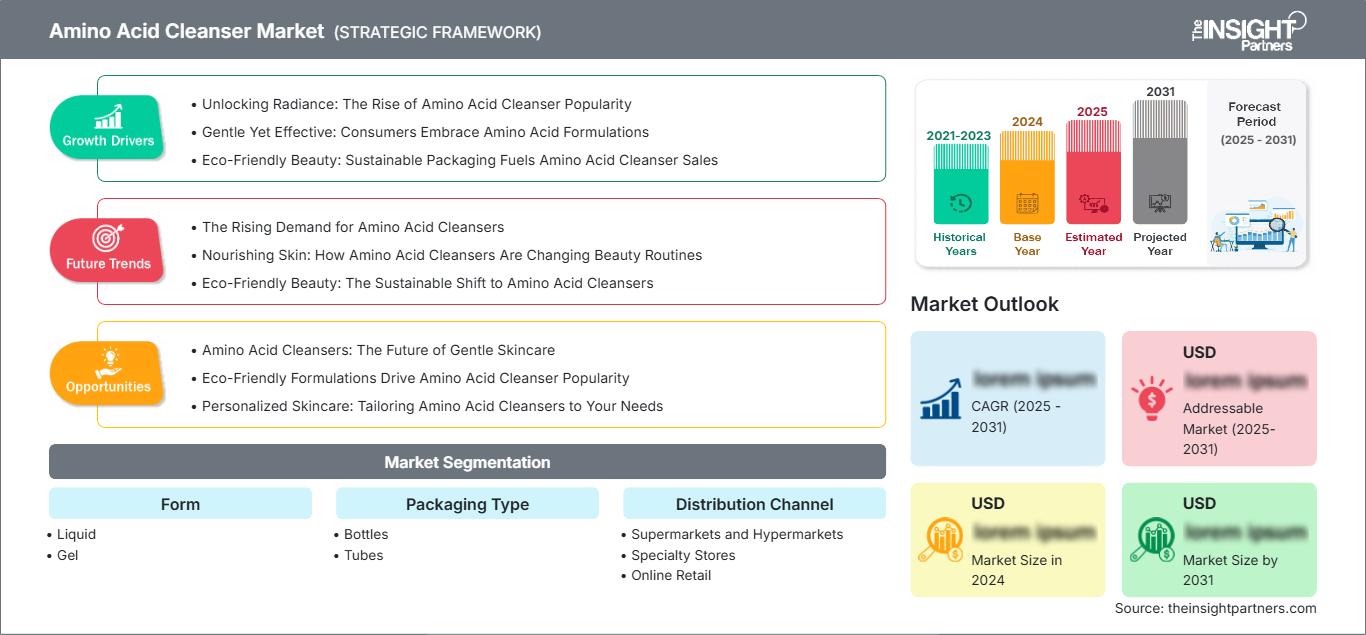
Regional Insights
North America amino acid cleanser market
North America held 28–31% amino acid cleanser market share in 2025 and is expected to grow at a CAGR of 8.0–8.6% during 2026–2034. Demand is driven by strong skin awareness, regular sunscreen usage, and luxury face care routines. Cleansers will focus on amino acid surfactants, glycerin, and barrier-supportive ingredients for positioning as complementary to treatment products.
The importance of specialty beauty retail and e-retail channels is crucial in driving regional adoption because the consumer compares the labels and scientific claims before buying the product. Dermatologists' advice and growing male grooming habits are other positive aspects of the market in the region.
U.S. amino acid cleanser Market
The U.S. represented 78–82% of North America's share in 2025 and is projected to grow at a CAGR of 8.1–8.7%. Combinations of product launches that incorporate amino acid surfactants with squalane, glycerin, and barrier claims are increasing their use not just by high-end skin care users but also in facial cleansing.
The company is well-represented in department stores, specialty stores, pharmacies, and branded digital sites. Companies such as Kiehl’s Since 1851, Lancôme, Unilever PLC, CP Skin Health Group, Inc., and boscia, LLC all enjoy built-in recognition. Online reviews and social media will keep influencing the decision-making process, especially for those who want non-stripping cleansers for sensitive/eczema skin.
Europe amino acid cleanser Market
Europe accounted for 22–25% share in 2025 and is forecast to grow at a CAGR of 7.6–8.2%. UK takes the lead on premium online discovery, with Germany emphasizing dermatology credibility and ingredient safety. France continues to be important in terms of pharmacy beauty and prestige skin care, with Italy and Spain assisting the market demand via personal grooming and clean beauty acceptance.
The strict regulation of cosmetic claims ensures that brands are able to back up claims regarding their products’ mildness, biodegradability, and skin compatibility. The European consumer is known for preferring formulas that integrate texture with ingredient transparency. Such an atmosphere makes it possible to implement amino acid cleansers into specialty and online shopping.
APAC amino acid cleanser Market
APAC held 35–39% share in 2025 and is projected to grow at 8.8–9.5% CAGR. China leads volume expansion, while Japan and South Korea influence formulation standards through gentle, low-pH cleansing routines. India and Australia add incremental demand through online beauty retail, rising incomes, and sensitivity-focused skin care education.
The region benefits from established beauty innovation ecosystems and faster adoption of gel and liquid formats. Local and global brands compete through texture, foam density, and post-cleanse hydration claims. Policy focus on cosmetic safety and e-commerce compliance further strengthens trusted brands that can demonstrate quality, labeling accuracy, and ingredient transparency.
Middle East & Africa amino acid cleanser Market
The Middle East & Africa is expected to grow at a CAGR of 7.2–7.9% through 2034, with Saudi Arabia and the UAE leading premium demand. Heat, humidity, and frequent cleansing needs create demand for mild formulas that remove sebum and sunscreen without dryness. South Africa supports broader retail access.
Growth is shaped by modern beauty retail, cross-border e-commerce, and premium personal care spending in urban centers. The region remains smaller than APAC, North America, and Europe, but offers opportunity for travel retail, dermatologist-positioned cleansing products, and brands that address climate-specific skin concerns with gentle surfactant systems.
Segmentation Analysis
Form
Form is a core amino acid cleanser market scope category because texture influences cleansing experience, residue perception, and repeat use. The segment is projected to grow at a CAGR of 8.3–8.9% during 2026–2034. Liquid products dominate daily-use routines, while gel cleansers are gaining traction among younger consumers seeking refreshing, low-residue formats.
- Liquid: Liquid cleansers maintain the strongest position because they are easy to dispense, compatible with pump packaging, and familiar to consumers seeking dependable daily cleansing for sensitive, dry, or combination skin.
- Gel: Gel cleansers are strategically important for oily and combination skin users because they offer a fresh sensory profile, clear appearance, and strong alignment with online beauty content focused on lightweight routines.
Packaging Type
Packaging Type is forecast to grow at a CAGR of 8.0–8.5% during 2026–2034 as brands balance convenience, shelf visibility, and sustainability. Bottles support liquid formulas and family-sized products, while tubes remain attractive for travel, controlled dispensing, and premium gel formats.
- Bottles: Bottles are preferred for liquid cleansers because pumps and flip caps support controlled dispensing, bathroom storage, and value packs suited to daily facial cleansing routines.
- Tubes: Tubes serve gel and cream-to-foam formats by improving portability, minimizing contamination risk, and supporting premium design cues that perform well in specialty stores and online merchandising.
Distribution Channel
Distribution Channel is expected to grow at a CAGR of 8.6–9.2% during 2026–2034. Supermarkets and hypermarkets support mass visibility, specialty stores provide guided discovery, and online retail is the fastest-growing route as consumers research ingredient claims, reviews, and skin-type suitability before purchase.
- Supermarkets and Hypermarkets: These outlets contribute to broad access and price comparison, making them important for mass and mid-tier amino acid cleanser adoption among routine household shoppers.
- Specialty Stores: Specialty stores remain influential because beauty advisors, testers, and curated shelf placement help consumers compare mildness, texture, and skin concern claims before purchase.
- Online Retail: Online retail accelerates trial through ingredient education, influencer demonstrations, subscription offers, and review-led decision-making, especially among younger consumers seeking gentle and transparent skin care products.
Opportunity Snapshot
| Distribution Channel | Revenue Contribution | Trend Tag | Adoption Stage |
| Supermarkets and Hypermarkets | High | Mass Access | Mature |
| Specialty Stores | Medium | Guided Trial | Scaling |
| Online Retail | High | Ingredient Search | Scaling |
Amino Acid Cleanser Market Growth Drivers and Impact Analysis
Rising Demand for Barrier-Friendly Daily Cleansing
There is now an increasing preference by consumers to move from foam cleaners to cleansers based on amino acids that offer cleansing properties but will not make the skin feel tight. This trend is most prominent amongst individuals dealing with sensitive skin, or acne-prone skin, or using sunscreen frequently. The effect of this is seen through increased repurchasing, higher price points, and more shelf space occupied by gentler cleansers.
Clean Beauty and Sulfate-Free Formulation Preferences
Innovation in ingredient analysis is changing the way cleansers are being designed since consumers analyze label claims regarding sulfates, fragrances, biodegradability, and skin friendliness. The use of amino acid-based surfactants fits into this innovation as they fit in line with the claim of mildness and naturality. The business implication of using such surfactants is that a broader range of consumers will be addressed within the premium and mass market segments.
E-Commerce Education and Dermatologist-Led Discovery
Digital platforms are accelerating adoption by making ingredient education more accessible. Consumers can compare surfactant types, read reviews, and watch demonstrations before purchase, reducing hesitation around premium cleanser prices. Dermatologist-led content further validates the amino acid cleanser market demand by linking mild cleansing with barrier preservation. This driver increases online retail conversion, supports subscription models, and helps niche brands compete against established personal care groups through targeted messaging.
Amino Acid Cleanser Market Future Trends
Hybrid Cleansers with Treatment-Led Claims
Amino acid cleanser market trends are moving toward hybrid products that combine gentle cleansing with hydration, barrier support, microbiome-friendly positioning, or pollution removal claims. These formulas will increasingly include glycerin, ceramides, squalane, niacinamide, and botanical extracts. The trend will help brands differentiate in a crowded cleanser category while encouraging consumers to treat cleansing as a functional skin care step rather than a basic hygiene purchase.
Sustainable Packaging and Concentrated Formats
Product development in the future will focus more on making use of recyclable bottles, a system whereby people can refill their products, making use of lightweight tubes, as well as more concentrate to minimize packaging intensity. This will be particularly important in Europe and premium North American markets, where consumers will expect accountability from the ingredients used as well as the packaging.
Amino Acid Cleanser Market Opportunities
Premiumization Through Sensitive Skin Positioning
Amino acid cleanser market Forecasts indicate a strong opportunity in products designed for sensitive, dry, and barrier-compromised skin. Brands can build value by creating milder surfactants with hydration claims, clinical evidence, and light fragrances. It helps brands achieve premium pricing while catering to consumers who are using sunscreen, actives, or acne products on a daily basis. The potential is particularly strong for North America, Europe, Japan, and South Korea because consumers are looking for barrier-friendly regimes.
Scaling Digital-First Distribution Models
Online sales provide the chance to educate customers about how amino acid-based surfactants are different from other cleansing agents. Quiz marketing, doctor’s content, ingredients information and routines will help to enhance conversion. Online shopping provides an avenue for small players to compete without making huge investments in physical stores. Proper online execution can drive subscriptions, repurchases, and the launch of products in various forms such as gels, liquids, and tubes.
Frequently Asked Questions

- Comprehensive Market Sizing and Forecast Analysis
- Detailed Segmentation Analysis
- In-Depth Market Dynamics Assessment
- Regional and Country-Level Insights
- Competitive Landscape and Company Benchmarking
- Strategic Business Intelligence
Recent Reports
Testimonials

The Insight Partners' SCADA System Market report is comprehensive, with valuable insights on current trends and future forecasts. The team was highly professional, responsive, and supportive throughout. We are very satisfied and highly recommend their services.
RAN KEDEM Partner, Reali Technologies LTDs
I requested a report on a very specific software market and the team produced the report in a few days. The information was very relevant and well presented. I then requested some changes and additions to the report. The team was again very responsive and I got the final report in less than a week.
JEAN-HERVE JENN Chairman, Future Analytica
We worked with The Insight Partners for an important market study and forecast. They gave us clear insights into opportunities and risks, which helped shape our plans. Their research was easy to use and based on solid data. It helped us make smart, confident decisions. We highly recommend them.
PIYUSH NAGPAL Sr. Vice President, High Beam Global
The Insight Partners delivered insightful, well-structured market research with strong domain expertise. Their team was professional and responsive throughout. The user-friendly website made accessing industry reports seamless. We highly recommend them for reliable, high-quality research services
YUKIHIKO ADACHI CEO, Deep Blue, LLC.
This is the first time I have purchased a market report from The Insight Partners.While I was unsure at first, I visited their web site and felt more comfortable to take the risk and purchase a market report.I am completely satisfied with the quality of the report and customer service. I had several questions and comments with the initial report, but after a couple of dialogs over email with their analyst I believe I have a report that I can use as input to our strategic planning process.Thank you so much for taking the extra time and making this a positive experience.I will definitely recommend your service to others and you will be my first call when we need further market data.
JOHN SUZUKI President and Chief Executive Officer, Board Director, BK Technologies
I wish to appreciate your support and the professionalism you displayed in the course of attending to my request for information regarding to infectious disease IVD market in Nigeria. I appreciate your patience, your guidance, and the fact that you were willing to offer a discount, which eventually made it possible for us to close a deal. I look forward to engaging The Insight Partners in the future, all thanks to the impression you have created in me as a result of this first encounter.
DR CHIJIOKE ONYIA MANAGING DIRECTOR, PineCrest Healthcare Ltd.Reason to Buy
- Informed Decision-Making
- Understanding Market Dynamics
- Competitive Analysis
- Identifying Emerging Markets
- Customer Insights
- Market Forecasts
- Risk Mitigation
- Boosting Operational Efficiency
- Strategic Planning
- Investment Justification
- Tracking Industry Innovations
- Aligning with Regulatory Trends





 Get Free Sample for