
Androgenic Alopecia Therapeutics Market Size, Demand & Growth by 2034
Coverage: By Therapy Type (Medicines, Surgery and Other Therapies); Gender (Female and Male); Sales Channel (Over-the-Counter (OTC), and Prescription); End User (Hospitals, Dermatology Clinics and Home Care Settings) , and Geography (North America, Europe, Asia Pacific, and South and Central America)
- Status : Data Released
- Report Code : TIPRE00008560
- Category : Life Sciences
- No. of Pages : 150
- Available Report Formats :


- Last update date : August 04, 2026


2025 Market Size
US$ 15.57 Bn
Base year value
2034 Forecast
US$ 28.26 Bn
Projected by 2034
CAGR 2026-2034
6.85 %
Growth rate
Addressable Market
US$ 198.03 Bn
(2026-2034)
The androgenic alopecia therapeutics market is projected to increase from US$ 15.57 Billion in 2025 to US$ 28.26 Billion by 2034, registering a CAGR of 6.85% during 2026–2034. The market is shaped by rising treatment-seeking behavior for pattern hair loss, expanding dermatology access, broader acceptance of prescription and over-the-counter therapies, and growing interest in regenerative, surgical, and home-based treatment pathways.
Across North America, the androgenic alopecia therapeutics market size is supported by high consumer awareness, strong dermatology clinic penetration, and rapid adoption of branded topical, oral, and procedural hair restoration solutions. The region is expected to grow at a CAGR range of 6.2–6.8% during 2026–2034, driven by direct-to-consumer access models, teledermatology, and increased demand from both male and female patients.
Androgenic Alopecia Therapeutics Market Assessment and Insights
- North America held 38–41% share in 2025 and is growing at a CAGR of 6.2–6.8% between 2026–2034, supported by dermatology access, high disposable income, and early adoption of regenerative therapies.
- US accounted for 84–87% of North America in 2025 and is growing at a CAGR of 6.3–6.9% between 2026–2034, driven by telehealth prescribing and aesthetic medicine demand.
- Europe held 25–28% share in 2025 and is growing at a CAGR of 5.7–6.3% between 2026–2034, led by Germany, the UK, France, Italy, and Spain.
- Asia Pacific held 23–26% share in 2025 and is growing at a CAGR of 7.8–8.5% between 2026–2034, with China, Japan, India, South Korea, and Australia expanding care access.
- Largest Segment medicines held 64–68% market share in 2025 and is growing at a CAGR of 6.4–7.0% between 2026–2034 due to broad OTC and prescription use.
- High Growth Segment dermatology clinics held 27–31% market share in 2025 and are growing at a CAGR of 8.1–8.8% between 2026–2034 as procedural care expands.
- Key companies analyzed in detail: Almirall S.A., BiologicsMD, Inc., Fresh Tracks Therapeutics, Inc., Cipla Limited, Sun Pharmaceutical Industries Ltd., Dr. Reddy’s Laboratories Ltd., HairClone Ltd., Merck & Co., Inc., RepliCel Life Sciences Inc., RiverTown Therapeutics Inc.
Source: The Insight Partners' analysis based on proprietary research, government publications, company annual reports, investor presentations, industry databases, and expert interviews.
Product evolution in the androgenic alopecia therapeutics market has moved beyond conventional minoxidil and finasteride toward topical antiandrogens, low-dose oral regimens, platelet-rich plasma, follicular unit extraction, cell-based concepts, and investigational stem-cell activation mechanisms. Dynamics of production vary significantly depending on the category type. For drugs, it involves scalable sourcing of active ingredients, stable formulations, and proper labeling; however, for surgical and regenerative companies, it means clinicians who undergo training, devices, techniques of working with tissues, and quality management at the clinic level.
Future demand trends include diagnosis in women, digital consultation methods, and increased readiness to use a combination of medicines and procedures. In emerging markets, investments in dermatology clinics and aesthetics platforms can be seen, whereas regulatory oversight will be tougher for hormonal, compounded drugs, and biologic methods. Evidence-based and adherence-supporting companies will have an advantage.
Androgenic Alopecia Therapeutics Market Report Scope
| Report Attribute | Details |
|---|---|
| Market size in 2025 | US$ 15.57 Billion |
| Market Size by 2034 | US$ 28.26 Billion |
| Global CAGR (2026 - 2034) | 6.85% |
| Historical Data | 2021-2024 |
| Forecast period | 2026-2034 |
Androgenic Alopecia Therapeutics Market Analysis
The androgenic alopecia therapeutics market growth is driven by the persistent burden of pattern hair loss and the psychological impact associated with visible scalp thinning. Hair loss is being viewed increasingly among dermatologists as a chronic disorder that requires timely treatment, maintenance treatment, and realistic monitoring of response. The ecosystem consists of drug companies, compounding pharmacies, online intermediaries, dermatology practices, surgical facilities, diagnostic tools for medical imaging, and home care product brands.
Factors influencing supply include the availability of generics, differences in formulations, confidence of clinicians, and patient compliance. OTC medications compete based on the reliability of the brand and availability of the products, whereas prescription medications rely on proper diagnosis, risk analysis, and follow-up.
The androgenic alopecia therapeutics market analysis shows a fragmented competitive landscape where legacy drug suppliers, dermatology-focused companies, regenerative medicine developers, and hair restoration clinics compete on efficacy, convenience, safety, and credibility. Merck & Co., Inc., Cipla Limited, Dr. Reddy’s Laboratories Ltd., and Sun Pharmaceutical Industries Ltd. indicate legacy players in pharmaceutical access, whereas Almirall S.A. and Fresh Tracks Therapeutics, Inc. highlight innovations in dermatology.
HairClone Ltd., RepliCel Life Sciences Inc., BiologicsMD, Inc., and RiverTown Therapeutics Inc. highlight new and innovative technologies that aim at follicular biology, hair cycle, or regenerative restoration. Competitive positioning is getting shaped on differentiated technology, gender-neutral data, commercial scalability of delivery, and collaboration with clinics or digital channels. The companies that offer both education for clinicians and products are in a more advantageous position than single-track players.
● REPORT CUSTOMIZATION
Tailor This Report To Align With Your Specific Business Requirements
This report can be customized to align precisely with your business objectives, scope, and target markets. Customization options include tailored segmentation, geography, competitive analysis, and strategic insights to support informed decision-making.
Customize This Report →WHAT YOU CAN ADJUST
- ● Segmentations
- ● Geography
- ● Competitive Analysis
- ● Language Preferences
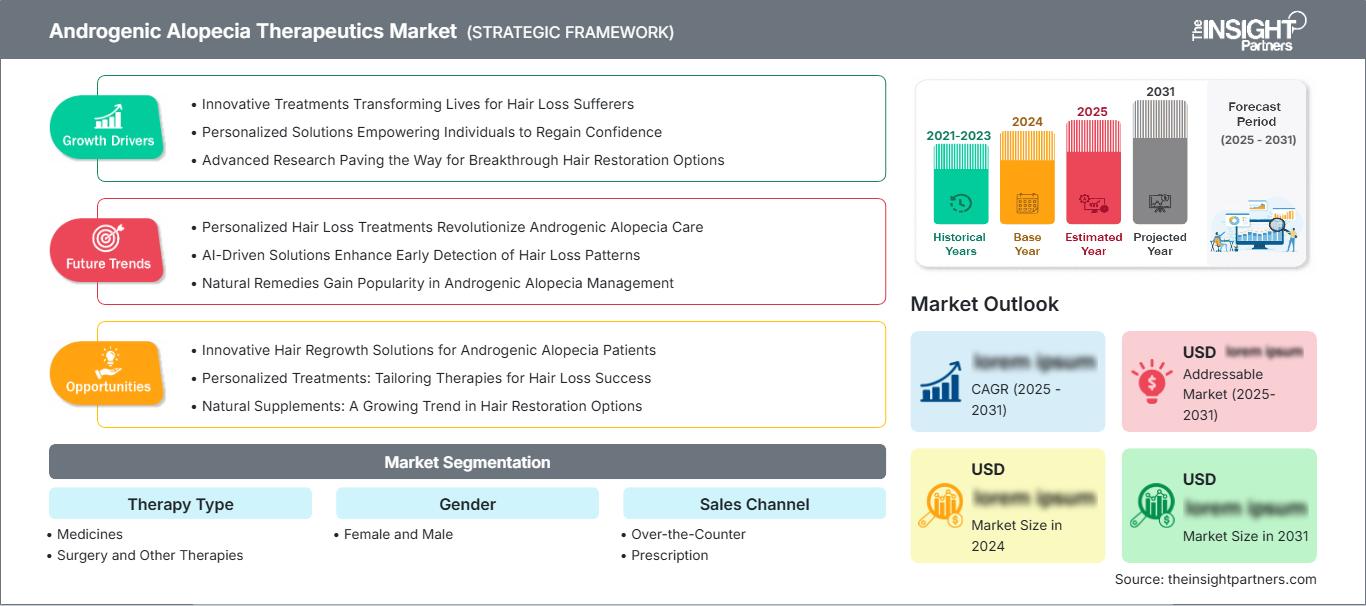
Androgenic Alopecia Therapeutics Market: Strategic Insights
Regional Insights
North America androgenic alopecia therapeutics market
North America held 38–41% share in 2025 and is expected to grow at a CAGR of 6.2–6.8% during 2026–2034. The region benefits from high awareness of hair restoration options, strong dermatology networks, and widespread consumer use of minoxidil and prescription antiandrogen therapies. These factors support the androgenic alopecia therapeutics market share across both medical and aesthetic care pathways.
Growth is reinforced by teledermatology platforms, subscription-based treatment models, and rising demand for combination protocols that pair medicines with platelet-rich plasma or surgery. Clinics increasingly use digital imaging to document response and support retention. Market expansion is moderated by adherence challenges, variable response rates, and consumer skepticism toward products lacking clinical evidence.
U.S. androgenic alopecia therapeutics Market
The U.S. represented 84–87% of North America in 2025 and is projected to grow at a CAGR of 6.3–6.9% during 2026–2034. The demand is driven by large dermatology practices, vibrant aesthetic clinics, online prescription services, and high consumer expenditure on out-of-pocket hair restoration. Male consumers continue to form a substantial base, and female consumers are increasingly demanding treatments.
The market participants include Merck & Co., Inc., Dr. Reddy’s Laboratories Ltd., Cipla Limited, Almirall S.A., Sun Pharmaceutical Industries Ltd., and some new players in the field of biotechnology exploring novel approaches. Application developments indicate the growing popularity of multi-therapy treatments, reduced oral dosage, and procedure adjuvants. The importance of compound products regulation and claims validation should not be overlooked.
Europe androgenic alopecia therapeutics Market
Europe held 25–28% share in 2025 and is expected to expand at a CAGR of 5.7–6.3% during 2026–2034, with Germany leading demand. The UK is helped by having private dermatology practices, digital pharmacies, and hair transplant tourism connections, even with advertising guidelines maintaining a restriction on therapeutic claims. Medical treatment is generally compared to procedure treatments.
Germany has good adoption rates due to specialty dermatology clinics, good medication control systems, and rising interest in cosmetic dermatology based on scientific evidence. France, Italy, and Spain have continued growth through their pharmacy availability, city-based aesthetics clinics, and rising acceptance of hair restoration treatments. In all European countries, regulatory controls promote proper labeling and documentation of results.
APAC androgenic alopecia therapeutics Market
APAC held 23–26% share in 2025 and is projected to grow at a CAGR of 7.8–8.5% during 2026–2034. China leads demand through expanding urban dermatology clinics, e-commerce access, and rising aesthetic expenditure, while Japan and South Korea emphasize advanced formulations and procedure quality.
India and Australia add momentum through generic medicine availability, private clinics, and growing digital consultation models. Policy support for domestic pharmaceutical manufacturing improves affordability. Suppliers must address diverse purchasing power, cultural attitudes toward hair loss, and the need for physician-backed claims in crowded online channels.
Middle East & Africa androgenic alopecia therapeutics Market
The Middle East & Africa is expected to grow at a CAGR of 6.5–7.1% during 2026–2034, led by the UAE. The growth drivers include premium aesthetic clinics, medical tourism, high disposable incomes in the Gulf regions, and increasing preference for hair transplantation procedures and dermatologically driven treatments.
Saudi Arabia is the region with clinic-oriented demand, whereas South Africa continues to be significant via private dermatologists and pharmacies. The adoption in the Rest of MEA varies significantly due to differences in terms of affordability, availability of specialists, and regulation of the products.
Segmentation Analysis
Therapy Type
The Therapy Type segment is expected to grow at a CAGR of 6.6–7.2% during 2026–2034. Demand is shaped by patient severity, gender, tolerance for long-term treatment, willingness to pay, and desire for visible improvement. The androgenic alopecia therapeutics market scope is widening as patients increasingly combine medicines with procedural and regenerative options to improve density, slow miniaturization, and maintain results.
- Medicines remain the core therapy type because OTC minoxidil, prescription antiandrogens, and emerging topical or oral regimens provide accessible first-line and maintenance options for many patients.
- Surgery and Other Therapies are gaining relevance as follicular unit extraction, platelet-rich plasma, microneedling, and regenerative approaches address patients seeking visible restoration beyond pharmacologic stabilization.
Gender
The Gender segment is expected to grow at a CAGR of 6.7–7.3% during 2026–2034. Male demand remains larger because pattern hair loss is highly recognized and treatment pathways are established. Female demand is expanding as dermatologists improve diagnosis, consumers become more open to treatment, and companies develop products that address safety, hormonal considerations, and diffuse thinning patterns.
- Female patients represent an underpenetrated care group because diagnosis can be delayed, treatment expectations differ, and safety considerations influence medicine selection and adherence.
- Male patients remain the largest demand base, supported by early onset, high awareness, strong OTC purchasing, and higher willingness to consider surgical restoration.
Sales Channel
The Sales Channel segment is expected to grow at a CAGR of 6.5–7.1% during 2026–2034. OTC channels provide scale through direct consumer access, while prescription channels support stronger medical supervision for antiandrogens, oral minoxidil, compounded regimens, and emerging therapies. Channel success depends on trust, safety communication, refill convenience, and evidence-backed product differentiation.
- Over-the-Counter channels dominate self-directed treatment because consumers can access topical minoxidil, cosmetic adjuncts, and maintenance products without waiting for specialist consultation.
- Prescription channels are strategically important for patients requiring physician assessment, hormonal therapy, oral treatment, combination protocols, or monitoring for adverse effects.
End User
The End User segment is expected to grow at a CAGR of 6.8–7.4% during 2026–2034. Hospitals support complex dermatology and reconstructive cases, while dermatology clinics drive diagnosis, prescription initiation, procedures, and imaging-based follow-up. Home care settings are expanding as patients use topical, oral, and device-assisted treatments between clinical visits.
- Hospitals serve patients requiring specialist evaluation, complex scalp disorders, reconstructive support, or multidisciplinary care when hair loss overlaps with systemic disease.
- Dermatology Clinics are strategically important because they combine diagnosis, prescription management, procedures, imaging, and follow-up needed for long-term patient retention.
- Home Care Settings support recurring product use, adherence, and maintenance therapy as patients apply topical or oral products outside clinic environments.
Opportunity Snapshot
| End User | Revenue Contribution | Trend Tag | Adoption Stage |
| Hospitals | Medium | Specialist Care | Mature |
| Dermatology Clinics | High | Combination Therapy | Scaling |
| Home Care Settings | High | Self Treatment | Mature |
Androgenic Alopecia Therapeutics Market Growth Drivers and Impact Analysis
Rising Treatment-Seeking Behavior Across Genders
People seek interventions due to the increased awareness about hair loss through various online media, skin clinics, and aesthetics centers. This trend drives the demand not only for male hair loss but also female hair loss, early-stage hair loss, and maintenance treatments following medical procedures. The effect on the market is seen through the increased usage of OTC drugs, prescription consultations, and refill models. Diagnostic imaging helps skin clinics with the diagnosis, whereas long-term therapies help pharmaceutical companies. The major issue in terms of commercial activity is setting proper expectations since the results might take some time, and patients might discontinue their treatments without proper counseling.
Expansion of Dermatology Clinics and Hair Restoration Centers
The specialized clinics are playing an important role in the diagnosis process, treatment choice and retention. This will be beneficial for scalp examinations, trichoscopy, prescribing medicines, platelet-rich plasma, surgical procedures and imaging processes. Such an environment will generate more income from each patient than selling alone because it allows for a combination of medical approach and procedure. Commercially speaking, it will drive a higher need for the delivery of clinic-dispensed therapy, documentation system and complementary therapy. Moreover, clinics build customer confidence through screening out unproven products.
Growing Acceptance of Combination Treatment Protocols
Combination therapies are becoming popular due to the nature of androgenic alopecia that usually demands not only stabilization but also regrowth. Patients could have such therapies that consist of minoxidil, antiandrogens, micro needling, platelet-rich plasma, low-level light therapy, or surgical restoration. The impact on the market is that more money is being spent on medicines, tools, procedures, and post-procedural services. This also means that there is an increasing demand for professional consultation because an inadequately developed therapy could be dangerous or affect compliance. It is a win for companies if their product is integrated into a protocol and not competing with other separate solutions.
Androgenic Alopecia Therapeutics Market Future Trends
Regenerative and Follicle-Targeted Mechanisms
Future innovation will focus on therapies that target follicle biology more directly, including stem-cell activation, androgen receptor modulation, prolactin receptor pathways, and cell-based regeneration. The androgenic alopecia therapeutics market trends indicate that patients and clinicians want treatments that go beyond slowing hair loss and provide measurable density improvement. Emerging products will need durable safety evidence because treatment often targets otherwise healthy consumers over long periods. Commercial success will depend on clear endpoints, visible photographic evidence, gender-inclusive trials, and scalable manufacturing. Therapies that combine topical convenience with biologic differentiation could reshape premium dermatology prescribing.
Digital Monitoring and Personalized Treatment Plans
Hair loss treatment is likely to move towards becoming more data-oriented due to the application of standardized photography, scalp imaging, artificial intelligence, and monitoring adherence through clinics and online platforms. The techniques would allow for documenting hair density, shaft diameter, the course of the process and speed of the response, minimizing the subjectivity of the process. Customized treatments could promote adherence since the level of therapy would be tailored to the severity, age, gender, risk profile, and cost of treatment. The highest success rate of adoption will be achieved if platforms increase the confidence and motivation of both clinicians and patients without increasing workload on dermatologists.
Androgenic Alopecia Therapeutics Market Opportunities
Female-Focused Therapeutic Pathways
A meaningful opportunity exists in improving diagnosis, education, and product design for women with pattern hair loss. The androgenic alopecia therapeutics market Forecasts indicate stronger uptake where companies address diffuse thinning patterns, hormonal safety concerns, cosmetic acceptability, and long-term adherence. Investment should prioritize female-inclusive trials, dermatologist education, patient-friendly formulations, and discreet digital support. Clinics can also create dedicated pathways that combine laboratory evaluation, scalp imaging, topical therapy, and procedural options. This opportunity remains underdeveloped because many women delay care or abandon treatment when expectations, timelines, and safety guidance are unclear.
Clinic-Linked Subscription and Maintenance Models
Value can be created through subscription models by incorporating refill programs along with tracking, medical supervision, and periodic tweaking. This would solve the most critical issue for this market, which is low patient persistence post initial purchase. Dermatologist clinics can make use of imaging technology and reminder systems to improve patient compliance, whereas brands could provide support to subscription services through topical/ oral/additional product packages. This opportunity would be most effective in developed countries and urban APAC regions where digital services and repeat aesthetics spending are appreciated.
Recent Developments
- May 2026: Veradermics, Incorporated announced two poster presentations on VDPHL01 at the Music City SCALE Symposium, including comparative analyses of its Phase 2 male data versus published minoxidil formulation data. VDPHL01 is an investigational extended-release oral minoxidil tablet in Phase 3 development for pattern hair loss in women and men.
- March 2026: Pelage Pharmaceuticals announced that PP405 and its follicular regeneration mechanism would be presented at the American Academy of Dermatology Annual Meeting. The company reported that PP405 targets dormant hair follicle stem cells, had shown tolerability with no systemic absorption in prior Phase 2a testing, and was expected to enter late-stage studies in 2026.
- December 2025: Cosmo Pharmaceuticals N.V. announced topline Phase III results from Scalp 1 and Scalp 2 for clascoterone 5% topical solution in male androgenetic alopecia. The company said both pivotal studies met statistically significant hair-count endpoints and that regulatory submissions in the United States and Europe were being prepared.
Frequently Asked Questions

- Comprehensive Market Sizing and Forecast Analysis
- Detailed Segmentation Analysis
- In-Depth Market Dynamics Assessment
- Regional and Country-Level Insights
- Competitive Landscape and Company Benchmarking
- Strategic Business Intelligence
Recent Reports
Testimonials

The Insight Partners' SCADA System Market report is comprehensive, with valuable insights on current trends and future forecasts. The team was highly professional, responsive, and supportive throughout. We are very satisfied and highly recommend their services.
RAN KEDEM Partner, Reali Technologies LTDs
I requested a report on a very specific software market and the team produced the report in a few days. The information was very relevant and well presented. I then requested some changes and additions to the report. The team was again very responsive and I got the final report in less than a week.
JEAN-HERVE JENN Chairman, Future Analytica
We worked with The Insight Partners for an important market study and forecast. They gave us clear insights into opportunities and risks, which helped shape our plans. Their research was easy to use and based on solid data. It helped us make smart, confident decisions. We highly recommend them.
PIYUSH NAGPAL Sr. Vice President, High Beam Global
The Insight Partners delivered insightful, well-structured market research with strong domain expertise. Their team was professional and responsive throughout. The user-friendly website made accessing industry reports seamless. We highly recommend them for reliable, high-quality research services
YUKIHIKO ADACHI CEO, Deep Blue, LLC.
This is the first time I have purchased a market report from The Insight Partners.While I was unsure at first, I visited their web site and felt more comfortable to take the risk and purchase a market report.I am completely satisfied with the quality of the report and customer service. I had several questions and comments with the initial report, but after a couple of dialogs over email with their analyst I believe I have a report that I can use as input to our strategic planning process.Thank you so much for taking the extra time and making this a positive experience.I will definitely recommend your service to others and you will be my first call when we need further market data.
JOHN SUZUKI President and Chief Executive Officer, Board Director, BK Technologies
I wish to appreciate your support and the professionalism you displayed in the course of attending to my request for information regarding to infectious disease IVD market in Nigeria. I appreciate your patience, your guidance, and the fact that you were willing to offer a discount, which eventually made it possible for us to close a deal. I look forward to engaging The Insight Partners in the future, all thanks to the impression you have created in me as a result of this first encounter.
DR CHIJIOKE ONYIA MANAGING DIRECTOR, PineCrest Healthcare Ltd.Reason to Buy
- Informed Decision-Making
- Understanding Market Dynamics
- Competitive Analysis
- Identifying Emerging Markets
- Customer Insights
- Market Forecasts
- Risk Mitigation
- Boosting Operational Efficiency
- Strategic Planning
- Investment Justification
- Tracking Industry Innovations
- Aligning with Regulatory Trends





 Get Free Sample for