
Animal Protein Market Share, Size & Demand by 2034
Coverage: By Source (Egg, Dairy, Others); Form (Solid, Liquid); Application (Food and beverages, Pharmaceuticals and nutraceuticals, Personal Care, Animal feed) , and Geography (North America, Europe, Asia Pacific, and South and Central America)
- Status : Data Released
- Report Code : TIPRE00012877
- Category : Food and Beverages
- No. of Pages : 150
- Available Report Formats :


- Last update date : August 25, 2026


2025 Market Size
US$ 51.02 Bn
Base year value
2034 Forecast
US$ 79.49 Bn
Projected by 2034
CAGR 2026-2034
5.05 %
Growth rate
Addressable Market
US$ 592.20 Bn
(2026-2034)
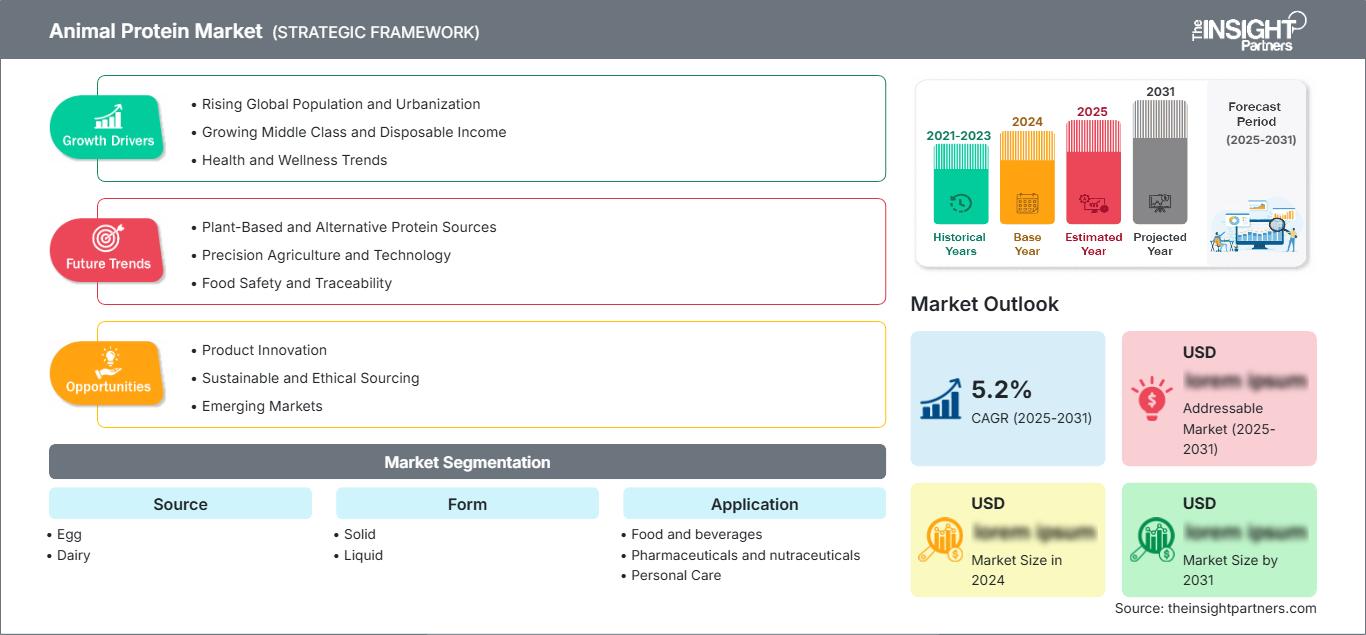
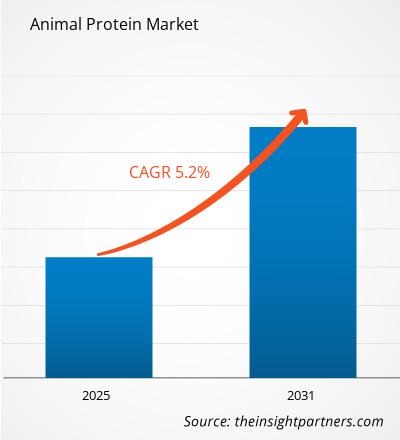
The global Animal Protein market was valued at US$ 51.02 billion in 2025 and is expected to reach US$ 79.49 billion by 2034; it is estimated to record a CAGR of 5.05% during 2026-2034.
Animal Protein Market Assessment and Insights
- North America: Share in 2025 estimated at 34%–36%, supported by mature dairy ingredient production, nutritional supplement demand, and established processing networks. CAGR between 2026–2034 is estimated at 4.8%–5.4%.
- US: Accounted for 76%–80% of North American revenue in 2025. Strong food processing capacity and functional nutrition adoption support a CAGR of 4.9%–5.5% during 2026–2034.
- Europe: Share in 2025 estimated at 27%–29%, led by Germany, France, the Netherlands, and the UK. CAGR between 2026–2034 is projected at 5.0%–5.6%.
- Asia Pacific: Share in 2025 estimated at 24%–26%, with China, India, Japan, and Australia driving consumption and manufacturing. CAGR between 2026–2034 is estimated at 6.5%–7.1%.
- Largest Segment: Food and beverages held a 48%–52% market share in 2025 and is projected to advance at a 5.4%–6.0% CAGR through 2034.
- High Growth Segment: Pharmaceuticals and nutraceuticals represented 17%–21% market share in 2025 and is forecast to grow at a 6.8%–7.4% CAGR during 2026–2034.
- Key companies analyzed in detail: Amco Proteins, Arla Foods Ingredients Group P/S, Bovogen Biologicals Pty Ltd., Cargill, Incorporated, Cooke Inc., GELITA AG, Kerry Group plc, Royal FrieslandCampina N.V., Saputo Inc., Valley Proteins, Inc.
Source: The Insight Partners' analysis based on proprietary research, government publications, company annual reports, investor presentations, industry databases, and expert interviews.
Innovations in protein isolation, hydrolysis, filtration, and standardized ingredient processing continue to transform the production process. The industry is witnessing the growing importance of high-grade proteins suitable for functional food applications, medical nutrition, and specialty feed applications. Dairy proteins are very important as there are increasing investments made in the production of whey proteins, caseins, and other related products. At the same time, there are new developments in collagen and gelatin, creating new avenues in pharmaceuticals, nutraceuticals, and beauty products.
The coming decade will see increased investment in production facilities in the Asia-Pacific region, nutrition manufacturing facilities, and premium ingredient manufacturing facilities. Food quality, traceability, and nutritional content of proteins are gaining regulatory attention and driving modernization in the industry. Growing economies will benefit from increased disposable incomes, increasing organized retail networks, and the availability of fortified protein products.
Animal Protein Market Report Scope
| Report Attribute | Details |
|---|---|
| Market size in 2025 | US$ 51.02 Billion |
| Market Size by 2034 | US$ 79.49 Billion |
| Global CAGR (2026 - 2034) | 5.05% |
| Historical Data | 2021-2024 |
| Forecast period | 2026-2034 |
Animal Protein Market Analysis
Market growth dynamics are driven by growing demand for high-protein foods, sports nutrition products, and clinically formulated dietary supplements. The consumption of animal-sourced foods is projected to continue growing until 2034 due to urbanization and income growth that lead to increased protein consumption in middle-income countries, according to the OECD-FAO outlook forecast.
The supply chain consists of dairy farms, egg production facilities, renderers, ingredient processors, contract manufacturers, and food product manufacturers. The advances in membrane filtration, enzyme-based processing technologies, and quality control systems contribute to better protein recovery and more consistent results. Stable dairy production in North America and Europe ensures the consistent availability of raw materials.
According to the market analysis, increasing competition is based on functional properties of ingredients, nutritional benefits, traceability, and application-oriented features. Key players distinguish themselves with the help of the following factors: clinical data, processing, and customized protein ingredients tailored to applications in foods, nutraceuticals, and pharmaceutical products.
Arla Foods Ingredients Group P/S, Royal FrieslandCampina N.V., Kerry Group plc, and Saputo Inc. proceed with increasing their range of proteins aimed at high-protein beverages and functional nutrition products. In its turn, GELITA AG develops its product line in collagen proteins used for health and wellness products applications, while Cargill, Incorporated and Amco Proteins are focused on diversified requirements of ingredients.
● REPORT CUSTOMIZATION
Tailor This Report To Align With Your Specific Business Requirements
This report can be customized to align precisely with your business objectives, scope, and target markets. Customization options include tailored segmentation, geography, competitive analysis, and strategic insights to support informed decision-making.
Customize This Report →WHAT YOU CAN ADJUST
- ● Segmentations
- ● Geography
- ● Competitive Analysis
- ● Language Preferences
Animal Protein Market: Strategic Insights
Regional Insights
North America animal protein market
North America accounted for approximately 34%–36% of global revenue in 2025 and is expected to grow at a 4.8%–5.4% CAGR through 2034. The region benefits from advanced dairy processing infrastructure, large-scale ingredient manufacturing facilities, and strong demand from sports nutrition, medical nutrition, and premium food categories.
Protein fortification trends continue to influence purchasing behavior across retail and foodservice channels. Growing consumption of functional beverages, protein-enriched snacks, and specialized dietary products supports capacity expansion among ingredient suppliers. Regulatory oversight and quality certification programs further strengthen market competitiveness and export capability throughout the regional value chain.
U.S. animal protein market
The United States represented roughly 76%–80% of North American revenue in 2025 and is projected to record a 4.9%–5.5% CAGR through 2034. Extensive dairy production, consumer health awareness, and strong participation in nutritional supplement categories sustain domestic demand for high-quality protein ingredients.
Major industry participants maintain operations across the country, supporting innovation in whey proteins, egg proteins, and collagen ingredients. Product development increasingly targets healthy aging, weight management, sports performance, and clinical nutrition applications. Continued investment in manufacturing efficiency and ingredient specialization is expected to reinforce the country's leadership position within the regional market.
Europe animal protein market
Europe captured approximately 27%–29% animal protein market share of global revenue in 2025 and is anticipated to expand at a 5.0%–5.6% CAGR through 2034. The region benefits from well-established dairy industries, advanced food processing ecosystems, and strong consumer demand for nutritional ingredients.
Germany remains the leading national contributor owing to extensive dairy production and ingredient manufacturing capabilities. The UK continues to demonstrate growing demand for functional foods and protein-enriched beverages, encouraging innovation among processors and branded manufacturers.
France, Italy, and Spain collectively contribute significant demand through bakery, dairy, supplement, and specialty nutrition applications. Regulatory focus on food quality and labeling supports premium positioning strategies, while cross-border trade strengthens ingredient availability throughout European supply chains.
APAC animal protein market
Asia Pacific accounted for approximately 24%–26% of global revenue in 2025 and is forecast to achieve the fastest regional CAGR of 6.5%–7.1% through 2034. Rising incomes, urbanization, and increasing awareness of nutritional products are accelerating consumption across diverse application sectors.
China leads regional demand, while India demonstrates rapid expansion in nutritional supplements and fortified food categories. Japan, South Korea, and Australia contribute through advanced food processing industries and premium health-focused product development supported by evolving dietary preferences.
Middle East & Africa animal protein market
The Middle East & Africa market is projected to expand at a 5.6%–6.2% CAGR during 2026–2034. Investments in food security, processing infrastructure, and nutrition programs continue to support protein ingredient demand across multiple application categories.
Saudi Arabia and the UAE remain important consumption centers due to food manufacturing growth and health-focused consumer trends. South Africa serves as a key regional processing hub, while broader MEA markets benefit from increasing retail modernization and nutrition awareness initiatives.
Segmentation Analysis
Source
The Source segment is projected to grow at a 5.5%–6.1% CAGR during 2026–2034. The segment represents the foundation of the industry, with dairy and egg proteins maintaining widespread utilization due to favorable amino acid profiles, functional performance, and broad regulatory acceptance. The animal protein market scope continues to expand as manufacturers develop specialized ingredients addressing nutritional, pharmaceutical, and feed requirements.
- Egg: Egg-derived proteins remain important in bakery, nutritional beverages, supplements, and feed formulations due to emulsification properties, protein quality, and formulation flexibility across industrial applications.
- Dairy: Dairy proteins maintain strong commercial significance through extensive use in beverages, clinical nutrition, sports nutrition, dairy products, and functional foods requiring highly digestible protein ingredients.
Form
The Form segment is anticipated to advance at a 5.4%–6.0% CAGR through 2034. Product format influences storage, transportation, formulation efficiency, and application suitability. Solid proteins retain broad acceptance because of handling convenience, while liquid formats support specialized industrial processing requirements.
- Solid: Solid ingredients dominate commercial distribution owing to longer shelf life, efficient transportation, formulation flexibility, and compatibility with powdered nutrition, bakery, and feed applications.
- Liquid: Liquid formats support direct incorporation into manufacturing processes where rapid blending, enhanced dispersion, and streamlined production workflows are operational priorities.
Application
The Application segment is expected to register a 5.8%–6.4% CAGR over the forecast period. Expanding utilization across food, pharmaceutical, feed, and personal care industries continues to broaden commercial opportunities. Product developers increasingly incorporate animal-derived proteins into premium formulations focused on functionality and nutritional performance.
- Food and beverages: The largest revenue-contributing sub-segment benefits from widespread use in dairy products, protein beverages, bakery formulations, snacks, and fortified foods targeting health-conscious consumers.
- Pharmaceuticals and nutraceuticals: Growing demand for clinical nutrition, collagen supplements, protein therapeutics, and healthy aging formulations supports increasing strategic importance within the industry.
- Personal Care: Protein ingredients are utilized in beauty, skincare, and haircare formulations where conditioning performance, structural benefits, and premium positioning objectives remain important.
- Animal feed: Feed applications support livestock productivity, nutritional optimization, and performance enhancement through balanced protein incorporation and specialized formulation approaches.
Opportunity Snapshot
| Segment Name | Revenue Contribution | Trend Tag | Adoption Stage |
| Food and beverages | High | Protein Fortification | Mature |
| Pharmaceuticals and nutraceuticals | High | Collagen Science | Scaling |
| Personal Care | Medium | Beauty Nutrition | Scaling |
| Animal feed | Medium | Precision Feed | Mature |
Animal Protein Market Growth Drivers and Impact Analysis
Expansion of Protein-Enriched Functional Food Categories
Interest in the benefits of protein-based nutrition is transforming purchasing patterns in beverage, snack food, dairy product, and nutritional supplement categories. Food companies are using whey, casein, collagen, and egg proteins to meet consumer needs associated with satiation, active living, senior nutrition, and weight control. Innovation in product development helps achieve higher price points and increases value generation along the ingredient chain. The expansion of retail distribution channels also aids in making protein-enhanced food products more available to consumers. The trend of nutritional distinction drives an ever-growing demand for high-end ingredients, both in advanced and emerging economies.
Rising Demand for Clinical and Healthy Aging Nutrition
Population aging within leading economies presents constant possibilities for the use of premium protein ingredients for clinical nutrition and wellness products. There is an increasing importance that healthcare professionals place on protein ingestion in the diet in order to help maintain muscles and the general well-being of older adults. Collagen products, particularly dairy proteins, and medical nutrition products are some of the products that are receiving benefits through this demographic change. Manufacturers have been continuing to conduct research and develop their formulations in order to build their credibility and positions in this market.
Advancements in Dairy Protein Processing Technologies
Innovations in processing have increased efficiencies in the extraction process, enhanced purity and stability, as well as the functionality of proteins. With modern filtration techniques, advanced separation techniques, and precise enzyme treatments, it is possible for producers to come up with proteins that are specifically designed to suit particular applications. Increased production efficiency increases profits, while waste is greatly reduced in the process. Adoption of technology also assists in developing proteins that are more soluble, have better textures, and improved nutritional qualities. With the increased demand for application-specific proteins by customers, there is a need for producers to come up with customized products to enjoy competitive advantages.
Animal Protein Market Future Trends
Precision Nutrition Product Development
The animal protein market trends increasingly point toward formulations designed for specific consumer outcomes rather than general nutrition. The inclusion of proteins in formulations aimed at muscle recovery, metabolism, healthy aging, and customized wellness needs is anticipated. Efforts are being made by organizations in the fields of formulation science, combination of ingredients, and health benefits backed by scientific data. The future success of products will depend on the functionality of the products and their nutritional benefits. With changing consumer demands, protein suppliers able to provide customized nutrition solutions will occupy better market positions.
Growing Integration of Collagen-Based Innovation
Collagen product innovations will not be limited to traditional supplements and will include beverages, functional foods, healthy aging, and beauty-related nutrition products. The key focus will be on clinically substantiated ingredients that offer clear results. Trends in product pipeline include the development of new easy-to-use delivery methods such as beverages, gummies, and enhanced snacks. It is predicted that increased scientific evidence and consumer education will drive the acceptance rate up. Such a trend will provide an opportunity for premiumization and premium applications.
Animal Protein Market Opportunities
Expansion Across Emerging Asian Consumption Centers
The strongest growth potential is expected from rapidly urbanizing economies where nutritional awareness, disposable income levels, and organized retail penetration continue increasing. Companies can establish long-term positions by expanding local manufacturing, distribution partnerships, and application-specific product portfolios. Animal protein market Forecasts indicate that Asia-Pacific will remain a principal investment destination due to favorable consumption fundamentals and expanding demand for nutritional products. Organizations capable of combining localized product development with efficient supply networks are likely to capture significant incremental revenue opportunities while strengthening regional competitiveness.
Premium Ingredients for Pharmaceutical Applications
There is an ever-growing need among producers of pharmaceutical and nutraceutical products for higher-quality proteins backed up by good quality assurance programs and science. This offers significant business opportunities for those companies that can produce unique proteins tailored to the exacting needs of formulation scientists. Quality research and compliance efforts may help position such products in a premium category and deliver better margins. With consumers' health consciousness increasing, the growing need for advanced nutritional ingredients will continue to rise.
Frequently Asked Questions

- Comprehensive Market Sizing and Forecast Analysis
- Detailed Segmentation Analysis
- In-Depth Market Dynamics Assessment
- Regional and Country-Level Insights
- Competitive Landscape and Company Benchmarking
- Strategic Business Intelligence
Recent Reports
Testimonials

The Insight Partners provided valuable market intelligence that supported our global go-to-market strategy. Their team was professional, responsive, and attentive to our feedback, providing thoughtful analysis and helpful methodological clarifications throughout the project.
Junmo Kim Chief Financial Officer (CFO), Enertech Co., Ltd.
The Insight Partners' SCADA System Market report is comprehensive, with valuable insights on current trends and future forecasts. The team was highly professional, responsive, and supportive throughout. We are very satisfied and highly recommend their services.
RAN KEDEM Partner, Reali Technologies LTDs
I requested a report on a very specific software market and the team produced the report in a few days. The information was very relevant and well presented. I then requested some changes and additions to the report. The team was again very responsive and I got the final report in less than a week.
JEAN-HERVE JENN Chairman, Future Analytica
We worked with The Insight Partners for an important market study and forecast. They gave us clear insights into opportunities and risks, which helped shape our plans. Their research was easy to use and based on solid data. It helped us make smart, confident decisions. We highly recommend them.
PIYUSH NAGPAL Sr. Vice President, High Beam Global
The Insight Partners delivered insightful, well-structured market research with strong domain expertise. Their team was professional and responsive throughout. The user-friendly website made accessing industry reports seamless. We highly recommend them for reliable, high-quality research services
YUKIHIKO ADACHI CEO, Deep Blue, LLC.
This is the first time I have purchased a market report from The Insight Partners.While I was unsure at first, I visited their web site and felt more comfortable to take the risk and purchase a market report.I am completely satisfied with the quality of the report and customer service. I had several questions and comments with the initial report, but after a couple of dialogs over email with their analyst I believe I have a report that I can use as input to our strategic planning process.Thank you so much for taking the extra time and making this a positive experience.I will definitely recommend your service to others and you will be my first call when we need further market data.
JOHN SUZUKI President and Chief Executive Officer, Board Director, BK Technologies
I wish to appreciate your support and the professionalism you displayed in the course of attending to my request for information regarding to infectious disease IVD market in Nigeria. I appreciate your patience, your guidance, and the fact that you were willing to offer a discount, which eventually made it possible for us to close a deal. I look forward to engaging The Insight Partners in the future, all thanks to the impression you have created in me as a result of this first encounter.
DR CHIJIOKE ONYIA MANAGING DIRECTOR, PineCrest Healthcare Ltd.Reason to Buy
- Informed Decision-Making
- Understanding Market Dynamics
- Competitive Analysis
- Identifying Emerging Markets
- Customer Insights
- Market Forecasts
- Risk Mitigation
- Boosting Operational Efficiency
- Strategic Planning
- Investment Justification
- Tracking Industry Innovations
- Aligning with Regulatory Trends





 Get Free Sample for