
Antibiotic-loaded Bone Cement Market Share, Size & Demand by 2034
Coverage: By Antibody Type (Tobramycin, Gentamicin, Vancomycin, Others); Application (Joint, Vertebral, Others), and Geography (North America, Europe, Asia Pacific, and South and Central America)
- Status : Data Released
- Report Code : TIPRE00014221
- Category : Life Sciences
- No. of Pages : 150
- Available Report Formats :


- Last update date : August 21, 2026


2025 Market Size
US$ 549.01 Mn
Base year value
2034 Forecast
US$ 1,112.13 Mn
Projected by 2034
CAGR 2026-2034
8.16 %
Growth rate
Addressable Market
US$ 7,464.94 Mn
(2026-2034)
The antibiotic-loaded bone cement market was valued at US$ 549.01 Million in 2025 and is projected to reach US$ 1,112.13 Million by 2034, registering a CAGR of 8.16% during 2026–2034. Expansions are driven by growing revision arthroplasty surgeries, periprosthetic joint infection issues, and increasing use of locally delivered antibiotics in orthopedic surgery. Antibiotic-loaded bone cement products continue to develop through increased focus on their ability to control antibiotic delivery, manageability, mechanical stability, and cementing process compatibility.
The North American antibiotic-loaded bone cement market size is forecast to generate significant revenues with its growth fueled by high volume of arthroplasty surgeries, proven revision pathway and hospital procurement capabilities. The region is forecasted to grow with a 7.5%–8.0% CAGR between 2026 and 2034.
Antibiotic-loaded Bone Cement Market Assessment and Insights
- North America: North America is estimated to account for a 39–42% share in 2025 and grow at a 7.5–8.0% CAGR between 2026–2034, supported by mature arthroplasty infrastructure, revision procedures, and established antibiotic cement utilization.
- US: The US is expected to represent 82–86% of North American revenue in 2025 and expand at a 7.6–8.1% CAGR between 2026–2034, led by high orthopedic procedure volumes.
- Europe: Europe is estimated at a 27–30% share in 2025 and a 7.2–7.8% CAGR through 2034, with Germany, the UK, France, Italy, and Spain representing major demand centers.
- Asia Pacific: Asia Pacific is projected to hold a 22–25% share in 2025 and achieve a 9.0–9.6% CAGR during 2026–2034, with China, Japan, India, South Korea, and Australia driving procedural expansion.
- Largest Segment: Joint applications represent an estimated 62–66% market share in 2025 and are expected to grow at a 7.9–8.3% CAGR through 2034, supported by arthroplasty volumes.
- High Growth Segment: Vertebral applications hold an estimated 18–22% market share in 2025 and are projected to expand at a 9.0–9.5% CAGR, supported by minimally invasive spine procedures.
- Key companies analyzed in detail: Stryker Corporation, Zimmer Biomet Holdings, Inc., Tecres S.p.A., DePuy Synthes, Teknimed, Exactech, Inc., Heraeus Holding GmbH, Smith+Nephew plc, Warsaw Orthopedic, Inc., DJO Global, Inc.
Source: The Insight Partners' analysis based on proprietary research, government publications, company annual reports, investor presentations, industry databases, and expert interviews.
The market for antibiotic bone cements has progressed from traditional antibiotic loading to formulations based on viscosities, setting attributes, radiopacity, antibiotic choices, and release mechanisms. More viscosities and more antibiotics are becoming available in order to fulfill the needs of primary and revision joint replacements. The supply chain consists of PMMA chemistry, antibiotic compatibility, sterile manufacturing, packaging and mixing technologies, while special spacers add to the infection treatment arsenal.
Further innovation will focus on combination products, procedure-specific bone cements, and more applications in developing orthopedic markets. Regulations regarding quality of medical devices, performance, biocompatibility, and reproducibility will drive new product introductions. In addition, financial success will favor companies that can integrate bone cements with revision kits, spacers, applicators, and overall orthopedic offerings.
Antibiotic-loaded Bone Cement Market Report Scope
| Report Attribute | Details |
|---|---|
| Market size in 2025 | US$ 549.01 Million |
| Market Size by 2034 | US$ 1,112.13 Million |
| Global CAGR (2026 - 2034) | 8.16% |
| Historical Data | 2021-2024 |
| Forecast period | 2026-2034 |
Antibiotic-loaded Bone Cement Market Analysis
The antibiotic-loaded bone cement market will be strongly correlated with orthopedic infection control, including periprosthetic joint infection and revision arthroplasty. Demand follows a value chain from the PMMA and antibiotic acquisition to their formulation, sterile production, packaging, procurement at hospitals, distribution among orthopedic players, and surgical use. Manufacturers with established production validation and constant antibiotic loading capabilities can cope with clinical and purchasing demands.
Demand is also affected by economics of the procedure. Hospitals take into account cement's effectiveness, infection control approach, surgical room procedures, storage, and overall cost of revision care while choosing products. Supply side differs geographically due to a wider presence in the region among established manufacturers compared with specialist suppliers' ability to develop formulations specifically for the procedure.
Positioning in the antibiotic-loaded bone cement market report is characterized by a combination of orthopedic scope, geographical reach, portfolio of products and infection management capabilities. Stryker Corporation, Zimmer Biomet Holdings, Inc., DePuy Synthes and Smith + Nephew plc leverage their orthopedic scope, whereas Teknimed and Tecres S.p.A. have more specialist scope in terms of bone cement and antibiotic-loaded products.
Differentiation is increasingly taking place through antibiotic mixes, viscosity options, revision spacers and instrumentations. For instance, Zimmer Biomet has antibiotic-loaded cements and spacers and Tecres supplies gentamicin and gentamicin/vancomycin. Teknimed produces gentamicin-containing bone cement of different viscosities. As a result, smaller companies can compete through specialized formulation, geographical registration and distribution as opposed to competing on commercial scale of orthopedic diversified companies.
● REPORT CUSTOMIZATION
Tailor This Report To Align With Your Specific Business Requirements
This report can be customized to align precisely with your business objectives, scope, and target markets. Customization options include tailored segmentation, geography, competitive analysis, and strategic insights to support informed decision-making.
Customize This Report →WHAT YOU CAN ADJUST
- ● Segmentations
- ● Geography
- ● Competitive Analysis
- ● Language Preferences
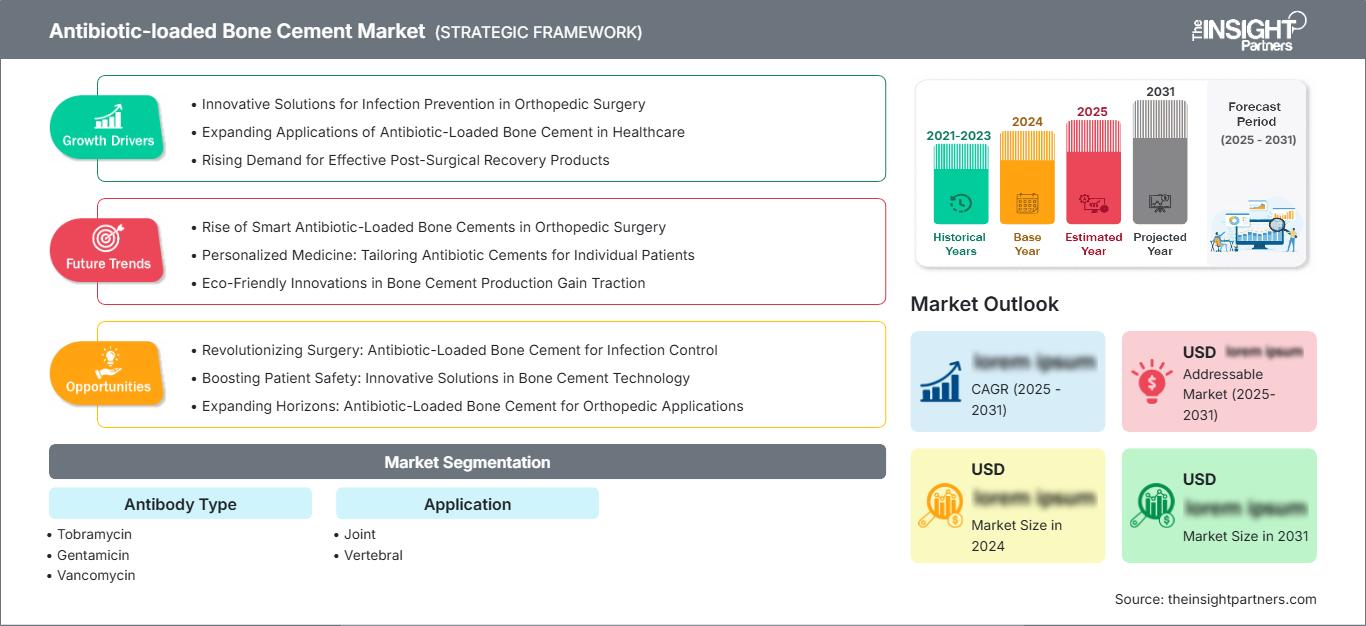
Antibiotic-loaded Bone Cement Market: Strategic Insights
Regional Insights
North America antibiotic-loaded bone cement market
North America will retain antibiotic-loaded bone cement market share of 39-42% in 2025 and register 7.5-8.0% CAGR from 2025-34. The US represents 82-86% of North America revenues with strong indications for joint replacements, advanced hospitals, and well-developed revision arthroplasty protocols. Canada is represented through central healthcare procurement practices, whereas Mexico brings additional demand through increasing orthopedic capacities.
This region benefits companies with comprehensive orthopedic product lines and solid hospital relations. Antibiotic-loaded cement is especially relevant in revisions due to the need to deliver antibiotics locally during infection treatment. Procurement now takes into account the efficacy of cements in relation to spacer systems, mixing units, and procedural needs. Further investments in orthopedic infrastructure, training of surgeons, and infection control practices will drive the market in the region. However, cementless fixation in certain primary procedures limits potential addressable market size.
U.S. antibiotic-loaded bone cement Market
United States represents 82% – 86% of revenue share from North America in 2025 and is forecast to have a CAGR of 7.6% - 8.1% till 2034. Demand in this region is driven by high volumes of hip and knee surgery, presence of advanced hospitals, and effective treatment pathways for patients with infected prosthetic joints. Stryker Corporation, Zimmer Biomet Holdings, Inc., DePuy Synthes, Smith+Nephew plc, and DJO Global, Inc. are highly visible companies in this region.
Demand for applications is focused on joint reconstruction & revision therapy, while there are smaller, yet rapidly growing, opportunities in vertebral applications. Hospitals prefer predictable handling, reliable preparation of the product, and its availability. In addition to this, United States also demands a wide product range to offer spacers, instrumentation, and infection management solutions to customers, along with proper cement and antibiotics.
Europe antibiotic-loaded bone cement market
Europe has an estimated market share of 27-30% in 2025 and growth at a rate of 7.2-7.8% CAGR till 2034, with Germany acting as a key market. Other markets include the UK, France, Italy, and Spain, which benefit from advanced orthopedic services and developed device purchasing programs.
The UK is able to maintain its market because of revision arthroplasty and infection management programs. Germany is supported through a strong orthopedic environment and manufacturing sector. Italy and France are supported through joint replacement procedures. In the case of Italy, Tecres S.p.A. enhances its manufacturing strength. The US companies compete with their regulatory registrations and wide range of formulations and surgeons' familiarity.
APAC antibiotic-loaded bone cement market
The APAC region is expected to be the second largest in 2025, with a share of 22-25% and a 9.0-9.6% CAGR till 2034. The most prominent country is China, followed by Japan, South Korea, India, and Australia. Growth in orthopedics and increased availability of joint replacement operations drive demand for devices.
Industrialization is boosting the manufacturing and distribution of devices in the region, while healthcare infrastructure initiatives are increasing access to orthopedic care. India and China represent good opportunities in terms of volume, as hospitals increase their surgical capacity. Australia and Japan represent mature clinical markets with stringent standards. Distribution, registration, and pricing will continue to be key factors for suppliers in different APAC countries.
Middle East & Africa antibiotic-loaded bone cement Market
MEA and Africa still lag behind North America, Europe, and APAC in terms of size, yet represent a region for growth potential due to development of orthopedics infrastructure. Saudi Arabia is the major market within MEA region driven by healthcare spending, while UAE and South Africa represent mature centers of private and tertiary healthcare demand.
Regional CAGR is expected to be in range of 7.0-8.0% until 2034, with factors affecting demand including modernization of hospitals, availability of specialists and surgical procedures, and healthcare infrastructure investments. The two largest markets, Saudi Arabia and UAE, benefit from relatively developed infrastructure, while South Africa represents a wider referral base. Rest of MEA is heterogeneous due to differences in procurement capability and availability of specialists.
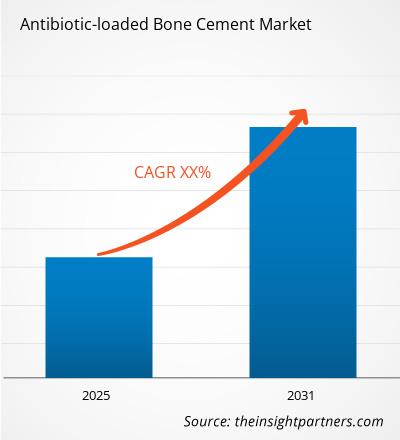
Segmentation Analysis
Antibody Type
The Antibody Type segment is expected to expand at a 7.8–8.3% CAGR during 2026–2034. Selection is influenced by pathogen coverage, antibiotic compatibility with PMMA, release behavior, surgeon familiarity, and regulatory availability. Gentamicin remains important in established formulations, while combination approaches address broader infection-management requirements.
- Tobramycin: Tobramycin-containing formulations serve selected orthopedic infection-management requirements where antimicrobial coverage and clinical familiarity support use, particularly when physicians seek alternatives within established antibiotic-loaded cement protocols.
- Gentamicin: Gentamicin remains a strategically important antibiotic because of its established incorporation into PMMA cement, broad availability, and extensive use across primary and revision orthopedic applications.
- Vancomycin: Vancomycin is important for resistant Gram-positive infection management and is increasingly relevant in combination formulations where broader antimicrobial coverage is clinically justified.
Application
The Application segment is forecast to grow at a 7.9–8.3% CAGR from 2026–2034. Joint procedures dominate utilization because hip and knee reconstruction generate substantial cement demand, while vertebral procedures represent a smaller but faster-growing opportunity supported by minimally invasive interventions.
- Joint: Joint applications represent the core demand base, encompassing primary fixation, revision arthroplasty, and infection-management procedures where antibiotic-loaded cement or spacers can support localized antimicrobial treatment.
- Vertebral: Vertebral applications address cement-based interventions such as vertebroplasty and kyphoplasty, with demand linked to osteoporosis-related fractures, pathological lesions, and expanding minimally invasive spine treatment.
Opportunity Snapshot
| Application | Revenue Contribution (High/Medium/Low) | Trend Tag (MAX 2 words) | Adoption Stage |
| Joint | High | Revision Arthroplasty | Mature |
| Vertebral | Medium | Spinal Infection | Scaling |
Antibiotic-loaded Bone Cement Market Growth Drivers and Impact Analysis
Increasing Revision Arthroplasty and Infection Management
Revision arthroplasty is a fundamental demand driver because infected prosthetic joints frequently require prolonged and complex treatment pathways. Antibiotic-loaded cement can provide localized antimicrobial delivery during selected revision procedures and spacer-based treatment. Rising procedure volumes increase the installed base of orthopedic implants, which can expand the population requiring revision intervention over time. Hospitals also prioritize strategies that can reduce repeat operations, prolonged admissions, and treatment complexity. The commercial impact extends beyond cement sales because revision-focused demand supports antibiotic spacers, mixing systems, delivery accessories, and procedural kits. Suppliers with integrated portfolios can therefore capture greater value per procedure. However, clinical protocols vary by infection organism, patient characteristics, and surgical strategy, limiting universal adoption and keeping evidence, surgeon preference, and institutional guidelines important purchasing determinants.
Expansion of Orthopedic Surgical Infrastructure
Investment in orthopedic hospitals and surgical capacity is widening access to joint replacement and revision procedures across emerging economies. China, India, Southeast Asia, Latin America, and selected Middle Eastern markets are developing tertiary-care facilities capable of performing more complex orthopedic interventions. This expansion creates a broader addressable population for antibiotic-loaded cement, particularly where hospitals establish infection-control protocols alongside arthroplasty programs. The impact is strongest where procedure volumes are increasing from a relatively low base, because incremental operating-room capacity can translate into substantial product demand. Manufacturers can benefit by strengthening distributor coverage, surgeon education, regulatory registrations, and local technical support. At the same time, purchasing organizations in developing markets remain price sensitive, requiring suppliers to balance premium formulations with reliable availability, standardized packaging, and cost-efficient distribution.
Preference for Procedure-Specific Antibiotic Formulations
Clinicians increasingly differentiate cement requirements according to procedure type, infection risk, antibiotic selection, viscosity, and handling characteristics rather than treating bone cement as a uniform commodity. This supports demand for products available in multiple viscosities and antibiotic combinations. Procedure-specific offerings can improve workflow consistency because surgeons can select products aligned with primary fixation, revision surgery, or spacer preparation. The commercial effect is a gradual shift toward portfolio depth, where suppliers compete through formulation options, delivery systems, and supporting instruments. Combination formulations containing gentamicin and vancomycin illustrate how manufacturers can address broader infection-management requirements. Suppliers that demonstrate predictable antibiotic loading, mechanical performance, and validated manufacturing processes are better positioned to secure institutional acceptance, while undifferentiated products face greater pressure from procurement standardization.
Antibiotic-loaded Bone Cement Market Future Trends
Greater Integration of Cement With Revision Infection Platforms
The antibiotic-loaded bone cement market trends are likely to move toward integrated revision-infection platforms combining cement, spacers, molds, mixing systems, delivery instruments, and procedural support. Rather than purchasing individual components from multiple suppliers, hospitals may increasingly favor coordinated portfolios that simplify inventory management and operating-room preparation. This model can improve supplier retention because cement becomes part of a broader procedural ecosystem. Customizable spacer systems may gain particular importance where surgeons require different joint geometries or staged revision approaches. Manufacturers are also likely to emphasize compatibility between cement formulations and delivery technologies. Over time, portfolio integration could become a stronger competitive differentiator than incremental changes in basic PMMA chemistry, particularly in mature markets where procurement teams increasingly evaluate total procedural efficiency.
Localized Manufacturing and Regional Formulation Strategies
Regional production strategies are expected to become more important as manufacturers seek to shorten supply chains, improve registration flexibility, and respond to local procurement requirements. The market may see greater use of regional packaging, contract manufacturing, and localized distribution partnerships, particularly across Asia Pacific and selected Middle Eastern economies. Manufacturers can also tailor viscosity ranges, package sizes, and antibiotic combinations to regional clinical preferences while retaining core quality specifications. Regulatory convergence may reduce duplication in selected markets, although country-specific registrations will remain relevant. Regional strategies should therefore combine manufacturing economics with regulatory planning. Suppliers capable of maintaining consistent sterile production while adapting commercial configurations to local hospital requirements can strengthen availability and reduce exposure to international logistics disruptions.
Antibiotic-loaded Bone Cement Market Opportunities
Expanding Revision-Care Solutions in Emerging Orthopedic Markets
The antibiotic-loaded bone cement market forecasts indicate meaningful opportunity in countries where arthroplasty infrastructure is expanding faster than specialist infection-management capabilities. Suppliers can target this gap by combining cement with revision spacers, mixing systems, surgeon education, and technical support. India, China, Southeast Asia, and selected Middle Eastern markets are particularly relevant because hospital modernization can increase demand for complex orthopedic care. A localized commercial model should prioritize regulatory registration, dependable distributor coverage, inventory availability, and procedure-specific training. Manufacturers can also develop tiered product portfolios that preserve premium antibiotic combinations for complex cases while offering standardized formulations for routine requirements. This approach can widen access without relying exclusively on high-price products and can create stronger relationships with hospital systems as orthopedic programs mature.
Combination Antibiotic Formulations and Specialized Spacers
A second opportunity lies in products designed for complex revision infections where broader antimicrobial coverage may be required. Combination cement formulations and preformed spacers can provide a differentiated value proposition by supporting staged revision workflows and reducing preparation complexity. Tecres S.p.A. already demonstrates this direction through cement containing gentamicin and vancomycin, while Zimmer Biomet maintains antibiotic spacer solutions. The opportunity for suppliers is to develop clinically differentiated combinations supported by compatibility, elution, mechanical, and handling evidence. Investment should focus on formulations that address defined clinical use cases rather than simply increasing antibiotic concentration. Companies can also explore customizable spacer architectures and delivery systems that improve procedural efficiency while maintaining regulatory compliance and predictable product performance.
Recent Developments
- March 2026: Stryker Corporation showcased new orthopedic innovations at the AAOS 2026 Annual Meeting, including additions to the Triathlon Total Knee System and expanded Mako SmartRobotics portfolio. The developments reinforce the company's broader orthopedic strategy around procedural technology, fixation options, and integrated surgical workflows.
- September 2025: Tecres S.p.A. participated in the European Bone and Joint Infection Society 2025 Annual Meeting and highlighted its portfolio of antibiotic-loaded bone cements and preformed spacers. The company presented Cemex formulations and Vancogenx cement containing gentamicin and vancomycin for infection-related orthopedic applications.
- June 2025: Smith+Nephew plc introduced a new medial stabilized insert for its LEGION Total Knee System, reflecting continued product development within knee reconstruction. The company's broader reconstruction portfolio includes bone cement, while its orthopedic expansion supports demand for associated fixation and procedural technologies.
Frequently Asked Questions

- Comprehensive Market Sizing and Forecast Analysis
- Detailed Segmentation Analysis
- In-Depth Market Dynamics Assessment
- Regional and Country-Level Insights
- Competitive Landscape and Company Benchmarking
- Strategic Business Intelligence
Recent Reports
Testimonials

The Insight Partners' SCADA System Market report is comprehensive, with valuable insights on current trends and future forecasts. The team was highly professional, responsive, and supportive throughout. We are very satisfied and highly recommend their services.
RAN KEDEM Partner, Reali Technologies LTDs
I requested a report on a very specific software market and the team produced the report in a few days. The information was very relevant and well presented. I then requested some changes and additions to the report. The team was again very responsive and I got the final report in less than a week.
JEAN-HERVE JENN Chairman, Future Analytica
We worked with The Insight Partners for an important market study and forecast. They gave us clear insights into opportunities and risks, which helped shape our plans. Their research was easy to use and based on solid data. It helped us make smart, confident decisions. We highly recommend them.
PIYUSH NAGPAL Sr. Vice President, High Beam Global
The Insight Partners delivered insightful, well-structured market research with strong domain expertise. Their team was professional and responsive throughout. The user-friendly website made accessing industry reports seamless. We highly recommend them for reliable, high-quality research services
YUKIHIKO ADACHI CEO, Deep Blue, LLC.
This is the first time I have purchased a market report from The Insight Partners.While I was unsure at first, I visited their web site and felt more comfortable to take the risk and purchase a market report.I am completely satisfied with the quality of the report and customer service. I had several questions and comments with the initial report, but after a couple of dialogs over email with their analyst I believe I have a report that I can use as input to our strategic planning process.Thank you so much for taking the extra time and making this a positive experience.I will definitely recommend your service to others and you will be my first call when we need further market data.
JOHN SUZUKI President and Chief Executive Officer, Board Director, BK Technologies
I wish to appreciate your support and the professionalism you displayed in the course of attending to my request for information regarding to infectious disease IVD market in Nigeria. I appreciate your patience, your guidance, and the fact that you were willing to offer a discount, which eventually made it possible for us to close a deal. I look forward to engaging The Insight Partners in the future, all thanks to the impression you have created in me as a result of this first encounter.
DR CHIJIOKE ONYIA MANAGING DIRECTOR, PineCrest Healthcare Ltd.Reason to Buy
- Informed Decision-Making
- Understanding Market Dynamics
- Competitive Analysis
- Identifying Emerging Markets
- Customer Insights
- Market Forecasts
- Risk Mitigation
- Boosting Operational Efficiency
- Strategic Planning
- Investment Justification
- Tracking Industry Innovations
- Aligning with Regulatory Trends





 Get Free Sample for