
Antiseptic Soaps Market Trends, Share & Demand by 2034
Coverage: By Form (Solid, Liquid); Distribution Channel (Supermarkets and Hypermarkets, Convenience Stores, Online Retail, Others) , and Geography (North America, Europe, Asia Pacific, and South and Central America)
- Status : Data Released
- Report Code : TIPRE00027362
- Category : Consumer Goods
- No. of Pages : 150
- Available Report Formats :


- Last update date : August 26, 2026


2025 Market Size
US$ 11.16 Bn
Base year value
2034 Forecast
US$ 15.43 Bn
Projected by 2034
CAGR 2026-2034
3.67 %
Growth rate
Addressable Market
US$ 120.80 Bn
(2026-2034)
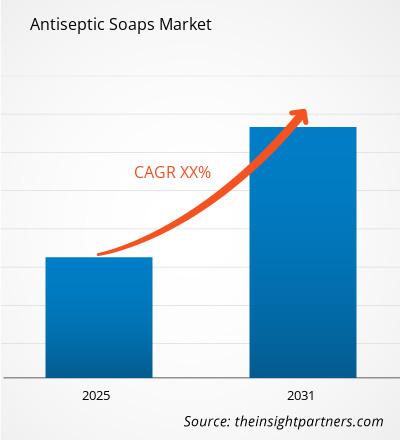
The Antiseptic Soaps market was valued at US$ 11.16 billion in 2025 and is expected to reach US$ 15.43 billion by 2034; it is estimated to record a CAGR of 3.67% during 2026-2034.
Antiseptic Soaps Market Assessment and Insights
- North America: Accounted for 32–36% share in 2025 and is expected to grow at a 3.8–4.8% CAGR during 2026–2034. Strong hygiene awareness, developed retail networks, and premium product adoption continue to support market expansion.
- US: Represented 74–78% of North America in 2025 and is projected to advance at a 3.9–4.9% CAGR during 2026–2034. Demand is supported by established consumer brands and widespread healthcare hygiene practices.
- Europe: Held 26–30% share in 2025 and is anticipated to grow at a 3.5–4.5% CAGR during 2026–2034. Germany, the UK, and France remain leading consumption centers driven by premium personal care spending.
- Asia Pacific: Captured 24–28% share in 2025 and is forecast to expand at a 5.0–6.0% CAGR during 2026–2034. China, India, Japan, and South Korea lead regional demand through expanding urban populations and rising hygiene awareness.
- Largest Segment: Liquid accounted for 56–60% market share in 2025 and is projected to grow at a 4.5–5.5% CAGR during 2026–2034, supported by convenience, dispensing efficiency, and institutional demand.
- High Growth Segment: Online Retail represented 16–20% market share in 2025 and is expected to register a 6.0–7.0% CAGR during 2026–2034, driven by digital purchasing behavior and subscription-based household replenishment.
- Key companies analyzed in detail: Unilever PLC, Johnson & Johnson, Reckitt Benckiser Group plc, Himalaya Global Holdings Ltd., Henkel AG & Co. KGaA, Galderma S.A., Prime Source Brands, Wipro Consumer Care & Lighting, The Potter Drug & Chemical Corporation, HealthAid Holdings Limited.
Source: The Insight Partners' analysis based on proprietary research, government publications, company annual reports, investor presentations, industry databases, and expert interviews.
Market-based product development is being done in terms of balancing out the antimicrobial efficacy and skin compatibility. The inclusion of botanical extracts, moisturizers, and sulfate-free formulas by the manufacturers caters to the issues regarding the regular hand washing process. Growth in terms of liquids, innovation in packaging design, and dermatological testing programs denotes the trend towards value-added hygiene products. The needs of the institutions, such as the healthcare centers, educational institutes, and the hospitality sectors, would drive the manufacturing trends.
Prospects for future growth are anticipated to get better in the developing countries, where the level of hygiene awareness and retail reach would keep improving over the forecast period. Support by regulations for the public health initiatives, consumer spending on preventive wellness, and online marketing efforts are anticipated to make the products more available to consumers.
Antiseptic Soaps Market Report Scope
| Report Attribute | Details |
|---|---|
| Market size in 2025 | US$ 11.16 Billion |
| Market Size by 2034 | US$ 15.43 Billion |
| Global CAGR (2026 - 2034) | 3.67% |
| Historical Data | 2021-2024 |
| Forecast period | 2026-2034 |
Antiseptic Soaps Market Analysis
The antiseptic soaps market growth trajectory is supported by sustained consumer focus on personal cleanliness, disease prevention, and everyday hygiene maintenance. Demands are especially robust from consumers looking for antibacterial effects and from organizations that need frequent use of hand washes. Supply chains are becoming more environmentally friendly through the incorporation of sustainable sourcing, environmentally responsible packaging, and local manufacturing optimization. Such measures help to enhance efficiency while also meeting consumer demands.
The ongoing trend towards urbanization, along with better access to retail outlets, is helping the category to penetrate the market better. Research and development are being undertaken by manufacturers to develop formulas that are both effective against germs and have skin-conditioning benefits. Modern trade expansion and greater online availability are helping categories to reach out to different consumer segments.
The market analysis shows a competitive environment characterized by strong brand recognition, extensive distribution networks, and active product innovation. The companies Unilever PLC and Reckitt Benckiser Group plc retain considerable worldwide recognition from their well-known hygiene brands, whereas Johnson & Johnson and Galderma S.A. capitalize on their dermatology knowledge to gain premium brand positioning. The regional companies are continuing their expansion through formulations and consumer targeting initiatives.
Investment efforts in the industry still remain concentrated on product differentiation, modernizing production processes, and growth in online sales. The companies Himalaya Global Holdings Ltd., Henkel AG & Co. KGaA, Wipro Consumer Care & Lighting, and HealthAid Holdings Limited are building their product lines through herbal, skin-friendly, and premium hygiene products. Strategic alliances with retail, healthcare, and e-commerce companies are assisting the participants in gaining greater access and positioning in multiple regions.
● REPORT CUSTOMIZATION
Tailor This Report To Align With Your Specific Business Requirements
This report can be customized to align precisely with your business objectives, scope, and target markets. Customization options include tailored segmentation, geography, competitive analysis, and strategic insights to support informed decision-making.
Customize This Report →WHAT YOU CAN ADJUST
- ● Segmentations
- ● Geography
- ● Competitive Analysis
- ● Language Preferences
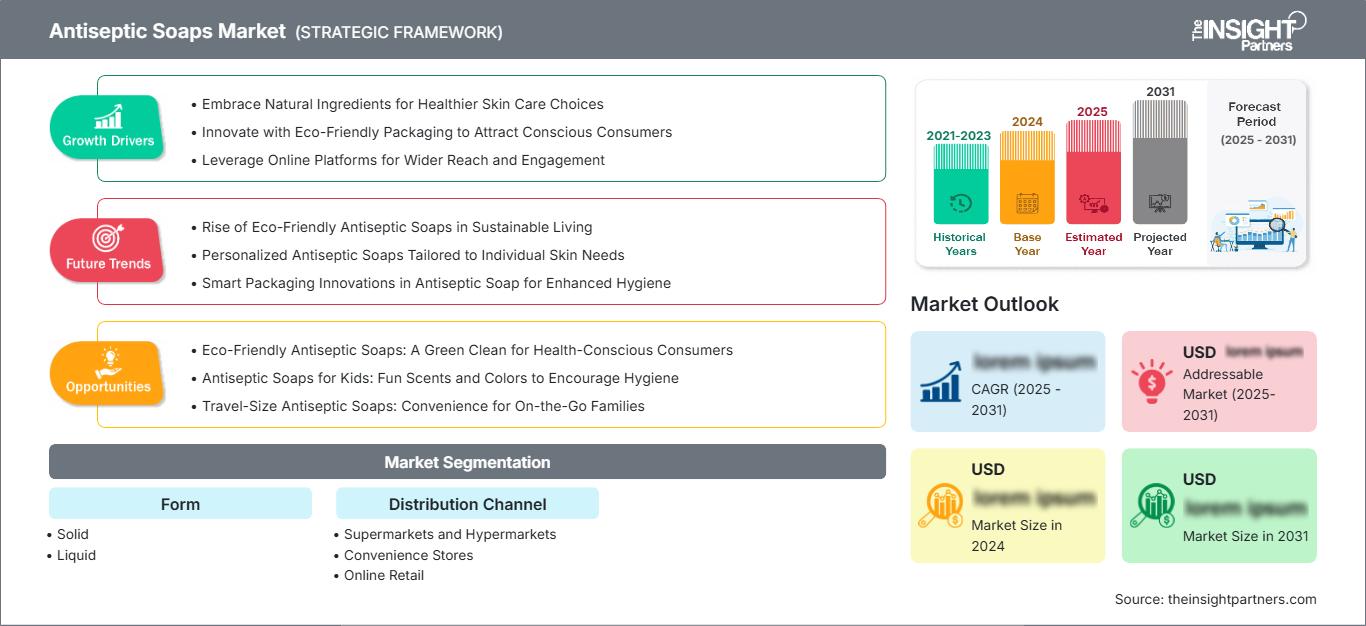
Antiseptic Soaps Market: Strategic Insights
Regional Insights
North America antiseptic soaps market
North America represented approximately 32–36% antiseptic soaps market share in 2025. The region benefits from high household penetration of hygiene products, extensive retail infrastructure, and established public-health awareness. Demand across healthcare facilities, hospitality operations, educational institutions, and residential consumers continues to support category stability. The market is expected to register a 3.8–4.8% CAGR between 2026 and 2034 due to ongoing product innovation and premiumization trends.
Increasingly, consumers are opting for liquid-based antibacterial products with moisturizers. Personal care products with an emphasis on hygiene are still being sold in-store with greater online accessibility. The companies active in the region are emphasizing sustainability, refilling, and skin-friendly products. Strong buying power and health consciousness of consumers will ensure growth prospects.
U.S. antiseptic soaps market
The United States accounted for approximately 74–78% of North American demand in 2025. A well-developed consumer goods sector, strong brand recognition, and widespread hygiene awareness support sustained adoption. The country is expected to expand at a 3.9–4.9% CAGR through 2034 as consumers continue prioritizing preventive hygiene products.
The leading players have large networks of distributors within supermarkets, convenience stores, pharmacies, and through online sales. The demand for high-end antibacterial products that have moisturizing substances is still on the rise. Institutions such as hospitals, colleges, and workplaces are continually playing their part in driving consumption.
Europe antiseptic soaps market
Europe accounted for 26–30% share in 2025 and is projected to grow at a 3.5–4.5% CAGR through 2034. Germany continues to lead in the national market owing to robust consumer expenditure on personal care products and a wide retail reach. The United Kingdom gains from a well-developed knowledge of hygiene and sustained demand for high-end cleansers.
France continues to focus on skin care-oriented formulations, while Italy and Spain continue to record growing demand for high-value antibacterial products. Eco-friendly packaging is now offered by manufacturers together with natural ingredient formulations. Consumer preference for high-quality personal care products continues to favor growth in the market.
APAC antiseptic soaps market
Asia Pacific captured 24–28% share in 2025 and is anticipated to expand at a 5.0–6.0% CAGR through 2034. China and India represent primary growth engines due to large populations, rising disposable income, and expanding awareness regarding personal hygiene.
Japan, South Korea, and Australia contribute significant value through premium product consumption. Government-supported sanitation initiatives, urbanization, and modern retail development continue to strengthen demand. Manufacturers increasingly focus on localized formulations and affordable packaging formats to reach wider consumer groups.
Middle East & Africa antiseptic soaps market
The Middle East and Africa region is projected to register a 4.2–5.2% CAGR during 2026–2034. Saudi Arabia and the United Arab Emirates remain significant contributors due to rising healthcare investments and expanding retail infrastructure.
South Africa leads demand within Sub-Saharan Africa, while broader regional development initiatives continue improving product accessibility. Population growth, sanitation awareness programs, and healthcare modernization projects are expected to support long-term category development across the region.
Segmentation Analysis
Form
The Form segment plays a central role in determining consumer preferences and usage patterns. The market scope continues expanding as manufacturers offer formats tailored for household and institutional environments. This segment is anticipated to grow at a 4.2–5.2% CAGR during 2026–2034, supported by product innovation, convenience considerations, and increasing hygiene awareness.
- Solid: Maintains relevance through affordability, storage convenience, and widespread availability across traditional retail outlets. Strong demand persists in price-sensitive markets and among consumers preferring conventional cleansing formats.
- Liquid: Represents the dominant format due to ease of dispensing, hygienic usage, and compatibility with modern residential and commercial environments. Demand remains particularly strong within healthcare and hospitality applications.
Distribution Channel
Distribution channels significantly influence purchasing behavior and brand visibility. This segment is expected to record a 4.5–5.5% CAGR during 2026–2034, driven by omnichannel retail strategies, digital commerce adoption, and expanded product accessibility across urban and rural markets.
- Supermarkets and Hypermarkets: Continue generating substantial sales through extensive product assortments, promotional activities, and high consumer footfall. These outlets remain critical for brand discovery and repeat purchases.
- Convenience Stores: Serve immediate purchasing needs and support product accessibility in densely populated areas. Their strategic locations contribute to recurring consumer purchases and category penetration.
- Online Retail: Rapidly gaining importance because of product variety, subscription offerings, direct-to-consumer models, and convenient home delivery. Digital channels increasingly influence purchasing decisions and brand engagement.
Opportunity Snapshot
| Segment Name | Revenue Contribution | Trend Tag | Adoption Stage |
| Supermarkets and Hypermarkets | High | Shelf Expansion | Mature |
| Convenience Stores | Medium | Quick Purchase | Mature |
| Online Retail | High | Subscription Sales | Scaling |
Antiseptic Soaps Market Growth Drivers and Impact Analysis
Expanding consumer focus on preventive hygiene practices
Infection-prevention awareness remains an important factor impacting buying behaviors in households, organizations, and retail stores. Consumers today have become more concerned about the purchase of hygiene products that help achieve daily cleaning and health objectives. Awareness programs on public health, education, and health in general have played a significant role in promoting regular hand washing in different places. Manufacturers are therefore developing products with the ability to kill germs as well as care for the skin.
Growth of organized retail and e-commerce ecosystems
Product availability has been greatly increased in many countries through the modernization of retail systems. Chains of organized retailers have helped achieve better visibility of products, while digital methods have facilitated wider customer access and customized shopping experiences. Replenishment shopping is promoted through subscription schemes and promotions conducted online. Better management of inventories, consumer knowledge and marketing are among the advantages for firms. This helps improve their market penetration capabilities.
Product innovation focused on skin compatibility
The manufacturers are now taking into account the consumer preference for a formula that has an optimal combination of antibacterial properties and skin benefits. Through their research efforts, they are able to develop ingredients such as moisturizers, herbal extracts, formulas without sulfates, and those that have been tested by dermatologists. These innovations help solve problems related to washing, as well as make the brands stand out amidst stiff competition. High-end products generate higher profit margins and foster customer loyalty.
Antiseptic Soaps Market Future Trends
Rising adoption of sustainable product platforms
The antiseptic soaps market trends indicate increasing emphasis on environmentally responsible production, refill systems, recyclable packaging, and responsibly sourced ingredients. Consumers are evaluating products not only for effectiveness but also for sustainability credentials. Brands investing in transparency, reduced packaging waste, and eco-friendly supply chains are expected to strengthen competitive positioning. Over time, sustainability factors are likely to become a significant purchasing criterion across both developed and emerging markets.
Integration of premium wellness positioning
The future portfolio of products will likely see an increasing trend where hygiene attributes and skincare or wellness will be blended together in one product. Brands will incorporate elements such as the use of natural components, scented options, and skin conditioning additives. This creates an opportunity for brands to differentiate themselves and capitalize on changing consumer demands.
Antiseptic Soaps Market Opportunities
Expansion across underserved emerging markets
The antiseptic soaps market Forecasts suggest substantial potential in regions where hygiene awareness, retail infrastructure, and disposable income continue improving. Market participants can capitalize on population growth, urbanization trends, and government sanitation initiatives by developing affordable products tailored to local preferences. Investment in localized manufacturing and distribution capabilities can improve accessibility while lowering logistical costs. Companies establishing early market presence may benefit from long-term brand loyalty and expanding consumer bases.
Digital-first brand development strategies
E-commerce gives firms chances to develop personal relations with customers, gain insight based on data, and optimize their product portfolio. Online interaction allows for customized marketing campaigns, quick product trials, and a customized purchase experience. Subscription services, hygiene kits, and influencer campaigns might help to enhance customer retention. Companies that will effectively use the online infrastructure can earn better margins and geographical coverage, along with being responsive to the market.
Frequently Asked Questions

- Comprehensive Market Sizing and Forecast Analysis
- Detailed Segmentation Analysis
- In-Depth Market Dynamics Assessment
- Regional and Country-Level Insights
- Competitive Landscape and Company Benchmarking
- Strategic Business Intelligence
Recent Reports
Testimonials

The Insight Partners provided valuable market intelligence that supported our global go-to-market strategy. Their team was professional, responsive, and attentive to our feedback, providing thoughtful analysis and helpful methodological clarifications throughout the project.
Junmo Kim Chief Financial Officer (CFO), Enertech Co., Ltd.
The Insight Partners' SCADA System Market report is comprehensive, with valuable insights on current trends and future forecasts. The team was highly professional, responsive, and supportive throughout. We are very satisfied and highly recommend their services.
RAN KEDEM Partner, Reali Technologies LTDs
I requested a report on a very specific software market and the team produced the report in a few days. The information was very relevant and well presented. I then requested some changes and additions to the report. The team was again very responsive and I got the final report in less than a week.
JEAN-HERVE JENN Chairman, Future Analytica
We worked with The Insight Partners for an important market study and forecast. They gave us clear insights into opportunities and risks, which helped shape our plans. Their research was easy to use and based on solid data. It helped us make smart, confident decisions. We highly recommend them.
PIYUSH NAGPAL Sr. Vice President, High Beam Global
The Insight Partners delivered insightful, well-structured market research with strong domain expertise. Their team was professional and responsive throughout. The user-friendly website made accessing industry reports seamless. We highly recommend them for reliable, high-quality research services
YUKIHIKO ADACHI CEO, Deep Blue, LLC.
This is the first time I have purchased a market report from The Insight Partners.While I was unsure at first, I visited their web site and felt more comfortable to take the risk and purchase a market report.I am completely satisfied with the quality of the report and customer service. I had several questions and comments with the initial report, but after a couple of dialogs over email with their analyst I believe I have a report that I can use as input to our strategic planning process.Thank you so much for taking the extra time and making this a positive experience.I will definitely recommend your service to others and you will be my first call when we need further market data.
JOHN SUZUKI President and Chief Executive Officer, Board Director, BK Technologies
I wish to appreciate your support and the professionalism you displayed in the course of attending to my request for information regarding to infectious disease IVD market in Nigeria. I appreciate your patience, your guidance, and the fact that you were willing to offer a discount, which eventually made it possible for us to close a deal. I look forward to engaging The Insight Partners in the future, all thanks to the impression you have created in me as a result of this first encounter.
DR CHIJIOKE ONYIA MANAGING DIRECTOR, PineCrest Healthcare Ltd.Reason to Buy
- Informed Decision-Making
- Understanding Market Dynamics
- Competitive Analysis
- Identifying Emerging Markets
- Customer Insights
- Market Forecasts
- Risk Mitigation
- Boosting Operational Efficiency
- Strategic Planning
- Investment Justification
- Tracking Industry Innovations
- Aligning with Regulatory Trends





 Get Free Sample for