
Appointment Scheduling Software Market Share, Size & Demand by 2034
Coverage: by Type (Web-Based/SaaS, Mobile App); Enterprise Size (Small and Medium-sized Enterprises, Large Enterprises); End-user (Corporate, Beauty and Wellness, Education, Healthcare, Others) , and Geography (North America, Europe, Asia Pacific, and South and Central America)
- Status : Data Released
- Report Code : TIPRE00009166
- Category : Technology, Media and Telecommunications
- No. of Pages : 150
- Available Report Formats :


- Last update date : August 28, 2026


2025 Market Size
US$ 555.05 Mn
Base year value
2034 Forecast
US$ 2,154.6 Mn
Projected by 2034
CAGR 2026-2034
16.26 %
Growth rate
Addressable Market
US$ 11,431.15 Mn
(2026-2034)
The appointment scheduling software market was valued at US$ 555.05 million in 2025 and is projected to reach US$ 2,154.6 million by 2034, registering a CAGR of 16.26% during 2026–2034. Demand is expanding as enterprises, clinics, salons, education providers, and corporate teams replace manual booking workflows with automated, cloud-based scheduling tools that improve availability visibility, reduce administrative work, and support customer self-service.
North America remains a leading adoption hub, supported by mature digital infrastructure, high penetration of small business software, expanding telehealth workflows, and strong use of customer engagement platforms. The appointment scheduling software market size in the region is reinforced by demand for integrated reminders, payments, calendar synchronization, CRM links, and analytics-led resource planning across service-oriented industries.
Appointment Scheduling Software Market Assessment and Insights
- North America: The region accounted for about 34–43% share in 2025 and is expected to grow at roughly 14–17% CAGR during 2026–2034, supported by cloud adoption, healthcare digitization, and SME automation.
- U.S.: The U.S. represented nearly 75–82% of North America's demand in 2025 and is forecast to grow at 14–16% CAGR, driven by service businesses, clinics, and corporate booking automation.
- Europe: Europe held about 24–29% share in 2025 and is expected to grow at 13–16% CAGR, with the UK, Germany, France, Italy, and Spain leading adoption.
- Asia Pacific: Asia Pacific accounted for about 20–25% share in 2025 and is projected to record 17–20% CAGR, led by China, India, Japan, South Korea, and Australia.
- Largest Segment: Web-Based/SaaS solutions held around 68–74% market share in 2025 and are expected to grow at 15–17% CAGR because of scalability and subscription pricing.
- High Growth Segment: Mobile App solutions held around 26–32% share in 2025 and are expected to grow at 18–21% CAGR as customers increasingly book services through smartphones.
- Key companies analyzed in detail: 10to8 Ltd., Acuity Scheduling, Appointy Software Inc., Melian Labs, Inc., MINDBODY, Inc., Setmore Appointments, SimplyBook.me Ltd., Block, Inc., SuperSaaS, and TimeTrade Systems, Inc.
Source: The Insight Partners' analysis based on proprietary research, government publications, company annual reports, investor presentations, industry databases, and expert interviews.
Commercial use of scheduling platforms has moved from basic calendar booking toward integrated workflow automation. Vendors now compete on payment acceptance, automated notifications, user permissions, staff allocation, analytics, and integrations with CRM, POS, video conferencing, and marketing tools. The appointment scheduling software market growth is also supported by demand for standard operating visibility across distributed locations, hybrid workforces, remote consultations, and appointment-heavy consumer services.
Adoption in the future will depend on the following factors: AI-assisted booking, improved no-show predictions, resource optimization, and localized mobile experience. The new geographies will drive incremental adoption as SMEs will begin using SaaS to help their customers gain easy access. There will be regulatory compliance in healthcare and education that will drive the booking process.
Appointment Scheduling Software Market Report Scope
| Report Attribute | Details |
|---|---|
| Market size in 2025 | US$ 555.05 Million |
| Market Size by 2034 | US$ 2,154.6 Million |
| Global CAGR (2026 - 2034) | 16.26% |
| Historical Data | 2021-2024 |
| Forecast period | 2026-2034 |
Appointment Scheduling Software Market Analysis
The appointment scheduling software market growth is being shaped by self-service expectations, labor efficiency requirements, and the need to reduce scheduling friction. Consumers want to book, reschedule, and be reminded without calls, and companies leverage automation to reduce no-shows and optimize their employees' schedules. The web-based SaaS solutions are still favored by virtue of their small infrastructure costs and rapid deployment for multi-branch firms.
The supply side is very fragmented, with specialized providers having to compete with more general commerce, CRM, and productivity software providers. Small businesses look for inexpensive solutions with built-in calendars and reminders, whereas large businesses have started looking for solutions that enable governance, role-based access, reporting, and integration with existing applications. Hence, vendors are now going beyond booking features to offer workflow orchestration, payment management, and customer data management capabilities.
The appointment scheduling software market analysis indicates a competitive landscape defined by usability, integration depth, vertical specialization, and pricing flexibility. Acuity Scheduling, Setmore Appointments, SimplyBook.me Ltd., Appointy Software Inc., SuperSaaS, 10to8 Ltd., MINDBODY, Inc., Block, Inc., Melian Labs, Inc., and TimeTrade Systems, Inc. cater to various buyer segments, such as wellness providers and enterprise appointment management departments.
The focus of investments lies in AI assistants, automated reminder notifications, payment booking capabilities, and mobile-first customer experience. Ecosystem players are able to offer scheduling alongside commerce, marketing, payments, and customer relationship services, whereas specialized vendors compete through customizable booking, multilingual capabilities, and vertical templates. The resulting market structure makes usability and integrations the key drivers of customer retention rather than scheduling itself.
● REPORT CUSTOMIZATION
Tailor This Report To Align With Your Specific Business Requirements
This report can be customized to align precisely with your business objectives, scope, and target markets. Customization options include tailored segmentation, geography, competitive analysis, and strategic insights to support informed decision-making.
Customize This Report →WHAT YOU CAN ADJUST
- ● Segmentations
- ● Geography
- ● Competitive Analysis
- ● Language Preferences
Appointment Scheduling Software Market: Strategic Insights
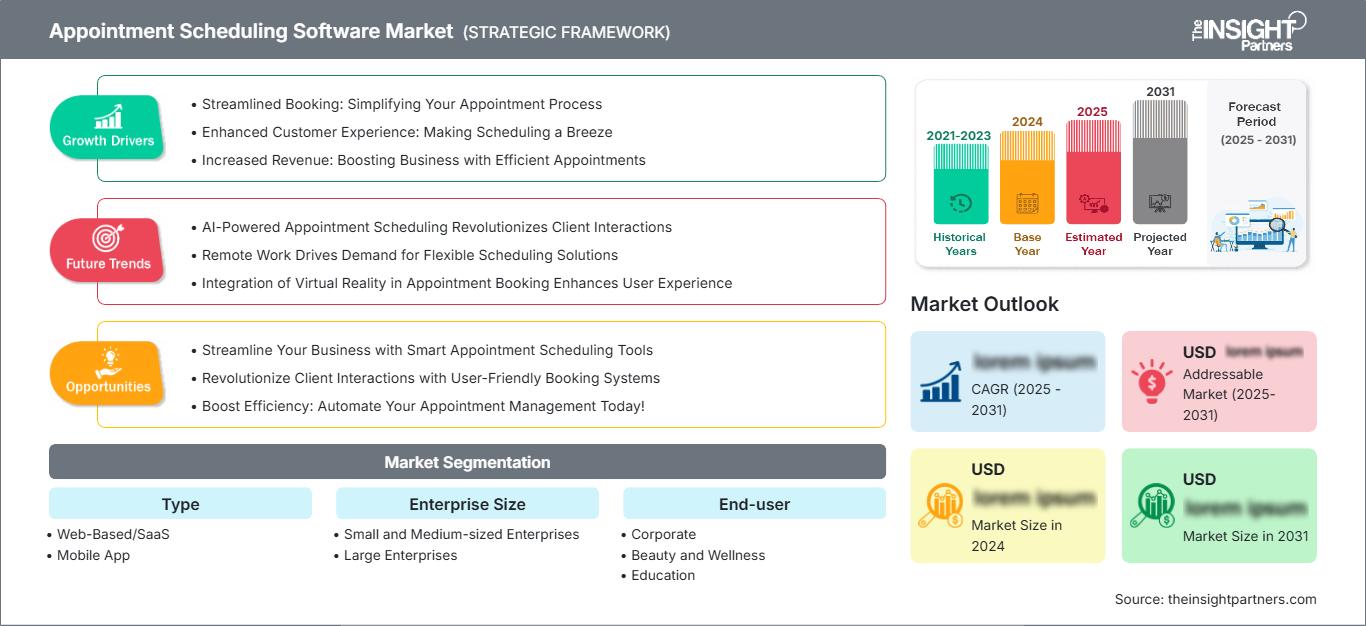
Regional Insights
North America Appointment Scheduling Software Market
North America accounted for about 34–43% appointment scheduling software market share in 2025 and is expected to grow at 14–17% CAGR during 2026–2034. The high digital readiness level, usage of cloud-based software, and formation of small businesses ensure high demand among clinics, salons, corporate groups, and professional services. The healthcare and wellness industry also continues to be a significant adopter since the automation of reminders and appointment rescheduling will help reduce administrative overheads.
Organizational adoption will also increase due to the consolidation of meeting scheduling, customer appointments, and internal resource management on single platform. The market will benefit from the maturity of its payments system, CRM implementation, and a strong presence of software vendors. AI-based routing and analysis will likely lead to increased conversion ratios for sales and services.
U.S. Appointment Scheduling Software Market
The Appointment Scheduling Software Market Report indicates that the U.S. represented about 75–82% of North America demand in 2025 and is expected to grow at a 14–16% CAGR during 2026–2034. The adoption of the solution is bolstered by the abundance of SMEs, the speed with which telehealth becomes normalized, and client preference for mobile self-booking. Services are increasingly integrating their scheduling with payments, form-filling, and communications. The company's presence is robust; vendors and platform providers address corporations, healthcare organizations, wellness, beauty and educational clients. Integration of appointment management processes becomes crucial for consultation, demonstration, class, maintenance, repair, and branch visits management by distributed teams.
Europe Appointment Scheduling Software Market
Europe held about 24–29% share in 2025 and is expected to grow at 13–16% CAGR during 2026–2034. The UK and Germany lead adoption due to digital service maturity, strong SME adoption, and professional services automation. France, Italy, and Spain are expanding through healthcare modernization, wellness bookings, and education scheduling.
Privacy-aware implementation remains important, especially for healthcare, education, and financial services. Vendors that support configurable consent, secure communication, and localized booking experiences are better positioned. Europe’s fragmented language and regulatory environment favor platforms offering multi-country settings, flexible reminders, and integration with local payment and communication channels.
APAC Appointment Scheduling Software Market
APAC accounted for about 20–25% share in 2025 and is projected to grow at 17–20% CAGR during 2026–2034. China, India, Japan, South Korea, and Australia are key markets as SMEs, clinics, education providers, and wellness operators increase online booking adoption. Smartphone-first behavior supports rapid mobile appointment scheduling software market trends.
Policy-led digital health, expanding service marketplaces, and rising internet access are improving addressable demand. Local language interfaces, low-cost subscriptions, and mobile payments are important adoption factors. Vendors able to serve high-volume appointment categories can capture growth across healthcare, tutoring, personal care, and corporate service use cases.
Middle East & Africa Appointment Scheduling Software Market
The Middle East & Africa is expected to grow at 12–15% CAGR during 2026–2034, supported by service digitization in the UAE, Saudi Arabia, South Africa, and other urban markets. Healthcare modernization, hospitality services, beauty and wellness operators, and public service booking platforms are creating demand for structured scheduling.
Adoption remains uneven because of variable SME digital maturity and budget constraints. However, cloud-based subscriptions reduce entry barriers, while mobile booking aligns with high smartphone usage in major cities. Platforms that offer multilingual support, online payments, and automated reminders will be better positioned across the region.
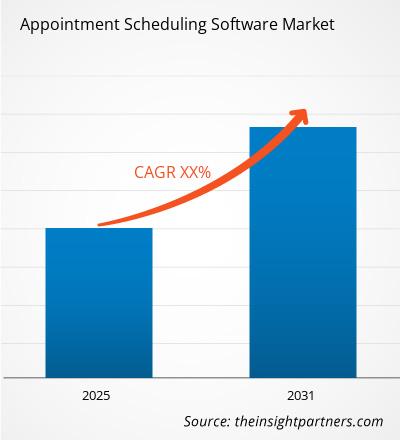
Segmentation Analysis
Type
Type is expected to grow at 15–18% CAGR during 2026–2034 as buyers choose between browser-based SaaS deployment and mobile-first booking access. The appointment scheduling software market scope is broadening as businesses combine web dashboards for administration with mobile apps for customer convenience, staff updates, and on-the-go appointment changes.
- Web-Based/SaaS: Web-based SaaS remains the largest format because it supports multi-user access, calendar syncing, centralized settings, payment integrations, and rapid deployment without major infrastructure investment.
- Mobile App: Mobile app solutions are gaining importance as customers expect quick booking, reminders, rescheduling, location details, and payment confirmation directly through smartphones.
Enterprise Size
Enterprise Size is expected to grow at 14–17% CAGR during 2026–2034 as SMEs and large enterprises use scheduling automation for different operational goals. SMEs prioritize affordability and fast setup, while large enterprises require governance, analytics, integration, and standardized workflows across multiple departments or locations.
- Small and Medium-sized Enterprises: SMEs use scheduling platforms to reduce phone-based coordination, improve staff utilization, and provide customers with always-available booking experiences at manageable monthly costs.
- Large Enterprises: Large enterprises use appointment platforms for centralized control, brand consistency, reporting, complex routing, role permissions, and integration with CRM, HR, and customer support systems.
End-user
End-user demand is expected to grow at 15–18% CAGR during 2026–2034 as appointment-based workflows expand across corporate, beauty and wellness, education, and healthcare buyers. Healthcare remains structurally important, while corporate teams use scheduling to manage demos, consultations, interviews, internal meetings, and customer success sessions.
- Corporate: Corporate users rely on scheduling tools to automate meeting routing, sales demonstrations, consultant bookings, interview coordination, and customer support appointments across distributed teams.
- Beauty and Wellness: Beauty and wellness operators use appointment platforms to manage staff calendars, service menus, deposits, reminders, repeat bookings, and local customer engagement.
- Education: Education providers adopt scheduling for admissions consultations, tutoring sessions, parent meetings, academic advising, interviews, and virtual learning appointments.
- Healthcare: Healthcare users apply scheduling tools to manage patient visits, telehealth slots, automated reminders, intake workflows, and resource allocation across clinics and specialty practices.
Opportunity Snapshot
| End-User | Revenue Contribution | Trend Tag | Adoption Stage |
| Corporate | High | Meeting Routing | Mature |
| Beauty and Wellness | Medium | Prepaid Booking | Scaling |
| Education | Medium | Advising Slots | Scaling |
| Healthcare | High | Telehealth Access | Scaling |
Appointment Scheduling Software Market Growth Drivers and Impact Analysis
Rising Demand for Self-Service Booking
Customers are now accustomed to booking, rebooking, and even canceling appointments outside of working hours without having to call an assistance desk. This trend is reshaping the way companies develop customer access, especially in industries like healthcare, wellness, education, and professional services. Availability views automate the process, and reminders cut down on no-shows and help with revenue protection. It works best for SMEs, where there is an insufficient workforce to enhance responsiveness via scheduling automation.
Cloud-Based Deployment and Subscription Pricing
With SaaS deployment, there are fewer obstacles to implementing solutions due to the absence of complicated infrastructure, maintenance, and expensive licensing fees. Companies have an option to use appointment scheduling software by subscription and increase the number of uses depending on the number of locations or users. It matters greatly for the fragmented service industry, where customers require quick deployment and clear costs.
Integration with Payments, CRM, and Communication Tools
The utility of scheduling apps is increasing when combined with payments, CRM databases, video conferencing, email, SMS, and POS solutions. Integration with these services converts appointment booking into an extended workflow involving capturing customer intent, confirming attendance, charging fees, and recording interactions. From a corporate perspective, integration improves data visibility and service standardization. From a small business perspective, integration simplifies reconciliation efforts and enhances customer experience from booking through payment and beyond.
Appointment Scheduling Software Market Future Trends
AI-Assisted Scheduling and No-Show Prediction
Appointment scheduling software market trends will increasingly include AI assistants that recommend time slots, route customers to suitable staff, and predict no-show risk based on booking behavior. These tools can help providers adjust reminder frequency, deposits, waitlists, and staffing plans. As AI features become embedded in mainstream SaaS products, scheduling software will shift from passive calendar management toward proactive demand planning and resource optimization.
Mobile-First Local Service Booking
Booking for mobile devices will gain even greater significance since the customers will make use of their smartphones to search for providers, compare availability, check out location information, and make payments. The local services companies will prefer solutions that integrate booking pages, notifications, client profiles, and deposits into one mobile-friendly package. Mobile loading speeds, customizable notifications, and integration with maps and messenger services will be critical factors.
Appointment Scheduling Software Market Opportunities
Vertical Templates for Healthcare, Education, and Wellness
Appointment scheduling software market forecasts indicate a strong opportunity for vendors that create vertical-specific templates instead of generic booking pages. Healthcare needs intake forms, patient reminders, telehealth links, and secure communication. Education requires advisor availability, class consultation slots, and parent meeting workflows. Wellness operators need service menus, staff calendars, deposits, and repeat bookings. Preconfigured workflows shorten deployment time and let vendors address industry pain points with clearer value propositions.
SME Expansion in Emerging Digital Economies
In emerging economies, there is potential for growth because small enterprises have digitized their customer engagements while adopting digital scheduling as opposed to phone calls. This market has the potential for generating revenues in affordable SaaS models, mobile payments support, local language user interface, and easy integration. Software vendors who provide a freemium model and scalable pricing tiers can target small and medium enterprises and generate revenue from reminders, payments, workforce management, and analytics.
Frequently Asked Questions

- Comprehensive Market Sizing and Forecast Analysis
- Detailed Segmentation Analysis
- In-Depth Market Dynamics Assessment
- Regional and Country-Level Insights
- Competitive Landscape and Company Benchmarking
- Strategic Business Intelligence
Recent Reports
Testimonials

The Insight Partners provided valuable market intelligence that supported our global go-to-market strategy. Their team was professional, responsive, and attentive to our feedback, providing thoughtful analysis and helpful methodological clarifications throughout the project.
Junmo Kim Chief Financial Officer (CFO), Enertech Co., Ltd.
The Insight Partners' SCADA System Market report is comprehensive, with valuable insights on current trends and future forecasts. The team was highly professional, responsive, and supportive throughout. We are very satisfied and highly recommend their services.
RAN KEDEM Partner, Reali Technologies LTDs
I requested a report on a very specific software market and the team produced the report in a few days. The information was very relevant and well presented. I then requested some changes and additions to the report. The team was again very responsive and I got the final report in less than a week.
JEAN-HERVE JENN Chairman, Future Analytica
We worked with The Insight Partners for an important market study and forecast. They gave us clear insights into opportunities and risks, which helped shape our plans. Their research was easy to use and based on solid data. It helped us make smart, confident decisions. We highly recommend them.
PIYUSH NAGPAL Sr. Vice President, High Beam Global
The Insight Partners delivered insightful, well-structured market research with strong domain expertise. Their team was professional and responsive throughout. The user-friendly website made accessing industry reports seamless. We highly recommend them for reliable, high-quality research services
YUKIHIKO ADACHI CEO, Deep Blue, LLC.
This is the first time I have purchased a market report from The Insight Partners.While I was unsure at first, I visited their web site and felt more comfortable to take the risk and purchase a market report.I am completely satisfied with the quality of the report and customer service. I had several questions and comments with the initial report, but after a couple of dialogs over email with their analyst I believe I have a report that I can use as input to our strategic planning process.Thank you so much for taking the extra time and making this a positive experience.I will definitely recommend your service to others and you will be my first call when we need further market data.
JOHN SUZUKI President and Chief Executive Officer, Board Director, BK Technologies
I wish to appreciate your support and the professionalism you displayed in the course of attending to my request for information regarding to infectious disease IVD market in Nigeria. I appreciate your patience, your guidance, and the fact that you were willing to offer a discount, which eventually made it possible for us to close a deal. I look forward to engaging The Insight Partners in the future, all thanks to the impression you have created in me as a result of this first encounter.
DR CHIJIOKE ONYIA MANAGING DIRECTOR, PineCrest Healthcare Ltd.Reason to Buy
- Informed Decision-Making
- Understanding Market Dynamics
- Competitive Analysis
- Identifying Emerging Markets
- Customer Insights
- Market Forecasts
- Risk Mitigation
- Boosting Operational Efficiency
- Strategic Planning
- Investment Justification
- Tracking Industry Innovations
- Aligning with Regulatory Trends





 Get Free Sample for