
Artificial Disc Replacement Systems Market Size, Trends & Growth by 2034
Coverage: by Disc Type ( Composite, Elastic, Mechanical, Others ); Location ( Cervical Discs Replacement, Lumbar Disc Replacement ); Material ( Metal, Biopolymer, Mixed, Others ) , and Geography (North America, Europe, Asia Pacific, and South and Central America)
- Status : Data Released
- Report Code : TIPRE00007169
- Category : Life Sciences
- No. of Pages : 150
- Available Report Formats :


- Last update date : September 01, 2026


2025 Market Size
US$ 3.82 Bn
Base year value
2034 Forecast
US$ 8.61 Bn
Projected by 2034
CAGR 2026-2034
10.68 %
Growth rate
Addressable Market
US$ 59.08 Bn
(2026-2034)
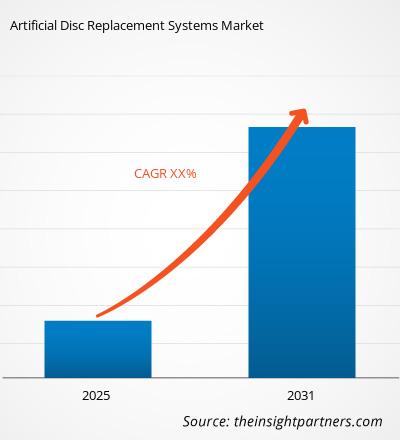
The artificial disc replacement systems market is valued at US$ 3.82 Billion in 2025 and is projected to reach US$ 8.61 Billion by 2034, advancing at a CAGR of 10.68% during 2026–2034. The market is growing owing to the rising acceptance of motion-preserving spinal technologies and the widening range of products available in cervical and lumbar segments. Growth is attributed to rising treatment rates of degenerative disc diseases, advanced biodynamics of implants, clinical evidence, and investments into minimally-invasive spine surgeries.
North America will remain strategically important due to existing spine care infrastructures, experienced specialists, established reimbursement, and familiarity with regulations required for adopting motion-preserving implants. The artificial disc replacement systems market size is projected to grow with 10–12% CAGR in North America till 2034.
Artificial Disc Replacement Systems Market Assessment and Insights
- North America: North America is expected to retain a leading position, supported by mature spine infrastructure, reimbursement experience, and product availability. Its share in 2025 is estimated at 47–49%, with a CAGR of 10–12% between 2026–2034.
- US: The US represents approximately 88–92% of North American revenue in 2025, supported by FDA-cleared cervical systems, specialist centers, established reimbursement pathways, and high procedure concentration. CAGR is expected at 10–12% through 2034.
- Europe: Europe is estimated to account for 25–28% share in 2025, led by Germany, the UK, France, Italy, and Spain. Public healthcare infrastructure, surgeon specialization, and growing evidence for motion preservation support a 9–11% CAGR during 2026–2034.
- Asia Pacific: Asia Pacific is estimated at 14–17% share in 2025, with China, Japan, South Korea, India, and Australia representing important adoption markets. Expanding spine-care capacity and medical-device investment support a 12–14% CAGR through 2034.
- Largest Segment: Cervical Disc Replacement is the largest segment, with a 64–67% market share in 2025 and an estimated 11–13% CAGR between 2026–2034, supported by stronger regulatory and clinical maturity.
- High Growth Segment: Lumbar Disc Replacement is the high-growth segment, representing 33–36% share in 2025 and expanding at 12–14% CAGR as implant designs and clinical confidence improve.
- Key companies analyzed in detail: DePuy Synthes, Globus Medical, Medtronic, Zimmer Biomet, Smith & Nephew plc, Aesculap Implant Systems, LLC, NuVasive, Inc., AxioMed LLC, K2M, and Centinel Spine, LLC.
Source: The Insight Partners' analysis based on proprietary research, government publications, company annual reports, investor presentations, industry databases, and expert interviews.
The technology has transitioned from rather restricted motion preservation concepts to differentiated implants that include advanced core mechanics, endplate fixation, biomaterials, and anatomical fit. There is a more developed evidence base for cervical implants compared to lumbar devices which should perform better in terms of biomechanics. The manufacturing process places an increasing focus on precision machining, polymer molding, sterilization, and compatibility with instruments. This opens up possibilities for vertically integrated vendors and specialists in contract manufacturing.
In the coming years, capital should flow into patient-tailored dimensions, enhanced imaging compatibility, and expanded indications backed up by longitudinal clinical evidence. The growing number of procedures due to expanding network of spine specialists can be another factor for emerging markets. Regulatory approval process plays an important role as the manufacturers need to prove their safety, durability, neurological results, and motion preservation.
Artificial Disc Replacement Systems Market Report Scope
| Report Attribute | Details |
|---|---|
| Market size in 2025 | US$ 3.82 Billion |
| Market Size by 2034 | US$ 8.61 Billion |
| Global CAGR (2026 - 2034) | 10.68% |
| Historical Data | 2021-2024 |
| Forecast period | 2026-2034 |
Artificial Disc Replacement Systems Market Analysis
Artificial disc technologies represent a consequence of the rising burden of spinal degeneration as well as the quest for non-fusion therapies for a subset of patients. The growth drivers of the artificial disc replacement systems market include advancements in the kinematics of implants, surgeon familiarity, and the evidence about the possible merits of retaining motion at segments. The value chain covers biomaterials, precision machining, implant manufacturing, instrumentation development, sterilization services, hospitals, ambulatory facilities, and spine surgeons.
The supply factors have a lot to do with high-quality standards and a degree of specialization of production. Both titanium and cobalt-chrome alloys need precise machining and surface treatments, whereas polymer cores should be characterized by uniform material properties and geometries. Companies need to develop trial instrumentation and preoperative planning software as procedures become widely accepted based on workflow compatibility. In hospitals, implant efficacy, procedure efficiency, training needs, and episode costs are becoming important besides unit cost.
The competitive landscape includes diversified companies in orthopedic and spine as well as specialist disc developers. Companies like DePuy Synthes, Globus Medical, Medtronic, Zimmer Biomet, and Aesculap Implant Systems, LLC have leverage due to surgeon relationships and spinal portfolios. Additional competition comes from companies like Smith & Nephew plc, NuVasive, Inc., AxioMed LLC, K2M, and Centinel Spine, LLC through special technology and products. Artificial disc replacement systems market report is thus based on clinical differentiation, regulatory portfolio, implant life, and surgeon switching.
Investments are increasingly looking for solutions which would allow addressing several spinal levels without losing their differentiating mechanics. A company with an existing distribution network and ecosystem of instruments can achieve faster adoption by incorporating their new discs into their processes. Clinical data itself is a strategic tool when a manufacturer needs to expand their indication or gain payer coverage.
● REPORT CUSTOMIZATION
Tailor This Report To Align With Your Specific Business Requirements
This report can be customized to align precisely with your business objectives, scope, and target markets. Customization options include tailored segmentation, geography, competitive analysis, and strategic insights to support informed decision-making.
Customize This Report →WHAT YOU CAN ADJUST
- ● Segmentations
- ● Geography
- ● Competitive Analysis
- ● Language Preferences
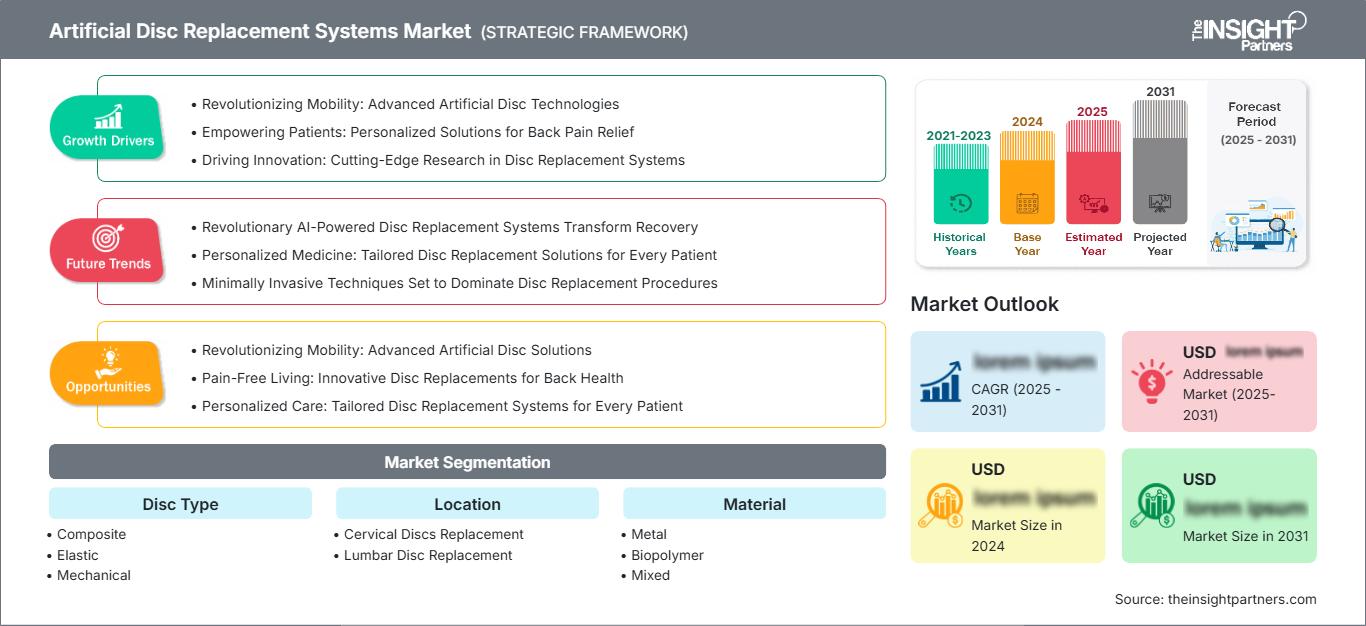
Artificial Disc Replacement Systems Market: Strategic Insights
Regional Insights
North America artificial disc replacement systems market
It is forecast that North America will account for 47%–49% of the artificial disc replacement systems market share in 2025 and register a 10%–12% CAGR in the period between 2025 and 2034. In the case of North America, the driver of demand will be the existence of spine centers in the United States, skilled surgeons, extensive regulatory knowledge, and relatively wide availability of cervical arthroplasty devices. Additionally, Canada will contribute to growth due to specialized orthopedic institutions and increased availability of spinal technologies.
The regional market will benefit from an established network of device distribution and training. Factors driving growth in North America include more physician expertise in motion preservation technology and consideration of an outpatient approach for appropriate procedures. Regulatory data continue to play an important role as a competitive advantage, while payers' strategies affect procedure choice. As a result, manufacturers are focused on long-term results, implant placement, and workflow.
U.S. artificial disc replacement systems market
The US is responsible for around 88-92% of North America's revenues in 2025 and is expected to expand at 10-12% CAGR during the forecast period till 2034. This is attributed to a high number of orthopedic and neurosurgical specialists, presence of strong reimbursement system, and availability of FDA-cleared cervical implants. Medtronic, Globus Medical, DePuy Synthes, NuVasive, and other manufacturers have their presence.
Application trends are shifting towards cervical surgery procedures due to better indications and standardization of procedure. Lumbar replacement is more selective due to its biomechanical complexities. Increasing importance of outpatient surgeries is another trend, which is driven by effective treatment procedures for eligible candidates. This will make the manufacturers focus on developing small-sized instruments, good anatomical fitment, and long-term clinical results.
Europe artificial disc replacement systems market
Europe accounts for approximately 25–28% of the share in 2025 and is projected to grow at 9–11% CAGR. The leading market in Europe is Germany, driven by developed infrastructure in orthopedics, specialty hospitals, and medical device procurement. The United Kingdom, France, Italy, and Spain represent demand from the healthcare sector and growth of specialized services in spine treatments.
The United Kingdom focuses on evidence-driven adoption and efficient surgical process, whereas Germany enjoys developed specialist capability and medical device procurement. France, Italy, and Spain are focusing on adopting the treatment with specialized spine centers and availability of advanced implants. For European vendors and distributors, differences in reimbursement, regulations, and procurement processes are the drivers of competitive advantage.
APAC artificial disc replacement systems market
APAC is estimated at 14–17% share in 2025 and is expected to record 12–14% CAGR. China, Japan, South Korea, India, and Australia represent the principal markets, with China emerging as a major long-term opportunity because of expanding tertiary hospitals and specialist surgical capacity. Japan and South Korea benefit from advanced spine-care infrastructure.
Localization of industry, investment in healthcare and specialist training are all contributing to acceptance. India is moving ahead rapidly as a result of increasing access to advanced spinal surgery provided by private hospitals, while Australia has the advantage of well-developed specialist service provision. Growth within regions will depend upon cost, surgeon training, reimbursement and regulation of implant products.
Middle East & Africa artificial disc replacement systems market
Middle East and Africa are lesser contributors to global demand, but their opportunities continue to grow owing to the development of specialist healthcare infrastructure. Saudi Arabia and the UAE are pioneering the use of new technologies through advanced hospital care facilities and investments in medical cities and specialist referral networks. South Africa continues to be an important market due to its well-established healthcare capabilities and orthopedic specialists.
Regional CAGR for the period up to 2034 is forecast at 8–10%. Energy income and infrastructure investments in Gulf countries contribute to healthcare development and the development of surgical capabilities. Rest of MEA region will be limited by cost and availability of specialists, as well as reimbursement issues. This allows focusing on distribution partnerships, reference centers, surgeon training, and central purchasing approach.
Segmentation Analysis
Disc Type
The Disc Type segment in the artificial disc replacement systems market is projected to grow at 10–12% CAGR during 2026–2034. Composite, elastic, and mechanical architectures address different requirements for stability, mobility, wear resistance, and anatomical conformity. Competitive development increasingly focuses on reproducing physiological motion while maintaining predictable fixation and long-term structural integrity. Product differentiation will depend on clinical evidence, material performance, and surgeon confidence.
- Composite: Composite designs combine multiple material characteristics to balance structural strength, controlled movement, and wear performance. They are strategically important where manufacturers seek differentiated biomechanical behavior and compatibility with demanding spinal loading conditions.
- Elastic: Elastic systems emphasize compliant motion and biomimetic behavior. Demand is associated with efforts to reproduce natural disc movement while limiting stress concentration, although long-term durability and fixation remain important purchasing considerations.
- Mechanical: Mechanical designs use engineered articulation and controlled movement mechanisms. Their strategic relevance lies in predictable kinematics, repeatable manufacturing, and potential differentiation through motion control, positioning, and implant stability.
Location
The Location segment is expected to expand at 11–13% CAGR from 2026 to 2034. Cervical procedures currently represent the larger opportunity because clinical adoption and regulatory experience are more mature. Lumbar replacement provides a significant expansion pathway as device designs improve and surgeons gain confidence with patient selection and long-term outcomes. The artificial disc replacement systems market scope consequently spans distinct clinical and biomechanical requirements.
- Cervical Discs Replacement: Cervical replacement remains the dominant application because of established indications, broad device availability, and comparatively standardized surgical workflows. Continued evidence and expanded indications can support wider use among appropriately selected patients.
- Lumbar Disc Replacement: Lumbar replacement addresses a large clinical need but involves greater biomechanical demands and patient-selection complexity. Its strategic importance is increasing as manufacturers refine implant durability, fixation, sizing, and motion characteristics.
Material
The Material segment is projected to advance at 10–12% CAGR during 2026–2034. Metal, biopolymer, and mixed constructions each influence strength, elasticity, imaging characteristics, wear behavior, and manufacturing complexity. Material engineering remains central to implant differentiation because long-term performance depends on maintaining mechanical integrity while minimizing adverse biological responses. Suppliers with validated biomaterial processing capabilities are positioned to support next-generation designs.
- Metal: Metal components provide structural strength and reliable endplate fixation. Their widespread use supports established manufacturing processes and surgeon familiarity, making metallic architectures important for durable spinal implant construction.
- Biopolymer: Biopolymers can provide flexibility, controlled motion, and lower stiffness relative to metallic structures. Development focuses on wear resistance, fatigue performance, dimensional stability, and long-term implant behavior.
- Mixed: Mixed-material systems combine metallic structural elements with polymeric or other components to balance fixation, durability, mobility, and imaging considerations. They offer manufacturers flexibility in optimizing biomechanical performance.
Opportunity Snapshot
| Location | Revenue Contribution (High/Medium/Low) | Trend Tag | Adoption Stage |
|---|---|---|---|
| Cervical Discs Replacement | High | Complex Spine | Mature |
| Lumbar Disc Replacement | Medium | Referral Pathways | Scaling |
Artificial Disc Replacement Systems Market Growth Drivers and Impact Analysis
Increasing Preference for Motion-Preserving Spine Procedures
Growing clinical interest in preserving spinal motion is changing the competitive basis of implant selection. Instead of evaluating devices solely on decompression and structural stability, surgeons increasingly consider postoperative mobility, adjacent-segment considerations, recovery profiles, and long-term functional outcomes. This shift can increase the addressable population for appropriately selected arthroplasty candidates. It also encourages manufacturers to invest in differentiated kinematics, endplate fixation, and anatomical sizing. Hospitals may benefit from higher-value procedures when clinical evidence supports improved outcomes and efficient recovery. For suppliers, the impact extends beyond device sales because surgeon education, instrumentation, clinical evidence, and postoperative monitoring become important components of adoption. The resulting ecosystem favors companies capable of supporting complete procedural pathways rather than supplying implants alone.
Expansion of Outpatient and Specialist Spine Care
The migration of selected spine procedures toward outpatient and specialist settings can influence purchasing patterns, operating-room utilization, and implant workflow requirements. Artificial disc procedures that demonstrate predictable operative performance and appropriate patient selection can become compatible with shorter-stay pathways. This development creates demand for streamlined instruments, efficient sizing systems, reliable fixation, and simplified surgical preparation. Specialist centers can also concentrate high procedure volumes, enabling surgeons to build expertise more rapidly than in lower-volume settings. Manufacturers therefore have an incentive to establish reference centers and training programs around high-volume institutions. Over time, outpatient migration may increase competitive pressure on hospitals to demonstrate procedural efficiency and patient outcomes. It can also encourage suppliers to redesign instrumentation and packaging to reduce setup time without compromising sterility or surgical control.
Advances in Implant Materials and Biomechanical Engineering
Material engineering is expanding the design possibilities available to artificial disc manufacturers. Modern systems can combine metallic endplates with engineered polymeric or elastomeric components to achieve different stiffness, mobility, fixation, and wear characteristics. Improved manufacturing precision also supports tighter dimensional tolerances and more consistent implant performance. These advances can reduce the historical trade-off between structural strength and physiological movement, although long-term clinical validation remains essential. The commercial impact is significant because material differentiation can create defensible product positioning even when competing devices address similar anatomical indications. Manufacturers with internal expertise in materials science, surface treatment, machining, and polymer processing can shorten development cycles and control quality more effectively. Consequently, material innovation is becoming an important basis for product differentiation, regulatory submissions, and strategic partnerships.
Artificial Disc Replacement Systems Market Future Trends
Patient-Specific Implant Selection and Digital Planning
Digital planning is expected to become increasingly integrated with artificial disc selection as manufacturers seek more precise anatomical matching. Future systems may use advanced imaging, digital templating, and patient-specific measurements to support implant sizing and positioning before surgery. Such workflows could improve procedural consistency by helping surgeons anticipate anatomical constraints and select suitable device dimensions. Integration with navigation and intraoperative imaging may further improve positioning accuracy. The artificial disc replacement systems market trends therefore point toward greater convergence between implant hardware and software-enabled surgical planning. Companies that establish interoperable digital ecosystems could strengthen relationships with hospitals by addressing preoperative planning, intraoperative guidance, and postoperative assessment within one workflow. Adoption will depend on clinical validation, interoperability, cybersecurity, training requirements, and demonstrable improvement in procedural outcomes.
Broader Evidence Generation for Lumbar Arthroplasty
Longer-term evidence generation is likely to become a defining trend for lumbar replacement. Manufacturers are expected to invest more heavily in prospective studies, registry participation, extended follow-up, and real-world evidence to address surgeon and payer concerns surrounding durability and patient selection. Broader evidence can clarify which patient characteristics predict successful motion-preserving outcomes and which clinical situations remain better suited to fusion. As evidence accumulates, manufacturers may pursue expanded indications and geographic registrations. This trend can also encourage more standardized outcome reporting across specialist centers. Companies that combine clinical development with commercial education will be better positioned to translate evidence into surgeon adoption. The resulting market structure should gradually shift from technology-led competition toward evidence-led differentiation, particularly for complex lumbar applications.
Artificial Disc Replacement Systems Market Opportunities
Localization of Production and Distribution in Emerging Markets
Manufacturers can pursue regional production and distribution strategies to improve affordability and shorten supply chains in high-growth markets. Localization can involve component sourcing, final assembly, sterilization partnerships, regional warehousing, and distributor networks rather than complete manufacturing relocation. China and India are particularly relevant because growing specialist hospital capacity can support higher procedure volumes when pricing becomes more accessible. Regional partnerships can also help manufacturers understand procurement requirements, regulatory expectations, surgeon preferences, and training needs. The artificial disc replacement systems market Forecasts indicate that emerging-market participation will increasingly depend on commercially viable pricing structures and localized clinical support. Companies that establish reference hospitals and surgeon education programs alongside distribution infrastructure can build adoption more sustainably than organizations relying solely on imported products and centralized sales models.
Strategic Partnerships for Clinical Evidence and Surgeon Training
Partnerships with spine centers, academic hospitals, and specialist surgeons represent an important opportunity for manufacturers seeking durable market positions. Collaborative programs can generate procedure-specific evidence while simultaneously improving surgeon familiarity with implant selection, instrumentation, positioning, and postoperative management. Manufacturers can prioritize centers that possess multidisciplinary spine teams and sufficient procedure volume to support meaningful follow-up. Training partnerships may also accelerate adoption when new implant designs require different surgical techniques or sizing approaches. Investors can assess such partnerships through measurable indicators including participating centers, trained surgeons, completed cases, follow-up duration, and publication activity. A structured evidence ecosystem can support regulatory expansion, payer discussions, and international commercialization. The most attractive opportunities are therefore likely to combine product innovation with clinical infrastructure rather than depend on device launches alone.
Recent Developments
- January 2026: Dymicron Inc. announced enrollment and treatment of the first patient in its Triadyme-C US IDE clinical trial. The study evaluates the safety and effectiveness of the cervical artificial disc against anterior cervical discectomy and fusion, advancing a next-generation implant with a polycrystalline diamond surface and tri-lobe design.
- December 2025: Centinel Spine, LLC marked 35 years of prodisc clinical development and reported a platform supported by more than 540 published papers. The company highlighted expanded cervical and lumbar indications and stated that its technology has received FDA-approved two-level indications for cervical and lumbar total disc replacement in the US.
- October 2025: Centinel Spine, LLC received FDA approval for the prodisc C SK and prodisc C Vivo PMA supplement. The regulatory action relates to artificial cervical disc systems indicated for reconstruction of a single disc from C3-C7 following discectomy in skeletally mature patients with symptomatic cervical disc disease.
Frequently Asked Questions

- Comprehensive Market Sizing and Forecast Analysis
- Detailed Segmentation Analysis
- In-Depth Market Dynamics Assessment
- Regional and Country-Level Insights
- Competitive Landscape and Company Benchmarking
- Strategic Business Intelligence
Recent Reports
Testimonials

The Insight Partners' SCADA System Market report is comprehensive, with valuable insights on current trends and future forecasts. The team was highly professional, responsive, and supportive throughout. We are very satisfied and highly recommend their services.
RAN KEDEM Partner, Reali Technologies LTDs
I requested a report on a very specific software market and the team produced the report in a few days. The information was very relevant and well presented. I then requested some changes and additions to the report. The team was again very responsive and I got the final report in less than a week.
JEAN-HERVE JENN Chairman, Future Analytica
We worked with The Insight Partners for an important market study and forecast. They gave us clear insights into opportunities and risks, which helped shape our plans. Their research was easy to use and based on solid data. It helped us make smart, confident decisions. We highly recommend them.
PIYUSH NAGPAL Sr. Vice President, High Beam Global
The Insight Partners delivered insightful, well-structured market research with strong domain expertise. Their team was professional and responsive throughout. The user-friendly website made accessing industry reports seamless. We highly recommend them for reliable, high-quality research services
YUKIHIKO ADACHI CEO, Deep Blue, LLC.
This is the first time I have purchased a market report from The Insight Partners.While I was unsure at first, I visited their web site and felt more comfortable to take the risk and purchase a market report.I am completely satisfied with the quality of the report and customer service. I had several questions and comments with the initial report, but after a couple of dialogs over email with their analyst I believe I have a report that I can use as input to our strategic planning process.Thank you so much for taking the extra time and making this a positive experience.I will definitely recommend your service to others and you will be my first call when we need further market data.
JOHN SUZUKI President and Chief Executive Officer, Board Director, BK Technologies
I wish to appreciate your support and the professionalism you displayed in the course of attending to my request for information regarding to infectious disease IVD market in Nigeria. I appreciate your patience, your guidance, and the fact that you were willing to offer a discount, which eventually made it possible for us to close a deal. I look forward to engaging The Insight Partners in the future, all thanks to the impression you have created in me as a result of this first encounter.
DR CHIJIOKE ONYIA MANAGING DIRECTOR, PineCrest Healthcare Ltd.Reason to Buy
- Informed Decision-Making
- Understanding Market Dynamics
- Competitive Analysis
- Identifying Emerging Markets
- Customer Insights
- Market Forecasts
- Risk Mitigation
- Boosting Operational Efficiency
- Strategic Planning
- Investment Justification
- Tracking Industry Innovations
- Aligning with Regulatory Trends





 Get Free Sample for