
Artificial Heart Lung Machine Market Demand, Trends & Forecast by 2034
Coverage: By Type (Single Roller Pump, Double Roller Pump); Application (Cardiac Surgery, Lung Transplantation Operations, Acute Respiratory Failure Treatment, Others); End User (Hospital, Ambulatory Surgical Centers, Specialty Care Center) , and Geography (North America, Europe, Asia Pacific, and South and Central America)
- Status : Data Released
- Report Code : TIPRE00028543
- Category : Life Sciences
- No. of Pages : 150
- Available Report Formats :


- Last update date : September 01, 2026


2025 Market Size
US$ 306.38 Mn
Base year value
2034 Forecast
US$ 415.51 Mn
Projected by 2034
CAGR 2026-2034
3.44 %
Growth rate
Addressable Market
US$ 3,277.93 Mn
(2026-2034)
The Artificial Heart Lung Machine market was valued at US$ 306.38 million in 2025 and is expected to reach US$ 415.51 million by 2034; it is estimated to record a CAGR of 3.44% during 2026-2034.
Artificial Heart Lung Machine Market Assessment and Insights
- North America: North America is expected to account for a 38–42% share in 2025 and grow at a 3.5–4.2% CAGR between 2026–2034, supported by mature cardiac centers, replacement demand, and technology-oriented perfusion practices.
- US: The US is estimated to represent 30–34% of the global market in 2025 and expand at a 3.4–4.1% CAGR between 2026–2034, led by high cardiac procedure volumes and established device infrastructure.
- Europe: Europe is projected to hold a 27–31% share in 2025 and grow at a 3.2–4.0% CAGR between 2026–2034, with Germany, the UK, France, and Italy providing substantial demand through cardiac centers and equipment replacement programs.
- Asia Pacific: Asia Pacific is estimated at a 20–24% share in 2025 and is expected to record a 4.5–5.3% CAGR between 2026–2034, led by China, Japan, India, and South Korea as cardiac-care capacity expands.
- Largest Segment: Cardiac Surgery is the largest application segment, with an estimated 72–78% market share in 2025 and a 3.4–4.1% CAGR from 2026–2034, reflecting the central role of CPB.
- High Growth Segment: Acute Respiratory Failure Treatment is the high-growth application segment, with an estimated 6–10% market share in 2025 and a 4.8–5.7% CAGR from 2026–2034, supported by extracorporeal support adoption.
- Key companies analyzed in detail: Medtronic Inc., Sorin Group, MAQUET GmbH & Co. KG, Terumo Corporation, C. R. Bard Inc., Edwards Lifesciences, Braile Biomedica, Tianjin Medical, SynCardia, Jarvik Heart.
Source: The Insight Partners' analysis based on proprietary research, government publications, company annual reports, investor presentations, industry databases, and expert interviews.
The base technologies have moved from mechanical pump control to an environment of integrated perfusion consisting of pumps, oxygenation, pressure monitoring, temperature control, alarm system, and electronic data collection. The roller pump setup continues to be relevant due to flow predictability and standardization of perfusion procedures, whereas the digital interface provides for the parameter visibility and documentation. Production focus continues to be on modular construction, disposables standardization, servicing capabilities, and compatibility with hospital operating room infrastructure.
Future innovation will be centered around connected perfusion systems, automation of safety controls, footprint reduction, and physiological monitoring improvement. Growing cardiac surgery capacity in Asia Pacific and certain Middle Eastern countries is expected to increase installed base, while the equipment replacement needs in North America and Europe will ensure recurrent sales. Requirements of reliability, electrical and cybersecurity, traceability, and documentation of devices will become more important in future product design and acquisition.
Artificial Heart Lung Machine Market Report Scope
| Report Attribute | Details |
|---|---|
| Market size in 2025 | US$ 306.38 Million |
| Market Size by 2034 | US$ 415.51 Million |
| Global CAGR (2026 - 2034) | 3.44% |
| Historical Data | 2021-2024 |
| Forecast period | 2026-2034 |
Artificial Heart Lung Machine Market Analysis
Cardiac surgery drives demand in this space since cardiopulmonary bypass continues to be essential for cardiac surgery where there needs to be temporary replacement of cardiac and pulmonary functions. The artificial heart lung machine market growth will thus be driven by the volume of coronary and valve surgery, congenital cardiac surgery, transplants, and hospitals' spending on perfusion facilities. The supply chain will consist of players ranging from pump makers and monitoring providers to oxygenators, tubing, cannulae, reservoirs, heater-coolers, and blood management solutions vendors.
The supply chain consists of the capital equipment alongside consumables that are specific to each procedure and technical service. Hospitals will consider factors such as equipment reliability, alarm system design, ergonomics, serviceability, and the ability to be compatible with currently used disposables. Thus, the supply dynamics are biased towards providers who have proven regulatory compliance, service networks in the location, validated consumable offerings, and strong relationships with cardiac centers.
The competitive landscape of this industry is defined by cardiovascular portfolio integration, installed base, perfusionist awareness, and hardware compatibility with monitoring and data management systems. The artificial heart lung machine market report shows that companies such as Medtronic Inc., Terumo Corporation, Edwards Lifesciences, and LivaNova PLC offer differentiation based on perfusion equipment and other cardiovascular technologies, whereas MAQUET GmbH & Co. KG and Braile Biomedica extend their product lines.
Strategic investments are made in digital connection and interaction, sensor technology, workflow reduction, and system integration. Medtronic Inc. has an extended extracorporeal portfolio, whereas Terumo Corporation offers heart-lung machines together with oxygenation and extracorporeal devices. LivaNova PLC relies on its tradition of integrated perfusion systems following the heritage of Sorin Group. In addition, regional producers can use their localized service and competitive pricing in their favor.
● REPORT CUSTOMIZATION
Tailor This Report To Align With Your Specific Business Requirements
This report can be customized to align precisely with your business objectives, scope, and target markets. Customization options include tailored segmentation, geography, competitive analysis, and strategic insights to support informed decision-making.
Customize This Report →WHAT YOU CAN ADJUST
- ● Segmentations
- ● Geography
- ● Competitive Analysis
- ● Language Preferences
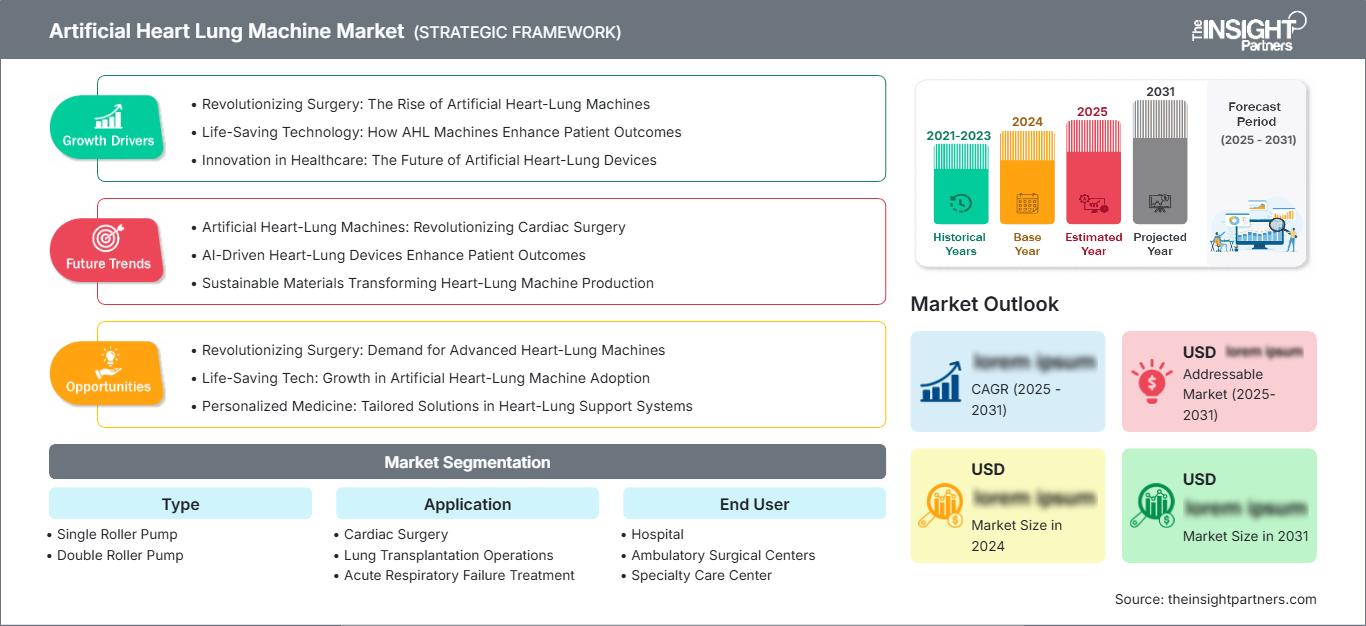
Artificial Heart Lung Machine Market: Strategic Insights
Regional Insights
North America artificial heart lung machine market
North America is estimated to represent 38–42% of the Artificial heart lung machine market share in 2025, with a 3.5–4.2% CAGR through 2034. The region benefits from concentrated cardiac surgery infrastructure, experienced perfusion professionals, and established procurement pathways. Replacement of aging consoles is an important source of demand because hospitals prioritize equipment reliability, service availability, and compatibility with existing perfusion consumables. The US accounts for the majority of regional activity.
However, Canada’s potential is realized through its tertiary cardiac centers and special surgery programs, even though the country has a small addressable equipment base. The procurement process now includes assessment of integration capabilities for monitoring and alarm systems, as well as cybersecurity, data collection, and interoperability with OR information systems. Hospitals in North America also enjoy good access to equipment financing and specialized maintenance. Such factors ensure that high-end systems remain in demand.
U.S. artificial heart lung machine Market
The United States accounts for 78-82% of North American revenues in 2025 and is projected to register a CAGR of 3.4-4.1% until 2034. There is extensive installed base of large cardiovascular centers, pediatric cardiology programs and transplantation hospitals. Major players such as Medtronic Inc., Terumo Corporation, Edwards Lifesciences and others have a good commercial footprint with respect to products, disposables and clinical services.
Applications have demand in cardiac surgery especially where traditional cardiopulmonary bypass techniques are employed. Hospitals evaluate system based on total cost of ownership, preventive maintenance, user training, system integration and supply of replacement parts. There are comparatively less applications in ambulatory settings owing to the complexity of perfusion procedures. The factors leading to product differentiation have more to do with system reliability, safety, monitoring and integration rather than mere pumping function itself.
Europe artificial heart lung machine market
In 2025, Europe is estimated to occupy a market share of 27–31%, expanding by a CAGR of 3.2–4.0% between 2024 and 2034, and Germany will be a market leader in the region. Cardiac surgery networks are currently present in the UK and Germany, with France, Italy, and Spain contributing through tertiary hospitals and regional centers for cardiovascular disease treatment. Safety, lifecycle cost, technical support, and regulatory compliance are major considerations in European purchasing.
Specialized cardiac centers in the NHS drive demand in the UK, with the evaluation of the integration of digital monitoring becoming an important criterion for purchasing. Germany capitalizes on its efficient hospital network and cardiovascular centers as well as on its expertise in the medical device industry. In addition, France, Italy, and Spain supply some demand through public and private cardiac centers; however, their purchasing differs based on their healthcare system.
APAC artificial heart lung machine market
APAC is estimated to account for 20–24% of global revenue in 2025 and record a 4.5–5.3% CAGR through 2034, making it the fastest-growing major region. China is the leading market, followed by Japan, South Korea, India, and Australia. Expanding cardiac-care capacity, increasing specialist training, and hospital modernization support equipment adoption.
China may have strong procedural capabilities along with domestic production capabilities, while Japan is interested in high-end cardiac care technologies. The growth opportunity exists in India and South Korea because of the availability of tertiary cardiac hospitals in these countries. Demand will remain high in Australia because of the presence of cardiac care centers in the region. Government health expenditure and local production will encourage adoption.
Middle East & Africa artificial heart lung machine Market
Middle East and Africa present themselves as a niche and emerging market, which is being spearheaded by Saudi Arabia and the UAE. The region is forecasted to exhibit growth of 3.8%–4.7% CAGR between 2024 and 2034 owing to hospital upgrades, specialized cardiovascular care facilities, and tertiary healthcare development initiatives.
Saudi Arabia is profiting from health system transformation programs, whereas the UAE will continue the establishment of its advanced private and public healthcare infrastructure. South Africa holds its position as the key sub-Saharan market due to its tertiary care hospitals. Other MEA demand is limited by uneven infrastructure and specialist availability; however, energy income and healthcare investments may allow selective purchase of the equipment.
Segmentation Analysis
Type
The Type segment in the Artificial heart lung machine market covers Single Roller Pump and Double Roller Pump configurations. The segment is expected to expand at a 3.3–4.1% CAGR from 2026–2034. Selection is influenced by established perfusion protocols, flow-control requirements, maintenance preferences, and compatibility with hospital equipment. Roller-based designs remain relevant because perfusion teams are familiar with their operating characteristics and hospitals often prioritize proven technologies for critical procedures.
- Single Roller Pump: Single roller configurations remain relevant where straightforward pumping architecture, predictable operation, and established clinical familiarity influence procurement. Their comparatively simple design can support maintenance efficiency and standardized perfusion workflows.
- Double Roller Pump: Double roller systems support configurations requiring multiple controlled pumping functions within a perfusion setup. Their strategic importance increases where hospitals seek flexible flow management across complex cardiopulmonary bypass procedures.
Application
Application is projected to grow at a 3.4–4.2% CAGR from 2026–2034, with Cardiac Surgery remaining dominant. Demand is determined by procedure volumes, complexity, transplant infrastructure, and availability of perfusion professionals. Lung transplantation and acute respiratory failure treatment represent narrower applications but provide opportunities for specialized extracorporeal support capabilities.
- Cardiac Surgery: Cardiac surgery represents the core application because cardiopulmonary bypass supports procedures requiring temporary mechanical circulation and gas exchange. Demand follows cardiac-center capacity, surgical volumes, and replacement of installed perfusion systems.
- Lung Transplantation Operations: Lung transplantation requires specialized extracorporeal support and coordinated multidisciplinary care. Growth depends on transplant-center development, donor availability, clinical expertise, and investment in advanced operating-room infrastructure.
- Acute Respiratory Failure Treatment: Acute respiratory failure treatment expands the addressable role of extracorporeal support beyond conventional surgery. Hospitals with advanced critical-care capabilities increasingly evaluate integrated systems for complex respiratory support pathways.
End User
The End User segment is expected to expand at a 3.2–4.0% CAGR from 2026–2034. Hospitals remain the principal buyers because complex cardiac procedures require specialized operating rooms, perfusion teams, intensive-care support, and equipment maintenance capabilities. Ambulatory Surgical Centers and Specialty Care Centers provide narrower opportunities where procedure complexity and infrastructure permit adoption.
- Hospital: Hospitals account for the largest demand base because they accommodate complex cardiac procedures, transplant programs, intensive care, and specialized perfusion services. Capital procurement typically includes equipment, service agreements, training, and compatible consumables.
- Ambulatory Surgical Centers: Ambulatory Surgical Centers represent a selective opportunity where cardiovascular procedure complexity, patient selection, and infrastructure allow extracorporeal technologies to be used safely. Adoption remains dependent on staffing and facility capabilities.
- Specialty Care Center: Specialty Care Centers can support targeted cardiac and extracorporeal procedures, particularly where dedicated teams and advanced clinical infrastructure are available. Their strategic role varies substantially by healthcare system and regional specialization.
Opportunity Snapshot
| End User | Revenue Contribution | Trend Tag | Adoption Stage |
|---|---|---|---|
| Hospital | High | CPB Modernization | Mature |
| Ambulatory Surgical Centers | Low | Selective Bypass | Emerging |
| Specialty Care Center | Medium | Specialist Perfusion | Scaling |
Artificial Heart Lung Machine Market Growth Drivers and Impact Analysis
Rising Cardiovascular Disease Treatment Requirements
The global cardiovascular disease burden continues to sustain demand for cardiac interventions requiring sophisticated extracorporeal circulation. For manufacturers, the commercial implication extends beyond new console purchases because growing procedure volumes generate associated demand for oxygenators, tubing, reservoirs, monitoring components, and technical services. Hospitals with expanding cardiac programs must also develop trained perfusion capacity, creating opportunities for integrated equipment and education packages. The market impact is strongest in countries where cardiovascular treatment infrastructure is expanding from major metropolitan centers toward regional hospitals. Suppliers that can combine reliable capital equipment with consumables and after-sales support are positioned to capture more value per installed system. This driver also supports replacement activity because higher utilization increases pressure on hospitals to maintain dependable backup capacity.
Hospital Modernization and Digital Perfusion Management
Hospital modernization is changing procurement criteria from basic mechanical performance toward integrated safety, monitoring, documentation, and connectivity. Newer perfusion systems can provide centralized displays, automated sensor checks, individual pump controls, and electronic recording of procedural parameters. These capabilities can improve workflow visibility and reduce reliance on manual transcription, particularly during complex procedures. For hospitals, the investment case increasingly includes operational standardization and information management rather than only equipment replacement. Manufacturers consequently have an incentive to develop modular platforms that connect with external operating-room devices and hospital information systems. The resulting demand supports premium positioning for systems that demonstrate practical workflow benefits, while established consoles without modern connectivity may experience longer replacement pressure. Digital architecture is therefore becoming a differentiating factor in capital-equipment decisions.
Expansion of Specialized Cardiac Infrastructure in Emerging Economies
Investment in tertiary hospitals across emerging economies is widening access to complex cardiac procedures and creating new requirements for perfusion infrastructure. China, India, Southeast Asia, and selected Middle Eastern countries are developing specialist centers capable of handling increasingly sophisticated cardiovascular interventions. New installations can be attractive because hospitals building cardiac programs often require complete ecosystems, including pumps, oxygenators, monitoring equipment, disposables, and technical training. Manufacturers can therefore compete through localized service organizations, distributor networks, training programs, and adaptable configurations rather than relying solely on equipment specifications. Domestic production can also improve affordability and shorten supply chains in price-sensitive markets. As specialist capacity moves beyond established metropolitan hospitals, suppliers with strong regional support and regulatory capabilities may gain access to previously underpenetrated cardiac-care institutions.
Artificial Heart Lung Machine Market Future Trends
Data-Connected Perfusion Platforms
artificial heart lung machine market trends are expected to increasingly center on connected perfusion platforms capable of capturing, organizing, and transferring procedural data. Future systems may combine pump controls, blood-gas measurements, pressure readings, temperature information, alarms, and patient-specific parameters through unified interfaces. This development can support more consistent documentation and enable retrospective review of perfusion performance. Manufacturers are likely to prioritize interoperability with hospital information systems and operating-room networks while strengthening cybersecurity controls. Data connectivity may also create opportunities for decision-support applications that identify abnormal parameters and prompt timely intervention. Over time, procurement teams could evaluate software functionality alongside mechanical reliability, shifting competitive differentiation toward integrated clinical workflows rather than standalone hardware specifications.
Greater Emphasis on Compact and Flexible Perfusion Architecture
Future product development is likely to favor compact architectures that improve visibility, accessibility, and operating-room utilization without compromising redundancy. Modular pump arrangements can allow hospitals to configure systems according to adult, pediatric, or procedure-specific requirements. Manufacturers may increasingly integrate cable management, movable displays, independent control modules, and simplified maintenance access. Such designs can be particularly relevant for hospitals operating within constrained surgical environments or upgrading existing rooms without extensive reconstruction. Flexibility can also reduce the operational burden associated with equipment relocation and service. As healthcare providers assess capital purchases through lifecycle economics, compact systems with modular replacement options may become more attractive than rigid platforms requiring extensive infrastructure changes. This trend should encourage suppliers to balance technological sophistication with practical usability.
Artificial Heart Lung Machine Market Opportunities
Localized Manufacturing and Regional Service Networks
artificial heart lung machine market Forecasts indicate meaningful opportunities for manufacturers that localize selected production, distribution, and service functions in high-growth healthcare economies. Local assembly or component sourcing can shorten lead times, improve responsiveness, and support competitive pricing where imported capital equipment carries significant logistical costs. Regional service centers can further strengthen customer retention by reducing equipment downtime and providing faster preventive maintenance. Companies entering emerging markets should consider partnerships with established medical-device distributors, cardiac hospitals, and perfusion-training institutions. Localization strategies can also improve understanding of national procurement requirements and reimbursement structures. The strongest opportunities are likely to emerge where cardiac-care capacity is expanding but specialized technical support remains limited. Strategic localization should therefore address the complete ownership lifecycle rather than focusing only on initial equipment sales.
Integrated Equipment and Consumables Strategies
Suppliers can increase commercial resilience by combining heart-lung machines with oxygenators, tubing packs, cannulae, reservoirs, blood-management products, monitoring systems, and service contracts. Such integrated strategies allow manufacturers to participate in recurring procedure-linked revenue rather than relying primarily on infrequent capital-equipment replacements. Hospitals may also prefer standardized consumable configurations when they simplify staff training, inventory management, and equipment compatibility. The artificial heart lung machine market Report therefore has strategic relevance for companies evaluating portfolio adjacency across cardiovascular and extracorporeal technologies. Vendors with established consumables portfolios can use installed equipment to deepen customer relationships, while specialist manufacturers can pursue partnerships to broaden offerings. Investment should prioritize validated interoperability, predictable supply, and clinical support because these factors can materially influence long-term hospital procurement decisions.
Recent Developments
- August 2025: LivaNova PLC launched the Essenz Perfusion System commercially in China following regulatory approval from the National Medical Products Administration. The company identified China as its second-largest heart-lung-machine market after the US and highlighted the system's patient-tailored perfusion approach, data-driven decision-making, and integrated monitoring capabilities. The launch expands availability of LivaNova's next-generation perfusion platform in a major cardiac-care market.
- 2025: Terumo Corporation continued to position its cardiovascular portfolio around cardiopulmonary bypass and extracorporeal life support technologies, including heart-lung machines, oxygenators, monitoring systems, and ECMO platforms. Its 2025 corporate materials describe these technologies as supporting cardiac surgery and emergency care, reinforcing the company's integrated approach across perfusion and extracorporeal circulation.
- 2025: Medtronic Inc. maintained its extracorporeal support portfolio, including the Quantum Perfusion System and associated centrifugal blood pumps, oxygenation systems, reservoirs, filters, tubing packs, cannulae, and hemoconcentrators. The portfolio demonstrates the company's strategy of supplying heart-lung equipment alongside the broader components required for cardiopulmonary bypass procedures.
Frequently Asked Questions

- Comprehensive Market Sizing and Forecast Analysis
- Detailed Segmentation Analysis
- In-Depth Market Dynamics Assessment
- Regional and Country-Level Insights
- Competitive Landscape and Company Benchmarking
- Strategic Business Intelligence
Recent Reports
Testimonials

The Insight Partners' SCADA System Market report is comprehensive, with valuable insights on current trends and future forecasts. The team was highly professional, responsive, and supportive throughout. We are very satisfied and highly recommend their services.
RAN KEDEM Partner, Reali Technologies LTDs
I requested a report on a very specific software market and the team produced the report in a few days. The information was very relevant and well presented. I then requested some changes and additions to the report. The team was again very responsive and I got the final report in less than a week.
JEAN-HERVE JENN Chairman, Future Analytica
We worked with The Insight Partners for an important market study and forecast. They gave us clear insights into opportunities and risks, which helped shape our plans. Their research was easy to use and based on solid data. It helped us make smart, confident decisions. We highly recommend them.
PIYUSH NAGPAL Sr. Vice President, High Beam Global
The Insight Partners delivered insightful, well-structured market research with strong domain expertise. Their team was professional and responsive throughout. The user-friendly website made accessing industry reports seamless. We highly recommend them for reliable, high-quality research services
YUKIHIKO ADACHI CEO, Deep Blue, LLC.
This is the first time I have purchased a market report from The Insight Partners.While I was unsure at first, I visited their web site and felt more comfortable to take the risk and purchase a market report.I am completely satisfied with the quality of the report and customer service. I had several questions and comments with the initial report, but after a couple of dialogs over email with their analyst I believe I have a report that I can use as input to our strategic planning process.Thank you so much for taking the extra time and making this a positive experience.I will definitely recommend your service to others and you will be my first call when we need further market data.
JOHN SUZUKI President and Chief Executive Officer, Board Director, BK Technologies
I wish to appreciate your support and the professionalism you displayed in the course of attending to my request for information regarding to infectious disease IVD market in Nigeria. I appreciate your patience, your guidance, and the fact that you were willing to offer a discount, which eventually made it possible for us to close a deal. I look forward to engaging The Insight Partners in the future, all thanks to the impression you have created in me as a result of this first encounter.
DR CHIJIOKE ONYIA MANAGING DIRECTOR, PineCrest Healthcare Ltd.Reason to Buy
- Informed Decision-Making
- Understanding Market Dynamics
- Competitive Analysis
- Identifying Emerging Markets
- Customer Insights
- Market Forecasts
- Risk Mitigation
- Boosting Operational Efficiency
- Strategic Planning
- Investment Justification
- Tracking Industry Innovations
- Aligning with Regulatory Trends





 Get Free Sample for