
Automotive Exhaust Aftertreatment Systems Market Size, Growth & Trends by 2034
Coverage: By Product (Three Way Catalytic Convertor, Diesel Particulate Filter (DPF), Diesel Oxidation Catalyst (DOC), Selective Catalytic Reduction (SCR), Gasoline Particulate Filter (GPF), Lean NOx Trap (LNT), Others); Vehicle (Passenger Car, Light Commercial Vehicle, Heavy Commercial Vehicle) , and Geography (North America, Europe, Asia Pacific, and South and Central America)
- Status : Data Released
- Report Code : TIPRE00021716
- Category : Automotive and Transportation
- No. of Pages : 150
- Available Report Formats :


- Last update date : August 19, 2026


2025 Market Size
US$ 64.41 Bn
Base year value
2034 Forecast
US$ 112.81 Bn
Projected by 2034
CAGR 2026-2034
6.43 %
Growth rate
Addressable Market
US$ 801.91 Bn
(2026-2034)
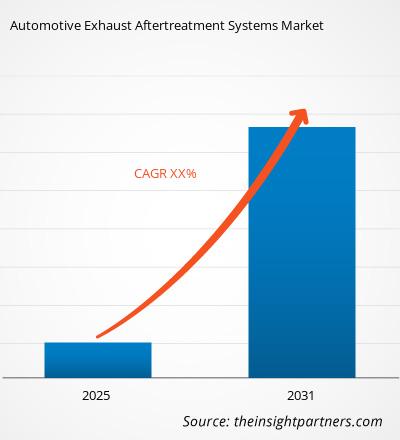
The Automotive Exhaust Aftertreatment Systems market was valued at US$ 64.41 billion in 2025 and is expected to reach US$ 112.81 billion by 2034; it is estimated to record a CAGR of 6.43% during 2026-2034.
Automotive Exhaust Aftertreatment Systems Market Assessment and Insights
- North America: Accounted for 29–33% share in 2025 and is projected to expand at a CAGR of 6.6–7.2% during 2026–2034. Strong emission regulations, high commercial vehicle production, and increasing retrofit activities continue to support regional demand.
- U.S.: Represented 76–80% of the North American market in 2025 and is expected to register a CAGR of 6.8–7.4% through 2034, supported by stringent EPA regulations and strong heavy-duty truck manufacturing.
- Europe: Held 26–30% market share in 2025 and is forecast to grow at a CAGR of 6.9–7.5%. Germany leads regional demand, followed by France, Italy, the United Kingdom, and Spain, owing to advanced automotive manufacturing and Euro emission standards.
- Asia Pacific: Captured 35–39% market share in 2025 and is anticipated to register the highest CAGR of 7.8–8.5% through 2034. China, Japan, India, and South Korea remain major manufacturing hubs supported by expanding vehicle production and tightening emission policies.
- Largest Segment: Selective Catalytic Reduction accounted for 29–33% market share in 2025 and is projected to expand at a CAGR of 7.8–8.4%, supported by increasing adoption in commercial diesel vehicles.
- High Growth Segment: Heavy Commercial Vehicle represented 25–29% market share in 2025 and is expected to register the highest CAGR of 8.0–8.7%, driven by tightening emission norms for heavy-duty transportation.
- Key companies analyzed in detail: Bosal Group, Cummins Inc., Donaldson Company, Inc., Eberspächer Group, Friedrich Boysen GmbH & Co. KG, Johnson Matthey Plc, Marelli Holdings Co., Ltd., Rheinmetall AG, Tenneco Inc., Wuxi Weifu International Trade Co., Ltd.
Source: The Insight Partners' analysis based on proprietary research, government publications, company annual reports, investor presentations, industry databases, and expert interviews.
Advanced catalyst formulations, integrated emission control modules, and digitally monitored exhaust systems continue transforming the automotive exhaust aftertreatment systems market. The use of diesel particulate filters, selective catalytic reduction systems, oxidation catalysts, and sensors is becoming more common through the creation of small packages that help reduce emissions more efficiently without making the installation process complex. Automation, new coatings, and improved substrates also make catalysts more durable and efficient in the vehicles where they are being used.
Industry growth in the future is expected to result from stricter environmental regulations, the upgrading of commercial vehicles, and the creation of hybrid internal combustion systems. Investments in local manufacturing, catalyst recycling technologies, and future monitoring systems should increase competitiveness and compliance with regulations within the automobile industry.
Automotive Exhaust Aftertreatment Systems Market Report Scope
| Report Attribute | Details |
|---|---|
| Market size in 2025 | US$ 64.41 Billion |
| Market Size by 2034 | US$ 112.81 Billion |
| Global CAGR (2026 - 2034) | 6.43% |
| Historical Data | 2021-2024 |
| Forecast period | 2026-2034 |
Automotive Exhaust Aftertreatment Systems Market Analysis
The growing implementation of stringent emission regulations continues driving the automotive exhaust aftertreatment systems market worldwide. Governments are progressively introducing tighter standards for NOx, particulate matter, hydrocarbons, and greenhouse gas emissions, compelling vehicle manufacturers to integrate advanced exhaust purification technologies into both gasoline and diesel vehicles. Contemporary aftertreatment systems make use of catalytic converters, diesel particulate filters, selective catalytic reduction units, as well as electronic monitoring devices in order to ensure increased efficiency of emission conversion. Moreover, progress in catalyst technology, substrate materials, and electronics enhances durability and decreases the cost of operation throughout the lifecycle of the system.
The automotive industry supply chain includes precious metal producers, ceramic substrate manufacturers, catalyst coating firms, system manufacturers, automotive Tier-1 manufacturers, Original Equipment Manufacturers (OEMs), and aftermarket services providers. Strategic metal procurement, local manufacturing, as well as digital quality management, continuously increase the efficiency of manufacturing processes and enhance the resiliency of the supply chain.
Comprehensive automotive exhaust aftertreatment systems market analysis indicates that technological innovation, regulatory compliance capability, manufacturing scale, and catalyst efficiency remain primary competitive differentiators. Companies increasingly invest in advanced catalyst formulations, lightweight housing materials, and integrated exhaust architectures capable of reducing emissions while maintaining fuel efficiency. These investments strengthen product portfolios across passenger vehicles, commercial transportation, construction equipment, and off-highway applications.
The major players in this market, such as Cummins Inc., Johnson Matthey Plc, Tenneco Inc., Eberspächer Group, Donaldson Company, Inc., Bosal Group, Friedrich Boysen GmbH & Co. KG, Marelli Holdings Co., Ltd., Rheinmetall AG, and Wuxi Weifu International Trade Co., Ltd. are still increasing their manufacturing capacity, innovating their catalyst technology and forming strong strategic alliances with the automobile manufacturers. According to the Automotive Exhaust Aftertreatment Systems Market report, all these endeavors by these companies are made in order to meet strict emission norms and satisfy the needs of global vehicle manufacturers.
● REPORT CUSTOMIZATION
Tailor This Report To Align With Your Specific Business Requirements
This report can be customized to align precisely with your business objectives, scope, and target markets. Customization options include tailored segmentation, geography, competitive analysis, and strategic insights to support informed decision-making.
Customize This Report →WHAT YOU CAN ADJUST
- ● Segmentations
- ● Geography
- ● Competitive Analysis
- ● Language Preferences
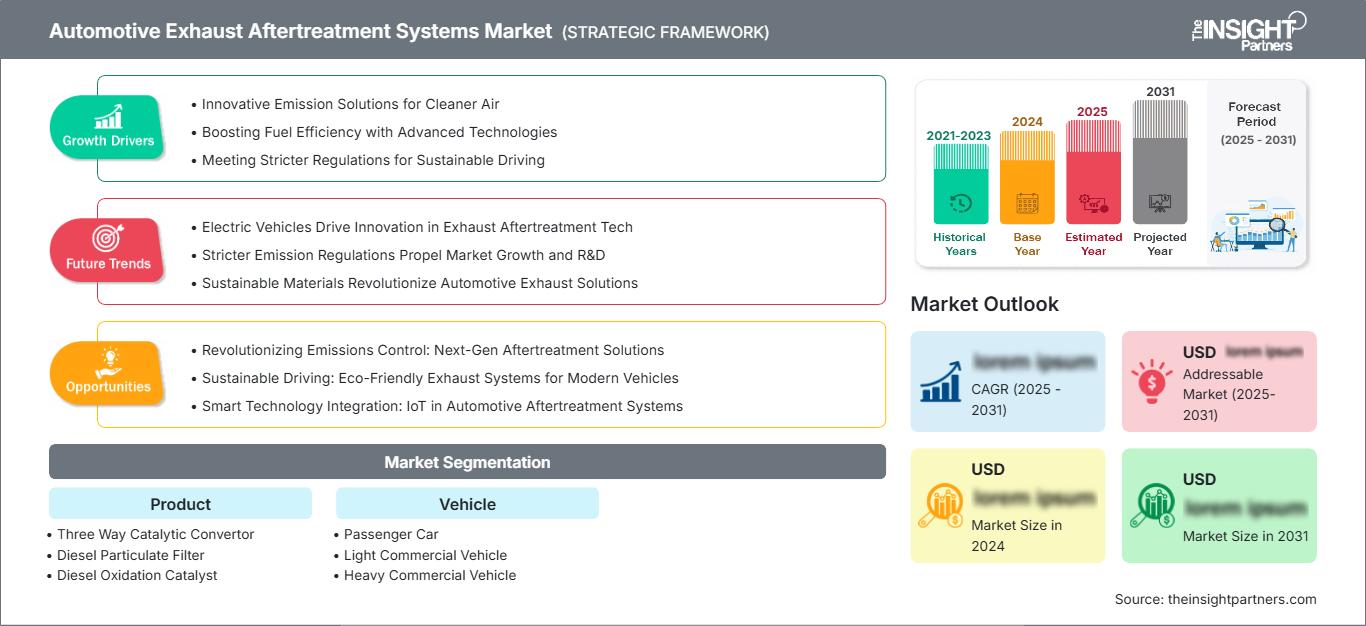
Automotive Exhaust Aftertreatment Systems Market: Strategic Insights
Regional Insights
North America Automotive Exhaust Aftertreatment Systems Market
North America accounted for 29–33% of the automotive exhaust aftertreatment systems market share in 2025 and is projected to expand at a CAGR of 6.6–7.2% during 2026–2034. The region benefits from stringent emission regulations issued by environmental authorities, high production of pickup trucks and heavy-duty commercial vehicles, and continuous investment in advanced diesel and gasoline engine technologies. Demand remains strong for selective catalytic reduction (SCR), diesel particulate filters (DPFs), and gasoline particulate filters (GPFs) as manufacturers seek compliance with increasingly rigorous emission standards.
Vehicle manufacturers and Tier-1 suppliers continue investing in catalyst optimization, lightweight exhaust assemblies, and electronically controlled emission systems to improve efficiency while reducing operating costs. Stable replacement demand from aging commercial vehicle fleets and increased adoption of integrated exhaust aftertreatment modules further support regional market expansion. Ongoing technological innovation and modernization of manufacturing facilities continue to strengthen North America's competitive position.
U.S. Automotive Exhaust Aftertreatment Systems Market
The U.S. represented 76–80% of the North American market in 2025 and is expected to register a CAGR of 6.8–7.4% throughout the forecast period. Strong heavy-duty truck production, strict Environmental Protection Agency emission standards, and continuous investment in commercial transportation infrastructure continue driving demand for advanced exhaust emission control technologies. Automotive Exhaust Aftertreatment Systems Market forecast projections indicate that growing adoption of integrated SCR and DPF systems will remain a key contributor to market expansion.
Leading global suppliers maintain advanced manufacturing, engineering, and testing facilities throughout the country to support OEM requirements. Increasing replacement demand, modernization of freight transportation fleets, and continued hybrid powertrain production further strengthen long-term demand for advanced exhaust aftertreatment technologies across both passenger and commercial vehicle applications.
Europe Automotive Exhaust Aftertreatment Systems Market
Europe held 26–30% market share in 2025 and is projected to expand at a CAGR of 6.9–7.5% during the forecast period. Automotive Exhaust Aftertreatment Systems Market trends in the region are led by Germany, supported by its extensive automotive manufacturing base, followed by the United Kingdom, France, Italy, and Spain. Stringent Euro emission regulations continue to encourage the widespread deployment of advanced catalyst systems, selective catalytic reduction technologies, and particulate filtration solutions across both passenger and commercial vehicles.
The United Kingdom continues investing in advanced automotive engineering and commercial vehicle manufacturing while supporting cleaner transportation technologies. Germany remains the leading regional producer because of its premium automotive manufacturers and advanced engine development capabilities. France, Italy, and Spain contribute significantly through established automotive supply chains, growing production of emission control systems, and continuous investments in environmentally compliant vehicle technologies.
APAC Automotive Exhaust Aftertreatment Systems Market
Asia Pacific accounted for 35–39% market share in 2025 and is forecast to register the fastest CAGR of 7.8–8.5% through 2034. China remains the largest regional market, while Japan, India, South Korea, and Australia continue expanding production through industrial modernization, localization strategies, and increasingly stringent vehicle emission regulations.
Growing automotive production, expanding commercial transportation networks, and government policies supporting cleaner vehicle technologies continue to strengthen regional demand. China dominates manufacturing capacity, while India demonstrates rapid growth supported by Bharat Stage VI emission standards and increasing domestic vehicle production.
Middle East & Africa Automotive Exhaust Aftertreatment Systems Market
The Middle East & Africa market is anticipated to expand at a CAGR of 5.8–6.4% during 2026–2034. Saudi Arabia continues promoting industrial diversification and automotive manufacturing initiatives, while the United Arab Emirates supports demand through commercial transportation expansion and vehicle imports. South Africa remains the region's largest automotive manufacturing hub.
Increasing infrastructure investments, fleet modernization programs, and gradual implementation of stricter vehicle emission standards are expected to support long-term adoption of advanced exhaust aftertreatment technologies. Although overall production volumes remain comparatively lower than those in developed markets, industrial development initiatives continue to create favorable growth opportunities.
Segmentation Analysis
Product
The Product segment is projected to expand at a CAGR of 7.5–8.1% during 2026–2034. The automotive exhaust aftertreatment systems market scope continues broadening as manufacturers integrate multiple emission reduction technologies into compact systems capable of meeting increasingly stringent global environmental regulations while maintaining engine performance and fuel efficiency.
- Three-way catalytic converter remains essential for gasoline-powered vehicles by simultaneously reducing carbon monoxide, hydrocarbons, and nitrogen oxide emissions while maintaining high conversion efficiency under varying engine operating conditions.
- Diesel Particulate Filter captures particulate matter generated by diesel combustion and plays a critical role in helping heavy-duty and light commercial vehicles comply with stringent particulate emission standards.
- Diesel Oxidation Catalyst supports oxidation of hydrocarbons and carbon monoxide while improving downstream particulate filter performance and overall exhaust treatment efficiency.
- Selective Catalytic Reduction represents the largest product segment owing to its superior nitrogen oxide reduction capability and widespread adoption across medium-duty and heavy-duty diesel vehicles.
- Gasoline Particulate Filter is increasingly adopted in gasoline direct injection engines to reduce particulate emissions while supporting compliance with evolving global emission regulations.
- Lean NOx Trap provides an effective emission control solution for selected lean-burn gasoline and diesel engines, particularly in smaller vehicle platforms where packaging efficiency is critical.
Vehicle
The Vehicle segment is projected to register a CAGR of 7.2–7.8% throughout the forecast period. Regulatory compliance, commercial transportation growth, and increasing production of cleaner internal combustion and hybrid vehicles continue driving demand across all vehicle categories.
- Passenger Car remains the largest vehicle category because of high global production volumes, widespread implementation of advanced emission regulations, and increasing adoption of gasoline particulate filters and catalytic converter technologies.
- Light Commercial Vehicle continues experiencing steady adoption as logistics, urban delivery, and fleet modernization activities increase demand for efficient emission control technologies.
- Heavy Commercial Vehicle is expected to record the fastest growth owing to extensive implementation of selective catalytic reduction systems, diesel particulate filters, and advanced electronic emission monitoring technologies across heavy-duty transportation fleets.
Opportunity Snapshot
| Vehicle | Revenue Contribution (High/Medium/Low) | Trend Tag | Adoption Stage |
| Passenger Car | High | Emission Compliance | Mature |
| Light Commercial Vehicle | Medium | Fleet Renewal | Scaling |
| Heavy Commercial Vehicle | Medium | Diesel Decarbonization | Scaling |
Automotive Exhaust Aftertreatment Systems Market Growth Drivers and Impact Analysis
Stringent Global Vehicle Emission Regulations Accelerate Technology Adoption
Emission standards for cars and trucks are getting stricter globally, which drives continuous needs for advanced exhaust gas after treatment technology in passenger vehicles and trucks. In Europe, the process of implementation of Euro 7 standard, China VI standards, Bharat Stage VI in India, and EPA standards in North America, vehicle producers will need to install sophisticated packages of selective catalytic reduction technology, diesel particulate filters, gasoline particulate filters, and diesel oxidation catalysts. Additionally, these regulations are going to motivate investment in catalysts, electronic, and thermal management technologies to ensure emission compliance under actual driving conditions. Due to the growth of heavy-duty transport fleets along with the movement of cargo in urban areas, there is an increasing number of emission control modules used by manufacturers that can reduce nitrogen oxides, particulate matter, carbon monoxide, and hydrocarbons emissions, and keep engines performing well.
Expansion of Commercial Vehicle Production Supports Component Demand
Increased activities related to industry, infrastructure, construction, mining, and growing logistics due to the growth of e-commerce lead to the growing production of commercial vehicles both in developed and developing countries. Medium- and heavy-duty trucks need highly reliable aftertreatment technologies that can operate in tough conditions and comply with increasingly stringent emission standards. In addition, customers seek highly fuel-efficient, compliant, and maintenance-friendly aftertreatment technologies, which is why integrated exhaust aftertreatment technology solutions are gaining popularity. At the same time, manufacturers are increasing their production capacities by building local manufacturing facilities, collaborating with suppliers, and implementing modular platforms to simplify the production process. Higher freight transportation volumes and aging commercial fleets make it a stable investment opportunity in the automotive exhaust aftertreatment systems value chain.
Advancements in Catalyst Materials Improve System Performance
Innovations in catalyst compositions, substrate compositions, sensors, and control systems are leading to more efficient conversions while simultaneously decreasing weight and packaging needs. Many producers use advanced precious metal optimization methods, cell-dense substrates, and intelligent monitors in order to have more efficient pollutant conversion processes at different engine loads and temperatures. Diagnostics and prediction abilities add to the increased reliability during the operation period. The result is an opportunity for car makers to meet ever-more stringent standards while not decreasing the performance of engines. Studies of less expensive catalyst materials and manufacturing methods are making the technology even cheaper to promote wider usage of the devices among passenger, light commercial, and heavy commercial vehicles.
Automotive Exhaust Aftertreatment Systems Market Future Trends
Integration of Intelligent Emission Monitoring and Connected Diagnostics
Automotive exhaust aftertreatment systems trends increasingly reflect the integration of intelligent sensors, onboard diagnostics, artificial intelligence-supported calibration, and cloud-based fleet monitoring solutions. Vehicle manufacturers are deploying connected emission control platforms capable of continuously monitoring catalyst efficiency, particulate filter loading, exhaust temperatures, and nitrogen oxide conversion performance under real driving conditions. Predictive diagnostics reduce unexpected maintenance while enabling fleet operators to optimize service schedules and regulatory compliance. As software-defined vehicle architectures become more common, aftertreatment control modules will communicate with engine management systems in real time, improving fuel efficiency, reducing emissions, and extending component lifespan across passenger cars and commercial vehicles operating in diverse environmental conditions.
Growing Adoption of Integrated Multi-Stage Emission Control Systems
Future product development is shifting toward compact, integrated aftertreatment assemblies combining diesel oxidation catalysts, diesel particulate filters, selective catalytic reduction units, gasoline particulate filters, and ammonia slip catalysts into modular platforms. This approach reduces installation complexity, lowers overall vehicle weight, and improves thermal efficiency while helping manufacturers satisfy increasingly stringent global emission regulations. Suppliers continue investing in advanced catalyst coatings, lightweight metallic substrates, and optimized packaging designs that fit modern engine compartments. Modular architectures also simplify manufacturing across multiple vehicle platforms, supporting economies of scale while enabling automotive manufacturers to accelerate deployment of cleaner internal combustion engine technologies in both mature and emerging automotive markets.
Automotive Exhaust Aftertreatment Systems Market Opportunities
Expansion Opportunities Across Emerging Commercial Vehicle Markets
Automotive exhaust aftertreatment systems Forecasts indicate significant investment opportunities across rapidly industrializing economies where commercial vehicle production continues expanding alongside infrastructure development, logistics modernization, mining, and construction activities. Countries throughout Asia Pacific, Latin America, the Middle East, and parts of Africa are progressively implementing stricter vehicle emission regulations that require advanced exhaust treatment technologies. Global suppliers can strengthen their regional presence through localized manufacturing, engineering partnerships, technology licensing, and strategic collaborations with domestic vehicle manufacturers. Increasing government support for cleaner transportation and rising replacement demand for aging commercial fleets create favorable conditions for long-term revenue generation while expanding supplier participation throughout regional automotive manufacturing ecosystems.
Advanced Catalyst Materials and Circular Manufacturing Initiatives
Growing emphasis on sustainability presents attractive opportunities for manufacturers investing in recyclable catalyst materials, precious metal recovery technologies, low-carbon manufacturing processes, and environmentally responsible supply chains. Innovations that reduce platinum group metal consumption while maintaining emission conversion efficiency can significantly improve competitiveness amid volatile raw material prices. Companies developing reusable catalyst substrates, closed-loop recycling systems, and digitally monitored lifecycle management solutions are positioned to benefit from evolving environmental policies and corporate sustainability objectives. Strategic investments in research, advanced materials engineering, and circular manufacturing practices can strengthen profitability while supporting long-term compliance with increasingly demanding environmental regulations across global automotive production networks.
Frequently Asked Questions

- Comprehensive Market Sizing and Forecast Analysis
- Detailed Segmentation Analysis
- In-Depth Market Dynamics Assessment
- Regional and Country-Level Insights
- Competitive Landscape and Company Benchmarking
- Strategic Business Intelligence
Recent Reports
Testimonials

The Insight Partners provided valuable market intelligence that supported our global go-to-market strategy. Their team was professional, responsive, and attentive to our feedback, providing thoughtful analysis and helpful methodological clarifications throughout the project.
Junmo Kim Chief Financial Officer (CFO), Enertech Co., Ltd.
The Insight Partners' SCADA System Market report is comprehensive, with valuable insights on current trends and future forecasts. The team was highly professional, responsive, and supportive throughout. We are very satisfied and highly recommend their services.
RAN KEDEM Partner, Reali Technologies LTDs
I requested a report on a very specific software market and the team produced the report in a few days. The information was very relevant and well presented. I then requested some changes and additions to the report. The team was again very responsive and I got the final report in less than a week.
JEAN-HERVE JENN Chairman, Future Analytica
We worked with The Insight Partners for an important market study and forecast. They gave us clear insights into opportunities and risks, which helped shape our plans. Their research was easy to use and based on solid data. It helped us make smart, confident decisions. We highly recommend them.
PIYUSH NAGPAL Sr. Vice President, High Beam Global
The Insight Partners delivered insightful, well-structured market research with strong domain expertise. Their team was professional and responsive throughout. The user-friendly website made accessing industry reports seamless. We highly recommend them for reliable, high-quality research services
YUKIHIKO ADACHI CEO, Deep Blue, LLC.
This is the first time I have purchased a market report from The Insight Partners.While I was unsure at first, I visited their web site and felt more comfortable to take the risk and purchase a market report.I am completely satisfied with the quality of the report and customer service. I had several questions and comments with the initial report, but after a couple of dialogs over email with their analyst I believe I have a report that I can use as input to our strategic planning process.Thank you so much for taking the extra time and making this a positive experience.I will definitely recommend your service to others and you will be my first call when we need further market data.
JOHN SUZUKI President and Chief Executive Officer, Board Director, BK Technologies
I wish to appreciate your support and the professionalism you displayed in the course of attending to my request for information regarding to infectious disease IVD market in Nigeria. I appreciate your patience, your guidance, and the fact that you were willing to offer a discount, which eventually made it possible for us to close a deal. I look forward to engaging The Insight Partners in the future, all thanks to the impression you have created in me as a result of this first encounter.
DR CHIJIOKE ONYIA MANAGING DIRECTOR, PineCrest Healthcare Ltd.Reason to Buy
- Informed Decision-Making
- Understanding Market Dynamics
- Competitive Analysis
- Identifying Emerging Markets
- Customer Insights
- Market Forecasts
- Risk Mitigation
- Boosting Operational Efficiency
- Strategic Planning
- Investment Justification
- Tracking Industry Innovations
- Aligning with Regulatory Trends





 Get Free Sample for