
Automotive Leasing Market Growth, Trends & Demand by 2034
Coverage: By Leasing Type (Open-end Lease, Closed-end Lease); Leasing Period (Short-term (12 Months), Long-term (more than 12 Months)); End-User (B2B, B2C) , and Geography (North America, Europe, Asia Pacific, and South and Central America)
- Status : Data Released
- Report Code : TIPRE00006622
- Category : Automotive and Transportation
- No. of Pages : 150
- Available Report Formats :


- Last update date : August 05, 2026


2025 Market Size
US$ 141.61 Bn
Base year value
2034 Forecast
US$ 309.52 Bn
Projected by 2034
CAGR 2026-2034
9.08 %
Growth rate
Addressable Market
US$ 2,018.09 Bn
(2026-2034)
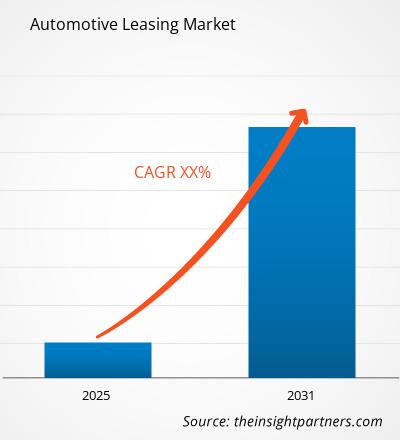
The automotive leasing market was valued at US$ 141.61 Billion in 2025 and is projected to reach US$ 309.52 Billion by 2034, expanding at a CAGR of 9.08% during 2026–2034. Rising consumer preference for flexible vehicle ownership, increasing fleet outsourcing by enterprises, and the growing availability of digital leasing platforms are reshaping mobility financing worldwide. The market continues to benefit from changing vehicle usage patterns and the transition toward subscription-based mobility solutions.
Driven by mature financing ecosystems and strong corporate fleet adoption, North America is expected to maintain a leading position throughout the forecast period. The automotive leasing market size across the region is supported by increasing electric vehicle leasing, strong credit availability, and widespread adoption of mobility-as-a-service solutions. Fleet replacement cycles and favorable tax structures continue encouraging both businesses and consumers to select leasing over outright vehicle ownership.
Automotive Leasing Market Assessment and Insights
- North America: Accounted for 34–38% share in 2025 and is anticipated to grow at a CAGR of 8.6–9.1% during 2026–2034, supported by established fleet management providers, high leasing penetration, and increasing EV adoption among commercial operators.
- U.S.: Represented 76–80% of North American revenue in 2025 and is projected to expand at a CAGR of 8.8–9.3%, driven by corporate fleet leasing, favorable financing conditions, and widespread digital leasing platforms.
- Europe: Held 29–33% share in 2025 and is expected to register a CAGR of 8.7–9.2%. Germany, France, the UK, Italy, and the Netherlands remain major contributors due to established leasing ecosystems and strong electric mobility initiatives.
- Asia Pacific: Accounted for 23–27% share in 2025 and is forecast to grow at a CAGR of 10.2–10.8%, led by China, Japan, India, South Korea, and Australia through expanding automotive financing infrastructure and increasing commercial fleet demand.
- Largest Segment: B2B dominated the market with 58–62% market share in 2025 and is projected to grow at a CAGR of 8.8–9.3%, supported by fleet outsourcing, operating lease adoption, and corporate mobility programs.
- High Growth Segment: Short-term Leasing accounted for 27–31% market share in 2025 and is projected to expand at a CAGR of 10.4–11.0%, driven by mobility subscriptions, tourism recovery, and flexible transportation requirements.
- Key companies analyzed in detail: ALD Automotive Pvt Ltd, Alphabet Inc., Arval BNP Paribas Group, Deutsche Leasing AG, Enterprise Holdings, Inc., ExpatRide International, General Motors Financial Company, Inc., LeasePlan Corporation N.V., Sixt Leasing SE, Wilmar, Inc.
Source: The Insight Partners' analysis based on proprietary research, government publications, company annual reports, investor presentations, industry databases, and expert interviews.
The automotive leasing industry has evolved from traditional financing arrangements into integrated mobility solutions that combine digital contracting, telematics, predictive fleet maintenance, and subscription-based ownership models. Increasing vehicle prices, stricter emission regulations, and rapid electrification have encouraged businesses and consumers to prioritize leasing for improved financial flexibility. Technology-enabled customer experiences and AI-driven residual value management are becoming central competitive differentiators across mature and emerging markets.
Future expansion will increasingly depend on electric vehicle leasing, connected fleet management, embedded insurance solutions, and digital customer onboarding. Rapid urbanization, supportive government policies promoting low-emission transportation, and investments in smart mobility infrastructure across Asia Pacific and Latin America are expected to create new growth avenues. Strategic collaborations between OEMs, financial institutions, and mobility service providers will continue reshaping the competitive landscape.
Automotive Leasing Market Report Scope
| Report Attribute | Details |
|---|---|
| Market size in 2025 | US$ 141.61 Billion |
| Market Size by 2034 | US$ 309.52 Billion |
| Global CAGR (2026 - 2034) | 9.08% |
| Historical Data | 2021-2024 |
| Forecast period | 2026-2034 |
Automotive Leasing Market Analysis
The automotive leasing market growth is being driven by rising vehicle acquisition costs, increasing corporate fleet outsourcing, and growing consumer demand for flexible mobility solutions. Leasing companies increasingly collaborate with vehicle manufacturers, insurance providers, maintenance service firms, and digital financing platforms to create integrated mobility ecosystems. Digital contract management, online approvals, and predictive vehicle maintenance are reducing operational costs while improving customer retention and fleet utilization. Increasing adoption of electric vehicles further supports leasing demand by reducing ownership risk associated with rapidly evolving battery technologies.
Vehicle supply chains have gradually stabilized following semiconductor shortages, enabling leasing providers to shorten delivery times and improve fleet renewal cycles. Higher residual value forecasting accuracy, supported by AI-driven analytics, has strengthened profitability across operating lease portfolios while improving financing flexibility for both commercial and retail customers.
The competitive environment of the automotive leasing market analysis continues evolving through consolidation, strategic partnerships, and digital transformation initiatives. Major participants including ALD Automotive Pvt Ltd, LeasePlan Corporation N.V., Arval BNP Paribas Group, Alphabet Inc., Enterprise Holdings, Inc., General Motors Financial Company, Inc., Deutsche Leasing AG, and Sixt Leasing SE continue investing in connected fleet services, electric vehicle leasing portfolios, and digital customer engagement platforms to strengthen long-term competitiveness.
Growing investments in mobility subscriptions, data-driven fleet optimization, and cross-border leasing solutions are reshaping strategic priorities across the industry. Providers are increasingly differentiating themselves through value-added services such as predictive maintenance, integrated insurance offerings, telematics-enabled fleet monitoring, and sustainability-focused mobility solutions, enabling higher customer retention while improving operational efficiency.
● REPORT CUSTOMIZATION
Tailor This Report To Align With Your Specific Business Requirements
This report can be customized to align precisely with your business objectives, scope, and target markets. Customization options include tailored segmentation, geography, competitive analysis, and strategic insights to support informed decision-making.
Customize This Report →WHAT YOU CAN ADJUST
- ● Segmentations
- ● Geography
- ● Competitive Analysis
- ● Language Preferences
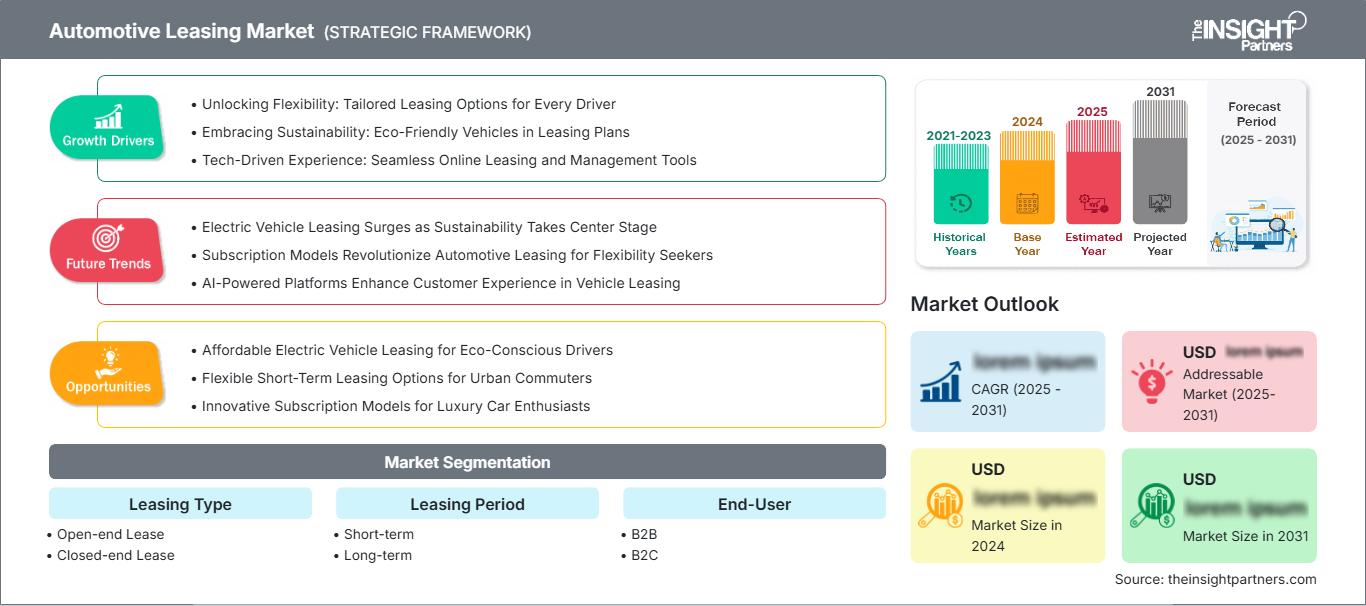
Automotive Leasing Market: Strategic Insights
Regional Insights
North America Automotive Leasing Market
North America accounted for 34–37% share of the global market in 2025 and is anticipated to register a CAGR of 8.5–9.0% during 2026–2034. The region benefits from mature automotive finance infrastructure, widespread fleet leasing adoption, strong corporate mobility demand, and high consumer awareness of leasing advantages. The automotive leasing market share remains significant because businesses increasingly prioritize operational flexibility while minimizing capital expenditure through structured leasing agreements.
Commercial fleet operators continue replacing aging vehicle fleets with connected, fuel-efficient, and electric models supported through leasing contracts. Government incentives supporting EV deployment, combined with sophisticated credit systems and well-developed used vehicle markets, improve residual value management and lower leasing risks. Digital contract processing and online vehicle selection platforms are also accelerating customer acquisition across both retail and corporate leasing segments.
U.S. Automotive Leasing Market
The United States represented approximately 80–83% of the North American market in 2025 and is projected to expand at a CAGR of 8.6–9.1% through 2034. High new vehicle leasing penetration, extensive corporate fleet ownership, and widespread adoption of electric vehicles continue supporting market expansion. Major automotive finance institutions and mobility providers actively invest in digital customer experiences and flexible leasing products.
Corporate fleet modernization remains a primary growth contributor, particularly across logistics, healthcare, technology, and professional services sectors. Subscription-style leasing, online approval systems, AI-supported credit assessment, and predictive maintenance services improve operational efficiency while increasing customer satisfaction. Increasing EV leasing volumes supported by federal and state incentives are expected to further strengthen long-term demand.
Europe Automotive Leasing Market
Europe captured approximately 29–32% of global revenue in 2025 and is forecast to expand at a CAGR of 8.8–9.3% during the forecast period. Stringent carbon emission regulations, advanced fleet management practices, and strong electric vehicle adoption continue supporting leasing demand across the region.
The United Kingdom maintains a highly developed corporate fleet leasing ecosystem supported by tax-efficient leasing policies and rapid electrification initiatives. Germany remains Europe's largest automotive manufacturing hub while demonstrating robust demand for business vehicle leasing among SMEs and multinational corporations.
France continues benefiting from strong presence of major leasing companies including Arval BNP Paribas Group, while Italy and Spain witness increasing adoption among SMEs, logistics providers, and mobility service operators. Digital fleet management platforms and favorable financing conditions continue improving leasing penetration throughout Southern Europe.
APAC Automotive Leasing Market
Asia Pacific accounted for approximately 23–26% of the global market in 2025 and is expected to register the fastest regional CAGR of 9.8–10.4% through 2034. China leads regional demand, followed by Japan, India, South Korea, and Australia. Rising vehicle ownership costs, expanding corporate mobility programs, growing ride-hailing fleets, and increasing electric vehicle adoption continue accelerating leasing penetration.
Government initiatives supporting EV deployment, digital finance ecosystems, and expanding logistics sectors strengthen leasing demand across emerging Asian economies. International leasing providers are increasingly partnering with regional financial institutions and OEMs to expand fleet financing capabilities and digital mobility solutions.
Middle East & Africa Automotive Leasing Market
The Middle East & Africa market is projected to grow at a CAGR of 8.1–8.6% during 2026–2034. Saudi Arabia remains the largest regional market, followed by the UAE and South Africa. Corporate fleet expansion, infrastructure investments, and diversification of non-oil industries continue encouraging vehicle leasing across commercial sectors.
Fleet outsourcing among construction companies, logistics providers, and government organizations continues increasing demand for flexible leasing solutions. Digital contract management, improved financing availability, and expanding automotive service networks are expected to strengthen long-term regional market development.
Segmentation Analysis
Leasing Type
Open-end and closed-end lease structures continue addressing diverse customer requirements across commercial fleets and retail consumers. The automotive leasing market scope continues expanding as flexible financing structures support changing mobility preferences, fleet optimization, and residual value management. This segment is expected to register a CAGR of 8.9–9.4% during the forecast period.
- Open-end Lease – Commonly adopted by commercial fleet operators requiring flexible mileage limits and residual value management. Businesses benefit from customized lease structures aligned with operational requirements and fleet replacement strategies.
- Closed-end Lease – Widely preferred by retail customers because monthly payments remain predictable while residual value risks remain with the leasing company, supporting greater affordability and financial planning.
Leasing Period
Organizations increasingly evaluate leasing duration based on fleet utilization, operational costs, maintenance requirements, and technology refresh cycles. This segment is anticipated to expand at a CAGR of 8.7–9.2% through 2034.
- Short-term – Increasingly utilized by project-based businesses, rental operators, seasonal logistics companies, and organizations seeking temporary fleet expansion with minimal long-term financial commitments.
- Long-term – Represents the dominant contractual model owing to lower monthly costs, improved asset planning, predictable maintenance schedules, and stronger residual value optimization for corporate fleet operators.
End-User
Growing fleet outsourcing, mobility-as-a-service adoption, and rising consumer preference for lower ownership costs continue driving leasing demand across both enterprise and individual customer segments. The end-user segment is forecast to register a CAGR of 9.3–9.8%, making it the fastest-growing segmentation category.
- B2B – Generates the largest revenue contribution through corporate fleets, logistics operators, government organizations, rental providers, and multinational enterprises seeking scalable fleet management solutions.
- B2C – Experiences accelerating adoption due to flexible payment options, increasing electric vehicle affordability, digital leasing platforms, and changing consumer attitudes toward vehicle ownership.
Opportunity Snapshot
| End User | Revenue Contribution | Trend Tag | Adoption Stage |
| B2B | High | Fleet Digitalization | Mature |
| B2C | Medium | EV Leasing | Scaling |
Automotive Leasing Market Growth Drivers and Impact Analysis
Expansion of Corporate Fleet Outsourcing
Firms involved in logistics, health care, the IT industry, retailing, manufacturing, and even public service firms are opting for leases rather than ownership to ensure capital efficiency and operational flexibility. Outsourcing fleet management saves the trouble of maintenance and assures fixed costs every month with faster turnover of the fleet. The growth in e-commerce and last-mile deliveries further intensifies the need for leased commercial fleet vehicles. The benefits of incorporating telematics systems, predictive maintenance, and fleet monitoring further enhance productivity and lower downtime for fleets. As firms become increasingly interested in maintaining an asset-light business model, corporate leasing will benefit from steady demand in both developed and developing markets.
Accelerating Electric Vehicle Adoption
The rapid transition toward electric mobility is creating substantial opportunities for vehicle leasing companies worldwide. Leasing reduces the initial costs of acquiring EVs while giving individuals and corporations the opportunity to benefit from new EV developments without the risk of owning such cars. Government incentives to purchase EVs, tax savings, the construction of charging stations, and emissions requirements encourage firms to replace their internal combustion vehicles with battery electric ones. Also, leasing firms support their customers by providing battery warranties, charging, maintenance, and upgrade possibilities.
Digitalization of Leasing Operations
The technologies that include cloud computing, artificial intelligence, digital identification, and automatic credit scoring are revolutionizing the entire process of car leasing in all markets around the world. Vehicle selection on the internet, electronic signing of documents, underwriting based on AI solutions, preventive maintenance, and fleet management through IoT technologies increase the quality of the customer experience and cut the cost of administration for leasing companies. Analytics allow them to enhance residual value prediction and pricing of the leases. Continued investment in digital infrastructure is expected to remain one of the strongest long-term competitive differentiators for market participants.
Automotive Leasing Market Future Trends
Expansion of Electric Mobility Ecosystems
Growing electrification is reshaping fleet management strategies worldwide. Automotive leasing market trends show that leasing firms are collaborating with Original Equipment Manufacturers, charging station providers, software developers, and energy providers in developing a comprehensive mobility ecosystem. Consumers are showing more interest in buying leasing packages that include all the above services, along with insurance and fleet analysis.
Subscription-Based Mobility Models
Automotive mobility continues evolving beyond conventional leasing contracts toward subscription-based services offering shorter commitments and enhanced flexibility. There is a greater appreciation for the benefits offered by subscription bundles that include maintenance, insurance, roadside assistance, and even vehicle replacement services. Technology platforms that facilitate smooth selection and monitoring of vehicles will further help in increasing the adoption of this business model.
Automotive Leasing Market Opportunities
Expansion into Emerging Mobility Markets
Urbanization, rise in discretionary income, increased digital banking options, and improvements in the automotive financing framework provide great opportunities in regions such as Asia-Pacific, Latin America, the Middle East, and Africa. Automotive leasing market Forecasts predicts that multinational leasing firms would gain much by forming partnerships with local banks, dealers, and fleets. This includes investing in digital solutions, innovative financing options, and even leasing electric vehicles. Early players in these regions should be able to secure a competitive advantage.
AI-Driven Fleet Management Solutions
There exist plenty of potential benefits for leasing companies from using artificial intelligence to boost efficiency and profit. AI-driven predictive maintenance, residual value prediction, intelligent routing, fraud detection, and dynamic pricing increase the efficiency of the fleet while cutting down the lifecycle costs. Connected vehicle data, together with advanced analytics, enable leasing companies to provide customized mobility services and recommendations on maintaining the vehicle. Companies that implement AI-based fleet ecosystem solutions are likely to benefit from improved customer retention, reduced cost of operations, and new sources of revenue.
Frequently Asked Questions

- Comprehensive Market Sizing and Forecast Analysis
- Detailed Segmentation Analysis
- In-Depth Market Dynamics Assessment
- Regional and Country-Level Insights
- Competitive Landscape and Company Benchmarking
- Strategic Business Intelligence
Recent Reports
Testimonials

The Insight Partners provided valuable market intelligence that supported our global go-to-market strategy. Their team was professional, responsive, and attentive to our feedback, providing thoughtful analysis and helpful methodological clarifications throughout the project.
Junmo Kim Chief Financial Officer (CFO), Enertech Co., Ltd.
The Insight Partners' SCADA System Market report is comprehensive, with valuable insights on current trends and future forecasts. The team was highly professional, responsive, and supportive throughout. We are very satisfied and highly recommend their services.
RAN KEDEM Partner, Reali Technologies LTDs
I requested a report on a very specific software market and the team produced the report in a few days. The information was very relevant and well presented. I then requested some changes and additions to the report. The team was again very responsive and I got the final report in less than a week.
JEAN-HERVE JENN Chairman, Future Analytica
We worked with The Insight Partners for an important market study and forecast. They gave us clear insights into opportunities and risks, which helped shape our plans. Their research was easy to use and based on solid data. It helped us make smart, confident decisions. We highly recommend them.
PIYUSH NAGPAL Sr. Vice President, High Beam Global
The Insight Partners delivered insightful, well-structured market research with strong domain expertise. Their team was professional and responsive throughout. The user-friendly website made accessing industry reports seamless. We highly recommend them for reliable, high-quality research services
YUKIHIKO ADACHI CEO, Deep Blue, LLC.
This is the first time I have purchased a market report from The Insight Partners.While I was unsure at first, I visited their web site and felt more comfortable to take the risk and purchase a market report.I am completely satisfied with the quality of the report and customer service. I had several questions and comments with the initial report, but after a couple of dialogs over email with their analyst I believe I have a report that I can use as input to our strategic planning process.Thank you so much for taking the extra time and making this a positive experience.I will definitely recommend your service to others and you will be my first call when we need further market data.
JOHN SUZUKI President and Chief Executive Officer, Board Director, BK Technologies
I wish to appreciate your support and the professionalism you displayed in the course of attending to my request for information regarding to infectious disease IVD market in Nigeria. I appreciate your patience, your guidance, and the fact that you were willing to offer a discount, which eventually made it possible for us to close a deal. I look forward to engaging The Insight Partners in the future, all thanks to the impression you have created in me as a result of this first encounter.
DR CHIJIOKE ONYIA MANAGING DIRECTOR, PineCrest Healthcare Ltd.Reason to Buy
- Informed Decision-Making
- Understanding Market Dynamics
- Competitive Analysis
- Identifying Emerging Markets
- Customer Insights
- Market Forecasts
- Risk Mitigation
- Boosting Operational Efficiency
- Strategic Planning
- Investment Justification
- Tracking Industry Innovations
- Aligning with Regulatory Trends





 Get Free Sample for