
Bio-Absorbable Bone Screw Market Size, Trends & Demand by 2034
Coverage: By Application (Orthopedic Surgeries, Spinal Surgeries, Extremities Surgeries, and Others); End User (Hospitals, Ambulatory Surgery Centers, and Others), and Geography (North America, Europe, Asia Pacific, and South and Central America)
- Status : Data Released
- Report Code : TIPRE00008546
- Category : Life Sciences
- No. of Pages : 150
- Available Report Formats :


- Last update date : November 05, 2026


2025 Market Size
US$ 204.99 Mn
Base year value
2034 Forecast
US$ 525.59 Mn
Projected by 2034
CAGR 2026-2034
11.03 %
Growth rate
Addressable Market
US$ 3,227.81 Mn
(2026-2034)
The bio-absorbable bone screw market was valued at US$ 204.99 Million in 2025 and is expected to reach US$ 525.59 Million by 2034, registering a CAGR of 11.03% during 2026–2034. Growth is supported by increasing orthopedic procedure volumes, wider preference for implants that avoid elective hardware-removal surgery, and continued advances in polymer and magnesium-based biomaterials. Greater clinical emphasis on patient recovery, postoperative imaging, and biologically compatible fixation is expanding the addressable application base.
Within North America, the bio-absorbable bone screw market size is expected to expand at approximately ~10% CAGR through 2034. Adoption is supported by established sports medicine and extremity surgery infrastructure, regulatory pathways for innovative absorbable devices, and growing outpatient orthopedic capacity. Product availability is also improving as manufacturers introduce headless, cannulated, and compression-oriented designs that align with familiar surgical techniques and address procedure-specific requirements.
Bio-Absorbable Bone Screw Market Assessment and Insights
Regional Outlook
- North America: ~39% of the global market in 2025 | ~10% CAGR through 2034. Market position: North America leads due to high orthopedic procedure intensity, developed reimbursement infrastructure, early uptake of advanced fixation materials, and strong access to sports medicine and extremity surgery specialists.
- US: ~86% of North American market revenue in 2025 | ~10% CAGR through 2034. Market position: The US anchors regional demand through its extensive hospital and ambulatory surgery network, active device innovation ecosystem, and increasing use of absorbable fixation in foot, ankle, hand, and sports-related procedures.
- Europe: ~29% of the global market in 2025 | ~10% CAGR through 2034. Market position: Europe represents a mature clinical market, supported by established biomaterial expertise and structured device evaluation. Germany leads within Europe, followed by the UK, France, Italy, and Spain.
- Asia Pacific: ~23% of the global market in 2025 | ~14% CAGR through 2034. Market position: Asia Pacific is the fastest-growing region as surgical access expands, local distribution improves, and hospitals adopt advanced fixation systems. China leads the region, while Japan, South Korea, India, and Australia support broader uptake.
Segment Outlook
- Application: ~69% Share in 2025 | ~11% CAGR through 2034. Market position: Application leads because purchasing and product selection are closely tied to operative indication, fixation loads, anatomical constraints, degradation behavior, and the surgeon’s preferred technique.
- End User: ~31% Share in 2025 | ~12% CAGR through 2034. Market position: Growth is driven by the movement of suitable orthopedic procedures into outpatient settings, standardized instrument sets, shorter recovery pathways, and greater attention to procedure-level cost efficiency.
Competitive Coverage
Smith & Nephew plc, Johnson & Johnson Services, Inc., Stryker Corporation, Zimmer Biomet Holdings, Inc., Tulpar Medical Solutions, Bioretec Ltd., Inion Oy, Teknimed, Biomatlante SA, Arthrex, Inc.
Methodology
The Insight Partners follows Data Collection & Secondary Research, Primary Research, Data Analysis, and Data Triangulation & Final Review to validate market estimates and insights.
Source: The Insight Partners' analysis based on proprietary research, government publications, company annual reports, investor presentations, industry databases, and expert interviews.
The technology has developed from an industry focused on screws made out of polymers to a much wider array of biomaterial technologies, including reinforced polymers, composites, and absorbable osteopromotive metals. This has required manufacturing processes to include control over molecular structures, degradation characteristics, sterilization, threading accuracy, and mechanical retention properties through the healing process. Manufacturers have also been improving the performance of cannulation, headless configurations, insertability, and compression characteristics in order to make absorbable systems compatible with existing surgical procedures rather than demanding alterations in surgeon techniques.
During 2034, use will continue to grow in Asia Pacific countries, selected Middle Eastern markets, and healthcare systems building up capacity for ambulatory orthopedics. Increasing investment will go into condition-specific clinical data, surgeon education programs, regional distribution networks, and reimbursement programs. The regulatory approval of innovative biomaterials may help advance the commercial success, but manufacturers will still have to prove that the absorption rate is predictable, that fixation is strong enough and clinical results are good. Firms bridging biomaterial science and instrumentation with economic evidence are well positioned.
Bio-Absorbable Bone Screw Market Report Scope
| Report Attribute | Details |
|---|---|
| Market size in 2025 | US$ 204.99 Million |
| Market Size by 2034 | US$ 525.59 Million |
| Global CAGR (2026 - 2034) | 11.03% |
| Historical Data | 2021-2024 |
| Forecast period | 2026-2034 |
Bio-Absorbable Bone Screw Market Analysis
The bio-absorbable bone screw market is driven by the economic and clinical costs of using permanent hardware, which may involve implant prominence, imaging problems, patient discomfort, and the necessity for removal. Demand starts from biomaterial science and component design and continues through high-quality manufacturing and sterilization processes to healthcare professionals via direct sales or distributors. Training surgeons is critical since drilling, tapping, insertion torque, and additional fixation could be important.
Supply side benefits manufacturers with capabilities to match the rates of degradation and healing and deliver reliable mechanical properties. Thus, purchasing goes beyond the cost per unit to such factors as variety of diameters and lengths, ease of instrumentation, clinical studies, FDA approval, distributor cooperation, and consistent supply. Devices made of magnesium materials have diversified the range of technologies used but reinforced polymer products are still in practice.
The bio-absorbable bone screw market reports on absorbable bone screws describe an industry that features diversified orthopedic firms and firms specializing in biomaterials. Smith & Nephew plc, Johnson & Johnson Services, Inc., Stryker Corporation, and Zimmer Biomet Holdings, Inc. benefit from established surgeon relationships and comprehensive portfolios of fixations. Bioretec Ltd. and Inion Oy leverage narrow specialization in absorbable products, while Teknimed, Biomatlante SA, Tulpar Medical Solutions, and Arthrex, Inc. bring in specific materials, distribution, or procedural solutions.
The trend is to invest in headless compression screw designs, absorption control, bioactive materials, clinical trials, regulatory submission processes, and market access strategies. The key to successful positioning is to demonstrate that an absorbable screw offers sufficient temporary stability without complicating the procedure. Partnering with surgeons, hospitals, distributors, and outpatient clinics could accelerate commercialization of such a product, especially along with the development of training, instruments, and reimbursement evidence.
● REPORT CUSTOMIZATION
Tailor This Report To Align With Your Specific Business Requirements
This report can be customized to align precisely with your business objectives, scope, and target markets. Customization options include tailored segmentation, geography, competitive analysis, and strategic insights to support informed decision-making.
Customize This Report →WHAT YOU CAN ADJUST
- ● Segmentations
- ● Geography
- ● Competitive Analysis
- ● Language Preferences
Bio-Absorbable Bone Screw Market: Strategic Insights
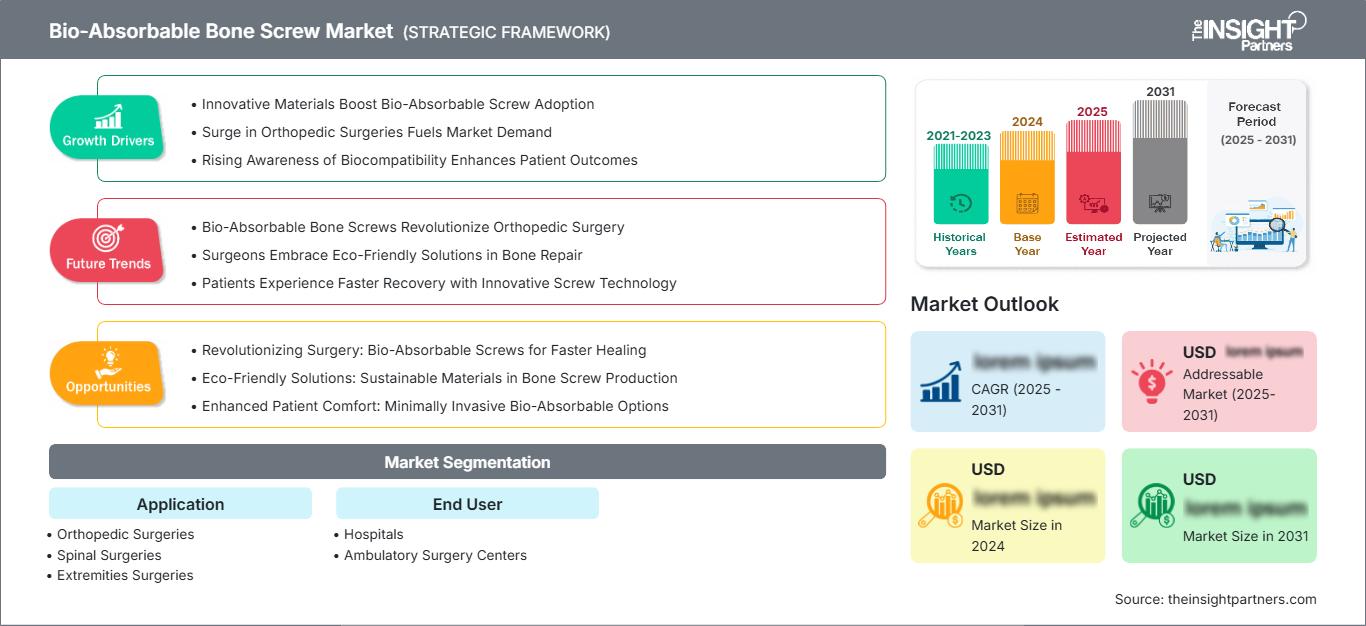
Regional Insights
North America bio-absorbable bone screw market
North America had a market share of ~39% of revenue in 2025 and is expected to see ~10% CAGR growth until 2034. Bio-absorbable bone screw market share in North America is attributed to the existing orthopedic infrastructure, high sports medicine activities, exposure of surgeons to advanced fixation systems, and channels of innovation introduction into medical device practice. Although hospitals continue to be important buyers, shift in surgery venues and cost structures has started impacting the dynamics.
Market extension will be based on successful education and demonstrating reliable fixation, degradation, and reduction in downstream costs compared to conventional implants. Canada's market is supported by the hospital organization and orthopedic centers, and Mexico provides opportunities related to investment in private healthcare services and medical device marketing. Indication-oriented evidence-based strategy coupled with good availability of instruments is expected to make suppliers more successful in the region.
U.S. bio-absorbable bone screw market
The US accounted for about ~86% of North America revenues in 2025 and is projected to experience growth at ~10% CAGR up to 2034. The regional dominance can be attributed to huge procedural volumes, well-developed practices in sports medicine, extensive usage of ASCs, and concentration of orthopedic manufacturers, distributors, regulators, payers, and surgeon training centers.
Application demand is especially important in extremity fixation, osteochondral procedures, fractures treatment, and some types of reconstruction surgeries, where lack of permanent prominence of implants can enhance the care process. Market presence of such players as Smith & Nephew plc, Johnson & Johnson Services, Inc., Stryker Corporation, Zimmer Biomet Holdings, Inc., Arthrex, Inc., Bioretec Ltd., and Inion Oy ensures awareness and competitive comparison. Nevertheless, the adoption is highly evidence-based, when the committee evaluates indication, performance, physician knowledge, coverage, and cost of procedure.
Europe bio-absorbable bone screw market
Europe accounted for ~29% of the global revenue in 2025 and is expected to witness ~10% CAGR during 2026–2034. It has well-developed expertise in orthopedic biomaterials, well-developed networks of clinical research and a healthcare system that considers both patient results and lifetime cost of treatment. The top country in Europe is Germany, with a robust orthopedic providers’ infrastructure, advanced engineering skills, and availability of innovative implants.
The UK has specialist orthopedic centers together with technology assessment, which creates opportunities for devices based on the economic and clinical evidence. In France, there is a demand through its hospital infrastructure, as well as focus on devices that are technically validated, while in Italy there is expertise in orthopedics and procedure volumes. Spain brings additional opportunities for absorbable fixation in the field of sports medicine and lower extremities surgery.
Country-specific procurement, reimbursement, language, and distributorship issues remain challenges even with increasing regulations harmonization for European suppliers. Bioretec Ltd., Inion Oy, Teknimed, and Biomatlante SA – some of the specialist companies – contribute to further strengthen the reputation of the region as an innovator in the area of materials. The increased adoption is expected as the data on efficacy of reinforced polymers and absorbable metal implants become available, but purchase committees will always scrutinize the issue of degradation, fixation, safety events tracking, learning needs, and cost.
APAC bio-absorbable bone screw market
Asia Pacific accounted for approximately ~23% of global bio-absorbable bone screw market share in 2025 and is projected to post the fastest regional CAGR of ~14% through 2034. China is the leading country in Asia Pacific due to its expanding hospital capacity, domestic device manufacturing, rising orthopedic workload, and improving distribution of advanced implants.
Japan brings to the table expertise in surgery along with stringent standards for quality, whereas South Korea provides medical device capability along with advanced orthopedics. India has a huge future potential because private hospitals and ambulatory centers are increasingly being set up outside of big urban areas. The clinical infrastructure present in Australia helps in adopting top-quality devices. Policy support in the region for local production, along with increasing surgeon training and insurance cover, would help adoption.
Middle East & Africa bio-absorbable bone screw market
The Middle East & Africa market is forecast to grow at approximately ~9% CAGR through 2034. Saudi Arabia is the leading country in the Middle East & Africa where hospital investment, specialist care expansion, and health-system modernization support advanced orthopedic procurement. The UAE contributes through premium hospitals and medical tourism, while South Africa represents an established clinical base within Sub-Saharan Africa.
However, opportunity in the Rest of MEA will be limited to urban referral hospitals due to large disparities in terms of price of goods, surgeon presence, and distributor reach. While investment in infrastructure and localization strategies could improve the availability of medical devices, the suppliers need to have a robust system for importing, training, and inventories. As against the energy-dependent industrial markets, demand is linked to healthcare capex.
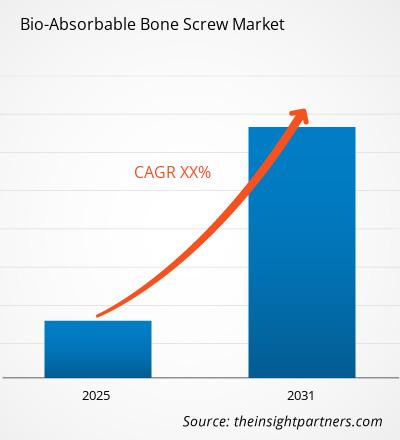
Segmentation Analysis
Application
Application is central to the bio-absorbable bone screw market scope because material strength, screw geometry, degradation rate, and instrumentation must correspond with anatomical and procedural requirements. Adoption is strongest where temporary fixation can support healing while reducing permanent-hardware concerns. Buyer evaluation emphasizes biomechanical evidence, available sizes, imaging compatibility, insertion reliability, and surgeon experience. Within this category, orthopedic surgeries are projected to expand at approximately ~11% CAGR during 2026–2034, supported by broader fixation use and continuing product refinement.
- Orthopedic Surgeries: These procedures represent the broadest demand base, encompassing fracture fixation, osteotomies, arthrodesis, and reconstructive interventions in which temporary stabilization and avoidance of planned implant removal can create clinical and economic value.
- Spinal Surgeries: Adoption remains selective because spinal fixation can require substantial long-term mechanical support. Opportunities are concentrated in specialized containment, graft-support, or adjunct applications where controlled absorption is compatible with fusion and load-sharing requirements.
- Extremities Surgeries: Foot, ankle, hand, and wrist procedures offer strong relevance because low-profile absorbable fixation can reduce hardware prominence, soft-tissue irritation, and later removal concerns in anatomically constrained areas.
End User
End User dynamics reflect differences in procedural complexity, purchasing governance, reimbursement, and postoperative pathways. Providers evaluate these screws against metallic alternatives using clinical outcomes, inventory breadth, instrumentation, training demands, and episode-of-care economics. Hospitals retain the principal institutional role, while outpatient facilities are gaining relevance for suitable extremity and sports medicine interventions. Ambulatory surgery centers are expected to record approximately ~13% CAGR through 2034 as minimally invasive workflows and standardized fixation systems support migration beyond inpatient settings.
- Hospitals: Hospitals manage complex trauma, spinal, reconstructive, and multidisciplinary orthopedic cases. Their purchasing decisions typically require clinical committee review, regulatory documentation, dependable supply, technical support, and evidence of performance across varied patient profiles.
- Ambulatory Surgery Centers: These facilities prioritize predictable procedure times, compact instrument sets, efficient turnover, and lower follow-up burden. Absorbable screws can fit outpatient economics when indications are appropriate, and surgeon training is established.
Opportunity Snapshot
| Application | Revenue Contribution | Trend Tag | Adoption Stage |
| Orthopedic Surgeries | High | Temporary Fixation | Mature |
| Spinal Surgeries | Low | Selective Fusion | Emerging |
| Extremities Surgeries | Medium | Low Profile | Scaling |
Bio-Absorbable Bone Screw Market Growth Drivers and Impact Analysis
Reducing the Clinical and Economic Burden of Hardware Removal
Permanent fixation can create additional clinical intervention when implants become prominent, painful, or otherwise unsuitable for long-term retention. Bio-absorbable screws address this issue by providing temporary mechanical support and gradually degrading after their functional role concludes. The effect is particularly meaningful in extremity and pediatric-oriented care pathways, where hardware removal can expose patients to another procedure, anesthesia, facility use, and recovery period. For providers, the value proposition extends beyond the implant price to operating-room capacity, follow-up requirements, and potential complication avoidance. Adoption will be strongest where manufacturers demonstrate that degradation is predictable, fixation remains adequate during healing, and the reduction in downstream resource use offsets acquisition costs.
Expanding Sports Medicine and Extremity Procedure Demand
Sports injuries, active lifestyles, and improved access to specialist orthopedic care are increasing demand for fixation products designed for anatomically constrained procedures. Foot, ankle, hand, wrist, and osteochondral interventions often require low-profile implants that minimize soft-tissue irritation and preserve postoperative imaging clarity. Bio-absorbable screws can meet these needs through headless, cannulated, and compression-oriented configurations. Their market impact depends on breadth of size, ease of insertion, compatibility with minimally invasive workflows, and surgeon confidence in mechanical retention. Greater availability of dedicated instrument sets and procedure-focused training should increase utilization, particularly where absorbable fixation can be integrated into established techniques without extending operating time or requiring unfamiliar postoperative management.
Advances in Polymers, Composites, and Absorbable Metals
Materials innovation is improving the balance among insertion strength, fixation stability, biocompatibility, and resorption. Reinforced polymers offer established manufacturing experience and adjustable degradation characteristics, while absorbable magnesium alloys introduce metal-like handling and potential osteopromotive properties. Composite systems may further improve mechanical or biological performance by combining structural polymers with bioactive components. These advances widen the range of indications that manufacturers can target and create differentiation beyond screw dimensions. Commercial impact will depend on reproducible production, sterilization stability, shelf life, clinical evidence, and regulatory acceptance. Suppliers that align material behavior with defined healing timelines can address surgeon concerns about early strength loss, inflammatory response, and unpredictable degradation.
Bio-Absorbable Bone Screw Market Future Trends
Shift Toward Bioactive and Healing-Oriented Fixation Platforms
The bio-absorbable bone screw market trends indicate movement from passive resorption toward implants designed to interact more constructively with the healing environment. Future systems are likely to emphasize osteopromotive alloys, bioactive composites, optimized surface characteristics, and degradation products that support rather than disrupt tissue recovery. Development programs will increasingly connect mechanical testing with biological response and longitudinal imaging. This approach could reposition the screw from a temporary structural component to an integrated healing platform. Regulatory scrutiny will remain substantial because bioactivity introduces additional performance claims and evidence requirements. Companies that establish clear relationships among material composition, strength retention, absorption, and bone remodeling should gain more credible differentiation.
Procedure-Specific Design and Data-Guided Adoption
Product portfolios will become more anatomically and procedurally specialized through variable thread geometry, headless compression, cannulation, tailored absorption periods, and size combinations designed for particular bones or fixation loads. Digital surgical planning and postoperative outcome tracking may help providers identify where absorbable screws deliver the strongest clinical and economic value. Rather than replacing metallic screws universally, adoption will increasingly follow indication-specific protocols based on patient characteristics, healing requirements, and revision risk. This trend should favor manufacturers that provide education, instrumentation, clinical datasets, and standardized selection guidance alongside the implant. Better real-world evidence may also facilitate reimbursement discussions and strengthen hospital committee decisions through measurable episode-of-care outcomes.
Bio-Absorbable Bone Screw Market Opportunities
Outpatient Orthopedic Fixation and Ambulatory Partnerships
Ambulatory surgery centers offer a focused route for manufacturers seeking repeatable procedure volumes and faster product evaluation. The bio-absorbable bone screw market Forecasts point to opportunity in suitable foot, ankle, hand, wrist, and sports medicine procedures where patients can be discharged without inpatient care. Suppliers can invest in compact instrument systems, consignment inventory, clear procedural training, and economic tools that compare total treatment costs with permanent fixation. Partnerships with high-volume surgeons and center networks could generate standardized protocols and real-world outcome evidence. Commercial success will require dependable product availability and minimal workflow disruption because outpatient facilities operate under strict scheduling, staffing, and cost controls.
Localized Distribution and Clinical Education in Emerging Markets
Expansion across Asia Pacific, the Middle East, and selected Latin American markets creates an opportunity for companies to build regional distribution before absorbable fixation becomes widely standardized. Investment priorities include regulatory expertise, surgeon laboratories, multilingual training, local inventory, and partnerships with tertiary hospitals. Premium products may initially gain acceptance in private facilities and specialist centers before broader diffusion. Manufacturers should avoid treating emerging markets as uniform, since reimbursement, import rules, surgical practice, and purchasing authority differ by country. A staged approach focused on high-value indications, clinical champions, and distributor accountability can reduce commercialization risk while building the evidence and service infrastructure required for sustained adoption.
Recent Developments
- September 2026: Bioretec Ltd. received US FDA 510(k) clearance for the ActivaScrew Cannulated COM bioabsorbable compression screw. The clearance covers fixation of bone and osteochondral fractures, osteotomies, arthrodeses, and bone grafts in specified upper- and lower-extremity applications. Its headless design is intended to sit flush with bone and reduce soft-tissue irritation.
- August 2026: Inion Oy introduced a threaded K-wire to its CompressOn instrumentation family. The instrument was designed to improve control during guide-wire placement for procedures using the company’s headless bioabsorbable compression screw. The development illustrates how suppliers are strengthening complete procedural systems, rather than competing only through implant composition or screw geometry.
- February 2026: Arthrex, Inc. released the TightRope SB all-suture implant for anterior cruciate ligament fixation. Although the system represents an all-suture rather than screw-based approach, its introduction is relevant to the competitive environment because alternative fixation technologies can influence demand for interference screws in sports medicine and encourage continued material and workflow innovation.
Frequently Asked Questions

- Comprehensive Market Sizing and Forecast Analysis
- Detailed Segmentation Analysis
- In-Depth Market Dynamics Assessment
- Regional and Country-Level Insights
- Competitive Landscape and Company Benchmarking
- Strategic Business Intelligence
Recent Reports
Testimonials

The Insight Partners provided valuable market intelligence that supported our global go-to-market strategy. Their team was professional, responsive, and attentive to our feedback, providing thoughtful analysis and helpful methodological clarifications throughout the project.
Junmo Kim Chief Financial Officer (CFO), Enertech Co., Ltd.
The Insight Partners' SCADA System Market report is comprehensive, with valuable insights on current trends and future forecasts. The team was highly professional, responsive, and supportive throughout. We are very satisfied and highly recommend their services.
RAN KEDEM Partner, Reali Technologies LTDs
I requested a report on a very specific software market and the team produced the report in a few days. The information was very relevant and well presented. I then requested some changes and additions to the report. The team was again very responsive and I got the final report in less than a week.
JEAN-HERVE JENN Chairman, Future Analytica
We worked with The Insight Partners for an important market study and forecast. They gave us clear insights into opportunities and risks, which helped shape our plans. Their research was easy to use and based on solid data. It helped us make smart, confident decisions. We highly recommend them.
PIYUSH NAGPAL Sr. Vice President, High Beam Global
The Insight Partners delivered insightful, well-structured market research with strong domain expertise. Their team was professional and responsive throughout. The user-friendly website made accessing industry reports seamless. We highly recommend them for reliable, high-quality research services
YUKIHIKO ADACHI CEO, Deep Blue, LLC.
This is the first time I have purchased a market report from The Insight Partners.While I was unsure at first, I visited their web site and felt more comfortable to take the risk and purchase a market report.I am completely satisfied with the quality of the report and customer service. I had several questions and comments with the initial report, but after a couple of dialogs over email with their analyst I believe I have a report that I can use as input to our strategic planning process.Thank you so much for taking the extra time and making this a positive experience.I will definitely recommend your service to others and you will be my first call when we need further market data.
JOHN SUZUKI President and Chief Executive Officer, Board Director, BK Technologies
I wish to appreciate your support and the professionalism you displayed in the course of attending to my request for information regarding to infectious disease IVD market in Nigeria. I appreciate your patience, your guidance, and the fact that you were willing to offer a discount, which eventually made it possible for us to close a deal. I look forward to engaging The Insight Partners in the future, all thanks to the impression you have created in me as a result of this first encounter.
DR CHIJIOKE ONYIA MANAGING DIRECTOR, PineCrest Healthcare Ltd.Reason to Buy
- Informed Decision-Making
- Understanding Market Dynamics
- Competitive Analysis
- Identifying Emerging Markets
- Customer Insights
- Market Forecasts
- Risk Mitigation
- Boosting Operational Efficiency
- Strategic Planning
- Investment Justification
- Tracking Industry Innovations
- Aligning with Regulatory Trends





 Get Free Sample for