
Black Masterbatches Market Demand, Size & Forecast by 2034
Coverage: By Carrier Resin (Polypropylene (PP), Linear Low-Density Polyethylene (LLDPE), Low-Density Polyethylene (LDPE), High-Density Polyethylene (HDPE), Polyethylene Terephthalate (PET), Polyvinyl Chloride (PVC), Polystyrene (PS), and Polyamide (PA)), By End-User (Automotive, Building and Construction, Packaging, Electrical and Electronics, Pharmaceuticals, Agriculture, Others), By Type (Standard Black Masterbatch, High Jetness Black Masterbatch, UV-Resistant Black Masterbatch, Conductive Black Masterbatch, and Recycled Polymer Compatible Black Masterbatch), and Geography
- Status : Data Released
- Report Code : TIPRE00026876
- Category : Chemicals and Materials
- No. of Pages : 150
- Available Report Formats :


- Last update date : November 05, 2026


2025 Market Size
US$ 2.97 Bn
Base year value
2034 Forecast
US$ 4.44 Bn
Projected by 2034
CAGR 2026-2034
4.56 %
Growth rate
Addressable Market
US$ 33.63 Bn
(2026-2034)
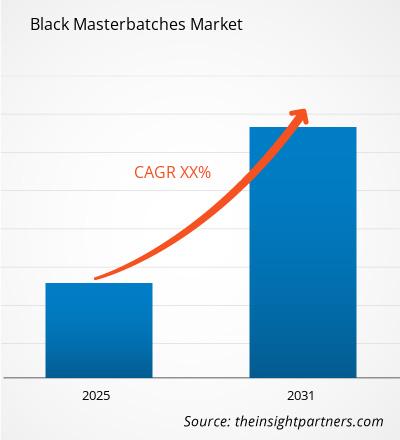
The Black Masterbatches Market size was valued at US$ 2.97 Billion in 2025 and is projected to reach US$ 4.44 Billion by 2034, registering a CAGR of 4.56% from 2026 to 2034. The market covers concentrated carbon black formulations dispersed in polymer carrier resins for coloring and functional enhancement of plastics. Demand spans automotive, packaging, construction, electrical and electronics, pharmaceutical, and agricultural applications, with formulation requirements increasingly shaped by dispersion quality, weather resistance, conductivity, recyclability, and polymer compatibility.
North America is expected to register a ~4% CAGR through 2034, supported by established plastics processing capacity and continued demand for engineered polymer components. Automotive applications require consistent pigmentation and weathering performance, while packaging converters increasingly evaluate recyclable black formulations that maintain optical properties without interfering with automated sorting. The region's mature processing base supports replacement and specification-driven demand alongside incremental adoption of higher-functionality grades.
Black Masterbatches Market Assessment and Insights
Regional Outlook
- North America: ~30% of the global Black Masterbatches Market share in 2025 | ~4% CAGR through 2034. Market position: North America holds a substantial mature-market position supported by automotive manufacturing, packaging conversion, electrical applications, established polymer processing infrastructure, and demand for consistent high-performance formulations.
- US: ~80% of North American market revenue in 2025 | ~4% CAGR through 2034. Market position: The US accounts for most North American demand, supported by automotive components, flexible and rigid packaging, construction products, electrical applications, and continued formulation development around recycled and functional polymers.
- Europe: ~25% of the global market in 2025 | ~4% CAGR through 2034. Market position: Europe represents a mature processing base, with Germany the leading country in Europe, followed by established demand in the UK, France, Italy, and Spain across automotive, packaging, construction, and recycling-oriented applications.
- Asia Pacific: ~35% of the global market in 2025 | ~6% CAGR through 2034. Market position: Asia Pacific is the largest and fastest-growing regional market, supported by plastics processing concentration, packaging production, automotive manufacturing, agricultural films, and capacity expansion across China, India, Japan, and South Korea.
Segment Outlook
- Packaging: ~34% Share in 2025 | ~5% CAGR through 2034. Market position: Packaging leads end-user demand because black formulations provide opacity, visual consistency, UV protection, and functional performance across films, containers, closures, trays, and industrial packaging, while recyclable grades address increasing sorting and circularity requirements.
- Recycled Polymer Compatible Black Masterbatch: ~7% Share in 2025 | ~7% CAGR through 2034. Market position: This type has the strongest growth outlook as converters increase recycled polymer usage and seek color systems compatible with variable recycled feedstocks, traceability requirements, recyclability targets, and lower-carbon material strategies.
Competitive Coverage
LyondellBasell Industries Holdings B.V., Avient Corporation, Ampacet Corporation, Cabot Corporation, PLASTIKA KRITIS S.A., Hubron International Ltd., Tosaf Compounds Ltd., Penn Color, Inc., Plastiblends India Limited, Clariant AG
Methodology
The Insight Partners follows Data Collection & Secondary Research, Primary Research, Data Analysis, and Data Triangulation & Final Review to validate market estimates and insights.
Source: The Insight Partners' analysis based on proprietary research, government publications, company annual reports, investor presentations, industry databases, and expert interviews.
The development in production technologies includes moving from simple pigments to more complex engineered formulations, in which the dispersion of carbon black is combined with polymer-specific requirements. High jetness formulations aim at achieving the deep optical appearance, while UV resistant formulations are developed for outdoor use, and conductive formulations are used to meet the requirements related to electricity and static control. Consistency in the process has gained much significance since poor dispersion of carbon black may influence appearance of the surface, mechanical properties, and extrusion or molding process.
Future trends will include increasing favor towards the regions that have an expansion in the processing capacity of polymers and increased investment in packaging, automotive, agriculture and infrastructure. Asia Pacific is expected to capitalize on the advantage of localization as well as continuing activities related to plastic conversion. Europe will be driven by circularity and recycling considerations, while processors in North America will increasingly look for formulations that facilitate use of recycled material but do not harm appearance and processing.
Black Masterbatches Market Report Scope
| Report Attribute | Details |
|---|---|
| Market size in 2025 | US$ 2.97 Billion |
| Market Size by 2034 | US$ 4.44 Billion |
| Global CAGR (2026 - 2034) | 4.56% |
| Historical Data | 2021-2024 |
| Forecast period | 2026-2034 |
Black Masterbatches Market Analysis
The Black Masterbatches market is strongly tied to the volume of polymer conversions and not just pigment usage. The value chain starts from carbon black procurement and carrier resin procurement, then moves to formulation, dispersion, pelletizing, testing, and delivery to converters. Demand is localized to areas of plastic film manufacture, molding, pipe making, cables, packaging, and automotive products. Formulators compete on their dispersion, let-down efficiencies, heat resistance, ultraviolet stability, and compatibility with process conditions.
The supply chain involves consistent access to carbon black types, carrier resins, additives, compounding technology, and the ability to test applications. Dispersion of carbon black still stands out as an area of technological control because poor dispersion can cause streaking, surface defects, or uneven coloration. Manufacturers that have several carrier systems can formulate for different polymer systems, such as polyethylene, polypropylene, PET, PVC, polystyrene, and polyamides. Regional manufacturing also reduces the risks of logistics issues and helps producers to tailor their formulas to local resins.
The Black Masterbatches market is experiencing a highly competitive environment among global formulators and specialized regional producers. Avient, Ampacet, Cabot, Clariant, LyondellBasell, and Tosaf are companies that offer extensive applications capabilities along with worldwide manufacturing or technical networks. Companies such as Plastiblends, Hubron, Penn Color, and PLASTIKA KRITIS increase the level of competitiveness due to specialized grades, polymer-specific formulations, technical services, and regional manufacturing capabilities. The competitive differentiation factor relies heavily on dispersibility, technical services, sustainability, and converter specifications.
The Black Masterbatches Market forecast shows that investment focus for the industry is shifting towards production localization, specialized formulation capabilities, and compatibility with recycled materials. An example of a production localization strategy is the launch of a Polish facility by Tosaf. Another example is the expanded distribution agreement by LyondellBasell in Germany and Austria, which aims to ensure localized production and technical services. Cabot circular black masterbatch offering serves as an example of recycling feedstock usage.
● REPORT CUSTOMIZATION
Tailor This Report To Align With Your Specific Business Requirements
This report can be customized to align precisely with your business objectives, scope, and target markets. Customization options include tailored segmentation, geography, competitive analysis, and strategic insights to support informed decision-making.
Customize This Report →WHAT YOU CAN ADJUST
- ● Segmentations
- ● Geography
- ● Competitive Analysis
- ● Language Preferences
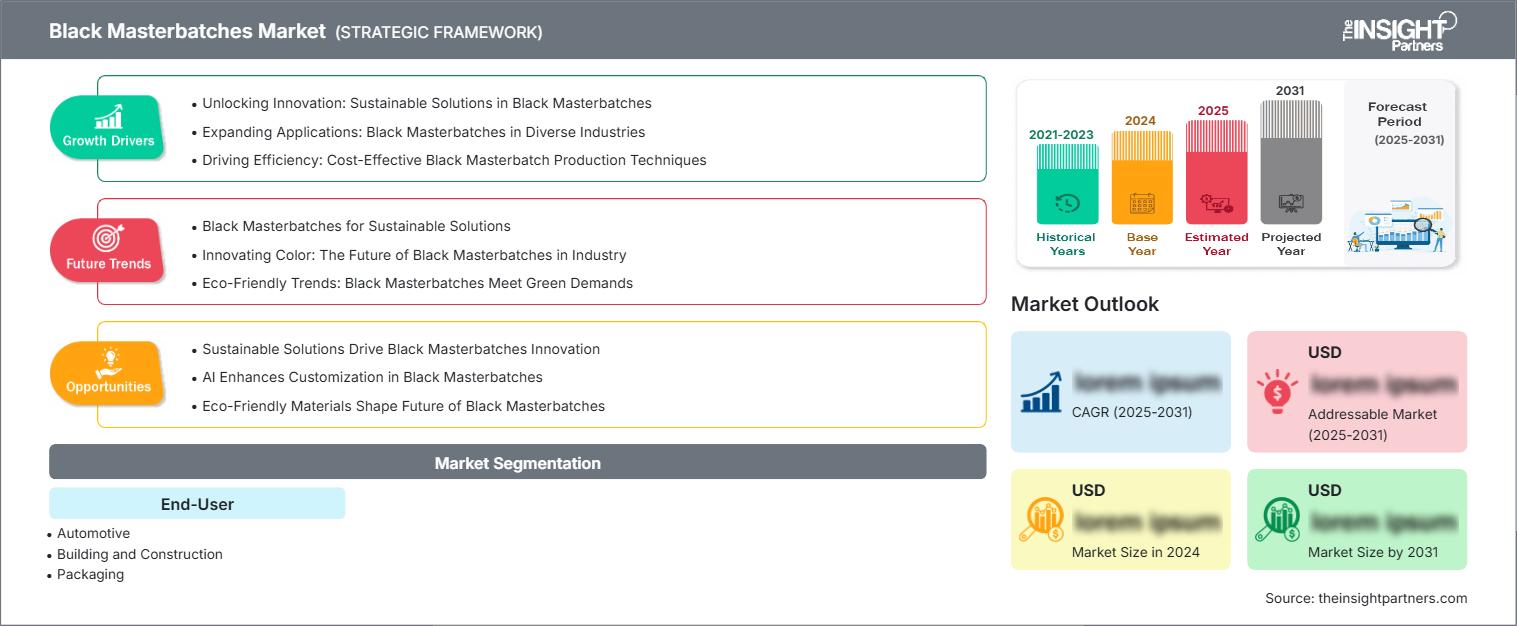
Black Masterbatches Market: Strategic Insights
Regional Insights
North America Black Masterbatches Market
North America represents a mature demand center, accounting for approximately ~30% of the global market in 2025 and expanding at a ~4% CAGR through 2034. The regional market benefits from established automotive production, packaging conversion, construction applications, and electrical manufacturing. Demand is increasingly specification-driven, with processors requiring stable color, weather resistance, dispersion quality, and compatibility with engineering and commodity polymers. The region's established recycling infrastructure further increases attention toward formulations that can maintain product appearance while supporting circular material streams.
The USA represents about 80% of revenue in North America due to its vast polymer conversion operations. While Canada adds value via packaging, construction, agriculture, and industry-related applications, Mexico receives value from its automotive and manufacturing chain related to North American production. Increasingly, regional suppliers are integrating their regional inventories and application development know-how as converters emphasize quicker lead times and performance of the formulation. The demand for recyclable black formulations will continue to be a key technical trend given packaging and automotive processors' growing use of recycling content.
U.S. Black Masterbatches Market
The US represents ~80% of the North American Black Masterbatches Market revenue and is expected to expand at a ~4% CAGR through 2034. Its demand base spans automotive interiors and exteriors, packaging, electrical components, building products, agricultural plastics, and consumer products. High-performance formulations are increasingly selected according to polymer compatibility and processing requirements rather than color alone. Producers with established technical networks can support application-specific formulation adjustments for extrusion, injection molding, blow molding, and other conversion processes.
Competitive factors of the country include international producers of masterbatches and dedicated formulators who cater to regional converters. Automotive application needs consistency in color black appearance and performance in terms of heat, light, and outdoor resistance, whereas packaging needs opaqueness, ease of processing, and recyclability. Electrical and electronics applications generate demands for conductive and functional formulating. Pharmaceutical and health care applications add to the need for regulation-compliant formulating materials.
Europe Black Masterbatches Market
Europe accounted for ~25% of the global Black Masterbatches Market in 2025 and is projected to grow at a ~4% CAGR through 2034. Germany is clearly the most dominant nation in Europe due to the presence of its automotive manufacturing, industrial plastics processing, engineering applications and its recycling infrastructure. The UK has strong demand in packaging, construction and industrial applications. There is also a strong presence of packaging and automotive processing base in France, while Italy provides applications in packaging machinery, molded plastics, construction materials and industrial parts.
Spain makes contribution in packaging, automotive parts, agriculture and construction-related plastics, while a large base of plastics processors exists in Italy. In all these regions, the increasing trend towards recyclable packaging is putting more importance on black masterbatches which will allow optical sorting or will be compatible with recycling streams of polymer. Technical support locally is becoming increasingly strategic as the converters need to balance the regulations, recycled content, aesthetics and processability. Thus the regional production investment focuses not only on capacities, but also on laboratories, color matching, applications testing and quick customer service.
APAC Black Masterbatches Market
APAC represented ~35% of the global Black Masterbatches Market in 2025 and is expected to expand at a ~6% CAGR through 2034, making it the fastest-growing regional market. China is the leading country in the Asia Pacific, supported by extensive plastics conversion, packaging, automotive production, infrastructure activity, and agricultural film demand. India is expanding through packaging, agriculture, automotive, and construction applications, while Japan and South Korea emphasize technically demanding automotive, electronics, and industrial plastics.
Packaging, agriculture, construction, and manufacturing are among the contributions by Australia. The regional manufacturers are becoming more focused on formulations, recycling, and functional grades in their processes as a result of the upgrade in the processing facilities used. Measures put in place for recycling, resource efficiency, and manufacturing ensure that there is greater need for formulations that fit into the circular polymer chain. The high production and conversion of polymers ensures that APAC has a good supply side foundation.
Middle East & Africa Black Masterbatches Market
The Middle East & Africa market is projected to expand at a ~5% CAGR through 2034. Saudi Arabia represents the leading country in the Middle East & Africa region, where available industrial evidence supports this position, benefiting from petrochemical integration, plastics conversion, packaging production, and infrastructure investment. The UAE contributes through packaging, construction, logistics-related manufacturing, and regional trade. South Africa provides an important base for packaging, agriculture, construction, and industrial polymer processing.
Regional growth is intrinsically tied with feedstock access, polymers production, infrastructure construction, and conversion capacities within the region. The chemicals cluster of Saudi Arabia can ensure carrier resin supply and plastics manufacturing, whereas the logistical infrastructure of the UAE supports regional distribution. The agricultural and packaging needs of South Africa drive the demand for black polymers that have good resistance to UV radiation. Growth is slower compared to APAC due to the lower converter base within the region, but there are specific business opportunities arising from local production.
Segmentation Analysis
Carrier Resin
Carrier resin selection determines dispersion, compatibility, processing behavior, and final-product performance. The segment is projected to grow at a ~4% CAGR from 2026 to 2034. Polyolefin carriers account for substantial demand because polyethylene and polypropylene are widely processed into films, packaging, pipes, automotive parts, and agricultural products. Specialty carriers remain important where PET, PVC, polystyrene, or polyamide processing requires specific thermal or compatibility characteristics. The Black Masterbatches Market scope, therefore, extends across both commodity and engineering polymer systems.
- Polypropylene: Widely used for molded automotive parts, packaging, consumer products, and nonwoven applications. Compatibility with PP processing makes it important for high-throughput conversion and applications requiring consistent pigmentation.
- Linear Low-Density Polyethylene: Supports flexible films and packaging applications where flexibility, puncture resistance, and controlled pigmentation are important. It is relevant to film converters seeking consistent dispersion at high processing speeds.
- Low-Density Polyethylene: Used extensively in flexible packaging, agricultural films, and industrial films. Black formulations provide opacity and functional protection where outdoor exposure and material durability influence product performance.
- High-Density Polyethylene: Supports pipes, containers, tanks, closures, and industrial molded products. Black formulations are strategically important where UV resistance and long service life are required.
- Polyethylene Terephthalate: Serves bottles, containers, fibers, and specialized packaging. PET-compatible black formulations require controlled dispersion and thermal stability during processing.
- Polyvinyl Chloride: Used in pipes, profiles, cables, flooring, and construction products. Black formulations support appearance and outdoor durability while requiring compatibility with PVC processing systems.
- Polystyrene: Serves molded packaging, consumer products, and selected industrial applications. Black masterbatch selection focuses on dispersion and processing consistency.
- Polyamide: Supports automotive, electrical, electronics, and engineering components. Formulations must tolerate higher processing temperatures and maintain stable pigmentation in demanding applications.
End-User
End-user demand is projected to expand at a ~5% CAGR from 2026 to 2034, with packaging representing the largest application base. Automotive demand benefits from lightweight polymer components, while building and construction applications use black plastics for pipes, profiles, membranes, and other durable products. Electrical and electronics applications create demand for specialized functional grades. Agriculture relies on UV-stable formulations for films and irrigation products, while pharmaceutical applications prioritize formulation consistency and regulatory controls.
- Automotive: Uses black masterbatch in interior and exterior components, underbody parts, trims, housings, and selected functional polymer systems where appearance and durability must remain stable.
- Building and Construction: Demand centers on pipes, conduits, profiles, membranes, tanks, and related products requiring opacity, weather resistance, and long service life.
- Packaging: Includes films, bottles, trays, containers, closures, and industrial packaging. Demand increasingly favors recyclable or sorting-compatible black formulations.
- Electrical and Electronics: Uses black formulations in cable components, housings, connectors, and technical parts where conductivity, insulation-system compatibility, and thermal stability may be required.
- Pharmaceuticals: Requires tightly controlled materials for packaging and selected healthcare components. Consistent pigmentation and documented compliance are important procurement considerations.
- Agriculture: Uses black masterbatch in mulch films, irrigation pipes, greenhouse products, and other outdoor plastics requiring UV protection and durability.
Type
Type-based demand is projected to expand at a ~5% CAGR from 2026 to 2034, with conventional grades maintaining broad volume demand while specialized formulations gain importance. High jetness grades address aesthetic requirements, UV-resistant products support outdoor applications, and conductive grades serve functional polymer systems. Recycled polymer compatible grades represent the fastest-expanding category as converters seek consistent pigmentation and processing performance with recycled feedstocks.
- Standard Black Masterbatch: Remains important for general-purpose pigmentation across packaging, construction, agriculture, consumer products, and industrial plastics where basic color consistency and processability are the principal requirements.
- High Jetness Black Masterbatch: Supports applications requiring a deep, uniform black appearance and strong visual consistency. Automotive components, consumer products, and premium packaging can benefit from controlled optical performance.
- UV-Resistant Black Masterbatch: Provides pigmentation alongside resistance to outdoor exposure. It is particularly important for pipes, agricultural films, construction products, tanks, and other applications exposed to sunlight.
- Conductive Black Masterbatch: Provides electrical functionality in addition to color and is relevant to cables, electronics, industrial components, antistatic applications, and selected automotive systems.
- Recycled Polymer Compatible Black Masterbatch: Designed to maintain pigmentation and processing performance when recycled polymers introduce greater feedstock variability. Its strategic importance is increasing with recycled-content targets and circular-material adoption.
Opportunity Snapshot
| Type | Revenue Contribution | Trend Tag | Adoption Stage |
|---|---|---|---|
| Standard Black Masterbatch | High | General Plastics | Mature |
| High Jetness Black Masterbatch | Medium | Deep Color | Scaling |
| UV-Resistant Black Masterbatch | High | Outdoor Durability | Mature |
| Conductive Black Masterbatch | Medium | Static Control | Scaling |
| Recycled Polymer Compatible Black Masterbatch | Low | Circular Plastics | Emerging |
Black Masterbatches Market Growth Drivers and Impact Analysis
Rising Demand for High-Performance Plastic Packaging Solutions
The packaging industry continues to account for the largest consumption of black masterbatches as manufacturers require consistent pigmentation, enhanced UV protection, and improved processing efficiency for flexible and rigid plastic products. There is an increased need for polymer blends that are resilient in nature and able to keep up the integrity of their properties during the course of their entire life cycle due to increasing food packaging, industrial packaging, e-commerce packaging, and consumer goods. The black masterbatches increase the capability of weather protection and opacity, which makes them ideal for use in agricultural films, industrial liners, and heavy packaging uses. The rising focus on recyclable packaging material will drive the development of formulations using recyclable polymers.
Expansion of Automotive Lightweighting and Engineering Plastics
Automotive manufacturers continue replacing conventional metal components with lightweight engineering plastics to improve fuel efficiency, reduce emissions, and extend electric vehicle driving range. This transition is increasing demand for high-performance black masterbatches used in interior trims, battery components, wire insulation, under-the-hood parts, and exterior applications. Advanced formulations provide improved UV resistance, thermal stability, color consistency, and mechanical durability required for demanding automotive environments. Continued investments in electric mobility, vehicle electrification, and advanced polymer engineering are expected to create sustained opportunities for specialty masterbatch suppliers serving original equipment manufacturers and component producers worldwide.
Growing Adoption of Recycled Polymer-Compatible Formulations
Increasing regulatory emphasis on circular economy initiatives and plastic waste reduction is accelerating the incorporation of recycled polymers into manufacturing processes. Conventional formulations often experience processing and color consistency challenges when blended with recycled resins, creating demand for specialized black masterbatches optimized for recycled polymer compatibility. Manufacturers are investing in advanced dispersion technologies, customized carrier resins, and process-enhancing additives that improve product quality while maintaining manufacturing efficiency. These innovations help converters achieve sustainability objectives without compromising mechanical performance, making recycled polymer-compatible masterbatches one of the most attractive long-term investment areas across the plastics compounding industry.
Black Masterbatches Market Future Trends
Increasing Development of Specialty Functional Masterbatches
The Black Masterbatches Market trends indicate that manufacturers are shifting beyond conventional coloration products toward multifunctional black masterbatches offering conductivity, UV stabilization, infrared absorption, laser marking compatibility, and antimicrobial performance. This trend reflects growing customer demand for application-specific polymer compounds capable of delivering multiple performance characteristics within a single formulation. Industries including automotive, electronics, medical devices, and industrial packaging increasingly require customized solutions that improve product durability while simplifying manufacturing processes. Continuous research into advanced carbon black technologies and additive combinations is expected to accelerate the commercialization of premium specialty grades throughout the forecast period.
Digital Manufacturing and Smart Compounding Technologies
Masterbatch producers are increasingly integrating automation, artificial intelligence-based process monitoring, and digital quality control into manufacturing operations. Smart compounding technologies enable tighter control over pigment dispersion, formulation consistency, and production efficiency while reducing material waste and energy consumption. Digital manufacturing also supports faster product development, shorter production cycles, and greater customization for customers requiring application-specific formulations. As Industry 4.0 adoption expands globally, manufacturers investing in intelligent production systems are expected to strengthen competitiveness through improved operational efficiency and enhanced product quality.
Black Masterbatches Market Opportunities
Expansion of Sustainable Infrastructure and Utility Projects
Large-scale investments in utility infrastructure, renewable energy installations, water management systems, and telecommunications networks are increasing demand for durable plastic components requiring long-term weather resistance and UV stability. Black masterbatches are widely incorporated into pipes, cable insulation, geomembranes, and protective infrastructure materials because they improve durability and environmental performance. Suppliers capable of delivering customized formulations meeting stringent infrastructure specifications are expected to benefit from expanding government and private sector investment programs while strengthening long-term customer partnerships across construction and utility industries.
Growing Opportunities Across Emerging Manufacturing Economies
Rapid industrialization in the Asia Pacific, the Middle East, Latin America, and selected African countries continues expanding plastics processing capacity and downstream manufacturing activities. Increasing production of packaging materials, consumer goods, electrical equipment, agricultural products, and automotive components is creating sustained demand for advanced masterbatch solutions. International manufacturers are responding through localized production facilities, regional technical service centers, and strategic partnerships with converters. These investments improve supply chain responsiveness while enabling companies to capture expanding opportunities in fast-growing industrial markets with rising polymer consumption.
Recent Developments
- June 2026: HydroGraph Clean Power Inc. has certified Modern Dispersions, Inc. as a qualified Compounding Partner for graphene masterbatch production in North America. MDI, based in Massachusetts and Georgia, has over 50 years of carbon black compounding experience and operates 18 extrusion lines with an annual production capacity of approximately 300 million pounds, positioning it to support commercial-scale graphene-enhanced formulations.
- January 2026: Ampacet has launched Natura Jet, a revolutionary black masterbatch utilizing naturally-derived pigment for superior jetness in injection-molded parts. This sustainable alternative to petroleum-based carbon black is compatible with various resins, including PE, PP, PET, and ABS, making it suitable for applications in durables, consumer electronics, housewares, and footwear, enabling OEMs to enhance sustainability without compromising aesthetics or performance.
- March 2026: HydroGraph Clean Power Inc. has certified Broadway Colors Ltd. as a qualified Compounding Partner, enhancing its commercial presence in the UK and Europe. This certification follows a rigorous qualification process and will facilitate the large-scale adoption of graphene-enhanced polymer materials in the plastics markets.
Frequently Asked Questions

- Comprehensive Market Sizing and Forecast Analysis
- Detailed Segmentation Analysis
- In-Depth Market Dynamics Assessment
- Regional and Country-Level Insights
- Competitive Landscape and Company Benchmarking
- Strategic Business Intelligence
Recent Reports
Testimonials

The Insight Partners provided valuable market intelligence that supported our global go-to-market strategy. Their team was professional, responsive, and attentive to our feedback, providing thoughtful analysis and helpful methodological clarifications throughout the project.
Junmo Kim Chief Financial Officer (CFO), Enertech Co., Ltd.
The Insight Partners' SCADA System Market report is comprehensive, with valuable insights on current trends and future forecasts. The team was highly professional, responsive, and supportive throughout. We are very satisfied and highly recommend their services.
RAN KEDEM Partner, Reali Technologies LTDs
I requested a report on a very specific software market and the team produced the report in a few days. The information was very relevant and well presented. I then requested some changes and additions to the report. The team was again very responsive and I got the final report in less than a week.
JEAN-HERVE JENN Chairman, Future Analytica
We worked with The Insight Partners for an important market study and forecast. They gave us clear insights into opportunities and risks, which helped shape our plans. Their research was easy to use and based on solid data. It helped us make smart, confident decisions. We highly recommend them.
PIYUSH NAGPAL Sr. Vice President, High Beam Global
The Insight Partners delivered insightful, well-structured market research with strong domain expertise. Their team was professional and responsive throughout. The user-friendly website made accessing industry reports seamless. We highly recommend them for reliable, high-quality research services
YUKIHIKO ADACHI CEO, Deep Blue, LLC.
This is the first time I have purchased a market report from The Insight Partners.While I was unsure at first, I visited their web site and felt more comfortable to take the risk and purchase a market report.I am completely satisfied with the quality of the report and customer service. I had several questions and comments with the initial report, but after a couple of dialogs over email with their analyst I believe I have a report that I can use as input to our strategic planning process.Thank you so much for taking the extra time and making this a positive experience.I will definitely recommend your service to others and you will be my first call when we need further market data.
JOHN SUZUKI President and Chief Executive Officer, Board Director, BK Technologies
I wish to appreciate your support and the professionalism you displayed in the course of attending to my request for information regarding to infectious disease IVD market in Nigeria. I appreciate your patience, your guidance, and the fact that you were willing to offer a discount, which eventually made it possible for us to close a deal. I look forward to engaging The Insight Partners in the future, all thanks to the impression you have created in me as a result of this first encounter.
DR CHIJIOKE ONYIA MANAGING DIRECTOR, PineCrest Healthcare Ltd.Reason to Buy
- Informed Decision-Making
- Understanding Market Dynamics
- Competitive Analysis
- Identifying Emerging Markets
- Customer Insights
- Market Forecasts
- Risk Mitigation
- Boosting Operational Efficiency
- Strategic Planning
- Investment Justification
- Tracking Industry Innovations
- Aligning with Regulatory Trends





 Get Free Sample for