
Bone Growth Stimulator Market Size, Trends & Growth by 2034
Coverage: By Product [Devices (External Bone Devices, Ultrasonic Bone Growth Stimulators, Implantable Bone Growth Stimulators], Bone Morphogenetic Proteins, andPlatelet-Rich Plasma), Application (Spinal Fusion Surgeries, Delayed Union & Non-union Bone Fractures, Oral and Maxillofacial Surgeries, and Others), End User (Hospitals & Specialized Clinics, Ambulatory Surgery Centers, and Others), and Geography (North America, Europe, Asia Pacific, Middle East & Africa, and South & Central America)
- Status : Data Released
- Report Code : TIPHE100001118
- Category : Life Sciences
- No. of Pages : 150
- Available Report Formats :


- Last update date : July 29, 2026


2025 Market Size
US$ 1.24 Bn
Base year value
2034 Forecast
US$ 1.88 Bn
Projected by 2034
CAGR 2026-2034
4.73 %
Growth rate
Addressable Market
US$ 14.16 Bn
(2026-2034)
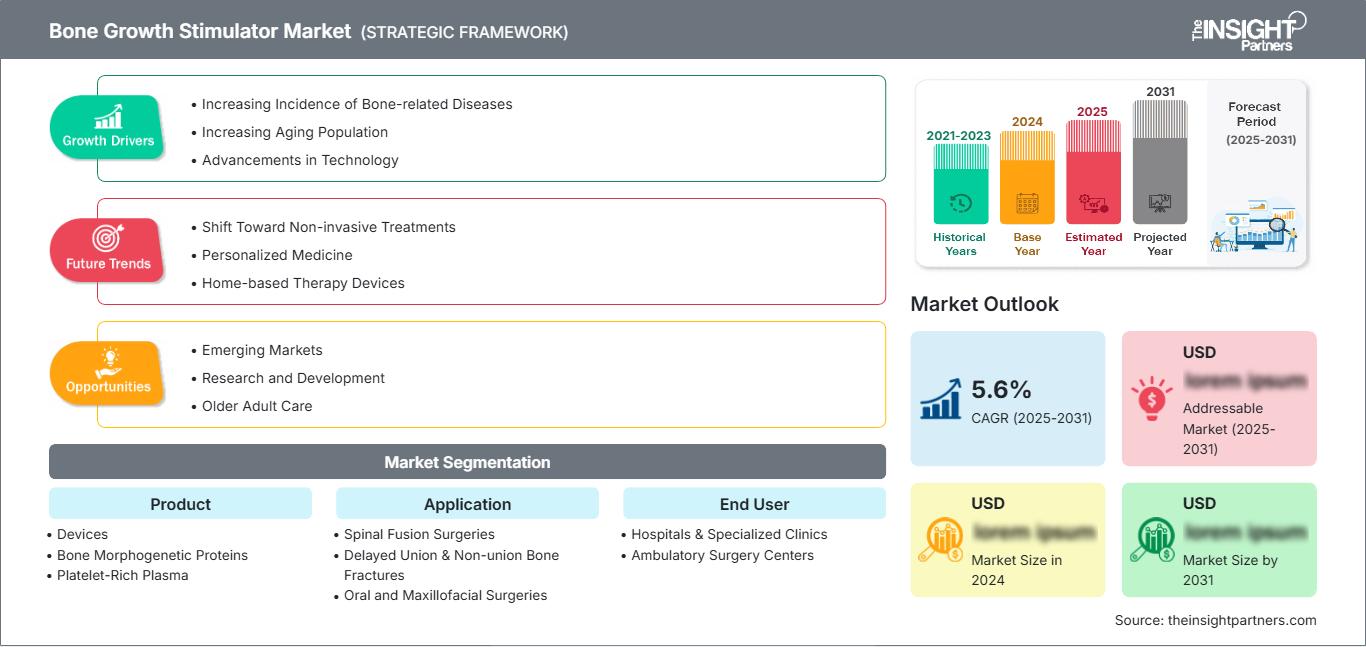
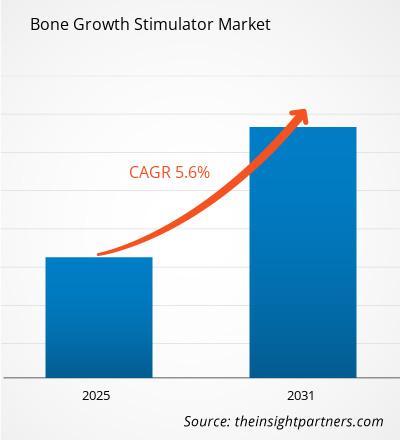
The Bone Growth Stimulator Market size is expected to grow from US$ 1.24 Billion in 2025 to US$ 1.88 Billion by 2034 at a CAGR of 4.73% during 2026-2034. This growth will be driven by consistent use of advanced healing devices used as an adjunct to orthopedic procedures like fracture treatment, spinal fusion, and maxillofacial reconstruction due to the preference for non-invasive treatments which offer less chances of revision.
North America features a volume of procedures, reimbursement sophistication in orthopedics, and good accessibility to specialists to give a modelled CAGR range of 4.4-5.0% through 2034. Additionally, the Bone Growth Stimulator Market size in North America is impacted by the high rate of spinal fusion, presence of devices, and increasing trend of recovery at home. More than 1.71 billion people worldwide suffer from musculoskeletal disorders.
Bone Growth Stimulator Market Assessment and Insights
- North America held 38–41% share in 2025 and is expected to grow at a CAGR between 4.4–5.0% during 2026–2034, supported by mature orthopaedic care, established reimbursement, and high spinal fusion volumes.
- US accounted for 82–86% of North America in 2025 and is projected to grow at a CAGR between 4.5–5.1% during 2026–2034, led by outpatient fracture management.
- Europe represented 25–28% share in 2025 and is expected to grow at a CAGR between 4.0–4.6% during 2026–2034, with Germany, the UK, and France leading adoption.
- Asia Pacific accounted for 20–23% share in 2025 and is projected to grow at a CAGR between 5.4–6.2% during 2026–2034, led by China, Japan, India, South Korea, and Australia.
- Largest Segment Devices held 50–54% market share in 2025 and is expected to grow at a CAGR between 4.5–5.1% during 2026–2034, supported by non-invasive outpatient use.
- High Growth Segment Platelet-Rich Plasma held 14–17% market share in 2025 and is projected to grow at a CAGR between 5.6–6.4% during 2026–2034, driven by regenerative orthopaedic protocols.
- Key companies analyzed in detail: Zimmer Biomet Holdings, Inc.; DJO, LLC; Arthrex, Inc.; Smith & Nephew plc; Orthofix Medical Inc.; Ossatec Benelux B.V.; Elizur Corporation; Medsource, LLC; Regen Lab SA; Ito Co., Ltd.; Bioventus LLC; Terumo BCT, Inc.; DePuy Synthes; Stryker Corporation; Altis Biologics (Pty) Ltd.; Medtronic plc; Johnson & Johnson Services, Inc.
Source: The Insight Partners' analysis based on proprietary research, government publications, company annual reports, investor presentations, industry databases, and expert interviews.
Technological advancements have caused the Bone Growth Stimulator Market to evolve into portable and therapy monitoring devices that also integrate biologics as part of the treatment pathway. Electrical stimulators, combined magnetic fields, low-intensity pulsed ultrasound, bone morphogenetic protein, and platelet-rich plasma have become uniquely used for different clinical indications. The manufacturing process is also changing where companies are looking to create small controllers, ambulatory adherence monitoring system, rechargeable device, and sterilization biologic processing platform.
The developing countries will provide improved access due to the orthopaedic hospital growth, investment in trauma facilities, and insurance penetration over the next ten years. Regulatory factors will drive companies to develop clinically validated, less risky adjunct therapies that can help prevent delayed healing and repeat procedures. While suppliers from the Asia-Pacific region will look to provide localization, suppliers from North America and Europe will look to provide connectivity devices and surgical biologics.
Bone Growth Stimulator Market Report Scope
| Report Attribute | Details |
|---|---|
| Market size in 2025 | US$ 1.24 Billion |
| Market Size by 2034 | US$ 1.88 Billion |
| Global CAGR (2026 - 2034) | 4.73% |
| Historical Data | 2021-2024 |
| Forecast period | 2026-2034 |
Bone Growth Stimulator Market Analysis
Growth in the Bone Growth Stimulator Market demand development path is related to the continuous burden of fractures, osteoporosis, spine degeneration, and sport trauma. More and more often, hospitals resort to the application of stimulation and biologic treatments for those cases where normal healing seems unlikely, including non-unions, multi-level fusions, and other risky cases of smokers, diabetics, and poor bone density. The supply chain consists of designers of the devices, biologic processors, contract manufacturers, orthopedic distributors, hospitals, specialized clinics, and compliance services providers.
Supply side remains controlled since the devices must pass regulation, prove efficacy, and be trusted by physicians. The biologics additionally should meet certain requirements regarding sterilization, donor tissues processing, and surgical preparation. Since surgeries are becoming more and more ambulatory, suppliers adjust packaging, patient education, and service offering in order to decrease training time while preserving the traceability and documentation after treatment.
Competitive positioning within Bone Growth Stimulator Market analysis includes three factors namely depth of evidence, range of indications, and access to distribution channels. Competitors in device-based stimulation include firms like Orthofix Medical Inc., Bioventus LLC, DJO, LLC and Zimmer Biomet Holdings, Inc., whereas competitors in biologics and orthopedic surgery portfolios include DePuy Synthes, Stryker Corporation, Medtronic plc, Arthrex, Inc., Johnson & Johnson Services, Inc. and Smith & Nephew plc.
Investments are being made in connected therapy, regenerative biologics and platform for surgeons. Niches for specialized products include firms such as Regen Lab SA, Terumo BCT, Inc., Altis Biologics (Pty) Ltd., Ossatec Benelux B.V., Ito Co., Ltd., Elizur Corporation and Medsource, LLC, who use PRP systems, distribution, physiotherapy technologies, and orthopedic services in their operations.
● REPORT CUSTOMIZATION
Tailor This Report To Align With Your Specific Business Requirements
This report can be customized to align precisely with your business objectives, scope, and target markets. Customization options include tailored segmentation, geography, competitive analysis, and strategic insights to support informed decision-making.
Customize This Report →WHAT YOU CAN ADJUST
- ● Segmentations
- ● Geography
- ● Competitive Analysis
- ● Language Preferences
Bone Growth Stimulator Market: Strategic Insights
Regional Insights
North America Bone Growth Stimulator Market
North America held 38–41% share in 2025 and is projected to expand at a CAGR between 4.4–5.0% during 2026–2034. The region benefits from established orthopaedic reimbursement, strong prescription pathways for home-use devices, and high use of adjunctive therapies in spinal fusion and difficult fractures. The Bone Growth Stimulator Market share in North America is also supported by specialist density and post-acute monitoring infrastructure.
The US remains the anchor market, while Canada contributes through public specialty care and trauma referral networks. Procedure intensity is shaped by aging, obesity, sports injuries, and chronic musculoskeletal disease. CDC data indicate 21.3% of US adults had diagnosed arthritis in 2024, reflecting a large orthopaedic care base relevant to fusion and fracture recovery.
U.S. Bone Growth Stimulator Market
The US accounted for 82–86% of North America in 2025 and is expected to grow at a CAGR between 4.5–5.1% during 2026–2034. Adoption is supported by prescription-based home recovery, commercial insurer coverage for indicated non-union cases, and surgeon familiarity with PEMF, capacitive coupling, combined magnetic field, and LIPUS systems.
Company presence is broad, with Orthofix Medical Inc., Bioventus LLC, DJO, LLC, Zimmer Biomet Holdings, Inc., DePuy Synthes, Stryker Corporation, and Medtronic plc maintaining strong commercial access. Spinal fusion surgeries and delayed union cases remain major applications. US spinal procedure datasets show more than 342,000 interbody fusions annually, supporting demand for fusion-enhancing solutions.
Europe Bone Growth Stimulator Market
Europe accounted for 25–28% share in 2025 and is projected to grow at CAGR 4.0–4.6% over the period 2026-2034. The UK demonstrates stable demand in the form of NHS trauma and spine pathways, but procurement pressure prefers those products which show proof of healing and cost-saving effects. Germany dominates the market because of procedure capability, reimbursement system, and spine centers.
France, Italy, and Spain add to growth due to trauma repair, maxillofacial reconstruction, and hospitals' acceptance of biologicals. European demand remains evidence-driven, with doctors weighing stimulation devices versus graft substitutes and autologous biologics. Growth comes from the ability to control compliance through follow-up systems in outpatient settings and the aging population leading to a risk of delayed healing after fracture or fusion.
APAC Bone Growth Stimulator Market
Asia Pacific was responsible for a share of 20–23% in 2025 and is expected to register a CAGR in the range of 5.4–6.2% between 2026 and 2034. China is the dominant market, owing to hospital capacity increases, volumes of traumas, and indigenous orthopaedic manufacturing. Demand for high-end technologies and regenerative procedures is seen in Japan and South Korea.
India and Australia contribute to market growth through orthopaedic chains, sports medicine, and ambulatory surgery centers. The policy on increasing the surgical capacity, localizing medical devices, and improving access to rehabilitation increases the probability of market adoption. However, differences in reimbursement and lack of trained surgeons limit the penetration of technologies.
Middle East & Africa Bone Growth Stimulator Market
The CAGR for the Middle East & Africa is forecast at 4.2%-4.8% over the period 2026-2034, with Saudi Arabia as the main contributor among regional countries. The UAE takes second place due to the presence of advanced hospitals, medical tourism, and advanced orthopaedic centers. South Africa makes its contribution through specialized trauma care centers. And finally, the rest of MEA is access-limited.
Spending on energy-related infrastructure in Gulf countries leads to the upgrading of hospitals and development of orthopaedic services. Implementation is mostly driven by tertiary care, complex trauma, and spinal cases. Development of the market will be determined by distribution capacity, surgeon education, and reimbursement of non-invasive devices/biological products.
Segmentation Analysis
Product
Product is projected to grow at a CAGR between 4.6–5.2% during 2026–2034. The Bone Growth Stimulator Market scope across product categories is broadening as device-based stimulation, recombinant or biologic proteins, and autologous blood-derived therapies support different stages of orthopaedic healing. Device adoption remains strongest where non-invasive home treatment is reimbursed, while biologics gain traction in surgical settings requiring scaffold or signaling support.
- Devices remain the leading product group because physicians can prescribe non-invasive systems for non-union fractures and fusion support, making the category strategically important for outpatient adherence and payer documentation.
- Bone Morphogenetic Proteins are used selectively in complex fusion and reconstructive procedures where osteoinductive support is clinically justified, although cost and safety scrutiny guide careful surgical use.
- Platelet-Rich Plasma is gaining relevance in regenerative orthopaedic protocols because it uses autologous preparation, fits sports medicine workflows, and supports broader interest in biologically assisted healing.
Application
Application is expected to grow at a CAGR between 4.7–5.3% during 2026–2034. Demand varies by clinical setting, with spinal fusion requiring predictable bone union, delayed union and non-union fractures needing adjunctive healing support, and oral-maxillofacial procedures requiring localized regenerative solutions. Application growth is shaped by patient risk profiles, surgical complexity, and the ability to document improved recovery outcomes.
- Spinal Fusion Surgeries account for a major application base because adjunctive stimulation and biologics may enhance fusion probability in high-risk patients and complex lumbar or cervical procedures.
- Delayed Union & Non-union Bone Fractures represent a clinically critical use case, as these patients often need non-surgical support before revision surgery becomes necessary.
- Oral and Maxillofacial Surgeries use regenerative products for grafting, socket preservation, and reconstruction, with demand tied to implant dentistry and facial trauma management.
End User
End User is projected to grow at a CAGR between 4.4–5.0% during 2026–2034. Hospitals and specialized clinics dominate because complex orthopaedic assessment, imaging, prescription, and biologic preparation remain specialist-led. Ambulatory surgery centers are gaining relevance as minimally invasive spine, trauma, and regenerative procedures move into lower-cost settings with faster discharge protocols.
- Hospitals & Specialized Clinics retain the largest revenue contribution because they manage high-risk fractures, spinal fusion, surgical biologics, and multidisciplinary follow-up for patients with impaired healing.
- Ambulatory Surgery Centers are scaling adoption as surgeons seek efficient procedure settings, standardized biologic preparation, and recovery pathways that align with payer preference for lower-site-of-care costs.
Opportunity Snapshot
| Segment Name | Revenue Contribution | Trend Tag | Adoption Stage |
| Spinal Fusion Surgeries | High | Fusion Support | Mature |
| Delayed Union & Non-union Bone Fractures | High | Non-union Care | Scaling |
| Oral and Maxillofacial Surgeries | Medium | Implant Grafting | Scaling |
Bone Growth Stimulator Market Growth Drivers and Impact Analysis
Rising Fracture and Musculoskeletal Disease Burden
Musculoskeletal disorders create a large clinical pool for adjunctive healing technologies because fracture repair, osteoporosis management, and spine degeneration often intersect in older patients. WHO identifies musculoskeletal conditions as affecting about 1.71 billion people globally, making them a leading contributor to disability and rehabilitation need. This burden increases the clinical importance of therapies that can reduce non-union risk, accelerate indicated fracture healing, and support return to mobility. In practice, hospitals and orthopaedic clinics are incorporating stimulation devices and biologics into care plans for patients with higher healing risk. The market impact is strongest in trauma centers and spine programs, where delayed healing can drive revision surgery, extended rehabilitation, and payer scrutiny.
Expansion of Home-Based Orthopedics Recovery
Home-use therapy is becoming a major driver because external stimulation devices allow healing support without repeated clinic visits. Products using LIPUS, PEMF, capacitive coupling, and combined magnetic field technologies are designed for daily patient use, making adherence tracking central to clinical outcomes. Orthofix and Bioventus report 20-minute daily LIPUS treatment models, while connected systems increasingly give physicians visibility into treatment use. This model fits value-based care because it supports documentation, reduces appointment burden, and may help avoid more invasive intervention in selected patients. As hospitals manage capacity constraints, home-based recovery shifts revenue opportunity toward service-enabled devices, patient education, and compliance-monitoring platforms that strengthen physician confidence.
Growth of Spine and Regenerative Surgery Pathways
Spine surgery remains a major demand catalyst because successful fusion depends on biological healing and mechanical stability. In the US, more than 342,000 interbody fusion procedures are performed annually, creating a large addressable base for fusion-enhancing adjuncts. Biologics, platelet-rich plasma systems, and bone morphogenetic products are increasingly evaluated alongside stimulation devices where surgeons need controlled osteogenesis support. The clinical impact is visible in complex fusions, revision procedures, smokers, metabolically compromised patients, and older adults. Commercially, this expands the role of orthopaedic companies from device suppliers to procedure-solution partners, combining implants, biologics, stimulation, digital planning, and post-operative recovery tools under integrated spine care strategies.
Bone Growth Stimulator Market Future Trends
Connected Compliance Platforms
Future Bone Growth Stimulator Market trends will increasingly center on connected compliance platforms that link prescribed therapy, patient behaviour, and physician oversight. Next-generation devices are adding Bluetooth transfer, mobile applications, rechargeable ergonomics, and activity-linked monitoring to reduce uncertainty around whether patients complete daily treatment. FDA PMA information for AccelStim 2.0 highlights controller interface changes, ergonomics, Bluetooth data transfer, and optional activity tracker integration. Over time, this data layer may influence reimbursement, clinical study design, and physician product selection. Companies able to prove adherence, automate reminders, and integrate reports into orthopaedic workflows will gain practical advantages over standalone devices with limited feedback.
Biologic-Device Convergence in Complex Healing
A second trend is convergence between stimulation technologies and regenerative biologics for patients with complex healing profiles. Surgeons are increasingly considering mechanical fixation, electrical or ultrasound stimulation, graft materials, blood-derived concentrates, and growth-factor technologies as complementary tools rather than separate categories. DePuy Synthes’ 2026 NOVOSIS distribution agreement indicates continued strategic interest in growth-factor bone graft substitutes across spine, craniomaxillofacial, and trauma applications. As clinical pathways become more personalized, implant companies and biologics suppliers will likely collaborate on bundled evidence packages. The competitive frontier will shift toward procedure-specific protocols that balance safety, cost, osteoinductive performance, and measurable fusion or fracture outcomes.
Bone Growth Stimulator Market Opportunities
Outpatient Fracture Healing Programs
Orthopedics groups can create scalable outpatient programs for delayed union and non-union cases by combining imaging review, risk stratification, device prescription, remote adherence reporting, and structured follow-up. Bone Growth Stimulator Market Forecasts point to stronger opportunity where payers prioritize avoidance of revision surgery and where ambulatory centers can manage therapy initiation efficiently. Such programs are attractive because they use existing surgeon networks while adding device-enabled monitoring and patient education. Vendors can support adoption through reimbursement toolkits, compliance dashboards, clinical evidence summaries, and field training. The most actionable opportunity lies in standardized care pathways for high-risk patients with diabetes, smoking history, osteoporosis, or complex fracture sites.
Asia Pacific Distribution and Training Expansion
Asia Pacific offers a practical expansion opportunity for companies that can pair product access with surgeon education and reimbursement navigation. China, India, Japan, South Korea, and Australia each have distinct adoption barriers, but all show rising orthopaedic procedure demand. Suppliers can improve market entry by partnering with trauma hospitals, spine societies, regenerative medicine clinics, and local distributors that understand tendering and private-pay pathways. Training should focus on patient selection, device adherence, biologic preparation, and outcomes documentation. The investment case is strongest where hospital groups are modernizing spine and trauma services, while private orthopaedic chains seek differentiated recovery solutions for higher-value procedures.
Recent Developments
- May 2026: DePuy Synthes entered an exclusive distribution agreement with CGBIO for NOVOSIS, an advanced growth-factor bone graft substitute across spine, craniomaxillofacial, and trauma applications in the US, Canada, and Australia. The agreement also referenced an FDA-approved IDE study actively enrolling US spine patients to evaluate safety and effectiveness.
- July 2025: Enovis Corporation launched the Manafuse Bone Growth Stimulator using low-intensity pulsed ultrasound technology for indicated fresh fractures and fracture nonunion. The device is portable, battery-powered, intended for 20 minutes of daily use, and includes treatment compliance tracking to support patient adherence during noninvasive fracture healing.
- March 2025: Orthofix Medical Inc. received FDA approval for the updated next-generation AccelStim 2.0 device, adding controller interface improvements, ergonomic and aesthetic modifications, Bluetooth data transfer, and optional integration with the Stim onTrack mobile application, including activity tracker data for compliance-oriented fracture healing management.
Frequently Asked Questions

- Comprehensive Market Sizing and Forecast Analysis
- Detailed Segmentation Analysis
- In-Depth Market Dynamics Assessment
- Regional and Country-Level Insights
- Competitive Landscape and Company Benchmarking
- Strategic Business Intelligence
Recent Reports
Testimonials

The Insight Partners' SCADA System Market report is comprehensive, with valuable insights on current trends and future forecasts. The team was highly professional, responsive, and supportive throughout. We are very satisfied and highly recommend their services.
RAN KEDEM Partner, Reali Technologies LTDs
I requested a report on a very specific software market and the team produced the report in a few days. The information was very relevant and well presented. I then requested some changes and additions to the report. The team was again very responsive and I got the final report in less than a week.
JEAN-HERVE JENN Chairman, Future Analytica
We worked with The Insight Partners for an important market study and forecast. They gave us clear insights into opportunities and risks, which helped shape our plans. Their research was easy to use and based on solid data. It helped us make smart, confident decisions. We highly recommend them.
PIYUSH NAGPAL Sr. Vice President, High Beam Global
The Insight Partners delivered insightful, well-structured market research with strong domain expertise. Their team was professional and responsive throughout. The user-friendly website made accessing industry reports seamless. We highly recommend them for reliable, high-quality research services
YUKIHIKO ADACHI CEO, Deep Blue, LLC.
This is the first time I have purchased a market report from The Insight Partners.While I was unsure at first, I visited their web site and felt more comfortable to take the risk and purchase a market report.I am completely satisfied with the quality of the report and customer service. I had several questions and comments with the initial report, but after a couple of dialogs over email with their analyst I believe I have a report that I can use as input to our strategic planning process.Thank you so much for taking the extra time and making this a positive experience.I will definitely recommend your service to others and you will be my first call when we need further market data.
JOHN SUZUKI President and Chief Executive Officer, Board Director, BK Technologies
I wish to appreciate your support and the professionalism you displayed in the course of attending to my request for information regarding to infectious disease IVD market in Nigeria. I appreciate your patience, your guidance, and the fact that you were willing to offer a discount, which eventually made it possible for us to close a deal. I look forward to engaging The Insight Partners in the future, all thanks to the impression you have created in me as a result of this first encounter.
DR CHIJIOKE ONYIA MANAGING DIRECTOR, PineCrest Healthcare Ltd.Reason to Buy
- Informed Decision-Making
- Understanding Market Dynamics
- Competitive Analysis
- Identifying Emerging Markets
- Customer Insights
- Market Forecasts
- Risk Mitigation
- Boosting Operational Efficiency
- Strategic Planning
- Investment Justification
- Tracking Industry Innovations
- Aligning with Regulatory Trends





 Get Free Sample for