
Breast Imaging Market Trends, Demand & Growth by 2034
Coverage: By Technology (Ionizing Technology, and Non-Ionizing Technology); End User (Hospitals, Diagnostic Centers, and Others), and Geography (North America, Europe, Asia Pacific, and South and Central America)
- Status : Data Released
- Report Code : TIPHE100000986
- Category : Life Sciences
- No. of Pages : 150
- Available Report Formats :


- Last update date : August 06, 2026


2025 Market Size
US$ 6.17 Bn
Base year value
2034 Forecast
US$ 13.40 Bn
Projected by 2034
CAGR 2026-2034
8.99 %
Growth rate
Addressable Market
US$ 87.53 Bn
(2026-2034)
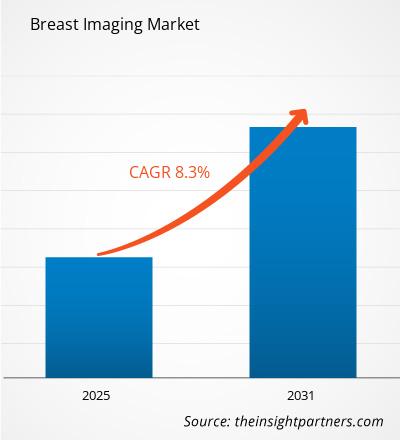
The Breast Imaging Market is expected to increase from US$ 6.17 billion in 2025 to US$ 13.40 billion by 2034, with a CAGR of 8.99%. Some of the driving forces in this market include early breast cancer detection trends, growing use of digital mammography technology, and increased adoption of tomosynthesis, ultrasound, MRI, molecular imaging, and artificial intelligence technologies for diagnosis.
North America continues to be one of the high-value adopters of the Breast Imaging Market size owing to structured screening initiatives, dense breast notifications, and replacement for digital breast tomosynthesis systems. This market is projected to grow with a CAGR of 8.4%-8.8% during 2026-2034, due to accredited mammography networks, hospital capital investment, and a well-established vendor presence in the United States and Canada.
Breast Imaging Market Assessment and Insights
- North America accounted for 39–42% share in 2025 and is projected to grow at a CAGR of 8.4–8.8% during 2026–2034, led by DBT upgrades, AI-assisted reading, and regulated quality standards.
- US represented 82–85% of North America in 2025 and is expected to grow at a CAGR of 8.5–8.9% during 2026–2034, supported by dense breast reporting and outpatient imaging growth.
- Europe recorded 27–30% share in 2025 and is forecast to grow at a CAGR of 7.8–8.2% during 2026–2034, with Germany, France, the UK, Italy, and Spain leading organized screening adoption.
- Asia Pacific held 22–25% share in 2025 and is set to grow at a CAGR of 10.2–10.8% during 2026–2034, with China, Japan, India, South Korea, and Australia driving capacity expansion.
- Largest Segment Ionizing Technology held 66–70% market share in 2025 and is expected to grow at a CAGR of 8.3–8.7% during 2026–2034, anchored by mammography and tomosynthesis.
- High Growth Segment Non-Ionizing Technology held 30–34% market share in 2025 and is projected to grow at a CAGR of 10.1–10.6% during 2026–2034, driven by MRI, ultrasound, and dense breast protocols.
- Key companies analyzed in detail: Hologic Inc., GE HealthCare Technologies Inc., Siemens Healthineers AG, Koninklijke Philips N.V., FUJIFILM Corporation, CMR Naviscan Corporation, Canon Medical Systems Corporation, SonoCiné Inc., Dilon Technologies, Inc., Aurora Imaging Technology, Inc.
Source: The Insight Partners' analysis based on proprietary research, government publications, company annual reports, investor presentations, industry databases, and expert interviews.
From analog screening, analog image interpretation to digital solutions, tomosynthesis, contrast-enhanced mammography, automated ultrasound, and multimodal diagnosis, the market has made its way. System manufacturing has become more software-based, and vendors distinguish their systems on the basis of detector performance, reconstruction techniques, dose optimization, ergonomic gantry design, and PACS integration. The dynamics of the manufacturing industry are also contingent on supply chain robustness, in terms of detector components, workstation hardware, and service agreements.
The investment trend is gradually switching towards new markets with increasing prevalence of breast cancer but limited organized screening capability. Ministries of Health, private hospital systems, and imaging service chains have begun to prefer scalable systems with high efficiency and cost-effective examinations. Tailwinds in regulation in the form of quality assurance programs, breast density notification laws, and coverage for advanced imaging will continue through 2034.
Breast Imaging Market Report Scope
| Report Attribute | Details |
|---|---|
| Market size in 2025 | US$ 6.17 Billion |
| Market Size by 2034 | US$ 13.40 Billion |
| Global CAGR (2026 - 2034) | 8.99% |
| Historical Data | 2021-2024 |
| Forecast period | 2026-2034 |
Breast Imaging Market Analysis
Breast Imaging Market development is related to a larger clinical trend of moving from episodic screening towards risk-based imaging and prompt diagnosis resolution. The use of DBT, Ultrasound, and MRI by hospitals is driven by the role of breast density, recall rate, and delayed biopsy decision in patient pathway planning. Also, market demand can be attributed to the global burden of breast cancer cases requiring early diagnosis to reduce treatment complexity and care management.
The market landscape involves manufacturers of imaging modalities, detectors, AI software solutions, radiologists, hospital purchasing organizations, and accreditation organizations. Factors that determine supply include the need for periodic system upgrade, uptime, training on applications and integration with enterprise imaging systems. Providers that offer imaging hardware and workflow analysis, biopsy tools and services have an advantage.
The competitive intensity is quite high since Hologic Inc., GE HealthCare Technologies Inc., Siemens Healthineers AG, FUJIFILM Corporation, and Koninklijke Philips N.V. continue competing on technology breadth, image quality, and leverage of their installed base services. Specialty vendors like Dilon Technologies, Inc., CMR Naviscan Corporation, SonoCiné Inc., and Aurora Imaging Technology, Inc. continue to offer solutions for specialty applications like molecular breast imaging, automated ultrasound, and MRI.
According to the Breast Imaging Market report, positioning is becoming more and more driven by AI capabilities, contrast enhancement solutions, and availability for outpatients. The big vendors have been increasing their market share due to platform enhancements, whereas specialty vendors have been focusing on differentiation through evidence generation in dense breast imaging or lesion characterization.
● REPORT CUSTOMIZATION
Tailor This Report To Align With Your Specific Business Requirements
This report can be customized to align precisely with your business objectives, scope, and target markets. Customization options include tailored segmentation, geography, competitive analysis, and strategic insights to support informed decision-making.
Customize This Report →WHAT YOU CAN ADJUST
- ● Segmentations
- ● Geography
- ● Competitive Analysis
- ● Language Preferences
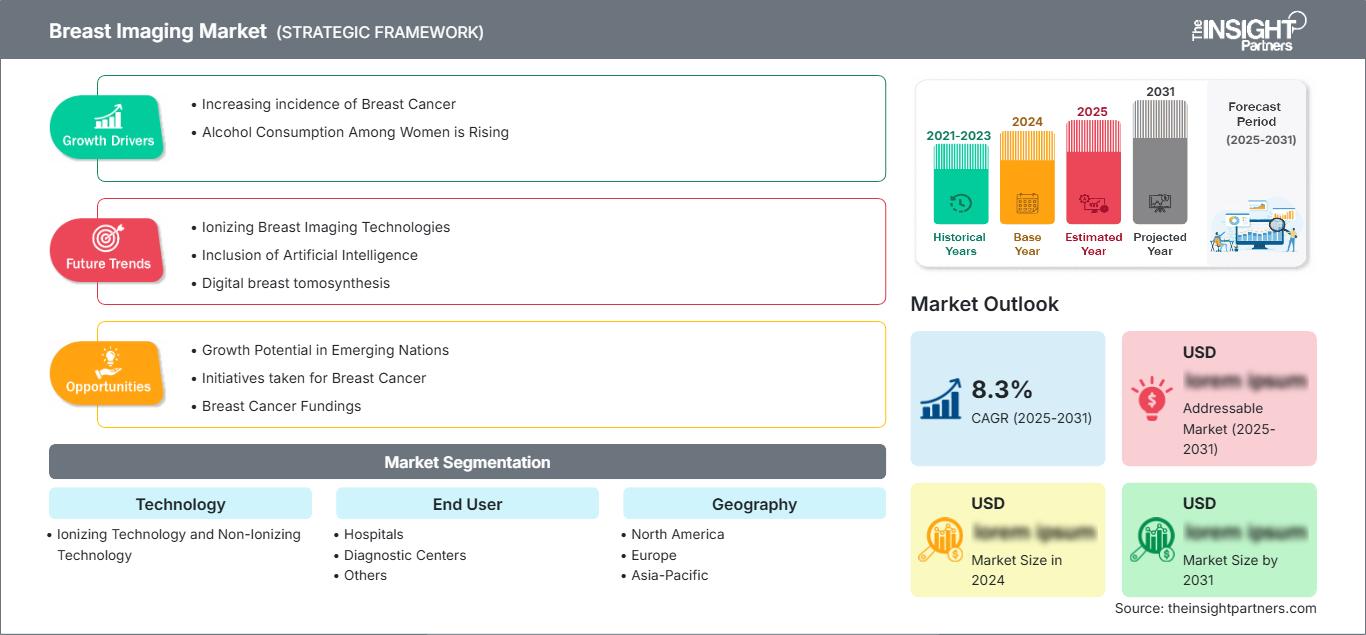
Breast Imaging Market: Strategic Insights
Regional Insights
North America Breast Imaging Market
The North American breast imaging market share was at 39%–42% in 2025, and it is forecasted to expand at a CAGR of 8.4%–8.8% during 2026–2034. North America is a favorable market because of its established screening infrastructure, MQSA standards for image quality, extensive DBT adoption rate, and mandatory dense breast reporting guidelines encouraging supplemental testing using ultrasound or MRI.
This is due to availability of screening tests and digital technology, while in Mexico, there will be increased adoption in private urban hospitals. Competition will arise from workflow efficiency, AI triage, biopsy integration, and low-dose radiation technology. The highest demand will arise in regions that require faster scanning due to high patient volumes.
U.S. Breast Imaging Market
The US held 82% to 85% of the North American market share in 2025 and is projected to grow at a CAGR of 8.5% to 8.9% over 2026 to 2034. Mammography accreditation, breast density reporting mandates, and increased adoption of DBT as a standard screening procedure have been among the driving forces. Outpatient centers will continue to be the primary purchasers due to volume and service level considerations.
Hologic Inc. continues to hold an extensive market presence in 3D mammography, whereas GE HealthCare Technologies Inc. and Siemens Healthineers AG concentrate on workflow solutions, contrast mammography, and reading assistance with the help of AI. Some of the application trends include supplemental screening in women with dense breasts, same-day diagnostics, and integration into the enterprise radiology solution ecosystem.
Europe Breast Imaging Market
Europe held a 27-30% market share in 2025 and will experience a CAGR of 7.8-8.2% from 2026-2034. Germany remains the leader due to its well-organized screening program, high-quality diagnostic imaging, and hospital spending on tomosynthesis and contrast enhanced mammography. In the UK, there are still priorities around population-based screening capability and reading efficiency.
France demonstrates high adoption of diagnostic mammography and breast MRI in specialty programs, whereas in Italy and Spain efforts are made to improve regional consistency of screening through procurement and updating equipment. EU-wide recommendations concerning cancer screening, covering broader age groups and QA, form a good basis for the use of advanced mammography and artificial intelligence assisted interpretation. Reimbursement discipline guides procurement process.
APAC Breast Imaging Market
APAC was positioned at 22-25% share in 2025 and is expected to grow at CAGR of 10.2-10.8% between 2026-2034. China was leading in terms of countries due to the expansion of hospitals and increased awareness of cancer screening. Japan and South Korea focused on quality imaging while India and Australia created new opportunities through private diagnosis and screening programs.
Factors driving policy include national cancer control policies, increase in diagnostic capabilities in urban centers, and insurance. Factors driving industry growth included local manufacturing, distribution network, and the need for platforms scalable for large patient numbers.
Middle East & Africa Breast Imaging Market
The Middle East & Africa region is expected to register a CAGR growth of 7.2-7.8% between 2026-2034, with Saudi Arabia leading as the most dominant country in the market. While UAE focuses on high-end imaging facilities, South Africa serves as the stronghold for diagnostic imaging in the region. The rest of MEA demand continues to be driven by urban hospitals and specialty clinics.
Government expenditure on diversification of energy and health infrastructure in Gulf countries is encouraging the use of imaging technology. There are inequalities in the screenings offered in low-income countries; yet, collaboration, portable mammography, and improved tertiary hospitals in the region are maintaining the demand for imaging technology.
Segmentation Analysis
Technology
The Technology segment is expected to grow at a CAGR of 8.8–9.2% during 2026–2034, reflecting continued investment in image acquisition, reconstruction software, and workflow automation. The Breast Imaging Market scope across this segment includes first-line screening, diagnostic clarification, biopsy planning, and follow-up imaging. Adoption is strongest where providers need reliable detection in dense tissue, lower recall rates, and consistent throughput.
- Ionizing Technology remains the dominant technology group because mammography and tomosynthesis are embedded in population screening programs, supported by standardized acquisition protocols, reimbursement familiarity, and broad radiologist confidence.
- Non-Ionizing Technology is increasingly strategic for supplemental assessment, especially in dense breasts and high-risk patients, where ultrasound and MRI provide additional sensitivity without radiation exposure.
End User
The End User segment is projected to grow at a CAGR of 8.7–9.1% during 2026–2034, driven by equipment modernization across hospitals and specialized imaging centers. Procurement decisions differ by setting, with hospitals prioritizing multimodality integration and diagnostic centers emphasizing throughput, utilization, and patient comfort. Service uptime, technologist training, and radiologist productivity remain decisive purchase criteria.
- Hospitals generate high-value demand because they manage complex diagnostic pathways, biopsy procedures, oncology referrals, and multimodality imaging integration across mammography, ultrasound, MRI, and surgical planning.
- Diagnostic Centers show strong adoption momentum as outpatient screening volumes rise, with operators seeking compact systems, faster examinations, AI support, and differentiated patient experience.
Opportunity Snapshot
| End User | Revenue Contribution | Trend Tag | Adoption Stage |
| Hospitals | High | Multimodality Care | Mature |
| Diagnostic Centers | High | Outpatient Screening | Scaling |
| Others | Low | Mobile Access | Emerging |
Breast Imaging Market Growth Drivers and Impact Analysis
Rising Breast Cancer Burden and Screening Intensity
Breast cancer remains one of the most frequently diagnosed cancers among women worldwide, creating sustained demand for earlier detection and better diagnostic confidence. Health systems are expanding screening coverage because delayed diagnosis raises treatment complexity, survivorship burden, and downstream oncology costs. This driver directly strengthens demand for mammography, tomosynthesis, ultrasound, and MRI across both mature and emerging markets. In practice, the impact is visible through higher utilization of outpatient imaging centers, wider adoption of dense breast assessment protocols, and replacement of legacy mammography systems with faster digital platforms. As screening programs become more structured, vendors with high-throughput equipment and integrated reporting software are positioned to capture recurring system upgrades.
AI-Enabled Workflow and Radiologist Productivity
Radiology departments face increasing examination volumes while specialist workforce growth remains constrained in many countries. AI-supported detection, triage, prior-image comparison, and slice-reduction tools are becoming practical solutions for managing heavier breast imaging workloads. The market impact extends beyond diagnostic accuracy because productivity tools shorten reading time, help prioritize suspicious cases, and improve consistency across screening networks. Hospitals and diagnostic centers are now evaluating equipment based on software ecosystem strength, not hardware performance alone. This shift favors companies that can integrate AI with mammography workstations, PACS platforms, and enterprise reporting systems. Over time, AI-enabled workflows may also support standardized quality programs in regions with limited breast radiology expertise.
Dense Breast Notification and Supplemental Imaging Adoption
Dense breast tissue can reduce mammographic sensitivity, prompting policy and clinical interest in supplemental imaging. Notification rules, patient awareness, and professional guidelines are increasing the use of ultrasound, contrast-enhanced mammography, and MRI for selected risk groups. The practical market impact is a broader diagnostic pathway after initial screening, rather than reliance on mammography alone. This creates demand for automated breast ultrasound, dedicated breast MRI, contrast protocols, and biopsy-compatible imaging systems. Diagnostic centers can use these services to differentiate offerings, while hospitals benefit from improved lesion characterization before treatment planning. Vendors that demonstrate evidence in dense breast detection are likely to gain stronger procurement visibility.
Breast Imaging Market Future Trends
Personalized Screening Pathways
Personalized screening is expected to become one of the defining Breast Imaging Market trends as providers combine age, family history, genetic profile, prior imaging, breast density, and lifestyle factors to determine optimal modality and interval. Instead of applying uniform screening schedules, health systems may route higher-risk patients toward MRI, contrast-enhanced mammography, or supplemental ultrasound while maintaining mammography for average-risk populations. This shift will require interoperable imaging records, risk algorithms, and decision-support tools embedded in radiology workflows. Equipment suppliers that connect imaging data with risk stratification platforms will gain relevance as payers demand evidence that advanced imaging improves outcomes and resource allocation.
Contrast-Enhanced Mammography as a Practical MRI Alternative
Contrast-enhanced mammography is likely to gain broader clinical attention because it offers functional information within a familiar mammography environment. For facilities with limited MRI capacity, it can help clarify inconclusive findings, assess disease extent, and guide biopsies with shorter scheduling delays. The future market effect will be strongest in community hospitals and outpatient centers that need advanced diagnostics without the cost and space requirements of MRI expansion. Adoption will depend on contrast safety protocols, radiologist training, reimbursement clarity, and vendor progress in image reconstruction. As evidence strengthens, contrast-enhanced platforms may become a strategic bridge between screening and complex diagnostic imaging.
Breast Imaging Market Opportunities
Expansion of Outpatient Breast Imaging Networks
Outpatient diagnostic networks offer a significant investment opportunity because they combine high patient volume, faster scheduling, and consumer-focused service delivery. The Breast Imaging Market Forecasts indicate that centers capable of offering mammography, ultrasound, biopsy guidance, and risk-based referral pathways can capture demand from hospitals facing capacity constraints. Investors should prioritize locations with favorable demographics, established physician referral networks, and reimbursement coverage for DBT or supplemental imaging. Operational success will depend on equipment uptime, technologist productivity, radiologist access, and patient retention. Partnerships with hospitals can also create integrated pathways where screening, diagnosis, and oncology referral occur without fragmented care transitions.
Technology Access in Emerging Screening Economies
Emerging markets present a practical opportunity for vendors that can balance affordability, durability, and clinical performance. Many countries are expanding cancer screening but still face shortages in trained radiologists, standardized quality systems, and advanced diagnostic equipment. Suppliers can address this gap through modular mammography systems, mobile screening units, cloud-enabled reporting, and training packages for technologists and radiologists. Financing models, managed equipment services, and public-private partnerships can reduce upfront capital barriers for hospitals. The opportunity is not limited to first installations; it also includes maintenance, software upgrades, and long-term workflow support as screening volumes rise and governments prioritize early diagnosis.
Recent Developments
- November 2025: Hologic Inc. announced that new clinical evidence on its AI-powered mammography solutions would be presented at RSNA 2025, including studies on 3DQuorum imaging and Genius AI Detection. The evidence focused on workflow efficiency, maintained cancer detection performance, and radiologist reading support in high-volume screening environments.
- April 2025: GE HealthCare Technologies Inc. showcased breast care advancements at the Society of Breast Imaging Symposium, including Pristina Via, SmartMammo distribution in the U.S., Invenia ABUS Premium, SenoBright HD, and SerenaBright. The portfolio emphasized faster mammography workflows, dense breast supplemental screening, contrast-enhanced mammography, and AI-enabled reading support.
- January 2025: Siemens Healthineers AG announced the first U.S. installation of its Mammomat B.brilliant next-generation mammography system at Grace Breast Imaging in Iowa. The system features wide-angle tomosynthesis, rapid 3D acquisition, improved ergonomics, and workflow enhancements designed to support early cancer detection and individualized breast care.
Frequently Asked Questions

- Comprehensive Market Sizing and Forecast Analysis
- Detailed Segmentation Analysis
- In-Depth Market Dynamics Assessment
- Regional and Country-Level Insights
- Competitive Landscape and Company Benchmarking
- Strategic Business Intelligence
Recent Reports
Testimonials

The Insight Partners' SCADA System Market report is comprehensive, with valuable insights on current trends and future forecasts. The team was highly professional, responsive, and supportive throughout. We are very satisfied and highly recommend their services.
RAN KEDEM Partner, Reali Technologies LTDs
I requested a report on a very specific software market and the team produced the report in a few days. The information was very relevant and well presented. I then requested some changes and additions to the report. The team was again very responsive and I got the final report in less than a week.
JEAN-HERVE JENN Chairman, Future Analytica
We worked with The Insight Partners for an important market study and forecast. They gave us clear insights into opportunities and risks, which helped shape our plans. Their research was easy to use and based on solid data. It helped us make smart, confident decisions. We highly recommend them.
PIYUSH NAGPAL Sr. Vice President, High Beam Global
The Insight Partners delivered insightful, well-structured market research with strong domain expertise. Their team was professional and responsive throughout. The user-friendly website made accessing industry reports seamless. We highly recommend them for reliable, high-quality research services
YUKIHIKO ADACHI CEO, Deep Blue, LLC.
This is the first time I have purchased a market report from The Insight Partners.While I was unsure at first, I visited their web site and felt more comfortable to take the risk and purchase a market report.I am completely satisfied with the quality of the report and customer service. I had several questions and comments with the initial report, but after a couple of dialogs over email with their analyst I believe I have a report that I can use as input to our strategic planning process.Thank you so much for taking the extra time and making this a positive experience.I will definitely recommend your service to others and you will be my first call when we need further market data.
JOHN SUZUKI President and Chief Executive Officer, Board Director, BK Technologies
I wish to appreciate your support and the professionalism you displayed in the course of attending to my request for information regarding to infectious disease IVD market in Nigeria. I appreciate your patience, your guidance, and the fact that you were willing to offer a discount, which eventually made it possible for us to close a deal. I look forward to engaging The Insight Partners in the future, all thanks to the impression you have created in me as a result of this first encounter.
DR CHIJIOKE ONYIA MANAGING DIRECTOR, PineCrest Healthcare Ltd.Reason to Buy
- Informed Decision-Making
- Understanding Market Dynamics
- Competitive Analysis
- Identifying Emerging Markets
- Customer Insights
- Market Forecasts
- Risk Mitigation
- Boosting Operational Efficiency
- Strategic Planning
- Investment Justification
- Tracking Industry Innovations
- Aligning with Regulatory Trends





 Get Free Sample for