
Breast Lumpectomy Treatment Market Analysis and Forecast by Size, Share, Growth, Trends 2034
Coverage: By Treatment Type (Stage I Breast Cancer, Stage II Breast Cancer, DCIS); End User (Hospitals, Specialized clinics, Ambulatory surgical centers, Research institutes, Others), and Geography (North America, Europe, Asia Pacific, and South and Central America)
- Status : Data Released
- Report Code : TIPRE00015589
- Category : Life Sciences
- No. of Pages : 150
- Available Report Formats :


- Last update date : October 26, 2026


2025 Market Size
US$ 2.45 Bn
Base year value
2034 Forecast
US$ 5.67 Bn
Projected by 2034
CAGR 2026-2034
7.84 %
Growth rate
Addressable Market
US$ 32.77 Bn
(2026-2034)
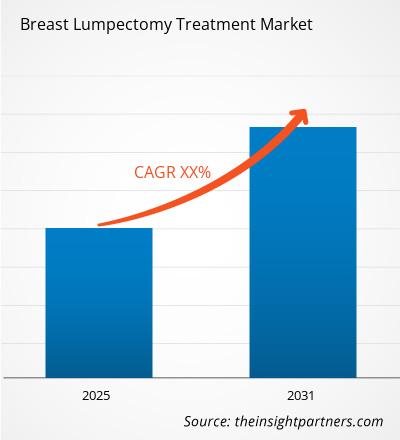
The Breast Lumpectomy Treatment Market is estimated to grow from US$ 2.45 billion in 2025 to US$ 5.67 billion by 2034, at a CAGR of 7.84% during 2026–2034. This can be attributed to growing uptake of breast-conserving surgery among eligible early-stage breast cancer patients facilitated by better tumor localization, intraoperative margin evaluation, imaging-based planning techniques, and multidisciplinary treatment pathways in hospitals, specialty centers, ambulatory surgery centers, and research facilities.
In North America, the Breast Lumpectomy Treatment Market size is estimated to progress at a CAGR between 7.1% and 7.6% during 2026-2034. The growth in this market can be attributed to established screening systems, more diagnosis of localized breast cancer, and good reimbursement for breast-conserving surgery along with radiation therapy. There have been consistent investments made in digital mammography, MRI-guided procedures, and wireless localization technologies that help in enhancing procedure accuracy and minimizing the number of repeat surgeries and recovery periods.
Breast Lumpectomy Treatment Market Assessment and Insights
- North America accounted for 42–45% share in 2025 and is projected to grow at a CAGR range of 7.1–7.6% during 2026–2034, supported by early diagnosis, oncology networks, breast imaging density, and adoption of advanced localization tools.
- US represented 83–86% of North America in 2025 and is expected to grow at a CAGR range of 7.0–7.5% during 2026–2034, driven by high screening penetration and surgical technology availability.
- Europe held 27–30% share in 2025 and is projected to grow at a CAGR range of 7.2–7.7% during 2026–2034, with the UK, Germany, France, Italy, and Spain leading organized cancer pathways.
- Asia Pacific captured 20–23% share in 2025 and is forecast to grow at a CAGR range of 8.7–9.3% during 2026–2034, led by China, Japan, South Korea, India, and Australia.
- Largest Segment Hospitals held 50–54% market share in 2025 and are projected to grow at a CAGR range of 7.2–7.7% during 2026–2034 due to integrated surgery, imaging, pathology, and radiation access.
- High Growth Segment Ambulatory surgical centers represented 14–17% market share in 2025 and are projected to grow at a CAGR range of 8.8–9.4% during 2026–2034, supported by outpatient procedure migration.
- Key companies analyzed in detail: Memorial Sloan Kettering Cancer Center, Cedars-Sinai Medical Center, Mayo Clinic, Mount Elizabeth Hospital, Moffitt Cancer Center, Carl Zeiss Meditec AG, Cianna Medical, Inc., Dune Medical Devices Ltd., Hologic, Inc., Medtronic plc.
Source: The Insight Partners' analysis based on proprietary research, government publications, company annual reports, investor presentations, industry databases, and expert interviews.
The market is moving away from the conventional method of open excision and towards a breast conservation platform which incorporates radiology, surgical oncology, pathology, and radiation planning. Selected locations have been moving from wire localization methods to magnetic seed, radar, and radio frequency. This is done through intra-operative imaging and margin analysis so as to avoid re-excision. The manufacturing trend is moving away from single-use devices to procedural platforms where device companies assist in training and procedure optimization.
Moving forward, new markets will bring increasing procedure volumes owing to expansion of screening campaigns, oncology centers, and specialty hospitals. Regulatory considerations are leaning towards devices improving margins, minimizing anesthesia time, and decreasing recovery time. Cancer control programs from governments, patients’ desire to conserve breasts, and payers' interest in cost-effective outpatient treatment will drive adoption of this technology, particularly where surgical oncologists can perform lumpectomies along with oncoplastic surgery and same-day surgery.
Breast Lumpectomy Treatment Market Report Scope
| Report Attribute | Details |
|---|---|
| Market size in 2025 | US$ 2.45 Billion |
| Market Size by 2034 | US$ 5.67 Billion |
| Global CAGR (2026 - 2034) | 7.84% |
| Historical Data | 2021-2024 |
| Forecast period | 2026-2034 |
Breast Lumpectomy Treatment Market Analysis
There is high demand due to the fact that breast-conserving surgery continues to be the treatment of choice for many early-stage patients where clinical guidelines, tumor biology, radiation, and patient preferences coincide. Breast Lumpectomy Treatment market growth will also be facilitated by advancements in the screening process, ductal carcinoma in situ being diagnosed, and improvements in neoadjuvant therapy which can lead to tumor staging prior to surgery.
The value chain comprises imaging, biopsy, localization device providers, surgery, pathology, radiation oncology, and surveillance. The supply chain is becoming more dependent upon consumables, procedure packs, digital visualization, and service in addition to the capital equipment. Hospitals prefer the system that will minimize the need for a second operation as this increases costs and affects the time when adjuvant therapies can begin.
Clinical credibility, training, imaging equipment installed and relations with comprehensive cancer centers determine competitive intensity. The Breast Lumpectomy Treatment Market Report shows that Hologic, Inc., Carl Zeiss Meditec AG, Dune Medical Devices Ltd., Cianna Medical, Inc., and Medtronic plc along with specialized medical institutions like Memorial Sloan Kettering Cancer Center, Cedars-Sinai Medical Center, Mayo Clinic, Mount Elizabeth Hospital, and Moffitt Cancer Center form a competitive environment.
Funding flows toward wireless localization, intraoperative visualization, imaging with help of artificial intelligence, robot-supported surgery and pathology digitization. The growth of Hologic company in the sphere of breast surgical navigation, development of Medtronic surgical ecosystem, visualization products of ZEISS show how suppliers form competitive environment around precision, speed and integration into the operation room.
● REPORT CUSTOMIZATION
Tailor This Report To Align With Your Specific Business Requirements
This report can be customized to align precisely with your business objectives, scope, and target markets. Customization options include tailored segmentation, geography, competitive analysis, and strategic insights to support informed decision-making.
Customize This Report →WHAT YOU CAN ADJUST
- ● Segmentations
- ● Geography
- ● Competitive Analysis
- ● Language Preferences
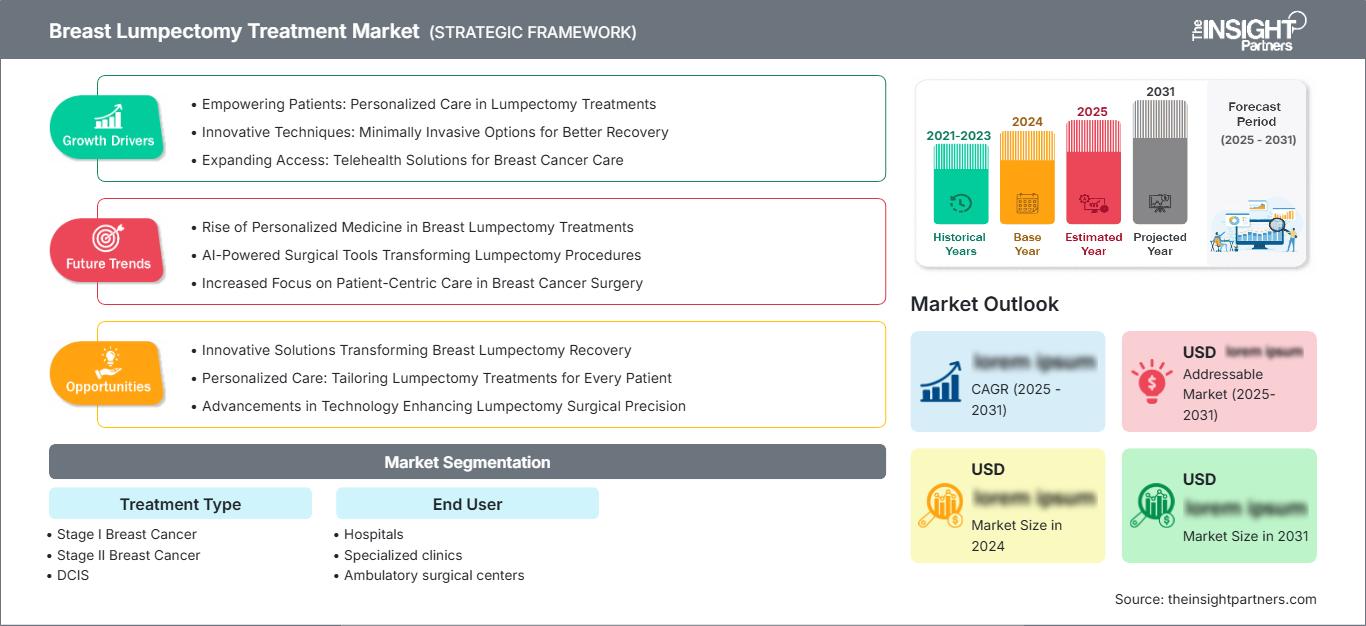
Breast Lumpectomy Treatment Market: Strategic Insights
Regional Insights
North America Breast Lumpectomy Treatment Market
North America held 42–45% share in 2025 and is projected to grow at a CAGR range of 7.1–7.6% during 2026–2034. The region benefits from widespread mammography, access to breast MRI, active cancer registries, and reimbursement that supports lumpectomy followed by radiation. The Breast Lumpectomy Treatment Market share is reinforced by dense networks of academic centers and community oncology programs.
Growth is also spurred on by the patients’ need for breast conservation and reduced recovery time. The hospitals are putting their money into wireless localization technology, tomosynthesis-assisted biopsies, intra-operative imaging of specimens, and radiation planning. The procedure volume continues to be focused on high-volume centers but is growing as standardization of anesthesia procedures, surgery, and post-operative monitoring takes place in ambulatory settings.
U.S. Breast Lumpectomy Treatment Market
U.S. constituted 83% - 86% of the total North American region in 2025 and is expected to grow at a CAGR of 7.0% - 7.5% between 2026 and 2034. High screening rate, insurance coverages, and high capability of breast imaging favor early diagnosis of the condition. The region has shown increased demand in integrated oncology centers that perform lumpectomy surgery, sentinel node biopsy, genomic testing, and radiotherapy at once.
There are notable players in the region such as Hologic, Inc., Medtronic plc, Dune Medical Devices Ltd., and Cianna Medical, Inc., who are involved in localization and surgical workflow systems. Clinical impact has been witnessed through institutions such as Memorial Sloan Kettering Cancer Center, Mayo Clinic, Cedars-Sinai Medical Center, and Moffitt Cancer Center.
Europe Breast Lumpectomy Treatment Market
The European region held 27-30% market share in 2025 and will experience a compound annual growth rate between 7.2-7.7% from 2026-2034. The United Kingdom is leading in terms of market adoption via national screening, breast units, and multidisciplinary tumor boards. Early diagnosis and breast-conserving surgery, when indicated, is aided by NHS pathways; however, waiting times and equipment replacement cycles affect capacity issues.
Germany is also one of the leaders in procedures because of its certified breast centers that coordinate surgery, pathology, radiotherapy, and systemic therapies. Robust medical device purchasing, hospital quality programs, and specialization among physicians help to adopt localization devices and oncoplastic approaches. Other countries contributing to the market include France, Italy, and Spain due to organized screening and public hospital oncology services.
APAC Breast Lumpectomy Treatment Market
APAC occupied 20-23% market share in 2025 and expected to register the highest CAGR of 8.7-9.3% for 2026-2034. China is the dominant country with respect to procedural adoption due to investments in hospital infrastructure and increased capabilities for cancer detection. Japan and South Korea provide support with advanced imaging and surgical expertise.
India and Australia provide their own unique drivers for growth. In India, private oncology hospitals and increased urban screenings play a role. In Australia, advanced breast-screening and strict clinical protocols drive the market. Key policy areas include women’s cancer, local device distribution, and lumpectomy access outside major metropolitan areas.
Middle East & Africa Breast Lumpectomy Treatment Market
Middle East & Africa market forecast shows an estimated growth of CAGR rate between 6.6% to 7.1% from 2026 to 2034. In this region, Saudi Arabia is at the forefront of leading the market demand through oncology setup, female health programs, and specialist hospitals. The UAE is backing the medical tourism business through imaging and breast surgery.
In South Africa, the sub-region has taken the lead for adoption of breast-conserving therapy in Africa with the help of oncology centers, whereas the Rest of MEA is fragmented owing to lack of screenings and radiation centers. Healthcare expenditure linked to energy in Gulf region is gradually expanding the procedures.
Segmentation Analysis
Treatment Type
The Treatment Type segment is projected to grow at a CAGR range of 7.5–8.0% during 2026–2034, reflecting clinical use across localized and in situ disease. Breast Lumpectomy Treatment Market scope is strongest where imaging confirms tumor location, margin strategy is clear, and adjuvant radiation is available. Adoption is shaped by tumor size, breast-to-tumor ratio, patient preference, genetics, and surgeon capability.
- Stage I Breast Cancer remains a core indication because localized tumors are often suitable for breast-conserving surgery, with demand supported by screening, image-guided biopsy, and radiation planning.
- Stage II Breast Cancer shows rising relevance as neoadjuvant therapy can reduce tumor burden, allowing selected patients to avoid mastectomy while maintaining oncologic treatment discipline.
- DCIS supports consistent demand because surgery is commonly used to remove noninvasive disease, with margin management, radiology-pathology correlation, and recurrence risk assessment guiding decisions.
End User
The End User segment is projected to grow at a CAGR range of 7.7–8.3% during 2026–2034, reflecting the shift from hospital-only surgery toward distributed breast-care delivery. Hospitals dominate complex procedures, while specialized clinics and ambulatory centers expand access for lower-risk cases. Research institutes influence future protocols through imaging, biomarkers, surgical de-escalation, and precision oncology studies.
- Hospitals remain the largest end user because they combine breast imaging, operating rooms, pathology, radiation referral, intensive care backup, and multidisciplinary tumor board decision-making.
- Specialized clinics serve patients seeking focused breast health services, faster diagnostic coordination, second opinions, oncoplastic consultation, and continuity across biopsy, counseling, and surgical planning.
- Ambulatory surgical centers are gaining strategic importance as shorter procedures, improved anesthesia, standardized localization, and payer pressure encourage migration of selected lumpectomy cases.
- Research institutes support evidence generation through clinical trials, intraoperative technologies, AI-assisted imaging, molecular profiling, and studies evaluating when surgery or radiation can be safely refined.
Opportunity Snapshot
| End User | Revenue Contribution | Trend Tag | Adoption Stage |
| Hospitals | High | Integrated Care | Mature |
| Specialized clinics | Medium | Breast Centers | Scaling |
| Ambulatory surgical centers | Medium | Outpatient Surgery | Scaling |
| Research institutes | Low | Trial Networks | Emerging |
Breast Lumpectomy Treatment Market Growth Drivers and Impact Analysis
Rising Early-Stage Diagnosis Through Screening Programs
Screening expansion is a direct driver because lumpectomy is most suitable when breast cancer is diagnosed before extensive spread. WHO estimates breast cancer remains the most commonly diagnosed cancer among women globally, while national screening programs in high-income countries are increasing detection of localized tumors and DCIS. Earlier diagnosis raises the pool of patients eligible for breast preservation, image-guided localization, sentinel node procedures, and radiation planning. The commercial impact extends beyond surgical instruments to biopsy systems, marker placement, pathology workflows, and follow-up imaging. In emerging markets, even incremental screening improvements can shift treatment from late-stage mastectomy-focused care toward breast-conserving options, creating demand for training, planning software, and affordable localization technologies.
Technology Integration Reducing Re-Excision Burden
A persistent clinical challenge in lumpectomy is margin uncertainty after tumor removal. Inadequate margins may require re-excision, adding cost, patient anxiety, operating-room utilization, and delays in radiation or systemic therapy. Technologies such as wireless localization, intraoperative specimen radiography, margin probes, digital pathology, and improved imaging correlation are helping surgeons remove target tissue more accurately. This driver has measurable purchasing impact because hospitals evaluate tools based on total episode cost rather than device price alone. Suppliers that demonstrate fewer repeat procedures, better scheduling predictability, and compatibility with existing imaging assets are better positioned. For providers, margin confidence also supports patient counseling and strengthens quality metrics in competitive cancer-care markets.
Preference for Breast Preservation and Faster Recovery
Patient preference is increasingly influencing treatment decisions when oncologic outcomes are comparable between breast-conserving therapy and mastectomy for suitable early-stage cases. Lumpectomy usually preserves more breast tissue, has shorter recovery than more extensive surgery, and can be combined with oncoplastic methods to improve cosmetic outcomes. This demand driver is strongest in markets with shared decision-making, survivorship programs, and transparent discussion of recurrence risk, radiation requirements, and genetic factors. Providers are responding by building dedicated breast clinics, coordinated imaging-to-surgery pathways, and rehabilitation support. The market impact is broader adoption of procedural systems that improve precision, reduce scars, support same-day care, and strengthen patient-reported outcomes.
Breast Lumpectomy Treatment Market Future Trends
AI-Guided Surgical Planning and Personalized Margins
Breast Lumpectomy Treatment Market trends are moving toward AI-supported planning that combines mammography, ultrasound, MRI, pathology, and genomic data to define surgical boundaries more precisely. Over the forecast period, AI may help identify patients who need wider excision, neoadjuvant therapy, or closer imaging follow-up. This will not replace surgeon judgment, but it can improve consistency across hospitals with different experience levels. Integration with digital pathology and radiology workstations could reduce planning variation and support real-time multidisciplinary decisions. As validation improves, adoption is expected first in academic centers and high-volume breast programs, then across networked hospitals using standardized protocols.
Shift Toward Outpatient Breast-Conserving Procedures
Outpatient lumpectomy is expected to expand as localization becomes less dependent on same-day wire placement and anesthesia protocols become more predictable. Ambulatory surgical centers can offer lower facility cost, shorter scheduling cycles, and improved convenience for selected patients without major comorbidity. This trend will require rigorous patient selection, rapid pathology coordination, post-operative communication, and reliable escalation pathways with hospitals. Device makers will adapt by offering compact imaging, disposable kits, and training packages suited to smaller operating rooms. Payers are likely to support this movement where quality measures remain stable and radiation referral continuity is preserved.
Breast Lumpectomy Treatment Market Opportunities
Building Integrated Breast Conservation Pathways
Providers and device companies have a clear opportunity to create end-to-end breast conservation pathways linking screening, biopsy, localization, surgery, pathology, radiation, and survivorship. Breast Lumpectomy Treatment Market Forecasts indicate that growth will favor organizations reducing delays between diagnosis and treatment while improving margin confidence. Investment should focus on interoperable imaging systems, scheduling platforms, nurse navigation, and surgeon training in oncoplastic approaches. Hospitals can differentiate by reporting re-excision rates, patient satisfaction, and time-to-adjuvant therapy. For suppliers, bundled contracts that include devices, disposables, workflow analytics, and clinical education can deepen adoption and improve recurring revenue visibility.
Expanding Access in High-Growth Emerging Markets
Emerging markets offer significant opportunity where breast cancer diagnosis is rising but breast-conserving care remains constrained by screening, specialist availability, and radiation access. Companies can address this gap through tiered product portfolios, distributor training, portable localization solutions, and partnerships with private oncology networks. Governments and nonprofit programs focused on women’s health can accelerate detection, but procedure adoption requires coordinated investment in imaging, pathology, and radiation referral capacity. For providers, regional breast centers can serve as hubs for standardized protocols and surgeon education. The commercial opportunity is strongest when affordability, clinical reliability, and service support are balanced.
Recent Developments
- June 2026: Cedars-Sinai Medical Center launched the Cayton BRCA Center, supported by a US$ 30 million gift, to help women and men with BRCA genetic mutations manage cancer risk. The center strengthens personalized breast cancer prevention and presurgical decision-making, which may influence demand for risk-stratified lumpectomy, mastectomy counseling, and surveillance pathways.
- June 2026: Medtronic plc submitted 510(k) filings to expand the Hugo robotic-assisted surgery system into general and gynecologic specialties in the US, while also advancing compatible surgical instruments. Although not breast-specific, the milestone supports Medtronic’s broader surgical ecosystem strategy, which can influence future minimally invasive oncology workflows and operating-room integration.
- March 2025: Moffitt Cancer Center researchers reported a pilot study evaluating a HER2-targeting dendritic cell vaccine with chemotherapy in stage 2 and stage 3 HER2-positive, ER-negative breast cancer. The study enrolled 30 patients before surgery and showed immune activity, supporting continued investigation of neoadjuvant strategies that may increase breast-conserving eligibility.
Frequently Asked Questions

- Comprehensive Market Sizing and Forecast Analysis
- Detailed Segmentation Analysis
- In-Depth Market Dynamics Assessment
- Regional and Country-Level Insights
- Competitive Landscape and Company Benchmarking
- Strategic Business Intelligence
Recent Reports
Testimonials

The Insight Partners provided valuable market intelligence that supported our global go-to-market strategy. Their team was professional, responsive, and attentive to our feedback, providing thoughtful analysis and helpful methodological clarifications throughout the project.
Junmo Kim Chief Financial Officer (CFO), Enertech Co., Ltd.
The Insight Partners' SCADA System Market report is comprehensive, with valuable insights on current trends and future forecasts. The team was highly professional, responsive, and supportive throughout. We are very satisfied and highly recommend their services.
RAN KEDEM Partner, Reali Technologies LTDs
I requested a report on a very specific software market and the team produced the report in a few days. The information was very relevant and well presented. I then requested some changes and additions to the report. The team was again very responsive and I got the final report in less than a week.
JEAN-HERVE JENN Chairman, Future Analytica
We worked with The Insight Partners for an important market study and forecast. They gave us clear insights into opportunities and risks, which helped shape our plans. Their research was easy to use and based on solid data. It helped us make smart, confident decisions. We highly recommend them.
PIYUSH NAGPAL Sr. Vice President, High Beam Global
The Insight Partners delivered insightful, well-structured market research with strong domain expertise. Their team was professional and responsive throughout. The user-friendly website made accessing industry reports seamless. We highly recommend them for reliable, high-quality research services
YUKIHIKO ADACHI CEO, Deep Blue, LLC.
This is the first time I have purchased a market report from The Insight Partners.While I was unsure at first, I visited their web site and felt more comfortable to take the risk and purchase a market report.I am completely satisfied with the quality of the report and customer service. I had several questions and comments with the initial report, but after a couple of dialogs over email with their analyst I believe I have a report that I can use as input to our strategic planning process.Thank you so much for taking the extra time and making this a positive experience.I will definitely recommend your service to others and you will be my first call when we need further market data.
JOHN SUZUKI President and Chief Executive Officer, Board Director, BK Technologies
I wish to appreciate your support and the professionalism you displayed in the course of attending to my request for information regarding to infectious disease IVD market in Nigeria. I appreciate your patience, your guidance, and the fact that you were willing to offer a discount, which eventually made it possible for us to close a deal. I look forward to engaging The Insight Partners in the future, all thanks to the impression you have created in me as a result of this first encounter.
DR CHIJIOKE ONYIA MANAGING DIRECTOR, PineCrest Healthcare Ltd.Reason to Buy
- Informed Decision-Making
- Understanding Market Dynamics
- Competitive Analysis
- Identifying Emerging Markets
- Customer Insights
- Market Forecasts
- Risk Mitigation
- Boosting Operational Efficiency
- Strategic Planning
- Investment Justification
- Tracking Industry Innovations
- Aligning with Regulatory Trends





 Get Free Sample for