
Cancer Diagnostics Market Share, Demand & Growth by 2034
Coverage: by Product (Consumables and Instrument), Technology (IVD Testing, Imaging, and Biopsy Technique), Application (Breast Cancer, Lung Cancer, Colorectal Cancer, Melanoma, and Other Cancers), End Users (Hospitals and Diagnostic Laboratories), and Geography (North America, Europe, Asia Pacific, and South and Central America)
- Status : Data Released
- Report Code : TIPMD00002290
- Category : Life Sciences
- No. of Pages : 150
- Available Report Formats :


- Last update date : August 12, 2026


2025 Market Size
US$ 122.17 Bn
Base year value
2034 Forecast
US$ 199.85 Bn
Projected by 2034
CAGR 2026-2034
5.62 %
Growth rate
Addressable Market
US$ 1,459.68 Bn
(2026-2034)
The Cancer Diagnostics Market is projected to grow from US$ 122.17 Billion in 2025 to US$ 199.85 Billion by 2034, registering a CAGR of 5.62% during 2026–2034. There is evidence that there is demand for early diagnosis, biomarker-based treatment, and diagnostics in oncology, with hospitals and laboratories playing key roles in test ordering, sample preparation, and interpretation of test results.
North America is still considered the most developed market for revenue generation with an organized screening program, high intensity of oncology testing, and the use of companion diagnostics. The Cancer Diagnostics Market in North America will grow at a CAGR range of 4.8-5.3% from 2026 to 2034 owing to molecular pathology coverage, imaging capabilities, and increase in U.S. incidence, with 2,041,910 cases expected for 2025.
Cancer Diagnostics Market Assessment and Insights
- North America: The region is estimated to hold 40–43% share in 2025 and grow at a CAGR range of 4.8–5.3% during 2026–2034, supported by screening coverage, companion diagnostics, and installed laboratory automation.
- US: The U.S. accounts for 82–85% of North America in 2025 and grows at a CAGR range of 4.9–5.4% during 2026–2034, led by oncology networks and genomic profiling adoption.
- Europe: Europe is estimated at 25–28% share in 2025 and grows at a CAGR range of 4.5–5.0% during 2026–2034, with Germany, the UK, and France leading structured screening and pathology modernization.
- Asia Pacific: Asia Pacific holds 21–24% share in 2025 and grows at a CAGR range of 7.1–7.8% during 2026–2034, led by China, Japan, South Korea, India, and Australia.
- Largest Segment: IVD Testing holds 50–54% market share in 2025 and grows at a CAGR range of 5.5–6.0% during 2026–2034, aided by repeat testing and decentralized laboratories.
- High Growth Segment: Biopsy Technique holds 24–28% market share in 2025 and grows at a CAGR range of 6.6–7.4% during 2026–2034, supported by tissue, liquid biopsy, and molecular confirmation.
- Key companies analyzed in detail: F. Hoffmann-La Roche Ltd, Thermo Fisher Scientific Inc., Agilent Technologies Inc., Illumina Inc., Merck KGaA, GenScript Biotech Corporation, Cell Signaling Technology, Inc., Revvity, Inc., Cancer Diagnostics, Inc., MultiplexDX, s.r.o., QIAGEN N.V., Danaher Corporation, Abbott Laboratories.
Source: The Insight Partners' analysis based on proprietary research, government publications, company annual reports, investor presentations, industry databases, and expert interviews.
With the adoption of technology, the Cancer Diagnostics Market has shifted focus from morphology-based validation to integrated solutions involving imaging, immunochemistry, PCR, sequencing, and interpretation of results. Consumables make up a bigger part of repeat business because all tests involve the use of assay kits, controls, reagents, slides, antibodies, and sample processing consumables. Instruments are more cyclical; however, automation, pathology scanners, and sequencing platforms are changing the economics of productivity as laboratories deal with staffing shortages and increasing test volume.
From 2024 to 2034, emerging markets will increasingly drive the demand growth due to growing cancer screenings within public health systems and investments into molecular diagnostic solutions by private laboratory chains. Favorable regulations in the form of more EU screening guidelines that apply to breast, cervical, colorectal cancers, and potential screening of lung, prostate, and gastric cancers are being developed. The goal of the EU to provide screening to 90% of the eligible population by 2025 illustrates this trend.
Cancer Diagnostics Market Report Scope
| Report Attribute | Details |
|---|---|
| Market size in 2025 | US$ 122.17 Billion |
| Market Size by 2034 | US$ 199.85 Billion |
| Global CAGR (2026 - 2034) | 5.62% |
| Historical Data | 2021-2024 |
| Forecast period | 2026-2034 |
Cancer Diagnostics Market Analysis
Market growth drivers will include increased cancer prevalence, early intervention, and personalized cancer treatment through molecular markers. According to WHO/IARC, an estimate of 20 million new cancer cases and 9.7 million cancer-related deaths occurred in 2022 with projections showing possible annual cancer cases to reach 35 million cases in 2050.
Value creation will become more contingent upon collaboration between test developers, hospitals, reference labs, oncologists, payers, and pharma partners. From a supply side perspective, there will be an advantage for firms that integrate regulated test menu, services, bioinformatics, and automation of samples processing. The Cancer Diagnostics Market Report reveals a realistic move towards solutions that shorten the turnaround times, preserve the tissues, and provide clinically useful reports that work well with tumor boards.
Competitive Positioning relies on the diagnostic portfolio, the menu offering of Next Generation Sequencing (NGS), Digital Pathology, and regional regulatory approvals. F. Hoffmann-La Roche Ltd and Agilent Technologies Inc both exert great influence in Tissue Diagnostics, while Thermo Fisher Scientific Inc and Illumina Inc dominate Sequencing enabled Oncology Work Flow. Assays and Laboratory Systems from QIAGEN N.V., Danaher Corporation, Abbott Laboratories, and Revvity Inc improve the ecosystem.
The investment trends are shifting towards areas like liquid biopsy, artificial intelligence enabled pathology, minimal residual disease studies, and decentralized genomics. Cancer Diagnostics, Inc., MultiplexDX, s.r.o., GenScript Biotech Corporation, Cell Signaling Technology, Inc., and Merck KGaA provide specialized competencies in terms of antibodies, assay development, reagents, and oncology research products. The strategic strength now lies in evidence building, payer adoption, and worldwide reach rather than just broad portfolio offerings.
● REPORT CUSTOMIZATION
Tailor This Report To Align With Your Specific Business Requirements
This report can be customized to align precisely with your business objectives, scope, and target markets. Customization options include tailored segmentation, geography, competitive analysis, and strategic insights to support informed decision-making.
Customize This Report →WHAT YOU CAN ADJUST
- ● Segmentations
- ● Geography
- ● Competitive Analysis
- ● Language Preferences
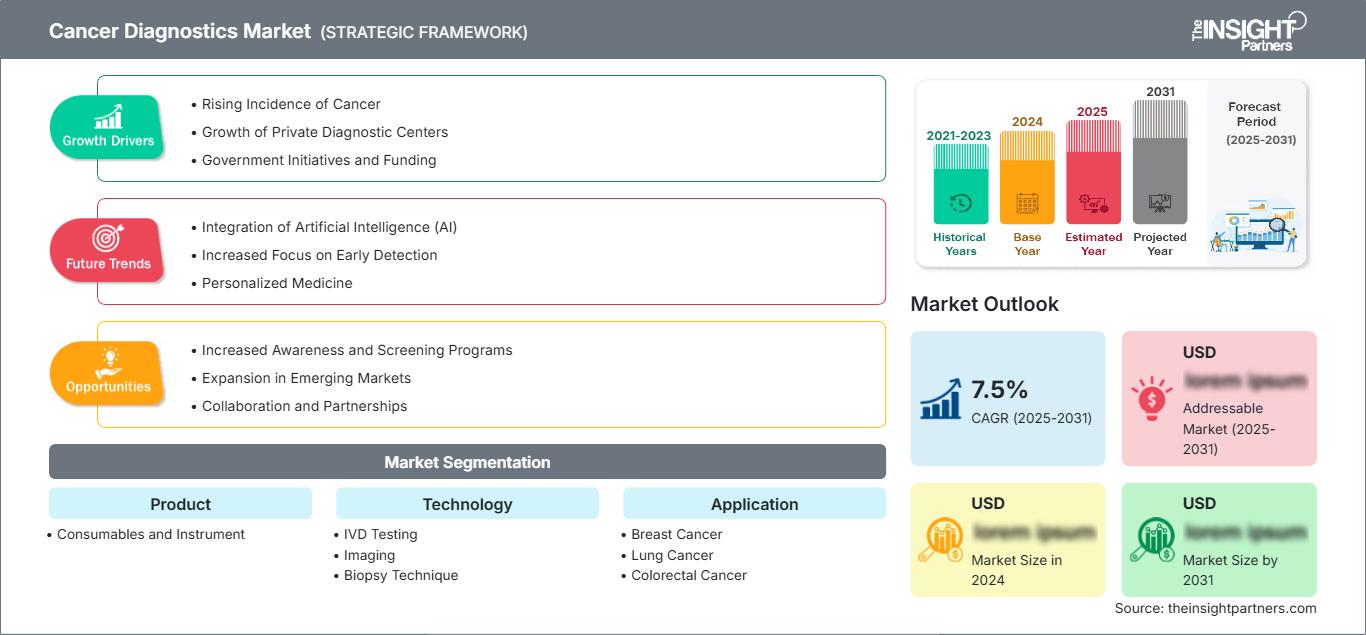
Cancer Diagnostics Market: Strategic Insights
Regional Insights
North America Cancer Diagnostics Market
Share for North America Cancer Diagnostics Market will be pegged to be in the range of 40-43% in 2025 with CAGR of 4.8-5.3% between 2026 and 2034. This region is well-endowed in terms of high-screening intensity, use of oncology biomarkers and diagnostic reimbursement. Mortality rate due to cancer in the U.S. has reduced by 34% between 1991 and 2022.
The trend is shifting towards comprehensive genomic profiling, faster tumor panels, and AI-driven pathology review. The hospital laboratories are working towards automation in order to handle increased specimens while the reference laboratories offer molecular testing services. Canada provides steady demand via its cancer programs in the provinces.
U.S. Cancer Diagnostics Market
The U.S. represents 82–85% of North America in 2025 and is expected to grow at a CAGR range of 4.9–5.4% during 2026–2034. The country’s test volumes are supported by 2,041,910 estimated new cancer diagnoses in 2025 and broad oncology specialist networks.
There is a strong presence of firms in the industry with companies such as Thermo Fisher Scientific Inc., Illumina Inc., Agilent Technologies Inc., Abbott Laboratories, and Danaher Corporation providing assistance for the testing platforms, reagents, and companion diagnostics. The application trends for the industry include lung cancer, breast cancer, colorectal cancer, and pan-tumor applications.
Europe Cancer Diagnostics Market
Europe possesses a market share of 25-28% in 2025 and records a CAGR of 4.5-5.0% over 2026-2034. Germany dominates owing to its pathology infrastructure, use of molecular testing, and specialized oncology systems. In the UK, genomic testing is being boosted via a centralized approach. On the other hand, in France, efforts for national cancer control and early diagnosis are supported by government.
In Italy and Spain, oncology diagnostics in the region are being improved by enhancing hospital networks, breast and colorectal testing. EU regulation is a structural factor since the updated recommendation on screening increases the chances of early diagnosis.
APAC Cancer Diagnostics Market
APAC accounts for 21–24% share in 2025 and records the fastest CAGR range of 7.1–7.8% during 2026–2034. China leads regional expansion because of hospital capacity additions, oncology center investments, and large patient volumes. Japan and South Korea support high-value imaging and molecular testing.
India and Australia provide diverse contributions to the narrative on growth: India through their diagnostic networks and tests, Australia through their organized screening processes and use of precision oncology. The prevalence of cancer in Asia is noteworthy: Asia contributed more than half of the cancers, according to the World Health Organization in 2024 estimates.
Middle East & Africa Cancer Diagnostics Market
MEA-Africa records a CAGR rate of 5.8% to 6.5% for the period 2026 to 2034. Leading regional consumer is Saudi Arabia with investments in cancer centers, diagnostic imaging and laboratory upgrades. In UAE, there is increased demand due to private hospitals and diagnostic services tied to medical tourism.
South Africa continues to dominate Sub-Saharan Africa due to specialist laboratories and oncology referral centers. Other MEA demand is inconsistent since it relies on availability of financial aid, pathology expertise and imported equipment. Exporting nations of the Gulf region are concentrating on diversifying their health infrastructure..
Segmentation Analysis
Product
Product is expected to grow at a CAGR range of 5.3–5.8% during 2026–2034. Product demand is anchored by continuous consumables usage and selective instrument replacement cycles. The Cancer Diagnostics Market scope across products is expanding as laboratories standardize reagent supply, automate staining and extraction, and connect instruments to laboratory information systems for faster oncology reporting.
- Consumables: Consumables represent the most recurring product category, supported by reagents, assay kits, antibodies, slides, controls, and sample-preparation products required across biopsy, IVD testing, and pathology workflows.
- Instrument: Instruments remain strategically important where laboratories need higher throughput, automated imaging, sequencing, molecular extraction, and digital pathology platforms to reduce turnaround time and improve reproducibility.
Technology
Technology is projected to grow at a CAGR range of 5.6–6.1% during 2026–2034. Technology selection varies by clinical question: IVD tests support screening and biomarker detection, imaging supports localization and staging, while biopsy techniques provide definitive tissue or molecular confirmation. Integrated workflows are becoming essential as clinicians combine anatomical and molecular evidence.
- IVD Testing: IVD Testing is the largest technology area, supported by immunoassays, molecular panels, PCR, sequencing, and companion diagnostics used across screening, diagnosis, therapy selection, and monitoring.
- Imaging: Imaging remains foundational for lesion detection, staging, treatment planning, and recurrence evaluation, particularly in breast, lung, colorectal, and melanoma care pathways.
- Biopsy Technique: Biopsy Technique is the fastest-advancing technology area, supported by tissue sampling, image-guided procedures, liquid biopsy adoption, and molecular confirmation for targeted therapy decisions.
Application
Application is anticipated to grow at a CAGR range of 5.4–5.9% during 2026–2034. Application demand reflects cancer prevalence, screening structures, therapy availability, and clinical urgency. Breast, lung, and colorectal cancers command high diagnostic volumes because they combine substantial incidence with established imaging, pathology, molecular, and monitoring workflows.
- Breast Cancer: Breast cancer diagnostics benefit from organized mammography, biopsy confirmation, receptor testing, HER2 assessment, and recurrence monitoring across hospital and laboratory networks.
- Lung Cancer: Lung cancer testing is increasingly biomarker-intensive, with imaging, tissue pathology, liquid biopsy, and NGS panels supporting therapy allocation in non-small cell lung cancer.
- Colorectal Cancer: Colorectal cancer demand is driven by fecal screening, colonoscopy follow-up, histopathology confirmation, molecular profiling, and surveillance after treatment.
- Melanoma: Melanoma diagnostics rely on dermoscopy, biopsy, histology, and mutation testing, especially where targeted and immunotherapy decisions require molecular characterization.
End Users
End Users are expected to grow at a CAGR range of 5.4–5.9% during 2026–2034. Hospitals remain essential for integrated imaging, biopsy, surgery, and oncology decision-making, while diagnostic laboratories deliver scale, specialization, and molecular expertise. Consolidation among laboratory networks improves purchasing leverage and supports adoption of validated workflows.
- Hospitals: Hospitals generate demand through inpatient oncology care, imaging facilities, surgical biopsy access, pathology departments, and tumor boards requiring coordinated diagnostic evidence.
- Diagnostic Laboratories: Diagnostic laboratories scale molecular testing, immunohistochemistry, sample logistics, and specialized reporting, making them central to outsourced oncology workflows and high-complexity testing.
Opportunity Snapshot
| End Users | Revenue Contribution (High/Medium/Low) | Trend Tag (MAX 2 words, specific) | Adoption Stage (Emerging/Scaling/Mature) |
| Hospitals | High | Tumor Boards | Mature |
| Diagnostic Laboratories | High | Molecular Scale | Scaling |
Cancer Diagnostics Market Growth Drivers and Impact Analysis
Rising Cancer Burden and Early Detection Prioritization
Cancer incidence is increasing because of population aging, lifestyle-related risks, and better case detection. WHO and IARC reported about 20 million new cancer cases in 2022, with lung, breast, and colorectal cancers forming the leading incidence categories. This creates durable demand for screening tests, imaging, biopsy confirmation, and molecular workups. The practical market impact is higher recurring consumables use, more oncology imaging appointments, and greater laboratory workload. Health systems are also shifting budgets toward early diagnosis because late-stage cancer treatment is costlier and often less effective. For manufacturers, the driver favors scalable assays, faster sample processing, and platforms that connect screening-positive patients to confirmatory diagnosis.
Precision Oncology Expanding Biomarker Testing
Targeted therapies and immuno-oncology have made biomarker assessment a routine decision point across lung cancer, breast cancer, colorectal cancer, melanoma, and additional tumor types. Companion diagnostics now influence patient eligibility, trial enrollment, and sequencing of therapy. This driver raises the value of IVD testing, immunohistochemistry, FISH, PCR, NGS, and pathology informatics. Manufacturers are responding with broader panels, CDx partnerships, and integrated tissue-to-report workflows. The impact is strongest in advanced cancer, where clinicians need actionable reports within short treatment windows. As more therapies require molecular evidence, diagnostic suppliers with validated assays and regulatory expertise gain stronger positioning across hospitals, reference laboratories, and pharmaceutical collaborations.
Laboratory Automation and Digital Pathology Adoption
Clinical laboratories face rising oncology volumes, skilled workforce constraints, and pressure to reduce turnaround time. Automation addresses these issues by standardizing sample preparation, staining, extraction, sequencing, image capture, and quality control. Digital pathology adds remote review, workload balancing, and AI-supported quantification, which is increasingly relevant for complex biomarker interpretation. The direct market impact is higher demand for instruments, software-enabled platforms, service contracts, and standardized consumables. Adoption also changes purchasing behavior: laboratories evaluate total workflow performance rather than standalone product specifications. Suppliers able to demonstrate accuracy, throughput, interoperability, and regulatory compliance are positioned to benefit as oncology diagnostics move toward connected laboratory ecosystems.
Cancer Diagnostics Market Future Trends
AI-Assisted Pathology Moving into Regulated Workflows
AI-assisted pathology will become one of the defining Cancer Diagnostics Market trends as laboratories seek reproducible scoring, faster slide review, and better biomarker quantification. Current adoption is strongest in research and selected clinical decision-support workflows, but regulated use is expected to expand as validation datasets improve. The trend will reshape competitive priorities by linking antibodies, stains, scanners, image management, algorithms, and clinical reporting into integrated ecosystems. Vendors with both assay expertise and digital pathology partnerships will be better positioned than standalone software providers. The market effect will be gradual but meaningful, especially for lung, breast, and immuno-oncology biomarker workflows.
Multiomic Testing Becoming More Clinically Practical
Multiomic testing is moving from research toward practical clinical application as laboratories combine DNA, RNA, methylation, protein, and spatial information from limited samples. This trend matters because many tumors cannot be characterized sufficiently through single-marker testing, particularly when tissue is scarce or therapy options are expanding. Over the next decade, adoption will depend on reimbursement, evidence of clinical utility, and ease of interpretation. The market impact will include demand for higher-quality extraction kits, advanced panels, bioinformatics pipelines, and integrated reporting. Companies that simplify multiomic workflows without increasing turnaround time will gain traction in advanced oncology centers.
Cancer Diagnostics Market Opportunities
Decentralized Genomic Testing in Regional Laboratories
Cancer Diagnostics Market Forecasts indicate a strong opportunity in decentralizing genomic testing beyond major academic centers. Regional laboratories want faster turnaround, local clinical control, and reduced dependence on external reference testing. Suppliers can capture this opportunity by offering compact sequencers, validated panels, plug-in bioinformatics, training, and quality assurance support. The investment case is strongest where lung cancer and colorectal cancer biomarker testing must be completed quickly to guide first-line therapy. Decentralization will not eliminate reference laboratories, but it will expand the addressable installed base and recurring consumables demand. Companies that reduce operational complexity will improve adoption among mid-sized hospitals and private laboratory networks.
Screening-Linked Confirmatory Testing Pathways
The expansion of screening programs creates an opportunity to connect positive screening results with confirmatory diagnostics faster and more consistently. Breast, colorectal, cervical, and lung cancer pathways all require follow-up imaging, biopsy, histology, or molecular testing after an abnormal screen. Manufacturers and laboratories can develop integrated service models that combine sample logistics, reflex testing protocols, and electronic reporting to reduce diagnostic delays. This opportunity is especially relevant in Europe and Asia Pacific, where public programs are widening eligibility or improving access. Commercial success will depend on affordability, guideline alignment, and the ability to demonstrate fewer missed follow-ups across large populations.
Recent Developments
- September 2025: Illumina Inc. announced new pharmaceutical development partnerships to build companion diagnostics enabled on its TruSight Oncology Comprehensive genomic profiling test, with a focus on KRAS alterations and tumor-agnostic CDx claims intended to support broader precision oncology access.
- September 2025: Agilent Technologies Inc. entered a nonexclusive collaboration with Lunit to develop AI-powered companion diagnostic solutions combining Agilent’s tissue-based diagnostic capabilities with Lunit’s AI algorithms for biomarker evaluation in pharmaceutical research and clinical trial settings.
- April 2025: F. Hoffmann-La Roche Ltd received FDA Breakthrough Device Designation for the VENTANA TROP2 RxDx Device, an AI-driven computational pathology companion diagnostic approach designed to analyze TROP2-stained NSCLC tissue and support precision treatment selection.
Frequently Asked Questions

- Comprehensive Market Sizing and Forecast Analysis
- Detailed Segmentation Analysis
- In-Depth Market Dynamics Assessment
- Regional and Country-Level Insights
- Competitive Landscape and Company Benchmarking
- Strategic Business Intelligence
Recent Reports
Testimonials

The Insight Partners provided valuable market intelligence that supported our global go-to-market strategy. Their team was professional, responsive, and attentive to our feedback, providing thoughtful analysis and helpful methodological clarifications throughout the project.
Junmo Kim Chief Financial Officer (CFO), Enertech Co., Ltd.
The Insight Partners' SCADA System Market report is comprehensive, with valuable insights on current trends and future forecasts. The team was highly professional, responsive, and supportive throughout. We are very satisfied and highly recommend their services.
RAN KEDEM Partner, Reali Technologies LTDs
I requested a report on a very specific software market and the team produced the report in a few days. The information was very relevant and well presented. I then requested some changes and additions to the report. The team was again very responsive and I got the final report in less than a week.
JEAN-HERVE JENN Chairman, Future Analytica
We worked with The Insight Partners for an important market study and forecast. They gave us clear insights into opportunities and risks, which helped shape our plans. Their research was easy to use and based on solid data. It helped us make smart, confident decisions. We highly recommend them.
PIYUSH NAGPAL Sr. Vice President, High Beam Global
The Insight Partners delivered insightful, well-structured market research with strong domain expertise. Their team was professional and responsive throughout. The user-friendly website made accessing industry reports seamless. We highly recommend them for reliable, high-quality research services
YUKIHIKO ADACHI CEO, Deep Blue, LLC.
This is the first time I have purchased a market report from The Insight Partners.While I was unsure at first, I visited their web site and felt more comfortable to take the risk and purchase a market report.I am completely satisfied with the quality of the report and customer service. I had several questions and comments with the initial report, but after a couple of dialogs over email with their analyst I believe I have a report that I can use as input to our strategic planning process.Thank you so much for taking the extra time and making this a positive experience.I will definitely recommend your service to others and you will be my first call when we need further market data.
JOHN SUZUKI President and Chief Executive Officer, Board Director, BK Technologies
I wish to appreciate your support and the professionalism you displayed in the course of attending to my request for information regarding to infectious disease IVD market in Nigeria. I appreciate your patience, your guidance, and the fact that you were willing to offer a discount, which eventually made it possible for us to close a deal. I look forward to engaging The Insight Partners in the future, all thanks to the impression you have created in me as a result of this first encounter.
DR CHIJIOKE ONYIA MANAGING DIRECTOR, PineCrest Healthcare Ltd.Reason to Buy
- Informed Decision-Making
- Understanding Market Dynamics
- Competitive Analysis
- Identifying Emerging Markets
- Customer Insights
- Market Forecasts
- Risk Mitigation
- Boosting Operational Efficiency
- Strategic Planning
- Investment Justification
- Tracking Industry Innovations
- Aligning with Regulatory Trends





 Get Free Sample for