
Cardiac Cryoablation Devices Market Trends, Demand & Growth by 2034
Coverage: By Product (Systems, Catheters, Others); Application (Atrial Fibrillation, Ventricular Tachycardia, Others); End-User (Hospitals, Specialty Centers, Ambulatory Surgical Centers, Others), and Geography (North America, Europe, Asia Pacific, and South and Central America)
- Status : Data Released
- Report Code : TIPRE00029936
- Category : Life Sciences
- No. of Pages : 150
- Available Report Formats :


- Last update date : September 08, 2026


2025 Market Size
US$ 480.61 Mn
Base year value
2034 Forecast
US$ 1,147.09 Mn
Projected by 2034
CAGR 2026-2034
10.15 %
Growth rate
Addressable Market
US$ 7,234.39 Mn
(2026-2034)
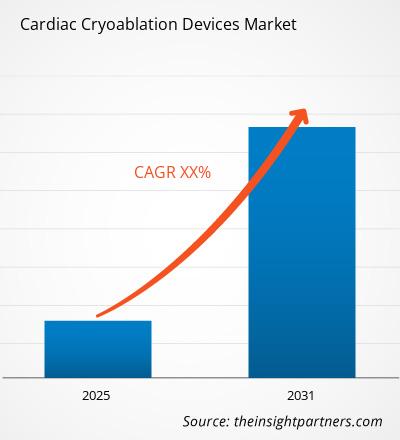
The Cardiac Cryoablation Devices Market was valued at US$ 480.61 Million in 2025 and is expected to reach US$ 1,147.90 Million by 2034. The market is projected to record a CAGR of 10.15% during 2026–2034, reflecting sustained adoption of temperature-controlled cardiac tissue ablation technologies across electrophysiology laboratories, cardiac surgery departments, and specialized arrhythmia treatment facilities.
Across North America, the Cardiac Cryoablation Devices Market size is projected to expand at an estimated CAGR of 9.5–10.5% during 2026–2034. A well-established electrophysiology network, broad availability of trained specialists, and growing acceptance of catheter ablation as an early rhythm-control option support demand. Medicare coverage of cardiac catheter ablation in ambulatory surgical centers from January 2026 could progressively broaden procedural access.
Cardiac Cryoablation Devices Market Assessment and Insights
- North America: The region accounted for an estimated 42–44% Cardiac Cryoablation Devices Market share in 2025 and is expected to register a CAGR between 9.5–10.5% during 2026–2034, supported by established electrophysiology infrastructure and favourable procedural reimbursement.
- US: The country represented approximately 83–85% of North American revenue in 2025 and is projected to grow at a CAGR between 9.3–10.3% during 2026–2034.
- Europe: Europe held an estimated 27–29% share in 2025 and is forecast to record a CAGR between 9.0–10.0% during 2026–2034. Germany, the UK, France, Italy, and Spain remain important adoption markets.
- Asia Pacific: Asia Pacific contributed approximately 21–23% in 2025 and is projected to expand at a CAGR between 11.5–12.5% during 2026–2034. China, Japan, South Korea, India, and Australia lead regional investment.
- Largest Segment: Catheters represented an estimated 61–64% market share in 2025 and are expected to register a CAGR between 10.5–11.5% during 2026–2034, reflecting recurring procedural consumption.
- High Growth Segment: Ambulatory surgical centers held approximately 8–10% market share in 2025 and are forecast to grow at a CAGR between 12.5–13.5% during 2026–2034 as outpatient ablation pathways scale.
- Key companies analyzed in detail: Boston Scientific Corporation, Medtronic plc, MicroPort EP MedTech Co., Ltd., AtriCure, Inc., CPSI Biotech, Premier Health, Galil Medical Inc., Metrum Cryoflex Sp. z o.o., IceCure Medical Ltd., and Sanarus Technologies, LLC.
Source: The Insight Partners' analysis based on proprietary research, government publications, company annual reports, investor presentations, industry databases, and expert interviews.
Technological advancement has changed the Cardiac Cryoablation Devices market from simple devices for focal freezing to consoles, steerable catheters, cryoballoons, temperature sensing, and map enabled systems. The technology development platform of Medtronic includes the combination of a controlled refrigerant console with single-use balloon and focal catheters, indicating the significance of equipment base as well as consumables in this regard. Economics of manufacturing involve polymers used in catheters, balloon uniformity, refrigerant control, sterilization, and supply chain of precision parts.
In future, focus would be more on workflow optimization, lesion permanence, reduced use of refrigerant, and distinct ventricular applications. Asia-Pacific region companies could provide better access to such systems by means of locally manufactured equipment, whereas hospitals in developing countries are setting up electrophysiology labs within tertiary cardiac care facilities. Guidance from Europe in terms of rhythm control and individualized reassessment helps evaluate procedures; at the same time, broader reimbursement in the US is providing a way out for certain low-risk patients.
Cardiac Cryoablation Devices Market Report Scope
| Report Attribute | Details |
|---|---|
| Market size in 2025 | US$ 480.61 Million |
| Market Size by 2034 | US$ 1,147.09 Million |
| Global CAGR (2026 - 2034) | 10.15% |
| Historical Data | 2021-2024 |
| Forecast period | 2026-2034 |
Cardiac Cryoablation Devices Market Analysis
Growth drivers in the Cardiac Cryoablation Devices Market include rising numbers of diagnosed cases of arrhythmias, early stage rhythm control procedures, and need for consistent pulmonary vein isolation. The global atrial fibrillation incidence grew from 33.5 million patients in 2010 to 59 million in 2019, thus broadening the pool of patients amenable to assessment. In the market, electrophysiologists choose energy modality and catheter designs, hospitals invest in consoles, and distributors ensure disposables' sterility.
Performance in supply depends on the compatibility of consoles, catheters, sheaths, mapping systems, refrigerant cylinders, and service maintenance. Medtronic claims that its Arctic Front product line gained more than 17 years of clinical experience and performed over one million procedures. It creates the installed base which, however, faces competition from pulsed field ablation and procedural simplicity of atrial fibrillation operations.
Analysis of the Cardiac Cryoablation Devices Market suggests a market with concentrated competition in cardiac-specific cryotherapy combined with the presence of the cryosurgical specialists. Medtronic plc relies on the electrophysiology portfolio of products; AtriCure, Inc. offers surgical ablation with cryoICE probes along with other technologies. Metrum Cryoflex Sp. z o.o. and CPSI Biotech offer the cryosurgical capability; while MicroPort EP MedTech Co., Ltd. takes advantage of the access to the Asian electrophysiology market.
Increasingly, strategic positioning includes evidence development, physician training, mapping integration, and services responsiveness. Boston Scientific Corporation chose pulsed field ablation for its electrophysiology strategy, which illustrates the substitution threat for the conventional freezing solutions. IceCure Medical Ltd., Galil Medical Inc., and Sanarus Technologies, LLC offer the cryotechnology know-how that is mostly utilized outside the cardiac electrophysiology procedures. Premier Health provides the perspective of the provider and its consideration when making purchases.
● REPORT CUSTOMIZATION
Tailor This Report To Align With Your Specific Business Requirements
This report can be customized to align precisely with your business objectives, scope, and target markets. Customization options include tailored segmentation, geography, competitive analysis, and strategic insights to support informed decision-making.
Customize This Report →WHAT YOU CAN ADJUST
- ● Segmentations
- ● Geography
- ● Competitive Analysis
- ● Language Preferences
Cardiac Cryoablation Devices Market: Strategic Insights
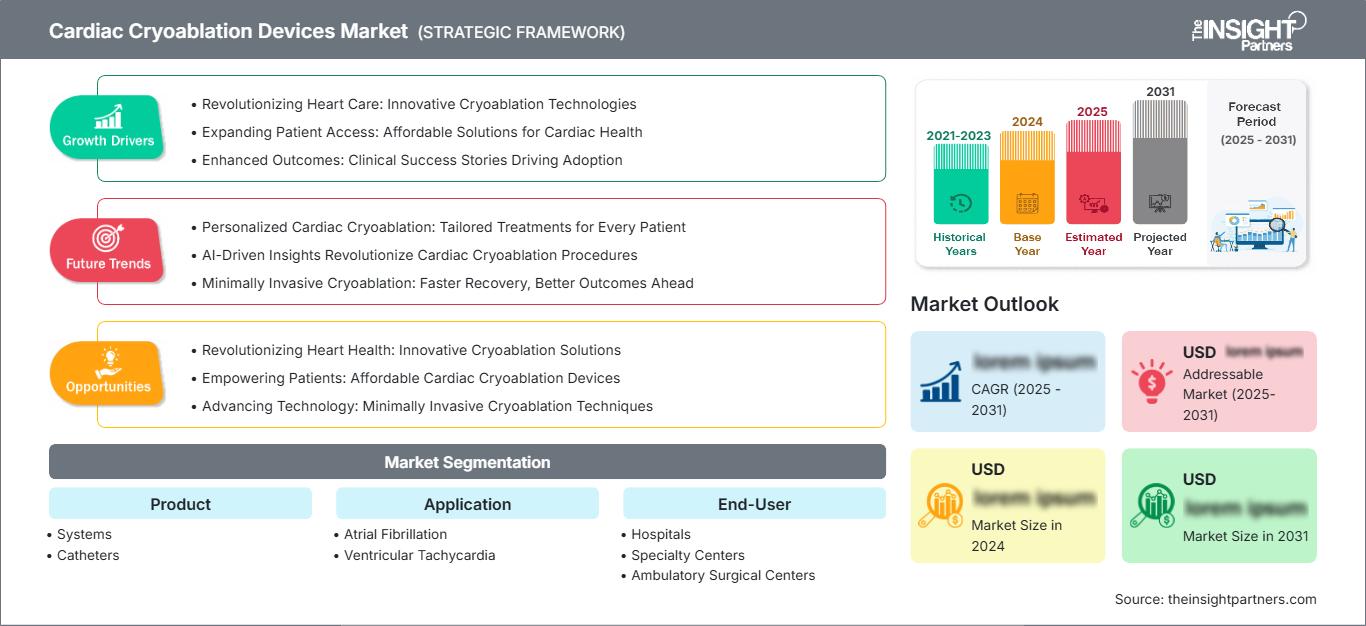
Regional Insights
North America Cardiac Cryoablation Devices Market
North America generated an estimated 42–44% share in 2025 and is projected to expand at a CAGR of 9.5–10.5% through 2034. Market share for Cardiac Cryoablation Devices is a function of high electrophysiology lab density, existing cryoballon use, training of practitioners, availability of advanced mapping technology, and reduced friction in switching among hospitals that have compatible consoles and disposables contracts.
Future growth will be driven by diversification of procedural venues other than hospitals. Coverage for cardiac catheter ablation was finalized by CMS in ASCs effective January 1, 2026, allowing appropriate Medicare patients to be reimbursed for this procedure. Canada adds value with its provincial cardiac centers, while Mexico has possibilities in private hospitals located in large metropolitan regions. PFA competition will drive cryo vendors toward reliable workflows and installed base economics.
U.S. Cardiac Cryoablation Devices Market
The US represented approximately 83–85% of North American market revenue in 2025 and is forecast to record a CAGR of 9.3–10.3% during 2026–2034. The demand for these devices will remain centered in tertiary care facilities and specialized electrophysiology facilities where transseptal procedures, anesthesia, imaging, post-procedure monitoring, and acute cardiac care facilities are available. The demographic trend towards an older population coupled with the increased rhythm control assessment will add to the volume of procedures performed.
Medtronic plc holds a strong market position for its cryoballoon products, which include the Arctic Front portfolio of devices, the CryoConsole, and focal Freezor catheters. Device application demand is mainly driven by atrial fibrillation applications, and the focal devices are utilized for selected supraventricular applications. Starting from 2026, ASCs’ reimbursement will begin to favor outpatient procedures, despite credentialing issues, state regulation, staffing needs, and capital constraints. Traditional cryoablation procedures have to establish their economic merit in the context of pulsed field nonthermal ablation performed in the USA.
Europe Cardiac Cryoablation Devices Market
Europe held an estimated 27–29% share in 2025 and is projected to register a CAGR of 9.0–10.0% during 2026–2034. Germany is still the leader due to its well-developed cardiac hospitals, skilled electrophysiology team, and reimbursement system. Recommendations of Europe on treatment include an integrated approach to AF management, reduction of symptoms, achieving and maintaining rhythm control, and periodic patient reassessment, which encourages referrals of patients eligible for the ablation procedure.
The UK combines specialist centers of the National Health Service with private cardiac hospitals; however, the laboratory capacity and waiting time impact treatment schedule. Technology procurement in the country focuses on procedures with minimal variation and fast patient throughput.
France, Italy, and Spain offer their contribution through universities' hospitals and cardiovascular centers in their regions. France takes advantage of central technology assessment; Italy has a highly developed electrophysiology practice in its northern regions, and Spain develops further services for arrhythmias. Technology adoption depends on particular national procurement, economic arguments, and competition with radiofrequency and pulsed field technologies.
APAC Cardiac Cryoablation Devices Market
Asia Pacific accounted for an estimated 21–23% share in 2025 and is expected to grow at a CAGR of 11.5–12.5% through 2034, making it the fastest-expanding region. China leads through hospital investment, local manufacturing, and a large untreated arrhythmia population.
Japan contributes mature electrophysiology practice, while South Korea and Australia support advanced ablation adoption. India offers longer-term volume potential as private cardiac chains establish additional laboratories. Regional policy priorities concerning localized medical-device production, specialist training, and hospital capacity will improve access, although reimbursement variation and urban concentration remain constraints.
Middle East & Africa Cardiac Cryoablation Devices Market
The Middle East and Africa region is projected to expand at a CAGR of 8.0–9.0% during 2026–2034. Saudi Arabia is the leading market, supported by hospital modernization and investment in specialist cardiovascular infrastructure, followed by the UAE’s advanced private and public hospitals.
South Africa anchors sub-Saharan adoption through tertiary cardiac centers. Rest-of-MEA demand remains limited by electrophysiologist shortages, capital constraints, and uneven insurance coverage. Oil-funded health infrastructure in Gulf countries supports equipment acquisition, while broader regional growth depends on training partnerships, referral networks, and dependable catheter distribution.
Segmentation Analysis
Product
The Product segment is projected to register a CAGR of 10.0–11.0% during 2026–2034. The Cardiac Cryoablation Devices Market scope includes capital systems that regulate refrigerant delivery and disposable catheters that create controlled lesions. Purchasing decisions balance console compatibility, per-procedure catheter cost, temperature stability, service coverage, mapping interoperability, and evidence supporting durable electrical isolation.
- Systems: Systems form the installed foundation for cryotherapy delivery, controlling refrigerant flow, catheter temperature, procedural data, and vapor recovery. Hospitals prioritize reliability, service contracts, staff familiarity, and compatibility with existing electrophysiology infrastructure.
- Catheters: Catheters represent the largest product category because they are generally procedure-specific consumables. Demand benefits from recurring utilization, balloon-based pulmonary vein isolation, focal lesion requirements, and continued improvement in steering and tissue contact.
Application
The Application segment is expected to record a CAGR of 9.8–10.8% during 2026–2034. Growth is driven by atrial fibrillation treatment, while ventricular tachycardia represents a technically demanding development area. Application expansion depends on lesion depth, anatomical accessibility, arrhythmia mechanism, mapping accuracy, and comparative evidence against radiofrequency and pulsed field energy.
- Atrial Fibrillation: Atrial fibrillation is the principal application because cryoballoon systems provide a standardized anatomical approach to pulmonary vein isolation. Early rhythm-control strategies and rising diagnosis strengthen referral volumes across high-capacity electrophysiology centers.
- Ventricular Tachycardia: Ventricular tachycardia offers a specialized opportunity where deeper or difficult-to-reach substrates may benefit from advanced freezing approaches. Adoption requires compelling safety evidence, mapping integration, and experienced multidisciplinary teams.
End-User
The End-User segment is projected to expand at a CAGR of 10.2–11.2% during 2026–2034. Hospitals currently dominate because cardiac ablation requires imaging, anesthesia, electrophysiology systems, trained personnel, and emergency support. Specialty centers improve procedural concentration, while ambulatory surgical centers present the strongest growth potential as payment coverage, patient selection protocols, and same-day workflows develop.
- Hospitals: Hospitals remain the largest users due to their capital capacity, cardiac surgery backup, intensive monitoring, and multidisciplinary teams. Academic institutions also influence device adoption through clinical trials, training, and guideline implementation.
- Specialty Centers: Specialty centers concentrate electrophysiology expertise and can achieve high procedural throughput. Their purchasing priorities include workflow standardization, rapid room turnover, predictable disposable availability, and differentiated arrhythmia care pathways.
- Ambulatory Surgical Centers: Ambulatory surgical centers represent the high-growth setting as reimbursement expands for cardiac ablation. Adoption will favor carefully selected patients, efficient technologies, robust emergency transfer protocols, and operators with substantial procedural experience.
Opportunity Snapshot
| End-User | Revenue Contribution (High/Medium/Low) | Trend Tag | Adoption Stage |
| Hospitals | High | EP Expansion | Mature |
| Specialty Centers | Medium | Workflow Focus | Scaling |
| Ambulatory Surgical Centers | Low | Outpatient Ablation | Emerging |
Cardiac Cryoablation Devices Market Growth Drivers and Impact Analysis
Expanding Atrial Fibrillation Diagnosis and Early Rhythm Control
A growing diagnosed atrial fibrillation population enlarges the pool of patients evaluated for rhythm-control procedures. Epidemiological data published suggests that the global prevalence of AF has grown from 33.5 million individuals in 2010 to 59 million in 2019, with lifetime risk for individuals over 45 years being about one in three to five. Early diagnosis using electrocardiography, Holter monitoring, and wearables may help expedite specialist visits. Cryoablation providers gain an advantage if the electrophysiology procedure needs a reliable pulmonary vein isolation and protocol standardization. The commercial impact is not limited to catheter but also includes consoles, sheaths, compatibility with mapping, maintenance, physician training, and postmarket evidence generation. Nevertheless, the switch is contingent upon symptoms, comorbidities, patient preference, payment, and competition between energy sources.
Clinical Preference for Reproducible Single-Shot Workflows
Cryoballoon ablation offers an anatomical, single-shot approach designed to create circumferential lesions around pulmonary veins. This workflow can reduce the dependence on point-by-point lesion construction and provide consistency across trained operators. Medtronic cites a user base exceeding one million patients under cryoballoon technology, indicating extensive familiarity and the presence of a well-established portfolio of compatible devices. The predictability of a technique enables planning for hospitals in terms of scheduling, staff training, inventories, and procedure standardization. Improvements by manufacturers in balloon compliance, catheter manipulation, temperature management, and mapping are capable of sustaining adoption in the face of pulsed field ablation competitors. Maximum effect in the market would be seen at centers that prioritize predictability in pulmonary vein isolation and own the cryo console devices.
Outpatient Reimbursement and Care-Setting Diversification
The extension of US Medicare coverage for cardiac catheter ablation in ambulatory surgical centers from January 1, 2026 creates a structural pathway for outpatient procedure growth. The eligible ambulatory centers can adopt more cost-effective therapy approaches for those patients who need it while alleviating the burden on the hospital electrophysiology labs. The medical device companies have to adapt to this approach by designing smaller equipment set-up, reliable supply chain for disposables, staff training, and emergency plans. It will take time for adoption due to the varying criteria at the state level, operator qualification, availability of anesthesia, transfer, and other factors. Yet, the policy makes the ambulatory surgical centers more strategically important and motivates the medical device industry to prove effectiveness and cost savings.
Cardiac Cryoablation Devices Market Future Trends
Multimodality Electrophysiology Platforms
Cardiac Cryoablation Devices Market trends will increasingly reflect multimodality purchasing rather than standalone energy decisions. Pulsed field ablation is being implemented by electrophysiology labs that already have radiofrequency and cryotherapy available, each for different anatomic applications, different indications, and personal preference of the operators. Future consoles will require a focus on common mapping interfaces, common procedural records, and energy options. The cryo companies will have to show what differences the application of freeze makes in terms of unique lesions created, predictability of the procedure, or safety of the procedure. Interoperability and evidence-based patient selection will drive the competitive advantage over just the installed base.
Data-Guided Freeze Dosing and Predictive Workflow Support
Future systems are expected to incorporate richer temperature curves, time-to-isolation measurements, pressure information, anatomical signals, and automated procedural documentation. Algorithms could help physicians select freeze duration, identify inadequate tissue contact, and reduce unnecessary applications while preserving clinical judgment. These capabilities may improve consistency across growing electrophysiology teams and support quality benchmarking between sites. Manufacturers will require prospective validation, cybersecurity controls, transparent decision logic, and regulatory clearance before predictive features influence therapy delivery. Data-enabled differentiation could also support value-based contracting by linking device performance with procedure time, recurrence, repeat intervention, and resource utilization.
Cardiac Cryoablation Devices Market Opportunities
Localized Manufacturing and Training Networks in Asia Pacific
Investment in localized catheter assembly, console servicing, and electrophysiology education could expand access across China, India, and Southeast Asia. Imported systems face pricing, maintenance, procurement, and supply-continuity barriers outside leading metropolitan hospitals. Manufacturers can address these constraints through regional component sourcing, authorized repair capabilities, structured physician training, and partnerships with tertiary cardiac institutions. Commercial programs should prioritize centers with sufficient mapping infrastructure and sustainable patient referral volumes. Local clinical evidence will be important because healthcare pathways and anatomical practice patterns vary. A hub-and-spoke training model can build operator confidence while allowing suppliers to establish reference sites before entering lower-volume provincial markets.
Specialized Cryotherapy for Complex Ventricular Substrates
Ventricular tachycardia represents an investment opportunity where conventional endocardial approaches may be limited by deep, intramural, or anatomically inaccessible arrhythmogenic tissue. Developers can pursue specialized catheters, deeper cooling profiles, and integrated mapping workflows designed for complex ventricular substrates. Clinical programs should initially focus on precisely defined patients treated at experienced centers, with endpoints covering acute arrhythmia termination, lesion durability, safety, and repeat intervention. Partnerships with electrophysiology investigators can accelerate protocol development and regulatory engagement. Successful differentiation would diversify revenue beyond pulmonary vein isolation, although technical risk, smaller eligible populations, and demanding evidence requirements make disciplined indication selection essential.
Recent Developments
- December 2025: AtriCure, Inc. announced the first successful patient treatments using a dual-energy platform combining pulsed field ablation and advanced radiofrequency energy with its EnCompass clamp. The first two procedures created a box lesion in less than 60 seconds. Although not a cryo product, the development demonstrates intensifying multimodality competition within surgical cardiac ablation.
- November 2025: The Centers for Medicare & Medicaid Services finalized coverage of cardiac catheter ablation procedures in ambulatory surgical centers, effective January 1, 2026. The policy creates a new treatment-setting opportunity for manufacturers including Medtronic plc and Boston Scientific Corporation while requiring facilities to establish appropriate electrophysiology infrastructure, staffing, patient-selection standards, and emergency protocols.
- April 2024: AtriCure, Inc. launched the cryoSPHERE+ probe in the US after FDA 510(k) clearance. The device uses enhanced insulation to reduce freeze time by 25% compared with the legacy cryoSPHERE probe. The product targets temporary peripheral nerve ablation for postoperative pain rather than cardiac rhythm correction but demonstrates continued investment in controlled cryogenic delivery.
Frequently Asked Questions

- Comprehensive Market Sizing and Forecast Analysis
- Detailed Segmentation Analysis
- In-Depth Market Dynamics Assessment
- Regional and Country-Level Insights
- Competitive Landscape and Company Benchmarking
- Strategic Business Intelligence
Recent Reports
Testimonials

The Insight Partners' SCADA System Market report is comprehensive, with valuable insights on current trends and future forecasts. The team was highly professional, responsive, and supportive throughout. We are very satisfied and highly recommend their services.
RAN KEDEM Partner, Reali Technologies LTDs
I requested a report on a very specific software market and the team produced the report in a few days. The information was very relevant and well presented. I then requested some changes and additions to the report. The team was again very responsive and I got the final report in less than a week.
JEAN-HERVE JENN Chairman, Future Analytica
We worked with The Insight Partners for an important market study and forecast. They gave us clear insights into opportunities and risks, which helped shape our plans. Their research was easy to use and based on solid data. It helped us make smart, confident decisions. We highly recommend them.
PIYUSH NAGPAL Sr. Vice President, High Beam Global
The Insight Partners delivered insightful, well-structured market research with strong domain expertise. Their team was professional and responsive throughout. The user-friendly website made accessing industry reports seamless. We highly recommend them for reliable, high-quality research services
YUKIHIKO ADACHI CEO, Deep Blue, LLC.
This is the first time I have purchased a market report from The Insight Partners.While I was unsure at first, I visited their web site and felt more comfortable to take the risk and purchase a market report.I am completely satisfied with the quality of the report and customer service. I had several questions and comments with the initial report, but after a couple of dialogs over email with their analyst I believe I have a report that I can use as input to our strategic planning process.Thank you so much for taking the extra time and making this a positive experience.I will definitely recommend your service to others and you will be my first call when we need further market data.
JOHN SUZUKI President and Chief Executive Officer, Board Director, BK Technologies
I wish to appreciate your support and the professionalism you displayed in the course of attending to my request for information regarding to infectious disease IVD market in Nigeria. I appreciate your patience, your guidance, and the fact that you were willing to offer a discount, which eventually made it possible for us to close a deal. I look forward to engaging The Insight Partners in the future, all thanks to the impression you have created in me as a result of this first encounter.
DR CHIJIOKE ONYIA MANAGING DIRECTOR, PineCrest Healthcare Ltd.Reason to Buy
- Informed Decision-Making
- Understanding Market Dynamics
- Competitive Analysis
- Identifying Emerging Markets
- Customer Insights
- Market Forecasts
- Risk Mitigation
- Boosting Operational Efficiency
- Strategic Planning
- Investment Justification
- Tracking Industry Innovations
- Aligning with Regulatory Trends





 Get Free Sample for