
Cardiac Patch Monitor Market Trends, Share & Demand by 2034
Cardiac Patch Monitor Market Size and Forecasts (2021–2034), Global and Regional Share, Trends, and Growth Opportunity Analysis Report Coverage : by Technology (Active Patch Monitors, Passive Patch Monitors); Number of Leads (Single-Lead Patch Monitors, Multi-Lead Patch Monitors); Application (Ambulatory Monitoring, Inpatient Monitoring); End-User (Hospitals, Clinics, Home Healthcare); and Geography (North America, Europe, Asia Pacific, and South and Central America)
- Status : Data Released
- Report Code : TIPRE00039951
- Category : Life Sciences
- No. of Pages : 150
- Available Report Formats :


- Last update date : September 07, 2026


2025 Market Size
US$ 9.55 Bn
Base year value
2034 Forecast
US$ 28.04 Bn
Projected by 2034
CAGR 2026-2034
14.41 %
Growth rate
Addressable Market
US$ 178.85 Bn
(2026-2034)
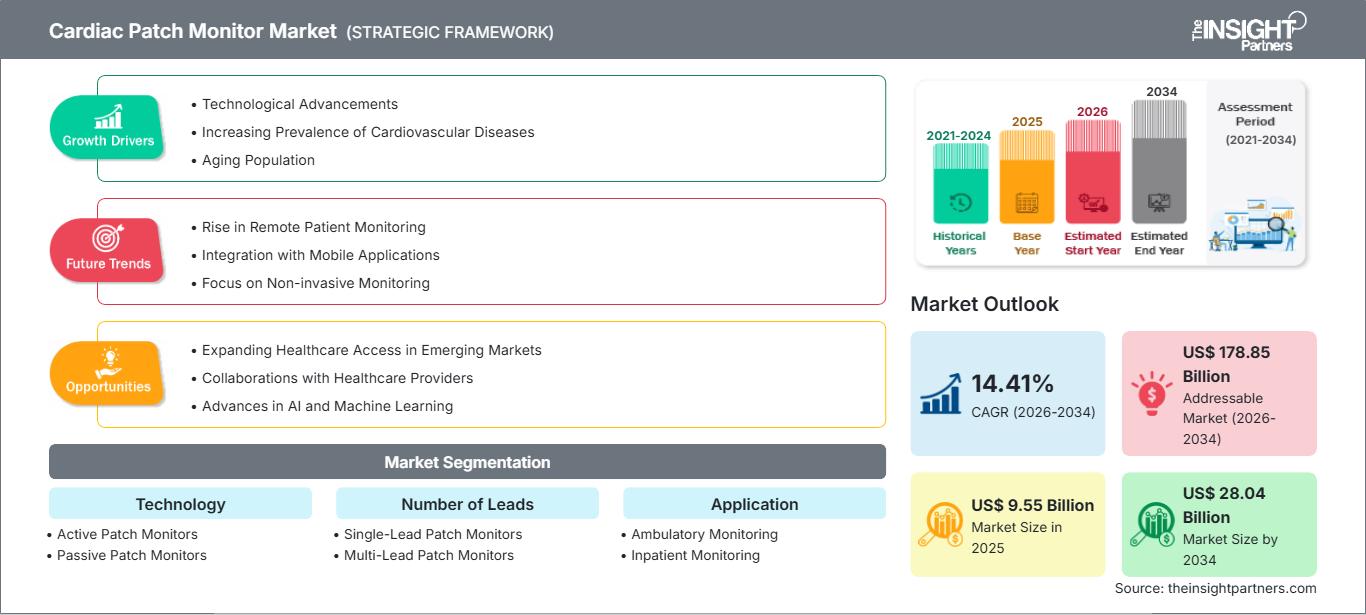
The Cardiac Patch Monitor Market was valued at US$ 9.55 Billion in 2025 and is expected to reach US$ 28.04 Billion by 2034, registering a CAGR of 1.46% during 2026–2034. The market encompasses wearable electrocardiographic patches used for extended rhythm surveillance across ambulatory, inpatient, and home healthcare environments, with product selection increasingly influenced by monitoring duration, lead configuration, connectivity, clinical workflow integration, and patient adherence.
Across North America, the Cardiac Patch Monitor Market size is supported by an estimated CAGR range of 1.2–1.6% during 2026–2034. High utilization of ambulatory electrocardiography, established reimbursement pathways, and integration of remote monitoring into cardiology practices sustain regional demand. Increasing use of extended-wear patches after stroke, ablation, and unexplained syncope is also shifting diagnostic activity from short-duration Holter testing toward decentralized monitoring.
Cardiac Patch Monitor Market Assessment and Insights
- North America: The region accounted for a 44–46% Cardiac Patch Monitor Market share in 2025 and is projected to record a 1.2–1.6% CAGR between 2026–2034, supported by reimbursement coverage, electrophysiology capacity, and mature remote-monitoring infrastructure.
- US: The country represented 82–84% of North American revenue in 2025 and is expected to expand at a 1.1–1.5% CAGR during 2026–2034, aided by extensive ambulatory cardiology networks.
- Europe: Europe held a 27–29% share in 2025 and is anticipated to register a 1.3–1.7% CAGR during 2026–2034. Germany and the UK lead adoption, followed by France, Italy, and Spain.
- Asia Pacific: Asia Pacific captured a 20–22% share in 2025 and is forecast to grow at a 1.8–2.2% CAGR during 2026–2034. China, Japan, India, South Korea, and Australia anchor regional deployment.
- Largest Segment: Active patch monitors represented a 62–66% market share in 2025 and are projected to expand at a 1.5–1.9% CAGR during 2026–2034, reflecting demand for connected surveillance and actionable alerts.
- High Growth Segment: Home healthcare accounted for an 18–22% market share in 2025 and is expected to register a 2.1–2.5% CAGR during 2026–2034, supported by self-application and decentralized cardiac care.
- Key companies analyzed in detail: Abbott Laboratories, Medtronic plc, AliveCor, Inc., BioTelemetry, Inc., Koninklijke Philips N.V., iRhythm Technologies, Inc., CardioComm Solutions, Inc., Samsung Electronics Co., Ltd., F. Hoffmann-La Roche Ltd, and ZOLL Medical Corporation.
Source: The Insight Partners' analysis based on proprietary research, government publications, company annual reports, investor presentations, industry databases, and expert interviews.
Monitoring of cardiac events has progressed from wired and short-term Holter monitors to light-weight patch sensors that are capable of recording ECG signals for extended durations. Miniaturization of semiconductors, better electrodes, skin-compatible adhesives, and cloud-based analytics have helped increase recording duration while minimizing interference in the lives of patients. Production considerations in this field are moving more towards sensor consistency, battery life, availability of disposables, security, and scalable technician reviews. As such, the Cardiac Patch Monitor Market has become a combination of medical device manufacturing and software, logistics, data analysis, and services.
Geographies that invest in digital healthcare infrastructure, primary care screenings, and remote specialist consultations will be more attractive in the future as far as technology development is concerned. Investment capital will flow into algorithm validation, multi-modal sensing, re-usable electronics, and automated clinical reports. The regulators are also raising their requirements in terms of algorithmic transparency, post-market surveillance, privacy, and interoperability. Such an approach might result in longer product development times, but will increase doctors' trust in the technology and allow validated patches to be used in clinical settings.
Cardiac Patch Monitor Market Report Scope
| Report Attribute | Details |
|---|---|
| Market size in 2025 | US$ 9.55 Billion |
| Market Size by 2034 | US$ 28.04 Billion |
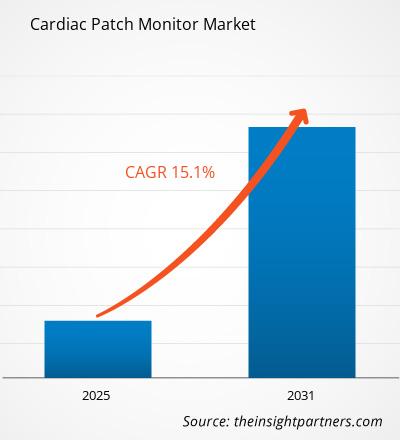
| Global CAGR (2026 - 2034) | 14.41% |
| Historical Data | 2021-2024 |
| Forecast period | 2026-2034 |
Cardiac Patch Monitor Market Analysis
Increases in the prevalence of cardiovascular disease, aging populations, and the sporadic occurrence of arrhythmias drive Cardiac Patch Monitor Market growth. The World Health Organization found that cardiovascular diseases accounted for an estimated 19.8 million deaths in 2022. There is a need for early detection and longitudinal observation. The ecosystem includes sensor manufacturers, adhesive providers, semiconductor firms, cloud service providers, diagnostic technicians, cardiologists, payers, and home-care providers.
The Cardiac Patch Monitor Market forecast shows that supply competitiveness will rely on the availability of validated algorithms, reliable electrodes, secure transmission, and qualified reviewing experts. Active monitors have increased clinical value when escalation is needed immediately, whereas passive ones stay valuable for retrospective diagnosis. Procurement processes become increasingly oriented toward total diagnostic effectiveness, avoidance of additional tests, reporting speed, reduced patient loss, and EHR compatibility instead of just lower costs of the device.
Analysis of the Cardiac Patch Monitor Market demonstrates a highly competitive landscape including integrated medtech firms and specialized digital-cardiology firms. iRhythm Technologies, Inc. offers extended monitoring and analytics by the technician, whereas Koninklijke Philips N.V., through BioTelemetry, Inc., combines monitoring services and clinical informatics. Abbott Laboratories and Medtronic plc benefit from broader cardiology connections, whereas AliveCor, Inc. and CardioComm Solutions, Inc. emphasize convenient ECG capture and interpretation.
The investment trends are now moving towards integrated diagnostic solutions rather than individual devices. Samsung Electronics Co., Ltd. brings consumer electronics experience, while ZOLL Medical Corporation already has channels in cardiac monitoring and emergency care. F. Hoffmann-La Roche Ltd participates in the larger personalized healthcare ecosystem. Positioning strategies will become more dependent on clinical studies, regulatory approval, cybersecurity, interactions with payers, and the ability to provide meaningful clinical information to physicians out of high volume of ECG data.
● REPORT CUSTOMIZATION
Tailor This Report To Align With Your Specific Business Requirements
This report can be customized to align precisely with your business objectives, scope, and target markets. Customization options include tailored segmentation, geography, competitive analysis, and strategic insights to support informed decision-making.
Customize This Report →WHAT YOU CAN ADJUST
- ● Segmentations
- ● Geography
- ● Competitive Analysis
- ● Language Preferences
Cardiac Patch Monitor Market: Strategic Insights
Regional Insights
North America Cardiac Patch Monitor Market
North America held a 44–46% share in 2025 and is projected to expand at a 1.2–1.6% CAGR during 2026–2034. The Cardiac Patch Monitor Market is underpinned by strong electrophysiology capabilities, solid diagnostic pathways for ambulant care, good levels of awareness regarding atrial fibrillation, and the widespread adoption of remote patient monitoring. Extended wear is becoming an increasingly attractive option in cases involving unexplained palpitations, stroke rhythms, syncope, and post-procedure cardiac rhythm monitoring.
Geographically speaking, there is strong demand in the US, while Canada and Mexico can add to it via the adoption of telecardiology and hospital upgrades. Providers become more interested in assessing the potential of cardiac patches in lowering repeat testing and speeding up the decision-making process in treatment. Reimbursement issues, information overload, and regional/payer differences in insurance may limit growth somewhat. Yet, cloud connectivity, self-adhesive patches, and the adoption of electronic medical records make the shift from wired systems to patches unavoidable.
U.S. Cardiac Patch Monitor Market
The US represented 82–84% of North American revenue in 2025 and is expected to record a 1.1–1.5% CAGR during 2026–2034. Adoption is encouraged by cardiological societies, providers of ambulatory monitoring services, awareness of prolonged-wear ECG, and a need for diagnostics to precede treatment options. Enrolment at home is becoming increasingly significant since a home-applied patch may decrease the number of clinic visits and reach patients across the country.
iRhythm Technologies, Inc., BioTelemetry, Inc., Koninklijke Philips N.V., Abbott Laboratories, Medtronic plc, AliveCor, Inc., and ZOLL Medical Corporation hold some form of business or clinical relationship in the region. The application trends highlight diagnosis of atrial fibrillation, post-ablation monitoring, cryptogenic stroke evaluation, and analysis of occasional symptoms. FDA control over medical devices and software-based interpretation promotes evidence generation and post-market surveillance. Nevertheless, adoption is influenced by provider concerns related to insurance coverage terms, reporting burden, handling of false positives, skin tolerance of the device, and integration into existing clinical IT systems.
Europe Cardiac Patch Monitor Market
Europe accounted for a 27–29% share in 2025 and is forecast to expand at a 1.3–1.7% CAGR during 2026–2034. Germany has the edge via hospital infrastructure, cardiology infrastructure, and digital health investment. Germany's approach to adoption depends on evidence needs, procurement practices, data protection, and demands for dependable interoperability between ambulatory ECG services and physicians' IT systems.
UK is an important market due to emphasis on community diagnostics in NHS pathway guidelines and reduction of elective backlog. Patch deployment helps in remote patient triage and monitoring, but regional purchasing organizations and clinical testing will impact its implementation timeline.
France, Italy, and Spain offer varied opportunities. France offers a framework for digital health reimbursement development, while Italy is investing in telemedicine capacity in regional systems. Spain's fragmented healthcare administration enables procurement differentiation but offers cardiology programs. Koninklijke Philips N.V. and specialty monitoring companies compete based on clinical evidence, coverage, interoperability, and conformity with European medical device regulations and data governance.
APAC Cardiac Patch Monitor Market
Asia Pacific held a 20–22% share in 2025 and is forecast to register a 1.8–2.2% CAGR during 2026–2034. China leads regional volume potential through hospital digitalization and domestic device manufacturing, while Japan provides a mature cardiology environment. South Korea combines connected-device expertise with advanced healthcare infrastructure.
India offers expansion through telecardiology and private hospital networks, whereas Australia supports adoption through remote-care requirements and established clinical standards. Policy-led digital health programs, rising cardiovascular risk, local electronics production, and specialist shortages strengthen the regional case for patches that transfer diagnostic data without requiring frequent hospital attendance.
Middle East & Africa Cardiac Patch Monitor Market
The Middle East and Africa region is projected to expand at a 1.5–1.9% CAGR during 2026–2034. Saudi Arabia leads investment through hospital modernization and digital-health programs, with the UAE supporting connected-care pilots and specialist services. South Africa remains the principal sub-Saharan market due to its private healthcare infrastructure.
Across the rest of MEA, adoption depends on mobile connectivity, diagnostic capacity, distributor coverage, and healthcare funding. Economic diversification, smart-hospital investment, and telecommunications infrastructure favor remote cardiac monitoring, although affordability and limited electrophysiology resources constrain widespread deployment outside major urban centers.
Segmentation Analysis
Technology
The Technology segment is projected to register a 1.4–1.8% CAGR during 2026–2034. Technology selection depends on whether clinicians require real-time event escalation or retrospective diagnostic interpretation. The Cardiac Patch Monitor Market scope includes connected active systems and recording-focused passive devices, with purchasing decisions shaped by monitoring duration, battery performance, data-transfer reliability, algorithm validation, clinical staffing, and reimbursement.
- Active Patch Monitors: These devices support near-real-time transmission and event notification, making them strategically important for higher-risk patients, mobile cardiac telemetry, post-discharge surveillance, and workflows requiring rapid clinical escalation.
- Passive Patch Monitors: Passive products store ECG data for later analysis and remain relevant where retrospective diagnosis, lower connectivity requirements, simplified patient use, and controlled review costs outweigh immediate notification needs.
Number of Leads
The Number of Leads segment is expected to grow at a 1.3–1.7% CAGR during 2026–2034. Lead configuration influences diagnostic detail, device size, power consumption, wear comfort, and clinician familiarity. Single-lead patches dominate routine ambulatory assessment because they simplify application and long-duration wear, whereas multi-lead configurations are strategically positioned for cases requiring improved signal context and rhythm differentiation.
- Single-Lead Patch Monitors: Lightweight construction, simple placement, and extended recording support broad ambulatory use. Their strategic importance lies in scalable arrhythmia screening, patient adherence, home application, and efficient cloud-based analysis.
- Multi-Lead Patch Monitors: These systems provide greater waveform context for complex diagnostic evaluation. Demand is concentrated among cardiology programs prioritizing signal specificity, morphology assessment, noise management, and stronger differentiation of rhythm abnormalities.
Application
The Application segment is projected to record a 1.4–1.8% CAGR during 2026–2034. Ambulatory use benefits from extended recording during normal activity, when intermittent arrhythmias are more likely to be captured. Inpatient applications emphasize mobility, telemetry continuity, and earlier discharge planning. Growth will depend on whether health systems can incorporate patch-generated findings into triage, diagnostic, and treatment workflows without increasing clinician burden.
- Ambulatory Monitoring: This application holds a central position because patches provide continuous observation beyond short clinic encounters, supporting investigations of palpitations, syncope, intermittent atrial fibrillation, and unexplained neurological events.
- Inpatient Monitoring: Hospitals use wearable patches to improve patient mobility, maintain surveillance beyond conventional telemetry areas, support step-down care, and establish monitoring continuity when patients transition from inpatient to home settings.
End-User
The End-User segment is expected to expand at a 1.6–2.0% CAGR during 2026–2034. Hospitals remain important prescribing and interpretation centers, while clinics expand access through ambulatory cardiology and primary-care pathways. Home healthcare is the highest-growth setting as self-application, courier logistics, digital enrollment, and remote support reduce dependence on facility-based initiation and broaden access for mobility-constrained patients.
- Hospitals: Hospitals generate substantial demand through electrophysiology, stroke, emergency, and post-procedure pathways. Their purchasing priorities include clinical accuracy, system integration, service responsiveness, cybersecurity, and standardized reporting across departments.
- Clinics: Cardiology and primary-care clinics use patches to investigate intermittent symptoms without hospital admission. Strategic value comes from faster patient enrollment, simplified device application, and access to specialist-reviewed diagnostic reports.
- Home Healthcare: Home-based monitoring supports older adults, rural patients, and post-discharge populations. Self-application, remote activation, digital symptom logs, and virtual assistance make this setting increasingly important for decentralized diagnostic delivery.
Opportunity Snapshot
| End-User | Revenue Contribution (High/Medium/Low) | Trend Tag | Adoption Stage |
| Hospitals | High | Care Continuity | Mature |
| Clinics | High | Ambulatory Triage | Scaling |
| Home Healthcare | Medium | Self Application | Scaling |
Cardiac Patch Monitor Market Growth Drivers and Impact Analysis
Rising Need to Detect Intermittent Cardiac Arrhythmias
Intermittent atrial fibrillation, tachycardia, bradycardia, and inexplicable palpitations can be missed in traditional clinical assessments and short-term Holter test procedures. Extended adhesive tests give more time for observation while allowing patients to go about their lives normally. The WHO’s estimate of 19.8 million cardiovascular fatalities in 2022 highlights the need for early detection and prevention in cardiovascular assessment. From a market perspective, this load motivates cardiologists, neurologists, and family doctors to employ patches when patients present with inexplicable fainting, stroke, or symptom recurrence. This effect reaches beyond the sales of patches since extended monitoring entails more recruitment, logistics, analysis, testing, and doctor interpretation.
Expansion of Remote and Home-Based Diagnostic Pathways
Hospitals are moving diagnostics which are appropriate outside of hospital settings to minimize the number of unnecessary admissions, ensure geographical accessibility, and manage specialist capacity. The cardiac patch is in line with the trend since portable technology may be delivered to patients who apply the patch at their convenience and return it without revisiting the facility. Remote symptom diaries and instructions help ensure compliance. The actual world experience of iRhythm during 2025 was based on 742,000 patients and showed that the at-home version could generate engagement and data integrity at a comparable level to the clinic version. In practice, decentralized enrollment broadens the addressable market of patients for the providers and decreases the dependence on monitoring labs. Thus, vendors that offer patient services, logistics, analytics, and EHR integration have excellent opportunities to earn more than the vendors of equipment.
Clinical Adoption of Extended-Wear ECG Analytics
Extended wear devices create large amounts of ECG data, which is not easily reviewed in a manual fashion at scale. Algorithmic assistance in classification aids in detection of rhythm events, prioritization of technologist review and creation of brief physician reports. A single study in 2025 analyzed 428,707 commercially insured individuals regarding yield, repeat utilization and cardiovascular outcomes by monitor type. This evidence generation impacts purchasing because health systems increasingly need proven clinical benefit in addition to technical accuracy. Commercial value is most evident when algorithms are paired with human review and quality control within predictable workflow. With more monitoring being done, scalable analytics could lower the cost of interpretation per unit, but vendors will need to deal with false positives, algorithm drift, cybersecurity and regulations surrounding software updates and clinical decision support.
Cardiac Patch Monitor Market Future Trends
Multimodal Patches Combining Electrical and Hemodynamic Signals
A major direction in Cardiac Patch Monitor Market trends is the transition from ECG-only recording toward devices that capture several physiological signals. Future patches may leverage electrocardiograms, photoplethysmograms, motion, temperature, respiratory, and mechanical cardiac measures in order to contextualize rhythm events. CardioTag was FDA-approved in 2025 for ECG, photoplethysmogram, and seismocardiogram recording at the same time, signaling a move towards multimodal devices. These would help in monitoring heart failure, fluid volume status, and distinguishing normal from abnormal physiology. Success would be based upon validation of relevant clinical outcomes and improvement in battery life. Manufacturers need to ensure that new signals add value by contributing useful information rather than increasing review or false alarm burden.
Device-Agnostic Artificial Intelligence and Interoperable Reporting
Cardiac monitoring software will depend less on proprietary hardware as healthcare providers look for consistent analysis of ECGs from various devices. Algorithm independence from specific hardware may provide health systems with flexibility while allowing for the standardization of workflows. Interoperable reporting will facilitate the entry of patch diagnoses into electronic health records, stroke pathway programs, virtual wards, and population health monitoring dashboards without extra documentation. Algorithmic innovation will be more about validation, transparency of the analysis, configuration of workflows, and integration services. It may stimulate cooperation among sensor producers, software companies, and healthcare service providers. The regulatory aspect will be important since algorithm modifications and new claims of diagnosis impact the class of medical devices. Companies that build clear performance monitoring and software-release procedures will have an advantage in enterprise purchasing.
Cardiac Patch Monitor Market Opportunities
Build Scalable Home-Enrollment and Patient-Support Networks
Home enrollment provides an actionable opportunity for manufacturers, diagnostic service companies, logistics providers, and virtual-care operators. Investment priorities include intuitive application instructions, multilingual support, automated activation checks, adhesive troubleshooting, symptom logging, and reliable device-return processes. According to Heart Rhythm study cited by iRhythm Technologies, Inc. in November 2025, over 1.1 million monitored patients have been evaluated, and it is apparent that short-term monitoring may fail to detect significant arrhythmias. A business model that will facilitate easy adoption of long-term monitoring would increase access without scheduling additional clinic visits. The metrics that successful operators should be able to track include the completion rate of enrollments, amount of analyzable wear time, repeat testing frequency, and report turn-around time.
Localize Monitoring Platforms for High-Growth Asian Health Systems
Asia Pacific offers an investment opportunity for companies able to localize products, clinical evidence, and service delivery. Market entry should prioritize regulatory approvals, local-language interfaces, regional cloud architecture, distributor training, and integration with hospital information systems. Working with electronics firms will help to enhance the process of sourcing parts and lower cost configurations, and working with hospital associations will allow for validation data to be collected locally. It is not prudent to consider China, India, South Korea, Japan, and Australia as one business opportunity because of differences in reimbursement, purchasing, and pathways. The risks associated with implementation will be minimized if the vendors target urban cardiology and telemedicine units first, followed by primary care and discharge screening later on.
Recent Developments
- November 2025: iRhythm Technologies, Inc. announced publication of a large-scale study in Heart Rhythm covering more than 1.1 million patients. The analysis indicated that 24–48-hour monitoring could miss actionable arrhythmias, while additional data involving over 742,000 patients supported at-home application and activation of 14-day Zio patch-based monitoring.
- July 2025: Cardiosense, Inc. received US FDA clearance for CardioTag, a wearable device designed to capture electrocardiogram, photoplethysmogram, and seismocardiogram signals simultaneously. The clearance broadened the technical direction of wearable cardiac surveillance by combining electrical rhythm data with measurements related to cardiac mechanics, blood flow, heart rate, and pulse rate.
- April 2025: iRhythm Technologies, Inc. presented AVALON study findings at HRS 2025 based on 428,707 commercially insured patients. The company reported that its long-term continuous monitoring service was associated with higher diagnostic yield and reduced repeat testing compared with other evaluated ambulatory monitoring approaches, extending evidence beyond Medicare populations.
Frequently Asked Questions

- Comprehensive Market Sizing and Forecast Analysis
- Detailed Segmentation Analysis
- In-Depth Market Dynamics Assessment
- Regional and Country-Level Insights
- Competitive Landscape and Company Benchmarking
- Strategic Business Intelligence
Recent Reports
Testimonials

The Insight Partners' SCADA System Market report is comprehensive, with valuable insights on current trends and future forecasts. The team was highly professional, responsive, and supportive throughout. We are very satisfied and highly recommend their services.
RAN KEDEM Partner, Reali Technologies LTDs
I requested a report on a very specific software market and the team produced the report in a few days. The information was very relevant and well presented. I then requested some changes and additions to the report. The team was again very responsive and I got the final report in less than a week.
JEAN-HERVE JENN Chairman, Future Analytica
We worked with The Insight Partners for an important market study and forecast. They gave us clear insights into opportunities and risks, which helped shape our plans. Their research was easy to use and based on solid data. It helped us make smart, confident decisions. We highly recommend them.
PIYUSH NAGPAL Sr. Vice President, High Beam Global
The Insight Partners delivered insightful, well-structured market research with strong domain expertise. Their team was professional and responsive throughout. The user-friendly website made accessing industry reports seamless. We highly recommend them for reliable, high-quality research services
YUKIHIKO ADACHI CEO, Deep Blue, LLC.
This is the first time I have purchased a market report from The Insight Partners.While I was unsure at first, I visited their web site and felt more comfortable to take the risk and purchase a market report.I am completely satisfied with the quality of the report and customer service. I had several questions and comments with the initial report, but after a couple of dialogs over email with their analyst I believe I have a report that I can use as input to our strategic planning process.Thank you so much for taking the extra time and making this a positive experience.I will definitely recommend your service to others and you will be my first call when we need further market data.
JOHN SUZUKI President and Chief Executive Officer, Board Director, BK Technologies
I wish to appreciate your support and the professionalism you displayed in the course of attending to my request for information regarding to infectious disease IVD market in Nigeria. I appreciate your patience, your guidance, and the fact that you were willing to offer a discount, which eventually made it possible for us to close a deal. I look forward to engaging The Insight Partners in the future, all thanks to the impression you have created in me as a result of this first encounter.
DR CHIJIOKE ONYIA MANAGING DIRECTOR, PineCrest Healthcare Ltd.Reason to Buy
- Informed Decision-Making
- Understanding Market Dynamics
- Competitive Analysis
- Identifying Emerging Markets
- Customer Insights
- Market Forecasts
- Risk Mitigation
- Boosting Operational Efficiency
- Strategic Planning
- Investment Justification
- Tracking Industry Innovations
- Aligning with Regulatory Trends





 Get Free Sample for