
Cardiopulmonary Autotransfusion System Market Size, Trends & Demand by 2034
Coverage: By Product (On-Pump Transfusion Device , Off-Pump Transfusion Device); End User (Hospitals, Ambulatory Surgical Centers, Cardiac Research Centers) , and Geography (North America, Europe, Asia Pacific, and South and Central America)
- Status : Data Released
- Report Code : TIPRE00028547
- Category : Life Sciences
- No. of Pages : 150
- Available Report Formats :


- Last update date : September 07, 2026


2025 Market Size
US$ 607.34 Mn
Base year value
2034 Forecast
US$ 724.72 Mn
Projected by 2034
CAGR 2026-2034
1.98 %
Growth rate
Addressable Market
US$ 6,036.79 Mn
(2026-2034)
The Cardiopulmonary Autotransfusion System market was valued at US$ 607.34 million in 2025 and is expected to reach US$ 724.72 million by 2034; it is estimated to record a CAGR of 1.98% during 2026-2034.
Cardiopulmonary Autotransfusion System Market Assessment and Insights
- North America: Accounted for an estimated 38–42% share in 2025 and is projected to grow at a CAGR of 1.8–2.2% during 2026–2034, supported by mature perfusion infrastructure, replacement purchasing, and formal blood conservation protocols.
- US: Represented approximately 82–86% of North American revenue in 2025 and is expected to record a CAGR of 1.9–2.3% through 2034.
- Europe: Held an estimated 34–38% share in 2025 and is projected to expand at a CAGR of 1.7–2.1%, with Germany, the UK, France, Italy, and Spain forming the principal markets.
- Asia Pacific: Captured approximately 17–21% share in 2025 and is forecast to register a CAGR of 3.1–3.7%, led by China, Japan, South Korea, India, and Australia.
- Largest Segment: Hospitals accounted for an estimated 72–76% market share in 2025 and are projected to register a CAGR of 2.0–2.4% during 2026–2034.
- High Growth Segment: Ambulatory surgical centers represented approximately 12–16% market share in 2025 and are forecast to expand at a CAGR of 3.0–3.6% through 2034.
- Key companies analyzed in detail: Haemonetics Corporation, Medtronic plc, LivaNova PLC, Fresenius Kabi AG, Terumo Cardiovascular Systems Corporation, Beijing Wandong Medical Technology Co., Ltd., Redax S.p.A., Global Blood Resources, LLC, Atrium Medical Corporation, and Stryker Corporation.
Source: The Insight Partners' analysis based on proprietary research, government publications, company annual reports, investor presentations, industry databases, and expert interviews.
Technological development is moving system choice from simple blood harvesting towards automatic washing, optical blood sensing, configurable processing, and electronic case recording. Modern systems are using software-controlled cycles, built-in suction, different bowl sizes, and continuous flow processing for improved red blood cells recovery and consistency in the operating room. The Medtronic’s autoLog IQ is using algorithms for blood sensing, whereas Haemonatics’ Cell Saver Elite+ has automatic and configurable wash features. The Fresenius Kabi’s CATSmart system uses continuous flow processing and it is marketed in the US by Terumo Cardiovascular Systems.
During the forecast period, the investments will be focused on portable machines, standardized disposables, training of personnel, and increased usage in developing cardiac facilities. Regulatory requirements regarding sterilization, hemolysis control, traceability, and post-marketing monitoring will motivate existing companies to enhance their quality systems. The growth in China, India, and Gulf regions will depend on the presence of cardiac facilities, capabilities of local distributors, tenders’ access, and availability of specific procedure disposables.
Cardiopulmonary Autotransfusion System Market Report Scope
| Report Attribute | Details |
|---|---|
| Market size in 2025 | US$ 607.34 Million |
| Market Size by 2034 | US$ 724.72 Million |
| Global CAGR (2026 - 2034) | 1.98% |
| Historical Data | 2021-2024 |
| Forecast period | 2026-2034 |
Cardiopulmonary Autotransfusion System Market Analysis
Cardiopulmonary autotransfusion system market growth is driven by cardiac procedures including use of cardiopulmonary bypass, high volume blood loss, and lack of access to compatible donor blood. Ecosystem consists of equipment vendors, disposable set vendors, perfusionists, cardiac surgeons, transfusion committee members, distributors, and biomedical services providers. Systems collect blood from the surgical field, separates and washes red blood cells, and transfuses patient with washed blood. Process may result in lower dependency on allogeneic products and enhanced blood availability during complicated surgery.
Economics of supply involve less frequent placements of capital equipment and regular revenue from disposable consumables such as bowls, tubing, reservoirs, filters, anticoagulation line, and collection bag. Healthcare facilities perform evaluations based on procedure cost, processing rate, support coverage, disposables availability, and training needs. Vendor reliability is very important due to proprietary disposables used by equipment.
Cardiopulmonary autotransfusion system market assessment reveals highly concentrated technological landscape with leaders such as Haemonetics Corporation, Medtronic plc, and LivaNova PLC supported by players such as Fresenius Kabi AG and Terumo Cardiovascular Systems Corporation. Established firms compete by leveraging installed-base relationships, consumables contracts, education, automation, and integration with perfusion systems. Consistently published industry reviews identify the three firms as owning a majority share of the revenue of the sector.
Market participants differ in strategic approaches. Haemonetics specializes in intelligent cell salvage workflows, Medtronic offers dynamic processing along with perfusion integration, LivaNova integrates autotransfusion into cardiopulmonary product family. Global Blood Resources, LLC concentrates on whole blood harvesting using Hemobag technology. Redax S.p.A. provides solutions for postoperative recovery via drainage and filtration system.
● REPORT CUSTOMIZATION
Tailor This Report To Align With Your Specific Business Requirements
This report can be customized to align precisely with your business objectives, scope, and target markets. Customization options include tailored segmentation, geography, competitive analysis, and strategic insights to support informed decision-making.
Customize This Report →WHAT YOU CAN ADJUST
- ● Segmentations
- ● Geography
- ● Competitive Analysis
- ● Language Preferences
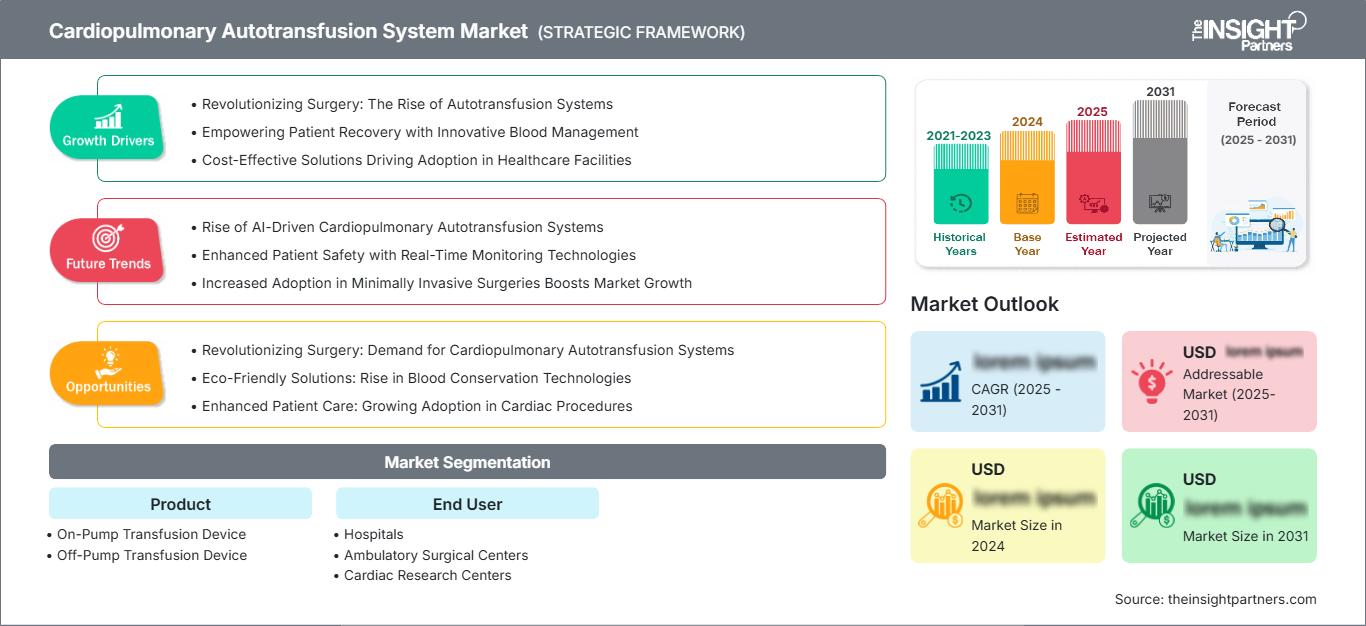
Cardiopulmonary Autotransfusion System Market: Strategic Insights
Regional Insights
North America Cardiopulmonary Autotransfusion System Market
North America held an estimated 38–42% Cardiopulmonary Autotransfusion System Market share in 2025 and is forecast to expand at a CAGR of 1.8–2.2% during 2026–2034. The region benefits from a large installed base in tertiary hospitals, established cardiac surgery programs, qualified perfusion personnel, and institutional patient blood management committees. Recurring disposable consumption provides stability even where capital replacement cycles remain extended.
Adoption can also be shaped by intermittent blood donor limitations, hospital expense control, and the need for traceable perioperative processes. Automated systems with ease of installation, case documentation, and customizable wash modes have a favorable position. The United States is the biggest market in the region in terms of earnings. On the other hand, Canada ensures constant demand via its hospital networks. Mexico constitutes a smaller market, where opportunities exist in private cardiac hospitals and big urban centers. Leading companies enjoy coverage throughout the region directly or through distributors.
U.S. Cardiopulmonary Autotransfusion System Market
The US represented an estimated 82–86% of North American revenue in 2025 and is projected to register a CAGR of 1.9–2.3% during 2026–2034. The demand focuses on academic medical centers, integrated delivery networks, trauma hospitals, and specialist cardiovascular institutes. Haemonetics Corporation and Medtronic plc have existing product presence in the market, while Terumo Cardiovascular Systems Corporation supplies the national market with Fresenius Kabi continuous autotransfusion systems.
Trends in application increasingly revolve around usage of the devices in accordance with established protocols. The purchasing department evaluates such aspects as red blood cell recovery, contaminant separation, processing speed, information management, capability of emergency mode work, and cost per unit volume of recovered blood. Large hospitals with high volumes of patients requiring treatment for heart diseases, vascular disorders, transplants, orthopedic conditions, or injuries are able to distribute the capital and training costs for the systems among various departments. The replacement purchases will be made in favor of systems featuring easy-to-use interface, technical support, barcode system, and case-data export.
Europe Cardiopulmonary Autotransfusion System Market
Europe accounted for an estimated 34–38% share in 2025 and is expected to grow at a CAGR of 1.7–2.1% through 2034. Germany is the largest national market, driven by heart centers, perfusion practice, and structured procurement. The presence of LivaNova in Europe, coupled with its history of cardiopulmonary manufacturing, supports its regional availability of equipment, consumables, training, and technical support.
In the UK, there are coordinated blood conservation strategies and centralized hospital procurement practices. Germany presents a larger procedural and installed-base opportunity, but tender review adds cost pressure across the life cycle. France, Italy, and Spain provide input through university hospitals and regional cardiac centers. Italy gains further advantage from the operating presence and supply chain of LivaNova. In Europe, the demands imposed by Medical Device Regulation include increased documentation, clinical data, surveillance, and distributor accountability. This favors suppliers able to maintain quality systems and consumable inventories. Growth in the market is limited, as the presence of equipment is already strong.
APAC Cardiopulmonary Autotransfusion System Market
Asia Pacific represented approximately 17–21% share in 2025 and is forecast to record a CAGR of 3.1–3.7% during 2026–2034. China leads regional demand through expanding cardiac centers and equipment localization, while Japan contributes through technologically advanced hospitals. South Korea and Australia support premium systems, whereas India offers volume potential through private hospital chains and cardiac institutes.
Growth depends on perfusion training, reimbursement, distributor service capacity, and reliable access to sterile disposables. Government investment in tertiary care and rising cardiovascular procedure capacity will encourage adoption, although price-sensitive tenders may favor modular systems, local sourcing, and utilization-based purchasing.
Middle East & Africa Cardiopulmonary Autotransfusion System Market
The Middle East & Africa region is expected to register a CAGR of 2.4–3.0% during 2026–2034. Saudi Arabia leads through investment in cardiac centers and hospital infrastructure, followed by the UAE’s specialist private hospitals. South Africa anchors sub-Saharan demand, while the Rest of MEA remains dependent on referral hospitals and imported equipment.
Expansion is associated with healthcare infrastructure programs rather than energy demand directly, although hydrocarbon-funded public investment supports hospital construction in Gulf countries. Adoption constraints include limited perfusion staffing, foreign-exchange exposure, distributor coverage, equipment servicing, and recurring consumable procurement.
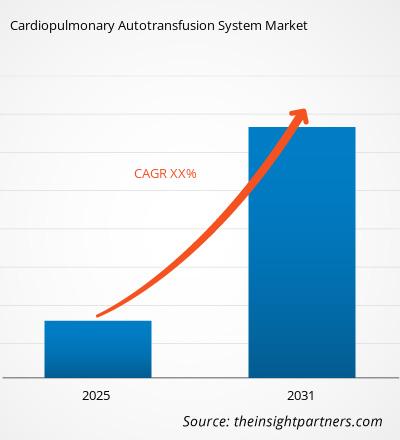
Segmentation Analysis
Product
The product segment is projected to grow at a CAGR of 2.1–2.5% during 2026–2034. The Cardiopulmonary Autotransfusion System Market scope encompasses on-pump and off-pump transfusion devices used to recover blood during or around cardiac procedures. Purchasing decisions depend on processing consistency, blood quality, disposable compatibility, emergency capability, equipment footprint, operator workload, and integration with established bypass or surgical workflows.
- On-Pump Transfusion Device: These devices hold the stronger position because cardiopulmonary bypass procedures generate recoverable circuit and surgical-field blood. Demand is concentrated in cardiac hospitals requiring predictable processing, contaminant removal, and perfusion-team integration.
- Off-Pump Transfusion Device: Adoption is associated with beating-heart procedures, postoperative recovery, and cases where flexible collection is preferable. Compact configurations and simplified operation improve strategic relevance in lower-volume surgical environments.
End User
The end-user segment is forecast to register a CAGR of 2.0–2.4% during 2026–2034. Adoption is determined by surgical volume, anticipated blood loss, availability of perfusionists, transfusion governance, and the economic case for reducing donor-blood utilization. Hospitals retain the dominant installed base, while ambulatory surgical centers offer faster percentage growth from a smaller base. Research centers influence future protocols through device evaluation and clinical evidence generation.
- Hospitals: Hospitals dominate demand because complex cardiac surgery requires operating rooms, blood-bank access, intensive care, perfusion specialists, and biomedical support. Recurring procedural volumes also improve equipment utilization and consumable purchasing efficiency.
- Ambulatory Surgical Centers: These facilities represent an emerging opportunity where suitable high-blood-loss procedures migrate to outpatient settings. Adoption favors portable systems, simple setup, limited training requirements, and predictable per-procedure economics.
- Cardiac Research Centers: Research institutions provide strategic value through clinical validation, comparative blood-quality studies, protocol development, and operator education. Their direct purchasing volume is smaller, but their evidence can influence hospital procurement.
Opportunity Snapshot
| End User | Revenue Contribution | Trend Tag | Adoption Stage |
| Hospitals | High | Protocol Integration | Mature |
| Ambulatory Surgical Centers | Medium | Portable Salvage | Scaling |
| Cardiac Research Centers | Low | Clinical Validation | Emerging |
Cardiopulmonary Autotransfusion System Market Growth Drivers and Impact Analysis
Expansion of Patient Blood Management Programs
Patient Blood Management has transformed the use of autotransfusion technology from the operating room into a multi-disciplinary process encompassing pre-operative anemia, blood conservation, coagulation management, and appropriate transfusion practices. Autotransfusion machines facilitate this practice through the ability to recover a patient’s red blood cells during surgical procedures that are likely to cause blood loss. Market implications are increased utilization criteria, consolidated procurement processes, and increased participation of transfusion committees. Hospitals have the ability to benchmark the equipment based on avoidance of donor units, blood quality, consistent workflows, and consumables costs. Suppliers who offer clinical education, protocols development and documentable cases can help ensure installed base retention. This impact is most significant in cardiac surgery, vascular surgery, transplant and trauma centers where procedure volumes justify the need for equipment and trained operators.
Persistent Constraints in Donor-Blood Availability
The challenges faced by blood banks include regular issues of supply due to shortages of blood due to seasonality, changing demographics, emergencies, and lack of matching products. While autologous harvesting does not eliminate the requirement for donor blood, it can help maintain the supplies of blood for those cases where cell harvesting cannot be employed. The usefulness of the system as an operation helps offset any concerns regarding the actual cost benefit of the machines on a hospital-by-hospital basis. It is clear from the market that there is increased interest in autologous harvesting technology by acute care facilities, military/emergency hospitals, and blood distribution areas. The vendors could increase sales through fast-processing machines, emergency protocols, reliable disposable supplies, and a variety of machines used in other surgery departments. Supply disruptions can interrupt surgeries and thus make it essential for customers to analyze the reliability of manufacturing, distributors, and supply chain when evaluating bids or renewing contracts.
Growth in Complex Cardiovascular Procedures
Growing aging populations and the enduring problem of coronary, valvular, and aortic disease will maintain demand for complex surgery despite advances in catheter-based methods. Such open surgeries will be needed for multivessel disease, composite surgery, repeat surgery, congenital disease, and patients unfit for minimal intervention surgery. Such surgeries will require significant blood loss and cardiopulmonary bypass; thus, there will be regular need for autotransfusion. The business implications will include a consistent demand for equipment replacements and regular processing sets and not fast expansion of units. Processing machines that can manage changing blood volumes and emergency situations can meet the different case loads. There is need for manufacturers to assist in training, since processing quality is dependent on suction technique, anticoagulation, washing, and operator reaction.
Cardiopulmonary Autotransfusion System Market Future Trends
Algorithm-Guided Processing and Connected Documentation
Cardiopulmonary Autotransfusion System Market trends will increasingly reflect algorithm-guided control, optical blood sensing, automated cycle adjustment, and connected case documentation. Existing platforms already demonstrate adaptive processing, barcode support, and electronic data export, creating a foundation for tighter integration with perfusion records and hospital information systems. Future development will focus on identifying inadequate fill conditions, optimizing wash parameters, reducing operator variability, and documenting processed volumes automatically. Adoption will depend on cybersecurity, interoperability, validation, and clinician oversight. Suppliers that translate device data into usable quality indicators can support blood-management audits, utilization benchmarking, preventive maintenance, and evidence-based procurement without replacing professional judgment.
Recovery of Multiple Autologous Blood Components
Next-generation development is likely to move beyond red blood cell concentration toward preservation or recovery of additional blood components. Conventional washing can discard platelets and plasma proteins, creating interest in technologies designed to retain platelets or concentrate whole blood. A 2026 clinical publication evaluating i-SEP’s same system reported partial preservation of platelet count and function in on-pump cardiac surgery, indicating a potential direction for future systems. Commercialization will require multicenter evidence, reproducible component quality, regulatory clearance, and economic validation. If achieved, multicomponent recovery could broaden value propositions by addressing coagulation support alongside oxygen-carrying capacity.
Cardiopulmonary Autotransfusion System Market Opportunities
Scaled Deployment Across High-Volume Hospital Networks
Integrated hospital networks offer an actionable opportunity to standardize autotransfusion equipment across cardiac, vascular, trauma, transplant, and orthopedic departments. Cardiopulmonary Autotransfusion System Market Forecasts indicate moderate overall expansion, making share gains and higher utilization more important than reliance on new hospital construction. Suppliers can pursue fleet agreements combining equipment, proprietary disposables, preventive maintenance, operator certification, and utilization analytics. Standardization can reduce training variation and simplify inventory, while multisite contracts improve demand visibility for manufacturers. Successful proposals should quantify procedure eligibility, disposable cost, service requirements, and avoided donor-product use. Flexible placement models, including reagent-rental or volume-linked arrangements, may accelerate adoption where capital budgets constrain outright equipment purchasing.
Emerging Cardiac Centers in Asia and the Gulf
Expansion of specialist cardiac capacity in China, India, Saudi Arabia, and the UAE creates an opportunity for suppliers with scalable distribution and clinical-support models. Market entry should combine local regulatory capability, service engineer coverage, perfusion training, and sufficient inventories of sterile sets. Premium systems may succeed in flagship hospitals, while broader penetration will require compact equipment and competitive procedure economics. Partnerships with teaching hospitals can establish reference sites and generate locally relevant operating experience. Manufacturers should avoid treating equipment placement as the final objective because recurring utilization depends on trained staff, protocol adoption, available disposables, and maintenance response. Local assembly or regional warehousing can further reduce tender risk, lead times, and foreign-exchange exposure.
Recent Developments
- August 2026: LivaNova PLC entered a long-term agreement with Thermo Fisher Scientific to strengthen availability of a critical oxygenator component. The agreement is expected to expand cardiopulmonary manufacturing output and address unmet customer demand. Although centered on oxygenators, the initiative strengthens LivaNova’s broader perfusion supply chain and customer relationships relevant to its Xtra autotransfusion platform.
- January 2026: i-SEP reported peer-reviewed clinical evidence for its same intraoperative autotransfusion system in cardiac surgery. The study evaluated 44 adults, with data from 31 patients, and reported median platelet recovery of 76.5% while preserving partial platelet functionality, supporting further investigation of combined red blood cell and platelet recovery.
- December 2025: Terumo Corporation published its 2025 strategic report outlining investment in blood-processing automation, data integration, geographically flexible manufacturing, and services responding to unstable blood supply. These priorities support Terumo’s wider blood-management strategy and complement the US distribution of Fresenius Kabi CATSmart continuous autotransfusion systems by Terumo Cardiovascular Systems Corporation.
Frequently Asked Questions

- Comprehensive Market Sizing and Forecast Analysis
- Detailed Segmentation Analysis
- In-Depth Market Dynamics Assessment
- Regional and Country-Level Insights
- Competitive Landscape and Company Benchmarking
- Strategic Business Intelligence
Recent Reports
Testimonials

The Insight Partners provided valuable market intelligence that supported our global go-to-market strategy. Their team was professional, responsive, and attentive to our feedback, providing thoughtful analysis and helpful methodological clarifications throughout the project.
Junmo Kim Chief Financial Officer (CFO), Enertech Co., Ltd.
The Insight Partners' SCADA System Market report is comprehensive, with valuable insights on current trends and future forecasts. The team was highly professional, responsive, and supportive throughout. We are very satisfied and highly recommend their services.
RAN KEDEM Partner, Reali Technologies LTDs
I requested a report on a very specific software market and the team produced the report in a few days. The information was very relevant and well presented. I then requested some changes and additions to the report. The team was again very responsive and I got the final report in less than a week.
JEAN-HERVE JENN Chairman, Future Analytica
We worked with The Insight Partners for an important market study and forecast. They gave us clear insights into opportunities and risks, which helped shape our plans. Their research was easy to use and based on solid data. It helped us make smart, confident decisions. We highly recommend them.
PIYUSH NAGPAL Sr. Vice President, High Beam Global
The Insight Partners delivered insightful, well-structured market research with strong domain expertise. Their team was professional and responsive throughout. The user-friendly website made accessing industry reports seamless. We highly recommend them for reliable, high-quality research services
YUKIHIKO ADACHI CEO, Deep Blue, LLC.
This is the first time I have purchased a market report from The Insight Partners.While I was unsure at first, I visited their web site and felt more comfortable to take the risk and purchase a market report.I am completely satisfied with the quality of the report and customer service. I had several questions and comments with the initial report, but after a couple of dialogs over email with their analyst I believe I have a report that I can use as input to our strategic planning process.Thank you so much for taking the extra time and making this a positive experience.I will definitely recommend your service to others and you will be my first call when we need further market data.
JOHN SUZUKI President and Chief Executive Officer, Board Director, BK Technologies
I wish to appreciate your support and the professionalism you displayed in the course of attending to my request for information regarding to infectious disease IVD market in Nigeria. I appreciate your patience, your guidance, and the fact that you were willing to offer a discount, which eventually made it possible for us to close a deal. I look forward to engaging The Insight Partners in the future, all thanks to the impression you have created in me as a result of this first encounter.
DR CHIJIOKE ONYIA MANAGING DIRECTOR, PineCrest Healthcare Ltd.Reason to Buy
- Informed Decision-Making
- Understanding Market Dynamics
- Competitive Analysis
- Identifying Emerging Markets
- Customer Insights
- Market Forecasts
- Risk Mitigation
- Boosting Operational Efficiency
- Strategic Planning
- Investment Justification
- Tracking Industry Innovations
- Aligning with Regulatory Trends





 Get Free Sample for