
Cardiorespiratory Stress Test Equipment Market Size, Share & Forecast by 2034
Coverage: By Type (Cardiopulmonary Exercise Testing (CPET) System, Stress ECG, Pulse Oximeters, Stress Blood Pressure Monitors, Single-Photon Emission Computed Tomography (SPECT)); Application (Hospitals, Specialty Clinics/Cardiology Clinics, Ambulatory Surgical Centers, Diagnostic Centers) , and Geography (North America, Europe, Asia Pacific, and South and Central America)
- Status : Data Released
- Report Code : TIPRE00026334
- Category : Life Sciences
- No. of Pages : 150
- Available Report Formats :


- Last update date : September 07, 2026


2025 Market Size
US$ 1.65 Bn
Base year value
2034 Forecast
US$ 3.01 Bn
Projected by 2034
CAGR 2026-2034
6.91 %
Growth rate
Addressable Market
US$ 21.05 Bn
(2026-2034)
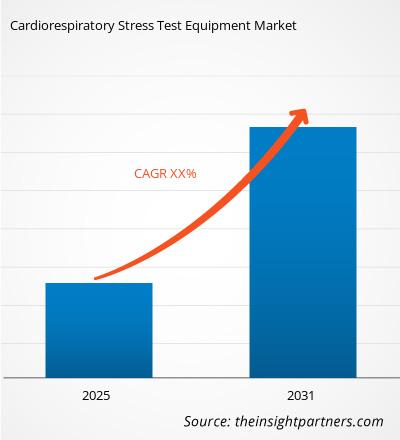
The Cardiorespiratory Stress Test Equipment market was valued at US$ 1.65 billion in 2025 and is expected to reach US$ 3.01 billion by 2034; it is estimated to record a CAGR of 6.91% during 2026-2034.
Cardiorespiratory Stress Test Equipment Market Assessment and Insights
- North America: The region accounted for an estimated 38–42% share in 2025 and is projected to expand at a 7.2–7.8% CAGR between 2026–2034, supported by structured cardiac-care networks and recurring equipment replacement.
- US: The country represented 82–86% of North American revenue in 2025 and is expected to record a 7.3–7.9% CAGR during 2026–2034.
- Europe: Europe held an estimated 27–31% share in 2025 and is forecast to grow at a 6.8–7.4% CAGR through 2034, led by Germany, the UK, France, Italy, and Spain.
- Asia Pacific: Asia Pacific represented approximately 20–24% of revenue in 2025 and is projected to register an 8.7–9.4% CAGR through 2034, with China, Japan, India, and South Korea generating significant demand.
- Largest Segment: Cardiopulmonary exercise testing systems accounted for an estimated 31–35% market share in 2025 and are projected to expand at a 7.8–8.4% CAGR during 2026–2034.
- High Growth Segment: Diagnostic centers represented an estimated 18–22% market share in 2025 and are expected to grow at an 8.5–9.2% CAGR during 2026–2034.
- Key companies analyzed in detail: Innomed Medical Inc., MGC Diagnostics Corporation, SCHILLER AG, custo med GmbH, Allengers Medical Systems Limited, GE HealthCare Technologies Inc., Nihon Kohden Corporation, Masimo Corporation, Koninklijke Philips N.V., and COSMED S.r.l.
Source: The Insight Partners' analysis based on proprietary research, government publications, company annual reports, investor presentations, industry databases, and expert interviews.
The clinical stress test has advanced from being solely a connected treadmill ECG recording process to a multimodal system that integrates breath-by-breath gas exchange, twelve-lead electrocardiogram recording, pulse oximetry, automated blood pressure monitoring, and imaging. Production dynamics are increasingly favoring modular hardware components, reusable sensor devices, software interoperability, and flexible workstations. The manufacturers are emphasizing features like wireless monitoring, cybersecurity, automated quality checks, and remote monitoring so as to allow clinicians to streamline protocols without the need for excessive data handling and repeat tests.
For the period ending 2034, investments in this segment will be moving to underserved metro regions within the Asia Pacific, the Middle East, and Africa. Hospital renovations, cardiovascular disease prevention programs, expansions of private diagnostic chains, and improved procurement policies will facilitate installations. A regulatory focus on precision in devices, calibratable instruments, equitable pulse oximeters, and secure data transmission will favor vendors who can invest in validations, after-sales services, clinician training, and post-market surveillance.
Cardiorespiratory Stress Test Equipment Market Report Scope
| Report Attribute | Details |
|---|---|
| Market size in 2025 | US$ 1.65 Billion |
| Market Size by 2034 | US$ 3.01 Billion |
| Global CAGR (2026 - 2034) | 6.91% |
| Historical Data | 2021-2024 |
| Forecast period | 2026-2034 |
Cardiorespiratory Stress Test Equipment Market Analysis
The Cardiorespiratory Stress Test Equipment Market growth is driven by the requirement for screening exertional symptoms prior to reaching the stage where the patient needs to be admitted into the hospital or be subjected to a more invasive investigation. According to the World Health Organization statistics, there were about 19.8 million deaths due to cardiovascular diseases in 2022, which amounts to approximately 32% of total global deaths. Hospitals drive demand, whereas specialist clinics and diagnostic centers broaden the testing scope for stable patients.
The Cardiorespiratory Stress Test Equipment Market includes gas-analysis modules, ECG acquisition units, exercise ergometers, treadmills, blood pressure units, oximeters, imaging systems, software, consumables, calibration gases, and service contracts. Supply chain sustainability requires certification of sensors, semiconductor components, software support, and training of field engineers. Increasingly, buyers consider lifecycle costs, uptime guarantees, cybersecurity updates, and integration into hospital information systems, rather than purchase price only.
The competitive environment in the Cardiorespiratory Stress Test Equipment Market is split between diversified medical technology players and cardiopulmonary specialists. GE HealthCare Technologies Inc., Koninklijke Philips N.V., Nihon Kohden Corporation, and Masimo Corporation rely on installed base and connectivity features. MGC Diagnostics Corporation, SCHILLER AG, COSMED S.r.l., custo med GmbH, Innomed Medical Inc., and Allengers Medical Systems Limited compete using specific workflow, modular systems, regional distribution, and application-specific solutions.
Development areas include wireless ECG acquisition, automated threshold detection, portable metabolic carts, noise filtering, and electronic medical record system integration. Positioning of suppliers is becoming increasingly dependent on clinically validated accuracy and responsiveness. The supplier able to offer scalable configuration solutions will be able to target small cardiology clinics without losing access to tertiary hospitals, software upgrades and consumables providing for recurrent revenue from equipment purchases.
● REPORT CUSTOMIZATION
Tailor This Report To Align With Your Specific Business Requirements
This report can be customized to align precisely with your business objectives, scope, and target markets. Customization options include tailored segmentation, geography, competitive analysis, and strategic insights to support informed decision-making.
Customize This Report →WHAT YOU CAN ADJUST
- ● Segmentations
- ● Geography
- ● Competitive Analysis
- ● Language Preferences
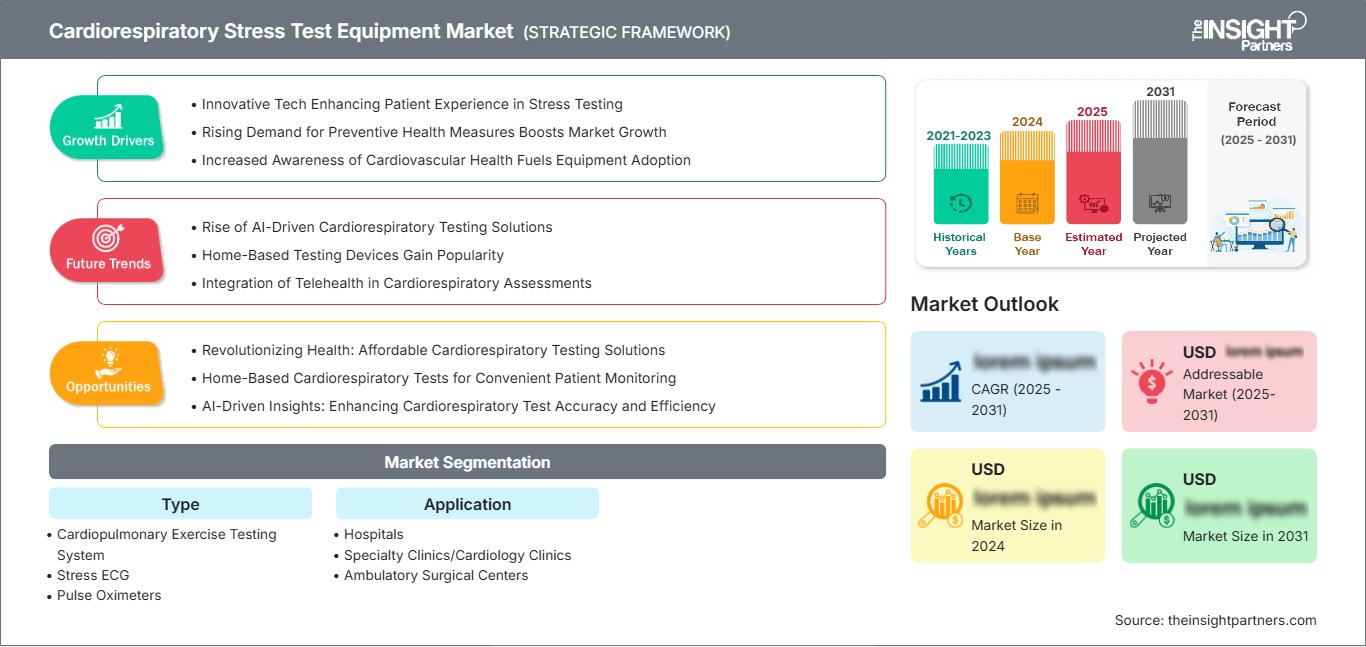
Cardiorespiratory Stress Test Equipment Market: Strategic Insights
Regional Insights
North America Cardiorespiratory Stress Test Equipment Market
North America held an estimated 38–42% Cardiorespiratory Stress Test Equipment Market share in 2025 and is projected to expand at a 7.2–7.8% CAGR during 2026–2034. Demand is underpinned by cardiology departments that have been in existence, wide availability of exercise ECG and nuclear imaging, large spend on cardiovascular disease and replacement of old diagnostic systems with newer, wireless and interoperable ones.
The region has structured referral mechanisms with primary care, specialty care centers, hospital labs and imaging facilities. US cardiovascular disease had impacted 127.9 million adults from 2017 to 2020, whereas the costs of direct and indirect association were reported to be at US$417.9 billion from 2020 to 2021. Canada makes its contribution through provincial capital projects and urban diagnostic capabilities. Increasingly procurement is focusing on cybersecurity, automated reporting, coverage and compatibility with enterprise ECG database. Research gas exchange and exercise physiology in academic hospitals is also sustained through this market.
U.S. Cardiorespiratory Stress Test Equipment Market
The US represented approximately 82–86% of North American Cardiorespiratory Stress Test Equipment Market in 2025 and is forecast to grow at a 7.3–7.9% CAGR through 2034. The country has high availability of procedures along with significant supplier presence in the form of GE HealthCare Technologies Inc., MGC Diagnostics Corporation, Masimo Corporation, Nihon Kohden Corporation, SCHILLER AG, among others through direct sales and distributors.
The hospitals continue to be major buyers of integrated CPET, ECG, blood pressure, and imaging systems. The cardiology centers prefer small systems that provide quick report generation, whereas the diagnostic centers consider productivity and compatibility important. Approximately six million procedures of myocardial perfusion imaging are carried out each year in the United States. Functional cardiac imaging technology has also found application in advanced heart failure, exertional intolerance, preoperative evaluation, sports cardiology, and pulmonary rehabilitation.
Europe Cardiorespiratory Stress Test Equipment Market
Europe accounted for an estimated 27–31% Cardiorespiratory Stress Test Equipment Market in 2025 and is expected to record a 6.8–7.4% CAGR through 2034. Germany emerges as the market leader owing to its capability in medical-device manufacture, cardiology specialization and exercise diagnostics practice. The UK focuses on standardized referral procedures, hospital productivity and reporting compatibility, promoting the consolidation of dispersed testing procedures into integrated systems.
France integrates public hospital procurement with specialized cardiolung clinics, whereas Italy and Spain generate demand via regional hospitals, private diagnostics, sports medicine, and rehabilitation services. Conformity of documentation, data protection, reparability and energy efficiency are becoming key considerations in European procurement. SCHILLER AG and custo med GmbH have an advantage in regional recognition, while GE HealthCare Technologies Inc., Koninklijke Philips N.V., COSMED S.r.l., Nihon Kohden Corporation and MGC Diagnostics Corporation operate in more diversified portfolios. Germany is predicted to retain its position as the leading national market, despite the potential of modernization schemes and diagnostics outside hospitals in southern Europe.
APAC Cardiorespiratory Stress Test Equipment Market
Asia Pacific held approximately 20–24% Cardiorespiratory Stress Test Equipment Market in 2025 and is projected to register an 8.7–9.4% CAGR through 2034. China leads through hospital expansion and domestic diagnostic investment, while Japan benefits from an aging population and established ECG usage.
India is scaling private hospitals and diagnostic chains, South Korea emphasizes connected medical technology, and Australia supports sophisticated CPET and sports-medicine applications. Policy-led hospital modernization, localization of manufacturing, growing cardiology workforces, and denser urban referral networks should expand installations, although budget variation and limited specialist availability can slow adoption outside major cities.
Middle East & Africa Cardiorespiratory Stress Test Equipment Market
The Middle East and Africa market is projected to expand at a 6.5–7.2% CAGR during 2026–2034. Saudi Arabia leads regional investment through hospital development and healthcare transformation, while the UAE supports premium diagnostic centers and internationally accredited facilities.
South Africa remains an important sub-Saharan procurement center, whereas the Rest of MEA presents distributor-led opportunities. Revenue growth depends on new cardiology infrastructure, reliable power and calibration support, clinician training, and maintenance capacity. Energy-secure hospitals and integrated medical cities are better positioned to deploy advanced CPET and nuclear-imaging configurations.
Segmentation Analysis
Type
The type segment is projected to expand at a 7.5–8.1% CAGR during 2026–2034. Cardiorespiratory Stress Test Equipment Market scope encompasses physiological measurement, electrical cardiac assessment, hemodynamic monitoring, oxygenation surveillance, and nuclear perfusion imaging. Adoption depends on clinical complexity, patient throughput, available specialists, reimbursement, and integration requirements. Modular systems combining several measurements are gaining preference because they simplify synchronization and reporting.
- Cardiopulmonary Exercise Testing System: These systems hold the leading position by integrating gas exchange, ventilation, ECG, and exercise workload data, making them strategically important for unexplained dyspnea, heart failure, rehabilitation, and performance assessment.
- Stress ECG: Stress ECG remains a widely accessible modality because it supports rapid functional cardiac assessment without advanced imaging infrastructure, sustaining replacement demand across hospitals, cardiology clinics, diagnostic centers, and ambulatory environments.
- Pulse Oximeters: Pulse oximeters provide continuous oxygen-saturation surveillance during exertion, supporting patient safety and interpretation where pulmonary limitation, desaturation, low perfusion, or combined cardiopulmonary disease may influence exercise tolerance.
- Stress Blood Pressure Monitors: Motion-tolerant blood-pressure monitors are essential for identifying exaggerated or inadequate hemodynamic responses, improving protocol safety and enabling clinicians to correlate pressure changes with ECG, workload, symptoms, and recovery.
- Single-Photon Emission Computed Tomography: SPECT supports perfusion-focused investigation of suspected ischemia and remains strategically relevant in nuclear cardiology centers with established cameras, radiopharmacy access, trained personnel, and standardized myocardial perfusion workflows.
Application
The application segment is forecast to grow at a 7.6–8.2% CAGR during 2026–2034. Hospitals retain the broadest clinical capabilities, while outpatient sites are gaining importance as healthcare systems redirect stable diagnostic cases away from high-cost acute settings. Purchasing criteria vary by patient complexity, staffing, throughput, available imaging infrastructure, referral partnerships, and the economic benefit of consolidating multiple physiological signals within one workflow.
- Hospitals: Hospitals represent the primary application because tertiary cardiology, pulmonary, surgical, rehabilitation, and transplant teams require integrated equipment capable of supporting complex patients, multidisciplinary interpretation, emergency response, and extensive clinical-data governance.
- Specialty Clinics/Cardiology Clinics: Specialty clinics prioritize compact systems, efficient preparation, automated reports, and connectivity, enabling focused cardiac assessment and longitudinal monitoring without the space, staffing, or infrastructure requirements associated with large hospital laboratories.
- Ambulatory Surgical Centers: Ambulatory surgical centers use stress-testing equipment selectively for preoperative evaluation and monitored recovery pathways, with demand concentrated on dependable ECG, blood-pressure, and oxygenation systems that support efficient patient risk stratification.
- Diagnostic Centers: Diagnostic centers offer the strongest expansion potential as independent and networked operators add cardiology services, pursue higher equipment utilization, shorten appointment waiting times, and build referral relationships with physicians and hospitals.
Opportunity Snapshot
| Application | Revenue Contribution | Trend Tag | Adoption Stage |
| Hospitals | High | Integrated Diagnostics | Mature |
| Specialty Clinics/Cardiology Clinics | High | Compact Workflows | Scaling |
| Ambulatory Surgical Centers | Low | Preoperative Screening | Emerging |
| Diagnostic Centers | Medium | Network Expansion | Scaling |
Cardiorespiratory Stress Test Equipment Market Growth Drivers and Impact Analysis
Rising Need for Earlier Cardiovascular Risk Identification
Cardiovascular disease remains the world’s leading cause of death, creating sustained pressure to identify ischemia, abnormal hemodynamic responses, arrhythmias, and exercise limitation before acute deterioration. WHO calculated that there were 19.8 million cases of CVD mortality in 2022, where more than three-quarters of cases occurred in low- and middle-income countries. This will justify the efforts on developing non-invasive tests in advanced and emerging healthcare settings. Stress ECG offers an inexpensive first-level test, but CPET and SPECT offer a more sophisticated discrimination and stratification. There is an economic benefit beyond new installations in terms of electrodes, masks, sensors, calibration substances, software upgrades, and maintenance. Suppliers that can offer tiered options can serve budget-strapped hospitals and cutting-edge laboratories within one common platform.
Expansion of Integrated Cardiopulmonary Diagnostic Pathways
For the measurement of breathlessness, fatigue, exercise intolerance, pulmonary vascular disease, and heart failure, clinicians require integrated data rather than discrete readings. CPET includes cardiovascular response, respiratory response, metabolic response, and workload response, enabling the localization of physiological limitation through one test. The standard modules could be gas analysis, twelve-lead ECG, blood pressure monitoring, pulse oximetry, and an exercise modality. Integration increases interpretation consistency and minimizes manual integration of data from different devices. This would necessitate modular systems from the manufacturing point of view, along with standardized interface, common patient database, custom reports, and peripherals for different protocols. Hospitals could justify procurement based on broader departmental utilization, whereas specialty clinics could start with core modules and upgrade based on increasing referrals.
Replacement of Legacy Systems with Connected Platforms
Aging stress-testing workstations often rely on wired acquisition, local-only storage, manual demographic entry, and limited cybersecurity support. More replacement systems are moving towards the use of wireless ECG modules, bi-directional communications between information system and equipment, automated transmission of data, encrypted data storage, access controls by roles, and interpretation software that is configurable. All of these features help to satisfy both the need for clinical efficiency and information governance requirements. Work lists in the automated format decrease errors of patient identification, while electronic reporting speeds up the process of review by specialists and comparison with previous tests. This effect is especially noticeable in busy hospitals and diagnostics centers where even a small saving of time during preparation, scanning, interpretation, and archiving will free up some capacity.
Cardiorespiratory Stress Test Equipment Market Future Trends
AI-Assisted Interpretation and Protocol Quality Control
Cardiorespiratory Stress Test Equipment Market trends are moving toward software that identifies signal artifacts, evaluates test quality, highlights arrhythmic events, and supports ventilatory-threshold assessment. These algorithms are supposed to help clinicians and not replace their judgments. The algorithms will make use of current diagnostic tools as well as longitudinal databases to identify any inconsistencies in the physiology of the patient prior to the production of the report. Successful implementation will be based on validation, explanation of outputs, cybersecurity, and performance among others. Differentiation by manufacturers will depend on having high-quality databases while providers will benefit from consistency and reduced number of tests.
Compact, Wireless, and Distributed Testing Configurations
The Cardiorespiratory Stress Test Equipment Market forecast shows that future platforms will become smaller and more configurable, allowing sophisticated testing to move beyond large hospital laboratories. Wireless ECG acquisition, compact gas analyzers, portable oximetry, and connected blood-pressure modules can support cardiology clinics, rehabilitation centers, sports-medicine facilities, and selected community sites. Distributed deployment will require central quality assurance, remote interpretation, secure cloud or enterprise connectivity, and standardized calibration. Suppliers may respond with subscription software, managed service agreements, and modular upgrades that lower initial capital requirements. This shift will expand geographic access but will not eliminate the need for trained supervision, emergency procedures, infection control, and rigorous equipment maintenance during maximal or symptom-limited exercise protocols.
Cardiorespiratory Stress Test Equipment Market Opportunities
Building Scalable Diagnostic Networks in Emerging Economies
Urban hospital construction and private diagnostic-chain expansion create opportunities to deploy standardized stress-testing platforms across multiple sites. Investors should prioritize metropolitan clusters with cardiologist availability, rising insured populations, reliable referral volumes, and biomedical-engineering support. A hub-and-spoke model can place advanced CPET or nuclear imaging at central facilities while distributing stress ECG, oximetry, and blood-pressure capabilities to satellite clinics. Centralized interpretation and quality management can improve equipment utilization and reduce specialist bottlenecks. Commercial success will depend on financing, multilingual software, local training, rapid maintenance, and consumable availability. Partnerships between manufacturers, distributors, hospitals, and diagnostic operators can accelerate deployment while aligning configuration with local clinical capacity and reimbursement conditions.
Developing Lifecycle Services and Modular Upgrade Programs
Equipment suppliers can expand recurring revenue by offering calibration, preventive maintenance, cybersecurity updates, interface management, staff certification, and analytics under multiyear contracts. Modular upgrade pathways enable smaller clinics to begin with stress ECG and monitoring, then add gas exchange, advanced reporting, or imaging connectivity as volumes rise. This approach reduces capital risk for providers while preserving vendor relationships throughout the equipment lifecycle. Refurbishment and trade-in programs can also support price-sensitive markets when accompanied by documented safety checks and warranty coverage. Vendors should link service performance to measurable uptime, response time, and training outcomes, creating differentiation that is difficult for low-cost hardware competitors to replicate.
Recent Developments
- November 2025: MGC Diagnostics Corporation launched the Meridian Series of modular cardiorespiratory diagnostic systems. The platform supports capabilities ranging from routine spirometry to advanced CPET and combines cart or tabletop configurations with Ascent software. Its upgradeable architecture targets hospitals, smaller practices, and research institutions seeking standardized workflows and reduced laboratory downtime.
- August 2025: SCHILLER AG launched the CARDIOVIT CS-300 exercise ECG system with wireless twelve-lead acquisition, exercise and pharmacological stress protocols, customizable analysis, bidirectional connectivity, and enhanced cybersecurity. The system also offers optional blood-pressure and oxygen-saturation measurement, automated ECG interpretation, arrhythmia detection, and integrated thermal printing for high-volume hospital workflows.
- March 2025: GE HealthCare Technologies Inc. announced the US launch of Flyrcado, an FDA-approved PET myocardial perfusion imaging agent for known or suspected coronary artery disease. Its 109-minute half-life enables ready-to-use unit-dose distribution and creates a practical pathway for combining exercise stress testing with cardiac PET imaging at qualified centers.
Frequently Asked Questions

- Comprehensive Market Sizing and Forecast Analysis
- Detailed Segmentation Analysis
- In-Depth Market Dynamics Assessment
- Regional and Country-Level Insights
- Competitive Landscape and Company Benchmarking
- Strategic Business Intelligence
Recent Reports
Testimonials

The Insight Partners provided valuable market intelligence that supported our global go-to-market strategy. Their team was professional, responsive, and attentive to our feedback, providing thoughtful analysis and helpful methodological clarifications throughout the project.
Junmo Kim Chief Financial Officer (CFO), Enertech Co., Ltd.
The Insight Partners' SCADA System Market report is comprehensive, with valuable insights on current trends and future forecasts. The team was highly professional, responsive, and supportive throughout. We are very satisfied and highly recommend their services.
RAN KEDEM Partner, Reali Technologies LTDs
I requested a report on a very specific software market and the team produced the report in a few days. The information was very relevant and well presented. I then requested some changes and additions to the report. The team was again very responsive and I got the final report in less than a week.
JEAN-HERVE JENN Chairman, Future Analytica
We worked with The Insight Partners for an important market study and forecast. They gave us clear insights into opportunities and risks, which helped shape our plans. Their research was easy to use and based on solid data. It helped us make smart, confident decisions. We highly recommend them.
PIYUSH NAGPAL Sr. Vice President, High Beam Global
The Insight Partners delivered insightful, well-structured market research with strong domain expertise. Their team was professional and responsive throughout. The user-friendly website made accessing industry reports seamless. We highly recommend them for reliable, high-quality research services
YUKIHIKO ADACHI CEO, Deep Blue, LLC.
This is the first time I have purchased a market report from The Insight Partners.While I was unsure at first, I visited their web site and felt more comfortable to take the risk and purchase a market report.I am completely satisfied with the quality of the report and customer service. I had several questions and comments with the initial report, but after a couple of dialogs over email with their analyst I believe I have a report that I can use as input to our strategic planning process.Thank you so much for taking the extra time and making this a positive experience.I will definitely recommend your service to others and you will be my first call when we need further market data.
JOHN SUZUKI President and Chief Executive Officer, Board Director, BK Technologies
I wish to appreciate your support and the professionalism you displayed in the course of attending to my request for information regarding to infectious disease IVD market in Nigeria. I appreciate your patience, your guidance, and the fact that you were willing to offer a discount, which eventually made it possible for us to close a deal. I look forward to engaging The Insight Partners in the future, all thanks to the impression you have created in me as a result of this first encounter.
DR CHIJIOKE ONYIA MANAGING DIRECTOR, PineCrest Healthcare Ltd.Reason to Buy
- Informed Decision-Making
- Understanding Market Dynamics
- Competitive Analysis
- Identifying Emerging Markets
- Customer Insights
- Market Forecasts
- Risk Mitigation
- Boosting Operational Efficiency
- Strategic Planning
- Investment Justification
- Tracking Industry Innovations
- Aligning with Regulatory Trends





 Get Free Sample for