
CBD Hemp Oil Market Share, Size & Demand by 2034
Coverage: By Product (Hemp-based, Marijuana-based); Application (Neurological Pain, Multiple Sclerosis, Depression and Sleep Disorders, Others); Distribution Channel (Hospital and Retail Pharmacies, Online Channels, Independent Drug Stores), and Geography (North America, Europe, Asia Pacific, and South and Central America)
- Status : Data Released
- Report Code : TIPRE00013756
- Category : Life Sciences
- No. of Pages : 150
- Available Report Formats :


- Last update date : September 07, 2026


2025 Market Size
US$ 9.6 Bn
Base year value
2034 Forecast
US$ 38.44 Bn
Projected by 2034
CAGR 2026-2034
16.67 %
Growth rate
Addressable Market
US$ 201.92 Bn
(2026-2034)
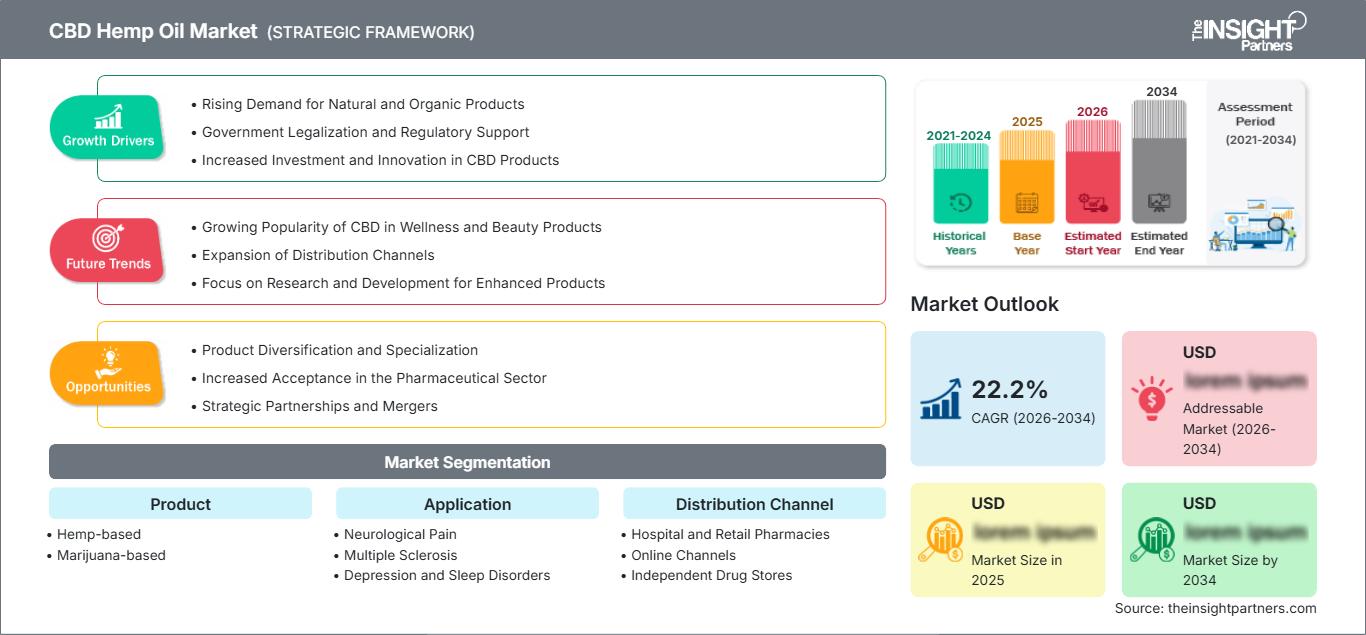
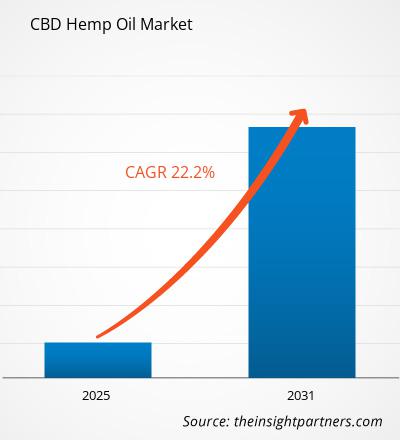
The CBD Hemp Oil Market was valued at US$ 9.6 Billion in 2025 and is expected to reach US$ 38.44 Billion by 2034, registering a CAGR of 16.67% during 2026–2034. Market expansion reflects broader consumer interest in hemp-derived wellness products, increasing use of cannabinoid formulations across selected therapeutic applications, and continued development of standardized oils, capsules, tinctures, and pharmaceutical preparations through regulated medical and retail channels.
North America remains the principal commercial center, with the CBD Hemp Oil Market size supported by established hemp cultivation, broad digital retail access, and growing demand for independently tested formulations. The region is estimated to expand at a CAGR of 15.5–17.0% during 2026–2034. However, evolving U.S. rules concerning total THC content, labeling, container limits, and cannabinoid classification are encouraging manufacturers to reformulate products and strengthen compliance systems.
CBD Hemp Oil Market Assessment and Insights
- North America: The region accounted for a 38–42% share in 2025 and is projected to record a CAGR between 15.5–17.0% during 2026–2034, supported by mature retail networks, product familiarity, and established hemp processing capacity.
- US: The country represented 83–87% of North American revenue in 2025 and is expected to grow at a CAGR between 15.0–16.5% during 2026–2034.
- Europe: Europe captured a 25–29% share in 2025 and is forecast to register a CAGR between 14.5–16.0% during 2026–2034, led by Germany, the UK, France, Italy, and Spain.
- Asia Pacific: Asia Pacific held a 20–24% share in 2025 and is projected to expand at a CAGR between 18.0–20.0% during 2026–2034, with China, Japan, Australia, South Korea, and India influencing demand.
- Largest Segment: Hemp-based products represented a 68–72% market share in 2025 and are anticipated to register a CAGR between 16.0–17.5% during 2026–2034, reflecting accessibility and non-intoxicating positioning.
- High Growth Segment: Online channels accounted for a 32–36% market share in 2025 and are expected to record a CAGR between 19.0–21.0% during 2026–2034 as digital education and subscriptions expand.
- Key companies analyzed in detail: CBD American Shaman, LLC, Aurora Cannabis Inc., Endoca BV, Folium Biosciences, LLC, NuLeaf Naturals, LLC, Canopy Growth Corporation, Elixinol Wellness Limited, Medical Marijuana, Inc., CV Sciences, Inc., and Tilray Brands, Inc., successor to Aphria Inc.
Source: The Insight Partners' analysis based on proprietary research, government publications, company annual reports, investor presentations, industry databases, and expert interviews.
There is progress that has been made from oil carrier tinctures to accurate dosages, emulsified products that can mix with water, liposomes, soft gels, and condition-specific products. Product development has been taking into consideration controlled extractions, contaminant testing, cannabinoid profiles, and batch tracing. There is also change that has been realized in the dynamics of the supply chain as the companies have been optimizing their product lines through outsourcing and channel optimization for profitability. An example is Elixinol Wellness Limited which invested in 2025 to manage inventory and optimize its channels.
Regulated medical access, pharmacies, and differentiated products based on evidence are predicted to form defensible revenue pools over the forecast period. Additional market opportunities include Germany, Australia, Japan, and some selected Latin American countries but subject to local legislation on narcotics, novel food, and prescriptions. The focus will be on capital going into manufacturers with validated tests, THC-poor formulations, pharmaceuticals, and manufacturing systems able to produce both consumer well-being and medicinal products separately.
CBD Hemp Oil Market Report Scope
| Report Attribute | Details |
|---|---|
| Market size in 2025 | US$ 9.6 Billion |
| Market Size by 2034 | US$ 38.44 Billion |
| Global CAGR (2026 - 2034) | 16.67% |
| Historical Data | 2021-2024 |
| Forecast period | 2026-2034 |
CBD Hemp Oil Market Analysis
CBD Hemp Oil Market growth in the CBD Hemp Oil space will be fueled by the demand for cannabinoid products that are not smoked and increased awareness about sleep patterns, mood regulation, and chronic pain. The ecosystem in the market includes hemp farmers, extractors, ingredient manufacturers, contract manufacturing organizations, labs, brand owners, pharmacies, and online distributors. Quality will be maximized for those manufacturers who link cultivation data with lab certificates of analysis.
The fragmented nature of supply is related to inconsistencies with hemp quality, extraction yield, ingredient types, and permitted health claims on the basis of jurisdiction. Innovation within supercritical carbon dioxide extraction, chromatography, isolates, and emulsions will allow for consistency in concentration and performance of formulas. On the contrary, restrictive regulations concerning the amount of THC in each finished product will have a negative impact on full-spectrum offerings after November 2026.
The CBD Hemp Oil Market report indicates that the dynamics of competition are shifting from proliferation to quality portfolio, clinical trials, management of distribution channels, and preparedness for regulation. Although the companies like Canopy Growth Corporation and Aurora Cannabis Inc. enjoy the advantage of medical cannabis facilities, Endoca BV, NuLeaf Naturals, LLC, and CBD American Shaman, LLC concentrate on developing their own products and their marketing efforts. CV Sciences, Inc. and Medical Marijuana, Inc. compete through portfolios of wellness and channel management.
More and more often strategic positioning depends on accuracy of concentration, intellectual property, education of practitioners, and economics of repeat purchases. Whereas Elixinol Wellness Limited has been concentrating on SKU rationalization and margin growth in sales channels, Canopy Growth Corporation has been concentrating on increased pack sizes of medical softgels and different dosage options. In this situation operators who differentiate themselves in medical, wellness, and adult-use categories become competitive.
● REPORT CUSTOMIZATION
Tailor This Report To Align With Your Specific Business Requirements
This report can be customized to align precisely with your business objectives, scope, and target markets. Customization options include tailored segmentation, geography, competitive analysis, and strategic insights to support informed decision-making.
Customize This Report →WHAT YOU CAN ADJUST
- ● Segmentations
- ● Geography
- ● Competitive Analysis
- ● Language Preferences
CBD Hemp Oil Market: Strategic Insights
Regional Insights
North America CBD Hemp Oil Market
In 2025, North America had a 38–42% of the CBD Hemp Oil Market Share which was expected to grow at a CAGR of 15.5–17.0% between 2026 and 2034. Growth would be driven by existing cannabis cultivation, professional extraction facilities, extensive online retailing, and customer knowledge of cannabidiol oil. Additionally, the country has legal mechanisms in place for selling cannabinoid oils, capsules, and softgels through its legal medical system and recreational marijuana programs in Canada.
However, growth would be predicated on re-formulation and compliance costs. Changes to the federal hemp definition in the U.S. from November 12, 2026, will include a total THC content requirement for finished products along with a 0.4 milligram total THC limit per container of hemp-derived cannabinoid products unless otherwise stated. Hence, manufacturers would be exploring isolate formulations, reduced packaging sizes, traceability improvements, and state-by-state mixes. Operators in Canada would also be seeking to build their medical product lines and expand internationally.
U.S. CBD Hemp Oil Market
The U.S. represented 83–87% of North American revenue in 2025 and is forecast to register a CAGR of 15.0–16.5% during 2026–2034. CBD American Shaman, LLC, NuLeaf Naturals, LLC, CV Sciences, Inc., Elixinol Wellness Limited, and Medical Marijuana, Inc. maintain brand, retail, wholesale, or digital exposure. Online ordering remains important because it supports product comparison, laboratory-document access, subscriptions, and nationwide brand discovery.
The use of sleep and discomfort products is commercially viable, whereas there is a need for more clinical and regulatory validation in neurological disorders. The inclusion of CBD in regular food and dietary supplements is currently not allowed by federal law due to the inclusion of drug exclusionary laws for pharmaceutical cannabidiol. The new definition of hemp also creates significant risk in terms of product portfolio in full-spectrum oils with traces of THC.
Europe CBD Hemp Oil Market
The Europe region had 25-29% market share in 2025 and is expected to register a CAGR of 14.5-16.0% between 2026 and 2034. Germany is the largest country in the region because of the high presence of pharmacy outlets and availability of medicinal marijuana, along with specialty wellness retail stores. The UK is one of the key branded CBD markets, but new food approvals and limited marketing require consolidation in the portfolio.
Germany has good opportunities for standardized oils distribution via medical and pharmacy channels. Canopy Growth Corporation considers Germany as an anchor country for their expansion in Europe, whereas already established CBD providers have consumer-focused supply channels. The UK prefers recognizable brands, online education, and independently tested products.
In addition to Germany, France, Italy, and Spain offer demand through wellness retail, pharmacies, and developing medical programs, but CBD commercialization in the countries is country-specific. France focuses on THC conformity, Italy experienced some regulatory issues, and Spain has relatively stringent consumer regulations. Therefore, local labeling, product categorization, and sales channels are needed instead of a general regional approach.
APAC CBD Hemp Oil Market
Asia Pacific accounted for 20–24% in 2025 and is expected to record a CAGR of 18.0–20.0% from 2026 to 2034. China is at the forefront of hemp farming and processing, while Australia follows a stringent medicinal cannabis route. Japan prefers highly regulated, THC-free formulations, whereas South Korea has a limited access to the medical segment.
However, India provides opportunities in the future in terms of traditional botanical manufacturing and drug discovery, considering that the legislation surrounding cannabinoids is extremely stringent. The development of Asia Pacific is associated with its import regulations, permitted level of THC, physician intervention, and processing facility. The pre-qualified isolates and medical formulation have an edge over consumer formulations.
Middle East & Africa CBD Hemp Oil Market
Middle East and Africa is forecasted to grow at a CAGR of 12.0 – 14.0% between 2026 – 2034. South Africa will be the largest market due to hemp farming interests, pharma distribution, and growing wellness industry. In UAE, there will be advanced healthcare facilities, as well as logistics infrastructure developed. However, control of cannabinoid legislation is rather strict.
In Saudi Arabia, consumers' accessibility is not feasible in the short run, but research on medicines can occur in a controlled setting. In Rest of MEA, the disparity in regulatory standards, purchasing power, and capability of laboratories to implement are challenges. The priorities of investments would be compliance in importation, storage, and accreditation.
Segmentation Analysis
Product
The product segment is forecast to record a CAGR of 16.0–17.5% during 2026–2034. The CBD Hemp Oil Market scope across product categories is influenced by source legality, cannabinoid composition, extraction economics, and channel eligibility. Hemp-based oil leads because it can serve broader wellness and non-intoxicating positioning, while marijuana-based oil remains concentrated in medical or adult-use systems that require licenses, prescriptions, or controlled dispensing.
- Hemp-based: Hemp-based formulations dominate commercial availability because they support non-intoxicating positioning, direct online sales, broad-spectrum options, and scalable agricultural sourcing, subject to jurisdiction-specific requirements for THC content and product classification.
- Marijuana-based: Marijuana-based oils occupy a strategically important regulated niche, particularly where physicians prescribe cannabinoid formulations or licensed dispensaries supply condition-oriented products requiring controlled potency, patient registration, and formal product tracking.
Application
The application segment in the CBD Hemp Oil Market is projected to expand at a CAGR of 16.5–18.0% during 2026–2034. Adoption varies materially by evidence quality, permitted claims, dosage consistency, and healthcare supervision. Sleep and mood-related products attract consumer wellness demand, whereas neurological pain and multiple sclerosis applications require structured medical evaluation. Suppliers seeking durable differentiation are investing in standardized concentrations, patient-friendly dosing, and documentation suitable for healthcare practitioners.
- Neurological Pain: Neurological pain represents a clinically sensitive application in which demand concentrates around physician oversight, reproducible dosing, interaction monitoring, and products supported by stronger safety documentation rather than broad unapproved therapeutic claims.
- Multiple Sclerosis: Multiple sclerosis creates targeted interest in cannabinoid-based symptom management, but commercialization depends on national prescribing rules, clinical evidence, standardized formulations, and clear separation between approved medicines and general wellness oils.
- Depression and Sleep Disorders: Depression and sleep disorders generate substantial consumer interest, particularly online, yet responsible suppliers avoid unsupported psychiatric claims and instead emphasize relaxation routines, nighttime formats, transparent ingredients, and dosage guidance.
Distribution Channel
The distribution channel segment in the CBD Hemp Oil Market is anticipated to register a CAGR of 17.0–18.5% during 2026–2034. Digital commerce expands assortment visibility and supports recurring purchases, while pharmacies provide professional credibility for medical and carefully documented products. Independent drug stores remain relevant where consumers value local advice. Channel strategy increasingly integrates online education, batch certificates, subscription services, pharmacist engagement, and inventory controls adapted to changing local requirements.
- Hospital and Retail Pharmacies: Hospital and retail pharmacies are strategically important for prescribed or medically supervised oils because they provide controlled storage, pharmacist consultation, interaction screening, and stronger confidence in documented product quality.
- Online Channels: Online channels benefit from broad assortment, subscription purchasing, educational content, and direct access to certificates of analysis, although advertising restrictions and differing state or national rules complicate cross-border fulfillment.
- Independent Drug Stores: Independent drug stores serve consumers seeking local guidance and immediate availability, giving specialist brands a route to community-based education, smaller trial formats, and differentiated products outside major pharmacy chains.
Opportunity Snapshot
| Application | Revenue Contribution (High/Medium/Low) | Trend Tag | Adoption Stage (Emerging/Scaling/Mature) |
| Neurological Pain | High | Precision Dosing | Scaling |
| Multiple Sclerosis | Medium | Clinical Access | Emerging |
| Depression and Sleep Disorders | High | Sleep Formulations | Scaling |
CBD Hemp Oil Market Growth Drivers and Impact Analysis
Demand for Non-Inhaled Cannabinoid Delivery
The adoption of oils, tinctures, capsules, and softgels is expanding the addressable market of people who are not ready to consume cannabis via inhalation. It is possible to give customers the opportunity to buy measured concentrations, discreet use, and routine according to certain conditions. The business value is clearly seen in the portfolio of regulated cannabis companies; for instance, Canopy Growth Corporation is increasing the variety of medical softgel packs with various concentrations in May 2026. Increased pack sizes may facilitate repeat usage, and various concentrations will help tailor patients’ regimens. The company will gain from repeated purchasing and format development; however, the key is stability tests, proper droppers or units, child-proof packing, and instructions. The strength of this factor is high in pharmacy, medical, and direct to consumer channels where customers compare the dosages and laboratory information independently.
Expansion of Digital Product Education and Commerce
Online channels reduce geographic limitations for specialist brands and allow consumers to examine ingredients, concentration, extraction method, batch testing, and usage guidance before purchasing. This capability is particularly important in a fragmented category where physical retailers may stock limited strengths or formats. Digital platforms also support subscriptions, replenishment reminders, customer service, and product-specific educational material, improving retention economics. Market impact extends upstream because brands can use repeat-purchase information to rationalize SKUs, forecast inventory, and negotiate contract-manufacturing volumes. However, digital growth is not independent of regulation. Companies must manage age controls, advertising restrictions, state-level shipping rules, payment-provider risk, and prohibited health claims. Operators combining compliant content management with accessible certificates of analysis are better positioned to convert informed buyers and maintain trust as enforcement expectations increase.
Standardization Across Extraction and Testing
Improved extraction controls, chromatography, cannabinoid profiling, and contaminant testing are making oils more consistent across production batches. Standardization matters because hemp feedstock varies according to genetics, climate, harvest timing, storage, and extraction conditions. Manufacturers that define specifications for CBD concentration, residual solvents, pesticides, heavy metals, microbes, and THC can reduce recalls and negotiate access to pharmacies or healthcare-oriented distributors. The impact extends to formulation efficiency, as standardized inputs reduce the need for costly batch adjustments and support predictable shelf life. Third-party certificates also strengthen online product comparison and retailer due diligence. Regulatory changes that focus on total THC per container will increase demand for lower-detection-limit laboratories and validated sampling protocols. Consequently, testing capacity and data integrity are becoming competitive assets rather than final-stage quality checks.
CBD Hemp Oil Market Future Trends
Shift Toward THC-Minimized and Isolate-Based Portfolios
CBD Hemp Oil Market trends will increasingly reflect reformulation around jurisdiction-specific THC limits rather than a single global product specification. In the U.S., the federal hemp definition scheduled to take effect on November 12, 2026 introduces a 0.4 milligram total THC limit per finished-product container. Many full-spectrum oils may require reformulation, smaller packaging, or withdrawal if the rule remains unchanged. Brands are therefore expected to prioritize CBD isolate, verified broad-spectrum extracts, improved remediation, and highly sensitive final-product testing. The transition may compress assortment breadth but strengthen compliant suppliers capable of documenting THC from raw material through finished goods. Premiumization will focus less on cannabinoid count and more on verified composition, stability, traceability, and predictable dosing.
Condition-Oriented Formulation Platforms
Product architecture will move toward formulation platforms designed around use occasions such as nighttime routines, persistent discomfort, recovery, and medically supervised symptom management. Rather than relying on CBD concentration alone, developers will combine delivery technology, carrier selection, terpene profiles, and permitted complementary ingredients to create differentiated experiences. Liposomal and water-compatible systems may gain attention where faster dispersion or flexible incorporation is required. Medical portfolios will emphasize dosing increments, larger refill packs, and practitioner support, while wellness products will use clearer routine-based positioning without disease claims. Investment will concentrate on stability data, bioavailability research, packaging accuracy, and post-market feedback. Companies converting these capabilities into modular product platforms can enter multiple channels without proliferating operationally inefficient formulations.
CBD Hemp Oil Market Opportunities
Pharmacy-Aligned Medical Cannabinoid Portfolios
Pharmacy-oriented portfolios offer an opportunity to build higher-trust revenue through standardized oils, softgels, and controlled-dose formats. Investment should focus on validated manufacturing, stability documentation, pharmacist education, adverse-event procedures, and country-specific product dossiers. Germany, Canada, Australia, and selected European markets provide practical entry points because medical-cannabis infrastructure can accommodate prescribed or supervised cannabinoid products. Partnerships with clinics and pharmacy distributors can reduce customer-acquisition dependence on consumer advertising while generating structured feedback on dose formats and pack sizes. The model requires longer commercialization timelines than general e-commerce, but it can create stronger barriers through quality systems and professional relationships. Manufacturers should prioritize jurisdictions with transparent licensing pathways and avoid assuming that consumer CBD rules automatically permit medical claims or pharmacy placement.
Traceable Contract Manufacturing for Specialist Brands
A significant opportunity in the CBD Hemp Oil Market Forecast exists for contract manufacturers that can provide extraction, formulation, testing, packaging, and batch documentation within one controlled system. Smaller brands often lack capital for chromatography, stability programs, or accredited quality laboratories, yet retailers increasingly require detailed certificates and recall readiness. Integrated manufacturing partners can monetize compliance infrastructure across multiple customers while supporting low-volume launches and scalable replenishment. Investment priorities include digital batch records, segregated THC and non-THC production, validated cleaning, finished-container testing, and flexible isolate or broad-spectrum processing. Operators should develop jurisdiction-specific formulation libraries rather than exporting identical products globally. This approach reduces reformulation time, supports retailer onboarding, and creates recurring business-to-business revenue that is less exposed to consumer-brand marketing costs.
Recent Developments
- August 2026: Canopy Growth Corporation secured renewed European Union Good Manufacturing Practice certification for its Kincardine facility as its European medical-cannabis business expanded. The certification supports continued production for regulated markets and reinforces the company’s ability to supply standardized cannabinoid products through pharmaceutical and medical channels.
- May 2026: Canopy Growth Corporation and Spectrum Therapeutics expanded their medical cannabinoid softgel range with additional dosing options and new 30-pack and 90-pack formats. The initiative was designed to improve patient flexibility, affordability, and access while responding to feedback from medical consumers and clinic networks.
- September 2025: Elixinol Wellness Limited completed a US$ equivalent capital placement valued at A$2.5 million before costs. The company stated that proceeds would support inventory growth, operational streamlining, SKU rationalization, higher-margin channel development, and its strategy for sustained profitability following recent acquisitions.
Frequently Asked Questions

- Comprehensive Market Sizing and Forecast Analysis
- Detailed Segmentation Analysis
- In-Depth Market Dynamics Assessment
- Regional and Country-Level Insights
- Competitive Landscape and Company Benchmarking
- Strategic Business Intelligence
Recent Reports
Testimonials

The Insight Partners' SCADA System Market report is comprehensive, with valuable insights on current trends and future forecasts. The team was highly professional, responsive, and supportive throughout. We are very satisfied and highly recommend their services.
RAN KEDEM Partner, Reali Technologies LTDs
I requested a report on a very specific software market and the team produced the report in a few days. The information was very relevant and well presented. I then requested some changes and additions to the report. The team was again very responsive and I got the final report in less than a week.
JEAN-HERVE JENN Chairman, Future Analytica
We worked with The Insight Partners for an important market study and forecast. They gave us clear insights into opportunities and risks, which helped shape our plans. Their research was easy to use and based on solid data. It helped us make smart, confident decisions. We highly recommend them.
PIYUSH NAGPAL Sr. Vice President, High Beam Global
The Insight Partners delivered insightful, well-structured market research with strong domain expertise. Their team was professional and responsive throughout. The user-friendly website made accessing industry reports seamless. We highly recommend them for reliable, high-quality research services
YUKIHIKO ADACHI CEO, Deep Blue, LLC.
This is the first time I have purchased a market report from The Insight Partners.While I was unsure at first, I visited their web site and felt more comfortable to take the risk and purchase a market report.I am completely satisfied with the quality of the report and customer service. I had several questions and comments with the initial report, but after a couple of dialogs over email with their analyst I believe I have a report that I can use as input to our strategic planning process.Thank you so much for taking the extra time and making this a positive experience.I will definitely recommend your service to others and you will be my first call when we need further market data.
JOHN SUZUKI President and Chief Executive Officer, Board Director, BK Technologies
I wish to appreciate your support and the professionalism you displayed in the course of attending to my request for information regarding to infectious disease IVD market in Nigeria. I appreciate your patience, your guidance, and the fact that you were willing to offer a discount, which eventually made it possible for us to close a deal. I look forward to engaging The Insight Partners in the future, all thanks to the impression you have created in me as a result of this first encounter.
DR CHIJIOKE ONYIA MANAGING DIRECTOR, PineCrest Healthcare Ltd.Reason to Buy
- Informed Decision-Making
- Understanding Market Dynamics
- Competitive Analysis
- Identifying Emerging Markets
- Customer Insights
- Market Forecasts
- Risk Mitigation
- Boosting Operational Efficiency
- Strategic Planning
- Investment Justification
- Tracking Industry Innovations
- Aligning with Regulatory Trends





 Get Free Sample for