
Cellulosic Polymers Market Key Players, Opportunities, and Forecast by 2034
Coverage: by Type (Cellulose Esters, Cellulose Ethers, Regenerated Cellulose); End User Industry (Building and Construction, Food, Health and Personal Care, Mining, Other End User Industries) , and Geography (North America, Europe, Asia Pacific, and South and Central America)
- Status : Data Released
- Report Code : TIPRE00006896
- Category : Chemicals and Materials
- No. of Pages : 150
- Available Report Formats :


- Last update date : August 07, 2026


2025 Market Size
US$ 8.68 Bn
Base year value
2034 Forecast
US$ 15.58 Bn
Projected by 2034
CAGR 2026-2034
6.72 %
Growth rate
Addressable Market
US$ 109.67 Bn
(2026-2034)
The global Cellulosic Polymers market was valued at US$ 8.68 billion in 2025 and is expected to reach US$ 15.58 billion by 2034; it is estimated to record a CAGR of 6.72% during 2026-2034.
Cellulosic Polymers Market Assessment and Insights
- North America: Accounted for a 31–33% share in 2025 and is projected to grow at a CAGR of 6.4–7.0% during 2026–2034. Growth is supported by strong pharmaceutical manufacturing, advanced construction chemicals, and increasing adoption of renewable specialty polymers.
- U.S.: Represented 75–78% of the North American market in 2025 and is expected to register a CAGR of 6.5–7.1% during 2026–2034, supported by innovation in drug formulations, food ingredients, and sustainable industrial materials.
- Europe: Held 27–29% share in 2025 and is forecast to expand at a CAGR of 6.6–7.2% during 2026–2034. Germany, France, Italy, and the UK continue to lead demand through pharmaceutical production, sustainable packaging initiatives, and specialty chemical manufacturing.
- Asia Pacific: Captured 30–32% share in 2025 and is anticipated to record the fastest regional expansion at a CAGR of 8.2–8.8% during 2026–2034, driven by China, India, Japan, and South Korea through rapid industrialization and investments in healthcare and construction.
- Largest Segment: Cellulose Ethers accounted for 60–64% market share in 2025 and are expected to grow at a CAGR of 7.3–7.8% during 2026–2034, supported by widespread use in pharmaceuticals, food products, and construction formulations.
- High Growth Segment: Pharmaceuticals represented 26–30% market share in 2025 and are projected to expand at a CAGR of 8.4–9.0% during 2026–2034, reflecting increasing demand for controlled-release drug delivery systems and excipients.
- Key companies analyzed in detail: Nouryon Chemicals Holding B.V., CP Kelco U.S., Inc., Ashland Global Holdings Inc., Dow Inc., Sappi Europe SA, Mitsubishi Chemical Group Corporation, Eastman Chemical Company, Daicel Corporation, Shin-Etsu Chemical Co., Ltd., Celanese Corporation.
Source: The Insight Partners' analysis based on proprietary research, government publications, company annual reports, investor presentations, industry databases, and expert interviews.
Continuous innovation in feedstocks and technology for cellulose processing has brought about significant changes to the commercial standing of specialty polymers within the last decade. More manufacturers are seeking ways to produce these products using integrated biorefineries, better purification techniques, and energy-efficient systems for manufacturing. Increased demand for cellulose derivatives from such industries as pharmaceuticals, construction chemicals, food processing, and personal care drives the growth of manufacturing capacities, strategic collaborations, and investments in high-quality products that increase resilience and diversify applications within mature and emerging markets all over the world.
Rising regulatory push towards sustainable materials is likely to drive investments in specialty chemicals derived from biological sources in the coming years. Production of these chemicals is projected to grow in Asia Pacific because of increased industrial capacity and lower manufacturing costs, whereas innovation and development of premium formulations are the focus of Europe and North America. Digital manufacturing, sustainable sourcing, and circular economy will help to increase efficiency and boost adoption.
Cellulosic Polymers Market Report Scope
| Report Attribute | Details |
|---|---|
| Market size in 2025 | US$ 8.68 Billion |
| Market Size by 2034 | US$ 15.58 Billion |
| Global CAGR (2026 - 2034) | 6.72% |
| Historical Data | 2021-2024 |
| Forecast period | 2026-2034 |
Cellulosic Polymers Market Analysis
The growing trend towards the application of specialty sustainable materials helps drive the growth of the Cellulosic Polymers Market in various industries. Pharmaceutical companies depend on cellulose derivatives to create binders, release agents, coating, and to manipulate the viscosity of their products. Construction companies make use of cellulose ethers in improving the water retention, plasticity, and adherence of cement-based materials, while food companies have been increasingly making use of cellulose in the form of stabilizers, emulsifiers, and thickening agents. The increasing regulations that encourage the use of renewable resources instead of synthetics ensure that there is consistent demand in the future.
The supply chain integration has proved vital to ensure reliable sourcing of cellulose and efficiency in manufacturing the material. The raw material sources for cellulose include wood pulp and cotton linters, while improvements in refinement techniques increase efficiency and purity of the product. The collaborations between pulp producers, specialty chemical companies, formulators, and end-users have increased innovation and speed to market of innovative cellulose products.
The competitive outlook in Cellulosic Polymers Market is dominated by innovation, production improvements, and regional expansion initiatives. The key players such as Nouryon Chemicals Holding B.V., Ashland Global Holdings Inc., Dow Inc., Shin-Etsu Chemical Co., Ltd., Eastman Chemical Company, Mitsubishi Chemical Group Corporation, and Daicel Corporation, continue to engage in the development of specialty products to cater to the dynamic requirements of customers. CP Kelco U.S., Inc., Celanese Corporation, and Sappi Europe SA expand their product lines through application-oriented research, production improvements, and strategic alliances for the manufacture of high-value cellulose derivatives.
Increased investments are now being made in the development of sustainable manufacturing practices, renewable raw materials, and new product formulations in accordance with changing environmental standards. There is an increasing trend towards capacity additions at sites close to centers of high demand growth, especially in the Asia Pacific region, coupled with facility modernizations in North America and Europe. Improved research capacities, process digitalization, and strategic partnerships with pharmaceuticals, food processing, and construction firms would help in achieving differentiation in products.
● REPORT CUSTOMIZATION
Tailor This Report To Align With Your Specific Business Requirements
This report can be customized to align precisely with your business objectives, scope, and target markets. Customization options include tailored segmentation, geography, competitive analysis, and strategic insights to support informed decision-making.
Customize This Report →WHAT YOU CAN ADJUST
- ● Segmentations
- ● Geography
- ● Competitive Analysis
- ● Language Preferences
Cellulosic Polymers Market: Strategic Insights
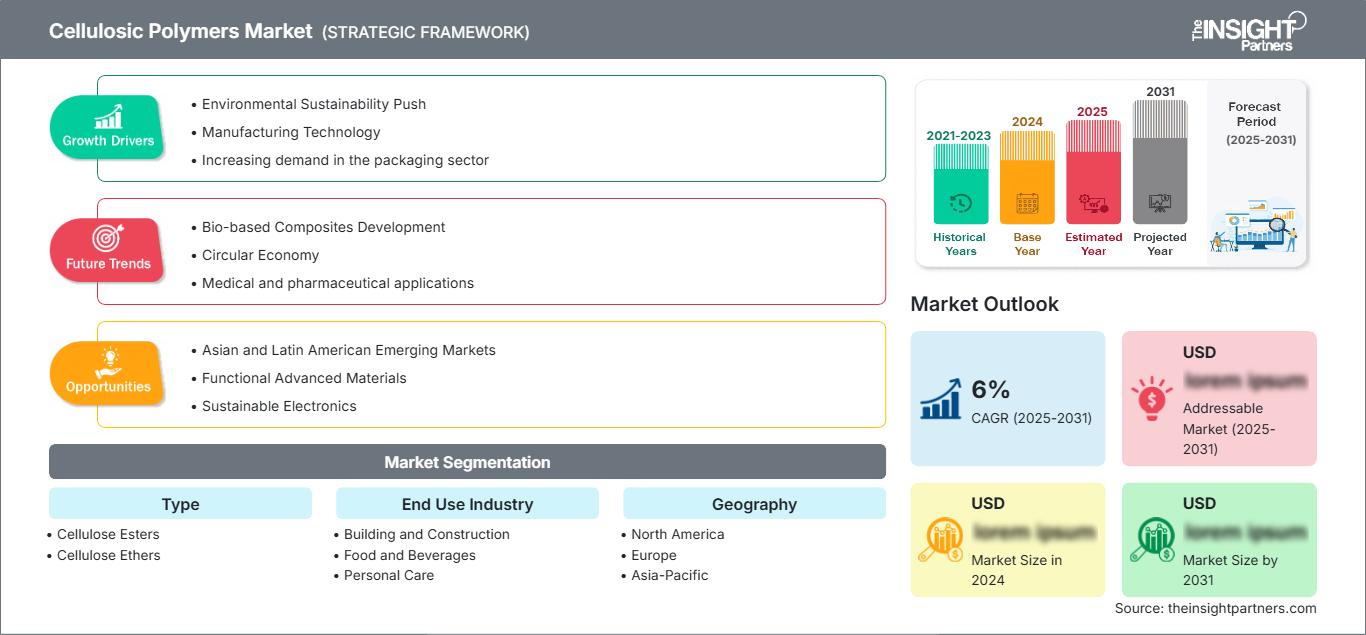
Regional Insights
North America Cellulosic Polymers Market
North America held 31-33% of the global Cellulosic Polymers Market share in 2025 and is expected to exhibit a CAGR of 6.4-7.0% during 2026-2034. The growth of the regional market is driven by the presence of well-developed pharmaceuticals industry, advanced manufacturing of specialty chemicals, and usage of cellulose derivatives in food and building materials applications. Continued growth in investment in bio-chemicals, on account of sustainability regulations and circular economy trends, is making the region more competitive. Additionally, technology advances in cellulose ether production and customization of products are contributing to the demand.
The region has a developed value chain with a support of pulp processing systems, chemicals manufacturing, and robust research and development base. Growing usage of green materials in the industrial segments is encouraging innovations in renewable polymers. Increased investments in pharmaceutical excipients, low-emission building material additives, and clean-label food ingredients are expected to boost demand in the long run.
U.S. Cellulosic Polymers Market
The share of the U.S. in the North American market was estimated to be between 75% and 78% in 2025 and it is projected that the share will grow at a CAGR of 6.5%–7.1% up to 2034. The country has strong infrastructure for pharmaceuticals manufacturing, biotechnology research, and utilization of cellulose derivatives in personal care and processed foods sectors. Specialty chemicals manufacturers persistently invest in innovative technologies improving domestic manufacturing and ensuring high quality products across different industrial applications.
Construction processes oriented towards sustainable building materials raise the demand for cellulose ethers applied in tile adhesives, cement mortars, and wall finishing compounds. Manufacturers of pharmaceuticals keep extending production capacities for oral solid dosage formulations based on cellulose derivatives as these substances proved to be efficient and accepted by regulators. Continuous investments in sustainable manufacturing processes and innovation of specialty chemicals will consolidate the leadership of the country in the regional market up to 2034.
Europe Cellulosic Polymers Market
The region holds a share of 27-29% of the global market in 2025 and is expected to register growth at a CAGR of 6.6–7.2% through 2026–2034 driven by strict environmental policies, well-established pharmaceutical industry, and rising adoption of renewable specialty chemicals. Germany retains its position as the largest market due to a developed chemical manufacturing sector, robust industrial research activities, and high demand in the construction and pharmaceutical industries.
The United Kingdom market is registering increased adoption of cellulose derivatives in pharmaceutical formulations, food processing, and personal care products. Increasing preference for biodegradable raw materials and clean label formulations boosts the demand for cellulose derivatives.
Germany dominates regional production with its integrated specialty chemical manufacturing industry and large investments in sophisticated manufacturing technologies. The demand continues to be high for pharmaceutical excipients, industrial coatings, construction chemicals, and food stabilizer uses due to innovations and export-oriented manufacturing.
France, Italy, and Spain add considerably to regional demand through the growing pharmaceutical manufacturing industry, cosmetics, processed foods, and infrastructure development. The sustainability drive and renewable chemical technologies are driving further adoption of cellulose specialty materials in Southern Europe.
APAC Cellulosic Polymers Market
Asia Pacific captured 30–32% of the global market in 2025 and is expected to record the highest regional CAGR of 8.2–8.8% during 2026–2034. China leads regional demand owing to large-scale specialty chemical manufacturing, while Japan and South Korea emphasize high-value pharmaceutical and electronics applications.
India continues expanding pharmaceutical production and infrastructure investments, supporting greater consumption of cellulose derivatives. Australia contributes through food processing and sustainable construction activities. Government initiatives encouraging domestic manufacturing, industrial modernization, and bio-based material adoption continue to strengthen long-term regional growth prospects.
Middle East & Africa Cellulosic Polymers Market
The Middle East & Africa market is projected to expand at a CAGR of 6.2–6.8% during 2026–2034. Saudi Arabia and the UAE continue investing in downstream specialty chemicals, infrastructure projects, and pharmaceutical manufacturing, creating new opportunities for cellulose derivative suppliers. South Africa remains an important consumer supported by construction activities and food processing industries.
Growing diversification beyond hydrocarbon-based industries is encouraging investments in sustainable materials and advanced manufacturing across the region. Infrastructure modernization, expanding healthcare capacity, and increasing local production of personal care and food products are expected to support the gradual adoption of cellulosic polymers during the forecast period.
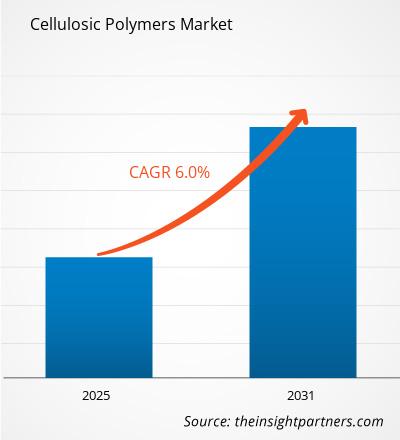
Segmentation Analysis
Type
The Type segment represents the largest revenue contributor within the Cellulosic Polymers Market scope, supported by broad industrial adoption across pharmaceutical, food, construction, and personal care applications. The segment is projected to expand at a CAGR of 7.3–7.8% during 2026–2034 as manufacturers continue developing advanced formulations with improved functional performance, processing efficiency, and sustainability characteristics.
- Cellulose Esters – Widely utilized in coatings, films, filtration media, display technologies, and specialty plastics because of their excellent transparency, durability, and chemical resistance. Continuous innovation supports expanding industrial applications and premium product development.
- Cellulose Ethers – The leading product category owing to extensive utilization in pharmaceuticals, dry-mix mortars, food processing, cosmetics, and oilfield chemicals. Their thickening, stabilizing, binding, and water-retention properties support sustained global demand.
End Use Industry
The End Use Industry segment is anticipated to register a CAGR of 7.5–8.0% during 2026–2034, reflecting expanding utilization across multiple industrial sectors. Continuous innovation in bio-based specialty chemicals, stricter environmental regulations, and growing demand for multifunctional additives continue supporting broader commercial adoption across developed and emerging economies.
- Building and Construction – Cellulose derivatives improve workability, adhesion, water retention, and durability in cement mortars, tile adhesives, plasters, and gypsum products, supporting increasing infrastructure development and sustainable construction practices.
- Food and Beverages – Food manufacturers increasingly utilize cellulose polymers as stabilizers, emulsifiers, viscosity modifiers, and fat replacers while addressing clean-label formulation requirements and improving product texture and shelf stability.
- Personal Care – Cosmetics and personal care companies incorporate cellulose derivatives into creams, lotions, shampoos, gels, and oral care products to enhance rheology, stability, sensory performance, and formulation consistency.
- Pharmaceuticals – Pharmaceutical manufacturers rely extensively on cellulose-based excipients for tablet binding, controlled drug release, coating applications, suspension stabilization, and formulation performance, making this the fastest-growing end-use industry.
Opportunity Snapshot
| End Use Industry | Revenue Contribution | Trend Tag | Adoption Stage |
|---|---|---|---|
| Building and Construction | High | Green Buildings | Mature |
| Food and Beverages | High | Clean Label | Scaling |
| Personal Care | Medium | Natural Formulas | Scaling |
| Pharmaceuticals | High | Drug Delivery | Mature |
Cellulosic Polymers Market Growth Drivers and Impact Analysis
Growing Demand for Pharmaceutical Excipients and Controlled Drug Delivery
The pharmaceutical industry continues to increase the consumption of cellulose-derived excipients owing to their excellent binding, film-forming, stabilizing, and controlled-release properties. Cellulose ethers and cellulose esters are widely incorporated into oral solid dosage formulations, ophthalmic products, topical medicines, and sustained-release drug delivery systems because they provide consistent performance while meeting stringent pharmacopeia requirements. Expanding global healthcare expenditure, rising chronic disease prevalence, and increasing generic drug production continue supporting long-term consumption of specialty cellulose materials. Regulatory acceptance across major pharmaceutical markets further enhances commercialization opportunities. As pharmaceutical manufacturers invest in advanced formulations and patient-centric dosage technologies, suppliers of high-purity cellulosic polymers continue expanding production capabilities, strengthening quality assurance systems, and developing customized excipient grades to meet evolving therapeutic requirements across both developed and emerging healthcare markets.
Expansion of Sustainable Construction Materials and Dry-Mix Mortars
Infrastructure modernization and sustainable construction practices continue increasing the demand for cellulose derivatives used in cement mortars, tile adhesives, self-leveling compounds, gypsum products, and exterior insulation systems. Cellulose ethers improve water retention, workability, adhesion strength, and crack resistance, enabling higher-quality construction materials with improved application efficiency. Urbanization across the Asia Pacific, the Middle East, and selected Latin American economies continues driving residential and commercial construction activity. At the same time, stricter environmental regulations encourage manufacturers to adopt renewable specialty additives with improved sustainability profiles. Investments in green building certification programs and energy-efficient construction technologies further support product demand. These developments encourage specialty chemical producers to expand manufacturing capacity while introducing application-specific formulations tailored to evolving construction performance requirements.
Increasing Preference for Renewable and Bio-Based Specialty Chemicals
Governments, manufacturers, and end users increasingly prioritize renewable raw materials to reduce dependence on petroleum-derived chemicals and improve environmental performance. Cellulosic polymers derived from sustainably managed wood pulp and cotton linters align well with circular economy initiatives because they originate from renewable biomass and offer favorable biodegradability characteristics in many applications. Consumer demand for environmentally responsible products has encouraged food, cosmetics, pharmaceutical, and industrial manufacturers to reformulate products using naturally derived functional ingredients. Corporate sustainability targets and evolving environmental policies continue to accelerate investments in cleaner manufacturing technologies and responsible sourcing practices. As global bioeconomy initiatives expand, specialty chemical companies are expected to strengthen research collaborations and commercialize innovative cellulose-based products with enhanced functionality, lower environmental footprints, and broader industrial applicability.
Cellulosic Polymers Market Future Trends
Advanced Bio-Based Material Innovation and Functional Product Development
Manufacturers continue investing in advanced cellulose modification technologies to improve thermal stability, viscosity control, solubility, and multifunctional performance across diverse industrial applications. These Cellulosic Polymers Market trends increasingly focus on developing customized specialty grades for pharmaceutical delivery systems, clean-label food ingredients, sustainable coatings, and high-performance construction materials. Digital process monitoring, precision manufacturing, and advanced analytical techniques are enabling consistent product quality while reducing production waste. Collaborative research involving chemical manufacturers, research institutes, and end-use industries is expected to accelerate the commercialization of innovative cellulose derivatives with improved sustainability and performance characteristics throughout the forecast period.
Regional Manufacturing Diversification and Supply Chain Localization
Global manufacturers are increasingly diversifying production networks by establishing regional manufacturing facilities closer to rapidly growing consumption markets. This strategy reduces transportation costs, strengthens supply chain resilience, and minimizes exposure to geopolitical disruptions affecting raw material availability. Investments in integrated production facilities combining pulp processing with specialty chemical manufacturing also improve operational efficiency and product consistency. Governments supporting domestic manufacturing through industrial policies and sustainability incentives continue attracting investments in bio-based materials. These developments are expected to enhance regional competitiveness, improve supply security, and create long-term opportunities for localized production of high-value cellulose derivatives serving pharmaceutical, food, construction, and personal care industries.
Cellulosic Polymers Market Opportunities
Expansion of High-Value Pharmaceutical and Biopharmaceutical Applications
Pharmaceutical innovation continues to create attractive Cellulosic Polymers Market Forecasts for manufacturers specializing in premium excipient technologies. Increasing development of complex drug formulations, biologics, and patient-focused delivery systems requires high-performance cellulose derivatives offering precise functionality and regulatory compliance. Investments in contract development and manufacturing organizations, generic pharmaceuticals, and specialty therapeutics are expanding the addressable market for customized cellulose products. Companies capable of supplying pharmaceutical-grade materials with consistent quality, validated manufacturing processes, and global regulatory support are well-positioned to secure long-term supply agreements while strengthening their competitive position within high-margin healthcare applications.
Growing Adoption Across Sustainable Food and Personal Care Formulations
Consumer preference for natural ingredients continues to encourage food and personal care manufacturers to replace synthetic additives with renewable cellulose-based alternatives. Opportunities are expanding in clean-label foods, reduced-fat formulations, plant-based beverages, premium cosmetics, and multifunctional skincare products requiring stabilization, texture enhancement, and viscosity control. Continuous product innovation, combined with increasing regulatory acceptance of renewable ingredients, supports broader commercial adoption across global consumer goods markets. Manufacturers investing in application-specific research, technical support capabilities, and sustainable sourcing partnerships are expected to benefit from expanding demand while strengthening long-term relationships with multinational food, beverage, and personal care companies.
Recent Developments
- March 2026: Elea & Lili Ltd. secured €2.5 million in seed funding to commercialize its patented Cellulose Super Absorbent (CSA™), a biodegradable and microplastic-free alternative to conventional fossil-based superabsorbent polymers used in hygiene and agricultural applications. The investment will support pilot-scale production, regulatory validation, industrial partnerships, and initial commercial launches across Europe and the U.S., accelerating the adoption of sustainable cellulose-based absorbent materials.
- May 2025: Colorcon Inc. and ASHA Cellulose Private Limited entered an exclusive multi-year partnership to support the development and manufacture of barrier membrane formulations for the pharmaceutical and nutraceutical industries. Under the agreement, Colorcon became the exclusive representative for ASHACEL® ethyl cellulose polymers and ASHAKOTE® aqueous ethyl cellulose dispersions across Europe, the Middle East, Africa, Northeast Asia, and Southeast Asia, strengthening controlled-release drug formulation capabilities.
Frequently Asked Questions

- Comprehensive Market Sizing and Forecast Analysis
- Detailed Segmentation Analysis
- In-Depth Market Dynamics Assessment
- Regional and Country-Level Insights
- Competitive Landscape and Company Benchmarking
- Strategic Business Intelligence
Recent Reports
Testimonials

The Insight Partners' SCADA System Market report is comprehensive, with valuable insights on current trends and future forecasts. The team was highly professional, responsive, and supportive throughout. We are very satisfied and highly recommend their services.
RAN KEDEM Partner, Reali Technologies LTDs
I requested a report on a very specific software market and the team produced the report in a few days. The information was very relevant and well presented. I then requested some changes and additions to the report. The team was again very responsive and I got the final report in less than a week.
JEAN-HERVE JENN Chairman, Future Analytica
We worked with The Insight Partners for an important market study and forecast. They gave us clear insights into opportunities and risks, which helped shape our plans. Their research was easy to use and based on solid data. It helped us make smart, confident decisions. We highly recommend them.
PIYUSH NAGPAL Sr. Vice President, High Beam Global
The Insight Partners delivered insightful, well-structured market research with strong domain expertise. Their team was professional and responsive throughout. The user-friendly website made accessing industry reports seamless. We highly recommend them for reliable, high-quality research services
YUKIHIKO ADACHI CEO, Deep Blue, LLC.
This is the first time I have purchased a market report from The Insight Partners.While I was unsure at first, I visited their web site and felt more comfortable to take the risk and purchase a market report.I am completely satisfied with the quality of the report and customer service. I had several questions and comments with the initial report, but after a couple of dialogs over email with their analyst I believe I have a report that I can use as input to our strategic planning process.Thank you so much for taking the extra time and making this a positive experience.I will definitely recommend your service to others and you will be my first call when we need further market data.
JOHN SUZUKI President and Chief Executive Officer, Board Director, BK Technologies
I wish to appreciate your support and the professionalism you displayed in the course of attending to my request for information regarding to infectious disease IVD market in Nigeria. I appreciate your patience, your guidance, and the fact that you were willing to offer a discount, which eventually made it possible for us to close a deal. I look forward to engaging The Insight Partners in the future, all thanks to the impression you have created in me as a result of this first encounter.
DR CHIJIOKE ONYIA MANAGING DIRECTOR, PineCrest Healthcare Ltd.Reason to Buy
- Informed Decision-Making
- Understanding Market Dynamics
- Competitive Analysis
- Identifying Emerging Markets
- Customer Insights
- Market Forecasts
- Risk Mitigation
- Boosting Operational Efficiency
- Strategic Planning
- Investment Justification
- Tracking Industry Innovations
- Aligning with Regulatory Trends





 Get Free Sample for