
Creatine Kinase Test Kit Market Trends, Demand & Growth by 2034
Coverage: By Type (Enzyme Coupling Method, Colorimetry Method); End User (Laboratory, Hospital, Others), and Geography (North America, Europe, Asia Pacific, and South and Central America)
- Status : Data Released
- Report Code : TIPRE00014438
- Category : Life Sciences
- No. of Pages : 150
- Available Report Formats :


- Last update date : August 05, 2026


2025 Market Size
US$ 1.66 Bn
Base year value
2034 Forecast
US$ 2.46 Bn
Projected by 2034
CAGR 2026-2034
4.47 %
Growth rate
Addressable Market
US$ 18.71 Bn
(2026-2034)
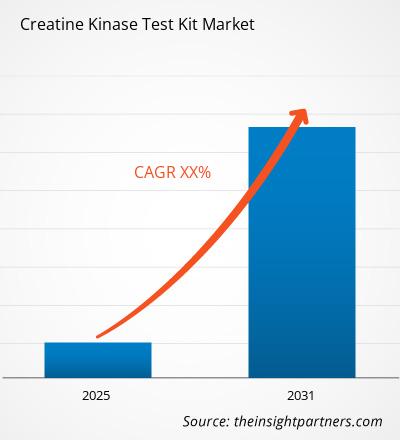
The Creatine Kinase Test Kit Market was estimated at US$ 1.66 Billion in 2025 and forecasted to increase to US$ 2.46 Billion by 2034 at a Compound Annual Growth Rate (CAGR) of 4.47% during the period 2026-2034. The growth of the market will be fueled by increased demand for fast biochemical diagnostic tests, rising cases of cardiovascular and neuromuscular diseases and greater use of automated lab equipment in both established and emerging healthcare systems. In North America, there is a continued push towards building more advanced laboratory facilities and increased use of advanced diagnostic testing in hospital and reference laboratories. The market size for Creatine Kinase Test Kit Market size is estimated to grow at a CAGR of 4.1%-4.6% until 2034.
Creatine Kinase Test Kit Market Assessment and Insights
- North America: Strong diagnostic infrastructure, broad reimbursement coverage, and high laboratory automation support regional leadership. Share in 2025: 36–39%. CAGR between 2026–2034: 4.1–4.6%.
- US: Extensive hospital networks, high diagnostic testing volumes, and continuous innovation maintain market leadership. Share in North America in 2025: 82–86%. CAGR between 2026–2034: 4.2–4.7%.
- Europe: Germany, the UK, France, Italy, and Spain continue investing in clinical laboratory modernization and preventive healthcare. Share in 2025: 27–30%. CAGR between 2026–2034: 3.9–4.4%.
- Asia Pacific: China, Japan, India, South Korea, and Australia are expanding diagnostic capabilities through healthcare investments and rising disease awareness. Share in 2025: 24–27%. CAGR between 2026–2034: 5.3–5.8%.
- Largest Segment: Laboratory remains the dominant end-user due to centralized testing capacity and high sample throughput. Market share in 2025: 61–65%. CAGR between 2026–2034: 4.3–4.8%.
- High Growth Segment: Colorimetry Method benefits from economical workflows and compatibility with automated analyzers. Market share in 2025: 42–46%. CAGR between 2026–2034: 5.0–5.5%.
- Key companies analyzed in detail: Merck KGaA, Biomerica, Inc., Danaher Corporation, Roche Diagnostics International Ltd., Hologic, Inc., Thermo Fisher Scientific Inc., IDL Biotech AB, Alfa Scientific Designs, Inc., Abbott Laboratories, Biosynex SA.
Source: The Insight Partners' analysis based on proprietary research, government publications, company annual reports, investor presentations, industry databases, and expert interviews.
From the use of traditional biochemical tests for diagnostics to the adoption of more standardized testing systems that are suitable for automation, there has been a steady progress in the technologies used in this sector. The increased application of laboratory information systems, quality management systems, and high-throughput analyzers has improved the efficiency of processes involved while enhancing the credibility of creatine kinase tests in emergency medicine, cardiology, and neurology. Continuous product development and adherence to strict quality standards also facilitate this process.
In future, focus is likely to shift towards increasing diagnostic access in developing healthcare systems, along with fostering the capability for local manufacture and digitalization of laboratories. The harmonization of regulations, stringent requirements for quality assurance, and rising spending on health care in the Asia-Pacific region, the Middle East, and some Latin American countries will promote innovations and partnerships within the forecast period.
Creatine Kinase Test Kit Market Report Scope
| Report Attribute | Details |
|---|---|
| Market size in 2025 | US$ 1.66 Billion |
| Market Size by 2034 | US$ 2.46 Billion |
| Global CAGR (2026 - 2034) | 4.47% |
| Historical Data | 2021-2024 |
| Forecast period | 2026-2034 |
Creatine Kinase Test Kit Market Analysis
Focus on early detection of myocardial injury, muscle disorders, and neuromuscular diseases by clinicians is still bolstering Creatine Kinase Test Kit market growth across the globe. The aging population, admission of patients into the emergency departments, and prevention-oriented healthcare initiatives have led to a continued demand for reliable biochemistry tests. At the same time, there is pressure from healthcare providers on laboratories to reduce the turnaround time and achieve standardized processes, which can be achieved through adoption of automated analyzers that can handle a high testing volume with consistent analytical performance.
The market setting entails suppliers of raw materials, producers of reagents, diagnostic equipment suppliers, distributors, hospitals, and reference laboratories. Supply chain resilience within the market has been increased through regional manufacturing and diversified sourcing approaches witnessed in the past disruptions in the global market. Quality certifications and laboratory accreditations have continued to affect procurement processes by ensuring stability of reagents, calibration accuracy, and instrument compatibility.
Competition in the industry is still intense due to the growing portfolios of global diagnostic players driven by innovations, approvals, partnerships, and geographic expansions. Creatine Kinase Test Kit Market report reveals that market leaders like Abbott Laboratories, Roche Diagnostics International Ltd., Thermo Fisher Scientific Inc., Danaher Corporation, and Merck KGaA keep benefiting from large distribution networks and diverse diagnostic portfolios. On the other hand, Biomerica, Inc., Hologic, Inc., IDL Biotech AB, Alfa Scientific Designs, Inc., and Biosynex SA enhance their competitive performance due to specific laboratory needs and market opportunities in the region.
The investments are now being made in laboratory automation, integration with IT infrastructure, reagents' optimization, and efficient manufacturing processes. Players invest in the growth of their production capacities and improved accuracy and compatibility with automated chemistry analyzers. Collaboration between healthcare facilities, developers of diagnostic tests, and technology suppliers will allow for the faster development of new biochemical testing solutions.
● REPORT CUSTOMIZATION
Tailor This Report To Align With Your Specific Business Requirements
This report can be customized to align precisely with your business objectives, scope, and target markets. Customization options include tailored segmentation, geography, competitive analysis, and strategic insights to support informed decision-making.
Customize This Report →WHAT YOU CAN ADJUST
- ● Segmentations
- ● Geography
- ● Competitive Analysis
- ● Language Preferences
Creatine Kinase Test Kit Market: Strategic Insights
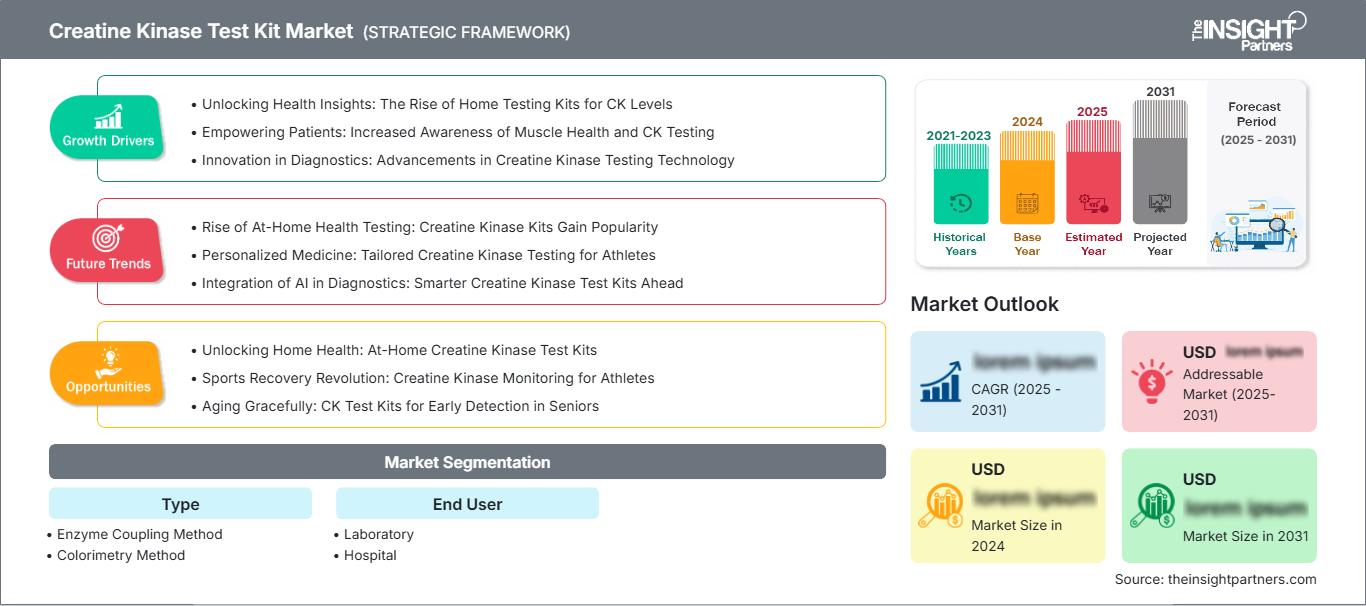
Regional Insights
North America Creatine Kinase Test Kit Market
North America constituted 36–39% of the global market in 2025 and is estimated to witness growth at a CAGR of 4.1–4.6% during 2026–2034. North America Creatine Kinase Test Kit Market share in the region is driven by well-established clinical laboratories with sophisticated infrastructure and adoption of automated chemistry analyzers. Additionally, regular demand for cardiac and neuromuscular diagnosis tests drives the growth in the region. Healthcare spending and positive reimbursement environment drive routine testing activities in hospitals and independent laboratories.
US and Canada continue their efforts in upgrading lab equipment, digitizing pathological services, and improving quality control in diagnostics. Growing number of visits to the emergency departments, an increase in age population, and rising cases of chronic cardiovascular diseases will continue to support testing volumes. Moreover, constant innovations by market players and distribution network allow health organizations to perform standardized and highly efficient tests for creatine kinase.
U.S. Creatine Kinase Test Kit Market
The U.S. accounted for 82% to 86% share of the North American market in 2025 and is projected to witness a CAGR of 4.2% to 4.7% until 2034. Availability of numerous hospitals, dedicated diagnostic laboratories, along with the presence of advanced clinical chemistry analyzers is driving demand. Rising expenditure towards healthcare services in addition to rising significance of fast and accurate diagnosis of cardiovascular events leads to frequent biochemical testing in hospitals while ensuring that old generation testing systems are replaced by advanced ones.
Top players such as Abbott Laboratories, Danaher Corporation, Thermo Fisher Scientific Inc., Roche Diagnostics International Ltd., and Hologic, Inc. have robust commercial, production, as well as research operations throughout the country. Widespread adoption of laboratory information systems, quality control measures and standardization of procedures allows healthcare facilities to maximize their efficiency while providing reliable tests.
Europe Creatine Kinase Test Kit Market
In 2025, Europe will account for 27-30% of global revenue, and it is expected to grow at a CAGR of 3.9-4.4% over the assessment period. In terms of individual countries, Germany leads the field owing to the developed healthcare infrastructure, high prevalence of laboratory facilities, and wide use of automated diagnostics technologies. Investment in preventive healthcare and disease monitoring will further help maintain the stable demand in hospitals and reference laboratories.
There is ongoing development of the diagnostic sector in the UK in view of efforts to modernize the existing infrastructure and pay more attention to early disease detection. Laboratory automation, development of the digital health infrastructure, and continued investment in the healthcare sector will drive the adoption of creatine kinase tests in emergency medicine and specialist clinics.
France, Italy, and Spain constitute another important growth cluster due to the rising laboratory accreditation, growing prevalence of chronic diseases, and increased use of biochemical analysis methods. Health authorities focus on quality improvement in diagnostics, which will allow labs to improve their performance and facilitate the clinical decision-making process.
APAC Creatine Kinase Test Kit Market
Asia Pacific accounted for 24%-27% of the total global revenue in 2025, and it is expected to experience the highest regional growth, registering a CAGR of 5.3%-5.8%. China dominates regional demand due to growing hospital infrastructure and production of domestic diagnostic facilities, while Japan sustains its high demand due to technologically advanced laboratory systems.
India, South Korea, and Australia continue developing their clinical diagnostics through healthcare spending, laboratory automation, and better access to high-quality testing services. The combination of government healthcare reforms, awareness of cardiovascular diseases, and growing diagnostics capacity drive the continued growth of the regional market.
Middle East & Africa Creatine Kinase Test Kit Market
The Middle East and Africa region is forecast to witness a CAGR of 4.5%–5.0% in the coming years until 2034. The demand in the region will be led by Saudi Arabia via healthcare infrastructure development, and the United Arab Emirates through its investments in high-end hospital laboratories and digital healthcare revolution.
South Africa is an important market in Africa due to its relatively well-established laboratory infrastructure and increasing clinical testing capability. Investment in healthcare infrastructure, advancement in diagnostic centers, and prevalence of chronic diseases in Rest of MEA regions will drive the demand for creatine kinase testing solutions.
Segmentation Analysis
Type
The Type segment is expected to register a CAGR of 4.4–4.9% between 2026 and 2034. Product selection depends on analytical accuracy, turnaround time, laboratory workflow, and instrument compatibility. The Creatine Kinase Test Kit Market scope continues expanding as laboratories increasingly adopt standardized assay technologies that improve precision while supporting automated testing platforms. Ongoing reagent innovation and quality improvements are expected to strengthen adoption across both centralized and decentralized diagnostic facilities.
- Enzyme Coupling Method: Widely adopted by clinical laboratories because of its established analytical reliability, compatibility with automated chemistry analyzers, and consistent performance in routine biochemical testing across high-volume healthcare facilities.
- Colorimetry Method: Increasingly preferred for cost-effective laboratory operations, simplified workflows, and broad compatibility with modern diagnostic platforms, making it attractive for expanding healthcare systems and medium-sized diagnostic laboratories.
End User
The End User segment is projected to grow at a CAGR of 4.3–4.8% during the forecast period. Rising demand for rapid clinical diagnostics, increasing patient admissions, and expanding laboratory automation continue supporting utilization across healthcare institutions. Hospitals and diagnostic laboratories are investing in advanced analytical systems to improve efficiency, reduce reporting times, and maintain standardized quality across diverse testing applications.
- Laboratory: The leading end-user owing to centralized diagnostic operations, experienced technical personnel, high sample throughput, and extensive deployment of automated analytical platforms supporting routine biochemical testing.
- Hospital: Demand continues increasing as emergency departments and critical care units emphasize rapid diagnosis of cardiac and muscular disorders, encouraging integration of reliable creatine kinase testing into routine clinical workflows.
Opportunity Snapshot
| End User | Revenue Contribution | Trend Tag | Adoption Stage |
|---|---|---|---|
| Laboratory | High | Automation Integration | Mature |
| Hospital | Medium | Emergency Diagnostics | Scaling |
Creatine Kinase Test Kit Market Growth Drivers and Impact Analysis
Growing Burden of Cardiovascular and Neuromuscular Disorders
The increasing prevalence of cardiovascular diseases, muscular injuries, inherited neuromuscular disorders, and age-related muscle degeneration continues to drive demand for reliable creatine kinase testing worldwide. Hospitals increasingly depend on biochemical markers for rapid patient assessment, particularly in emergency departments where timely clinical decisions are essential. Expanding geriatric populations and rising incidence of chronic diseases have also increased diagnostic testing volumes across healthcare systems. As healthcare providers emphasize early diagnosis and evidence-based treatment pathways, laboratories are investing in standardized assays that deliver reproducible and accurate results. Manufacturers are responding by improving reagent stability, assay sensitivity, and compatibility with automated analyzers, allowing healthcare facilities to manage growing patient volumes while maintaining diagnostic quality and operational efficiency throughout routine clinical practice.
Expansion of Automated Clinical Laboratory Infrastructure
Healthcare systems worldwide continue investing in automation to improve laboratory productivity, reduce manual intervention, and minimize analytical variability. Automated chemistry analyzers equipped with advanced software enable faster sample processing while maintaining consistent quality across thousands of tests each day. This trend supports increased adoption of creatine kinase test kit designed for seamless integration with existing laboratory platforms. Growing demand from large diagnostic chains and hospital laboratories encourages manufacturers to optimize reagent packaging, calibration procedures, and instrument compatibility. Continuous improvements in workflow efficiency also reduce operating costs, enabling laboratories to expand testing capacity without proportionally increasing staffing requirements. These structural developments strengthen long-term demand across both developed and emerging healthcare markets.
Improving Healthcare Access Across Emerging Economies
Developing countries continue expanding healthcare infrastructure through public investment, private hospital construction, and modernization of diagnostic laboratories. National initiatives supporting universal healthcare coverage and preventive disease management have increased demand for reliable biochemical testing services. As laboratory networks expand into secondary cities and rural healthcare systems, procurement of standardized diagnostic kits continues rising. International quality accreditation programs and regulatory improvements further encourage adoption of validated laboratory products capable of meeting global performance standards. Manufacturers are increasingly establishing regional distribution partnerships and localized production capabilities to improve product availability, reduce delivery times, and enhance pricing competitiveness. These initiatives collectively create favorable conditions for sustained long-term market development.
Creatine Kinase Test Kit Market Future Trends
Digital Integration with Connected Laboratory Ecosystems
Clinical laboratories are increasingly integrating diagnostic instruments with laboratory information management systems, cloud-enabled reporting platforms, and digital quality management solutions. The Creatine Kinase Test Kit Market trends indicate that future product development will prioritize interoperability, automated calibration, predictive maintenance, and real-time quality monitoring. These capabilities improve laboratory efficiency while reducing reporting errors and supporting standardized clinical decision-making. Manufacturers that provide complete digital diagnostic ecosystems alongside high-performance reagents are expected to strengthen customer retention, improve workflow optimization, and expand recurring revenue opportunities across hospitals and independent diagnostic laboratories over the coming decade.
Development of High-Sensitivity and Multiparameter Assays
Future innovation is expected to focus on higher analytical sensitivity, shorter processing times, and improved compatibility with multiplex diagnostic platforms. Clinical laboratories increasingly seek solutions capable of evaluating multiple biomarkers within a single workflow, improving efficiency while reducing operational costs. Continued advances in reagent chemistry, instrument automation, and quality control technologies are anticipated to enhance diagnostic precision across cardiovascular and neuromuscular applications. Companies investing in research and development for next-generation biochemical assays are likely to gain competitive advantages as healthcare providers prioritize accuracy, standardization, and scalable laboratory operations.
Creatine Kinase Test Kit Market Opportunities
Expansion into Emerging Diagnostic Infrastructure Projects
Rapid investment in hospital construction, laboratory modernization, and national diagnostic programs across Asia Pacific, the Middle East, and parts of Africa presents substantial commercial potential for manufacturers. Creatine Kinase Test Kit Market Forecasts indicate that suppliers capable of establishing localized manufacturing, technical support, and distribution partnerships will be better positioned to capture expanding procurement opportunities. Governments continue prioritizing healthcare accessibility and laboratory accreditation, encouraging demand for standardized diagnostic products. Companies that combine competitive pricing with regulatory compliance, technical training, and reliable supply chains are expected to strengthen long-term market presence while improving customer loyalty in fast-growing healthcare systems.
Strategic Innovation Through Integrated Diagnostic Solutions
Manufacturers have significant opportunities to differentiate themselves by offering integrated diagnostic platforms rather than standalone reagents. Combining creatine kinase assays with automated analyzers, software solutions, maintenance services, and quality assurance programs creates additional value for healthcare providers seeking comprehensive laboratory solutions. Strategic collaborations with hospitals, academic institutions, and regional distributors can accelerate product adoption while supporting regulatory approvals in new markets. Investments in sustainable manufacturing, digital laboratory services, and next-generation assay development are expected to enhance competitive positioning and generate durable revenue growth across global healthcare markets.
Recent Developments
- December 2025: Roche Diagnostics International Ltd. announced the U.S. launch of the next-generation cobas 6800/8800 Systems Version 2.0, enhancing laboratory throughput, workflow flexibility, sample prioritization, and software capabilities. Although designed for the broader molecular diagnostics portfolio, the platform upgrade strengthens laboratory efficiency and supports high-volume clinical testing environments that utilize integrated biochemical diagnostic workflows.
- May 2025: Roche Diagnostics International Ltd. announced an investment of up to US$550 million to expand its Indianapolis diagnostics manufacturing campus by 2030. The project is intended to increase domestic diagnostics manufacturing capacity, strengthen supply chain resilience, and support future production of advanced diagnostic solutions serving hospital and clinical laboratory customers worldwide.
- February 2025: Roche Diagnostics International Ltd. introduced its proprietary Sequencing by Expansion (SBX) technology, representing a new sequencing platform designed to improve speed, scalability, and flexibility for clinical and research laboratories. While focused on genomic diagnostics, the innovation demonstrates continued investment in advanced laboratory technologies that complement the broader in vitro diagnostics ecosystem.
Frequently Asked Questions

- Comprehensive Market Sizing and Forecast Analysis
- Detailed Segmentation Analysis
- In-Depth Market Dynamics Assessment
- Regional and Country-Level Insights
- Competitive Landscape and Company Benchmarking
- Strategic Business Intelligence
Recent Reports
Testimonials

The Insight Partners provided valuable market intelligence that supported our global go-to-market strategy. Their team was professional, responsive, and attentive to our feedback, providing thoughtful analysis and helpful methodological clarifications throughout the project.
Junmo Kim Chief Financial Officer (CFO), Enertech Co., Ltd.
The Insight Partners' SCADA System Market report is comprehensive, with valuable insights on current trends and future forecasts. The team was highly professional, responsive, and supportive throughout. We are very satisfied and highly recommend their services.
RAN KEDEM Partner, Reali Technologies LTDs
I requested a report on a very specific software market and the team produced the report in a few days. The information was very relevant and well presented. I then requested some changes and additions to the report. The team was again very responsive and I got the final report in less than a week.
JEAN-HERVE JENN Chairman, Future Analytica
We worked with The Insight Partners for an important market study and forecast. They gave us clear insights into opportunities and risks, which helped shape our plans. Their research was easy to use and based on solid data. It helped us make smart, confident decisions. We highly recommend them.
PIYUSH NAGPAL Sr. Vice President, High Beam Global
The Insight Partners delivered insightful, well-structured market research with strong domain expertise. Their team was professional and responsive throughout. The user-friendly website made accessing industry reports seamless. We highly recommend them for reliable, high-quality research services
YUKIHIKO ADACHI CEO, Deep Blue, LLC.
This is the first time I have purchased a market report from The Insight Partners.While I was unsure at first, I visited their web site and felt more comfortable to take the risk and purchase a market report.I am completely satisfied with the quality of the report and customer service. I had several questions and comments with the initial report, but after a couple of dialogs over email with their analyst I believe I have a report that I can use as input to our strategic planning process.Thank you so much for taking the extra time and making this a positive experience.I will definitely recommend your service to others and you will be my first call when we need further market data.
JOHN SUZUKI President and Chief Executive Officer, Board Director, BK Technologies
I wish to appreciate your support and the professionalism you displayed in the course of attending to my request for information regarding to infectious disease IVD market in Nigeria. I appreciate your patience, your guidance, and the fact that you were willing to offer a discount, which eventually made it possible for us to close a deal. I look forward to engaging The Insight Partners in the future, all thanks to the impression you have created in me as a result of this first encounter.
DR CHIJIOKE ONYIA MANAGING DIRECTOR, PineCrest Healthcare Ltd.Reason to Buy
- Informed Decision-Making
- Understanding Market Dynamics
- Competitive Analysis
- Identifying Emerging Markets
- Customer Insights
- Market Forecasts
- Risk Mitigation
- Boosting Operational Efficiency
- Strategic Planning
- Investment Justification
- Tracking Industry Innovations
- Aligning with Regulatory Trends





 Get Free Sample for