
CT Machine Market Growth, Trends & Forecast by 2034
Coverage: By Type (Stationary CT scanners, Portable CT scanners); Device Type (C-arm CT Scanners, O-arm CT Scanners); Technology (High-slice CT, Mid-slice CT, Low-slice CT, Cone-beam CT (CBCT)); Application (Cardiology, Oncology, Neurology, Veterinary, Research, Others) , and Geography (North America, Europe, Asia Pacific, and South and Central America)
- Status : Data Released
- Report Code : TIPRE00028551
- Category : Life Sciences
- No. of Pages : 150
- Available Report Formats :


- Last update date : August 13, 2026


2025 Market Size
US$ 5.44 Bn
Base year value
2034 Forecast
US$ 9.99 Bn
Projected by 2034
CAGR 2026-2034
6.99 %
Growth rate
Addressable Market
US$ 69.69 Bn
(2026-2034)
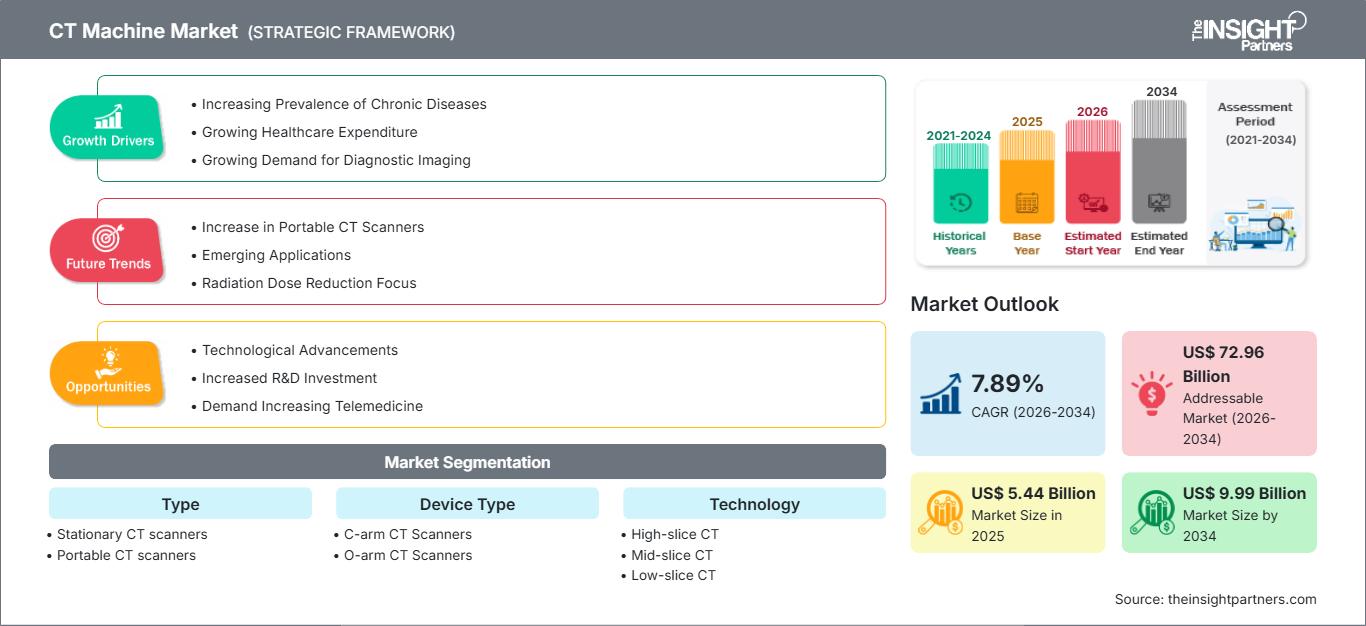
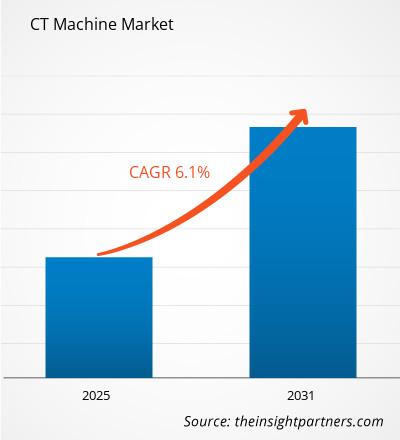
The CT Machine market was valued at US$ 5.44 billion in 2025 and is expected to reach US$ 9.99 billion by 2034; it is estimated to record a CAGR of 6.99% during 2026-2034.
CT Machine Market Assessment and Insights
- North America: The region demonstrates a strong position with estimate share of 34–38% in 2025 and is projected to grow at a CAGR of 7.2–8.0% between 2026–2034. Demand is supported by technology upgrades, diagnostic infrastructure, and clinical adoption.
- US: The country represents the largest North American contributor with estimate share of 26–30% in 2025 and expected CAGR of 7.3–8.1% between 2026–2034. Growth is supported by hospital modernization and imaging investments.
- Europe: Europe holds an estimated 27–31% share in 2025 and is expected to register a CAGR of 6.8–7.6% between 2026–2034. Germany, the UK, France, and Italy remain important markets due to healthcare digitization.
- Asia Pacific: Asia Pacific accounts for an estimated 24–29% share in 2025 and is expected to achieve a CAGR of 8.2–9.1% between 2026–2034. China, Japan, South Korea, and India support growth through healthcare expansion and diagnostic access initiatives.
- Largest Segment: Stationary CT scanners represent the largest segment with estimate share of 72–78% in 2025 and CAGR of 7.0–7.8% between 2026–2034 due to broad hospital deployment.
- High Growth Segment: Portable CT scanners represent a high-growth segment with an estimated share of 10–15% in 2025 and CAGR of 9.0–10.2% between 2026–2034 due to point-of-care adoption.
- Key companies analysed in detail: GE HealthCare Technologies Inc., Siemens Healthineers AG, Koninklijke Philips N.V., Canon Medical Systems Corporation, FUJIFILM Holdings Corporation, Shimadzu Corporation, Samsung Electronics Co., Ltd., Neusoft Medical Systems Co., Ltd., Medtronic plc, Shenzhen Anke High-tech Co., Ltd., and Accuray Incorporated.
Source: The Insight Partners' analysis based on proprietary research, government publications, company annual reports, investor presentations, industry databases, and expert interviews.
The progress in CT imaging technologies was driven by the advancement of the detector technologies, fast image reconstruction, and low radiation exposure technologies. Currently, manufacturers develop high performance machines, which unite efficient hardware with software diagnostics assistance. The dynamics of the production process is moving towards the development of modular solutions, specialized CT scanners, and workflow integration. This helps in enhancing the adoption rate within hospitals, specialist centers, and research institutes. The development of the imaging ecosystem remains influential to the competitive landscape of the CT Machine Market.
The future of the market development will be driven by emerging markets for healthcare, local manufacturing capacities, and favorable regulation of the safer diagnostic technologies. Investments into the development of the healthcare infrastructure in developing countries increase access to imaging machines. Public health policies with the focus on early disease detection also boost the demand. The growing role of AI technologies, cloud-based imaging, and remote diagnostics is expected to provide new opportunities for manufacturers until 2034.
CT Machine Market Report Scope
| Report Attribute | Details |
|---|---|
| Market size in 2025 | US$ 5.44 Billion |
| Market Size by 2034 | US$ 9.99 Billion |
| Global CAGR (2026 - 2034) | 6.99% |
| Historical Data | 2021-2024 |
| Forecast period | 2026-2034 |
CT Machine Market Analysis
More investment is being made in diagnostic imaging technology by healthcare service providers due to high incidence rates of chronic diseases as well as the need for fast decision making in healthcare facilities. CT Machine Market growth is driven by an increase in the application of such machines in the areas of oncology, cardiology, neurology and emergency medicine. Some of the entities in the value chain include equipment makers, component suppliers, software developers, distributors, hospitals, imaging centers and others.
Some of the factors that impact supply of the technology include availability of semiconductors, advances in detectors, efficiency in manufacturing process and healthcare investment trends within particular geographic locations. On the other hand, demand is being impacted by the need for replacement of old equipment as well as preference for diagnostic systems with improved workflow efficiency. Healthcare facilities consider ownership cost, maintenance and performance among other things in choosing an imaging platform.
The CT Machine Market report indicates that competition is characterized by the presence of multinationals and specialized imaging technology suppliers in the sector. GE HealthCare Technologies Inc., Siemens Healthineers AG, Koninklijke Philips N.V., and Canon Medical Systems Corporation are some examples of firms that continue to enhance their portfolios with the help of innovative imaging technology and software integration. Other companies include Shimadzu Corporation, Samsung Electronics Co., Ltd., Neusoft Medical Systems Co., Ltd., Medtronic plc, Shenzhen Anke High-tech Co., Ltd., and Accuray Incorporated.
The investment trends within the market are centered on the integration of artificial intelligence into the products and workflow automation alongside advanced imaging technologies. Product development activities are oriented towards increased diagnostic accuracy, efficiency, and minimization of patient exposure to radiation. Technology companies and healthcare providers are collaborating to ensure innovation within the sector. The competitive scenario in the CT Machine Market is likely to be shaped by the aforementioned factors.
● REPORT CUSTOMIZATION
Tailor This Report To Align With Your Specific Business Requirements
This report can be customized to align precisely with your business objectives, scope, and target markets. Customization options include tailored segmentation, geography, competitive analysis, and strategic insights to support informed decision-making.
Customize This Report →WHAT YOU CAN ADJUST
- ● Segmentations
- ● Geography
- ● Competitive Analysis
- ● Language Preferences
CT Machine Market: Strategic Insights
Regional Insights
North America CT Machine Market
North America remains a major contributor, with an analyst-modeled CT Machine Market share estimate of 34–38% in 2025. The region is expected to record a CAGR of 7.2–8.0% from 2026–2034. Strong hospital networks, advanced reimbursement structures, and demand for high-quality diagnostic services support adoption.
The US and Canada are key contributors due to investments in healthcare technology and modernization of imaging facilities. Leading manufacturers maintain significant operational presence in the region, while hospitals increasingly prioritize systems offering faster scanning, improved visualization, and workflow optimization. Replacement demand from installed equipment bases is expected to remain an important growth factor.
U.S. CT Machine Market Market
The U.S. represents the dominant North American market, accounting for an analyst-modeled 75–80% share of the regional market in 2025. The country is projected to grow at a CAGR of 7.3–8.1% between 2026–2034, supported by healthcare technology investments and advanced diagnostic adoption.
The installation of improved systems with advanced reconstruction and automation tools is being seen in hospitals, imaging centers, and specialized clinics. Firms such as GE HealthCare Technologies Inc., Siemens Healthineers AG, Koninklijke Philips N.V., and Canon Medical Systems Corporation are dominant in the market due to extensive range of products available from their side.
Europe CT Machine Market Market
Europe is estimated to account for 27–31% of the global CT Machine Market share in 2025 through analyst modeling. The region is expected to register a CAGR of 6.8–7.6% between 2026–2034, with Germany considered a leading market due to healthcare infrastructure and technology adoption.
Advancements in the UK market are attributed to the ongoing modernization efforts and the need for effective diagnostic systems among the healthcare systems of the nation. Advanced medical imaging is the focus of Germany owing to the robust infrastructure in hospitals along with technological know-how. There has been a rise in the use of advanced medical imaging in France, Italy, and Spain due to healthcare digitization efforts, system replacements, and early disease detection.
APAC CT Machine Market Market
Asia Pacific represents an analyst-modeled share estimate of 24–29% in 2025 and is projected to grow at a CAGR of 8.2–9.1% between 2026–2034. China remains a leading market due to healthcare expansion and domestic manufacturing capabilities.
Japan, South Korea, India, and Australia contribute through technology adoption, healthcare investments, and increasing diagnostic requirements. Industrial development, public healthcare programs, and efforts to improve access to advanced medical equipment are supporting regional demand. Rising private healthcare investment is also encouraging adoption of modern imaging systems.
Middle East & Africa CT Machine Market Market
Middle East and Africa represent an emerging region with an analyst-modeled CAGR estimate of 7.0–8.0% between 2026–2034. Saudi Arabia and the UAE are key markets due to healthcare infrastructure investments and modernization initiatives.
South Africa contributes through expanding diagnostic networks, while other MEA markets are gradually improving imaging accessibility. Energy-sector revenues in several Gulf economies have supported healthcare infrastructure development. Investments in hospitals, specialty centers, and medical technology procurement are expected to influence regional adoption over the forecast period.
Segmentation Analysis
Type
The Type segment of the CT Machine Market is divided into Stationary CT scanners and Portable CT scanners. The segment is expected to expand at an estimated CAGR of 7.1–8.0% between 2026–2034 based on analyst modeling. Stationary systems continue to dominate due to extensive hospital installation, while portable solutions are gaining attention in critical care, emergency settings, and facilities requiring flexible imaging access. The CT Machine Market scope is expanding as healthcare providers balance high-performance imaging requirements with operational flexibility.
- Stationary CT scanners maintain a strong market position due to established use in hospitals, diagnostic centers, and specialty facilities. These systems support advanced imaging applications requiring high throughput, detailed visualization, and integration with clinical workflows.
- Portable CT scanners are gaining adoption in intensive care units, operating rooms, and remote healthcare environments. Their mobility advantages support point-of-care diagnostics and enable imaging access where conventional infrastructure is limited.
Device Type
The Device Type segment includes C-arm CT Scanners and O-arm CT Scanners. This segment is estimated to grow at a CAGR of 7.5–8.4% between 2026–2034. Demand is influenced by increasing use of intraoperative imaging, minimally invasive procedures, and surgical navigation requirements. Device innovations are improving image quality, workflow integration, and procedural accuracy across hospitals and specialty care environments.
- C-arm CT Scanners are widely adopted in interventional procedures because they combine fluoroscopy capabilities with three-dimensional imaging. Their use supports cardiovascular interventions, surgical procedures, and image-guided treatments.
- O-arm CT Scanners support advanced surgical applications by providing intraoperative imaging and navigation capabilities. These systems are particularly relevant in neurosurgery and orthopedic procedures requiring precise anatomical visualization.
Technology
The Technology segment consists of High-slice CT, Mid-slice CT, Low-slice CT, and Cone-beam CT. The segment is projected to grow at an estimated CAGR of 7.3–8.2% between 2026–2034. Technological improvements are focused on faster acquisition, lower radiation exposure, and enhanced reconstruction capabilities. Healthcare providers increasingly evaluate technology selection based on clinical requirements, workflow efficiency, and cost considerations.
- High-slice CT systems represent advanced imaging platforms designed for complex diagnostic applications. They are preferred in facilities requiring rapid scanning, detailed imaging, and support for specialized clinical procedures.
- Mid-slice CT systems provide a balance between performance and affordability. They remain relevant for hospitals and diagnostic centers seeking reliable imaging capabilities across routine clinical applications.
- Low-slice CT systems continue to support basic diagnostic requirements, particularly in cost-sensitive markets and healthcare facilities with limited infrastructure investment capacity.
- Cone-beam CT technology is increasingly used in specialized applications requiring three-dimensional imaging. Its adoption is supported by dental, orthopedic, and surgical imaging requirements.
Application
The Application segment includes Cardiology, Oncology, Neurology, Veterinary, Research, and Others. The segment is estimated to register a CAGR of 7.6–8.5% between 2026–2034. Expanding clinical applications and increasing emphasis on early disease detection continue to influence demand. Oncology and neurology remain important application areas due to the need for detailed anatomical assessment and treatment planning.
- Cardiology applications benefit from advanced imaging capabilities supporting cardiovascular assessment, anatomical visualization, and procedure planning. CT adoption is increasing as healthcare providers seek efficient diagnostic approaches.
- Oncology applications rely on CT imaging for tumor detection, staging, treatment monitoring, and radiation therapy planning. The segment remains strategically important due to rising global cancer care requirements.
- Neurology applications use CT systems for emergency assessment, brain imaging, and neurological condition evaluation. Demand is supported by the importance of rapid diagnosis in acute care environments.
- Veterinary applications are expanding as animal healthcare facilities adopt advanced diagnostic imaging solutions. CT systems assist in complex examinations and specialized veterinary procedures.
- Research applications support medical studies, technology development, and imaging innovation. Academic institutions and research organizations use advanced systems for clinical and scientific investigations.
Opportunity Snapshot
| Application | Revenue Contribution (High/Medium/Low) | Trend Tag | Adoption Stage |
|---|---|---|---|
| Cardiology | Medium | Cardiac Imaging | Scaling |
| Oncology | High | Cancer Imaging | Mature |
| Neurology | High | Brain Imaging | Mature |
| Veterinary | Low | Animal Diagnostics | Emerging |
| Research | Medium | Imaging Studies | Scaling |
| Others | Low | Specialized Use | Emerging |
CT Machine Market Growth Drivers and Impact Analysis
Increasing Chronic Disease Burden and Diagnostic Requirements
The increasing occurrence of ailments like cancer, heart diseases, and neurodegenerative ailments will drive the demand for better diagnostic imaging solutions. Diagnostic healthcare facilities are using CT systems to enhance early diagnosis and treatment. Increasing attention towards preventative medicine will push diagnostic centers to invest in diagnostic equipment. It is more relevant in areas which aim to enhance their healthcare accessibility and diagnostic services. The effect will be felt by manufacturers, service providers, and medical institutions because the demand for systems that are more accurate and offer fast results will increase. Increasing need for diagnostics is predicted to continue as one of the key factors for market growth until 2034.
Integration of Artificial Intelligence in Imaging Workflows
The use of artificial intelligence technology is bringing about a revolution in CT imaging through enhancing the performance of image reconstruction, workflow automation, and diagnosis support features. Many healthcare facilities are adopting systems that minimize operational complications and provide support to radiologists through advanced analysis tools. AI-driven technology can be used for image quality improvement, workflow optimization, and enhanced efficiency in heavy workload imaging systems. Technology companies are now developing software in order to outshine other companies through their products that do not only rely on hardware capabilities. This development is having an effect on the buying behaviors of hospitals and imaging centers.
Expansion of Healthcare Infrastructure in Emerging Economies
The development of healthcare infrastructure in emerging economies is presenting new possibilities for the implementation of high-tech diagnostic equipment. Governments and private healthcare establishments are building hospitals, specialty hospitals, and diagnostic centers in order to increase healthcare accessibility. Numerous countries in Asia Pacific, the Middle East, and Africa are making more purchases of health-related technologies amid growing population and demand for specialty healthcare services. This is helping implement up-to-date imaging systems outside big cities. The companies are reacting to this trend through localized approaches, channel partnerships, and low-cost products. It is assumed that further development of infrastructure will have an impact on demand through better access to diagnostic imaging and computed tomography solutions.
CT Machine Market Future Trends
AI-Driven Autonomous Imaging Assistance
Future CT systems are expected to incorporate more advanced artificial intelligence capabilities that support automated workflow management, image optimization, and clinical decision assistance. These developments will focus on reducing scan preparation time, improving consistency, and supporting healthcare professionals in complex diagnostic environments. AI-driven imaging platforms may become increasingly integrated with hospital information systems and cloud-based solutions. The CT Machine Market trends indicate movement toward intelligent imaging ecosystems where hardware and software capabilities operate together. Manufacturers are expected to prioritize software innovation, interoperability, and data-driven functionality as healthcare providers seek efficient diagnostic solutions. This evolution will influence product development strategies and purchasing criteria across healthcare organizations.
Growth of Compact and Mobile Imaging Platforms
Compact and mobile CT platforms are expected to gain importance as healthcare delivery models become more decentralized. Future adoption will be influenced by the need for imaging solutions in intensive care units, emergency departments, rural facilities, and specialized environments. Manufacturers are focusing on reducing system size while maintaining diagnostic performance. These platforms can support flexible deployment and improve access to imaging services in locations where conventional installations are challenging. Advances in detector technology, reconstruction methods, and system design are expected to enhance portability. The trend reflects a broader movement toward adaptable healthcare technologies that support patient-centered diagnostic models and efficient resource utilization.
CT Machine Market Opportunities
Expansion of Diagnostic Imaging Networks in Developing Regions
Developing healthcare markets present opportunities for manufacturers and service providers as governments and private organizations expand diagnostic infrastructure. Investment opportunities exist in countries where healthcare facilities are increasing imaging capacity and improving access to specialized diagnostics. Companies can benefit by developing region-specific strategies, including affordable platforms, service partnerships, and localized support networks. CT Machine Market Forecasts indicate that emerging regions may contribute significantly to future demand as healthcare systems mature. Collaboration with hospitals, distributors, and technology partners can support market penetration. Strategic investments focused on accessibility, maintenance capabilities, and training programs are expected to strengthen adoption in developing healthcare environments.
Development of Integrated Imaging and Data Platforms
The increasing importance of connected healthcare creates opportunities for companies developing integrated imaging platforms that combine scanners, software, analytics, and data management capabilities. Healthcare providers are seeking solutions that improve operational efficiency and support coordinated clinical workflows. Investment opportunities are emerging around cloud connectivity, remote imaging support, and advanced analytics. Companies that develop interoperable systems may improve their competitive position as healthcare organizations prioritize digital transformation. The future opportunity landscape includes partnerships between imaging manufacturers, software providers, and healthcare networks. These collaborations can support innovation while addressing growing requirements for efficient, data-enabled diagnostic services.
Recent Developments
- September 2025: Siemens Healthineers AG introduced the Naeotom Alpha.Prime photon-counting CT scanner designed for radiation therapy planning support. The system incorporates photon-counting detector technology to improve image resolution and contrast for oncology applications and complements the company’s advanced CT portfolio.
- May 2025: GE HealthCare Technologies Inc. launched CleaRecon DL, an AI-powered deep learning solution designed to improve cone-beam CT image quality. The technology focuses on reducing image artifacts and supporting enhanced visualization in interventional procedures, including neurovascular, liver, prostate, and endovascular applications.
- December 2025: Canon Medical Systems Corporation showcased CT innovations at RSNA 2025, highlighting developments across its CT portfolio, including advanced detector systems, ultra-high-resolution imaging platforms, and AI-driven reconstruction technologies. The company emphasized continued advancement of imaging performance and workflow efficiency
Frequently Asked Questions

- Comprehensive Market Sizing and Forecast Analysis
- Detailed Segmentation Analysis
- In-Depth Market Dynamics Assessment
- Regional and Country-Level Insights
- Competitive Landscape and Company Benchmarking
- Strategic Business Intelligence
Recent Reports
Testimonials

The Insight Partners' SCADA System Market report is comprehensive, with valuable insights on current trends and future forecasts. The team was highly professional, responsive, and supportive throughout. We are very satisfied and highly recommend their services.
RAN KEDEM Partner, Reali Technologies LTDs
I requested a report on a very specific software market and the team produced the report in a few days. The information was very relevant and well presented. I then requested some changes and additions to the report. The team was again very responsive and I got the final report in less than a week.
JEAN-HERVE JENN Chairman, Future Analytica
We worked with The Insight Partners for an important market study and forecast. They gave us clear insights into opportunities and risks, which helped shape our plans. Their research was easy to use and based on solid data. It helped us make smart, confident decisions. We highly recommend them.
PIYUSH NAGPAL Sr. Vice President, High Beam Global
The Insight Partners delivered insightful, well-structured market research with strong domain expertise. Their team was professional and responsive throughout. The user-friendly website made accessing industry reports seamless. We highly recommend them for reliable, high-quality research services
YUKIHIKO ADACHI CEO, Deep Blue, LLC.
This is the first time I have purchased a market report from The Insight Partners.While I was unsure at first, I visited their web site and felt more comfortable to take the risk and purchase a market report.I am completely satisfied with the quality of the report and customer service. I had several questions and comments with the initial report, but after a couple of dialogs over email with their analyst I believe I have a report that I can use as input to our strategic planning process.Thank you so much for taking the extra time and making this a positive experience.I will definitely recommend your service to others and you will be my first call when we need further market data.
JOHN SUZUKI President and Chief Executive Officer, Board Director, BK Technologies
I wish to appreciate your support and the professionalism you displayed in the course of attending to my request for information regarding to infectious disease IVD market in Nigeria. I appreciate your patience, your guidance, and the fact that you were willing to offer a discount, which eventually made it possible for us to close a deal. I look forward to engaging The Insight Partners in the future, all thanks to the impression you have created in me as a result of this first encounter.
DR CHIJIOKE ONYIA MANAGING DIRECTOR, PineCrest Healthcare Ltd.Reason to Buy
- Informed Decision-Making
- Understanding Market Dynamics
- Competitive Analysis
- Identifying Emerging Markets
- Customer Insights
- Market Forecasts
- Risk Mitigation
- Boosting Operational Efficiency
- Strategic Planning
- Investment Justification
- Tracking Industry Innovations
- Aligning with Regulatory Trends





 Get Free Sample for