
Defense Aircraft Materials Market Share, Growth & Forecast by 2034
Coverage: By Aircraft Type (Combat, Non-Combat); Material Type (Aluminum Alloys, Steel Alloys, Titanium Alloys, Composite Materials, Others), and Geography (North America, Europe, Asia Pacific, and South and Central America)
- Status : Data Released
- Report Code : TIPRE00013909
- Category : Chemicals and Materials
- No. of Pages : 150
- Available Report Formats :


- Last update date : July 15, 2026


2025 Market Size
US$ 103.23 Bn
Base year value
2034 Forecast
US$ 141.30 Bn
Projected by 2034
CAGR 2026-2034
3.55 %
Growth rate
Addressable Market
US$ 1,110.60 Bn
(2026-2034)
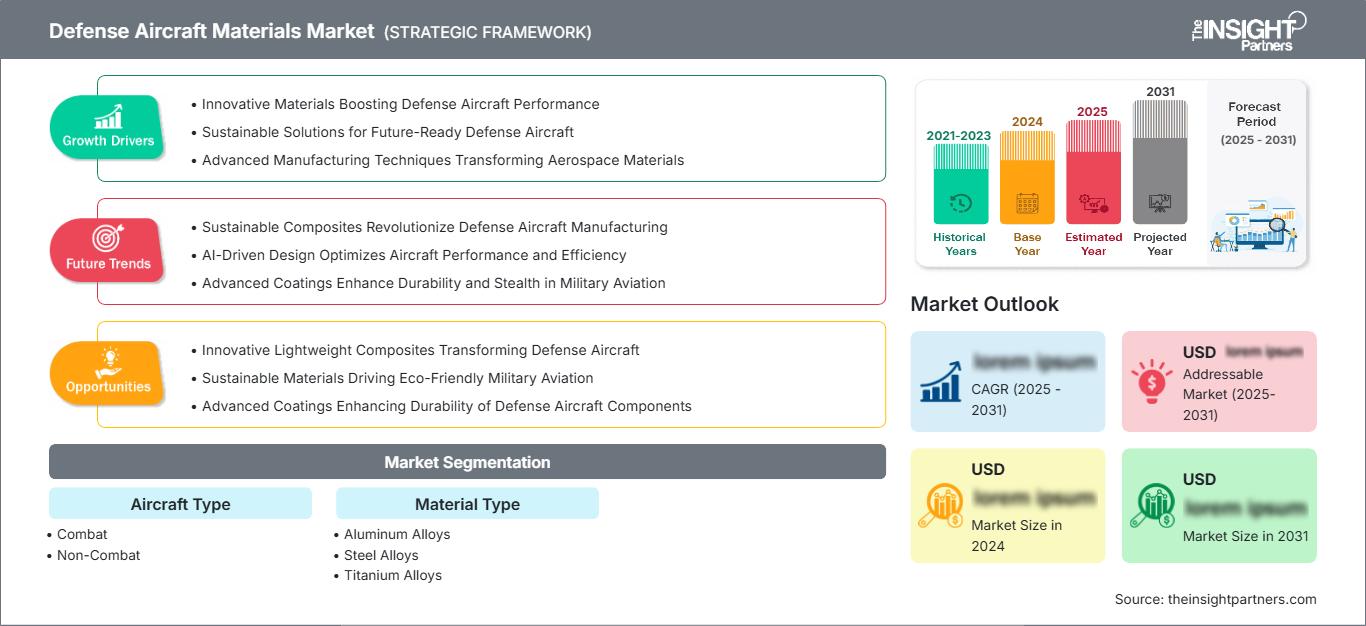
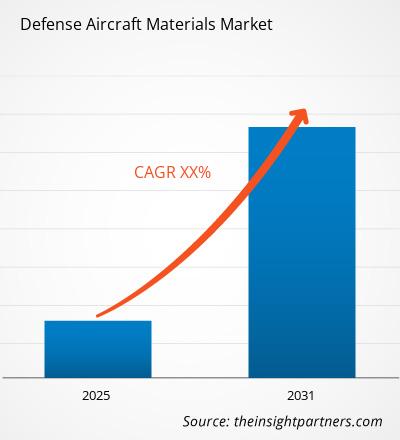
The Defense Aircraft Materials Market Size was valued at US$ 103.23 Billion in 2025 and is projected to reach US$ 141.30 Billion by 2034, expanding at a CAGR of 3.55% during 2026–2034. The market demonstrates continuing purchases of state-of-the-art military aircraft, fleet modernization efforts, and increased use of light weight but strong materials in fighter aircraft, transport aircraft, surveillance aircraft, and special defense aviation systems. Material science continues to be important in the process of increasing the carrying capability, strength, survivability, and life span.
In North America, the defense budgeting, production capabilities in aerospace, and fleet modernization efforts continue to drive demand. The Defense Aircraft Materials market forecast for the region is driven by the increased use of titanium alloys and composites in the next generation of aircraft. Growth is expected to continue within the 3.2%-4.2% CAGR range, with the help of localization efforts in the supply chain and military aerospace R&D investments.
Defense Aircraft Materials Market Assessment and Insights
- North America: Accounted for 36%–40% of the Defense Aircraft Materials market share in 2025 and is expected to grow at a 3.2%–4.2% CAGR during 2026–2034, supported by strong military aircraft production, defense modernization programs, and advanced aerospace material manufacturing capabilities.
- U.S.: Represented 82%–86% of North American demand in 2025 and is projected to record a 3.3%–4.3% CAGR during 2026–2034, driven by fighter aircraft upgrades, rotorcraft programs, and strategic material sourcing initiatives.
- Europe: Held 24%–28% share in 2025 and is anticipated to expand at a 3.1%–4.1% CAGR during 2026–2034, led by the UK, Germany, France, Italy, and Spain through collaborative defense aerospace programs.
- Asia Pacific: Captured 22%–26% share in 2025 and is forecast to grow at a 4.1%–5.1% CAGR during 2026–2034, led by China, India, Japan, South Korea, and Australia through indigenous military aircraft development.
- Largest Segment: Composite Materials accounted for a 34%–38% market share in 2025 and are projected to grow at a 4.2%–5.2% CAGR during 2026–2034, reflecting demand for weight reduction and enhanced structural performance.
- High Growth Segment: Non-Combat Aircraft represented 40%–44% market share in 2025 and is expected to advance at a 4.4%–5.4% CAGR during 2026–2034, supported by transport, surveillance, tanker, and special mission aircraft programs.
- Key companies analyzed in detail: AMG Advanced Metallurgical Group N.V., The Boeing Company, Constellium SE, Henkel AG & Co. KGaA, Hexcel Corporation, Novelis Inc., SABIC, Solvay SA, Toray Industries, Inc., RTX Corporation.
Source: The Insight Partners' analysis based on proprietary research, government publications, company annual reports, investor presentations, industry databases, and expert interviews.
Changing consumer demands for aesthetics, longevity, and environmental sustainability have led Military aircraft manufacturing has witnessed an inclination towards materials that exhibit structural strength, corrosion resistance, and cost-effectiveness in their lifecycle. The emergence of advanced carbon fiber composites, aluminum-lithium alloys, and titanium production technologies is redefining manufacturing trends. Manufacturers in the Defense Aircraft Materials market are focusing on lightweight design for airframes without compromising survivability standards, resulting in the use of multifunctional materials in the industry.
Moving forward, increased programs for defense industrialization in the Asia Pacific and the Middle East regions will create new markets for the industry. The government's focus on supply chain resiliency, stockpiling aerospace grade metals, and manufacturing ecosystem is likely to drive procurement activities in the coming years. Growing cooperation between aircraft manufacturers, aerospace material suppliers, and defense agencies is expected to hasten the qualification process of novel aerospace materials in the forecast period. The evolving requirements of military aerospace materials have resulted from increasing defense agency demands for extended platform lifecycles and decreased maintenance costs. High-end alloys and composite materials have been designed to perform in extreme conditions such as temperature extremes and high speed flights. Material qualification standards continue to tighten, encouraging aerospace manufacturers to invest heavily in testing, certification, and long-term reliability assessments.
Defense Aircraft Materials Market Report Scope
| Report Attribute | Details |
|---|---|
| Market size in 2025 | US$ 103.23 Billion |
| Market Size by 2034 | US$ 141.30 Billion |
| Global CAGR (2026 - 2034) | 3.55% |
| Historical Data | 2021-2024 |
| Forecast period | 2026-2034 |
Defense Aircraft Materials Market Analysis
The Defense Aircraft Materials market growth is driven by increased spending on defense and programs that aim at modernizing the fleets of aircraft. There is an increasing emphasis within military bodies for light materials that ensure greater efficiency in terms of fuel consumption, endurance of the mission, and lower maintenance costs. This means that there is an increased need for materials with greater mechanical characteristics. All along the supply chain from material suppliers, processors to manufacturers of components and Original Equipment Manufacturers (OEM) of the aircraft are involved in joint development efforts.
There are certain factors that influence the supply side such as access to strategic metals, the need to meet aerospace certification standards, and geopolitics. Metals such as titanium, specialty aluminum, and carbon fiber are under increased scrutiny because of their application in defense production.
The analysis of Defense Aircraft Materials Market Report shows that this industry operates in an environment marked by specialization in technology, vertically integrated manufacturing, and cooperation with aircraft OEMs. Increasing attention is being paid to the development of the next generation of materials which will enhance fatigue resistance, heat resistance, and manufacturing efficiencies. Material qualification plays an important role in the differentiation due to high standards required by the defense aerospace segment.
The main Defense Aircraft Materials market players such as Hexcel Corporation, Toray Industries, Inc., Solvay SA, Constellium SE, and Henkel AG & Co. KGaA are developing their aerospace material portfolios through innovation and partnerships. At the same time, The Boeing Company, RTX Corporation, and other companies involved in the aerospace industry are cooperating closely with the suppliers of materials in order to meet the performance goals for both combat and non-combat aircrafts.
● REPORT CUSTOMIZATION
Tailor This Report To Align With Your Specific Business Requirements
This report can be customized to align precisely with your business objectives, scope, and target markets. Customization options include tailored segmentation, geography, competitive analysis, and strategic insights to support informed decision-making.
Customize This Report →WHAT YOU CAN ADJUST
- ● Segmentations
- ● Geography
- ● Competitive Analysis
- ● Language Preferences
Defense Aircraft Materials Market: Strategic Insights
Regional Insights
North America Defense Aircraft Materials Market
North America accounted for 36%–40% of the Defense Aircraft Materials share in 2025 and is projected to register a 3.2%–4.2% CAGR through 2034. The region has access to developed aerospace manufacturing industry, defense procurement initiatives, and material qualification ecosystems. The demand will be linked to the need for materials for fighter aircraft, strategic cargo aircraft, helicopters, and intelligence aircraft.
The region has continued focus on the development of lightweight structures, high-temperature alloys, and advanced composite materials for next generation military aircraft. The strong manufacturing capabilities and visibility associated with procurement programs help in encouraging investment in the value chain of aerospace materials. Canada has also made a contribution to this end through specialized aerospace manufacturing and cross border supply chains.
The procurement programs of next generation fighter aircraft, strategic bombers, and advanced rotorcraft have been driving the demand for specialized aerospace materials in the region. The region is also helped by the presence of substantial defense research funds for lightweight structural materials, advanced coatings, and high-temperature materials.
U.S. Defense Aircraft Materials Market
The U.S. represented 82%–86% of North American demand in 2025 and is expected to record a 3.3%–4.3% CAGR through 2034. Key military aviation programs ensure that the consumption of titanium alloys, aerospace-grade aluminum, adhesives, and composites continues in the future. Large OEMs and defense contractors are responsible for ensuring continued demand for such products.
The Boeing Company, RTX Corporation, Hexcel Corporation, Henkel AG & Co. KGaA, and Solvay SA have considerable operations in support of military aerospace. Trending application is toward composite structures, parts amenable to additive manufacturing techniques, and corrosion-resistant alloys.
In addition to the production of military aircraft, there is an extensive military sustainment and modernization infrastructure in the country. There is a continual replacement and extended life of aging structures, as well as repair and overhaul at depot level which creates demand for aerospace materials.
Europe Defense Aircraft Materials Market
Europe held 24%–28% share in 2025 and is forecast to expand at a 3.1%–4.1% CAGR. Benefits of the region include multinational defense collaboration projects and aerospace engineering proficiency. The materials demand is still very much correlated with the modernization of combat aircraft and strategic air mobility programs.
Aerospace innovation programs, manufacturing initiatives, and development of defense aircraft programs contribute significantly from the United Kingdom and Germany. Both nations are continuously building domestic supply chains specializing in aerospace metals and composites.
French companies dominate in several important defense aviation projects, whereas Italy and Spain contribute through aircraft assembly, subsystems manufacturing, and materials processing capabilities. All of these countries increase regional competitiveness and ensure long-term materials demand in aerospace applications.
Defense sovereignty and industry resilience of European nations are getting more attention recently from the government level. As a result, investments into aerospace-grade aluminum, titanium processing capability, and composite materials technology are increasing. Such projects not only help to develop an indigenous platform but also ensure the safe and secure supply chain in the region.
APAC Defense Aircraft Materials Market
Asia Pacific captured 22%–26% share in 2025 and is expected to achieve a 4.1%–5.1% CAGR, the fastest among major regions. The development of indigenous aerospace programs, modernization schemes of the armed forces, and growth in aerospace manufacturing industries are still driving material requirements.
The most dominant market is China, and India, Japan, South Korea, and Australia have started investing more in defense aviation systems. Support of policy for local manufacturing, technology, and defense self-sufficiency has continued to bolster the fundamentals of demand in the region.
Fast-paced developments in aerospace engineering skills in the region have led to an increase in material requirements from the local manufacturers. Several governments are adopting industrial policies aimed at achieving technological self-reliance in defense aviation.
Middle East & Africa Defense Aircraft Materials Market
The Middle East & Africa market is projected to grow at a 3.4%–4.4% CAGR through 2034. Demand is generally attributed to military fleet modernization, procurement efforts, and aerospace maintenance and manufacturing capacity investments.
The leading activities within the region include Saudi Arabia and the United Arab Emirates with their diversified defense industries and South Africa with its aerospace engineering capabilities. The infrastructure modernization and industrial development initiatives will continue providing future growth prospects.
There are several nations that are engaging in efforts to develop more extensive defense industrialization plans designed to increase local involvement in aviation maintenance and manufacturing operations. These plans will help in generating future demand for high-performance materials as well as technological developments.
Segmentation Analysis
Aircraft Type
The aircraft type segment is expected to grow at a 3.5%–4.5% CAGR during 2026–2034. The Defense Aircraft Materials trends within this category is expanding as military operators prioritize platform efficiency, enhanced survivability, and reduced operating costs. Material selection increasingly reflects mission requirements and lifecycle performance considerations.
- Combat: Demand remains centered on fighter aircraft and attack platforms requiring high-strength alloys and advanced composites capable of supporting intensive operational environments and extreme performance conditions.
- Non-Combat: Transport, tanker, maritime patrol, surveillance, and special mission aircraft increasingly utilize lightweight structural materials to improve endurance, payload capability, and operational economics.
Material Type
Material type is projected to expand at a 3.8%–4.8% CAGR during 2026–2034. Innovation in metallurgy, composites engineering, and advanced processing techniques continues to influence procurement decisions. Manufacturers seek material combinations that optimize structural integrity, durability, and manufacturing efficiency.
- Aluminum Alloys: Widely used due to favorable strength-to-weight characteristics, cost efficiency, and established aerospace certification history across multiple military airframe applications.
- Steel Alloys: Retain importance in high-load structural components, landing gear systems, and applications requiring exceptional durability and impact resistance.
- Titanium Alloys: Increasingly adopted for critical aerospace structures requiring superior corrosion resistance, elevated temperature performance, and high specific strength.
- Composite Materials: The leading material category, supporting weight reduction objectives while delivering enhanced fatigue performance and structural efficiency across advanced aircraft platforms.
Opportunity Snapshot
| Segment Name | Revenue Contribution | Trend Tag | Adoption Stage |
| Combat | High | Stealth Systems | Mature |
| Non-Combat | High | ISR Aircraft | Scaling |
Defense Aircraft Materials Market Growth Drivers and Impact Analysis
Next-Generation Military Aircraft Procurement Programs
Growing investments in next-generation aircraft development programs will ensure the continued growth of aerospace materials usage throughout the world. The increasing preference of defense authorities towards the procurement of military aircraft with higher levels of endurance, economy, and survivability is a factor contributing to this trend. It necessitates more use of lightweight composite structures, titanium parts, and high-performance alloys. Material suppliers can expect to have their products utilized in long-lasting programs covering several decades. Increasing procurement activities of not only established but also emerging defense markets will create a need for the utilization of certified aerospace materials for meeting operational needs. Long-range plans of several powerful military nations for defense modernization offer greater visibility to material suppliers. Since military aircraft projects typically last for decades, approved procurement programs provide steady demand for certified aerospace materials.
Growing Emphasis on Lightweight and Fuel-Efficient Structures
Reducing aircraft weight is a significant strategic aim for military users who are looking for better operational efficiency and longer range of operation. There are many composite materials and metal alloys that can be used to decrease weight without impairing performance. Decrease in weight leads to fuel economy, better payload flexibility, and improved effectiveness. Today’s airframe designs involve use of hybrid materials, thus there is a constant need for new aerospace materials able to comply with military specifications and work in harsh environment. Benefits from using lighter aircraft structure go beyond just saving on fuel. Lighter aircraft can benefit from improved maneuverability, better payload flexibility, higher endurance and less maintenance.
Expansion of Domestic Aerospace Manufacturing Capabilities
Aerospace material manufacturing at the national level is currently encouraged by many governments globally in order to increase their industrial strength. Domestic supply of aerospace material makes countries less dependent on other nations as well as helps them to be more responsive to their defense needs. Investments in the manufacture of aluminum, titanium, advanced composites, and certification infrastructure keep growing in numbers. This Defense Aircraft Materials Market trend makes possible more involvement of domestic markets in aerospace business and gives chances for domestic suppliers of unique materials as well as ensures future development of defense aerospace industry. Defense issues related to strategic materials have raised the interest of governments to develop their industries.
Defense Aircraft Materials Market Future Trends
Rise of Automated Composite Manufacturing
Automated Fiber Placement, Digital Inspection and Advanced Manufacturing Integration are some of the key trends in the Defense Aircraft Materials trends landscape. Such advancements help increase the consistency in manufacturing processes, decrease waste material, and improve manufacturing scale. With increasing sizes of composites in defense aircraft designs, automation would be key in ensuring cost-effective and precise manufacturing processes. Such innovations will become more common in both existing and new aerospace manufacturing plants. Digital engineering technologies are likely to become increasingly important in materials innovation. The use of design tools that employ artificial intelligence and simulations has shortened product development cycles while enhancing the predictability of material behavior in the future.
Greater Adoption of Multi-Material Airframe Architectures
The future design of aircraft is projected to involve combinations of composites, titanium, aluminum lithium alloys, and novel adhesives in efficient structural assemblies. The choice of materials for aircraft structures is becoming more based on specific local properties rather than depending on one predominant family of materials. The benefits from this include enhanced durability and efficiency while opening up wider possibilities for specialist aerospace materials providers. Environmental issues are beginning to play a role in choosing military aerospace materials. While operational effectiveness continues to be the key criteria, companies are also experimenting with recycling, reduced emissions in production, and manufacturing efficiencies.
Defense Aircraft Materials Market Opportunities
Expansion of Indigenous Aircraft Development Programs
Up-and-coming countries in the aerospace industry have been dedicating increasing amounts of funding towards domestic development of military aircraft. The Defense Aircraft Materials Forecasts have noted that there will be plenty of opportunities for companies who can assist the efforts of these countries by partnering with them, qualifying materials, and scaling up production. Those companies who already possess certifications in the aerospace industry should stand to gain from their involvement in these types of strategic national programs. Aircraft manufacturing companies will be partnering more frequently with material companies.
Recycling and Circular Aerospace Material Ecosystems
Recycling and reusing the high value materials used in decommissioned planes are areas that are attracting the attention of the aerospace industry. The use of technology to recycle aluminum and composite materials gives the opportunity to bring down material prices and enhance sustainability performance. In a world where the defense community is looking at ways to optimize the use of resources, suppliers providing recycled material products may enjoy a competitive edge and help in meeting the goals of circular manufacturing as well. Expansion of the maintenance repair and overhaul ecosystem also represents a new area of growth.
Recent Developments
- June 2026: Hexcel Corporation – Announced a long-term composite partnership with Deutsche Aircraft for the D328eco regional aircraft program, reinforcing advanced composite manufacturing capabilities relevant to aerospace and defense applications.
- September 2025: Constellium SE – Extended its long-term agreement with Embraer to supply advanced aluminum and aluminum-lithium aerospace solutions supporting commercial, executive, and defense aviation programs, strengthening aerospace-grade material demand visibility.
- June 2025: Toray Industries, Inc. – Highlighted advanced composite materials for defense, space, and next-generation aerospace systems at the Paris Air Show, including materials qualified for advanced military aviation programs.
Frequently Asked Questions

- Comprehensive Market Sizing and Forecast Analysis
- Detailed Segmentation Analysis
- In-Depth Market Dynamics Assessment
- Regional and Country-Level Insights
- Competitive Landscape and Company Benchmarking
- Strategic Business Intelligence
Recent Reports
Testimonials

The Insight Partners' SCADA System Market report is comprehensive, with valuable insights on current trends and future forecasts. The team was highly professional, responsive, and supportive throughout. We are very satisfied and highly recommend their services.
RAN KEDEM Partner, Reali Technologies LTDs
I requested a report on a very specific software market and the team produced the report in a few days. The information was very relevant and well presented. I then requested some changes and additions to the report. The team was again very responsive and I got the final report in less than a week.
JEAN-HERVE JENN Chairman, Future Analytica
We worked with The Insight Partners for an important market study and forecast. They gave us clear insights into opportunities and risks, which helped shape our plans. Their research was easy to use and based on solid data. It helped us make smart, confident decisions. We highly recommend them.
PIYUSH NAGPAL Sr. Vice President, High Beam Global
The Insight Partners delivered insightful, well-structured market research with strong domain expertise. Their team was professional and responsive throughout. The user-friendly website made accessing industry reports seamless. We highly recommend them for reliable, high-quality research services
YUKIHIKO ADACHI CEO, Deep Blue, LLC.
This is the first time I have purchased a market report from The Insight Partners.While I was unsure at first, I visited their web site and felt more comfortable to take the risk and purchase a market report.I am completely satisfied with the quality of the report and customer service. I had several questions and comments with the initial report, but after a couple of dialogs over email with their analyst I believe I have a report that I can use as input to our strategic planning process.Thank you so much for taking the extra time and making this a positive experience.I will definitely recommend your service to others and you will be my first call when we need further market data.
JOHN SUZUKI President and Chief Executive Officer, Board Director, BK Technologies
I wish to appreciate your support and the professionalism you displayed in the course of attending to my request for information regarding to infectious disease IVD market in Nigeria. I appreciate your patience, your guidance, and the fact that you were willing to offer a discount, which eventually made it possible for us to close a deal. I look forward to engaging The Insight Partners in the future, all thanks to the impression you have created in me as a result of this first encounter.
DR CHIJIOKE ONYIA MANAGING DIRECTOR, PineCrest Healthcare Ltd.Reason to Buy
- Informed Decision-Making
- Understanding Market Dynamics
- Competitive Analysis
- Identifying Emerging Markets
- Customer Insights
- Market Forecasts
- Risk Mitigation
- Boosting Operational Efficiency
- Strategic Planning
- Investment Justification
- Tracking Industry Innovations
- Aligning with Regulatory Trends





 Get Free Sample for