
Dental Fluoride Treatment Market Growth, Trends & Forecast by 2034
Coverage: By Product (Mouth Rinse, Varnish, Toothpaste, Gel, Supplements, Other products); Type (Unit Dose 0.40 ml, Others); Application (General Hospitals, Dental Hospitals), and Geography (North America, Europe, Asia Pacific, and South and Central America)
- Status : Data Released
- Report Code : TIPRE00015559
- Category : Life Sciences
- No. of Pages : 150
- Available Report Formats :


- Last update date : August 21, 2026


2025 Market Size
US$ 15.06 Bn
Base year value
2034 Forecast
US$ 24.51 Bn
Projected by 2034
CAGR 2026-2034
5.56 %
Growth rate
Addressable Market
US$ 179.39 Bn
(2026-2034)
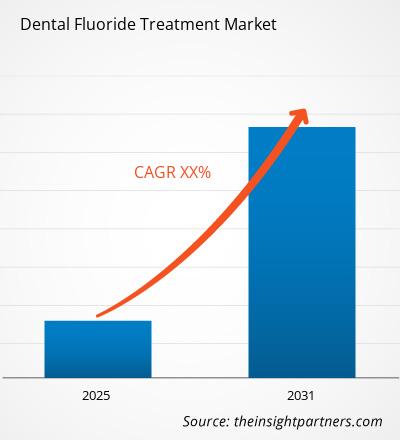
The Dental Fluoride Treatment Market was valued at US$ 15.06 Billion in 2025 and is projected to reach US$ 24.51 Billion by 2034, registering a CAGR of 5.56% during 2026–2034. This segment includes fluoride products that are professionally administered and formulated for consumers in order to protect against tooth decay, to strengthen enamel, and maintain oral hygiene. Innovations, preventive dentistry initiatives, and greater availability of dental care facilities are impacting demand from both developed and developing healthcare markets.
The North American region is forecast to retain its position as a key market for the product, thanks to its established dental care framework, preventive measures, and relatively high spending on oral care treatments. The Global Dental Fluoride Treatment Market size is anticipated to grow at a compound annual growth rate (CAGR) of 5.0%-6.0% between 2026 and 2034.
Dental Fluoride Treatment Market Assessment and Insights
- North America: North America is projected to account for a 32–36% share in 2025 and expand at a CAGR of 5.2–6.0% between 2026–2034, supported by established preventive dentistry, professional fluoride protocols, and broad product availability.
- US: The US is estimated to represent 78–82% of North America's 2025 share, growing at a CAGR of 5.1–5.9% during 2026–2034, supported by pediatric and professional preventive care.
- Europe: Europe is expected to hold a 25–29% share in 2025 and grow at a CAGR of 4.7–5.5% during 2026–2034. Germany, the UK, France, Italy, and Spain provide established dental infrastructure and preventive-care channels.
- Asia Pacific: Asia Pacific is estimated at a 21–25% share in 2025 and is projected to grow at a CAGR of 6.0–7.0% between 2026–2034, led by China, Japan, India, South Korea, and Australia.
- Largest Segment: Toothpaste is estimated to command a 34–38% market share in 2025 and grow at a CAGR of 5.0–5.8% through 2034, reflecting routine household usage.
- High Growth Segment: Varnish is estimated at a 12–16% market share in 2025 and is projected to grow at a CAGR of 6.5–7.4% during 2026–2034, supported by professional preventive applications.
- Key companies analyzed in detail: Koninklijke Philips N.V., Colgate-Palmolive Company, DMG Chemisch-Pharmazeutische Fabrik GmbH, VOCO GmbH, DENTSPLY SIRONA Inc., DÜRR DENTAL SE, Young Dental, Ivoclar Vivadent AG, Ultradent Products, Inc., Church & Dwight Co., Inc.
Source: The Insight Partners' analysis based on proprietary research, government publications, company annual reports, investor presentations, industry databases, and expert interviews.
The Dental Fluoride Treatment market has shifted from traditional fluoride treatment formulas to product types that are built according to the concepts of retention, dosing, comfort, and procedure convenience. Products such as toothpastes and mouthwashes continue to fall into volumes-based types whereas varnishes and gels focus on the concept of controlled professional administration. The development of flavors, consistencies, packaging, and one-off presentations will enhance acceptability as well as simplify product handling in clinical settings.
Looking into the future, the growth in the market will be supported by the financing of preventive treatments, children’s dental care programs, and the provision of professional treatments from venues other than dentistry clinics. According to the WHO recommendations made in 2026, fluoride varnish is used as a prevention strategy, and there is also emphasis on minimal invasive oral care.
Dental Fluoride Treatment Market Report Scope
| Report Attribute | Details |
|---|---|
| Market size in 2025 | US$ 15.06 Billion |
| Market Size by 2034 | US$ 24.51 Billion |
| Global CAGR (2026 - 2034) | 5.56% |
| Historical Data | 2021-2024 |
| Forecast period | 2026-2034 |
Dental Fluoride Treatment Market Analysis
Drivers for Growth in the Dental Fluoride Treatment Market include the prevalence of dental caries disease and the focus on preventive rather than corrective treatments. According to WHO, 3.7 billion individuals suffered from oral diseases in 2025, with untreated dental caries in permanent teeth being the most widespread health problem in the world. The prevalence drives constant need for fluoride toothpaste, mouth washes, gels, varnishes, and other preventive treatments.
The fluoride treatment value chain consists of suppliers and producers of fluoride compounds, formula developers, packaging manufacturers, dental distributors, pharmacies, hospitals, clinics, and retail outlets. Economic aspects of production depend on fluoride content, excipients used, packaging, regulatory standards, and effectiveness of distribution. Dynamics of supply are determined by availability of raw materials and volume of production. Professional products should be manufactured under stricter control and more thorough documentation.
The competitive positioning in the Dental Fluoride Treatment Market Report represents the balance between scale of consumer oral-care and dental materials expertise. Colgate-Palmolive Company and Koninklijke Philips N.V. have high consumer-scale capabilities in oral care, while DENTSPLY SIRONA Inc., VOCO GmbH, Ivoclar Vivadent AG, and Ultradent Products, Inc. are closer to dental workflow. Strategic focus is different due to diversity of their portfolios, channels, geographical presence, and formulation specializations.
The investments are made not into increasing fluoride content but in improved formula efficacy, user convenience, efficiency of packaging, and preventive treatment integration. Ultradent Products, Inc. focuses on professional varnish formulas, while large dental material producers can rely on already existing distribution channels. The small specialists can use differentiating formulation and specific clinical applications, while diversification companies can benefit from cross-selling and regulation capabilities.
● REPORT CUSTOMIZATION
Tailor This Report To Align With Your Specific Business Requirements
This report can be customized to align precisely with your business objectives, scope, and target markets. Customization options include tailored segmentation, geography, competitive analysis, and strategic insights to support informed decision-making.
Customize This Report →WHAT YOU CAN ADJUST
- ● Segmentations
- ● Geography
- ● Competitive Analysis
- ● Language Preferences
Dental Fluoride Treatment Market: Strategic Insights

Regional Insights
North America Dental Fluoride Treatment Market
The North American Dental Fluoride Treatment Market Share is expected to account for 32-36% in 2025 and grow with a CAGR of 5.2-6.0% until 2034. This region has well-developed dental infrastructure, preventive care practices, professional fluoride application, and widespread availability of toothpaste and mouth rinse products among the consumers. The pediatric dentistry field is crucial since regular fluoride intake is part of preventive treatments.
The US market is considered the leading one, whereas the Canadian and Mexican markets also participate via dental care programs. Moreover, the need for fluoride toothpaste in the region may be driven by school programs, dental insurance, professional recommendation, and information on protecting enamel. Regulatory pressure concerning labeling and pediatrics may increase the clarity in dosing communication. Thus, suppliers with good regulatory compliance and professional packaging are well-prepared for evolving trends.
U.S. Dental Fluoride Treatment Market
It is expected to account for 78%-82% of North America’s 2025 market share and has a CAGR of 5.1%-5.9% for the period through 2034. It has high demand because of extensive dental practice networks, preventive pediatric dentistry services, pharmacy distribution channels, and oral-care product brands available among consumers.
There are products available in general dental practices, pediatric practices, hospitals, and retail pharmacies. Relevant companies include Colgate-Palmolive Company, DENTSPLY SIRONA Inc., and Ultradent Products, Inc. Application trends focus on unit dose form delivery, better patient experience, and preventive interventions that may be included in regular dental visits. Packaging and labeling are becoming a significant aspect as age-appropriate fluoride application guidelines need to be conveyed.
Europe Dental Fluoride Treatment Market
It is predicted that Europe will constitute 25-29% of the market in 2025 and will experience growth at CAGR of 4.7-5.5% till 2034, with Germany being one of the largest markets. The presence of established dental systems, preventive policies, and professionally available products drives regional demand, despite the disparity of reimbursement systems in different countries.
In the UK, preventive dentistry services, community oral health care programs, and fluoridated toothpaste boost the demand. Professional fluoride treatment is necessary for children and at-risk patients, but the buying decision depends on the value of the product.
A well-developed industry of dental equipment manufacturers, as well as a highly professional care system exist in Germany. The regional demand is influenced by dental clinics, specialized suppliers, and preventive procedures. Proximity to leading European distributors and a product-oriented regulation are advantages for manufacturers.
France, Italy, and Spain make their contribution to the market through established dental system and preventive care awareness. Market development depends on reimbursement from the government, private dental spending, and access to professional services. Product differentiation in Europe focuses on formulation, clinical efficacy, and packaging.
APAC Dental Fluoride Treatment Market
APAC is estimated to hold a 21–25% share in 2025 and is expected to grow at a CAGR of 6.0–7.0% through 2034, with China representing the leading market. China, Japan, South Korea, India, and Australia combine expanding dental capacity with increasing preventive-care awareness.
Industrial development, urbanization, growth of dental clinics, and government programs for promoting oral health facilitate demand. There is considerable potential volume from India and China, whereas Japan and Australia have established professional distribution networks. Emphasis on preventive dentistry through policy can speed up acceptance of fluoride products professionally applied.
Middle East & Africa Dental Fluoride Treatment Market
Middle East and Africa demand is projected to grow at a CAGR of 5.0–6.2% through 2034. Saudi Arabia and the UAE provide stronger private healthcare infrastructure, while South Africa remains a key regional dental-services market. Rest of MEA demand is more constrained by access and affordability.
The energy earnings and healthcare facilities investments in Gulf states aid in purchasing advanced dental equipment. Private dental clinics and hospitals, as well as preventive healthcare programs, may help in enhancing accessibility to such goods. Market development in other regions depends on the reliability of transportation, the availability of dentists, and affordability.
Segmentation Analysis
Product
Product segmentation reflects different fluoride-delivery occasions, ranging from daily consumer use to periodic professional treatment. Toothpaste remains the principal volume category because it is incorporated into routine hygiene, while varnish and gel serve targeted preventive applications. The segment is projected to grow at a CAGR of 5.1–5.9% during 2026–2034. Product differentiation increasingly focuses on dosage control, patient acceptance, formulation stability, and channel-specific packaging.
- Mouth Rinse: Mouth rinses support supplementary fluoride exposure between brushing occasions and remain relevant for consumers seeking additional cavity-prevention measures, particularly where professional recommendations encourage targeted daily or periodic use.
- Varnish: Varnish occupies an important professional-care position because clinicians can apply concentrated fluoride directly to tooth surfaces. Unit-dose formats support controlled application, hygiene, storage efficiency, and pediatric treatment workflows.
- Toothpaste: Toothpaste represents the broadest routine-use category, combining fluoride delivery with daily brushing. Its strategic importance arises from high household penetration, frequent replenishment, and extensive retail and pharmacy distribution.
- Gel: Gel products serve targeted professional or prescribed applications, particularly for patients with elevated caries risk. Their strategic value lies in concentrated delivery and integration into clinical preventive protocols.
- Supplements: Supplements address specific preventive-care requirements under professional guidance and remain a narrower application category. Demand is shaped by patient characteristics, local clinical practice, and regulatory conditions governing fluoride exposure.
- Other products: Other products contribute through specialized delivery formats and complementary preventive-care applications, with their market role determined by clinical utility, formulation differentiation, procurement requirements, and channel availability.
Type
Type is represented by Unit Dose 0.40 ml, a format emphasizing controlled quantities and simplified professional administration. The segment is projected to grow at a CAGR of 6.0–6.8% during 2026–2034. Unit-dose packaging can reduce preparation steps, support hygiene protocols, improve inventory handling, and facilitate consistent application, making it relevant for pediatric dentistry, community programs, and high-throughput clinical environments.
- Unit Dose 0.40 ml: The format supports standardized dispensing and convenient professional handling. Its strategic importance is strongest where clinicians require consistent application quantities, rapid treatment preparation, and efficient inventory management.
Application
Application segmentation covers institutional settings where fluoride products are integrated into preventive and therapeutic dental workflows. The segment is expected to grow at a CAGR of 5.3–6.1% during 2026–2034. Demand depends on patient throughput, availability of dental professionals, procurement budgets, and the extent to which hospitals incorporate preventive oral health into routine care.
- General Hospitals: General hospitals provide fluoride treatment access through dental departments, pediatric services, and multidisciplinary care. Procurement decisions often emphasize standardized products, dependable supply, regulatory compliance, and compatibility with broader hospital protocols.
- Dental Hospitals: Dental hospitals support concentrated professional utilization through specialized clinics, teaching environments, and preventive programs. Their strategic importance derives from higher procedural intensity and greater exposure to advanced fluoride treatment practices.
Opportunity Snapshot
| Application | Revenue Contribution | Trend Tag | Adoption Stage |
| General Hospitals | Medium | Preventive Care | Scaling |
| Dental Hospitals | High | Clinical Varnish | Mature |
Dental Fluoride Treatment Market Growth Drivers and Impact Analysis
Persistent Global Caries Burden Expands Preventive Treatment Need
WHO estimates that oral diseases affect nearly 3.7 billion people, creating a substantial addressable population for preventive interventions. Untreated dental caries remains the most common health condition globally, strengthening the clinical rationale for regular fluoride exposure. This burden affects both mature and developing healthcare systems, although access varies materially by income and infrastructure. The commercial impact is strongest for products that can be incorporated into routine care without complex equipment. Toothpaste benefits from household replenishment, while varnishes and gels benefit from professional encounters. Suppliers can therefore pursue multiple channels rather than depend on one application environment. Rising attention to early intervention also supports procurement by hospitals, schools, clinics, and public-health programs where prevention can reduce the need for more expensive restorative procedures.
Clinical Preference for Minimally Invasive Preventive Dentistry
According to WHO, almost 3.7 billion people suffer from oral diseases, which means there is a significant addressable population to work with when it comes to prevention measures. Dental caries, which is yet another term for tooth decay, continues to be the most widespread condition in the world. There are some advantages when it comes to clinical justification of the need for the fluoride treatment since it helps to prevent tooth decay. However, the burden of the disease is applicable not only to developed countries but also to those that have a lower level of economic development. When it comes to commercialization of the product, it should be mentioned that there are many ways how the product may be used. For instance, toothpaste is replenished regularly, and varnishes and gels are applied professionally.
Clinical Preference for Minimally Invasive Preventive Dentistry
The move towards minimally invasive dentistry makes the strategy value of fluoride even more relevant in terms of both preventive and non-invasive treatment. WHO guidelines from 2026 advise applying 5% sodium fluoride varnish twice a year to all people as a preventive measure and also to the first appearance of lesions that are not yet cavitations. Such trends in medicine will enhance the need for products that will be fast to apply multiple times. Products will be valuable when they will be well integrated into the existing medical routine and will not take much time from chair work and special equipment from the practitioner. It is important since the role of fluoride products will go far beyond private practice; such products can be incorporated in preventive routines in hospitals, clinics, pediatric care and public programs.
Dental Fluoride Treatment Market Future Trends
Evidence-Linked Personalization of Preventive Fluoride Regimens
The Dental Fluoride Treatment Market trends are likely to move toward more individualized preventive regimens based on age, caries risk, treatment history, and clinical assessment. Instead of applying identical preventive schedules across patient populations, dental professionals may increasingly align product selection and frequency with documented risk categories. This direction can favor differentiated concentrations, dosage formats, and professional-use instructions. Digital patient records may support reminders for recurring applications and improve continuity between dental visits. Manufacturers could respond by developing clearer clinical protocols, age-specific packaging, and decision-support materials. The trend also creates room for partnerships between product companies, dental networks, and software providers. Over time, evidence-based personalization may shift competition away from broad product availability toward measurable clinical utility, workflow integration, and appropriate fluoride exposure.
Sustainability and Traceability in Dental Fluoride Packaging
Future product development is also expected to place greater emphasis on packaging sustainability, traceability, and material efficiency. Dental products frequently require protective packaging because formulation stability, hygiene, and dosage integrity are important, yet excessive packaging can increase procurement and disposal costs. Manufacturers may increasingly evaluate recyclable materials, reduced packaging volume, and clearer supply-chain documentation without compromising product safety. Batch traceability can become particularly important for institutional buyers seeking stronger quality assurance and inventory control. Sustainable packaging initiatives may therefore influence supplier qualification in hospitals and larger dental networks. Companies with scalable manufacturing processes can potentially improve material efficiency while preserving standardized presentation. This trend is distinct from formulation innovation because it addresses the product's complete lifecycle, from manufacturing and logistics through clinical use and post-use disposal.
Dental Fluoride Treatment Market Opportunities
Expansion of Preventive Programs in Emerging Healthcare Systems
Emerging healthcare systems offer opportunities for suppliers to build preventive fluoride programs alongside expanding dental infrastructure. India, China, Southeast Asia, the Middle East, and parts of Latin America have growing urban populations and increasing demand for accessible oral healthcare. Investment can focus on regional distribution hubs, professional education, affordable formulations, and procurement partnerships with hospitals and community clinics. The Dental Fluoride Treatment Market Forecasts can support planning where companies combine recurring consumer products with professional treatment portfolios. Local manufacturing or packaging can improve supply resilience and price competitiveness while reducing dependence on long international supply chains. Successful strategies should account for national fluoride standards, reimbursement structures, practitioner availability, and consumer purchasing power. Market entry should therefore prioritize country-specific regulatory and channel assessments rather than applying a uniform regional strategy.
Institutional Procurement and High-Volume Clinical Channels
Institutional buyers represent a strategic opportunity because hospitals, dental teaching centers, pediatric clinics, and community programs can generate recurring demand through standardized treatment protocols. Suppliers can develop procurement packages combining varnish, unit-dose formats, applicators, educational materials, and inventory support. Such bundles may improve operational efficiency for organizations managing large patient volumes while creating more predictable purchasing cycles for manufacturers. Strategic account management can also help suppliers understand usage patterns and adapt packaging quantities to institutional workflows. In markets where professional preventive care is expanding, partnerships with dental associations, hospital networks, and public-health agencies may accelerate implementation. The strongest opportunities are likely to arise where procurement teams value clinical documentation, reliable delivery, and standardized specifications alongside price, creating a more defensible competitive environment than purely consumer-led retail channels.
Recent Developments
- April 2026: Ultradent Products, Inc. expanded its fluoride varnish portfolio with additional Enamelast flavors, unit-dose cups, and the introduction of Gleo fluoride varnish, a 5% sodium fluoride bulk-tube formulation designed for high-volume practices. The portfolio expansion emphasizes flexible professional delivery, patient acceptance, storage efficiency, and cost-conscious clinical workflows.
- July 2026: Koninklijke Philips N.V. highlighted continued oral-health technology development, including an electric toothbrush using on-device artificial intelligence and real-time spatial guidance. The initiative illustrates continued investment in connected oral-care technologies, personalized brushing feedback, and digital engagement, broadening the preventive-care ecosystem surrounding fluoride-based daily hygiene products.
- November 2025: Colgate-Palmolive Company began updating toothpaste packaging and marketing materials for children's products to depict age-appropriate, pea-sized quantities. The change followed increased scrutiny of pediatric fluoride-use communication and demonstrates how manufacturers are adapting product presentation and consumer guidance to address concerns surrounding appropriate fluoride exposure.
Frequently Asked Questions

- Comprehensive Market Sizing and Forecast Analysis
- Detailed Segmentation Analysis
- In-Depth Market Dynamics Assessment
- Regional and Country-Level Insights
- Competitive Landscape and Company Benchmarking
- Strategic Business Intelligence
Recent Reports
Testimonials

The Insight Partners' SCADA System Market report is comprehensive, with valuable insights on current trends and future forecasts. The team was highly professional, responsive, and supportive throughout. We are very satisfied and highly recommend their services.
RAN KEDEM Partner, Reali Technologies LTDs
I requested a report on a very specific software market and the team produced the report in a few days. The information was very relevant and well presented. I then requested some changes and additions to the report. The team was again very responsive and I got the final report in less than a week.
JEAN-HERVE JENN Chairman, Future Analytica
We worked with The Insight Partners for an important market study and forecast. They gave us clear insights into opportunities and risks, which helped shape our plans. Their research was easy to use and based on solid data. It helped us make smart, confident decisions. We highly recommend them.
PIYUSH NAGPAL Sr. Vice President, High Beam Global
The Insight Partners delivered insightful, well-structured market research with strong domain expertise. Their team was professional and responsive throughout. The user-friendly website made accessing industry reports seamless. We highly recommend them for reliable, high-quality research services
YUKIHIKO ADACHI CEO, Deep Blue, LLC.
This is the first time I have purchased a market report from The Insight Partners.While I was unsure at first, I visited their web site and felt more comfortable to take the risk and purchase a market report.I am completely satisfied with the quality of the report and customer service. I had several questions and comments with the initial report, but after a couple of dialogs over email with their analyst I believe I have a report that I can use as input to our strategic planning process.Thank you so much for taking the extra time and making this a positive experience.I will definitely recommend your service to others and you will be my first call when we need further market data.
JOHN SUZUKI President and Chief Executive Officer, Board Director, BK Technologies
I wish to appreciate your support and the professionalism you displayed in the course of attending to my request for information regarding to infectious disease IVD market in Nigeria. I appreciate your patience, your guidance, and the fact that you were willing to offer a discount, which eventually made it possible for us to close a deal. I look forward to engaging The Insight Partners in the future, all thanks to the impression you have created in me as a result of this first encounter.
DR CHIJIOKE ONYIA MANAGING DIRECTOR, PineCrest Healthcare Ltd.Reason to Buy
- Informed Decision-Making
- Understanding Market Dynamics
- Competitive Analysis
- Identifying Emerging Markets
- Customer Insights
- Market Forecasts
- Risk Mitigation
- Boosting Operational Efficiency
- Strategic Planning
- Investment Justification
- Tracking Industry Innovations
- Aligning with Regulatory Trends





 Get Free Sample for