
Dental Materials Market Share, Growth & Forecast by 2034
Coverage: by Type (Direct Restorative Materials, Indirect Restorative Materials, Impression Materials, Bonding Agents, and Biomaterials), End User (Dental Hospitals & Clinics, Dental Laboratories and Academic Institutes) , and Geography (North America, Europe, Asia Pacific, and South and Central America)
- Status : Data Released
- Report Code : TIPRE00003007
- Category : Life Sciences
- No. of Pages : 150
- Available Report Formats :


- Last update date : August 27, 2026


2025 Market Size
US$ 7.17 Bn
Base year value
2034 Forecast
US$ 11.50 Bn
Projected by 2034
CAGR 2026-2034
5.39 %
Growth rate
Addressable Market
US$ 84.67 Bn
(2026-2034)
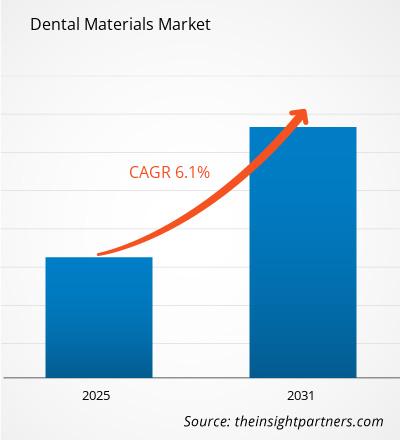
The Dental Materials Market is projected to expand from US$ 7.17 Billion in 2025 to US$ 11.50 Billion by 2034, registering a CAGR of 5.39% during 2026–2034. Expansion is supported by restorative dentistry, prosthodontics, implant procedures, laboratory digitization, and continued material innovation. Demand is also influenced by aging populations, preventive dental care, replacement of aging restorations, and increasing clinical preference for materials offering improved durability, aesthetics, handling, and workflow efficiency.
North American Dental Materials Market size is supported by mature dental infrastructure, high procedure utilization, established reimbursement pathways, and substantial spending on restorative and cosmetic dentistry. The region is expected to register a CAGR range of 4.8–5.4% through 2034. Growth is additionally reinforced by dental laboratory digitization and the adoption of high-performance composites, ceramics, adhesives, impression materials, and biomaterial solutions.
Dental Materials Market Assessment and Insights
- North America: North America held a 2025 share range of 37–40% and is expected to grow at a CAGR of 4.8–5.4% between 2026–2034, supported by mature clinical infrastructure, restorative procedures, laboratory demand, and premium material adoption.
- US: The U.S. represented 84–86% of North American demand in 2025 and is projected to grow at a CAGR of 4.7–5.3%, supported by established dental networks and specialist procedures.
- Europe: Europe accounted for a 2025 Dental Materials Market share range of 27–30% and is projected to expand at a CAGR of 4.9–5.5%, with Germany, the UK, France, Italy, and Spain as leading markets.
- Asia Pacific: Asia Pacific represented 20–23% of 2025 demand and is expected to record a CAGR of 6.0–6.8%, led by China, Japan, South Korea, India, and Australia.
- Largest Segment: Direct Restorative Materials represent the largest segment, with a 2025 market share range of 32–36% and a CAGR range of 5.0–5.5% through 2034.
- High Growth Segment: Biomaterials represent the high-growth segment, with a 2025 market share range of 12–16% and CAGR range of 6.2–7.0% through 2034.
- Key companies analyzed in detail: 3M Company, Shandong Huge Dental Material Corporation, VOCO GmbH, Henry Schein, Inc., Ivoclar Vivadent AG, Ultradent Products, Inc., Zimmer Biomet Holdings, Inc., DMP Dental Industry S.A., Dental Creations, Ltd., and Dentsply Sirona Inc.
Source: The Insight Partners' analysis based on proprietary research, government publications, company annual reports, investor presentations, industry databases, and expert interviews.
Development in material science has gone from traditional alloys, cements, and impression materials to resins, composites, adhesives, ceramics, bioactive materials, and digitized materials. Increasingly, manufacturing of materials involves polymer science, filler technologies, CAD/CAM compatible products, precise manufacturing, and quality packaging. Dental laboratories play an important role in adopting new technologies since digitally designed restorations need materials with predictable properties regarding milling, printing, sintering, bonding, and finishing.
The Dental Materials Market forecast indicates that emerging markets in Asia will witness capacity building, distribution, and local production of dental materials. Regulation, infection control, biocompatibility, and increasing emphasis on minimal intervention treatments will shape purchase decisions. WHO estimates that nearly 3.7 billion individuals suffer from oral diseases, while the oral health strategy of WHO till 2030 stresses wide accessibility to prevention and treatment. These dynamics form a strong structural base for future material demands.
Dental Materials Market Report Scope
| Report Attribute | Details |
|---|---|
| Market size in 2025 | US$ 7.17 Billion |
| Market Size by 2034 | US$ 11.50 Billion |
| Global CAGR (2026 - 2034) | 5.39% |
| Historical Data | 2021-2024 |
| Forecast period | 2026-2034 |
Dental Materials Market Analysis
The Dental Materials Market report indicates that the market is driven by volume of restorative treatments, restoration replacement, prosthetic treatments, implantology, orthodontics, and laboratory production. The market ecosystem involves the producers of chemical and ceramic raw materials, formula development experts, manufacturers, distributors, dental laboratories, hospitals, clinics, and research organizations. The needs are determined by strength, esthetics, bonding, curing properties, biocompatibility, working time, and adaptability to digital workflows. The supply is becoming application-specific rather than generic raw material-based.
In the value chain, dental laboratories are the key consumers of indirect restorative materials, ceramics, polymers, and digital manufacturing materials, whereas clinics use direct restorative materials, bonding agents, impression materials, and biomaterials. The distribution channel remains important as clinics need regular replenishment and technical service. Manufacturers are developing systems combining material selection with scanners, milling machines, printing, curing, and finishing equipment.
Competitive Environment for Dental Materials Market analysis includes diverse portfolios, specialty in materials, geographic presence, and constant product introduction. 3M Company and Dentsply Sirona Inc. have diverse portfolios, whereas VOCO GmbH and Ultradent Products Inc. focus on the development of restorative, adhesive and clinical material solutions. Ivoclar Vivadent AG is well positioned for laboratories and restoratives, whereas Shandong Huge Dental Material Corporation and DMP Dental Industry S.A. have diverse material portfolios globally.
Increasing investments in the Dental Materials Market include development of materials compatible with CAD/CAM equipment, advanced ceramics, bioactive materials, simplification of restorative system and production automation. Henry Schein Inc. enhances the presence in the market via distribution and practice relationships, whereas Zimmer Biomet Holdings Inc. adds value via relevant biomaterials for implants. Dental Creations Ltd. holds a specialty supply position, whereas product diversity helps manufacturers cross-sell materials across laboratories, clinics and institutional customers.
● REPORT CUSTOMIZATION
Tailor This Report To Align With Your Specific Business Requirements
This report can be customized to align precisely with your business objectives, scope, and target markets. Customization options include tailored segmentation, geography, competitive analysis, and strategic insights to support informed decision-making.
Customize This Report →WHAT YOU CAN ADJUST
- ● Segmentations
- ● Geography
- ● Competitive Analysis
- ● Language Preferences
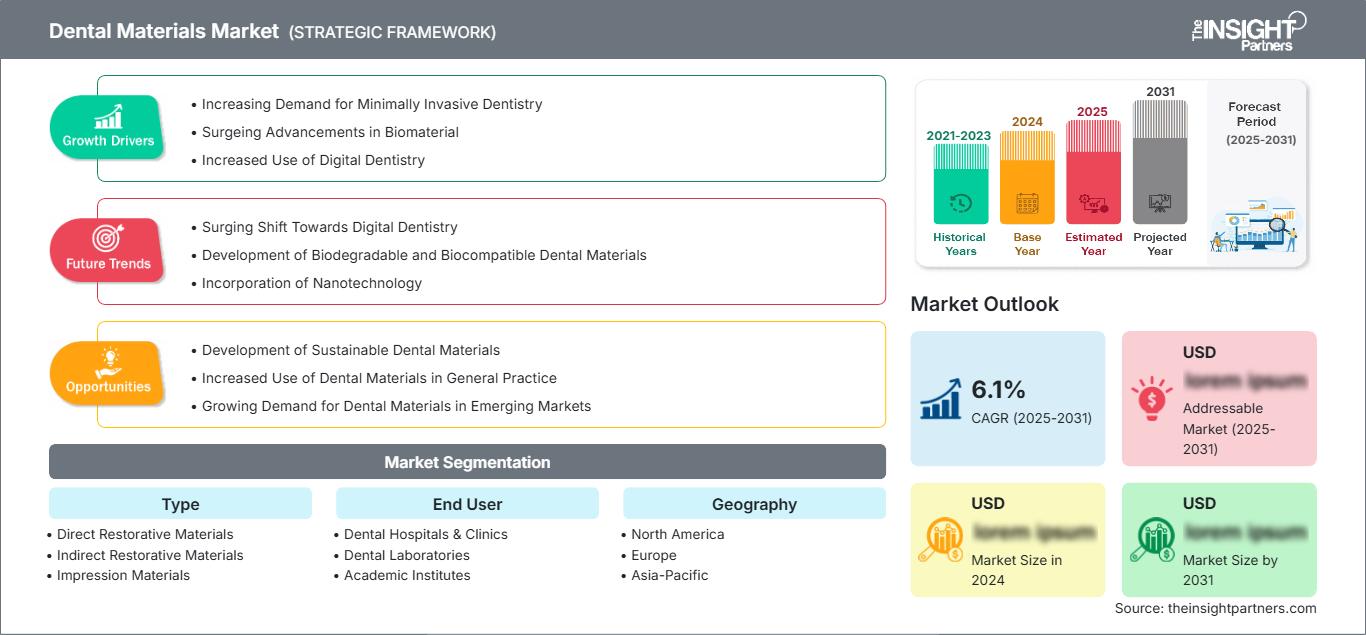
Dental Materials Market: Strategic Insights
Regional Insights
North America Dental Materials Market
North America holds a 2025 share range of 37–40% and is forecast to grow at a CAGR of 4.8–5.4%. The United States stimulates regional demand with the help of advanced dentistry that includes private practices, specialists, laboratories, implantology, cosmetic dentistry, and procurement systems. Canada supports the development with expanding access to oral care and improving clinical facilities. High-quality restorative materials continue to be relevant as the practices pay attention to aesthetics, durability, handling, and predictability.
The regional demand for the products is also stimulated by digital dentistry, laboratory automation, and switching from traditional manufacturing processes to CAD/CAM fabrication. Competition among manufacturers goes through validation of material systems, distribution systems, education of professionals, and compatibility with digital technology. The fact that companies such as 3M Company, Dentsply Sirona Inc., Henry Schein, Inc., and Ultradent Products, Inc. operate within the region increases supply depth.
U.S. Dental Materials Market Market
The U.S. represents 84–86% of North American demand in 2025 and is projected to grow at a CAGR of 4.7–5.3%. This is a function of its large networks of dental clinics, specialized care, laboratory, implant, and use of restorative material in great amounts. More and more dental practices now emphasize the use of materials easy to apply but still provide enough strength and aesthetics, as well as reliable curing and bonding capabilities.
Material applications in the Dental Materials Market include direct composite, bonding material, impression material, indirect ceramic and biomaterials. 3M Company, Dentsply Sirona Inc., Ultradent Products, Inc. and Henry Schein, Inc. already operate on the market. It may be possible to affect purchases through group practices and dental services organization, by establishing standard material use protocols in them.
Europe Dental Materials Market Market
Europe accounts for a 2025 share range of 27–30% and is expected to grow at a CAGR of 4.9–5.5%, with Germany leading the region. The UK, Germany, France, Italy, and Spain form major national markets, supported by established dental laboratories, private clinics, specialist care, and European manufacturing capabilities.
Private dentistry and laboratory demand is high in the UK, with restorative and aesthetic materials still being essential. Germany offers a combination of highly developed dental manufacturing and laboratory capacity. There is steady demand in private and institutional dentistry in France, while Italy is helped by the development of its own dental manufacturing industry and exports. In Spain, there is an expanding private dentistry market and dental tourism, which helps restorative and prosthetic material consumption.
APAC Dental Materials Market Market
APAC represents a 2025 share range of 20–23% and is projected to grow at a CAGR of 6.0–6.8%, with China as the leading market. Japan and South Korea can be helpful due to their modern clinical infrastructure, and India and Australia can bring in demand through growing dental services and specialization.
There is a lot of volume growth in China and India as the clinics grow and more people spend on their own. Japan provides good restorative and laboratory materials, and South Korea focuses on digital dentistry along with good cosmetic procedures. Australia has well-established procurement standards.
Middle East & Africa Dental Materials Market Market
Despite being a regional market of lesser magnitude, MEA enjoys the advantage of having healthcare infrastructure development, specialized hospitals, dental services network, and medical tourism. In terms of potential, the lead is held by Saudi Arabia, followed by UAE and South Africa. MEA is expected to grow at a CAGR of 4.2% to 5.0% through 2034 due to incremental growth on account of a growing installed base.
There is healthcare modernization and specialized infrastructure support in case of Saudi Arabia and UAE, while the latter has an already developed infrastructure for dental services. Other MEA region still lags owing to disparity in terms of purchasing power and presence of specialists.
Segmentation Analysis
Type
The type segment in the Dental Materials Market is projected to grow at a CAGR of 5.1–5.6% during 2026–2034. Product selection increasingly depends on clinical indication, handling, durability, aesthetics, bonding performance, and compatibility with digital workflows. The Dental Materials Market scope therefore covers materials used throughout restorative and prosthetic workflows, from chairside applications to laboratory fabrication.
- Direct Restorative Materials: These materials retain the broadest clinical application because they are used directly in tooth restoration. Demand is supported by caries treatment, replacement procedures, aesthetic dentistry, and simplified chairside workflows.
- Indirect Restorative Materials: Ceramics, polymers, and related materials support laboratory and CAD/CAM workflows. Their strategic importance rises with digital fabrication, high-strength restorations, aesthetic requirements, and growing demand for prosthetic precision.
- Impression Materials: Impression materials remain essential where physical records are required for restorative, prosthetic, and orthodontic workflows. Manufacturers increasingly emphasize dimensional stability, scanning compatibility, working efficiency, and clinician handling.
- Bonding Agents: Bonding systems support adhesion between restorative materials and tooth structures. Their importance is linked to minimally invasive dentistry, composite restoration longevity, simplified application protocols, and reliable clinical performance.
- Biomaterials: Biomaterials address tissue interaction, regeneration, pulp protection, bone-related procedures, and implant applications. Their strategic relevance is increasing as clinicians seek materials that support biological healing alongside mechanical restoration.
End User
The end-user segment is expected to expand at a CAGR of 5.0–5.6% through 2034. Dental hospitals and clinics remain the principal consumption centers, while laboratories increasingly influence material specifications through CAD/CAM production. Academic institutes contribute to product evaluation, clinician training, and future adoption patterns.
- Dental Hospitals & Clinics: These facilities represent the principal purchasing base because they consume restorative, impression, bonding, and biomaterial products across routine and specialized procedures. Standardized procurement can favor established material systems.
- Dental Laboratories: Laboratories are strategically important for indirect restorations and digitally manufactured products. Their demand is increasingly shaped by milling, printing, sintering, characterization, and workflow integration.
- Academic Institutes: Academic institutions influence long-term adoption through clinical education, materials research, laboratory training, and evaluation of emerging formulations. Their strategic role extends beyond immediate purchasing volumes.
Opportunity Snapshot
| End User | Revenue Contribution (High/Medium/Low) | Trend Tag | Adoption Stage |
|---|---|---|---|
| Dental Hospitals & Clinics | High | Chairside Restorations | Mature |
| Dental Laboratories | High | Digital Fabrication | Scaling |
| Academic Institutes | Low | Materials Research | Emerging |
Dental Materials Market Growth Drivers and Impact Analysis
Rising Burden of Untreated Oral Disease
The fundamental clinical demand for restorative and preventive materials remains significant because oral diseases are prevalent amongst billions of people around the world. The number of people with oral diseases, according to WHO, is estimated to be 3.7 billion, and untreated dental caries is the most prevalent health problem. This necessitates the ongoing demand for restorative materials, bonding agents, impression materials, and biomaterials. Impact on the market is greater in those areas where people who had never received professional dental care have access to it for the first time. Thus, growth in primary and specialized care increases both the number of initial treatments and replacement treatments. Product lines of producers that allow addressing various stages of the procedure are of great importance, as well as the geographical expansion opportunities for distributors. However, limited financial resources in poorer regions restrict market penetration.
Acceleration of Digital Dental Workflows
Digital dentistry is changing how dental materials are selected, processed, and integrated into clinical and laboratory workflows. CAD/CAM systems, intraoral scanning, milling, and additive manufacturing require materials with tightly controlled mechanical, optical, dimensional, and processing properties. This results in an opportunity for high-end ceramics, printing resin, PMMA material, and special bonding systems. This will also have an effect on competitiveness since material providers now need to be compatible with proven hardware and software solutions. There are improvements in terms of productivity in dental laboratories when there is material that can help cut down processing time and can work directly with digital manufacturing. Clinics also reap the benefit when there are restorations made through digital design that can be reliably produced with fewer visits.
Demand for Biocompatible and Minimally Invasive Solutions
Clinical preferences are increasingly oriented toward preserving healthy tooth structure, improving tissue compatibility, and achieving durable restorations with less invasive intervention. This trend supports high-performance composites, adhesive systems, bioactive materials, pulp-protection products, and regenerative biomaterials. Product development is therefore moving beyond mechanical strength alone toward interactions with enamel, dentin, pulp, bone, and surrounding tissues. Market impact is visible in the increasing importance of material chemistry, filler technology, polymerization behavior, and biological performance during procurement. Manufacturers that can demonstrate predictable handling alongside clinically relevant biological properties may gain stronger acceptance in specialist applications. Academic research also influences adoption because new formulations often require evidence concerning safety, longevity, and clinical indications. As treatment philosophies evolve, material suppliers are likely to allocate more resources to formulations that combine restorative performance with biological compatibility.
Dental Materials Market Future Trends
Convergence of Materials With Digital Production
Dental Materials Market trends are likely to increasingly converge with digital production as laboratories and clinics adopt integrated design-to-fabrication workflows. Future materials will be developed around specific printers, milling systems, curing units, scanners, and software parameters rather than treated as independent consumables. This approach can improve process consistency and reduce technical variability. Printable denture bases, surgical guides, temporary restorations, and laboratory models illustrate the expanding role of formulated resins within digital workflows. Suppliers may increasingly validate complete material-processing combinations, provide digital libraries, and optimize curing or sintering parameters for defined applications. The resulting competitive advantage will depend on workflow reliability as much as material composition. Companies that combine materials expertise with digital partnerships may therefore capture greater value from laboratories seeking predictable production, streamlined inventory, and reproducible output across multiple restoration types.
Development of Smarter Multifunctional Materials
Future formulations are expected to incorporate multiple performance attributes within simplified product architectures. Materials may combine improved adhesion, strength, aesthetics, moisture tolerance, antimicrobial characteristics, or biological activity while reducing the number of clinical steps required. Such development responds to pressure on dental practices to improve efficiency without compromising outcomes. Simplified universal composites, self-adhesive systems, bioactive formulations, and multifunctional cements illustrate the direction of product development. Manufacturers are likely to use advanced filler systems, polymer chemistry, surface modification, and controlled-release technologies to improve functionality. Regulatory requirements will remain important because multifunctionality can increase testing complexity and affect claims. Successful products will need to demonstrate measurable advantages in handling, durability, safety, or clinical workflow. Over time, multifunctionality could reshape purchasing by favoring systems that reduce procedural complexity and inventory requirements.
Dental Materials Market Opportunities
Localized Manufacturing in High-Growth Economies
Dental Materials Market Forecasts indicate an opportunity to expand localized manufacturing and regional supply networks in high-growth economies, particularly across Asia Pacific. Local production can reduce lead times, improve inventory availability, and enable manufacturers to tailor packaging and product configurations to national procurement practices. India and China provide particularly relevant opportunities because expanding dental infrastructure can support larger addressable volumes. Partnerships with local distributors, dental laboratories, and academic centers can help suppliers establish technical credibility while controlling market-entry costs. Manufacturers can also develop tiered portfolios that separate premium digital materials from cost-sensitive conventional products. Quality-system certification and regulatory registration remain prerequisites for sustainable expansion. Investment should therefore prioritize facilities, quality assurance, technical service, and application training rather than production capacity alone. This approach can create a scalable regional platform while reducing dependence on long international supply chains.
Integrated Material Portfolios for Laboratory Networks
A second opportunity lies in supplying integrated material portfolios to dental laboratory networks and multi-site clinic organizations. Large customers increasingly benefit from standardized procurement because consistent products can simplify training, inventory management, quality control, and workflow documentation. Suppliers can organize offerings around complete restorative pathways, including impression materials, bonding agents, composites, ceramics, polymers, and finishing products. Digital workflow compatibility can further increase account value by connecting material specifications with design and manufacturing systems. Strategic investment in customer support, technical training, digital libraries, and application-specific kits can strengthen retention without relying solely on price. Manufacturers may also use laboratory partnerships to gather feedback for new material development and validate workflow performance. The most attractive accounts will likely be organizations seeking standardized protocols across multiple facilities, where a single supplier can reduce purchasing complexity while supporting consistent clinical and laboratory outcomes.
Recent Developments
- July 2026: Shandong Huge Dental Material Corporation highlighted four new CAD/CAM innovations designed to support digital restorative workflows, spanning stages from scanning through final finishing. The company positioned the portfolio around workflow integration and predictability, reflecting the increasing importance of digitally compatible materials for laboratories and clinics. The announcement reinforces the company's expansion beyond individual consumables toward integrated digital dental solutions.
- May 2026: Ivoclar Vivadent AG introduced IPS e.max Zirconia, a new zirconium oxide material developed with input from approximately 40 dental technicians. The material expands the company's all-ceramic portfolio and emphasizes versatility, aesthetics, efficiency, and reliability for dental laboratory applications. Its launch illustrates continued investment in high-performance materials designed for broader digital and conventional restorative workflows.
- April 2026: Dentsply Sirona Inc. launched Smart View - Detect, an FDA-cleared AI-enabled diagnostic aid for identifying teeth with periapical radiolucencies in CBCT images. The technology was also CE approved in Europe and is compatible with existing and new Dentsply Sirona CBCT systems. The development demonstrates the company's continued integration of digital technologies across professional dental workflows.
Frequently Asked Questions

- Comprehensive Market Sizing and Forecast Analysis
- Detailed Segmentation Analysis
- In-Depth Market Dynamics Assessment
- Regional and Country-Level Insights
- Competitive Landscape and Company Benchmarking
- Strategic Business Intelligence
Recent Reports
Testimonials

The Insight Partners' SCADA System Market report is comprehensive, with valuable insights on current trends and future forecasts. The team was highly professional, responsive, and supportive throughout. We are very satisfied and highly recommend their services.
RAN KEDEM Partner, Reali Technologies LTDs
I requested a report on a very specific software market and the team produced the report in a few days. The information was very relevant and well presented. I then requested some changes and additions to the report. The team was again very responsive and I got the final report in less than a week.
JEAN-HERVE JENN Chairman, Future Analytica
We worked with The Insight Partners for an important market study and forecast. They gave us clear insights into opportunities and risks, which helped shape our plans. Their research was easy to use and based on solid data. It helped us make smart, confident decisions. We highly recommend them.
PIYUSH NAGPAL Sr. Vice President, High Beam Global
The Insight Partners delivered insightful, well-structured market research with strong domain expertise. Their team was professional and responsive throughout. The user-friendly website made accessing industry reports seamless. We highly recommend them for reliable, high-quality research services
YUKIHIKO ADACHI CEO, Deep Blue, LLC.
This is the first time I have purchased a market report from The Insight Partners.While I was unsure at first, I visited their web site and felt more comfortable to take the risk and purchase a market report.I am completely satisfied with the quality of the report and customer service. I had several questions and comments with the initial report, but after a couple of dialogs over email with their analyst I believe I have a report that I can use as input to our strategic planning process.Thank you so much for taking the extra time and making this a positive experience.I will definitely recommend your service to others and you will be my first call when we need further market data.
JOHN SUZUKI President and Chief Executive Officer, Board Director, BK Technologies
I wish to appreciate your support and the professionalism you displayed in the course of attending to my request for information regarding to infectious disease IVD market in Nigeria. I appreciate your patience, your guidance, and the fact that you were willing to offer a discount, which eventually made it possible for us to close a deal. I look forward to engaging The Insight Partners in the future, all thanks to the impression you have created in me as a result of this first encounter.
DR CHIJIOKE ONYIA MANAGING DIRECTOR, PineCrest Healthcare Ltd.Reason to Buy
- Informed Decision-Making
- Understanding Market Dynamics
- Competitive Analysis
- Identifying Emerging Markets
- Customer Insights
- Market Forecasts
- Risk Mitigation
- Boosting Operational Efficiency
- Strategic Planning
- Investment Justification
- Tracking Industry Innovations
- Aligning with Regulatory Trends





 Get Free Sample for