
Depressive Disorders Market Demand, Trends & Forecast by 2034
Coverage: By Type (Tricyclic Antidepressants, Selective Serotonin Reuptake Inhibitors, Serotonin-Norepinephrine Reuptake Inhibitors, Monoamine Oxidase Inhibitors, Serotonin Antagonist And Reuptake Inhibitors, Others); Application (Hospitals, Ambulatory Surgical Centers, Diagnostic Centers, Homecare Settings, Long Term Care Centers), and Geography (North America, Europe, Asia Pacific, and South and Central America)
- Status : Data Released
- Report Code : TIPRE00008238
- Category : Life Sciences
- No. of Pages : 150
- Available Report Formats :


- Last update date : September 08, 2026


2025 Market Size
US$ 6.74 Bn
Base year value
2034 Forecast
US$ 10.38 Bn
Projected by 2034
CAGR 2026-2034
4.91 %
Growth rate
Addressable Market
US$ 77.68 Bn
(2026-2034)
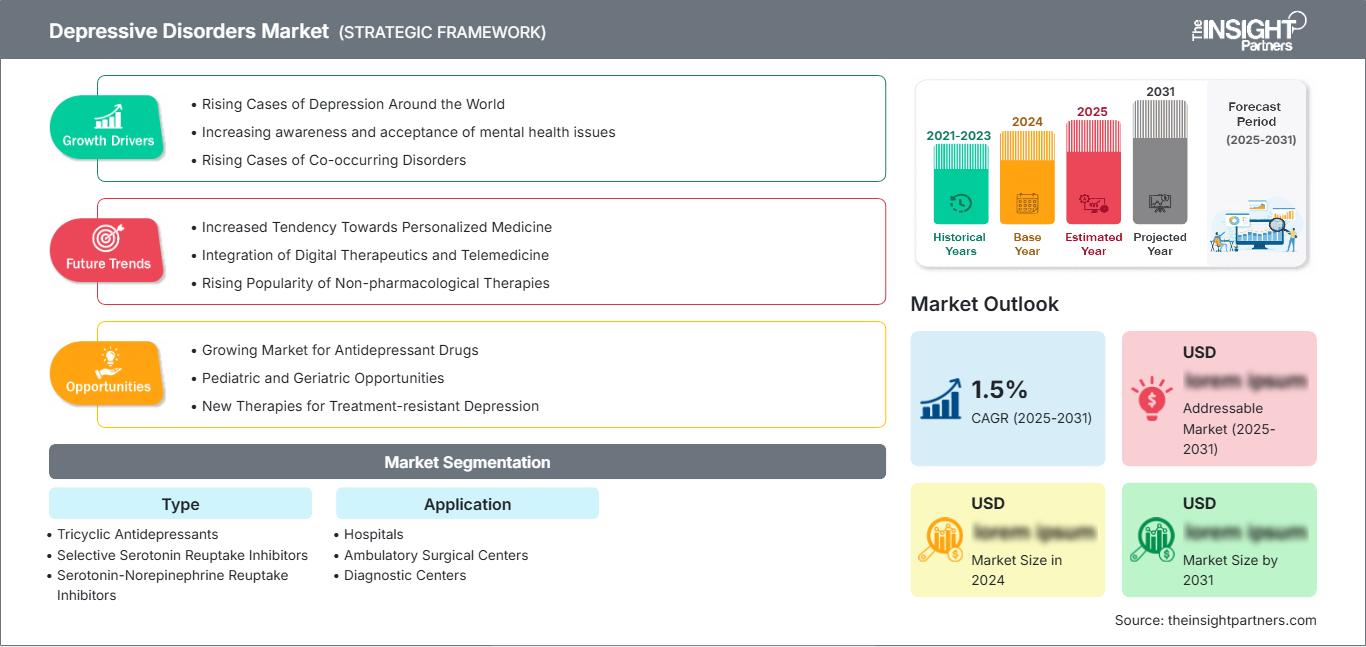
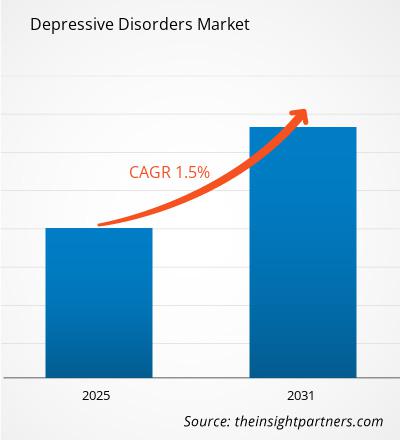
The Depressive Disorders Market was valued at US$ 6.74 Billion in 2025 and is projected to reach US$ 10.38 Billion by 2034, registering a CAGR of 4.91% during 2026–2034. The market includes currently existing groups of antidepressants as well as developing care paths at the institutional and community level. The demand will be determined by access to treatments, diagnosis of depression, compliance with treatments, and investment in medications for treatment of depressive disorders.
North America is still strategically significant due to its existing psychiatric treatment system, easy access to prescriptions, availability of specialists, and developing options for treatment-resistant depression. The forecasted regional CAGR 5.10–5.60% for the period from 2026 through 2034 illustrates the continuation of developments in this field. The Depressive Disorders Market Size is also driven by growing integration of mental health services in primary and ambulatory care. There are still substantial treatment gaps highlighted by WHO.
Depressive Disorders Market Assessment and Insights
- North America: North America represented a modeled 34–38% share in 2025 and is expected to grow at a CAGR of 5.10–5.60% between 2026–2034, supported by mature prescribing channels, specialist care, and treatment-resistant depression management.
- US: The US accounted for 82–86% of North America's 2025 value, with a CAGR of 5.20–5.70% during 2026–2034, reflecting broad access to pharmacological treatment and established psychiatric services.
- Europe: Europe held a modeled 27–31% share in 2025 and is projected to expand at a CAGR of 4.60–5.10% through 2034. Germany, the UK, France, Italy, and Spain provide the principal regional demand base.
- Asia Pacific: Asia Pacific captured a modeled 20–24% share in 2025 and is expected to record a CAGR of 5.40–6.00% during 2026–2034, led by China, Japan, South Korea, India, and Australia.
- Largest Segment: Selective Serotonin Reuptake Inhibitors held a modeled market share of 38–42% in 2025 and are projected to grow at a CAGR of 4.80–5.20% between 2026–2034.
- High Growth Segment: Homecare Settings represented a modeled 14–18% share in 2025 and is projected to grow at a CAGR of 6.00–6.50% during 2026–2034, supported by decentralized treatment delivery.
- Key companies analyzed in detail: Alkermes plc, AbbVie Inc., Bristol-Myers Squibb Company, Eli Lilly and Company, GSK plc, H. Lundbeck A/S, Merck & Co., Inc., Pfizer Inc., Takeda Pharmaceutical Company Limited, and Otsuka Pharmaceutical Co., Ltd.
Source: The Insight Partners' analysis based on proprietary research, government publications, company annual reports, investor presentations, industry databases, and expert interviews.
From being a specialty-driven market to one that encompasses primary care, ambulatory care, and even community-care pathways, the mode of treatment is evolving. Generic availability is still defining mature drugs, while differentiation in mechanisms and treatment-resistant diseases are factors shaping development. The Market thus consists of a mixture of both existing and novel drugs and treatment approaches, along with new service-delivery models.
The future growth of this market will increasingly be dependent on access in emerging markets, updated reimbursement models, and regulations to facilitate innovation in psychiatric drug development. Europe has made efforts at improving clinical-development guidelines for depression, while healthcare providers worldwide are focusing on early identification and community care. The convergence of regulations and service-delivery models thus offers opportunities for drugs with differentiated profiles.
Depressive Disorders Market Report Scope
| Report Attribute | Details |
|---|---|
| Market size in 2025 | US$ 6.74 Billion |
| Market Size by 2034 | US$ 10.38 Billion |
| Global CAGR (2026 - 2034) | 4.91% |
| Historical Data | 2021-2024 |
| Forecast period | 2026-2034 |
Depressive Disorders Market Analysis
The Growth of Depressive Disorders Market will be driven by high treated and undertreated patient pools, recurring nature of the disease, and dependence on pharmacotherapy. According to WHO estimates, around 280 million people were suffering from depression in 2019 and access to treatments is also variable among different income brackets. Consequently, the demand for pharmaceuticals includes maintenance, first-line, adjunctive, and treatment resistant patient pools.
Ecosystem encompasses the innovators, generics, distributors, hospitals, psychiatrists, primary care physicians, pharmacies, payers, and digital health companies. The supply side factors encompass balance between traditional molecules and differentiation, manufacturing, regulations, generics, and reimbursement. The record maintained by the FDA indicates generic approvals for traditional antidepressants suggesting price competition in the established therapeutic category.
It is a competitive market with large drug pipelines in addition to concentrated neuroscience companies. Though Eli Lilly and Company has increased its neuroscience pipeline, AbbVie Inc. has psychiatric drugs as well as has developed adjunct therapy for major depressive disorder. At the same time, Takeda Pharmaceutical Company Limited maintains focus on the late-stage pipeline development whereas H. Lundbeck A/S is well-established in the neuroscience sector.
According to the Depressive Disorders Market Report, investment in differentiated mechanisms, treatment resistant depression, and products that can overcome the issues with conventional therapy has been growing in recent years. Other key players include Bristol-Myers Squibb Company, Pfizer Inc., Merck & Co., Inc., GSK plc, and Otsuka Pharmaceutical Co., Ltd., all contributing their pharmaceutical expertise, whereas Alkermes plc brings their expertise in CNS.
● REPORT CUSTOMIZATION
Tailor This Report To Align With Your Specific Business Requirements
This report can be customized to align precisely with your business objectives, scope, and target markets. Customization options include tailored segmentation, geography, competitive analysis, and strategic insights to support informed decision-making.
Customize This Report →WHAT YOU CAN ADJUST
- ● Segmentations
- ● Geography
- ● Competitive Analysis
- ● Language Preferences
Depressive Disorders Market: Strategic Insights
Regional Insights
North America Depressive Disorders Market
North America captured 34-38% of the Depressive Disorders Market Share in 2025 and is expected to grow at a CAGR of 5.10-5.60% up to 2034. The US constitutes the major demand center, backed by prescription infrastructure, availability of specialists, insurance routes, and usage of antidepressant drugs. Resistant forms of depression contribute to the need for innovative product offerings and complementary solutions.
Canada comes in via its publicly funded health care system and increased focus on community-based delivery of mental health services. Growing regional development is characterized by integration between specialists in psychiatry and primary care physicians, limiting dependency on standalone specialist routes. Novel medicines for treating psychiatric conditions along with new treatment modes and controlled treatments are expected to drive regulatory initiatives, thus differentiated investments.
U.S. Depressive Disorders Market Market
The US constituted 82–86% of North America’s market value of $2.17 billion in 2025 and is anticipated to witness CAGR of 5.20–5.70% from 2026 to 2034. Factors contributing to market depth include effective pharmaceutical distribution channels, specialist availability, insurance coverage, and efficient pathways of outpatient treatments.
There is an abundance of company presence that includes AbbVie Inc., Eli Lilly and Company, Bristol-Myers Squibb Company, Pfizer Inc., and Otsuka Pharmaceutical Co., Ltd. Application trends have shifted towards continued outpatient treatments, drug management, and treatment-resistant population. FDA regulatory trends are also promoting differentiated psychiatry development, whereas generic approvals have become a constraint on pricing of mature molecules.
Europe Depressive Disorders Market Market
Europe held 27–31% share of the market in 2025 and will have the CAGR growth of 4.60–5.10%. Germany will be a leader in Europe too. UK demand gets support due to developed primary care and prescription programs. High healthcare coverage together with high outpatient capability is provided by Germany, whereas France, Italy, and Spain provide demand in connection with their health system and specialization.
Regulatory development will still be of great importance owing to an amendment of the guideline on clinical investigation for depression by the European Medicines Agency. It will be enacted in September 2025.
APAC Depressive Disorders Market Market
APAC held a modeled 20–24% share in 2025 and is projected to grow at a CAGR of 5.40–6.00%. China is the leading country, followed by Japan, South Korea, India, and Australia. Expanding insurance coverage, rising diagnosis, and healthcare infrastructure development support pharmaceutical access.
Policy-led mental health integration is particularly relevant in India and other emerging economies, while Japan and South Korea benefit from mature healthcare systems. Greater use of community and primary-care channels can broaden access where specialist capacity remains constrained.
Middle East & Africa Depressive Disorders Market Market
MEA is forecasted to achieve a CAGR of 4.30%-4.90% between 2026-2034, with Saudi Arabia being the dominant region. UAE enjoys good private healthcare infrastructure, whereas South Africa boasts a relatively developed pharma-clinical landscape.
Rest of MEA faces limitations due to unequal availability of specialists, disparities in reimbursements, and overall healthcare accessibility. Investment in healthcare infrastructure and hospital upgrade along with overall digitization of health systems can be helpful in expanding the scope of treatment.
Segmentation Analysis
Type
The Type segment covers established pharmacological mechanisms and remains central to prescribing decisions. The segment is projected to grow at a CAGR of 4.70–5.30% during 2026–2034. The Depressive Disorders Market scope within Type reflects differences in efficacy, tolerability, drug interactions, prescribing familiarity, and suitability for treatment-resistant patients.
- Tricyclic Antidepressants: Remain relevant for selected patients and specialist prescribing because of established efficacy, while tolerability and safety considerations limit broader first-line adoption.
- Selective Serotonin Reuptake Inhibitors: Maintain the strongest market position because of extensive clinical familiarity, broad prescribing use, generic availability, and established integration across primary and specialist care.
- Serotonin-Norepinephrine Reuptake Inhibitors: Serve patients requiring broader monoaminergic activity and remain important where depressive symptoms coexist with pain or anxiety-related manifestations.
- Monoamine Oxidase Inhibitors: Occupy a specialist-oriented position because dietary restrictions, interactions, and monitoring requirements make careful patient selection important.
- Serotonin Antagonist And Reuptake Inhibitors: Provide an alternative pharmacological pathway, with clinical utility influenced by symptom profile, tolerability, and physician preference.
Application
Application reflects where treatment is initiated, monitored, or continued across the healthcare pathway. This segment is projected to grow at a CAGR of 5.00–5.60% during 2026–2034. The Depressive Disorders Market scope increasingly extends beyond hospitals toward distributed outpatient and home-based models.
- Hospitals: Remain important for severe episodes, complex comorbidities, acute risk management, and initiation of intensive treatment under specialist supervision.
- Ambulatory Surgical Centers: Provide a limited but relevant setting for procedures and associated psychiatric care, particularly where integrated outpatient services are available.
- Diagnostic Centers: Support assessment pathways where structured evaluation, screening, and referral processes help identify depressive symptoms requiring formal clinical management.
- Homecare Settings: Gain strategic importance as medication monitoring, telehealth, remote consultations, and community-based support improve continuity outside institutional environments.
- Long Term Care Centers: Address depressive symptoms among older and medically complex populations, where polypharmacy, cognitive impairment, and chronic disease management require coordinated care.
Opportunity Snapshot
| Application | Revenue Contribution | Trend Tag | Adoption Stage |
|---|---|---|---|
| Hospitals | High | Acute Care | Mature |
| Ambulatory Surgical Centers | Low | Outpatient Care | Emerging |
| Diagnostic Centers | Medium | Early Screening | Scaling |
| Homecare Settings | Medium | Remote Monitoring | Scaling |
| Long Term Care Centers | Medium | Elder Care | Scaling |
Depressive Disorders Market Growth Drivers and Impact Analysis
Expansion of integrated mental health care pathways
Primary-care integration can materially expand the addressable treated population by moving identification and management closer to patients. WHO's recent policy work emphasizes stronger mental health capabilities within primary care, improved specialist linkages, and coordinated community services. This approach reduces dependence on specialist-only pathways and can shorten delays between symptom recognition and treatment initiation. For pharmaceutical suppliers, the implication is broader prescriber reach and greater importance of simple dosing, tolerability, and adherence support. It also creates demand for educational programs that help non-specialist providers recognize depressive disorders and manage routine follow-up. The resulting market impact is likely to be strongest in regions where specialist shortages constrain conventional treatment access.
Persistent treatment gaps and disease burden
Depression remains a substantial global health burden, with WHO estimating 280 million affected people in 2019 and identifying major inequalities in treatment access. This persistent gap creates structural demand for pharmacological therapies that can be deployed across different levels of care. Economic consequences also strengthen the policy rationale for treatment expansion because untreated depression can reduce productivity, worsen comorbid conditions, and increase healthcare utilization. Commercially, this environment favors medicines with accessible pricing, manageable administration, and evidence across diverse populations. It also encourages health systems to evaluate treatment pathways beyond specialist psychiatry. As diagnosis improves and stigma declines, previously untreated patients can enter formal care, supporting sustained demand across established and differentiated antidepressant categories.
Innovation focused on difficult-to-treat patient populations
Treatment-resistant depression is increasing the strategic value of differentiated mechanisms and adjunctive approaches. Regulatory agencies are refining development expectations around acute treatment, long-term management, recurrence prevention, and resistant disease, creating clearer pathways for companies pursuing differentiated candidates. The commercial opportunity extends beyond replacing conventional antidepressants because new therapies can target patients who have inadequate responses, poor tolerability, or complex symptom profiles. This encourages investment in neuroscience platforms, biomarker research, rapid-acting mechanisms, and treatment personalization. Competitive advantage will increasingly depend on demonstrating clinically meaningful differentiation rather than simply introducing another pharmacological option. Companies with established CNS expertise and regulatory capabilities are therefore positioned to capture value from innovation-led segments.
Depressive Disorders Market Future Trends
Precision-oriented treatment selection
Future Depressive Disorders Market trends are expected to emphasize more systematic matching of therapies with patient characteristics, prior treatment history, symptom patterns, comorbidities, and response trajectories. Digital records and longitudinal clinical datasets can help clinicians identify patients at risk of nonresponse or recurrence earlier. Over time, developers may increasingly incorporate biological markers, computational approaches, and real-world evidence into trial design and treatment algorithms. This could shift competition away from broad class-based prescribing toward differentiated patient segments. The commercial consequence would be greater value for therapies supported by clear responder profiles and durable outcomes. Health systems may also place more emphasis on measurable functional recovery, adherence, and relapse prevention when assessing therapeutic value.
Community-centered and digitally enabled continuity
The next phase of care delivery is likely to place greater emphasis on continuity across primary care, specialist services, community programs, and digital platforms. WHO has highlighted community-based networks, task-sharing, digital technologies, and peer support as mechanisms for expanding access to depression care. This model can reduce dependence on hospital-centered delivery while creating new touchpoints for monitoring adherence and symptoms. For pharmaceutical companies, digital integration may influence patient-support strategies, treatment initiation pathways, and evidence generation. The strongest opportunities should emerge where healthcare systems can connect remote monitoring with professional oversight rather than treating digital tools as standalone substitutes for clinical care.
Depressive Disorders Market Opportunities
Targeted expansion across underserved emerging markets
The Depressive Disorders Market Forecasts point to meaningful opportunity in countries where treatment coverage remains below clinical need. Investors can prioritize markets with expanding insurance programs, primary-care reforms, and increasing mental health budgets rather than relying solely on population size. India, China, Southeast Asia, selected Middle Eastern economies, and parts of Latin America offer differentiated entry conditions. Successful strategies should combine affordable formulations, local regulatory expertise, physician education, and distribution partnerships. Companies can also adapt commercial models to public-sector procurement and community-based delivery. The opportunity is not simply volume expansion; it involves building sustainable access channels that convert growing diagnosis into consistent treatment while addressing affordability, stigma, and workforce constraints.
Specialized platforms for treatment-resistant depression
A second opportunity lies in specialized products and services addressing patients who do not achieve adequate benefit from conventional therapy. Investment can focus on differentiated mechanisms, adjunctive treatments, rapid-acting approaches, and patient-monitoring capabilities that demonstrate measurable advantages over established care. Regulatory agencies are increasingly attentive to treatment resistance and long-term outcomes, strengthening the rationale for evidence-led development. Companies can improve commercial prospects by designing trials around clinically meaningful endpoints, functional recovery, and durable response rather than symptom reduction alone. Partnerships between pharmaceutical developers, academic centers, digital-health providers, and specialist networks can accelerate patient identification and real-world evidence generation, creating stronger positioning in high-value psychiatric treatment segments.
Recent Developments
- July 2026: Eli Lilly and Company announced a definitive agreement to acquire AtaiBeckley, expanding its neuroscience pipeline with BPL-003, an investigational therapy designed for treatment-resistant depression. The transaction strengthens Lilly's focus on rapid-acting neuroplastogen approaches and adds clinical-stage programs addressing difficult-to-treat mental health conditions.
- February 2026: AbbVie Inc. published its 2026 strategic priorities for investigator-initiated studies, highlighting psychiatric research around VRAYLAR and development programs involving bipolar depression and related neuropsychiatric conditions. The priorities demonstrate continued investment in differentiated neuroscience research and evidence generation across psychiatric indications.
- May 2025: Takeda Pharmaceutical Company Limited reported FY2024 results and outlined FY2025 priorities, including continued late-stage pipeline investment and preparation for new product launches. The company reported 7.4% core revenue growth at actual exchange rates and emphasized pipeline progression as a foundation for future innovation investment.
Frequently Asked Questions

- Comprehensive Market Sizing and Forecast Analysis
- Detailed Segmentation Analysis
- In-Depth Market Dynamics Assessment
- Regional and Country-Level Insights
- Competitive Landscape and Company Benchmarking
- Strategic Business Intelligence
Recent Reports
Testimonials

The Insight Partners' SCADA System Market report is comprehensive, with valuable insights on current trends and future forecasts. The team was highly professional, responsive, and supportive throughout. We are very satisfied and highly recommend their services.
RAN KEDEM Partner, Reali Technologies LTDs
I requested a report on a very specific software market and the team produced the report in a few days. The information was very relevant and well presented. I then requested some changes and additions to the report. The team was again very responsive and I got the final report in less than a week.
JEAN-HERVE JENN Chairman, Future Analytica
We worked with The Insight Partners for an important market study and forecast. They gave us clear insights into opportunities and risks, which helped shape our plans. Their research was easy to use and based on solid data. It helped us make smart, confident decisions. We highly recommend them.
PIYUSH NAGPAL Sr. Vice President, High Beam Global
The Insight Partners delivered insightful, well-structured market research with strong domain expertise. Their team was professional and responsive throughout. The user-friendly website made accessing industry reports seamless. We highly recommend them for reliable, high-quality research services
YUKIHIKO ADACHI CEO, Deep Blue, LLC.
This is the first time I have purchased a market report from The Insight Partners.While I was unsure at first, I visited their web site and felt more comfortable to take the risk and purchase a market report.I am completely satisfied with the quality of the report and customer service. I had several questions and comments with the initial report, but after a couple of dialogs over email with their analyst I believe I have a report that I can use as input to our strategic planning process.Thank you so much for taking the extra time and making this a positive experience.I will definitely recommend your service to others and you will be my first call when we need further market data.
JOHN SUZUKI President and Chief Executive Officer, Board Director, BK Technologies
I wish to appreciate your support and the professionalism you displayed in the course of attending to my request for information regarding to infectious disease IVD market in Nigeria. I appreciate your patience, your guidance, and the fact that you were willing to offer a discount, which eventually made it possible for us to close a deal. I look forward to engaging The Insight Partners in the future, all thanks to the impression you have created in me as a result of this first encounter.
DR CHIJIOKE ONYIA MANAGING DIRECTOR, PineCrest Healthcare Ltd.Reason to Buy
- Informed Decision-Making
- Understanding Market Dynamics
- Competitive Analysis
- Identifying Emerging Markets
- Customer Insights
- Market Forecasts
- Risk Mitigation
- Boosting Operational Efficiency
- Strategic Planning
- Investment Justification
- Tracking Industry Innovations
- Aligning with Regulatory Trends





 Get Free Sample for