
Diabetes Care Drugs Market Demand, Size & Forecast by 2034
Coverage: By Product (Injectable, Oral Antidiabetic Drugs); Distribution Channel (Online Pharmacies, Hospital Pharmacies, Retail Pharmacies) , and Geography (North America, Europe, Asia Pacific, and South and Central America)
- Status : Data Released
- Report Code : TIPRE00008471
- Category : Life Sciences
- No. of Pages : 150
- Available Report Formats :


- Last update date : July 06, 2026


2025 Market Size
US$ 66.46 Bn
Base year value
2034 Forecast
US$ 123.1 Bn
Projected by 2034
CAGR 2026-2034
7.09 %
Growth rate
Addressable Market
US$ 855.69 Bn
(2026-2034)
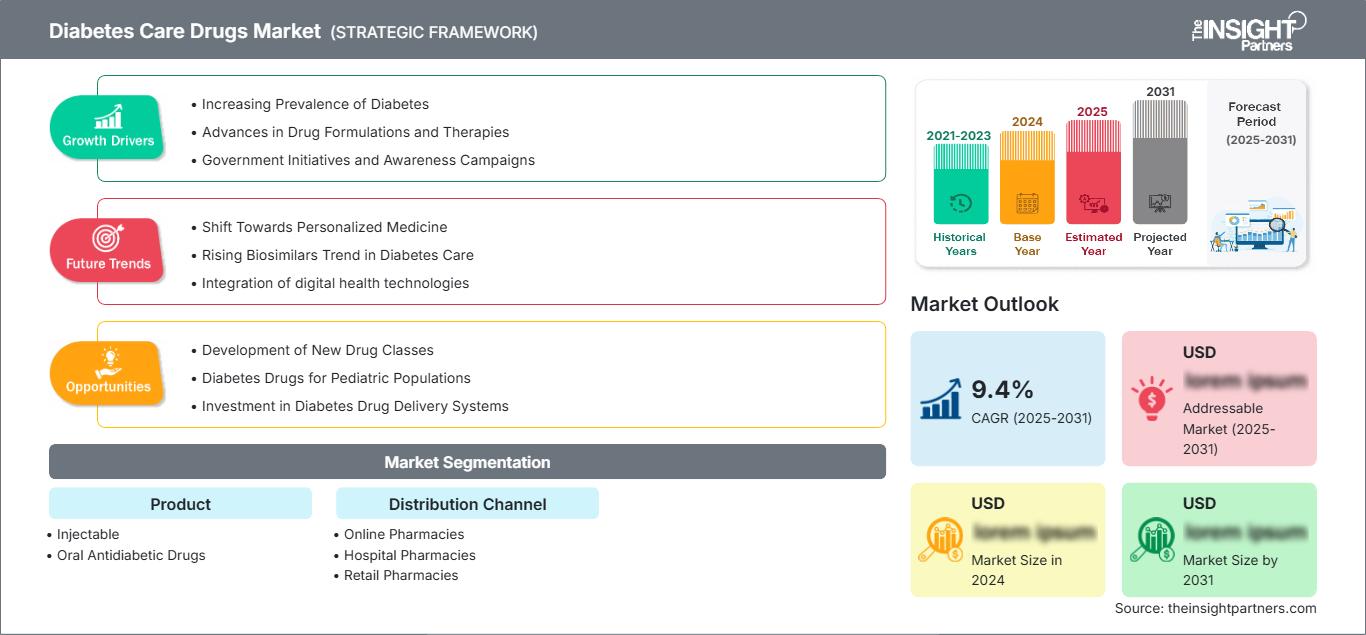
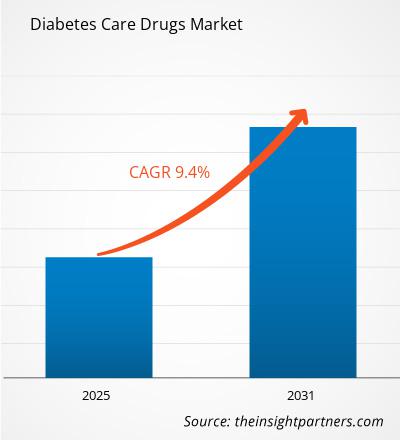
The Diabetes Care Drugs Market continues to expand as the global burden of diabetes increases and healthcare systems prioritize long-term disease management. Valued at US$ 66.46 billion in 2025, the market is projected to reach US$ 123.1 billion by 2034, reflecting a CAGR of 7.09% during 2026–2034. Advances in glucose-lowering therapies, broader access to innovative drug classes, and increasing diagnosis rates across emerging economies are collectively reshaping treatment pathways and supporting sustained market development.
North America remains a pivotal contributor to the Diabetes Care Drugs Market and is anticipated to record an estimated CAGR of approximately 6.8% through 2034. Strong reimbursement frameworks, widespread adoption of GLP-1 receptor agonists and SGLT2 inhibitors, and rising awareness of diabetes complications continue to drive demand. The region also benefits from robust pharmaceutical innovation, extensive clinical research activity, and high healthcare expenditure, supporting rapid uptake of advanced therapies.
Diabetes Care Drugs Market Assessment and Insights
- North America: Holds 37–40% share in 2025, growing at a CAGR of 6.8–7.3% during 2026–2034, driven by strong adoption of advanced diabetes therapies, favorable reimbursement systems, and widespread disease management programs.
- US: Accounts for 78–82% of the North American diabetes care drugs market share in 2025, expanding at a 6.9–7.4% CAGR due to increasing use of innovative antidiabetic therapies, advanced healthcare infrastructure, and strong patient access to treatment.
- Europe: Represents 24–27% share in 2025, growing at a 6.5–7.0% CAGR, led by Germany, the UK, France, Italy, and Spain through rising diabetes prevalence, aging populations, and broad access to healthcare services.
- Asia Pacific: Holds 27–30% of the diabetes care drugs market size in 2025, expanding at a CAGR of 8.2–8.8%, led by China, India, Japan, and South Korea, supported by large diabetic populations, improving healthcare infrastructure, and growing insurance coverage.
- Largest Segment: Oral Antidiabetic Drugs hold the largest market share in 2025, growing at a 6.7–7.2% CAGR due to their role as the preferred first-line therapy, convenience of administration, and strong physician familiarity.
- High Growth Segment: Injectable Drugs are expected to record the fastest growth at a CAGR of 8.4–9.0% during 2026–2034, supporting the diabetes care drugs market forecast, driven by rising adoption of GLP-1 therapies and advanced insulin formulations that enhance patient outcomes.
- Key companies analyzed in detail: AstraZeneca PLC; Boehringer Ingelheim International GmbH; Eli Lilly and Company; GSK plc; Johnson & Johnson; Merck & Co., Inc.; Novartis AG; Novo Nordisk A/S; Sanofi S.A.
Source: The Insight Partners' analysis based on proprietary research, government publications, company annual reports, investor presentations, industry databases, and expert interviews.
The Diabetes Care Drugs Market report has undergone a substantial transformation as treatment strategies have evolved from conventional glucose control toward comprehensive metabolic management. Pharmaceutical innovation has introduced therapies offering glycemic regulation alongside cardiovascular and renal benefits. Increased screening programs, aging populations, and the growing prevalence of obesity-linked diabetes have further strengthened demand across developed and developing healthcare systems.
Future market progression will be shaped by next-generation oral therapies, personalized treatment approaches, and broader access to innovative biologics. Competitive activity is increasingly focused on expanding indications, improving patient adherence, and integrating digital monitoring capabilities. Regulatory support for preventive care and improved disease management frameworks is expected to reinforce long-term market momentum.
Diabetes Care Drugs Market Report Scope
| Report Attribute | Details |
|---|---|
| Market size in 2025 | US$ 66.46 Billion |
| Market Size by 2034 | US$ 123.1 Billion |
| Global CAGR (2026 - 2034) | 7.09% |
| Historical Data | 2021-2024 |
| Forecast period | 2026-2034 |
Diabetes Care Drugs Market Analysis
Growing diabetes prevalence remains the primary force influencing market expansion. Rising sedentary lifestyles, dietary changes, urbanization, and aging demographics continue to increase the number of diagnosed patients globally. Healthcare providers are emphasizing earlier intervention, resulting in higher prescription volumes across both injectable and oral treatment categories.
The market ecosystem encompasses pharmaceutical manufacturers, contract development organizations, healthcare providers, distributors, pharmacies, insurers, and digital health providers. Increasing collaboration across these stakeholders is facilitating improved treatment accessibility, medication adherence, and patient monitoring. Expanding telehealth adoption further strengthens prescription continuity and chronic disease management.
Competition is characterized by extensive research investments and strong product differentiation. Companies including AstraZeneca plc., Boehringer Ingelheim GmbH, Eli Lilly and Company, GlaxoSmithKline plc., Johnson & Johnson, Merck & Co., Inc., Novartis AG, Novo Nordisk, and Sanofi S.A. continue to compete through innovative formulations, lifecycle management strategies, and expanded therapeutic indications.
Investment activity increasingly targets GLP-1 receptor agonists, combination therapies, and oral alternatives to injectable treatments. Strategic positioning now extends beyond glucose reduction toward comprehensive metabolic health outcomes. Manufacturers are prioritizing geographic expansion, digital patient support platforms, and manufacturing scale-up initiatives to strengthen market presence and capture emerging demand.
● REPORT CUSTOMIZATION
Tailor This Report To Align With Your Specific Business Requirements
This report can be customized to align precisely with your business objectives, scope, and target markets. Customization options include tailored segmentation, geography, competitive analysis, and strategic insights to support informed decision-making.
Customize This Report →WHAT YOU CAN ADJUST
- ● Segmentations
- ● Geography
- ● Competitive Analysis
- ● Language Preferences
Diabetes Care Drugs Market: Strategic Insights
Regional Insights
North America Diabetes Care Drugs Market
North America accounts for the largest share of the Diabetes Care Drugs Market and is projected to expand at a CAGR of approximately 6.8% through 2034. High diabetes prevalence, strong insurance coverage, and rapid uptake of innovative therapies support continued demand growth. Healthcare systems increasingly emphasize preventive management and complication reduction, creating favorable conditions for advanced drug adoption.
The region benefits from extensive clinical research infrastructure and a strong presence of leading pharmaceutical companies. Growing utilization of continuous glucose monitoring technologies and integrated diabetes management platforms complements pharmacological treatment, enhancing patient outcomes and supporting sustained prescription growth across multiple therapeutic classes.
U.S. Diabetes Care Drugs Market
The United States represents the dominant national market, accounting for an estimated 75–80% share of the North American market and recording a projected CAGR of approximately 6.9% through 2034. Large patient populations, substantial healthcare expenditure, and broad access to specialty medications continue to reinforce market leadership.
Major industry participants maintain extensive commercial and research operations throughout the country. Adoption of GLP-1 receptor agonists, SGLT2 inhibitors, and combination therapies continues to increase as physicians prioritize treatments delivering cardiovascular and metabolic benefits. Growth in telemedicine, digital prescription management, and value-based healthcare initiatives further strengthens diabetes care drugs market expansion.
Europe Diabetes Care Drugs Market
Europe holds an estimated 25–30% share of the global Diabetes Care Drugs Market and is anticipated to expand at a CAGR of roughly 6.5% through 2034. The region benefits from mature healthcare systems, widespread disease awareness, and strong reimbursement structures supporting long-term diabetes treatment. Germany remains the leading national market due to its large patient base and advanced healthcare infrastructure.
The UK continues to experience increasing adoption of innovative diabetes therapies supported by clinical guideline updates and growing emphasis on reducing diabetes-related complications. Expanded utilization of modern antidiabetic agents and preventive healthcare initiatives contributes to market development across both primary and specialty care settings.
Germany maintains leadership within the European diabetes care drugs market through strong pharmaceutical innovation, extensive healthcare coverage, and high diagnosis rates. France, Italy, and Spain collectively contribute substantial demand driven by aging populations, increasing obesity prevalence, and government-supported chronic disease management programs. Regional healthcare modernization efforts continue to support therapy adoption.
APAC Diabetes Care Drugs Market
Asia-Pacific is expected to be the fastest-growing regional diabetes care drugs market, with an estimated CAGR of approximately 8.5% through 2034 and a global market share of around 25–30%. China represents the leading national market due to its substantial diabetic population and expanding healthcare infrastructure. Rising income levels and increased disease awareness are supporting treatment uptake.
Japan remains a major contributor through advanced healthcare delivery systems and widespread adoption of innovative therapies. Strong clinical research activity and aging demographics further reinforce demand for diabetes medications across the country.
India, South Korea, and Australia are witnessing increasing prescription volumes as governments strengthen diabetes screening initiatives and healthcare accessibility. Public health programs, insurance expansion, and growing investment in chronic disease management are accelerating market penetration throughout the region.
Middle East & Africa Diabetes Care Drugs Market
The Middle East & Africa Diabetes Care Drugs Market is projected to register a CAGR of approximately 7.2% through 2034. Rising diabetes prevalence, healthcare infrastructure investments, and increasing disease awareness are supporting demand growth. Saudi Arabia represents the leading market due to extensive healthcare spending and a high burden of lifestyle-related metabolic disorders.
The UAE has continued to improve its diabetes management program through efforts in healthcare modernization and increased availability of specialty drugs. Increasing adoption of innovative therapies and digital health solutions supports treatment effectiveness and patient engagement.
South Africa is an important market within the African region, and the MEA region overall will be supported by efforts in healthcare capacity building and improved pharmaceutical distribution channels. Efforts toward economic diversification and investment in healthcare infrastructure will continue to help the market develop.
Segmentation Analysis
Product
- Injectable – Injectable therapies maintain strong demand due to their effectiveness in advanced diabetes management, particularly among patients requiring intensive glycemic control and those benefiting from GLP-1 receptor agonist and insulin-based treatment regimens.
- Oral Antidiabetic Drugs – Oral antidiabetic drugs represent the leading segment owing to convenience, patient preference, broad prescribing patterns, and continued innovation in oral formulations delivering improved efficacy and long-term disease management outcomes.
Distribution Channel
- Online Pharmacies – Online pharmacies are gaining traction through home delivery services, digital prescription fulfillment, and improved accessibility for chronic disease patients seeking convenient medication procurement and adherence support.
- Hospital Pharmacies – Hospital pharmacies remain important for initiating treatment, managing complex cases, and dispensing specialized therapies requiring physician supervision or integrated care coordination.
- Retail Pharmacies – Retail pharmacies account for a substantial portion of drug distribution due to extensive geographic presence, recurring prescription refills, and accessibility for long-term diabetes management needs.
Opportunity Snapshot
| Distribution Channel | Revenue Contribution | Trend Tag | Adoption Stage |
| Online Pharmacies | Medium | Digital Access | Scaling |
| Hospital Pharmacies | Medium | Clinical Care | Mature |
| Retail Pharmacies | High | Refill Demand | Mature |
Diabetes Care Drugs Market Growth Drivers and Impact Analysis
Escalating Global Prevalence of Type 2 Diabetes
The steady increase in diabetes incidence across both developed and developing economies remains the most significant market driver. Urban lifestyles, dietary transitions, obesity prevalence, and aging populations continue to increase the number of patients requiring long-term pharmacological treatment. Earlier diagnosis through improved screening initiatives has expanded the treatment pool, while healthcare systems increasingly recognize the economic burden associated with unmanaged diabetes complications.
The resulting demand extends across oral therapies, injectable products, and combination regimens. Pharmaceutical manufacturers benefit from expanding patient populations requiring lifelong treatment. This dynamic encourages continued investment in therapeutic innovation, manufacturing capacity expansion, and commercialization efforts. Market participants capable of delivering clinically differentiated products are positioned to capture significant value as disease prevalence continues rising globally.
Growing Adoption of Advanced GLP-1 and SGLT2 Therapies
Clinical evidence of cardiovascular, renal, and metabolic benefits beyond blood sugar management has led to the rapid acceptance of advanced diabetes medicines. It has become an accepted trend for physicians to opt for medications that can deliver multiple health effects, especially in cases involving patients with multiple comorbidities.
This will have repercussions right from the production stage until the point of sale of these drugs. Manufacturers will increase their manufacturing capacity, doctors will change their treatment guidelines, and payers will change their compensation methods as well, depending on health results. This will help boost revenues and encourage further R&D for next-generation therapies with broader therapeutic benefits.
Expansion of Healthcare Access in Emerging Economies
Healthcare infrastructure developments in Asia-Pacific, Latin America, and some regions of the Middle East and Africa are creating more opportunities for the diagnosis and treatment of diabetes. Authorities are reinforcing their public health efforts, expanding insurance coverage, and creating programs for chronic disease management due to the rising burden of diabetes.
The increased availability of medical services is likely to result in greater medication prescribing and higher use of new drugs. Drug companies have been expanding their regional presence through improved distribution channels and cost-effective approaches. Such developments in the diabetes drug market present great prospects for future growth.
Diabetes Care Drugs Market Future Trends
Rise of Oral Alternatives to Injectable Metabolic Therapies
Drug developers are increasingly pursuing oral drugs that are similar to their counterparts that require injections in terms of efficacy, but are much more convenient to use. Progress in drug delivery technology enables the oral administration of medications that were traditionally delivered by injection. This issue is especially topical when it comes to diabetes because treatment compliance plays a crucial role in this disease.
In the coming years, the launch of highly effective oral therapies is expected to influence prescribing behaviors and consumer preferences. Companies that deliver strong efficacy with convenient administration are likely to gain a competitive advantage. These diabetes care drugs market trends may encourage adoption among patients hesitant to begin injectable therapies, creating additional growth opportunities across multiple regions.
Integration of Digital Health and Personalized Diabetes Management
Digital technologies are increasingly becoming an indispensable part of diabetes treatment approaches. Predictive algorithms, artificial intelligence-based solutions, continuous glucose monitoring, and other innovations are providing meaningful insights to deliver personalized treatments. Companies in the pharmaceutical industry are exploring ways to collaborate by integrating medications with digital ecosystems.
The future treatment approach will have to include real-time patient monitoring and personalized treatments based on patient data. This may enhance the effectiveness of such therapies, increase adherence, and lower the costs associated with diabetes complications. Investors in healthcare-related digital solutions are likely to strengthen differentiation and create additional value beyond traditional pharmaceutical products.
Diabetes Care Drugs Market Opportunities
Untapped Potential in Emerging Market Treatment Expansion
Many emerging economies continue to exhibit substantial gaps between diagnosed diabetes cases and active treatment rates. Improvements in healthcare infrastructure, physician training, reimbursement frameworks, and patient awareness provide significant opportunities for pharmaceutical companies seeking long-term growth.
Local production investment, collaboration, and market entry programs will accelerate market penetration in these countries. Presence in these countries from the beginning, along with proper pricing, can provide a competitive edge and access to treatment.
Development of Combination and Multi-Benefit Therapeutic Platforms
The growing emphasis on comprehensive metabolic health creates opportunities for therapies addressing multiple disease pathways simultaneously. Combination treatments capable of improving glycemic control while delivering cardiovascular, renal, or weight-management benefits are attracting increasing clinical and commercial interest.
For firms that invest in unique drug delivery systems, there will definitely be improved market positioning and value proposition. Investments in acquisitions, licensing agreements, and pipeline diversity to produce multifunctional drugs will remain an important investment trend over the forecast period.
Recent Developments
- June, 2026: Sanofi announced the US Food and Drug Administration (FDA) had granted accelerated approval to Sanofi’s Tzield (teplizumab-mzwv) to delay the decline in endogenous (own) insulin production in children aged eight to 17 years recently diagnosed with stage 3 T1D. Tzield is not effective as a disease-modifying therapy in non-autoimmune dysglycemic conditions.
- March, 2026: Novo Nordisk announced that the US Food and Drug Administration (FDA) has approved Awiqli (insulin icodec-abae) injection 700 units/mL, the first and only once-weekly, long-acting basal insulin, indicated as an adjunct to diet and exercise to improve glycemic control (blood sugar) in adults living with type 2 diabetes. This new approval offers the only once‑weekly basal insulin option, recognizing the importance of personalized care and the need for treatments that fit different patient routines and preferences for adults living with type 2 diabetes.
- September, 2025: Eli Lilly and Company reported positive Phase III ACHIEVE-3 trial results for oral GLP-1 candidate orforglipron, demonstrating superior HbA1c reduction and weight-loss outcomes compared with oral semaglutide in adults with type 2 diabetes. The results support ongoing regulatory and commercialization efforts in diabetes care.
Frequently Asked Questions

- Comprehensive Market Sizing and Forecast Analysis
- Detailed Segmentation Analysis
- In-Depth Market Dynamics Assessment
- Regional and Country-Level Insights
- Competitive Landscape and Company Benchmarking
- Strategic Business Intelligence
Recent Reports
Testimonials

The Insight Partners' SCADA System Market report is comprehensive, with valuable insights on current trends and future forecasts. The team was highly professional, responsive, and supportive throughout. We are very satisfied and highly recommend their services.
RAN KEDEM Partner, Reali Technologies LTDs
I requested a report on a very specific software market and the team produced the report in a few days. The information was very relevant and well presented. I then requested some changes and additions to the report. The team was again very responsive and I got the final report in less than a week.
JEAN-HERVE JENN Chairman, Future Analytica
We worked with The Insight Partners for an important market study and forecast. They gave us clear insights into opportunities and risks, which helped shape our plans. Their research was easy to use and based on solid data. It helped us make smart, confident decisions. We highly recommend them.
PIYUSH NAGPAL Sr. Vice President, High Beam Global
The Insight Partners delivered insightful, well-structured market research with strong domain expertise. Their team was professional and responsive throughout. The user-friendly website made accessing industry reports seamless. We highly recommend them for reliable, high-quality research services
YUKIHIKO ADACHI CEO, Deep Blue, LLC.
This is the first time I have purchased a market report from The Insight Partners.While I was unsure at first, I visited their web site and felt more comfortable to take the risk and purchase a market report.I am completely satisfied with the quality of the report and customer service. I had several questions and comments with the initial report, but after a couple of dialogs over email with their analyst I believe I have a report that I can use as input to our strategic planning process.Thank you so much for taking the extra time and making this a positive experience.I will definitely recommend your service to others and you will be my first call when we need further market data.
JOHN SUZUKI President and Chief Executive Officer, Board Director, BK Technologies
I wish to appreciate your support and the professionalism you displayed in the course of attending to my request for information regarding to infectious disease IVD market in Nigeria. I appreciate your patience, your guidance, and the fact that you were willing to offer a discount, which eventually made it possible for us to close a deal. I look forward to engaging The Insight Partners in the future, all thanks to the impression you have created in me as a result of this first encounter.
DR CHIJIOKE ONYIA MANAGING DIRECTOR, PineCrest Healthcare Ltd.Reason to Buy
- Informed Decision-Making
- Understanding Market Dynamics
- Competitive Analysis
- Identifying Emerging Markets
- Customer Insights
- Market Forecasts
- Risk Mitigation
- Boosting Operational Efficiency
- Strategic Planning
- Investment Justification
- Tracking Industry Innovations
- Aligning with Regulatory Trends





 Get Free Sample for