
Diesel Exhaust Fluid Market Demand, Size & Forecast by 2034
Coverage: By Supply modes (Cans and bottles, Intermediate Bulk container(IBC), Bulk, Pumps); Vehicle Type (Passenger car, HCV, LCV, Off Highway); Component (SCR CATALYST, Tank, Injector, Supply Module, Sensor); Application (Construction, Agriculture) , and Geography (North America, Europe, Asia Pacific, and South and Central America)
- Status : Data Released
- Report Code : TIPRE00026048
- Category : Chemicals and Materials
- No. of Pages : 150
- Available Report Formats :


- Last update date : July 20, 2026


2025 Market Size
US$ 44.87 Bn
Base year value
2034 Forecast
US$ 85.57 Bn
Projected by 2034
CAGR 2026-2034
7.44 %
Growth rate
Addressable Market
US$ 588.11 Bn
(2026-2034)
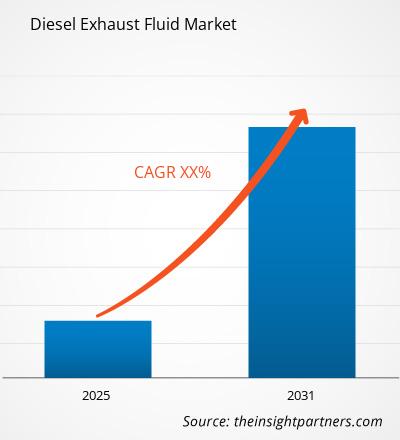
The Diesel Exhaust Fluid Market size was estimated at US$ 44.87 Billion in 2025 and is expected to reach US$ 85.57 Billion by 2034, growing at a CAGR of 7.44% in 2026-2034. The demand for DEF is driven by selective catalytic reduction systems utilized for lowering nitrogen oxide emissions from diesel engines in commercial vehicles, passenger vehicles, construction machines, agricultural tractors, and off-highway machinery.
North America still holds significant importance in the structural landscape, which is reflected by the size estimation of the Diesel Exhaust Fluid Market in the region underpinned by a forecasted CAGR of 6.6–7.6% in 2034. Refill demand is driven by high freight volume, EPA emissions regulations, well-established truck stop DEF dispensers, and high SCR penetration in heavy-duty trucks. Additionally, construction and agriculture equipment players are drivers of regional demand.
Diesel Exhaust Fluid Market Assessment and Insights
- North America: Diesel Exhaust Fluid Market Share in 2025 of 31–35% and CAGR between 6.6–7.6%. Mature diesel fleets, highway freight density, EPA compliance, and extensive pump availability support stable refill demand across on-road and off-highway applications.
- US: Share in 2025 of 82–86% of North America and CAGR between 6.7–7.7%. Large commercial vehicle parc, truck-stop infrastructure, and construction equipment utilization sustain DEF consumption.
- Europe: Share in 2025 of 24–28% and CAGR between 5.8–6.8%. Germany, the UK, France, Italy, and Spain lead demand through Euro VI compliance, AdBlue distribution density, and commercial transport activity.
- Asia Pacific: Share in 2025 of 29–33% and CAGR between 8.2–9.2%. China, India, Japan, South Korea, and Australia drive demand through China VI, BS-VI, logistics expansion, and industrial diesel equipment adoption.
- Largest Segment: Bulk supply mode held market share of 42–46% in 2025 and CAGR of 7.0–8.0% during 2026–2034, reflecting fleet and fuel-station procurement economics.
- High Growth Segment: Pumps supply mode held market share of 18–22% in 2025 and CAGR of 8.5–9.5% during 2026–2034, supported by forecourt expansion and automated dispensing.
- Key companies analyzed in detail: BASF SE, Brenntag North America, Inc., Castrol Limited, Cummins Inc., Graco Inc., Nissan Chemical Corporation, Shell plc, China Petroleum & Chemical Corporation, CF Industries Holdings, Inc., Yara International ASA.
Source: The Insight Partners' analysis based on proprietary research, government publications, company annual reports, investor presentations, industry databases, and expert interviews.
The market growth has also been driven by increased emission standards, increased use of SCR systems, and high-quality DEF production. Diesel exhaust fluid is defined as a high-purity 32.5% urea solution, and ISO-compliant handling has become key to reliability. Major manufacturers are improving supply chains, whereas dispenser makers are improving metering, tank monitoring and preventing contamination. With diesel engines still critical in freight, agricultural, mining, and construction applications, DEF consumption has become more dependent on operating time rather than on the volume of vehicle sales.
Future demand will depend on logistics corridors, off-highway mechanization, and the adoption of regulations in developing countries. The U.S. EPA reports that since 2010, almost all on-road diesel trucks and many nonroad equipment have used DEF with SCR, while DEF adoption is increasing globally in line with Euro VI-equivalent emission standards. Investments are being made in bulk supply of DEF, pumps, telemetry-enabled tanks, and urea supply to prevent interruptions.
Diesel Exhaust Fluid Market Report Scope
| Report Attribute | Details |
|---|---|
| Market size in 2025 | US$ 44.87 Billion |
| Market Size by 2034 | US$ 85.57 Billion |
| Global CAGR (2026 - 2034) | 7.44% |
| Historical Data | 2021-2024 |
| Forecast period | 2026-2034 |
Diesel Exhaust Fluid Market Analysis
Growth profile of Diesel Exhaust Fluid Market is very much dependent on compliance rather than optional expenses on vehicles. DEF is used continuously in heavy-duty trucks since the SCR technology involves fluid injection when the engine works. High volume of freight, warehouse expansion, construction, and farming mechanization ensure repetitive need. Another advantage for DEF is regulatory lock-in, as compliant diesel engines cannot run without the right fluid, dedicated tank, sensor, and fluid dosage system.
Market supply is determined by the presence of urea, deionized water quality, packaging options, and logistics of delivery. The large fleet tends to purchase DEF in bulk and Intermediate Bulk Containers (IBCs) to lower per-unit costs, whereas individual passenger-car customers rely on cans, bottles, and dispensers at fuel stations. Increasingly important role in fuel supply is the aspect of protection of storage from contamination that would lead to damage of SCR technology components.
The current Diesel Exhaust Fluid market analysis includes competition in areas of chemical manufacture, distribution, branded retailing, and SCR eco-system support. Upstream availability is provided by Yara International ASA, BASF SE, CF Industries Holdings, Inc., and China Petroleum & Chemical Corporation, while downstream channel support is provided by Shell plc, Castrol Limited, and Brenntag North America, Inc. Demand influence by Cummins Inc. comes from engine calibration, SCR service provision, and emissions compliance support.
Positioning strategies will increasingly depend on quality assurance, geographic presence, and fleet integration aspects. The dispenser systems that are used in workshops and at fueling points are supported by Graco Inc., and Nissan Chemical Corporation provides expertise in specialized chemicals useful for high purity industrial fluids. Suppliers with storage, telemetry, and emergency replenishment facilities will be capable of providing services to fleets that require uptime assurance.
● REPORT CUSTOMIZATION
Tailor This Report To Align With Your Specific Business Requirements
This report can be customized to align precisely with your business objectives, scope, and target markets. Customization options include tailored segmentation, geography, competitive analysis, and strategic insights to support informed decision-making.
Customize This Report →WHAT YOU CAN ADJUST
- ● Segmentations
- ● Geography
- ● Competitive Analysis
- ● Language Preferences
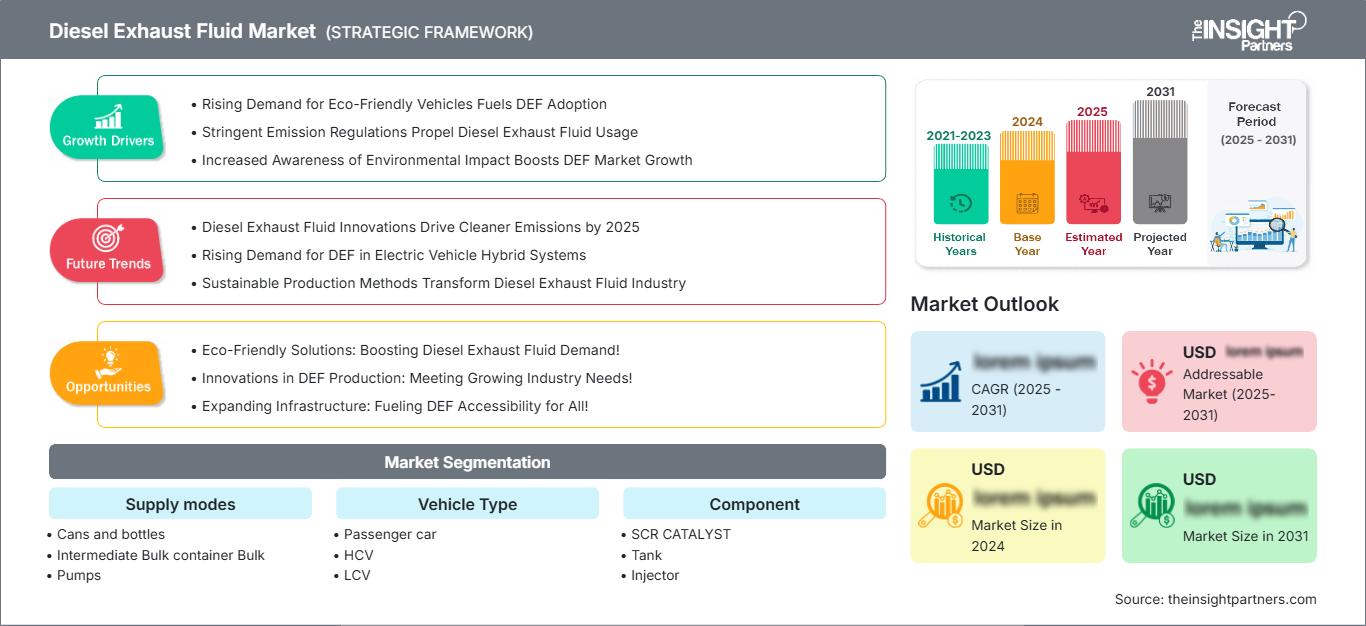
Diesel Exhaust Fluid Market: Strategic Insights
Regional Insights
North America Diesel Exhaust Fluid Market
North America captured a revenue market share of 31–35% in 2025 and is expected to expand at a 6.6–7.6% CAGR from 2026 to 2034. North America’s share in the Diesel Exhaust Fluid Market is driven by the presence of freight corridors, high penetration of SCR technologies, and wide availability of DEF products at truck stops, fleet stations, retailers, and agriculture retailers.
U.S. EPA’s guidelines on DEF reveal continuing use of SCR systems on on-road trucks, tractors, and construction machinery. Meanwhile, Canada contributes to demand through its cross-border freight transport and resource-sector machinery. Local companies take advantage of bulk purchases, properly working pumps, and service capabilities that limit downtime. In addition, there is robust demand due to fuel utilization in relation to operating diesel engines.
U.S. Diesel Exhaust Fluid Market Market
The U.S. accounted for 82-86% share of revenue of North America in 2025 and is estimated to grow at a CAGR of 6.7-7.7%. The use of DEF was prevalent in long haul trucks, regional transport, construction machinery, agricultural machines, and municipal fleets. Availability of DEF increased due to availability in truck-stop dispensers, bulk tanks, retail packages, and service center distribution.
Inducement calibrations of DEF for more than 1.5 million eligible engines have been started by Cummins Inc., signifying the role of uptime and compliance in the fleet business. Some of the players that had presence in the supply chain or products were Shell plc, Castrol Limited, Brenntag North America, Inc., CF Industries Holdings, Inc., and Yara International ASA.
Europe Diesel Exhaust Fluid Market Market
The European continent accounted for 24-28% of world revenues in 2025 and is projected to register a CAGR of 5.8-6.8% through 2034. Germany is the top country due to freight transportation, vehicle engineering expertise, and AdBlue facilities. The continued compliance of Euro VI standards will drive demand for heavy-duty trucks, buses, and off-road vehicles.
The United Kingdom will see demand for AdBlue driven by logistics, retail distribution activities, and usage in farm machinery. France, Italy, and Spain have contributed through road freight, diesel parc vehicles, construction activities, and tourist fleets. According to the VDA report, AdBlue helps Euro 6 diesel vehicles reduce NOx into nitrogen and water, whereas Yara says that about 80 million diesel vehicles and machines use AdBlue globally.
APAC Diesel Exhaust Fluid Market Market
The Asia Pacific region accounted for 29–33% of global revenue in 2025 and is projected to exhibit a CAGR of 8.2–9.2%. China dominates in this region because of China VI emissions regulation, heavy freight, industrial diesel application, and extensive investments in logistics. Additional DEF demand comes from the BS-VI standards and increasing truck fleet in India.
Defenders in Japan and South Korea drive demand via strict vehicle regulations and high-level distribution channels. Australia depends on DEF because of mining, agricultural and long-haul trucks usage. Infrastructure spending, construction equipment application, and cleaner air policies contribute to regional expansion. Suppliers who invest in local terminals and secure IBC delivery, have good chances to benefit from growing consumption.
Middle East & Africa Diesel Exhaust Fluid Market Market
The growth in the MEA region will be around 6.2%-7.2% CAGR from 2024 through 2034. Demand is driven by the increasing use of diesel machinery in infrastructure, logistics, mining, and destination development in Saudi Arabia, and by urea consumption in the UAE through transport, construction, ports, and hospitality-related fleet operations.
Demand in South Africa is driven by mining, agriculture, and commercial transport whereas other countries in the Middle East and Africa are adopting better emission control practices gradually. Growth in this market depends on the availability of urea sources, investment in bulk urea storage, and the installation of pumps.
Segmentation Analysis
Supply modes
The Supply modes segment is projected to grow at a 7.2–8.2% CAGR during 2026–2034. The Diesel Exhaust Fluid Market scope is widening as end users choose formats based on fleet size, refill frequency, storage capability, and contamination risk. Bulk and pump channels dominate high-volume demand, while cans, bottles, and IBCs serve retail, workshop, agricultural, and smaller fleet requirements.
- Cans and bottles: Retail packs serve passenger cars, small commercial operators, workshops, and emergency refill needs where convenience, shelf availability, and clean handling outweigh unit-cost efficiency.
- Intermediate Bulk container Bulk: IBC and bulk formats support depots, fleets, farms, and construction sites that need controlled storage, lower procurement cost, and repeat refill capability.
- Pumps: Pump dispensing is strategically important at truck stops, fuel stations, and fleet yards because it improves refill speed, measurement accuracy, and high-volume accessibility.
Vehicle Type
The Vehicle Type segment is expected to expand at a 7.0–8.0% CAGR through 2034. Demand is led by heavy-duty and light commercial vehicles because they operate high annual mileage and require continuous SCR dosing. Passenger cars contribute through retail and service channels, while off-highway equipment generates consumption from operating hours in construction, mining, agriculture, and infrastructure development.
- Passenger car: Passenger diesel vehicles use smaller DEF volumes but create broad retail demand through service stations, automotive stores, workshops, and packaged refill products.
- HCV: Heavy commercial vehicles remain the core demand base because long-haul trucks and buses consume DEF continuously under SCR compliance requirements.
- LCV: Light commercial vehicles support urban distribution, last-mile logistics, utility fleets, and service operators where diesel efficiency remains valuable for daily operations.
- Off Highway: Off-highway machinery in construction, agriculture, mining, and forestry requires DEF for compliant high-load diesel engines operating across demanding environments.
Component
The Component segment is forecast to grow at a 6.8–7.8% CAGR during 2026–2034. Component demand is tied to SCR system installation, maintenance, calibration, and replacement cycles. Tanks, injectors, sensors, supply modules, and catalysts must operate reliably because poor dosing or contaminated fluid can reduce NOx conversion efficiency and trigger fault codes that disrupt fleet operations.
- SCR CATALYST: SCR catalysts are central to NOx conversion, making fluid purity, dosing accuracy, and thermal performance critical to emissions compliance and long-term system durability.
- Tank: DEF tanks must prevent contamination and support freezing, venting, level detection, and refill access requirements across passenger, commercial, and off-highway platforms.
- Injector: Injectors meter DEF into exhaust streams, influencing conversion efficiency, deposit control, and reliable operation under variable load and temperature conditions.
- Supply Module: Supply modules manage fluid delivery from tank to injector, supporting pressure control, filtration, thawing, and diagnostic functions across SCR architectures.
- Sensor: Sensors monitor DEF level, quality, temperature, NOx concentration, and system performance, helping fleets maintain compliance and avoid operational interruptions.
Application
The Application segment is projected to record a 7.4–8.4% CAGR through 2034. Construction and agriculture use diesel equipment under demanding duty cycles, making DEF availability essential for uptime. Jobsite tanks, farm storage, mobile service vehicles, and distributor networks are becoming more important as machinery owners seek predictable refill logistics and compliant operation.
- Construction: Construction equipment demand is supported by infrastructure projects, earthmoving activity, mining support work, and equipment fleets requiring dependable DEF storage and mobile refill service.
- Agriculture: Agricultural demand comes from tractors, harvesters, sprayers, and other diesel machinery where seasonal uptime, farm storage, and reliable supply are operational priorities.
Opportunity Snapshot
| Segment Name | Revenue Contribution | Trend Tag | Adoption Stage |
| Construction | High | Jobsite Tanks | Scaling |
| Agriculture | Medium | Farm Storage | Scaling |
Diesel Exhaust Fluid Market Growth Drivers and Impact Analysis
Tighter NOx Standards and SCR Compliance Requirements
Emission standards remain the most powerful structural driver because SCR systems require DEF to convert nitrogen oxides into nitrogen and water. Yara’s regulatory guidance notes that SCR with AdBlue became mandatory for heavy-duty vehicles in Europe under Euro IV and V, was effectively required for U.S. trucks from 2010, and is now embedded in many global Euro VI-equivalent rules. This regulatory foundation creates recurring fluid demand after vehicle sale, supporting distributors, chemical producers, fuel retailers, and fleet service providers.
Expansion of High-Utilization Commercial and Off-Highway Fleets
DEF demand rises with engine operating hours, making commercial and off-highway fleets central to market resilience. Long-haul trucks, buses, light commercial vehicles, tractors, harvesters, loaders, and excavators operate under high load profiles where SCR dosing is continuous. Infrastructure projects, agricultural mechanization, logistics growth, and mining activity therefore translate directly into refill demand. Fleet managers increasingly prefer bulk tanks, telemetry monitoring, and service contracts because unplanned shortages can cause derates, productivity losses, and maintenance disruption.
Improved Distribution Infrastructure and Dispensing Accuracy
Distribution infrastructure is improving as fuel stations, fleet depots, workshops, and agricultural suppliers install dedicated DEF storage and dispensing equipment. Pump availability reduces reliance on packaged products for high-volume users, while calibrated meters help manage procurement accuracy and fluid accountability. Storage integrity is equally important because contamination can damage catalysts, sensors, and injectors. Equipment suppliers such as Graco Inc. benefit from demand for pumps, tanks, reels, and transfer systems that support clean handling.
Diesel Exhaust Fluid Market Future Trends
Digital Tank Monitoring and Predictive Replenishment
Emerging Diesel Exhaust Fluid Market trends point toward connected tanks, sensor-based inventory alerts, and predictive replenishment models. Fleets want fewer emergency deliveries, better usage visibility, and assurance that DEF remains available during peak operating periods. Distributors can use telemetry to plan routes, reduce stockouts, and improve customer retention. This trend also supports quality control because monitoring systems can track consumption anomalies, storage conditions, and refill timing across multiple depots or remote worksites.
Lower-Carbon Urea and Cleaner DEF Supply Chains
Future procurement may increasingly consider the carbon intensity of urea and ammonia production. DEF itself supports NOx reduction, but large fleets and public agencies are beginning to evaluate broader lifecycle impacts across fuels, lubricants, and consumables. Producers with access to lower-emission ammonia, renewable hydrogen initiatives, or carbon capture projects could gain differentiation. Over time, verified lower-carbon DEF supply may become relevant in sustainability reporting, especially for logistics providers serving customers with Scope 3 emissions targets.
Diesel Exhaust Fluid Market Opportunities
Fleet Depot Bulk Programs and Managed Refill Services
Fleet operators represent a high-value opportunity because they prioritize uptime, cost visibility, and compliance assurance. Suppliers can create managed programs covering bulk tanks, periodic testing, telemetry, delivery scheduling, and emergency replenishment. These services reduce the risk of derates caused by empty tanks or poor-quality fluid while improving procurement predictability. Investment aligned with Diesel Exhaust Fluid Market Forecasts should focus on depots serving logistics, construction, agriculture, municipal fleets, and bus operators.
Emerging Market Distribution and Local Storage Expansion
Emerging markets offer opportunities as emission standards tighten and diesel fleets modernize. Local storage terminals, distributor partnerships, and packaged-product availability can accelerate adoption where pump networks remain underdeveloped. Suppliers should prioritize transport corridors, agricultural clusters, mining regions, and construction hubs with rising SCR-equipped equipment penetration. Early investment can build brand familiarity, quality trust, and channel loyalty before markets mature. Successful entrants will combine certified product, reliable logistics, training, and contamination-prevention practices.
Recent Developments
- March 2026: Dakota Gasification Company has signed a long-term supply agreement with Musket Corporation for diesel exhaust fluid, effective from February 1, 2026, to December 31, 2028. This agreement positions Musket as the sole customer for DEF produced at Dakota Gas’s Beulah facility, enhancing their nearly decade-long partnership. Musket Corporation is a major distributor of DEF and an affiliate of Love’s Travel Stops.
- July 2026: Hindustan Petroleum Corporation Ltd. (HPCL) and Tata Motors have collaborated to launch a co-branded Genuine Diesel Exhaust Fluid (DEF), designed to improve vehicle performance, drivetrain efficiency, and longevity. Produced in BIS-approved facilities, this high-quality DEF will be accessible through HPCL's network of 23,000 fuel stations in India. Essential for BS6-compliant diesel vehicles, DEF helps to reduce harmful nitrogen oxides, ensuring enhanced vehicle efficiency and compliance with emission standards.
Frequently Asked Questions

- Comprehensive Market Sizing and Forecast Analysis
- Detailed Segmentation Analysis
- In-Depth Market Dynamics Assessment
- Regional and Country-Level Insights
- Competitive Landscape and Company Benchmarking
- Strategic Business Intelligence
Recent Reports
Testimonials

The Insight Partners' SCADA System Market report is comprehensive, with valuable insights on current trends and future forecasts. The team was highly professional, responsive, and supportive throughout. We are very satisfied and highly recommend their services.
RAN KEDEM Partner, Reali Technologies LTDs
I requested a report on a very specific software market and the team produced the report in a few days. The information was very relevant and well presented. I then requested some changes and additions to the report. The team was again very responsive and I got the final report in less than a week.
JEAN-HERVE JENN Chairman, Future Analytica
We worked with The Insight Partners for an important market study and forecast. They gave us clear insights into opportunities and risks, which helped shape our plans. Their research was easy to use and based on solid data. It helped us make smart, confident decisions. We highly recommend them.
PIYUSH NAGPAL Sr. Vice President, High Beam Global
The Insight Partners delivered insightful, well-structured market research with strong domain expertise. Their team was professional and responsive throughout. The user-friendly website made accessing industry reports seamless. We highly recommend them for reliable, high-quality research services
YUKIHIKO ADACHI CEO, Deep Blue, LLC.
This is the first time I have purchased a market report from The Insight Partners.While I was unsure at first, I visited their web site and felt more comfortable to take the risk and purchase a market report.I am completely satisfied with the quality of the report and customer service. I had several questions and comments with the initial report, but after a couple of dialogs over email with their analyst I believe I have a report that I can use as input to our strategic planning process.Thank you so much for taking the extra time and making this a positive experience.I will definitely recommend your service to others and you will be my first call when we need further market data.
JOHN SUZUKI President and Chief Executive Officer, Board Director, BK Technologies
I wish to appreciate your support and the professionalism you displayed in the course of attending to my request for information regarding to infectious disease IVD market in Nigeria. I appreciate your patience, your guidance, and the fact that you were willing to offer a discount, which eventually made it possible for us to close a deal. I look forward to engaging The Insight Partners in the future, all thanks to the impression you have created in me as a result of this first encounter.
DR CHIJIOKE ONYIA MANAGING DIRECTOR, PineCrest Healthcare Ltd.Reason to Buy
- Informed Decision-Making
- Understanding Market Dynamics
- Competitive Analysis
- Identifying Emerging Markets
- Customer Insights
- Market Forecasts
- Risk Mitigation
- Boosting Operational Efficiency
- Strategic Planning
- Investment Justification
- Tracking Industry Innovations
- Aligning with Regulatory Trends





 Get Free Sample for