
Digital Mobile X-Ray Devices Market Demand, Share & Growth by 2034
Coverage: by Technology (Computed Radiography, Direct Radiography) ; Application (Orthopedic Imaging, Chest imaging, Dental Imaging, Others) ; End User (Hospitals, Radiology, Outpatient Clinics, Others) , and Geography (North America, Europe, Asia Pacific, and South and Central America)
- Status : Data Released
- Report Code : TIPRE00005789
- Category : Life Sciences
- No. of Pages : 150
- Available Report Formats :


- Last update date : July 08, 2026


2025 Market Size
US$ 2.84 Bn
Base year value
2034 Forecast
US$ 4.94 Bn
Projected by 2034
CAGR 2026-2034
6.36 %
Growth rate
Addressable Market
US$ 35.23 Bn
(2026-2034)
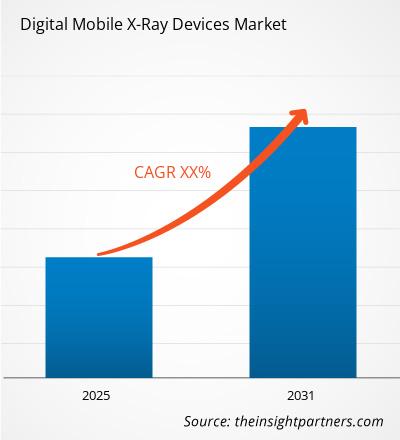
The Digital Mobile X-Ray Devices Market is advancing as healthcare providers prioritize rapid diagnostic imaging, decentralized care delivery, and workflow efficiency across acute and ambulatory settings. The Digital Mobile X-Ray Devices market is estimated at approximately US$ 2.84 billion in 2025 and is projected to approach US$ 4.94 billion by 2034, reflecting a steady CAGR of around 6.36% during 2026–2034. Growing adoption of portable imaging systems, increasing emergency care requirements, and improvements in detector technology continue to strengthen market expansion across developed and emerging healthcare ecosystems.
North America remains a pivotal revenue-generating region within the Digital Mobile X-Ray Devices Market, supported by widespread digital radiography adoption and continual modernization of hospital imaging infrastructure. The regional market is anticipated to record a CAGR of approximately 5.9% through 2034, driven by growing demand for bedside imaging, expanding outpatient care networks, and investments in emergency preparedness. Increasing utilization of direct radiography systems and integration of AI-assisted image processing further reinforce regional growth momentum.
Digital Mobile X-Ray Devices Market Assessment and Insights
- North America: North America accounted for 34–36% share in 2025 and is anticipated to expand at a CAGR of 5.9–6.3% during 2026–2034. Growing demand for bedside imaging in critical care and emergency medicine, along with continued hospital fleet modernization, supports sustained regional market growth.
- U.S.: The U.S. represented 82–85% of the North American Digital Mobile X-Ray Devices market size in 2025 and is projected to register a CAGR of 6.0–6.4% during 2026–2034, supported by increasing adoption of portable imaging systems, expanding acute care services, and ongoing investments in digital radiography infrastructure.
- Europe: Europe held 26–28% of the Digital Mobile X-Ray Devices market share in 2025 and is expected to grow at a CAGR of 5.6–6.0% during 2026–2034. Germany, the United Kingdom, and France remain the leading markets due to established radiology infrastructure, mobile imaging replacement cycles, and increasing adoption of digital detector-based ward imaging.
- Asia Pacific: Asia Pacific accounted for 24–26% share in 2025 and is forecast to expand at a CAGR of 7.2–7.6% during 2026–2034. China, Japan, and India continue to benefit from hospital expansion, trauma care capacity building, and local manufacturing initiatives that support procurement of compact digital radiography platforms.
- Largest Segment: Direct Radiography represented the largest Digital Mobile X-Ray Devices market segment and is expected to record a CAGR of 6.8–7.2% during 2026–2034, reflecting faster image acquisition, reduced cassette handling, and greater compatibility with digital bedside imaging workflows.
- High Growth Segment: Outpatient Clinics are projected to grow at a CAGR of 7.4–7.8% during 2026–2034, driven by expanding same-day diagnostic services, increasing orthopedic walk-in centers, and rising investments in compact imaging systems outside tertiary hospitals.
- Key companies analyzed in detail: PROTEC GmbH & Co. KG; Canon Medical Systems Corporation; Koninklijke Philips N.V.; Siemens Healthineers AG; Carestream Health, Inc.; GE HealthCare Technologies Inc.; Shimadzu Corporation; MinXray, Inc.; Ziehm Imaging GmbH; FUJIFILM Corporation.
Source: The Insight Partners' analysis based on proprietary research, government publications, company annual reports, investor presentations, industry databases, and expert interviews.
The Digital Mobile X-Ray Devices Market report has evolved from a niche diagnostic segment into a critical component of modern healthcare delivery. Advances in detector sensitivity, battery-powered mobility, wireless image transfer, and compact system design have significantly improved imaging accessibility. Mobile radiography has become increasingly important in intensive care units, emergency departments, surgical suites, and remote healthcare settings where patient movement may be challenging.
Over the coming decade, the Digital Mobile X-Ray Devices market is expected to benefit from healthcare decentralization and growing emphasis on point-of-care diagnostics. Vendors are increasingly focusing on intelligent imaging systems that combine mobility with advanced image quality and workflow automation. As healthcare providers seek operational efficiency while maintaining diagnostic accuracy, demand for digital mobile X-ray devices is likely to expand across both mature and developing healthcare markets.
Digital Mobile X-Ray Devices Market Report Scope
| Report Attribute | Details |
|---|---|
| Market size in 2025 | US$ 2.84 Billion |
| Market Size by 2034 | US$ 4.94 Billion |
| Global CAGR (2026 - 2034) | 6.36% |
| Historical Data | 2021-2024 |
| Forecast period | 2026-2034 |
Digital Mobile X-Ray Devices Market Analysis
Growing patient volumes, rising prevalence of orthopedic disorders, and increasing incidence of respiratory diseases are creating sustained demand for portable diagnostic imaging solutions. Digital mobile X-ray devices enable faster clinical decision-making by bringing imaging directly to patients, reducing transport risks and improving workflow efficiency. Hospitals increasingly deploy these systems in emergency, trauma, and critical care environments where immediate diagnostic visibility is essential.
The value chain encompasses detector manufacturers, imaging software developers, system integrators, healthcare facilities, and service providers. Technological improvements in wireless detectors, cloud-enabled image management, and AI-assisted interpretation continue to enhance the overall ecosystem. Regulatory emphasis on radiation optimization and image quality standards further influences product development strategies.
Competition remains concentrated among established imaging technology providers with extensive radiology portfolios. Companies such as Canon Medical Systems, Koninklijke Philips N.V., Siemens Healthcare Private Limited, Carestream Health, Fujifilm Corporation, and General Electric Company maintain strong market positions through product innovation, service capabilities, and global distribution networks.
Investment activity is increasingly directed toward AI-enhanced imaging platforms, portable detector technologies, and integrated digital healthcare ecosystems. Strategic partnerships between imaging manufacturers and healthcare providers are facilitating broader adoption of mobile radiography solutions. Digital Mobile X-Ray Devices Market participants are also emphasizing compact designs, lower total ownership costs, and software-driven workflow improvements to strengthen competitive differentiation.
● REPORT CUSTOMIZATION
Tailor This Report To Align With Your Specific Business Requirements
This report can be customized to align precisely with your business objectives, scope, and target markets. Customization options include tailored segmentation, geography, competitive analysis, and strategic insights to support informed decision-making.
Customize This Report →WHAT YOU CAN ADJUST
- ● Segmentations
- ● Geography
- ● Competitive Analysis
- ● Language Preferences
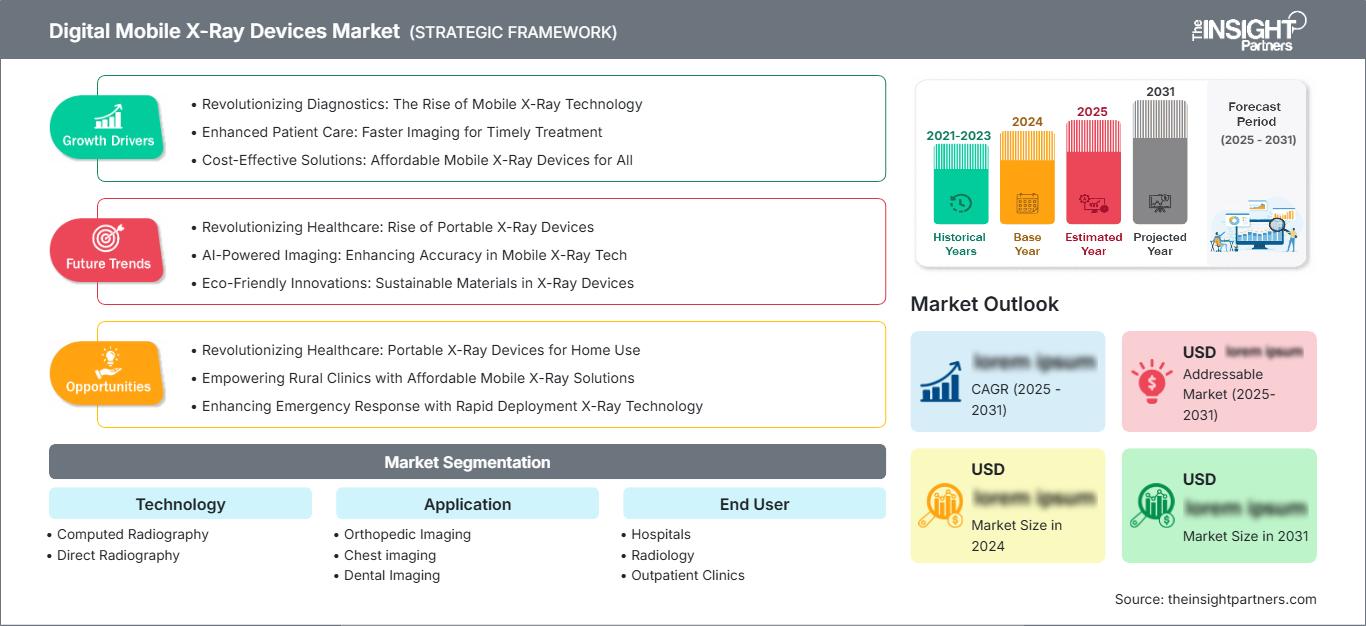
Digital Mobile X-Ray Devices Market: Strategic Insights
Regional Insights
North America Digital Mobile X-Ray Devices Market
North America accounts for the largest share of the Digital Mobile X-Ray Devices Market and is expected to expand at a CAGR of approximately 5.9% through 2034. The region benefits from advanced healthcare infrastructure, widespread digital imaging adoption, and continuous investments in hospital modernization. Healthcare facilities increasingly utilize mobile radiography systems to improve patient throughput and minimize delays in emergency and intensive care settings.
Demand is further supported by aging populations, rising chronic disease prevalence, and increasing utilization of outpatient care services. Healthcare providers continue to prioritize technologies that enhance operational efficiency while delivering high-quality diagnostic outcomes. The presence of major imaging technology vendors and strong reimbursement frameworks supports sustained market development.
U.S. Digital Mobile X-Ray Devices Market
The United States represents the dominant contributor within North America, accounting for an estimated 78–82% of regional revenue. The U.S. Digital Mobile X-Ray Devices market is projected to register a CAGR of approximately 5.8% through 2034, supported by extensive adoption of digital radiography technologies across hospitals and outpatient facilities.
Leading manufacturers including General Electric Company, Carestream Health, Fujifilm Corporation, Canon Medical Systems, and Philips maintain significant commercial footprints throughout the country. Orthopedic imaging and chest imaging applications continue to generate substantial demand due to increasing musculoskeletal disorders, respiratory disease screening, and emergency care requirements. Healthcare systems are also investing in AI-assisted imaging platforms that improve workflow efficiency and support radiologist productivity.
Europe Digital Mobile X-Ray Devices Market
Europe represents a mature yet steadily expanding market, accounting for approximately 26–30% of global revenue. The region is anticipated to achieve a CAGR of around 5.7% through 2034. Strong public healthcare systems, growing demand for diagnostic imaging, and modernization initiatives across hospitals continue to support the adoption of mobile radiography solutions.
The UK Digital Mobile X-Ray Devices market benefits from increasing digitalization in the healthcare industry and shorter wait times for diagnosis. Today, mobile imaging equipment is used by both emergency and community healthcare providers, enabling proper patient management and diagnostics.
Germany continues to be the top European country because of its well-developed healthcare infrastructure, strong medical technology industry, and high usage of diagnostic imaging. Development of advanced radiological imaging technologies and investments in hospital upgrades further solidify its dominance in the market.
France, Italy, and Spain generate significant demand through the development of their healthcare infrastructure and the growth of diagnostics. Increasing usage of digital radiography technologies and greater decentralization of healthcare are forecasted to drive regional market growth in the coming years.
APAC Digital Mobile X-Ray Devices Market
Asia Pacific is projected to be the fastest-growing regional Digital Mobile X-Ray Devices market, with a CAGR of approximately 7.8% through 2034 and a global market share estimated between 24–28%. Expanding healthcare infrastructure, increasing healthcare expenditures, and rising awareness of early diagnosis are accelerating adoption across the region.
China dominates the regional Digital Mobile X-Ray Devices market due to investments in hospitals, increased healthcare coverage, and strong manufacturing capacity. Efforts to transform the country’s healthcare sector are ongoing, creating strong demand for imaging devices.
Japan and South Korea have technologically advanced healthcare systems and are early adopters of digital imaging technology. India is becoming a high-potential market due to the growth of its healthcare infrastructure and the availability of diagnostic tests. Rural health accessibility efforts in Australia continue to contribute to the deployment of mobile imaging technology.
Middle East & Africa Digital Mobile X-Ray Devices Market
The Middle East & Africa Digital Mobile X-Ray Devices market is expected to record a CAGR of approximately 6.8% through 2034. Although representing a smaller share of global revenue, the region is witnessing growing investments in healthcare infrastructure and diagnostic imaging capabilities. Demand is increasingly driven by healthcare modernization programs and rising disease burden.
Saudi Arabia has been ahead in the adoption process in the region due to numerous health transformation initiatives and investments aligned with its economic diversification plan. Digital mobile imaging is increasingly used in advanced hospitals to improve healthcare efficiency and accessibility.
The UAE continues to build its health care facilities, and South Africa remains a key investment market due to its health care investments. In the greater MEA region, infrastructure developments in health care accessibility continue to lay conducive grounds for future market growth.
Segmentation Analysis
Technology
- Computed Radiography: Continues to serve facilities transitioning from conventional imaging systems by offering cost-effective digital conversion, particularly in budget-sensitive healthcare environments and smaller medical centers seeking workflow improvements without complete infrastructure replacement.
- Direct Radiography: Represents the leading technology segment due to faster image acquisition, superior image quality, reduced examination times, and seamless integration with modern digital healthcare ecosystems across hospitals and advanced imaging facilities.
Application
- Orthopedic Imaging: Generates significant demand owing to increasing musculoskeletal disorders, sports injuries, trauma cases, and growing requirements for immediate bedside assessment in emergency and postoperative settings.
- Chest Imaging: Remains a critical application area due to widespread use in respiratory disease diagnosis, intensive care monitoring, infection assessment, and routine hospital imaging workflows.
- Dental Imaging: Expanding adoption is supported by increasing dental care utilization, improved portability requirements, and growing demand for digital imaging solutions in specialized dental practices and outreach programs.
End User
- Hospitals: Represent the largest end-user segment due to extensive imaging requirements across emergency departments, intensive care units, surgical suites, and inpatient care settings.
- Radiology: Specialized imaging centers increasingly adopt mobile systems to improve operational flexibility, optimize patient workflows, and support diversified diagnostic service offerings.
- Outpatient Clinics: Growing utilization reflects healthcare decentralization trends and increasing demand for cost-efficient diagnostic capabilities outside traditional hospital environments.
Opportunity Snapshot
| End User | Revenue Contribution | Trend Tag | Adoption Stage |
| Hospitals | High | Bedside Care | Mature |
| Radiology | Medium | Workflow AI | Scaling |
| Outpatient Clinics | Medium | Decentralized Care | Emerging |
Digital Mobile X-Ray Devices Market Growth Drivers and Impact Analysis
Expansion of Point-of-Care Diagnostic Imaging
Healthcare providers are increasingly shifting diagnostic capabilities closer to the patient to improve treatment timelines and clinical outcomes. Digital mobile X-ray systems support this transition by enabling imaging directly within intensive care units, emergency departments, operating rooms, and long-term care facilities. The ability to obtain immediate diagnostic information reduces the need for patient transport and enhances workflow efficiency.
The implications extend beyond mere operational efficiency. Point-of-care imaging technologies offer benefits such as faster diagnosis, safe patient management, and effective resource management. Those hospitals facing staffing shortages and growing patient volumes will stand to gain a lot from mobile imaging technologies. Given that healthcare institutions consistently emphasize the need for rapid response and decentralized patient management services, mobile radiography technology is poised for market expansion.
Rising Burden of Orthopedic and Respiratory Conditions
The growing prevalence of orthopedic injuries, age-related musculoskeletal disorders, and respiratory diseases continues to create sustained demand for diagnostic imaging. Mobile X-ray devices provide healthcare professionals with rapid access to diagnostic information, particularly in emergency and critical care settings where immediate evaluation is essential.
The significance of the matter is especially important when considering the cases of trauma treatment, post-operative monitoring, and pulmonary conditions. More and more medical institutions need an imaging system that performs consistently across various settings. Such a requirement stimulates both the updating of outdated devices and the application of modern digital radiography technologies that offer improved image quality and workflow efficiency.
Advancements in Detector and Imaging Software Technologies
Innovations in technology continue to be a key factor influencing market dynamics. Enhancements in detectors' sensitivity, wireless communications, batteries, and the use of artificial intelligence for image optimization have led to major changes in mobile X-ray systems. The latest models provide fast acquisition, improved diagnosis, and seamless integration.
Such innovations bring tangible advantages for healthcare institutions, including shorter examination times and increased productivity. Manufacturers are actively using innovative software solutions with intelligent algorithms, automated positioning systems, and cloud-based image management to differentiate their products.
Digital Mobile X-Ray Devices Market Future Trends
AI-Integrated Mobile Radiography Workflows
Artificial intelligence is increasingly becoming an integral component of digital mobile imaging platforms. Vendors are incorporating AI capabilities that assist with image optimization, workflow automation, quality assurance, and preliminary clinical assessment. These functionalities help reduce variability while supporting healthcare professionals operating in high-pressure environments.
Future innovations are expected to shape Digital Mobile X-Ray Devices market trends through advancements in artificial intelligence for image enhancement, predictive maintenance, and automated positioning guidance. As the number of radiology specialists decreases in healthcare facilities, intelligent imaging systems that can increase efficiency and facilitate clinical decision-making are bound to emerge.
Development of Ultra-Mobile and Connected Imaging Platforms
Imaging system manufacturers are emphasizing factors such as lightweight, maneuverability, and connectivity to meet future clinical needs. Contemporary healthcare organizations require diagnostic systems that can perform well across different settings and can interface with electronic medical records and cloud-based diagnostic systems.
Future research could focus on developing extremely small imaging devices, improved battery performance, remote diagnostics, and greater compatibility. A combination of the three features mentioned above would enable diagnostic companies to offer scalable solutions through mobile imaging systems.
Digital Mobile X-Ray Devices Market Opportunities
Expansion Across Emerging Healthcare Infrastructure Projects
Continued investment by emerging nations in health care infrastructure upgrades and diagnostics is evident. Most areas remain underserved in access to state-of-the-art imaging facilities, creating many business opportunities for manufacturers of mobile X-ray systems. Portability provides a practical alternative where fixed installations are unavailable or prohibitively expensive, strengthening the Digital Mobile X-Ray Devices market forecast.
Vendors that can deliver economical, scalable, and supported solutions have a good chance of taking advantage of those opportunities. Strategic collaboration with medical facilities, government organizations, and distributors will help expand market penetration. Local manufacturing and training will provide additional leverage in fast-growing emerging markets.
Growth Potential in Ambulatory and Outpatient Care Settings
There is an increasing trend toward outpatient and ambulatory care settings in healthcare delivery. Such centers need imaging technology that delivers affordability, efficiency, and operational flexibility. Mobile X-ray machines seem to fit these demands well, as they provide imaging without requiring significant infrastructure investments.
The possibility goes beyond traditional outpatient centers to include urgent care centers, specialty care centers, rehabilitation centers, and even home health care services. Firms that manufacture small-sized equipment meant for decentralized settings may be able to take advantage of larger markets. Product differentiation through workflow simplicity, connectivity, and lower ownership costs will likely influence future investment decisions within this segment.
Recent Developments
- July 2025: Fujifilm Corporation launched the FDR Go iQ portable digital radiography system in the United States. The system features a lightweight design, touchscreen controls, tube-head display integration, and smart charging capabilities intended to improve bedside imaging efficiency in hospitals and ambulatory surgery centers. The development reflects growing industry focus on intelligent mobile imaging platforms.
- November 2025: Canon Medical Systems announced the commercial launch of the Mobirex i9 / Smart Edition mobile X-ray system. The platform incorporates enhanced radiography support functions, improved mobility, and compatibility with Canon’s digital radiography detectors to support bedside imaging applications across hospital environments.
- September 2024: FUJIFILM Philippines introduced the FDR Xair Ultra-Portable Digital X-ray System for commercial distribution after receiving regulatory clearance for medical device sales. Designed as a lightweight and highly portable imaging solution, the system aims to expand access to diagnostic radiology and tuberculosis screening services, especially in remote and underserved communities where conventional imaging infrastructure remains limited.
Frequently Asked Questions

- Comprehensive Market Sizing and Forecast Analysis
- Detailed Segmentation Analysis
- In-Depth Market Dynamics Assessment
- Regional and Country-Level Insights
- Competitive Landscape and Company Benchmarking
- Strategic Business Intelligence
Recent Reports
Testimonials

The Insight Partners' SCADA System Market report is comprehensive, with valuable insights on current trends and future forecasts. The team was highly professional, responsive, and supportive throughout. We are very satisfied and highly recommend their services.
RAN KEDEM Partner, Reali Technologies LTDs
I requested a report on a very specific software market and the team produced the report in a few days. The information was very relevant and well presented. I then requested some changes and additions to the report. The team was again very responsive and I got the final report in less than a week.
JEAN-HERVE JENN Chairman, Future Analytica
We worked with The Insight Partners for an important market study and forecast. They gave us clear insights into opportunities and risks, which helped shape our plans. Their research was easy to use and based on solid data. It helped us make smart, confident decisions. We highly recommend them.
PIYUSH NAGPAL Sr. Vice President, High Beam Global
The Insight Partners delivered insightful, well-structured market research with strong domain expertise. Their team was professional and responsive throughout. The user-friendly website made accessing industry reports seamless. We highly recommend them for reliable, high-quality research services
YUKIHIKO ADACHI CEO, Deep Blue, LLC.
This is the first time I have purchased a market report from The Insight Partners.While I was unsure at first, I visited their web site and felt more comfortable to take the risk and purchase a market report.I am completely satisfied with the quality of the report and customer service. I had several questions and comments with the initial report, but after a couple of dialogs over email with their analyst I believe I have a report that I can use as input to our strategic planning process.Thank you so much for taking the extra time and making this a positive experience.I will definitely recommend your service to others and you will be my first call when we need further market data.
JOHN SUZUKI President and Chief Executive Officer, Board Director, BK Technologies
I wish to appreciate your support and the professionalism you displayed in the course of attending to my request for information regarding to infectious disease IVD market in Nigeria. I appreciate your patience, your guidance, and the fact that you were willing to offer a discount, which eventually made it possible for us to close a deal. I look forward to engaging The Insight Partners in the future, all thanks to the impression you have created in me as a result of this first encounter.
DR CHIJIOKE ONYIA MANAGING DIRECTOR, PineCrest Healthcare Ltd.Reason to Buy
- Informed Decision-Making
- Understanding Market Dynamics
- Competitive Analysis
- Identifying Emerging Markets
- Customer Insights
- Market Forecasts
- Risk Mitigation
- Boosting Operational Efficiency
- Strategic Planning
- Investment Justification
- Tracking Industry Innovations
- Aligning with Regulatory Trends





 Get Free Sample for